Get 20% OFF All Premium 3D & STL Models!

In the fast-evolving landscape of digital media, the demand for realistic and impeccably detailed 3D assets has never been higher. From the cinematic spectacle of a cutting-edge advertisement to the immersive realism of a next-generation video game, the quality of a 3D model can make or break a project. Automotive design, in particular, thrives on precision and authenticity, requiring digital representations that capture every curve, every reflection, and every material nuance with absolute fidelity. Professionals across industries are constantly seeking assets that not only look stunning but are also technically robust and versatile enough to integrate into diverse workflows.
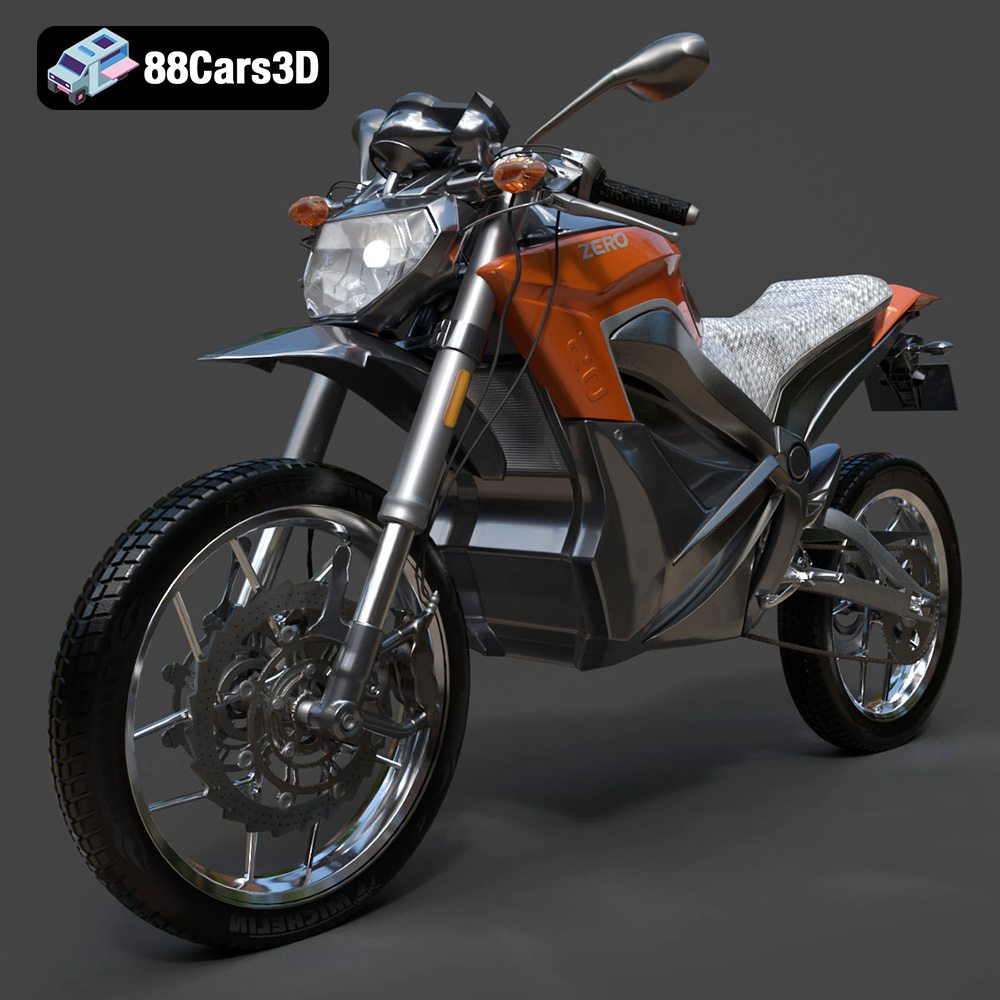
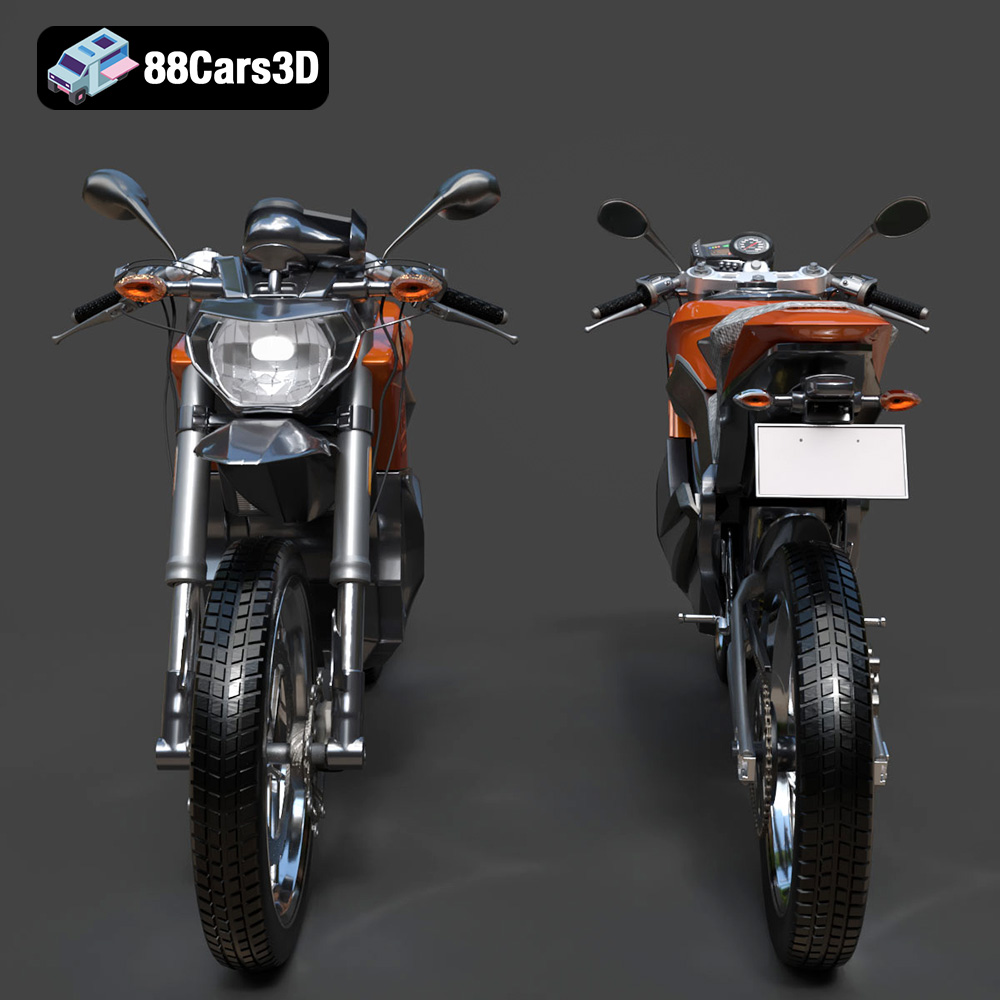
This pursuit of digital perfection is perfectly embodied by the Zero Motorcycles S ZF8 5 3D Model. This exceptional asset stands as a testament to the meticulous craftsmanship required for professional-grade visualization. It offers an authentic, highly detailed representation of the innovative electric motorcycle, designed from the ground up to meet the stringent demands of advanced digital projects. Whether your goal is to render striking cinematic visuals, develop interactive game environments, or create cutting-edge AR/VR experiences, this model provides the foundational realism necessary to elevate your work. Its clean geometry, accurate proportions, and realistic materials are engineered for seamless integration and impressive output across a wide spectrum of applications.
The true power of a professional 3D asset lies not just in its visual fidelity, but also in its adaptability across various software and platforms. This adaptability is primarily dictated by the range and quality of the file formats provided. Understanding these formats is crucial for any digital artist or developer, as each serves a distinct purpose in the pipeline, from initial modeling to final deployment. The Zero Motorcycles S ZF8 5 3D Model, recognizing this critical need, is supplied in a comprehensive array of industry-standard formats, ensuring maximum compatibility and utility.
The .blend format is the native file type for Blender, the powerful open-source 3D creation suite. When you receive a .blend file, you’re getting more than just the mesh; you’re often receiving a complete scene. This includes not only the model itself but also the associated materials, textures, lighting setups, camera positions, and even animation data. For users deeply integrated into the Blender ecosystem, a .blend file offers unparalleled flexibility. It allows for full editability of all aspects of the model, from adjusting polygon flow and UV maps to tweaking shader networks and rendering settings. It’s the ideal starting point for anyone looking to customize the Zero Motorcycles S ZF8 5 model, animate it within Blender, or integrate it into a complex Blender scene.
The .fbx (Filmbox) format is arguably the most widely adopted interchange format in the 3D industry, especially prevalent in game development. Developed by Autodesk, FBX is designed to transfer 3D data between different software applications while preserving key elements like meshes, materials, textures, animations, and even rigging information. It is the go-to format for importing assets into game engines like Unreal Engine and Unity. The .fbx version of the Zero Motorcycles S ZF8 5 3D Model is optimized for these environments, typically featuring triangulated meshes for efficient rendering and baked textures for consistent appearance across platforms. Its robustness makes it indispensable for real-time pipelines.
The .obj (Wavefront Object) format is a venerable and universally supported 3D file format. While it may not carry as much scene information as .blend or .fbx (it primarily stores geometry data – vertices, faces, UVs – and references to external material files like .mtl), its widespread compatibility is its greatest strength. Almost every 3D software package can import and export .obj files, making it an excellent fallback or starting point for cross-software workflows. When working with the Zero Motorcycles S ZF8 5 as an .obj, artists can be confident that the core mesh data will transfer cleanly into their preferred modeling or rendering application, allowing them to rebuild materials and lighting from scratch if desired.
The .glb (GL Transmission Format Binary) is the binary version of the glTF format, specifically designed for efficient transmission and loading of 3D scenes and models by engines and applications. It is rapidly becoming the standard for 3D content in web-based applications, augmented reality (AR), and virtual reality (VR). .glb files are self-contained, embedding all necessary data (geometry, materials, textures, animations) into a single file, which streamlines deployment. For showcasing the Zero Motorcycles S ZF8 5 in an interactive web viewer, a mobile AR experience, or a lightweight VR scene, the .glb format offers optimal performance and ease of use.
The .stl (STereoLithography) format is synonymous with 3D printing. It represents a 3D model as a series of connected triangles, describing only the surface geometry without color, texture, or other CAD attributes. While simple, this format is universally accepted by 3D printers and slicing software. The .stl version of the Zero Motorcycles S ZF8 5 3D Model is critical for anyone looking to produce a physical prototype, scale model, or even custom parts using additive manufacturing. Ensuring a watertight, manifold mesh in .stl is essential for successful 3D printing, and professional models are prepared with this in mind.
The .ply (Polygon File Format or Stanford Triangle Format) is another widely used format for storing 3D data, particularly known for its ability to store a wide range of properties, including color, transparency, surface normals, and texture coordinates. It’s often used in academic and research settings, as well as in CAD and reverse engineering for capturing precise mesh data from 3D scanners. For applications requiring a detailed polygon mesh for analysis, measurement, or specific CAD integrations, the .ply version of the Zero Motorcycles S ZF8 5 offers robust data integrity.
The inclusion of an .unreal file format (often indicating a pre-configured asset pack or directly importable asset for Unreal Engine) signifies a significant advantage for game developers. This format implies that the Zero Motorcycles S ZF8 5 3D Model is not just compatible, but potentially optimized and pre-set for Unreal Engine’s specific material system, collision meshes, and LODs (Levels of Detail). This dramatically reduces setup time and ensures that the model performs optimally within the engine right out of the box, reflecting a commitment to a seamless professional workflow.
Finally, the .max format is the native file type for Autodesk 3ds Max, a leading software for 3D modeling, animation, rendering, and compositing. Similar to .blend, a .max file can contain the entire scene, including the model, materials, textures, lights, cameras, and animations. For professionals working within the 3ds Max ecosystem, this provides complete control and editability over the Zero Motorcycles S ZF8 5 model. It’s perfect for detailed rendering projects, architectural visualizations, or integrating the motorcycle into complex animated sequences, allowing artists to leverage all the powerful features of 3ds Max.
The comprehensive range of formats provided with the Zero Motorcycles S ZF8 5 3D Model ensures that whether you are a game developer, a visualization artist, an AR/VR creator, or a product designer, you have the right tools to integrate this high-quality asset into your workflow with minimal friction. This versatility is a hallmark of truly professional 3D car models.
Automotive rendering is a specialized field that demands an acute understanding of light, materials, and form. Achieving photorealistic results requires not only a powerful rendering engine but also a meticulously crafted 3D model. The Zero Motorcycles S ZF8 5 3D Model provides the ideal foundation, allowing artists to push the boundaries of realism.
At the heart of any photorealistic render are the materials. Modern rendering relies heavily on Physically Based Rendering (PBR), a methodology that accurately simulates how light interacts with surfaces in the real world. For automotive models, this means precisely replicating everything from the multi-layered metallic paint with its subtle flakes and clear coat reflections, to the matte finish of rubber tires, the precise sheen of polished chrome, and the nuanced textures of plastics and carbon fiber. The Zero Motorcycles S ZF8 5 model comes equipped with realistic materials tailored for advanced digital projects, implying a PBR-ready setup. This includes carefully authored albedo, metallic, roughness, normal, and sometimes ambient occlusion maps. A professional asset like this ensures that when rendered under appropriate lighting, it reacts convincingly, avoiding the “plastic look” often associated with lower quality models.
Even the most perfect 3D model will look flat under poor lighting. In automotive rendering, lighting is paramount. High Dynamic Range Imagery (HDRI) environments are frequently used to capture real-world lighting conditions, providing realistic reflections and ambient illumination. Beyond HDRIs, skilled artists employ a variety of virtual light sources – area lights, spot lights, and photometric lights – to sculpt the form of the vehicle, highlight its design lines, and create dramatic shadows. A strong 3D car model, with its accurate geometry and PBR materials, will respond beautifully to these sophisticated lighting setups, allowing the artist to define the mood and focus of the render. The detailed exterior and intricate components of the Zero Motorcycles S ZF8 5 model are designed to catch and reflect light accurately, making it a joy to light in any virtual studio or outdoor scene.
While the render engine does the heavy lifting, the final stage often involves post-processing and compositing in software like Photoshop or Nuke. This is where subtle adjustments can elevate a good render to an exceptional one. Techniques include color grading to achieve a specific mood, adding depth of field for cinematic focus, incorporating lens flares, chromatic aberration, or subtle atmospheric effects. Compositing also allows for seamlessly blending the rendered vehicle into a backplate image or video, making it appear as if it was truly photographed in that environment. The inherent quality of models found on 88cars3d.com ensures that you begin with a clean, high-resolution render that responds well to these critical post-production steps, leading to truly impressive output.
The immersive nature of modern video games places immense pressure on asset quality, particularly for central elements like vehicles. Game developers require 3D car models that are not only visually stunning but also highly optimized for real-time performance. The Zero Motorcycles S ZF8 5 3D Model is purpose-built to excel in this demanding environment.
A primary challenge in game development is balancing visual fidelity with performance. High-polygon models, while excellent for cinematic renders, can cripple frame rates in real-time engines. Professional game assets adhere to strict polygon budgets. This often involves judicious use of Levels of Detail (LODs), where multiple versions of the same model exist at varying polygon counts. The highest detail model is used when the camera is close, while progressively lower detail models are swapped in as the object moves further away, imperceptibly to the player. The Zero Motorcycles S ZF8 5 model boasts an optimized polygon structure, ensuring it maintains exceptional visual fidelity while keeping performance steady – a testament to its readiness for game environments.
The industry standards for game development are overwhelmingly Unreal Engine and Unity. Importing 3D car models into these engines requires specific workflows. Typically, an .fbx file is the preferred format, carrying mesh, materials, and sometimes animation data. For a model like the Zero Motorcycles S ZF8 5, which also offers a pre-configured .unreal file, integration is even smoother. This means material setups, texture assignments, collision meshes, and potentially even vehicle physics configurations are already in place, significantly cutting down development time. Developers can quickly drop the model into their scenes, adjust PBR materials as needed, set up physics constraints for realistic handling, and implement interactive elements.
A game’s environment is crucial for player immersion, and detailed vehicle assets play a significant role. Imagine riding the Zero Motorcycles S ZF8 5 through a meticulously crafted digital city or a sprawling open-world landscape. The realism of the bike itself contributes directly to the player’s connection with the virtual world. High-quality 3D models allow for realistic reflections on surfaces, accurate shadow casting, and dynamic interactions with the environment. Whether it’s for racing simulations, open-world adventures, or realistic vehicle-based combat, the detail and optimization of the Zero Motorcycles S ZF8 5 3D Model make it an ideal game asset, enhancing the overall aesthetic and interactive experience.
The utility of a robust 3D model extends far beyond static images and linear animations. Emerging technologies like Augmented Reality (AR), Virtual Reality (VR), and 3D printing are creating new avenues for interaction and physical manifestation, and the Zero Motorcycles S ZF8 5 3D Model is perfectly positioned for these frontiers.
Augmented and Virtual Reality demand highly optimized assets that can be rendered in real-time across various devices, often with limited computational power. The .glb format (GL Transmission Format Binary) is explicitly designed for this purpose. Its single-file packaging and efficient data structure make it ideal for quick loading and smooth performance in AR/VR applications. Imagine interacting with the Zero Motorcycles S ZF8 5 model in AR, placing it on your desk via your smartphone, and walking around it to inspect its details, or experiencing it in a full VR showroom. These applications offer unprecedented levels of engagement for product showcases, training simulations, or even interactive gaming. The availability of the Zero Motorcycles S ZF8 5 in .glb ensures it’s ready for these cutting-edge, immersive experiences.
The journey of a design often moves from the digital realm to the physical. 3D printing has revolutionized prototyping and even small-batch manufacturing. The .stl format is the de facto standard for 3D printing, representing the model’s surface geometry as a triangulated mesh. For more precise or analytical applications, the .ply format offers additional data attributes. Having the Zero Motorcycles S ZF8 5 3D Model available in both .stl and .ply formats opens up possibilities for physical prototyping. Engineers and designers can print scaled models for form factor evaluation, create custom accessories, or even integrate parts of the design into larger physical assemblies. This capability bridges the gap between purely digital visualization and tangible product development.
In product design and engineering, accurate 3D models are indispensable tools. Before a single physical prototype is built, a detailed digital model allows for exhaustive review, iteration, and communication. The Zero Motorcycles S ZF8 5 3D Model, with its clean geometry and accurate proportions, can be used for design reviews, evaluating aesthetics, ergonomics, and even preliminary engineering simulations. It facilitates clear communication between designers, engineers, and marketing teams, ensuring everyone is aligned on the product vision. From showcasing design variants to generating high-quality promotional materials, a professional 3D car model simplifies and enhances every stage of the product lifecycle.
In today’s fast-paced creative industries, time is a precious commodity. Building a highly detailed, production-ready 3D model from scratch is a labor-intensive process, demanding hundreds of hours of expert work. This is where purchasing premium 3D models becomes not just a convenience, but a strategic business advantage.
For studios and individual artists, time spent on modeling foundational assets like vehicles can divert resources from core creative tasks. By acquiring high-quality 3D car models, like those available on 88cars3d.com, you instantly gain a head start. The Zero Motorcycles S ZF8 5 3D Model, for instance, represents countless hours of expert modeling, texturing, and optimization. This allows teams to focus immediately on lighting, rendering, animation, or game integration, drastically cutting down project timelines and associated labor costs. The initial investment in a professional asset is often far less than the cost of building it internally, especially when considering the expertise and software licenses required.
The digital marketplace can be flooded with assets of varying quality. For professional projects, consistency and reliability are paramount. Purchasing from reputable sources like 88cars3d.com guarantees a certain standard of quality. Models like the Zero Motorcycles S ZF8 5 are crafted to strict professional standards, ensuring clean geometry, accurate proportions, and optimized polygon structures. This minimizes issues during import, rendering errors, or performance bottlenecks in real-time applications. Knowing that the underlying asset is technically sound allows artists to work with confidence, rather than spending valuable time fixing topological issues or optimizing inefficient meshes.
Consider a hypothetical marketing agency tasked with creating a compelling digital campaign for a new electric vehicle. Instead of commissioning a custom 3D model, which could take weeks and significant budget, they opt for a ready-made, high-fidelity asset like the Zero Motorcycles S ZF8 5 3D Model from 88cars3d.com. Within days, their team of artists can download the .max or .blend file, quickly integrate it into their studio rendering environment, and begin crafting stunning visuals. The model’s realistic materials and accurate reflections allow them to produce photorealistic stills for print ads and dynamic animations for social media, all within a tight deadline. For an interactive element, the .glb version could be quickly deployed for a web-based AR experience, letting potential customers explore the motorcycle in their own space. This rapid deployment of high-quality assets enables the agency to deliver a comprehensive, impactful campaign efficiently and cost-effectively, showcasing the power of professional 3D assets in action.
The world of digital content creation is constantly pushing the boundaries of realism and immersion. Whether for high-end automotive rendering, dynamic game development, engaging AR/VR experiences, or practical 3D printing and design visualization, the foundation of any successful project is a high-quality 3D model. These assets are not mere digital objects; they are meticulously engineered components that bridge the gap between imagination and tangible digital reality, enabling artists and developers to achieve unparalleled results efficiently.
The Zero Motorcycles S ZF8 5 3D Model perfectly exemplifies what a professional-grade asset should be. Its unparalleled realism, clean geometry, accurate proportions, and realistic materials are designed for seamless integration into diverse pipelines. Coupled with its availability in a comprehensive range of industry-standard file formats – from .blend and .max for full editability, to .fbx and .unreal for game engines, and .glb for AR/VR – it provides a versatile solution for virtually any digital project. By investing in such meticulously crafted 3D car models, professionals gain not just an asset, but a powerful tool that saves time, ensures quality, and unlocks new creative possibilities. Discover this exceptional model and more at 88cars3d.com, and elevate your next digital venture.
Experience unparalleled realism with the Zero Motorcycles S ZF8.5 3D Model. Crafted for professionals, this digital asset brings realistic detailing to life, offering an authentic representation of the innovative electric motorcycle. Designed with precision, the model features clean geometry, accurate proportions, and realistic materials tailored for advanced digital projects. Built to meet strict professional standards, this 3D model ensures seamless integration into various pipelines. Its optimized polygon structure maintains exceptional visual fidelity while keeping performance steady. Whether you are rendering striking cinematic visuals or building interactive environments, the detailed exterior and intricate components guarantee an impressive output. This versatile 3D model is perfect for a wide range of applications. It excels in game development, offering realistic assets for immersive simulations and environments. It is equally suited for architectural visualizations, vehicle design showcases, and cutting-edge AR/VR experiences. From complex simulation software to promotional rendering, this digital asset adapts effortlessly to your creative needs. The Zero Motorcycles S ZF8.5 3D Model is provided in multiple industry-standard file formats to ensure maximum compatibility: .blend – Editable Blender file with materials and lighting setup, .fbx – Game-engine ready format for Unreal Engine and Unity, .obj – Standard 3D model format compatible with all major software, .glb – Optimized for AR/VR and web-based visualization, .stl – Suitable for 3D printing and prototyping, .ply – Detailed polygon mesh for analysis and visualization, .unreal – Pre-configured for Unreal Engine use, .max – Editable 3ds Max file for rendering and animation.
$19.99
.arvr
.blend
.car3dmodel
.electricmotorcycle
.fbx
.gameasset
.glb
.max
.motorcycle
.obj
.ply
.rendering
.simulation
.stl
.szf85
.unreal
.zeromotorcycles