Get 20% OFF All Premium 3D & STL Models!

In the rapidly evolving world of 3D content creation, the demand for high-fidelity, production-ready assets is ceaseless. From photorealistic automotive rendering to immersive game development and groundbreaking AR/VR experiences, the quality of your 3D models directly impacts the final output. Sourcing exceptional 3D car models can significantly streamline workflows and elevate projects to professional standards. Today, we delve into how a meticulously crafted asset like the Lexus GX460 2014 3D Model stands out as a critical tool for artists, developers, and designers across various industries.
The Lexus GX460 2014 3D Model is more than just a digital representation; it’s a foundation for countless creative endeavors. Its precision, realism, and optimized structure make it an invaluable addition to any digital library. Whether you’re a seasoned professional looking to enhance your project with a luxurious SUV or an aspiring artist eager to learn with a high-quality asset, this model from 88cars3d.com offers unparalleled versatility and detail. Join us as we explore the technical intricacies and creative potential of such a robust 3D asset.
Choosing the correct file format for your 3D model is as crucial as the model’s quality itself. Each format serves specific purposes, offering unique advantages for different stages of the 3D production pipeline. The Lexus GX460 2014 3D Model comes packaged with a comprehensive array of formats, ensuring maximum compatibility and utility. Understanding these distinctions is key to unlocking their full potential in your projects.
The .blend format is Blender’s native file type, encompassing an entire scene’s data. When you acquire the Lexus GX460 2014 3D Model in .blend, you receive a fully editable Blender scene. This means not just the mesh, but also materials, textures, lighting setups, cameras, animations (if any), and even modifiers are all contained within. For Blender users, this offers unparalleled flexibility, allowing for direct modification, custom rendering with Cycles or Eevee, and easy integration into existing Blender projects without data loss during import/export. It’s the ideal starting point for anyone working primarily within the Blender ecosystem.
FBX (Filmbox) is a proprietary file format owned by Autodesk, widely regarded as the industry standard for 3D data interchange, especially in game development and animation pipelines. The .fbx format for the Lexus GX460 2014 3D Model is game-engine ready, capable of storing not just geometry and materials, but also skeletal animation, rigging, and scene hierarchy. Its robust nature makes it ideal for transferring complex 3D models with all their associated data to engines like Unreal Engine and Unity, ensuring that assets behave predictably in real-time environments. It’s designed for efficiency and broad compatibility across professional 3D software.
The Wavefront .obj format is one of the oldest and most widely supported 3D file formats. It’s a universal standard, meaning almost every 3D modeling and rendering software can open and save .obj files. For the Lexus GX460 2014 3D Model, the .obj file typically contains the raw geometric data (vertices, faces, normals, UV coordinates) and references external .mtl (material) files for basic material properties. While it doesn’t support advanced features like animation or rigging, its simplicity and ubiquitous compatibility make it excellent for cross-software model transfer, especially when the primary concern is the mesh data itself.
GLB (GL Transmission Format Binary) is a relatively newer format, specifically optimized for efficient transmission and loading of 3D scenes and models in web and AR/VR applications. It’s a binary container format that includes the 3D model’s geometry, materials (often PBR, or Physically Based Rendering), textures, and even animations, all in a single, compact file. The .glb version of the Lexus GX460 2014 3D Model is perfect for integrating into browser-based configurators, interactive product showcases, or mobile augmented reality experiences due to its small file size and quick loading times.
STL (STereoLithography) is the most common file format for 3D printing. It represents the surface geometry of a 3D object using a collection of triangular facets. The .stl version of the Lexus GX460 2014 3D Model is specifically structured for additive manufacturing, meaning it defines the external surface of the SUV without color, texture, or internal structure. It’s a straightforward format used by slicing software to prepare models for physical production, suitable for prototyping, creating scale models, or even custom parts.
PLY (Polygon File Format) is a versatile format for storing 3D data, particularly known for its ability to store properties beyond just geometry, such as color, transparency, and range data from 3D scanners. While less common for artistic rendering, the .ply format for the Lexus GX460 2014 3D Model can be incredibly valuable for scientific or engineering applications requiring precise mesh data. It’s often used in scenarios where data integrity and the inclusion of extra attributes per vertex or face are critical, such as reverse engineering or detailed analysis.
The .unreal format, or more accurately, the .uasset format within an Unreal Engine project structure, signifies an asset that is pre-configured and optimized for direct use within the Unreal Engine environment. For the Lexus GX460 2014 3D Model, this means the asset has likely been imported, had its materials set up using Unreal’s PBR system, collision meshes generated, and potentially LODs (Levels of Detail) established. This format eliminates significant setup time for Unreal Engine developers, allowing immediate deployment into virtual worlds, simulations, or architectural visualizations.
Similar to .blend for Blender, .max is the native file format for Autodesk 3ds Max, a powerful 3D modeling, animation, and rendering software widely used in architectural visualization, automotive design, and film production. The .max file for the Lexus GX460 2014 3D Model provides a fully editable project, complete with intricate modeling details, sophisticated material setups (often V-Ray or Corona-ready), lighting scenes, and animation capabilities. For those entrenched in the 3ds Max workflow, this format offers the highest level of control and flexibility for high-end rendering and detailed modifications.
Automotive rendering is a specialized field that demands an exceptional eye for detail and a deep understanding of lighting, materials, and composition. A high-quality 3D car model is the cornerstone of any successful rendering project. The Lexus GX460 2014 3D Model provides an outstanding foundation, with its clean geometry and realistic materials setting the stage for breathtaking visuals.
For achieving ultimate photorealism, 3ds Max combined with renderers like V-Ray or Corona remains a top choice for many professionals. With the .max file of the Lexus GX460 2014 3D Model, artists can delve into the intricate details of the SUV’s design. This workflow allows for precise control over every aspect of the scene:
The meticulously modeled exterior curves and interior elements of the Lexus GX460 ensure that even extreme close-ups maintain their fidelity, critical for high-resolution marketing imagery.
Blender, with its powerful Cycles and real-time Eevee renderers, offers another robust platform for automotive visualization. The .blend file of the Lexus GX460 2014 3D Model integrates seamlessly into this environment. Cycles, a physically based ray-tracing renderer, excels at generating incredibly realistic images, leveraging the model’s clean topology and accurate UVs for flawless texture application. Artists can experiment with different lighting scenarios, from sun-drenched outdoor scenes to dramatic night renders, all while maintaining precise control over material properties.
Eevee, Blender’s real-time renderer, provides immediate visual feedback, making it perfect for rapid prototyping, animation previz, or even stylized renders where speed is paramount. The optimized polygon count of the Lexus GX460 2014 3D Model ensures smooth performance in Eevee, allowing for dynamic scene exploration without compromising on visual quality.
Regardless of the software or renderer used, the quality of textures and materials is paramount for realistic automotive rendering. The Lexus GX460 2014 3D Model comes fully textured with realistic materials, providing a significant head start. Professional workflows often involve:
By leveraging these techniques with a high-quality base model, artists can transform the Lexus GX460 2014 3D Model into stunning, photorealistic imagery for marketing campaigns, design reviews, or cinematic sequences.
The role of high-quality 3D car models in game development cannot be overstated. From racing simulators to open-world adventures, vehicles are often central to player interaction and environmental immersion. The Lexus GX460 2014 3D Model is designed with game development in mind, offering both visual fidelity and performance optimization essential for real-time applications.
Game engines demand efficient assets. While high-poly models are fantastic for rendering, real-time environments require a careful balance between detail and performance. The Lexus GX460 2014 3D Model features an optimized polygon count, striking this balance effectively. Key optimization techniques include:
These considerations ensure that the Lexus GX460 can be integrated into a game world without causing performance bottlenecks, even in complex scenes with many other interactive elements.
For Unreal Engine developers, the .unreal (uasset) and .fbx formats of the Lexus GX460 2014 3D Model offer immediate benefits. The .unreal asset can be dropped directly into a project, often with pre-configured materials and collision meshes, significantly accelerating development time. Using the .fbx file allows for a more customized import process, where developers can fine-tune settings:
The availability of a production-ready 3D car model like this from 88cars3d.com drastically reduces the artistic and technical burden on game development teams.
Modern game engines are capable of astonishing visual fidelity. With the Lexus GX460 2014 3D Model, developers can push the boundaries of realism:
The precision and realism of the base model ensure that all these advanced techniques are applied to a high-quality foundation, resulting in a visually compelling and performant game asset.
The utility of a high-quality 3D car model extends far beyond traditional rendering and game development. Augmented Reality (AR), Virtual Reality (VR), and advanced simulation environments are rapidly becoming crucial applications for such assets, particularly in industries like automotive design, training, and sales.
The .glb format is a game-changer for AR/VR and web-based interactivity. For the Lexus GX460 2014 3D Model, its .glb version offers a streamlined path to creating engaging digital experiences. Imagine:
These applications democratize access to high-fidelity 3D content, making the Lexus GX460 2014 3D Model accessible for a wider range of marketing and sales tools.
In fields like automotive engineering, autonomous vehicle development, and driver training, accurate 3D models are fundamental for simulation. The precision and realistic materials of the Lexus GX460 2014 3D Model are perfect for creating digital twins and robust simulation environments:
The .fbx, .max, and .unreal formats of the Lexus GX460 2014 3D Model are particularly well-suited for integration into these sophisticated simulation platforms, ensuring data integrity and visual fidelity.
Beyond screen-based applications, the Lexus GX460 2014 3D Model also supports physical creation through its .stl format. This is invaluable for:
The versatility provided by offering a wide range of formats ensures that the Lexus GX460 2014 3D Model can be a valuable asset across the entire product lifecycle, from digital conception to physical realization.
In the vast landscape of 3D asset marketplaces, the distinction between good and exceptional often lies in the meticulous attention to detail and adherence to professional standards. The Lexus GX460 2014 3D Model from 88cars3d.com exemplifies this commitment to quality, offering significant advantages for any serious 3D artist or developer.
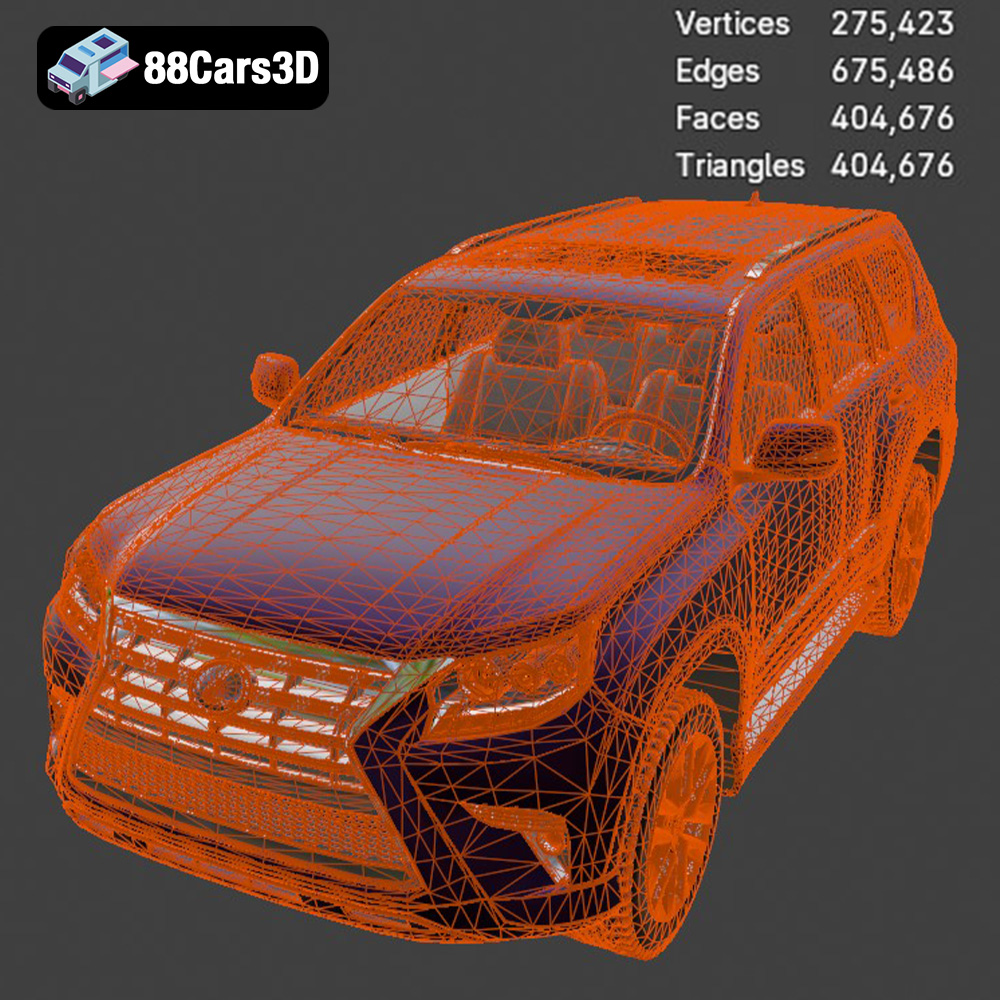
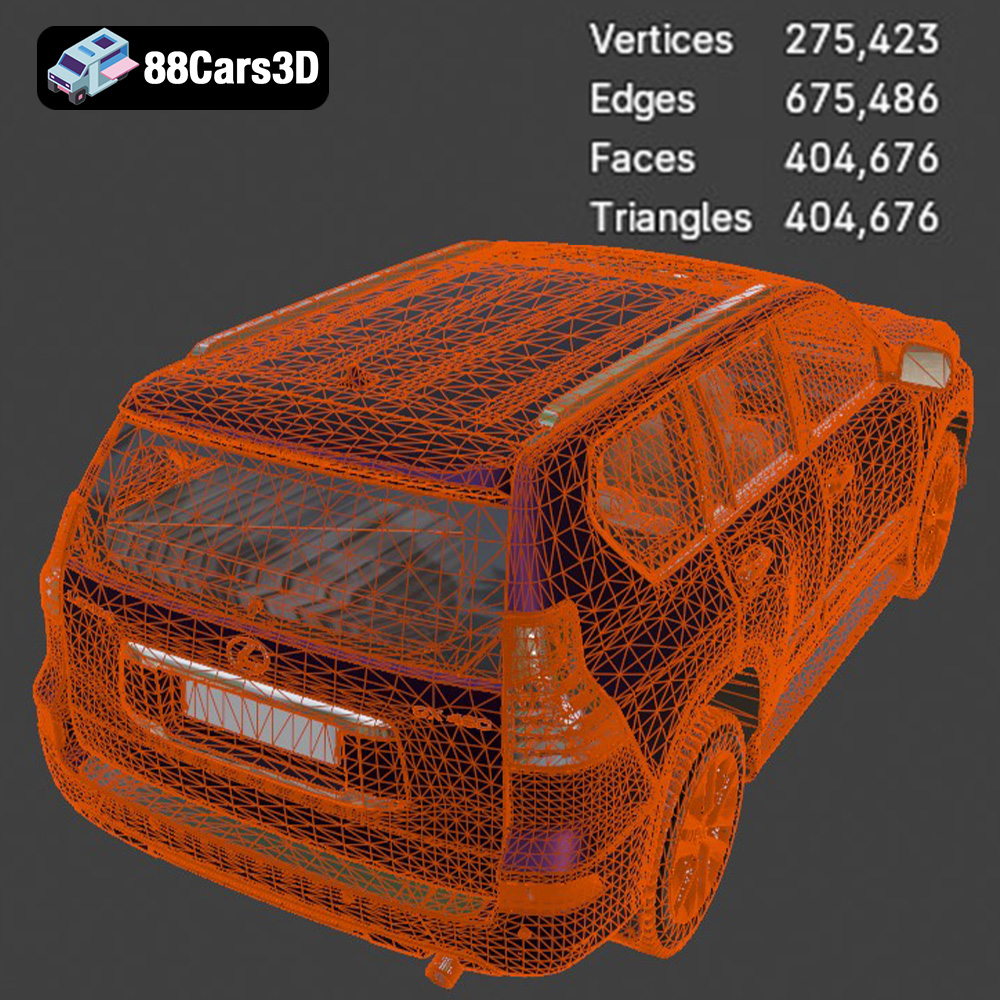
The foundation of any high-quality 3D model is its geometry. The Lexus GX460 2014 3D Model boasts clean geometry, meaning it’s free from common issues like n-gons (polygons with more than four sides), overlapping faces, or inverted normals that can cause rendering artifacts and complicate further editing. Every exterior curve and interior element is modeled with precision, replicating the powerful stance and luxurious design of the real-world SUV. This level of detail ensures that whether the model is viewed from afar or in extreme close-up, it maintains its integrity and realism.
Furthermore, the realistic materials and fully textured surfaces are a direct result of this meticulous approach. UV maps are clean and optimized, allowing textures to be applied without distortion and making it easy for users to apply their own custom liveries or material variations. This attention to every minute aspect is what elevates a standard 3D asset to a professional-grade tool.
Time is a valuable commodity in any production pipeline. Investing in a production-ready asset like the Lexus GX460 2014 3D Model significantly streamlines professional workflows by eliminating the need for extensive modeling, texturing, and optimization from scratch. For artists and studios, this means:
88cars3d.com prioritizes delivering assets that are not just visually appealing but also technically robust and workflow-efficient.
Purchasing a high-quality 3D car model from a reputable marketplace like 88cars3d.com is an investment. It’s an investment in efficiency, quality, and the ability to deliver exceptional results. For a nominal fee, you gain access to an asset that embodies hours of expert modeling and texturing work, ready to be dropped into your next project. This allows creative professionals to focus their energy on artistic direction and storytelling, rather than the laborious technical aspects of asset creation.
Whether you are tackling a tight deadline for an automotive commercial, building out a vast open-world game, or crafting an interactive AR experience, starting with a superior 3D model like the Lexus GX460 2014 significantly enhances the final product and saves invaluable resources. It’s the smart choice for professionals who demand excellence.
The world of 3D modeling is vast and exciting, constantly pushing the boundaries of what’s possible in digital visualization. At its core, success in this domain hinges on the quality of the assets you employ. The Lexus GX460 2014 3D Model stands as a prime example of a meticulously crafted asset, offering exceptional realism, precision, and versatility across a myriad of applications.
From breathtaking automotive rendering in 3ds Max and Blender to seamless integration into Unreal Engine for game development, and even extending to cutting-edge AR/VR experiences and physical 3D printing, this model provides a robust foundation. Its comprehensive package of industry-standard file formats ensures maximum compatibility, allowing artists and developers to pick the right tool for every job, confident in the asset’s integrity and performance.
Investing in such high-quality 3D car models not only streamlines your workflows but also elevates the final output of your projects to a professional standard. Explore the potential that a production-ready asset like the Lexus GX460 2014 3D Model can bring to your creative endeavors. Discover this and many other exceptional 3D car models at 88cars3d.com, your premier source for premium digital automotive assets.
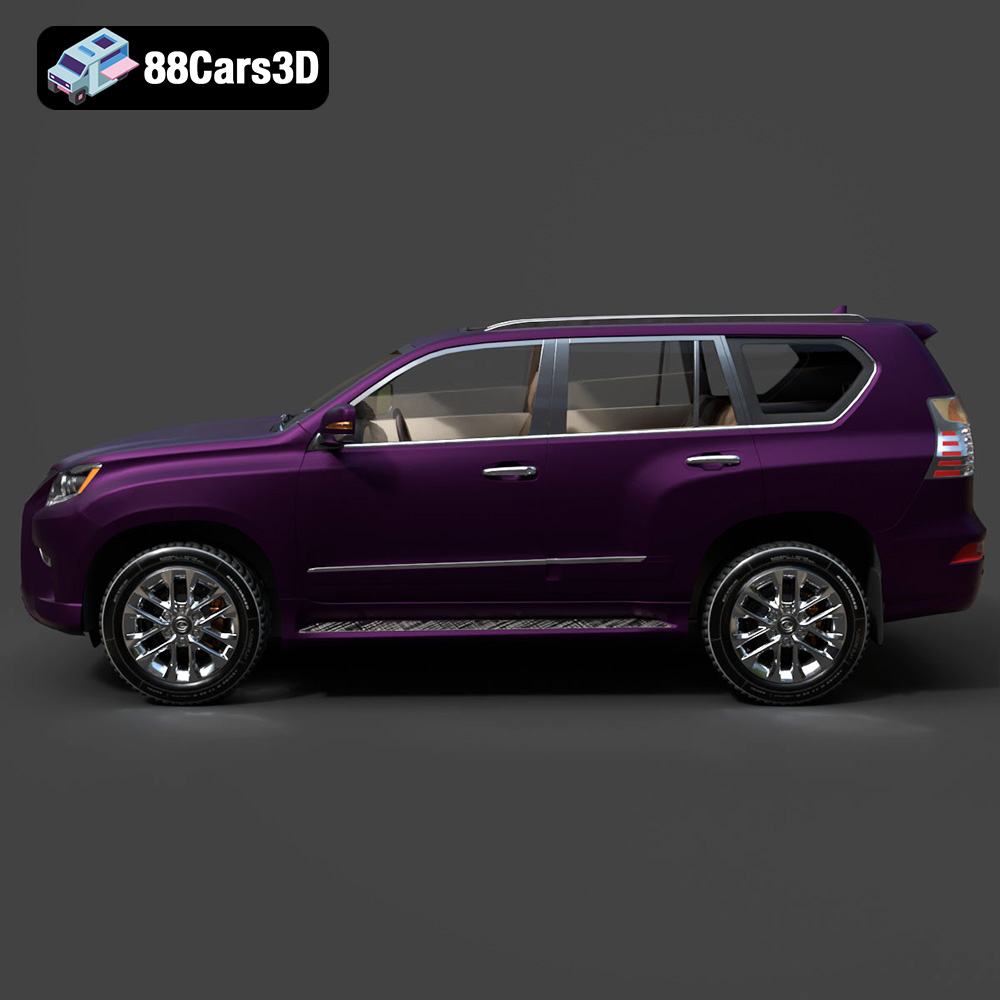
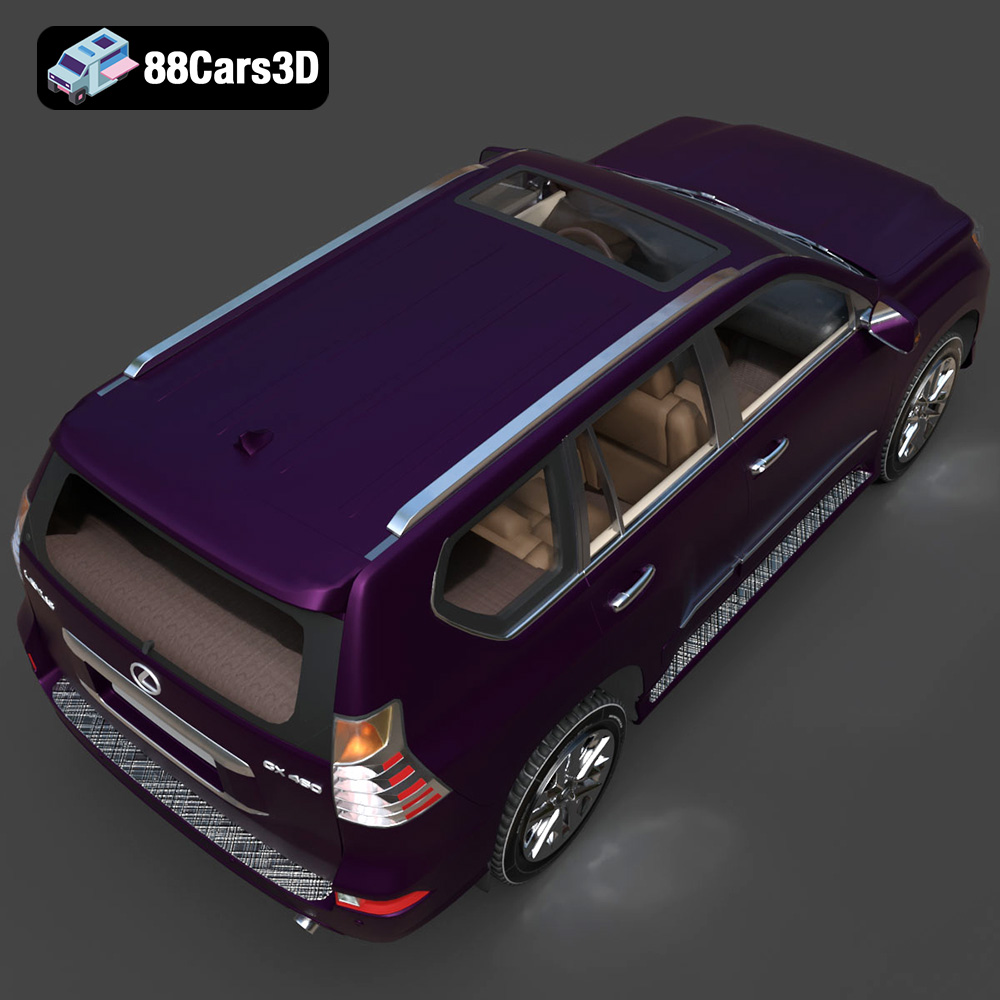
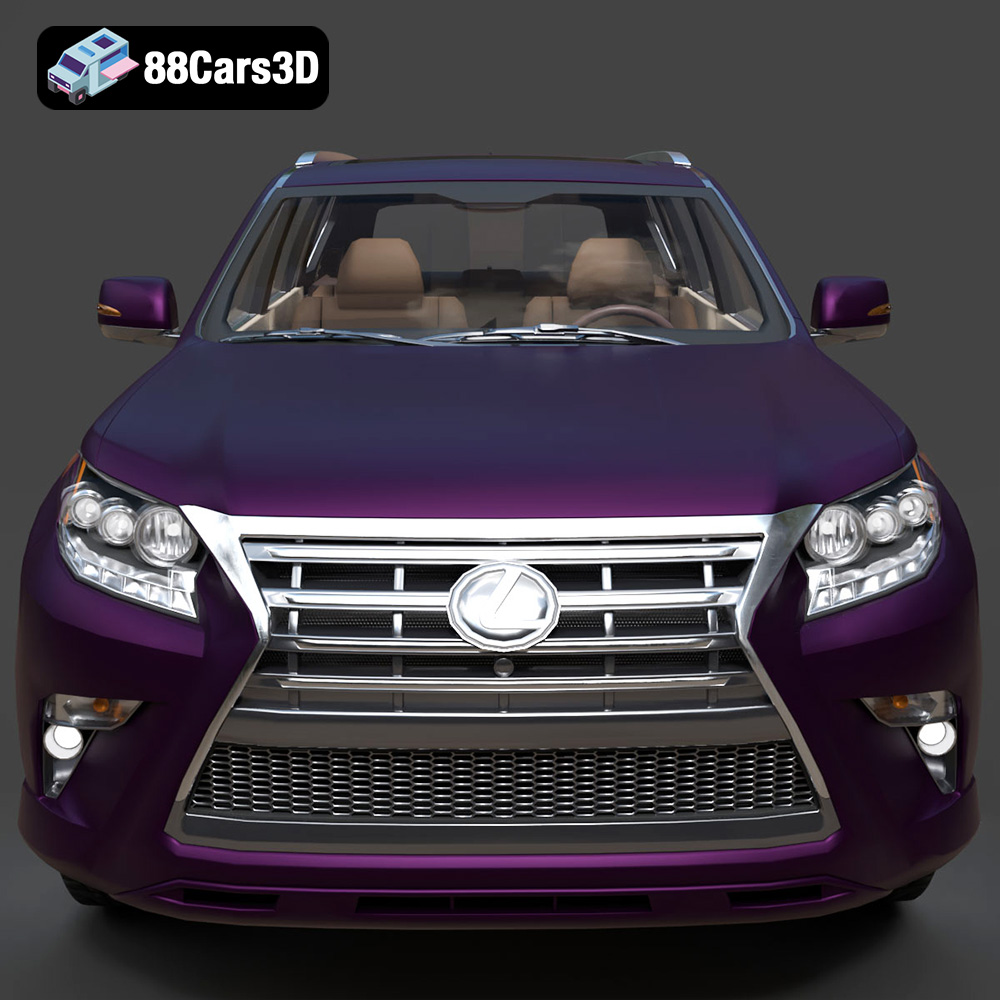
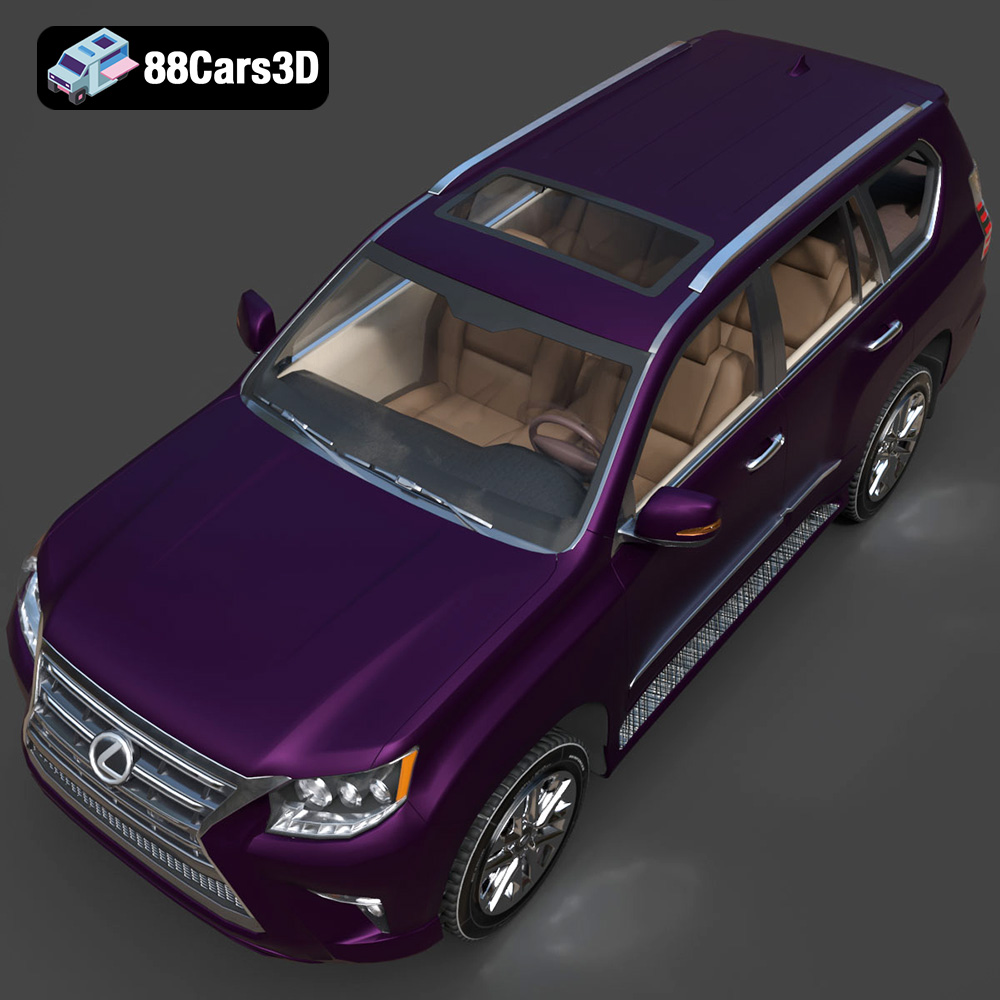
Discover the exceptional realism and precision of the Lexus GX460 2014 3D Model. Crafted with meticulous attention to detail, this digital asset perfectly replicates the powerful stance and luxurious design of the iconic SUV, making it an outstanding addition to your digital library. Designed for optimal performance, this model features clean geometry, realistic materials, and an optimized polygon count. Every exterior curve and interior element has been modeled to deliver professional quality results. The asset is fully textured and ready for immediate deployment in your chosen software. Whether you are developing an immersive video game, creating photorealistic architectural visualizations, producing interactive AR/VR experiences, or conducting automotive simulations, this versatile 3D model adapts seamlessly to any demanding production environment. This comprehensive package includes multiple industry-standard file formats to ensure maximum compatibility: .blend – Editable Blender file with materials and lighting setup; .fbx – Game-engine ready format for Unreal Engine and Unity; .obj – Standard 3D model format compatible with all major software; .glb – Optimized for AR/VR and web-based visualization; .stl – Suitable for 3D printing and prototyping; .ply – Detailed polygon mesh for analysis and visualization; .unreal – Pre-configured for Unreal Engine use; .max – Editable 3ds Max file for rendering and animation.
$19.99
.arvr
.blend
.car3dmodel
.fbx
.gameasset
.glb
.gx460
.lexus
.luxury
.max
.obj
.offroad
.ply
.rendering
.simulation
.stl
.unreal
SUV