Get 20% OFF All Premium 3D & STL Models!

In the expansive world of digital creation, the demand for highly detailed, yet performant, 3D models continues to accelerate. Whether you’re a game developer pushing the boundaries of realism, an automotive designer visualizing a new concept, or an AR/VR enthusiast building immersive experiences, the quality of your assets dictates the fidelity of your final product. Nowhere is this more apparent than with complex machinery like vehicles. Imagine a beast built for adventure, an iconic machine reimagined for the toughest expeditions – like the Custom Off-Road BMW R1150GS Adventure Sidecar. This isn’t just a motorcycle; it’s a testament to rugged engineering, and bringing it to life in 3D demands precision and expertise.
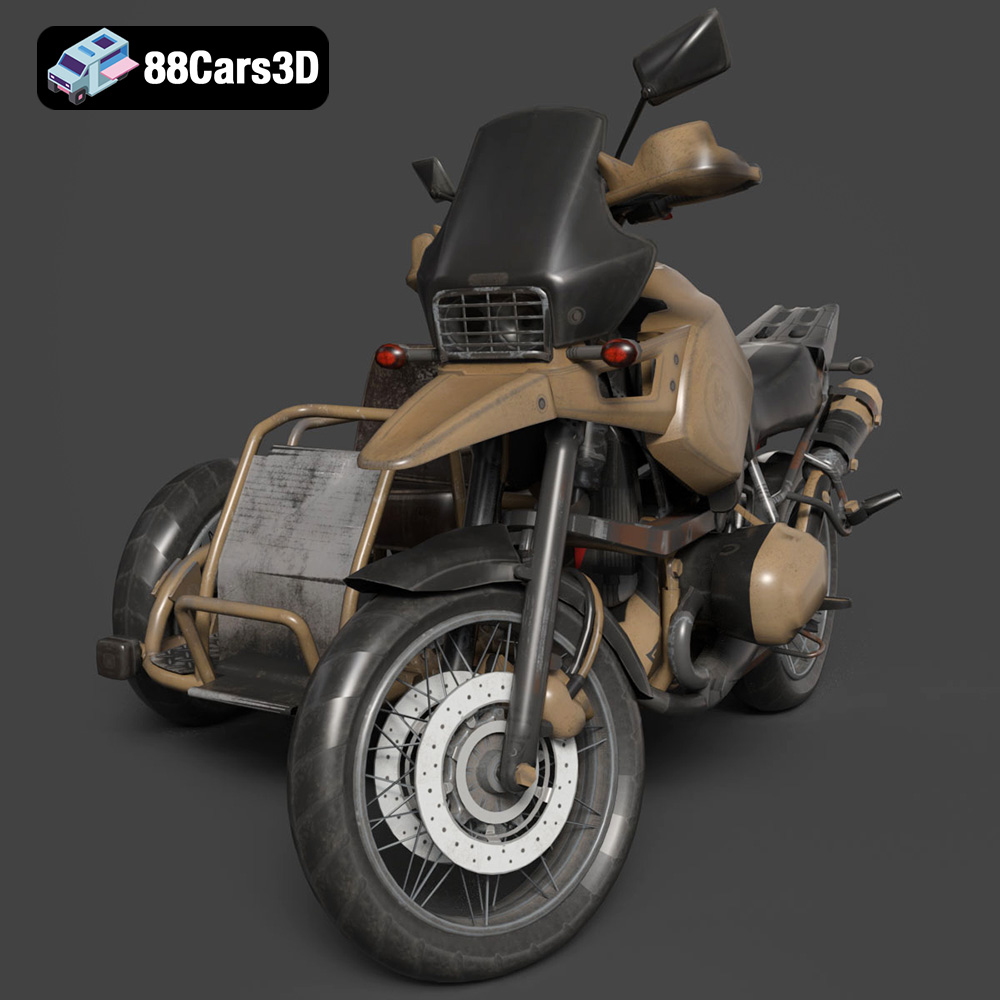
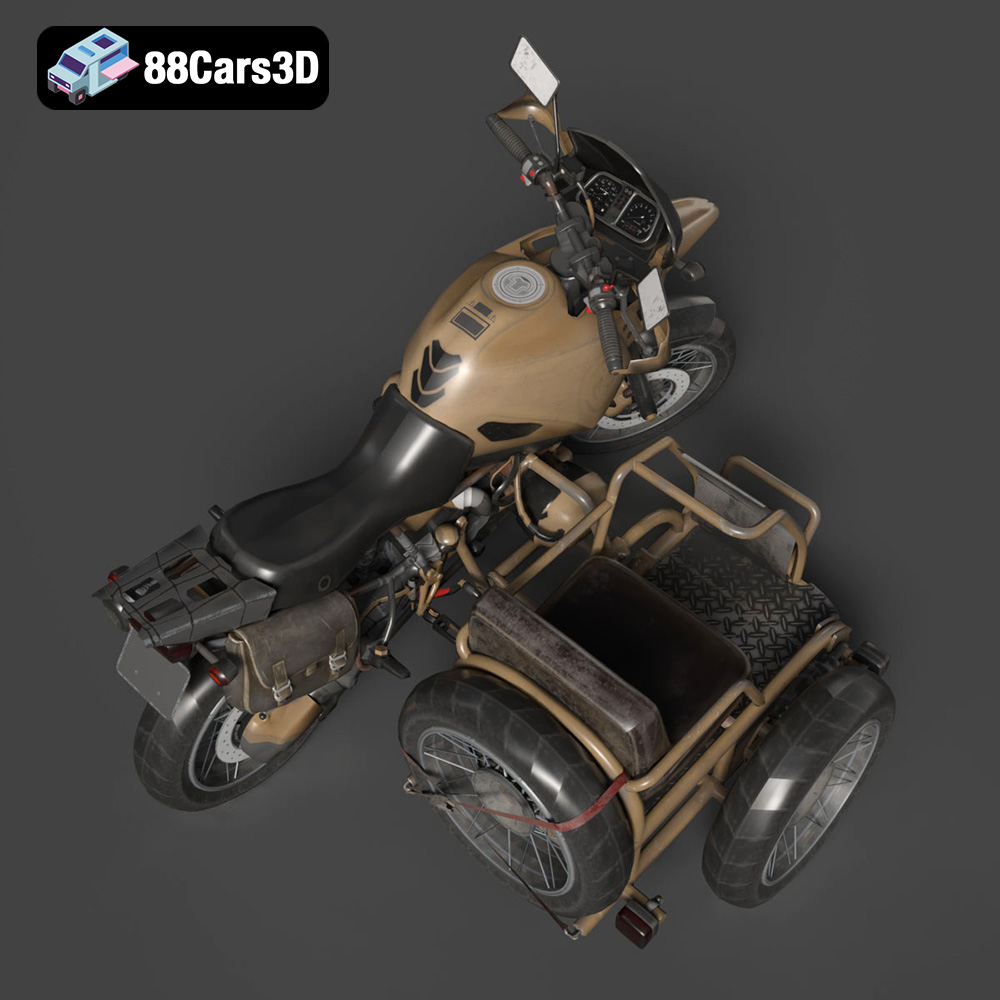
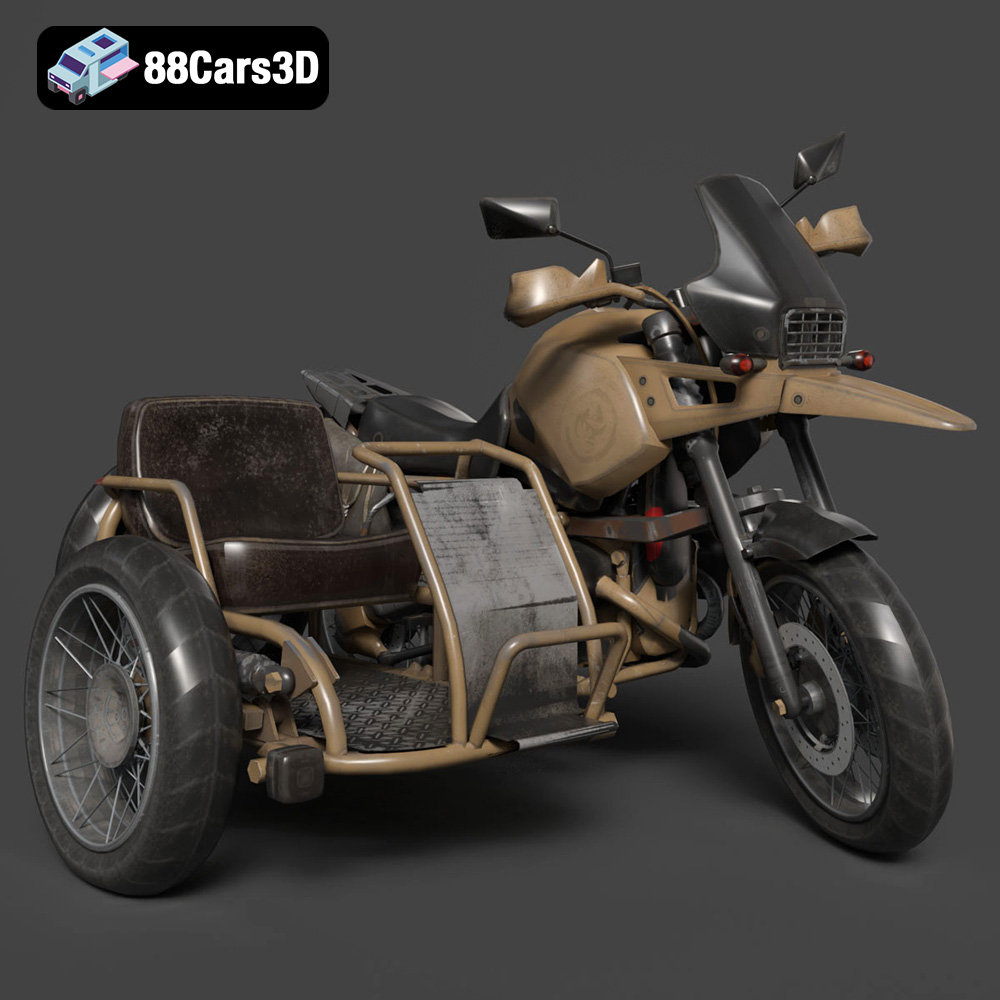
Capturing the essence of such a unique vehicle – its iconic boxer twin engine, the robust sidecar integration, aggressive knobby tires, and distinctive asymmetric headlights – requires a meticulous approach to 3D modeling. A premium asset like the Custom Off-Road BMW R1150GS Adventure Sidecar 3D Model exemplifies the pinnacle of this craft, offering not just visual fidelity but also the technical optimization essential for diverse professional applications. It stands as a prime example of the kind of high-quality 3D car models available for creators seeking to elevate their projects, seamlessly bridging the gap between artistic vision and technical execution.
Creating a compelling 3D model of a complex vehicle like the Custom Off-Road BMW R1150GS Adventure Sidecar involves more than just replication; it requires understanding its soul and translating that into a digital format that performs across various platforms. This particular model isn’t merely a static mesh; it’s a carefully engineered digital twin designed for dynamic use.
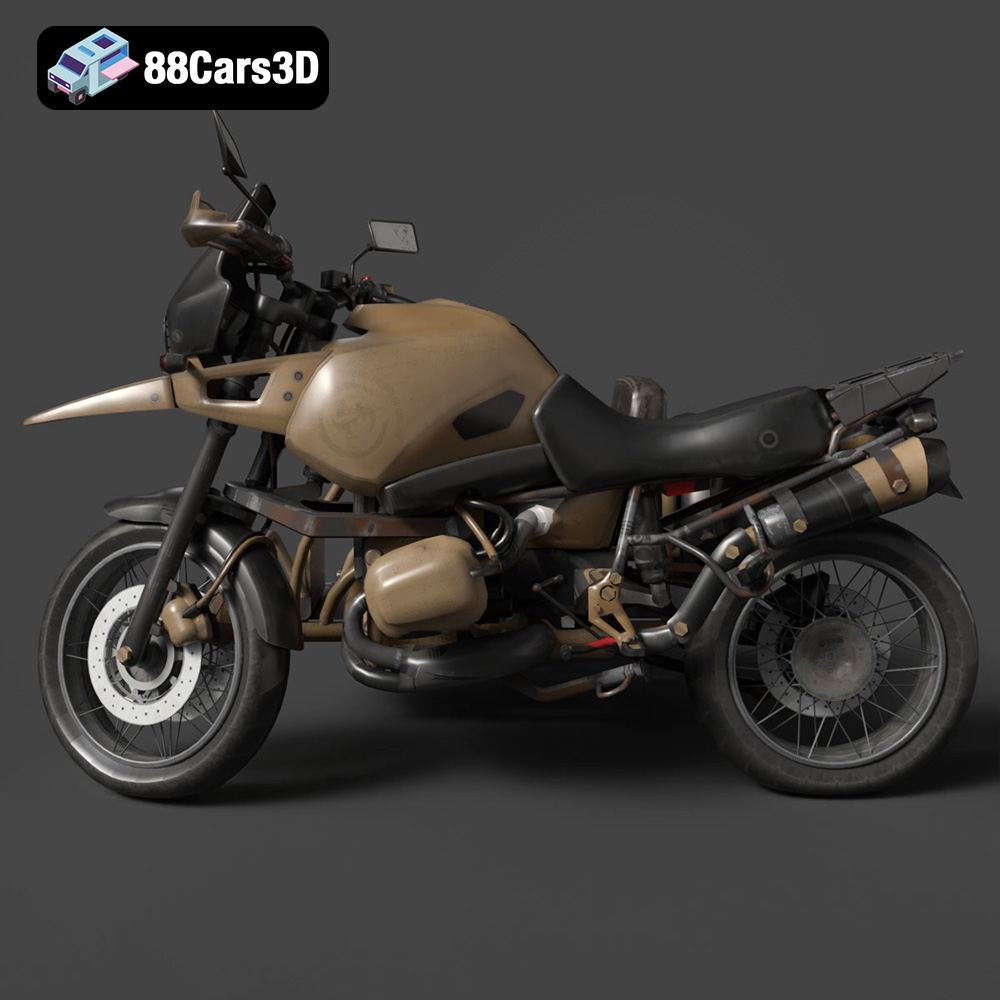
The R1150GS Adventure itself is a legendary motorcycle, known for its go-anywhere capability. In the 3D model, this legacy is honored through accurate frame geometry and proportions. Every curve, every angle of the distinctive 1,130cc horizontally opposed boxer twin engine block is meticulously modeled. The model faithfully reproduces the massive dual-sport fuel tank, a hallmark of its overland heritage, alongside crucial details like the robust crash bars and the unmistakable asymmetric headlights. This attention to detail ensures that whether the model is viewed up close in an automotive rendering studio or speeding across a virtual landscape, its identity as a true BMW R1150GS Adventure remains unquestionable.
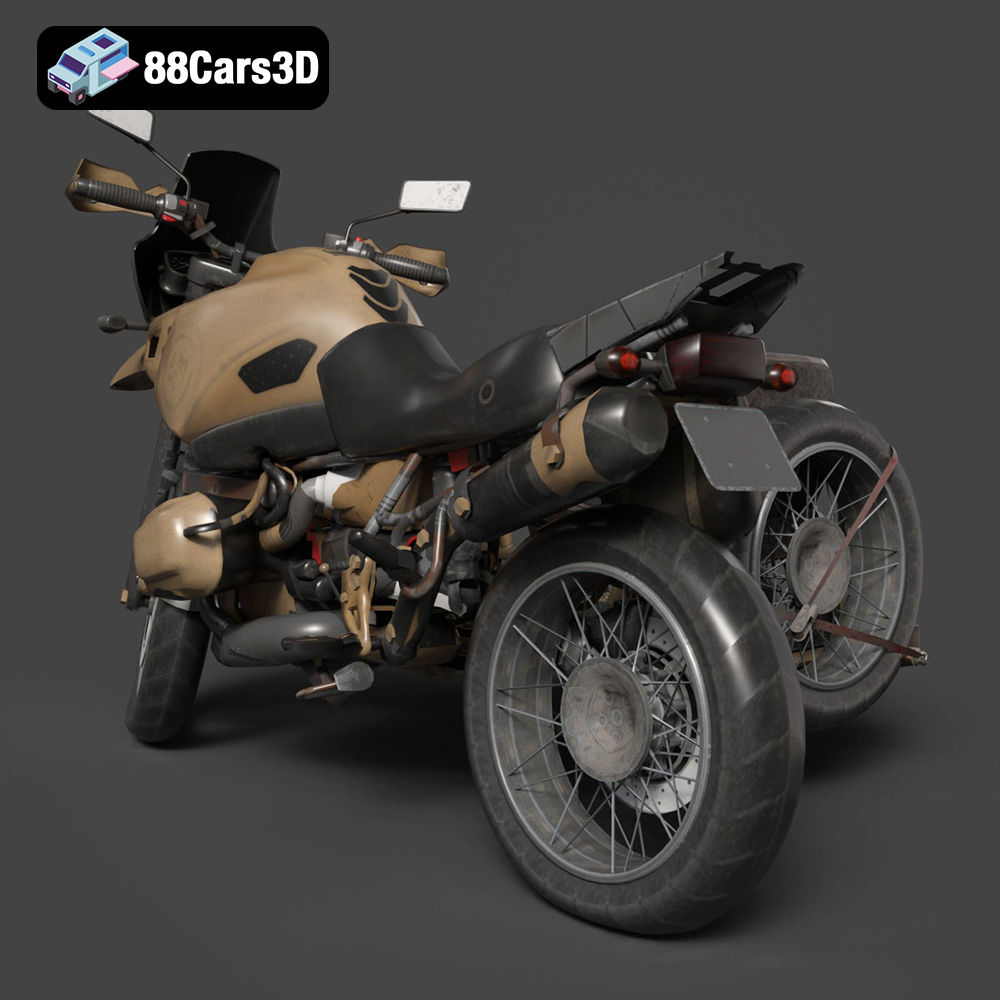
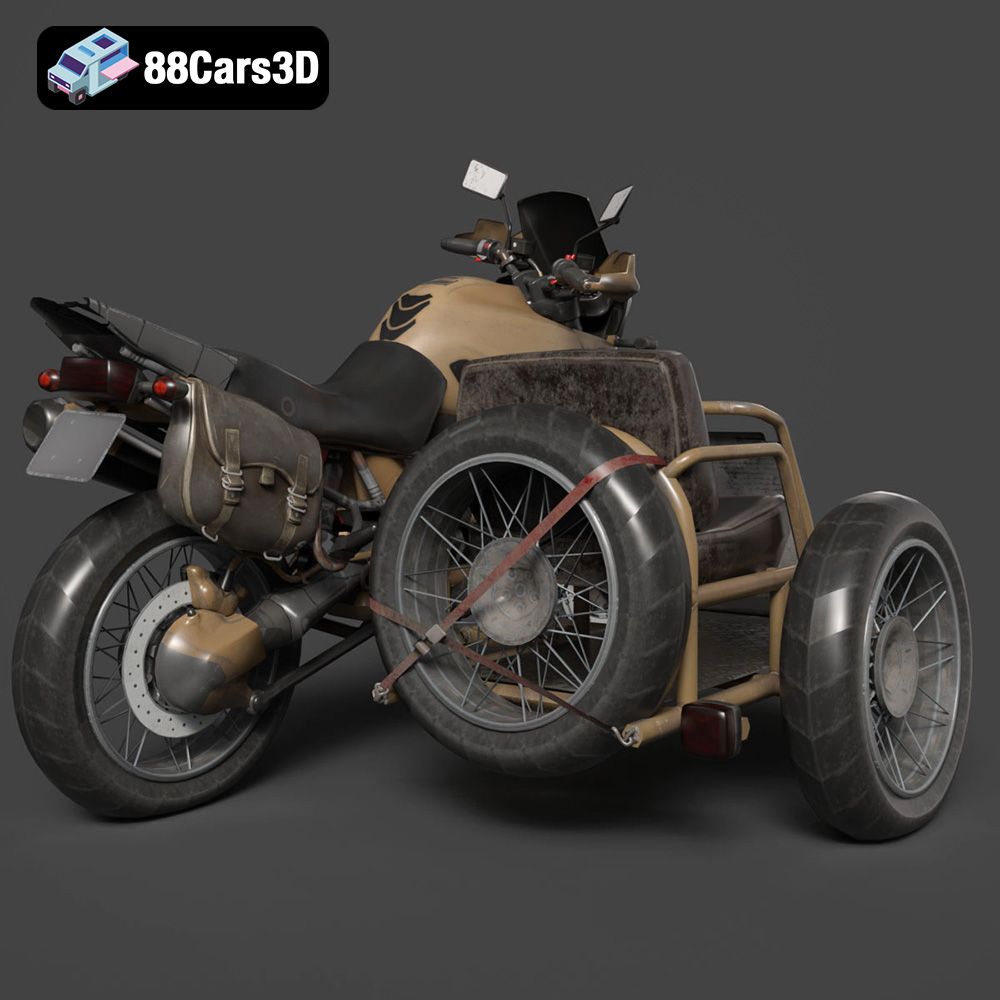
The integration of the heavy-duty passenger sidecar is a defining feature of this custom rig, transforming it into an ultimate all-terrain expedition vehicle. The 3D model expertly mirrors this transformation. The sidecar isn’t an afterthought; it’s an integral component, with its own robust structure, passenger seat, and precise mounting hardware. The high-clearance exhaust system, modified to accommodate the sidecar, is another example of the deep consideration given to the custom nature of this build. Furthermore, the inclusion of separate components for wheels, suspension, and steering allows for realistic animation, bringing the model to life with authentic movement.
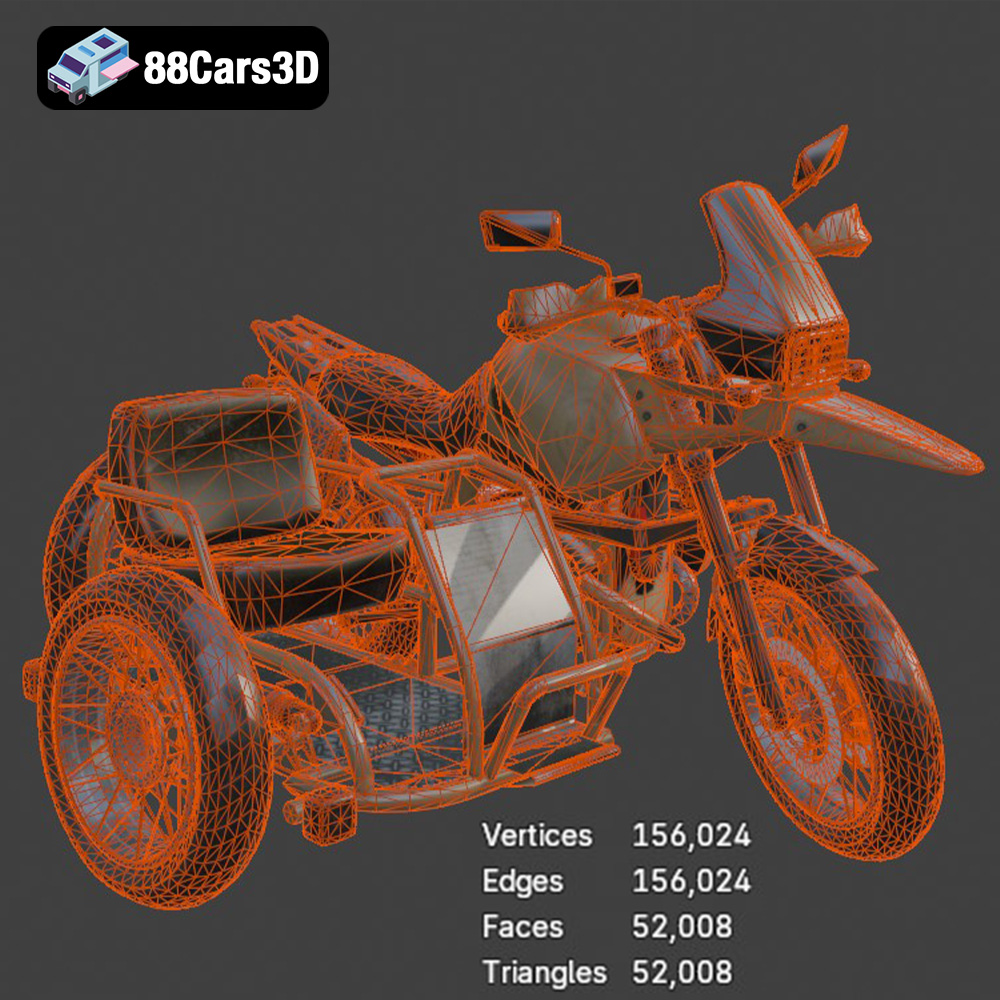
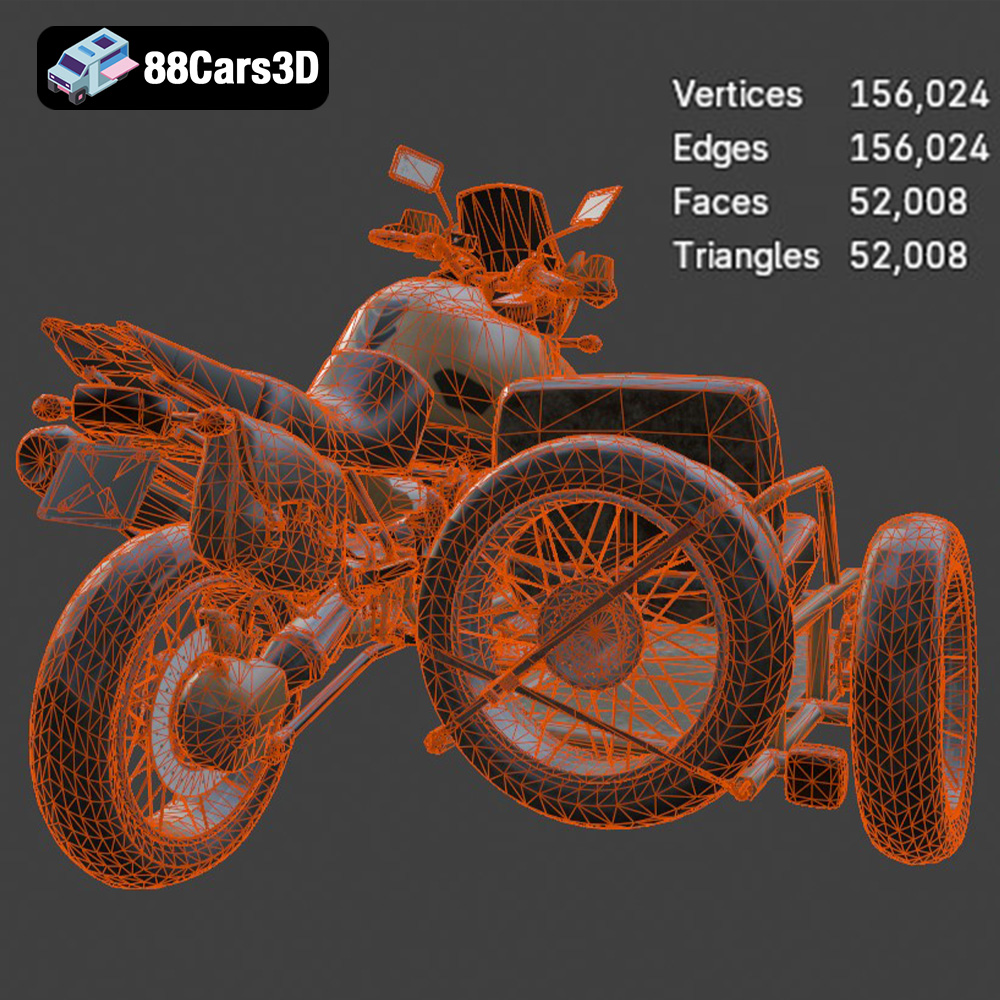
While visual fidelity is paramount, a truly professional 3D model must also be optimized for performance. The Custom Off-Road BMW R1150GS Adventure Sidecar 3D Model achieves this delicate balance with approximately 180,000 triangles. This polycount is carefully chosen to deliver high-end visual realism without sacrificing frame rates, making it game-ready for demanding real-time engines like Unreal and Unity. Real-world scale accuracy, based on actual vehicle chassis dimensions, ensures that the model integrates seamlessly into any scene, maintaining believable interactions with other assets and environments. Proper pivot setups for steering, wheel rotation, and suspension travel further enhance its utility, allowing for dynamic and accurate animation straight out of the box.
The versatility of a high-quality 3D model is often defined by the array of file formats it supports. Each format serves a specific purpose, catering to different stages of a creative pipeline, software environments, or end-use applications. Understanding these distinctions is crucial for any professional working with 3D car models or game assets, ensuring smooth workflows and optimal results.
The .blend format is the native file type for Blender, a powerful open-source 3D creation suite. When you acquire a .blend file, you’re getting a fully editable Blender scene, complete with materials, textures, lighting, cameras, and even animation data. This format is ideal for artists who wish to delve deep into the model, modify its topology, tweak the material nodes, or adapt the rigging. It offers maximum flexibility and control, making it a favorite for those who want to use the asset as a starting point for extensive customization or integrate it seamlessly into a Blender-centric workflow.
FBX (Filmbox) is a proprietary file format owned by Autodesk, designed for high-fidelity 3D data exchange between various software applications. It’s renowned for its ability to store not just geometry, but also animation, skeletal data, materials, and even camera and light information. This makes .fbx incredibly versatile and ideal for pipelines involving game engines like Unreal Engine and Unity, as well as digital content creation (DCC) tools such as 3ds Max, Maya, and Blender. For game assets, an .fbx is often the go-to format due to its robust support for animations and hierarchies, ensuring that components like the BMW’s wheels and suspension retain their pivot information for dynamic interaction.
The .obj (Wavefront OBJ) format is one of the oldest and most universally supported 3D file formats. It’s a simple, text-based format primarily used for exchanging raw geometric data – vertices, faces, UV coordinates, and normals. While it doesn’t typically store animation, rigging, or advanced material definitions (these are usually in an accompanying .mtl file), its simplicity ensures compatibility across virtually all 3D software. For artists needing to transfer just the base mesh between different programs for sculpting, retopology, or UV mapping, .obj remains an indispensable format.
GLB (GL Transmission Format Binary) is a relatively newer format optimized for the web and real-time environments, particularly AR/VR and browser-based applications. It’s a self-contained format that bundles geometry, materials, textures, and animation into a single, compact file. This “all-in-one” nature makes .glb incredibly efficient for streaming and displaying 3D models directly in web browsers without needing external dependencies, perfect for interactive product viewers, virtual showrooms, or mobile AR experiences. For the Custom Off-Road BMW R1150GS Adventure Sidecar, the .glb variant is perfect for a virtual showroom on 88cars3d.com or an immersive AR app.
STL (stereolithography) is the standard file format for 3D printing. Unlike other formats that describe surfaces, .stl represents a 3D model as a collection of interconnected triangles, creating a tessellated surface. For a model like the BMW GS Sidecar, the .stl variant would be prepared specifically for additive manufacturing, ensuring a “manifold” mesh (watertight with no gaps or overlaps) suitable for slicing into print layers. This format enables hobbyists and professionals alike to bring digital automotive renderings into the physical world, creating display models or functional prototypes.
PLY (Polygon File Format, or Stanford Triangle Format) is a versatile format for storing 3D data, often used with 3D scanners. It can store a variety of properties beyond just geometry, including color, transparency, normals, texture coordinates, and even reliability information for each vertex or face. While not as common for general asset exchange as FBX or OBJ, it’s particularly useful in scientific, engineering, and CAD applications where precise mesh data with rich metadata is required for analysis or visualization.
The “.unreal” format isn’t a standalone file type in the traditional sense, but rather indicates that the asset is provided in a pre-configured, engine-ready state specifically for Unreal Engine. This means the model has likely undergone specific optimization, material setup, collision mesh generation, and potentially even LOD (Level of Detail) creation within an Unreal project. Importing such an asset drastically reduces setup time, allowing developers to drop the Custom Off-Road BMW R1150GS Adventure Sidecar directly into their virtual world and begin working with it immediately, streamlining the game development process.
Similar to .blend for Blender, the .max format is the native file type for Autodesk 3ds Max, a leading software for 3D modeling, animation, and rendering. An included .max file provides the complete 3ds Max scene, offering full control over complex rigging, animation setups, material networks (often V-Ray or Corona specific), and scene lighting. This is invaluable for professionals in architectural visualization, cinematic production, or high-end automotive rendering who require the deep functionality and robust tools of 3ds Max to create stunning visual content.
The true value of a versatile 3D asset lies in its seamless integration into various professional workflows. The Custom Off-Road BMW R1150GS Adventure Sidecar 3D Model is engineered precisely for this, supporting a range of applications from real-time game engines to high-fidelity cinematic rendering.
For game developers, efficiency and performance are paramount. The “game-ready & optimized” nature of this 3D car model, with its approximately 180,000 triangles, makes it an ideal candidate for titles across PC, console, and mobile platforms. Using the provided .fbx or .unreal formats, developers can quickly import the model into Unreal Engine or Unity. The model’s proper pivot setup for steering, wheel rotation, and suspension travel is crucial here, allowing for straightforward implementation of vehicle physics and animation systems. Developers can then create custom collision meshes, implement LODs (Levels of Detail) to optimize performance at varying distances, and integrate realistic PBR (Physically Based Rendering) materials using the included textures, ensuring the sidecar looks stunning without bogging down the game engine. It’s a perfect game asset for open-world exploration or racing simulators.
When the goal is photorealism, artists turn to dedicated rendering engines and robust DCC software. With the .max or .blend files, artists can leverage the full power of 3ds Max or Blender. This involves setting up studio-quality lighting, crafting intricate camera paths for animation, and utilizing advanced renderers like V-Ray, Corona, or Cycles. The meticulously mapped textures and realistic material finishes of the BMW GS Sidecar model shine in these environments. Artists can further enhance realism by using tools like Substance Painter to add wear, dirt, or specific environmental effects, creating breathtaking automotive rendering scenes for commercials, product showcases, or art installations. The ability to modify body/tank colors, adjust material finishes, and adapt lighting provides immense creative control for brand campaigns and lifestyle scenes.
The advent of AR (Augmented Reality) and VR (Virtual Reality) has opened new avenues for showcasing 3D car models. The .glb format is particularly well-suited for these applications. Developers can deploy the Custom Off-Road BMW R1150GS Adventure Sidecar into immersive virtual showrooms, where customers can explore the vehicle in a 1:1 scale, or integrate it into interactive configurators allowing real-time customization. For mobile AR experiences, the optimized geometry and self-contained nature of the .glb file ensure smooth performance on a variety of devices, providing users with a compelling, realistic interaction with the digital model in their own environment.
The journey of a 3D model doesn’t always end on a digital display. For enthusiasts, model makers, and even some prototyping scenarios, translating a digital asset into a physical object is a compelling application. The Custom Off-Road BMW R1150GS Adventure Sidecar 3D Model supports this through its .stl and .ply file formats, making it ready for 3D printing.
While the provided .stl file simplifies this step, understanding the principles is key. The digital model needs to be “manifold” – a completely watertight mesh without any holes or intersecting geometry – to be successfully printed. The model is recommended for scales like 1:12, 1:18, or 1:24, which are popular for display models. When preparing for printing, settings such as layer height (0.04–0.12 mm for fine detail, especially with resin printers), wall thickness (1.2–2.0 mm for structural integrity), and infill (20–30%) are crucial. Given the intricate details of the motorcycle and sidecar, supports will be required for complex parts like the exhaust system, mirrors, and handlebars to prevent print failures. Strategic print orientation, such as angling the frame, can also improve structural integrity and reduce the need for excessive supports.
Once printed, the physical model undergoes a transformation through post-processing. This typically involves removing supports, sanding down any visible layer lines or imperfections, and applying primer for a smooth, even surface. The final and most rewarding step is painting, where authentic factory colors or custom finishes can be applied to truly bring the miniature Custom Off-Road BMW R1150GS Adventure Sidecar to life. Metallic finishes can replicate the gleam of chrome or polished aluminum, while weathering effects can enhance its off-road character, mirroring the detailed textures present in the digital automotive rendering.
A truly professional 3D model is not a rigid, unchangeable entity. It’s a foundation for creativity, offering extensive customization options that empower artists and developers to tailor it to their specific project needs. The Custom Off-Road BMW R1150GS Adventure Sidecar 3D Model is designed with this flexibility in mind.
The provided .blend, .max, and .fbx files offer full access to the model’s underlying structure and materials. This allows users to easily change body and tank colors, from authentic BMW factory hues to bespoke custom finishes that match a unique brand identity or cinematic aesthetic. Material finishes can be adjusted between matte, gloss, and various metallic sheens, dramatically altering the visual impact. The aggressive off-road knobby tires, a key visual element, can be swapped for street-oriented variants if the scene demands a different context. Furthermore, the ability to adapt lighting for different environments is critical, allowing the model to look equally stunning under a harsh desert sun or the moody glow of a post-apocalyptic cityscape.
The inherent design of this custom BMW R1150GS Adventure Sidecar lends itself to a vast array of narrative and environmental contexts. It’s not just a prop; it’s a character in itself. Its rugged appearance and practical modifications make it perfect for post-apocalyptic survival games, where it could serve as a reliable, heavily modified vehicle for traversing desolate landscapes. Conversely, its “overland expedition” roots position it ideally for realistic adventure simulations or visualizations showcasing extreme travel. Imagine it parked against a stunning digital vista, highlighting a brand’s spirit of exploration. This adaptability ensures a long lifespan for the asset across multiple projects, providing excellent return on investment for any studio or individual creator looking for high-quality game assets.
In today’s fast-paced digital production environment, relying on meticulously crafted 3D assets is not a luxury, but a necessity. The Custom Off-Road BMW R1150GS Adventure Sidecar 3D Model embodies the core advantages that high-quality 3D car models bring to professional workflows.
Developing complex 3D models from scratch is an incredibly time-consuming and resource-intensive process, often requiring specialized modeling, texturing, and optimization skills. By leveraging pre-made, optimized assets from reputable marketplaces like 88cars3d.com, studios and freelancers can drastically cut down on production cycles. This means less time spent on foundational modeling and more time dedicated to creative iteration, scene building, animation, and final polish, ultimately accelerating project delivery and reducing overhead costs. The game-ready nature and included file formats mean less conversion and cleanup work.
The visual impact of a project hinges on the quality of its assets. A detailed and realistic 3D model, like the Custom Off-Road BMW R1150GS Adventure Sidecar, instantly elevates the credibility and immersion of any scene. For automotive rendering, this translates into compelling advertisements and marketing materials that genuinely resonate with an audience. In game development, it means creating believable worlds that pull players deeper into the experience. The accurate proportions, intricate mechanical details, and realistic material finishes contribute directly to a superior visual narrative, leaving a lasting impression on viewers and users alike.
Investing in versatile, well-documented, and expertly crafted 3D models is an investment in the longevity and adaptability of your digital asset library. An asset that provides multiple file formats, is optimized for various platforms, and allows for extensive customization will remain relevant across many projects and technological advancements. Platforms like 88cars3d.com are curated to provide such future-proof assets, ensuring that your creative endeavors are supported by a robust foundation of quality that stands the test of time, from current-generation games to emerging AR/VR applications.
The journey of creating, optimizing, and deploying a complex 3D asset like the Custom Off-Road BMW R1150GS Adventure Sidecar 3D Model highlights the intricate balance between artistic detail and technical performance. From its meticulously recreated boxer engine to its rugged sidecar integration and game-ready optimization, this model stands as a premier example of how professional-grade 3D car models can revolutionize creative workflows.
Whether your aim is high-fidelity automotive rendering, crafting immersive game assets for the next big title, or designing interactive AR/VR experiences, the availability of comprehensive file formats – from .blend to .unreal – ensures maximum versatility. Its adaptability for 3D printing further extends its utility, bridging the digital and physical realms. By choosing expertly crafted assets from trusted sources like 88cars3d.com, creators can streamline their production pipelines, elevate their visual storytelling, and confidently bring their most ambitious digital visions to life.
The Custom Off-Road BMW R1150GS Adventure Sidecar represents the pinnacle of overland exploration and rugged dual-sport capability. Renowned for its iconic boxer twin engine and indestructible shaft drive, this customized adventure rig integrates a heavy-duty passenger sidecar, transforming it into an ultimate all-terrain expedition vehicle. Key visual elements include the massive dual-sport fuel tank, aggressive knobby tires, robust crash bars, and the distinctive asymmetric headlights that define the GS lineage. This premium 3D model is meticulously crafted to deliver exceptional visual fidelity while maintaining optimal performance. With a well-balanced topology and game-ready optimization, it ensures high-quality real-time rendering without sacrificing frame rates. The model boasts carefully mapped textures, realistic material finishes, and accurately modeled mechanical components, making it an outstanding asset for game development, AR/VR applications, animation, and digital visualization. Perfect for post-apocalyptic survival games, off-road racing simulators, overland expedition visualizations, and immersive VR garage environments.
$19.99
.adventure
.blend
.bmw
.custom
.fbx
.glb
.max
.obj
.ply
.rendering
.sidecar
.stl
.unreal
game asset
game-ready
low-poly
motorcycle-3d-model
off-road
optimized
r1150gs
VR/AR