Get 20% OFF All Premium 3D & STL Models!

In the dynamic world of automotive design, visualization, and interactive experiences, the demand for exceptionally detailed and optimized 3D car models has never been higher. From the sleek lines of a concept vehicle showcased in a cinematic rendering to the high-octane action of a racing simulator, precision and realism are paramount. Professionals across industries—game development, architectural visualization, AR/VR, and marketing—rely on assets that seamlessly integrate into their demanding pipelines, delivering stunning results without compromising performance.
Among the pantheon of automotive legends, the Toyota Supra stands as a beacon of performance and iconic design. Its triumphant return with the 2020 model year reignited a passion for enthusiasts worldwide. Capturing the essence of such a vehicle in a digital format requires not just artistic skill, but a profound understanding of technical optimization. A premium asset, like the Toyota Supra 2020 3D Model available on 88cars3d.com, exemplifies this blend of artistry and engineering. It offers a meticulously crafted digital replica, ready to be deployed in a myriad of professional applications, from photo-realistic renders to real-time interactive experiences.
Navigating the landscape of 3D modeling often begins with understanding the various file formats available. Each format serves a specific purpose, catering to different software ecosystems, project requirements, and deployment targets. Choosing the correct format is crucial for maintaining data integrity, optimizing performance, and ensuring compatibility across your workflow. The Toyota Supra 2020 3D Model package from 88cars3d.com includes a comprehensive suite of formats, ensuring maximum flexibility for any professional project.
The .blend file is Blender’s native format, encompassing an entire scene including meshes, materials, textures, lighting, cameras, animations, and even physics simulations. It offers unparalleled flexibility for users working within Blender, providing a fully editable and reconstructible project file. When you acquire a .blend file, you’re not just getting the model; you’re getting the complete setup as the artist intended, allowing for deep customization, material adjustments, and scene integration directly within Blender. It’s the ideal starting point for anyone leveraging Blender for automotive rendering or game asset preparation.
Autodesk’s .fbx (Filmbox) format is arguably the most widely adopted interchange format in the 3D industry, particularly popular for game development and real-time pipelines. It excels at transferring 3D model data, including geometry, materials, textures, animations, rigging, and even light information, between different software applications like 3ds Max, Maya, Unreal Engine, and Unity. Its robust support for skeletal animations and complex scene hierarchies makes it indispensable for character models, vehicle rigging, and game assets where movement and interaction are critical. For the Toyota Supra 2020 3D Model, the .fbx ensures smooth integration into game engines with its optimized mesh and structured material assignments.
The .obj (Wavefront Object) format is a simple, universal geometry format that has been around for decades. It primarily stores vertex positions, UV coordinates, normals, and material group information. While it doesn’t typically encapsulate animations or complex scene data, its simplicity makes it exceptionally compatible across virtually all 3D software. For static models or when you need a clean mesh to start from in an unfamiliar application, .obj is a reliable choice. It’s often accompanied by an .mtl (material) file that defines basic material properties and texture references.
.glb (GLB or glTF Binary) is the binary version of the glTF (GL Transmission Format), a relatively newer format designed for efficient transmission and loading of 3D scenes and models by engines and applications. It’s particularly optimized for AR (Augmented Reality), VR (Virtual Reality), and browser-based displays due to its compact size and native support in many web and mobile platforms. A single .glb file contains model geometry, textures, materials, and animations, making it a self-contained and highly portable asset, perfect for interactive product viewers or immersive mobile experiences.
.stl (Stereolithography) is the de-facto standard file format for 3D printing. It represents a 3D model as a series of connected triangles, defining only the surface geometry without color, texture, or material information. While lacking visual richness, its simplicity makes it ideal for additive manufacturing. The Toyota Supra 2020 3D Model, offered in .stl format, allows hobbyists and professionals to fabricate physical replicas, bringing the digital design into the tangible world with recommended settings for scale and support structures.
The .ply (Polygon File Format or Stanford Triangle Format) is another format for storing 3D data, particularly suited for representing scanned data, point clouds, and mesh data from scientific and engineering applications. It can store a wider range of properties than .obj, including color per vertex, normal information, and various other attributes. While less common for general game assets, .ply is valuable in workflows involving CAD, metrology, or precise analytical modeling where detailed vertex and face information is critical.
The .unreal format, or more accurately, assets pre-prepared and exported specifically for Unreal Engine, represents a significant time-saver for developers. While not a standalone file extension in the traditional sense (often referring to a packaged asset or specific import settings), its inclusion indicates that the model has been optimized, tested, and potentially configured within Unreal Engine itself. This could mean pre-setup materials, collision meshes, or even basic blueprint integrations, streamlining the process of bringing the Toyota Supra 2020 directly into your real-time project.
Similar to .blend for Blender, .max is the native project file format for Autodesk 3ds Max. It contains all scene information, including geometry, modifiers, materials, textures, cameras, lighting, and animation data specific to 3ds Max. This format is invaluable for professionals who primarily work within 3ds Max, offering complete editability and the ability to leverage all of 3ds Max’s powerful modeling, rendering, and animation toolsets. For those using V-Ray or Corona Renderer, the .max file would typically come pre-configured with scene settings and advanced materials.
Developing high-quality 3D car models for modern applications is a complex endeavor that balances visual fidelity with computational efficiency. A truly professional asset, such as the Toyota Supra 2020 3D Model from 88cars3d.com, is engineered to excel in both stunning renders and demanding real-time environments.
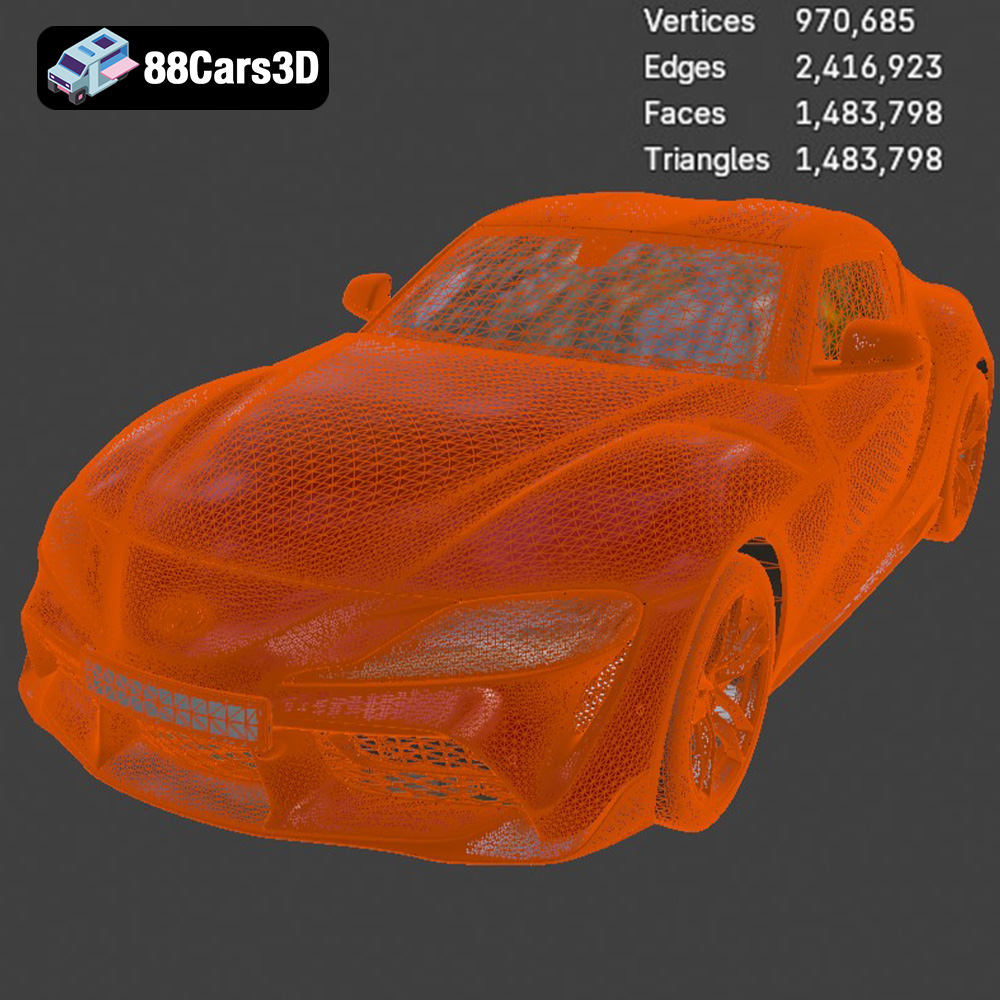
At the heart of any game-ready asset lies optimized topology. The Toyota Supra 2020 model features approximately 250,000 triangles, a strategic polycount that strikes an exceptional balance. For game development, particularly for open-world titles or racing simulators, this number allows for impressive visual detail without overburdening the rendering engine. Every polygon is placed with intent, ensuring smooth curves and sharp edges that accurately define the Supra’s aggressive aerodynamic profile, from its signature double-bubble roof to the intricate details of its grille. This careful optimization means developers can populate virtual scenes with high-quality vehicles without sacrificing frame rates or increasing load times, a critical factor for immersive experiences.
Beyond raw polygon count, the organization of materials and proper UV mapping are crucial for photorealistic results. The Supra model boasts intelligent material separation, allowing for easy customization of body colors, metallic finishes, and tire textures. This modularity means artists can quickly iterate on designs, adapt to different brand campaigns, or create diverse car variants within a game. High-resolution UV maps ensure that textures—such as those for the detailed sports bucket seats or the high-fidelity digital instrument cluster—are applied without stretching or distortion, contributing to an authentic appearance under various lighting conditions, a cornerstone of professional automotive rendering.
Authenticity extends to real-world scale and articulation. The Toyota Supra 2020 model is built to accurate vehicle chassis dimensions, ensuring it fits seamlessly into virtual environments and interacts realistically with physics systems. Crucially, components like wheels, suspension, and steering are separated and properly pivoted. This foresight enables realistic animation for racing games, dynamic suspension travel in simulators, and accurate steering responses, bringing the digital Supra to life with believable motion. Detailed brake calipers, rotors, and suspension components further enhance the realism, even down to the micro-level, for close-up shots or intricate mechanical visualizations.
The versatility of a premium 3D car model is defined by its ability to integrate effortlessly into diverse professional software pipelines. The Toyota Supra 2020 3D Model, with its array of file formats and optimized structure, is a testament to this adaptability.
For many automotive visualization studios, Autodesk 3ds Max remains a powerhouse. Utilizing the provided .max file, artists gain full access to the model’s structure within a familiar environment. This allows for advanced material setup with renderers like V-Ray or Corona, crafting breathtaking cinematic shots with global illumination, sophisticated reflections, and intricate light scattering. Animators can easily leverage the separated components—wheels, suspension, doors—to create dynamic sequences, perhaps showcasing the Supra drifting around a corner or having its detailed engine bay revealed during a virtual presentation. The clean geometry and proper pivot points are invaluable here, simplifying the rigging and animation process for high-fidelity productions.
Blender has emerged as a formidable tool in the 3D landscape, celebrated for its robust feature set and open-source nature. The included .blend file for the Toyota Supra 2020 provides a ready-to-use scene within Blender. Artists can immediately begin rendering with Cycles or Eevee, leveraging Blender’s powerful procedural texturing and shading capabilities. This format is particularly beneficial for indie game developers, freelancers, and smaller studios who rely on Blender for comprehensive 3D creation. The ability to dive deep into the model’s native file allows for precise adjustments, custom livery designs, or integration into larger Blender-based projects without compatibility hurdles.
Unreal Engine stands at the forefront of real-time rendering, powering everything from AAA games to cutting-edge architectural walkthroughs and virtual production. The Supra’s optimized polycount and the availability of .fbx and .unreal-ready assets make it an ideal candidate for Unreal Engine projects. Developers can import the .fbx, set up physical materials, define collision meshes, and integrate the vehicle into a sophisticated physics system. The game-ready nature means less time spent on optimization and more on crafting interactive gameplay, realistic vehicle dynamics, and stunning visual effects with features like Lumen and Nanite. Imagine the Supra tearing down a virtual street, perfectly integrated with Unreal’s environmental lighting and particle systems for exhaust fumes or tire smoke.
The application of 3D car models extends far beyond traditional screen-based rendering. For Augmented Reality (AR) and Virtual Reality (VR) experiences, the .glb format of the Toyota Supra 2020 is a game-changer. Its compact, self-contained nature ensures quick loading times and broad compatibility across AR/VR platforms, making it perfect for immersive virtual showrooms, interactive product configurators, or mobile AR apps where users can place the Supra in their driveway. Furthermore, the inclusion of an .stl file, complete with recommended print settings, caters to the growing community of 3D printing enthusiasts. Hobbyists can bring a tangible replica of the Supra to life, meticulously painting and assembling their own scale model, demonstrating the versatility of a well-prepared 3D asset.
The true value of a high-quality 3D car model lies in its ability to empower creative professionals to realize their vision across a spectrum of applications. The Toyota Supra 2020 3D Model is designed to be a versatile tool, capable of adapting to diverse project needs and artistic directions.
The Supra’s optimized ~250,000 triangle count makes it an exceptional game asset. For developers creating open-world environments, racing titles, or even mobile games, this polycount allows for multiple high-detail vehicles on screen simultaneously without a detrimental impact on performance. Its real-world scale and articulated components are critical for realistic driving mechanics, allowing for precise handling, believable suspension, and accurate wheel rotation. Integrating this model means players can immerse themselves in high-stakes races, explore vast digital landscapes, or simply cruise in one of the most iconic modern sports cars, enhancing the realism and engagement of any virtual driving experience.
Beyond the realm of gaming, the Supra model shines in architectural visualization (ArchViz) and interactive product configurators. Imagine placing this exquisitely detailed Supra in the driveway of a luxury home rendering, adding a touch of prestige and realism to an architectural scene. For automotive brands or dealerships, the model forms the foundation of a dynamic configurator, allowing prospective buyers to customize body colors, wheel types, and interior finishes in real-time. The intelligent material separation makes these customizations seamless, providing an interactive, engaging experience that showcases the vehicle’s aesthetic possibilities, all powered by a single, versatile 3D asset.
When it comes to cinematic quality, the Supra model’s premium visual fidelity truly stands out. Its accurate frame geometry, detailed engine block, and intricate interior make it perfect for high-end animation and marketing campaigns. Studios can create stunning brand commercials, lifestyle scenes, or even music videos where the Supra is the star. The ability to modify material finishes from matte to gloss, adjust lighting for different environments, and showcase intricate details like the LED headlamps or the dual-branch exhaust system allows for unparalleled creative control, delivering impactful visuals that capture attention and evoke emotion. The model’s readiness for studio lighting setups means rapid iteration and beautiful output.
In a competitive digital landscape, efficiency and quality are paramount. Sourcing high-fidelity 3D car models like the Toyota Supra 2020 from a trusted marketplace such as 88cars3d.com offers significant advantages for professionals across various industries.
Creating a highly detailed, game-ready 3D car model from scratch is an incredibly time-consuming and resource-intensive process. It requires expert modeling, texturing, UV mapping, and optimization skills, often taking weeks or even months for a single vehicle. By investing in a pre-made, professional-grade asset like the Toyota Supra 2020, studios and individual artists can dramatically reduce their production timelines. This allows teams to focus their valuable time and talent on more complex tasks, such as scene composition, animation, lighting, or game logic, significantly boosting overall project efficiency and meeting tighter deadlines without compromising quality.
One of the primary benefits of acquiring assets from a reputable source like 88cars3d.com is the assurance of quality and technical reliability. Each model undergoes rigorous scrutiny to ensure it meets professional standards. This means clean geometry, optimized topology, accurate real-world scale, proper pivot setups for animation, and well-organized material groups. Such meticulous attention to detail prevents common issues like messy meshes, non-manifold geometry, or incorrect scale that can plague lower-quality assets. The Toyota Supra 2020 3D Model is a prime example of this commitment to excellence, offering an asset that’s ready to perform out of the box across multiple software and real-time engines.
Access to a diverse library of high-quality 3D car models empowers artists and developers to undertake projects that might otherwise be out of reach. Whether it’s populating a virtual city with realistic traffic, creating a compelling automotive advertisement, or developing an interactive product experience, premium assets provide the foundational elements needed for success. The availability of various file formats, customization options, and detailed technical specifications for each model on 88cars3d.com means creative professionals are equipped with the tools to innovate and push the boundaries of what’s possible in digital visualization and interactive media.
The realm of 3D visualization and real-time interactive experiences continues to evolve at an astonishing pace. At its core, the success of any project, be it a groundbreaking game, an immersive AR/VR experience, or a stunning cinematic animation, hinges on the quality of its foundational assets. High-fidelity 3D car models are no exception; they are the digital cornerstones upon which compelling automotive narratives and interactive worlds are built.
The Toyota Supra 2020 3D Model stands as a testament to the meticulous craftsmanship and technical optimization required in today’s demanding digital production pipelines. Its game-ready topology, intelligent material separation, real-world scale, and comprehensive file format support ensure it is not merely a static representation, but a dynamic, versatile tool for creative professionals. From its detailed engine block to its highly accurate cockpit, every element is designed to elevate your projects, saving valuable production time while guaranteeing exceptional visual fidelity.
Whether you are developing a racing simulator, designing a virtual showroom, creating a compelling marketing visual, or even bringing a physical replica to life through 3D printing, the quality of your 3D car models dictates the outcome. Explore the possibilities and enhance your next project with premium 3D car models by visiting 88cars3d.com, where expertise meets innovation in automotive rendering and game asset development.
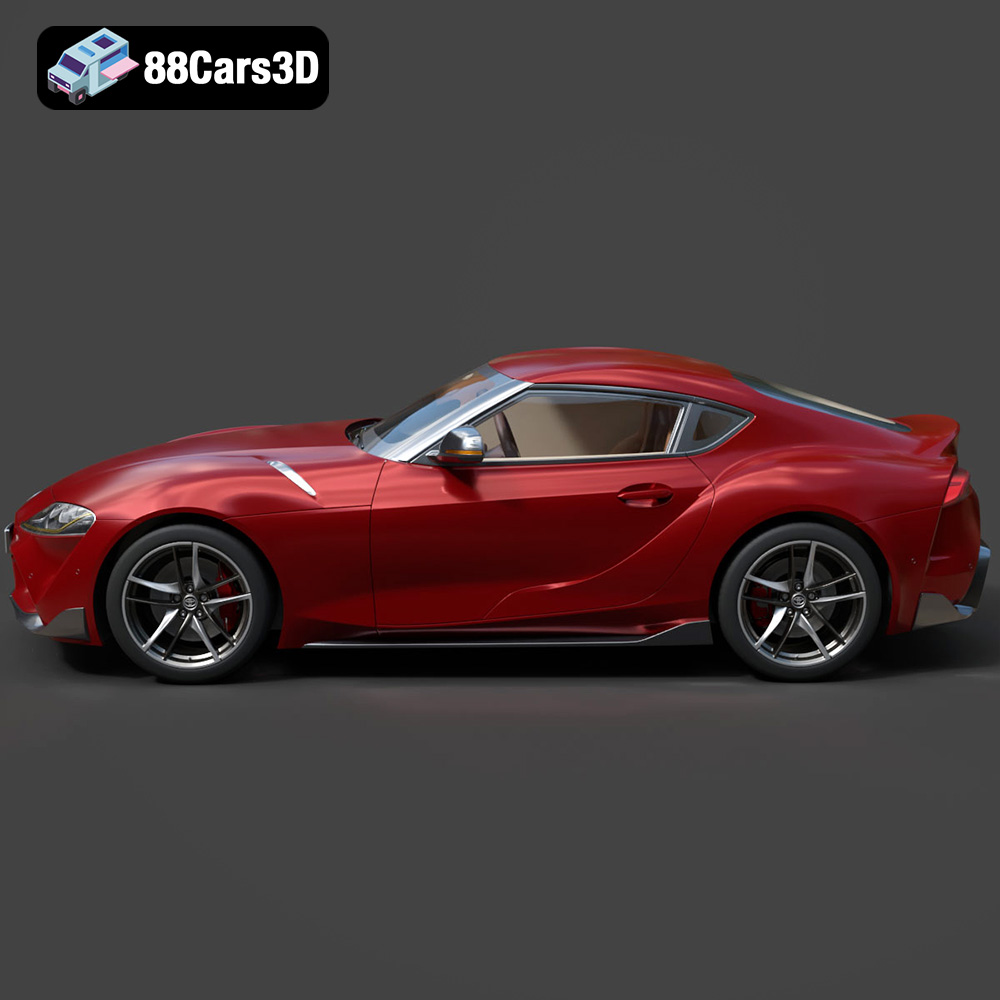
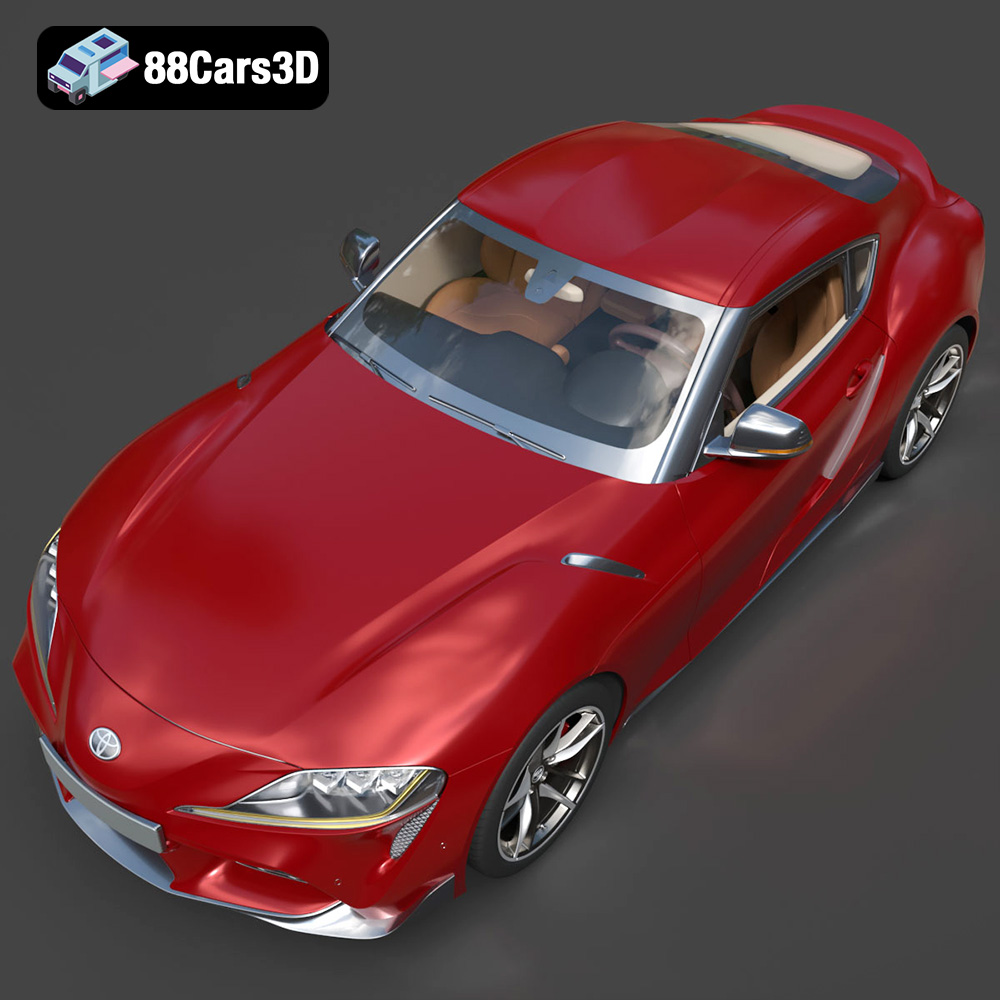
The Toyota Supra 2020 marks the triumphant return of a legendary sports car icon. Fusing a rich heritage with modern engineering, this masterpiece boasts an aggressive aerodynamic profile, signature double-bubble roof, and a meticulously detailed B58 3.0L turbocharged inline-six engine bay. Every curve, from the striking LED headlight clusters to the prominent rear lip spoiler and dual-branch exhaust system, has been faithfully recreated to capture its powerful stance and dynamic aesthetics.
Crafted with premium visual fidelity, this 3D model features a highly optimized topology of approximately 250,000 triangles, making it exceptionally game-ready without sacrificing extreme detail. Its clean geometry and intelligent material separation ensure seamless integration into real-time rendering pipelines, making it a top-tier asset for game development, AR/VR applications, high-end animation, and architectural visualization.
Perfect for street racing environments, virtual showrooms, digital car configurators, and cinematic automotive animations.
.blend, .fbx, .obj, .glb, .stl, .ply, .unreal, .max
Tags:
toyota, supra-2020, sports-car, coupe, jdm, game-ready, low-poly, optimized, car-3d-model, game-asset, rendering, vr-ar, blend, fbx, obj, glb, stl, ply, unreal, maxVespa VNB 125-B 3D Model 3D Printable STL
$19.99
.blend
.coupe
.fbx
.glb
.jdm
.max
.obj
.ply
.rendering
.sports car
.stl
.toyota
.unreal
car-3d-model
game asset
game-ready
low-poly
optimized
supra-2020
VR/AR