Get 20% OFF All Premium 3D & STL Models!

In the vast landscape of automotive design, some vehicles leave an indelible mark, not just on the roads, but in the collective imagination. The Mercedes-Benz A-Class 3-Door from 2010 is one such icon. Representing a pivotal moment in compact luxury, this car deftly combined urban practicality with the esteemed German engineering synonymous with Mercedes-Benz. For 3D artists, game developers, architectural visualizers, and VR/AR creators, capturing the essence of such a vehicle requires a meticulously crafted 3D model. This isn’t merely about replicating shapes; it’s about translating the car’s soul into a digital format that performs flawlessly across diverse applications.
A truly professional 3D car model, like the Mercedes Benz A Class 3 Door 2010 3D Model available on 88cars3d.com, serves as a cornerstone for countless creative and technical projects. From high-fidelity renders that grace advertising campaigns to optimized assets powering immersive game worlds, the demands on these digital representations are immense. This article will delve deep into the technical intricacies, artistic considerations, and professional workflows that make a premium 3D vehicle model indispensable in today’s digital design ecosystem.
The versatility of a 3D model is often defined by the range of file formats it supports. Each format is engineered for specific purposes, offering unique advantages in terms of compatibility, data integrity, and optimization. Understanding these distinctions is crucial for anyone working with 3D assets, ensuring smooth integration into various software pipelines and end-use applications. The Mercedes Benz A Class 3 Door 2010 3D Model, for instance, provides a comprehensive suite of formats, catering to virtually every professional need.
The .blend file format is the native format for Blender, a powerful open-source 3D creation suite. When a 3D model is provided in .blend format, it means you’re getting a fully editable Blender scene. This includes not only the mesh geometry but also all materials, textures, lighting setups, cameras, animations, and even modifiers or rigging information. For artists who primarily use Blender, this offers unparalleled flexibility for customization, tweaking, or integrating the model directly into existing Blender projects without any loss of data or conversion artifacts. It’s ideal for those who want to dive deep into the model’s construction and make significant modifications.
.fbx (Filmbox) is a proprietary file format developed by Autodesk, widely recognized as an industry-standard format for 3D data exchange, especially in game development and animation. Its strength lies in its ability to store a vast array of 3D data, including models, animation, cameras, lights, and even blend shapes. For real-time engines like Unreal Engine and Unity, .fbx is the preferred choice due to its robust support for skeletal animations and complex scene hierarchies. It ensures that textures, materials, and rigging transfer seamlessly between different software packages, making it a critical format for collaborative pipelines and high-performance applications.
The .obj (Wavefront OBJ) format is one of the oldest and most universally supported 3D file formats. It’s a simple, text-based format that primarily stores geometry data (vertices, normals, texture coordinates, and faces) and can link to an external .mtl (material) file for color and texture information. While it doesn’t support animation or rigging, its widespread compatibility across virtually all 3D software makes it an excellent choice for cross-software model sharing. If you need a clean mesh for sculpting, retopology, or simply importing into a less common 3D application, .obj is often the most reliable option.
.glb (GL Transmission Format Binary) is the binary version of glTF, a royalty-free specification for the efficient transmission and loading of 3D scenes and models by applications. Developed by the Khronos Group, .glb is highly optimized for AR (Augmented Reality), VR (Virtual Reality), and browser-based display. It packages all assets (geometry, textures, animations) into a single binary file, reducing file size and accelerating loading times. This makes it perfect for interactive web experiences, mobile AR applications, and any scenario where rapid deployment and efficient resource usage are paramount.
.stl (Stereolithography) is the de facto standard file format for 3D printing. It represents a 3D model as a collection of unconnected triangles (a tessellation of the surface). While it contains no color, texture, or material information, its simplicity makes it universally compatible with 3D printers and slicing software. When preparing the Mercedes A-Class model for physical replication, converting it to .stl is the first step. The quality of the print depends heavily on the model’s topology and resolution in the .stl, with finer tessellation leading to smoother printed surfaces.
.ply (Polygon File Format, or Stanford Triangle Format) is another format primarily used for storing 3D data, particularly from 3D scanners. It can store a wider range of properties than .obj or .stl, including color, transparency, and often more complex mesh data like vertex normals and properties for individual faces. While not as common for general artistic exchange, .ply is valuable in scientific, engineering, and CAD applications where precise mesh data and attribute storage are critical for analysis or reverse engineering.
The inclusion of an .unreal file (often referring to a .uasset file or project setup) signifies that the asset has been specifically prepared and packaged for direct use within the Unreal Engine. This often means textures are correctly imported, materials are set up with proper PBR (Physically Based Rendering) workflows, collision meshes might be included, and the asset is ready to be dropped into an Unreal project with minimal additional setup. This dramatically streamlines development for projects targeting Unreal Engine, saving precious time on asset preparation and optimization.
Similar to .blend for Blender, .max is the native project file format for Autodesk 3ds Max, a leading software for 3D modeling, animation, and rendering. A .max file contains the complete scene, including geometry, materials, textures, lighting, cameras, animation, and any specific 3ds Max modifiers or settings. This format is essential for professionals working within the Autodesk ecosystem, providing full editability and direct access to the model’s source data for high-end animation, rendering, or integration into complex visualization scenes.
Creating a truly exceptional 3D car model, such as the Mercedes-Benz A-Class 3-Door (2010), is a blend of artistic vision and technical precision. It requires an acute eye for detail, a deep understanding of automotive design, and mastery of 3D modeling principles to capture not just the shape, but the very essence of the vehicle.
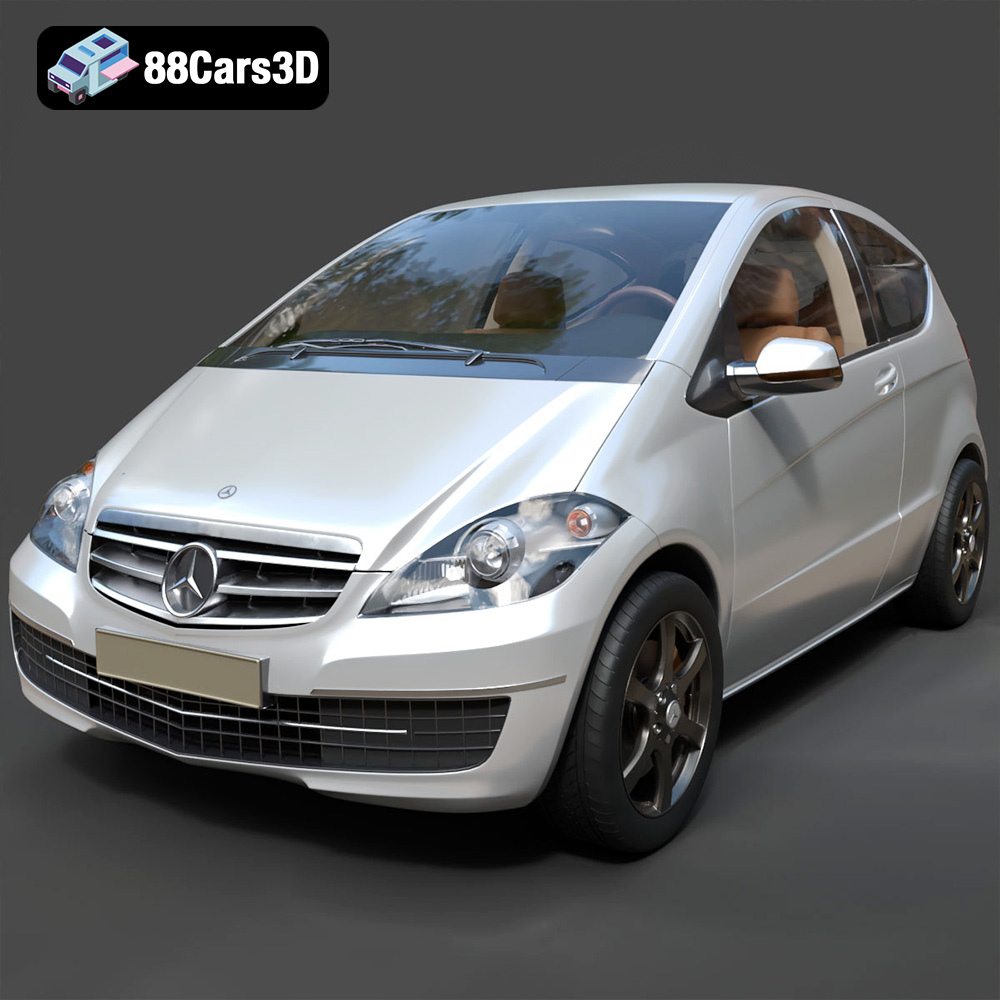
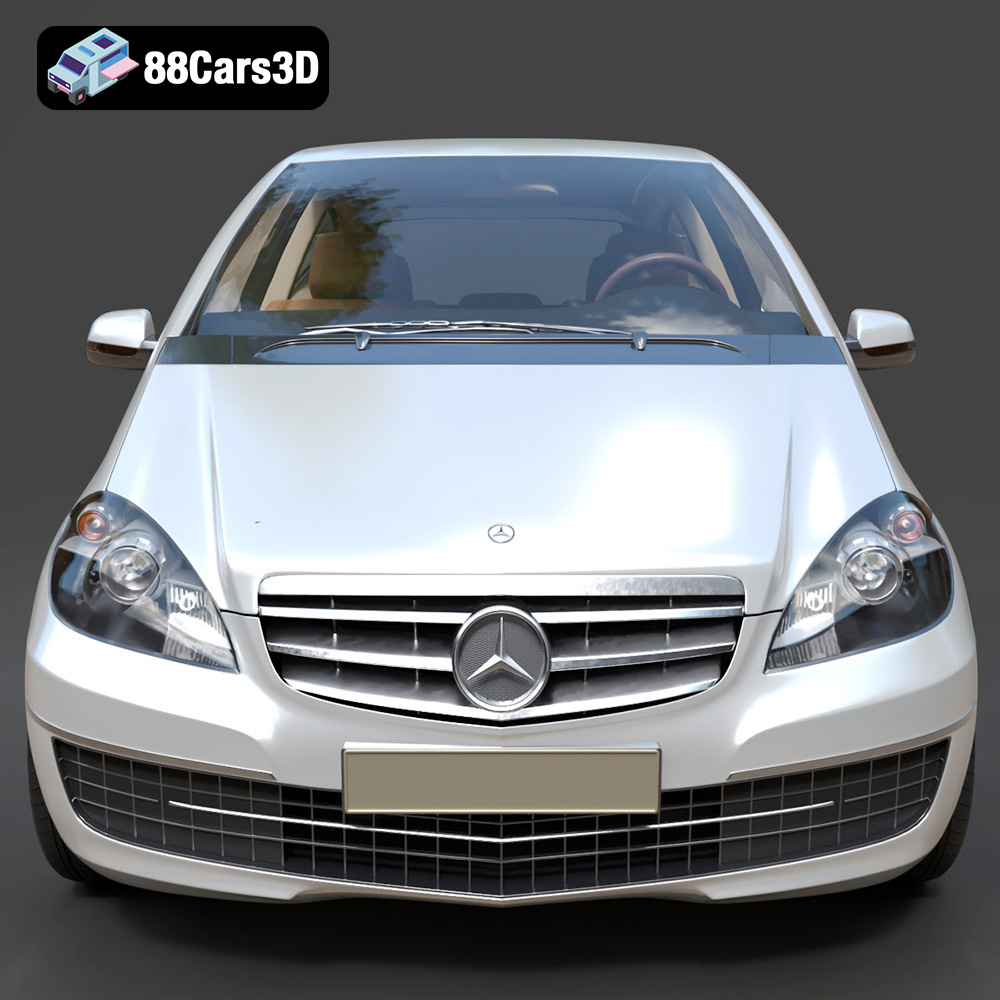
The first and most critical step in producing a premium 3D car model is achieving impeccable design accuracy. For the Mercedes-Benz A-Class W169, this means meticulous attention to its distinctive wedge-shaped silhouette, the precise curvature of its panels, and the iconic front grille crowned by the three-pointed star. Every curve, every crease, and every panel gap must be faithfully replicated to match the real-world vehicle’s proportions. This involves extensive research, often using blueprints, photographs, and even real-world measurements to ensure the digital model is an exact replica. Details like the swept-back headlights, the distinct taillight clusters, and the integrated exhaust system are not merely added; they are precisely modeled to reflect the manufacturer’s original design intent. This level of fidelity is what elevates a generic car model to a recognizable, high-quality asset.
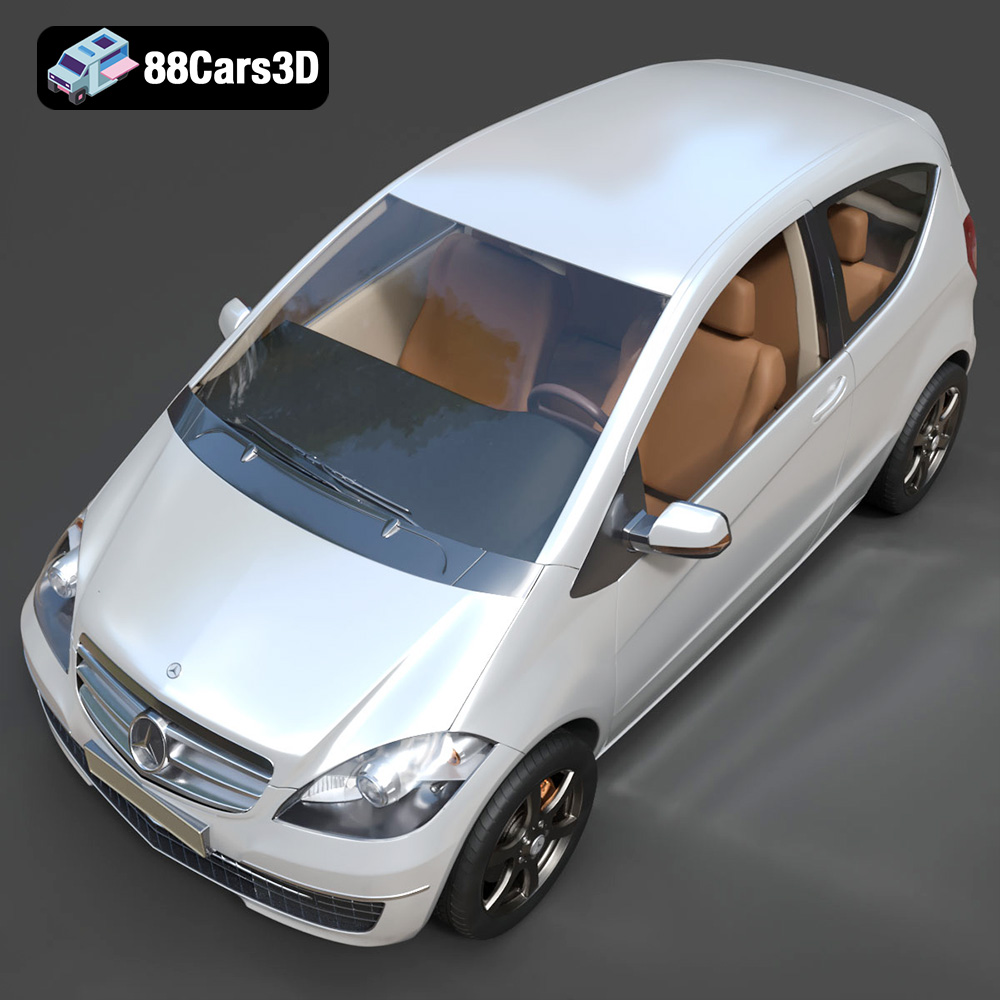
While the exterior often grabs the initial attention, a truly comprehensive 3D car model doesn’t stop there. The interior, or cockpit, is equally vital, especially for applications like game development where first-person perspectives are common, or for realistic architectural visualization where the car might be viewed through windows. The Mercedes A-Class model meticulously reproduces the authentic compact luxury seating arrangement, the detailed steering wheel with its integrated emblem and controls, and the accurate dashboard layout complete with instrument cluster details. Even the center console, shifter, pedals, and climate controls are carefully modeled. This interior optimization is crucial for gaming, where players might step inside the vehicle, or for AR/VR experiences, offering an immersive and believable virtual environment.
The true value of a high-quality 3D car model lies in its seamless integration into various professional workflows. Whether the project involves intricate animation, real-time game environments, or stunning photorealistic renders, the model must be prepared to meet the specific demands of each software and engine.
For many professionals, 3ds Max and Blender serve as the primary hubs for 3D content creation and manipulation. A model provided in native formats like .max or .blend offers the most flexibility. In 3ds Max, artists can easily access and modify every component of the Mercedes A-Class model, from adjusting material finishes to setting up complex animation sequences for advertisements or film. The hierarchical structure of the model, with separate components for wheels, doors, and steering, facilitates advanced rigging and animation. Similarly, Blender users can take full advantage of the .blend file to customize colors, adapt lighting for different environments, or integrate the car into larger scenes, leveraging Blender’s robust rendering engines like Cycles or Eevee.
Game developers and AR/VR creators rely heavily on real-time engines like Unreal Engine and Unity. For these applications, assets need to be “game-ready,” meaning they are optimized for performance without sacrificing visual quality. The Mercedes A-Class model excels here with its optimized triangle count of approximately 150,000. This strikes a perfect balance, allowing for high-end visual realism in cinematics while maintaining high frame rates in interactive environments. The inclusion of .fbx and potentially .unreal specific files streamlines the import process. Proper pivot setups for steering, wheel rotation, and suspension travel are critical for realistic vehicle physics and animation within these engines, allowing developers to quickly rig and implement driving mechanics without extensive rework.
The utility of a high-quality 3D car model extends far beyond simple imagery. These assets are powerful tools that drive innovation across multiple industries, from entertainment to engineering and marketing. The Mercedes Benz A Class 3 Door 2010 3D Model from 88cars3d.com exemplifies this versatility.
In the realm of game development, realistic and optimized vehicle assets are paramount. For racing titles, open-world games, or detailed simulators, the Mercedes A-Class model is an ideal candidate. Its game-ready optimization ensures that even with a detailed exterior and interior, the polygon count remains manageable for real-time rendering. This allows game designers to populate virtual cities, create engaging driving mechanics, or even feature the car prominently in cutscenes without significant performance overhead. The separate components for animation – doors, wheels, steering wheel – provide developers with the necessary granular control to create authentic driving experiences, enabling realistic physics interactions and immersive player perspectives.
Augmented Reality (AR) and Virtual Reality (VR) are transforming how we interact with products and environments. High-fidelity 3D car models are central to this revolution. Imagine a virtual showroom where prospective buyers can walk around the Mercedes A-Class, open its doors, and even sit inside, all from the comfort of their home. Models optimized for AR/VR, particularly those available in .glb format, facilitate smooth, interactive experiences on various devices, including mobile. Companies can create immersive configurators, allowing customers to customize colors, wheel types, and interior trims in real-time. This not only enhances engagement but also provides a powerful sales tool, offering a level of interaction previously only possible in a physical showroom.
Beyond digital displays, 3D car models can transition into the physical world through 3D printing. The ability to convert the Mercedes A-Class model into an .stl format opens up opportunities for collectors, hobbyists, and even design engineers. While digital assets offer endless customization, a physical print allows for tangible appreciation of the design. However, preparing a model for 3D printing requires specific considerations. Recommendations like using resin printing for fine details, adhering to specific layer heights, and providing necessary supports for complex parts (like the exhaust or mirrors) are crucial for a successful print. Hobbyists can then apply post-processing techniques – sanding, priming, and painting with authentic factory colors – to create highly detailed display models at recommended scales of 1:12, 1:18, or 1:24.
The balance between visual fidelity and performance is a constant challenge in 3D content creation. For a versatile asset like the Mercedes Benz A Class 3 Door 2010 3D Model, this optimization is key to its broad appeal and utility across different platforms and applications.
The stated ~150,000 triangles for the Mercedes A-Class model represents a carefully considered balance. In high-end architectural visualization or marketing renders, models can easily exceed millions of polygons. However, for real-time environments like games or AR/VR, such high poly counts would cripple performance. A count around 150,000 allows for excellent visual detail, capturing the intricate curves and sharp edges of the car’s design, while remaining efficient enough for real-time engines to render smoothly at high frame rates. This “game-ready” optimization means developers don’t have to spend precious time on costly manual retopology, getting a visually rich asset that’s performant right out of the box.
Beyond raw polygon count, several technical details define a professional-grade 3D car model. Real-world scale accuracy is fundamental. A model built to the actual dimensions of the Mercedes A-Class ensures consistency when integrating it into any scene, whether it’s an architectural exterior or a virtual garage. Proper pivot setup is equally critical for animation. Each movable part – wheels, doors, steering wheel – must have its pivot point correctly aligned to its natural rotation axis. This allows for realistic animation of steering, suspension travel, and door opening/closing without complex adjustments. Finally, efficient UV mapping ensures that textures are applied correctly and without distortion, maximizing visual quality while allowing for texture atlasing and optimization in real-time engines. These seemingly small details collectively contribute to a robust, user-friendly, and highly adaptable asset.
A high-quality 3D car model is not just a static representation; it’s a dynamic canvas for creative expression. The built-in customization options of a well-structured asset allow artists and designers to tailor the model to their specific project needs, injecting unique flair and storytelling into their visualizations.
The Mercedes Benz A Class 3 Door 2010 3D Model offers extensive customization capabilities. Changing body colors is a straightforward process, allowing artists to render the vehicle in various factory hues or experiment with custom finishes like metallic, matte, or pearlescent paints to match specific brand aesthetics or artistic visions. Modifying tire textures, for instance, enables a quick switch between sleek street variants and rugged winter treads, instantly altering the car’s context and narrative. Furthermore, adjusting material finishes for components like interior upholstery, dashboard trim, or chrome accents provides granular control over the overall look and feel, ensuring the car integrates perfectly into any scene’s mood or setting. This flexibility is invaluable for advertising, product visualization, and cinematic productions.
Beyond the car itself, a customizable 3D model thrives in diverse lighting and environmental conditions. Artists can adapt the lighting to simulate various times of day – a sunny afternoon, a moody dusk, or a dramatic nighttime scene with streetlights reflecting off the paintwork. Placing the Mercedes A-Class in different environments, from bustling cityscapes to serene countryside roads, or even conceptual, futuristic settings, transforms its narrative. The model’s clean topology and well-defined materials respond realistically to different lighting setups, producing stunning renders that highlight its design and character. This adaptability makes the model a powerful tool for visual storytelling, ensuring it remains relevant and impactful across an array of creative contexts.
The world of 3D design is continually evolving, driven by demands for greater realism, efficiency, and versatility. In this landscape, a meticulously crafted asset like the Mercedes Benz A Class 3 Door 2010 3D Model stands out as a testament to expert artistry and technical prowess. From its accurate exterior and detailed interior to its game-ready optimization and support for a multitude of file formats, this model is engineered to empower professionals across diverse industries.
Whether you’re developing the next generation of immersive games, creating stunning architectural visualizations, producing compelling brand campaigns, designing AR/VR experiences, or even fabricating physical models through 3D printing, the foundational quality of your 3D assets is paramount. Opting for high-fidelity, optimized 3D car models not only saves invaluable development time but also elevates the overall quality and impact of your projects. For those seeking such exceptional resources, 88cars3d.com remains a premier destination for acquiring professional-grade 3D car models that drive innovation and transform digital dreams into stunning realities.
The Mercedes-Benz A-Class 3-Door (2010) represents a defining era of compact luxury, blending urban practicality with premium German engineering. This 3D model captures the distinctive wedge-shaped silhouette, prominent front grille with the iconic three-pointed star, and the sleek 3-door configuration that gives it a sportier edge over its 5-door sibling. Expertly crafted with game-ready optimization, this model features a highly efficient topology while maintaining exceptional visual fidelity. With an optimized triangle count, it perfectly bridges the gap between high-end architectural visualization and real-time performance, making it an ideal asset for game development, AR/VR experiences, and high-quality animations. Perfect for urban driving simulations, virtual showrooms, architectural traffic populations, and lifestyle renders.
$19.99
.2010
.blend
.fbx
.glb
.hatchback
.max
.obj
.ply
.rendering
.stl
.unreal
3-door
a-class
car-3d-model
compact-car
game asset
game-ready
low-poly
mercedes-benz
optimized
VR/AR