Get 20% OFF All Premium 3D & STL Models!

In the rapidly evolving landscape of digital content creation, the demand for photorealistic assets is at an all-time high. From blockbuster films and cutting-edge video games to immersive AR/VR experiences and detailed architectural visualizations, the foundation of compelling visuals often lies in the quality of its core assets. Among these, 3D car models stand out as particularly complex and critical components, requiring immense precision and technical expertise to replicate their real-world counterparts digitally.
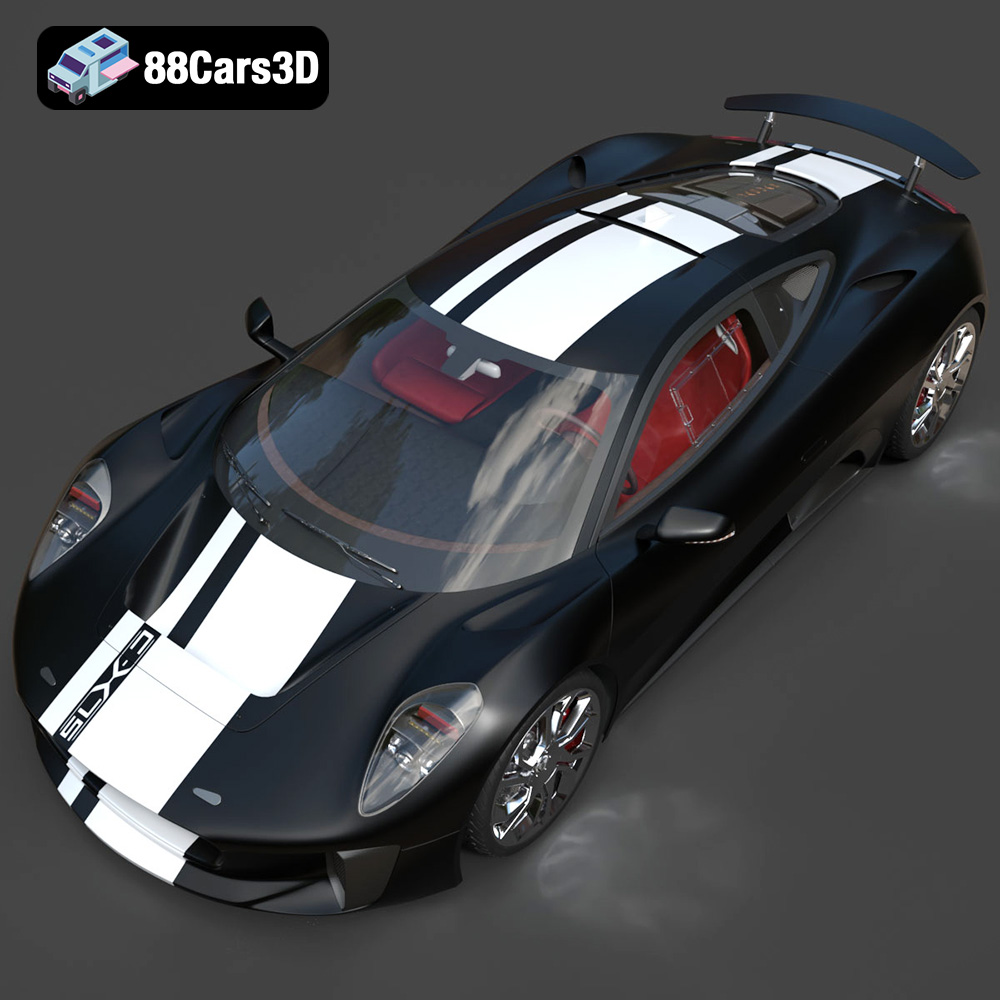
The creation of a truly authentic 3D vehicle model goes beyond just capturing its exterior shape; it encompasses intricate details of its engineering, the nuances of its materials, and its performance characteristics in various digital environments. This commitment to detail is what elevates a standard model to a professional-grade asset, crucial for serious production pipelines. Today, we delve into the world of high-quality automotive 3D assets, exploring their applications, technical considerations, and how they empower creators to achieve unparalleled realism. To illustrate these concepts, we’ll specifically look at an outstanding example of digital craftsmanship: the Jaguar C-X75 2014 3D Model, a testament to what’s achievable in automotive visualization, available at 88cars3d.com.
The versatility of a 3D car model, such as the Jaguar C-X75, largely hinges on the file formats it supports. Each format is designed with specific strengths, making it ideal for particular stages of a workflow or target applications. Understanding these formats is crucial for any professional working with 3D assets, ensuring seamless integration and optimal performance across different software and platforms. The Jaguar C-X75 2014 3D Model is supplied in an impressive array of industry-standard formats, ensuring maximum flexibility for diverse project needs.
The .blend format is the native file type for Blender, the powerful open-source 3D creation suite. When you acquire a model in .blend format, you gain access to the complete Blender scene, often including pre-configured materials, lighting setups, cameras, and even basic animation rigs. This provides unparalleled control for artists who prefer Blender’s workflow, allowing for deep customization, shader adjustments, and scene re-composition without loss of data. It’s perfect for detailed rendering projects using Cycles or Eevee, and for iterative design changes.
.fbx (Filmbox) is arguably the most widely used proprietary 3D interchange format, developed by Autodesk. Its strength lies in its ability to store not just mesh data, but also materials, textures, animations, and even rigging information in a single file. This makes it the go-to format for exporting models to game engines like Unreal Engine and Unity, as well as for animation software. An .fbx file from the Jaguar C-X75 2014 3D Model ensures game-engine readiness, often optimized with proper UVs and PBR (Physically Based Rendering) material assignments for efficient real-time performance.
The .obj (Wavefront OBJ) format is a universal standard for storing 3D geometry. While it’s simpler than .fbx, primarily storing mesh data (vertices, normals, texture coordinates), it is compatible with virtually every 3D software package. It’s often accompanied by an .mtl file that defines basic material properties. For cross-software compatibility or when you only need the raw mesh, .obj is a reliable and widely accepted choice. The Jaguar C-X75 as an .obj provides a clean, transferable mesh for any environment.
.glb (GL Transmission Format Binary) is an increasingly popular format, especially for modern applications like augmented reality (AR), virtual reality (VR), and web-based 3D viewers. It’s a self-contained format that bundles geometry, materials, textures, and animations into a single binary file, making it highly efficient for delivery and parsing on various devices and browsers. A .glb version of a complex model like the Jaguar C-X75 ensures it can be easily integrated into interactive web configurators or mobile AR apps with minimal overhead.
.stl (Stereolithography) is the de facto standard for 3D printing. It represents a 3D model as a collection of unconnected triangular facets, without color, texture, or other CAD attributes. While not suitable for rendering or animation, its simplicity and widespread support make it ideal for turning digital models into physical objects. For engineers or designers wishing to prototype the Jaguar C-X75, the .stl format provides the necessary data for additive manufacturing.
The .ply (Polygon File Format) is another format for storing 3D data, particularly useful for scanned data, CAD applications, and scientific visualization. It can store a wider range of properties than .obj, including color, transparency, and often normal information per vertex or face. While less common for general rendering, it offers a robust solution for precision mesh data, useful for detailed analysis or specific manufacturing pipelines.
The .unreal format, or more accurately, assets packaged for Unreal Engine, signifies a model that has been specifically prepared and optimized for this powerful real-time platform. This often means it comes with pre-configured materials, textures, LODs (Levels of Detail), and potentially collision meshes, all set up within an Unreal Engine project structure or ready for direct import with minimal configuration. For developers targeting the highest visual fidelity in games or virtual productions, having the Jaguar C-X75 as an .unreal asset significantly streamlines the integration process.
Finally, the .max format is the native file type for Autodesk 3ds Max, a staple in architecture, visualization, and entertainment industries. Like .blend, it offers a complete scene file, including all geometry, materials (e.g., V-Ray, Corona), lighting, cameras, and animation data. For professionals relying on 3ds Max for high-end rendering, complex scene assembly, or character animation workflows, the .max file of the Jaguar C-X75 2014 3D Model provides full creative control within a familiar and powerful environment.
Achieving photorealistic quality in automotive rendering is an art form that demands meticulous attention to detail, advanced software knowledge, and powerful hardware. High-quality 3D car models are the cornerstone of this process, providing the geometric fidelity and material definition necessary to trick the eye into believing it’s looking at a real vehicle.
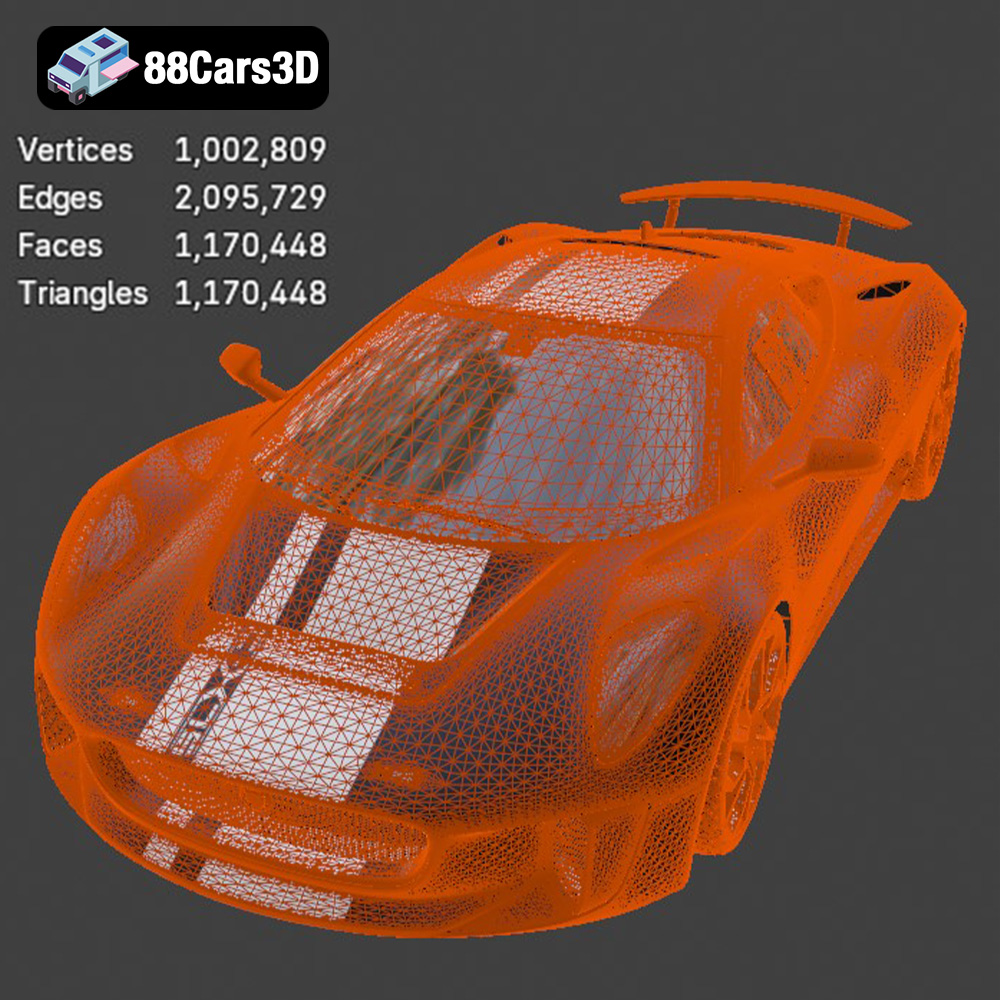
The foundation of any photorealistic render is an impeccably modeled asset. The Jaguar C-X75 2014 3D Model exemplifies this, featuring “exceptionally clean geometry” and “pristine edge flow.” This isn’t just aesthetic; clean topology is crucial for smooth subdivisions, distortion-free UV mapping, and predictable deformation. High-resolution textures, particularly those following PBR (Physically Based Rendering) principles, are then layered onto this geometry. Materials like car paint, chrome, glass, and carbon fiber are meticulously crafted, often involving complex shader networks to simulate reflections, refractions, and anisotropy accurately. The fully modeled interior of the C-X75 adds another layer of realism, allowing for dynamic camera angles and close-up shots that reveal intricate dashboard details, stitching on seats, and subtle material variations.
Lighting is paramount in rendering. Professional workflows often utilize HDRI (High Dynamic Range Image) maps for realistic global illumination, combined with targeted area lights and photometric lights to accentuate specific features of the vehicle. Software like 3ds Max (with renderers like V-Ray or Corona Renderer) and Blender (with Cycles) provide sophisticated lighting tools. The Jaguar C-X75 model, with its versatile .max and .blend formats, allows artists to integrate it seamlessly into complex lighting scenarios, from sun-drenched outdoor scenes to dramatic studio setups. Post-processing in tools like Adobe Photoshop or Nuke further refines the image, adding depth of field, color grading, and subtle effects to achieve that final, production-ready polish.
In the automotive industry, photorealistic 3D renders are indispensable for advertising campaigns, configurators, and design reviews. Before a physical prototype is even built, the Jaguar C-X75 2014 3D Model could be used to generate stunning marketing materials, showcasing its aggressive styling and cutting-edge design in various environments. Design studios use such models for virtual wind tunnel tests, ergonomic studies, and presenting concept variations to stakeholders, drastically reducing costs and time associated with physical prototyping. The precision and detail of models found on 88cars3d.com directly contribute to creating these high-impact visual experiences.
The demands of real-time rendering in video games are unique, balancing visual fidelity with performance efficiency. Game developers require game assets that are optimized for rendering hundreds of frames per second, yet still look breathtakingly realistic. This is where models like the Jaguar C-X75 2014 3D Model truly shine, designed with “optimal polygon count” and “versatile build” for seamless integration.
Creating high-performance game assets involves several optimization techniques. While the initial source model might be very high poly for cinematic renders, game-ready versions often employ careful polygon reduction, baking high-detail normal maps from the high-poly mesh onto a lower-poly game mesh. LODs (Levels of Detail) are crucial, where multiple versions of the model exist at different polygon counts, swapping out dynamically based on distance from the camera. The .fbx and .unreal formats of the Jaguar C-X75 are specifically tailored for this, ensuring that the model looks great up close but doesn’t bog down the frame rate when viewed from afar. Clean UVs are also essential for efficient texture mapping and avoiding visual artifacts.
Unreal Engine and Unity are the leading platforms for real-time interactive experiences. Integrating a sophisticated model like the Jaguar C-X75 requires more than just importing the mesh. It involves setting up PBR materials correctly (base color, normal, roughness, metallic, ambient occlusion maps), configuring collision meshes for realistic physics interactions, and potentially adding vehicle rigging for animation and suspension dynamics. The availability of the Jaguar C-X75 in both .fbx and dedicated .unreal formats streamlines this process significantly, providing developers with a head start on implementing a high-fidelity, production-ready vehicle into their racing simulators, open-world games, or virtual production sets.
In racing simulators, the accuracy of the vehicle model directly impacts the player’s immersion. Every curve, every aerodynamic element of the Jaguar C-X75 needs to be precise to convey the car’s real-world presence and performance. For open-world games, these detailed vehicles serve as crucial elements that enrich the environment and offer interactive opportunities. The quality of models available on platforms like 88cars3d.com allows indie developers and AAA studios alike to populate their virtual worlds with authentic, high-performance vehicles without the immense cost and time of creating them from scratch.
Augmented Reality (AR) and Virtual Reality (VR) are transforming how we interact with digital content, offering immersive experiences that were once confined to science fiction. High-quality 3D car models are pivotal in these applications, providing the detailed visual anchors for interactive showrooms, virtual test drives, and design reviews.
AR/VR environments impose even stricter performance requirements than traditional games due to the need for high frame rates (typically 90fps or higher per eye) to prevent motion sickness. This necessitates highly optimized models with efficient geometry, streamlined material setups, and aggressive LOD strategies. The .glb format, in particular, is an excellent choice for AR/VR applications. Its self-contained nature and efficiency make it ideal for delivering complex models like the Jaguar C-X75 to mobile AR apps (e.g., using ARKit or ARCore) or VR headsets, allowing users to virtually place the car in their driveway or explore its interior in a fully immersive headset environment.
Imagine being able to explore every angle of the Jaguar C-X75, change its paint color, or even open its doors and get inside, all within a browser or an AR app. High-fidelity 3D models enable this level of interactivity. Automotive manufacturers can use these models for interactive product configurators on their websites, allowing potential customers to customize vehicles in real-time. Training simulations for mechanics or sales personnel can also benefit from highly detailed interactive 3D models, providing a safe and engaging environment to learn about complex vehicle components and systems. The ‘clean geometry’ and ‘realistic materials’ of the Jaguar C-X75 2014 3D Model ensure that these interactive experiences are not just functional but visually stunning.
Beyond dedicated apps, WebGL has opened the door for rich 3D experiences directly within web browsers. Models optimized for web display, often in .glb format, can be embedded on websites, allowing users to spin, zoom, and inspect a vehicle without downloading any software. This provides unparalleled accessibility for showcasing products like the Jaguar C-X75 to a global audience. The ability to leverage such detailed 3D car models in browser-based AR and VR further expands their utility, offering engaging and easily deployable solutions for marketing and customer engagement.
While the focus of high-fidelity 3D car models is often on digital display, their utility extends into the physical realm through 3D printing and rapid prototyping. For designers, engineers, and hobbyists, the ability to materialize a digital concept car like the Jaguar C-X75 is a powerful tool for evaluation and presentation.
Converting a high-detail rendering model into a 3D printable asset requires specific considerations. The .stl format is the industry standard for 3D printing, representing the model as a collection of triangles. However, models designed for rendering often have extremely thin surfaces, non-manifold geometry, or open edges that are problematic for 3D printers. The ‘clean geometry’ of the Jaguar C-X75 2014 3D Model is a significant advantage here, simplifying the process of making it manifold and watertight – prerequisites for successful printing. Further steps might include scaling the model appropriately, adding support structures (though these are often generated by slicing software), and ensuring all parts are merged into a solid object.
For automotive design studios, 3D printing allows for rapid iteration and physical evaluation of design concepts. Before investing in expensive clay models or full-scale prototypes, a scaled-down 3D print of the Jaguar C-X75 can be produced quickly and affordably. This allows designers to assess proportions, surface quality, and ergonomic considerations in a tangible form. Such prototypes are invaluable for design reviews, allowing stakeholders to physically interact with the concept, identify potential issues, and make informed decisions early in the development cycle. The availability of the C-X75 model in .stl format directly supports these crucial prototyping stages, bridging the gap between digital vision and physical reality.
Beyond industrial prototyping, 3D printing with high-quality models opens avenues for creating detailed scale models and collectibles. Enthusiasts can print their own versions of iconic vehicles, customizing scales and materials. For niche markets, on-demand manufacturing of specific car parts or entire vehicles becomes feasible. The meticulous crafting of every exterior curve and aerodynamic element of the Jaguar C-X75 2014 3D Model ensures that even a 3D-printed replica will retain the stunning aesthetics of the original concept car, making it a valuable asset for collectors and model makers.
The success of any visual project hinges on the quality of its assets. When it comes to 3D car models, this means sourcing models that are not only aesthetically accurate but also technically robust, optimized for performance, and versatile across different workflows. This is where specialized marketplaces like 88cars3d.com provide immense value to professionals and enthusiasts alike.
When evaluating a 3D car model for professional use, several criteria stand out:
The Jaguar C-X75 2014 3D Model exemplifies these qualities, offering “exceptionally clean geometry and realistic materials” and a “fully modeled interior,” making it a truly professional-grade asset.
General 3D asset marketplaces can offer a vast array of models, but specialized platforms like 88cars3d.com focus on a niche, allowing them to curate a collection of exceptionally high-quality automotive rendering and game asset models. This specialization often translates to higher standards of modeling, texturing, and optimization, as well as dedicated support. Professionals can save significant time and resources by starting with a high-fidelity base model rather than building from scratch or extensively cleaning up lower-quality assets. The comprehensive file format support offered by models like the Jaguar C-X75 ensures that regardless of your software preference – be it 3ds Max, Blender, Unreal Engine, or Unity – you have an immediate, production-ready solution.
In the long run, investing in premium 3D assets pays dividends. A well-modeled and optimized asset like the Jaguar C-X75 2014 3D Model not only looks better but also integrates more smoothly into various pipelines, reduces debugging time, and provides a solid foundation for future projects. Whether you’re a freelancer, a small studio, or a large production house, having access to reliable, high-quality 3D car models from a trusted source like 88cars3d.com is a strategic advantage, enabling you to deliver stunning visuals with efficiency and confidence across all forms of digital media, from cinematic renders to interactive AR/VR experiences.
The journey through the intricate world of 3D car models reveals a profound truth: precision, versatility, and technical excellence are not merely desirable traits, but essential foundations for any compelling digital project. From the pixel-perfect demands of photorealistic advertising to the performance-critical environments of real-time gaming and immersive AR/VR, the quality of a 3D model directly dictates the success and impact of the final output. The careful consideration of geometry, materials, and comprehensive file format support ensures that a single asset can serve a multitude of professional applications.
The Jaguar C-X75 2014 3D Model stands as a shining example of this commitment to quality. Its meticulous detail, clean geometry, and multi-format compatibility make it an invaluable asset for anyone aiming to produce top-tier automotive visualizations. Whether you are an architect needing a stunning vehicle for a visualization, a game developer crafting the next-generation racing title, or an automotive designer exploring new concepts, this model provides the raw material for excellence.
By offering such high-caliber assets, marketplaces like 88cars3d.com empower creators to bypass the time-consuming and technically challenging process of building complex vehicles from scratch. They allow professionals to focus on artistic direction, scene composition, and innovative storytelling, knowing that the core visual components are built to the highest industry standards. In an increasingly visual world, investing in such premium 3D car models is not just a purchase; it’s an investment in the future quality and efficiency of your creative endeavors.
Experience unparalleled realism with the Jaguar C-X75 2014 3D Model. This exceptionally detailed digital replica captures the essence of the renowned hybrid-electric concept car, offering automotive enthusiasts and professionals an immaculate asset for their digital projects. Engineered with precision, this model brings the stunning aerodynamics and aggressive styling of the C-X75 to your virtual environments.
Designed with professional standards in mind, the model features exceptionally clean geometry and realistic materials. Every exterior curve and aerodynamic element has been meticulously crafted to reflect the authentic vehicle, complemented by a fully modeled interior. This dedication to accuracy ensures pristine edge flow and optimal polygon count, making it a reliable asset for intense production pipelines.
Whether you are developing next-generation racing games, producing photorealistic cinematic renderings, creating interactive AR/VR experiences, or generating architectural visualizations, this Jaguar C-X75 model delivers outstanding performance. Its versatile build ensures seamless integration into major production software and real-time engines.
To provide maximum flexibility, the model is supplied in multiple industry-standard formats:
Tags: .jaguar, .c-x75, .cx75, .conceptcar, .hypercar, .sportscar, .hybrid, .car3dmodel, .rendering, .simulation, .gameasset, .arvr, .blend, .fbx, .obj, .glb, .stl, .ply, .unreal, .max
$19.99
.arvr
.blend
.c-x75
.car3dmodel
.conceptcar
.cx75
.fbx
.gameasset
.glb
.hybrid
.hypercar
.jaguar
.max
.obj
.ply
.rendering
.simulation
.sportsCar
.stl
.unreal