Get 20% OFF All Premium 3D & STL Models!

In the rapidly evolving landscape of digital content creation, the demand for exceptionally detailed and versatile 3D car models has never been higher. From breathtaking photorealistic visualizations for marketing campaigns to immersive experiences in cutting-edge video games and AR/VR applications, the quality of a 3D automotive asset can make or break a project. Artists, designers, and developers are constantly seeking assets that not only look stunning but also integrate seamlessly into diverse professional workflows.
This pursuit of digital perfection is where models like the Land Rover Range Rover Sport SVR 2015 3D model truly shine. Representing the pinnacle of performance SUVs, this specific model transcends mere visual appeal, offering a robust foundation for a multitude of advanced projects. Its meticulous design, clean geometry, and optimized structure make it an invaluable resource for anyone aiming to achieve unparalleled realism and efficiency in their digital automotive endeavors. Let’s explore the intricate world of professional 3D car models and discover how a meticulously crafted asset like this can elevate your creative and technical pursuits.
Creating a truly professional 3D car model is an intricate process that blends artistic vision with technical precision. It’s about more than just replicating shapes; it’s about capturing the essence, the engineering, and the subtle nuances that define a vehicle. Every curve, panel gap, and material finish must be faithfully reproduced to convey authenticity, especially when aiming for photorealism.
The journey begins with meticulous reference gathering, often involving detailed blueprints, photographs, and even real-world vehicle inspections. This foundational research informs the modeling process, ensuring that proportions, dimensions, and unique design characteristics are accurately translated into the digital realm. For a performance vehicle like the Land Rover Range Rover Sport SVR 2015, capturing its aggressive styling and aerodynamic contours is paramount. This requires skilled polygonal modeling, often starting with a low-polygon base and progressively adding detail through subdivision surfacing techniques.
Every element, from the distinctive grille and headlights to the intricate wheel designs and brake calipers, must be individually modeled with an obsessive attention to detail. This level of fidelity is what allows the model to hold up under close-up scrutiny, revealing the sophisticated design language of the original vehicle. The resulting clean geometry ensures smooth shading and avoids artifacts that can detract from realism.
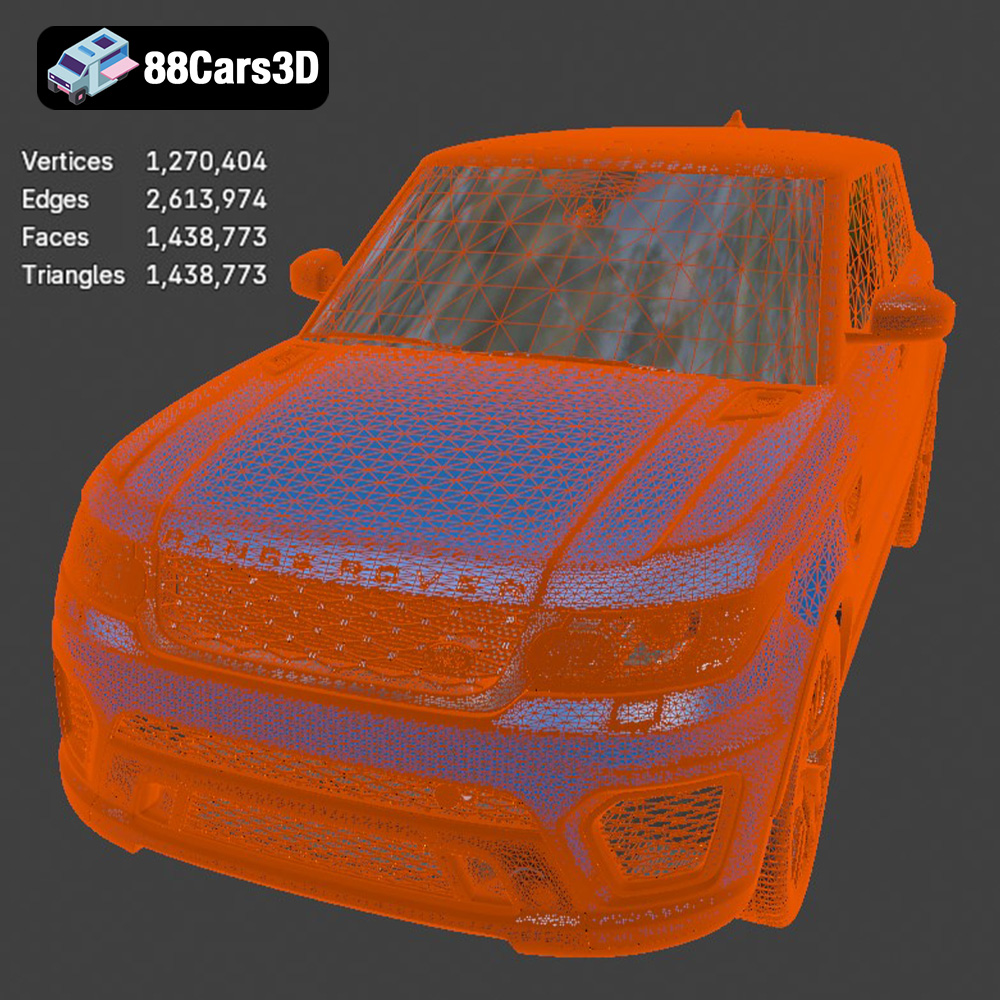
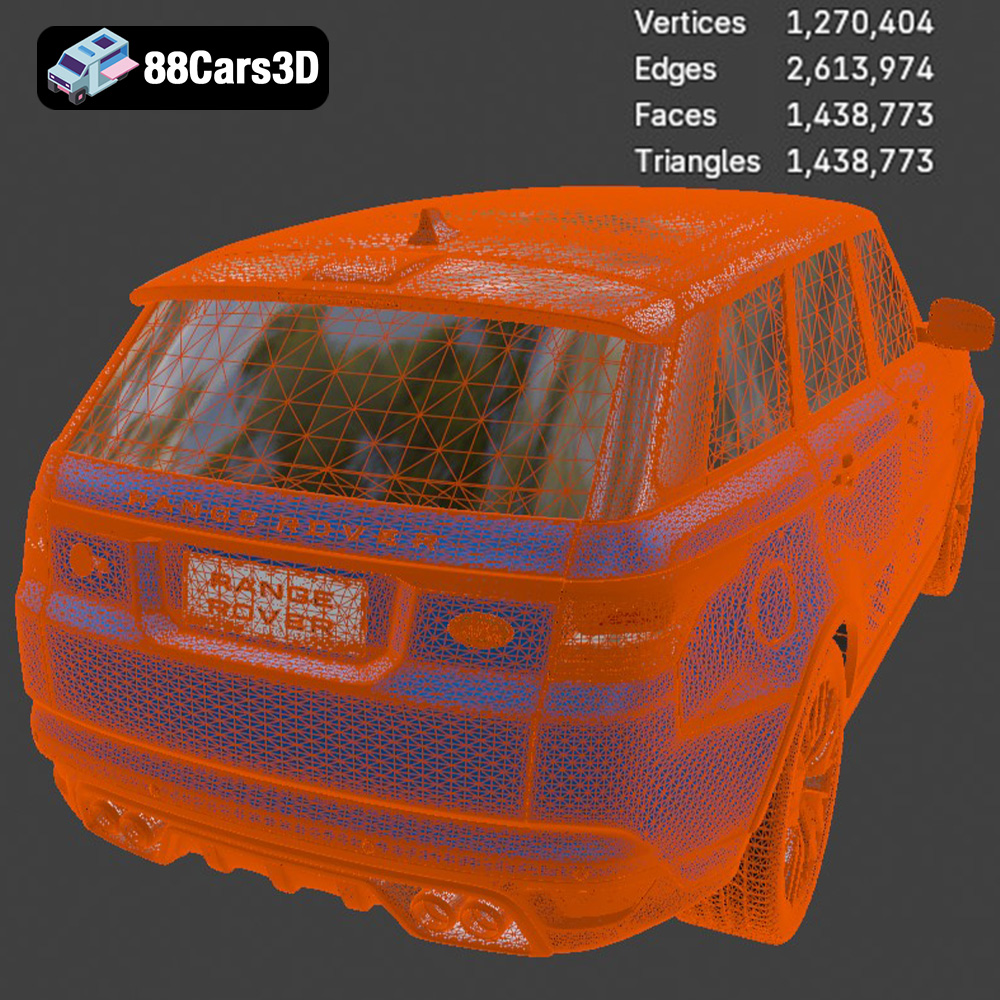
While detail is crucial, so is optimization. A professional 3D car model must strike a delicate balance between polygon count and visual fidelity. Overly complex models can cripple real-time performance in games or AR/VR, while models lacking detail fail to impress in high-resolution renders. The solution lies in strategic poly-reduction techniques, efficient UV unwrapping, and the intelligent use of normal maps to simulate fine surface details without adding unnecessary geometry.
The Land Rover Range Rover Sport SVR 2015 3D model, for instance, is designed with an optimized polygon count, ensuring it’s suitable for both demanding cinematic rendering and real-time interactive applications. This optimization extends to the materials, which are typically set up using physically based rendering (PBR) workflows. PBR materials accurately simulate how light interacts with different surfaces, delivering realistic reflections, refractions, and diffuse lighting, making the model truly shine under any lighting condition.
One of the most crucial aspects of working with 3D models, particularly when sourcing high-quality assets like those found on 88cars3d.com, is understanding the various file formats available. Each format serves a specific purpose, offering unique advantages for different stages of the production pipeline, from initial modeling and animation to real-time rendering and 3D printing. The Land Rover Range Rover Sport SVR 2015 3D model is a prime example of a versatile asset, provided in multiple formats to ensure maximum compatibility and utility.
The .blend format is the native file type for Blender, a powerful open-source 3D creation suite. When you receive a .blend file, you’re not just getting the model; you’re often getting the entire Blender scene. This typically includes the model’s geometry, its materials (set up with Blender’s Cycles or Eevee render engines), textures, lighting, camera setups, and even animations or modifiers applied to the mesh. It offers complete editability for Blender users, allowing for extensive customization, rigging, animation, or integration into existing Blender projects. For artists who primarily work in Blender, this format provides the most flexibility and a ready-to-render setup straight out of the box.
.fbx (Filmbox) is an industry-standard format widely used for exchanging 3D data between various software applications, especially popular in game development. It can store not only geometry and UVs but also crucial data like materials, textures, animations, rigging, and even camera information. Its robust support for animation and skeletal data makes it the go-to choice for importing complex animated models into game engines like Unreal Engine and Unity. When a 3D car model is provided as .fbx, it often means it’s prepped for efficient import, potentially with optimized meshes and PBR material assignments ready for real-time environments.
The .obj (Wavefront OBJ) format is one of the most widely supported and universal 3D file formats. It’s excellent for geometry and UV coordinate data, making it a reliable choice for transferring models between almost any 3D software package. While it can reference external material files (.mtl) for basic color and texture information, it doesn’t typically store complex PBR material properties or animation data directly within the file itself. Its simplicity and broad compatibility make it an indispensable format for ensuring a base model can be opened and worked on regardless of the user’s preferred software.
.glb (GL Transmission Format Binary) is a modern, compact, and efficient format designed for the web, AR (Augmented Reality), and VR (Virtual Reality). It packages 3D model data – geometry, materials, textures, and animation – into a single binary file, making it incredibly easy to load and display in browsers and real-time AR/VR applications. .glb natively supports PBR materials, ensuring models look consistent and high-quality across different platforms. For displaying a Land Rover SVR in an interactive web viewer or an immersive AR experience, .glb is the optimal choice.
The .stl (STereoLithography) format is the standard for 3D printing. It represents a 3D model as a collection of triangular facets, defining the surface geometry without color, texture, or material information. While it lacks the visual richness of other formats, its simplicity is perfect for communicating pure shape to 3D printers. When a 3D car model is offered as .stl, it means it has likely been checked for manifold errors and prepared for physical fabrication, allowing users to print a miniature replica or prototype of the Land Rover SVR.
.ply (Polygon File Format or Stanford Triangle Format) is another format for storing 3D data, particularly popular in academic and research settings, often used for data generated by 3D scanners. It can store not only polygonal geometry but also point clouds, colors per vertex or face, normal vectors, and other properties. It’s a versatile format for capturing precise mesh data and is often used for engineering, CAD applications, or advanced visualization and analysis where detailed surface information is critical.
The .unreal format signifies an asset specifically packaged and optimized for Unreal Engine. This often means the model has been imported, had its materials configured using Unreal’s robust material editor, potentially includes LODs (Levels of Detail), collision meshes, and may even be set up with blueprints for interactivity. Using a .unreal file bypasses many of the manual import and setup steps, offering a truly “plug-and-play” experience for Unreal Engine developers looking to drop the Land Rover Range Rover Sport SVR 2015 directly into their projects.
Finally, the .max format is the native file type for Autodesk 3ds Max, a leading software for 3D modeling, animation, and rendering in architectural visualization, product design, and cinematic production. Similar to .blend, a .max file contains the entire scene, including geometry, modifiers, materials (often V-Ray or Corona Renderer setups), lighting, cameras, and animation data. It offers full editability within 3ds Max, making it indispensable for professionals who use this software for high-end rendering and complex animation sequences of vehicles like the Land Rover SVR.
By offering the Land Rover Range Rover Sport SVR 2015 3D model in such a comprehensive array of formats, 88cars3d.com ensures that creators across various disciplines have immediate access to the asset in their preferred and most efficient workflow, maximizing its potential for every project type.
The true value of a high-quality 3D car model like the Land Rover Range Rover Sport SVR 2015 lies in its adaptability across diverse professional pipelines. Its inherent realism and optimized structure allow it to be seamlessly integrated into demanding projects, saving countless hours of modeling and texturing.
For automotive studios, advertising agencies, and visualization artists, photorealistic rendering is paramount. Using the .max file provided, artists working in Autodesk 3ds Max can leverage powerful render engines like V-Ray or Corona Renderer to create stunning, lifelike imagery and animations. The Land Rover SVR model’s clean geometry and carefully crafted PBR materials ensure flawless reflections and accurate lighting interactions, essential for capturing the vehicle’s luxurious appeal.
Workflows often involve placing the SVR model into a studio environment or a dynamic outdoor scene, adjusting lighting setups, and fine-tuning material properties such as metallic flake, clear coat depth, and tire rubber texture. The pre-configured materials in the .max file provide an excellent starting point, allowing artists to focus on artistic direction rather than technical setup. This precision makes the Land Rover Range Rover Sport SVR 2015 3D model an ideal asset for high-impact marketing collateral, digital configurators, and architectural visualization projects that require an authentic vehicle presence.
The game industry constantly pushes the boundaries of real-time graphics, and high-quality 3D car models are central to this evolution. The Land Rover Range Rover Sport SVR 2015 3D model, provided in game-engine-ready .fbx and .unreal formats, is perfectly suited for integration into Unreal Engine and Unity. Developers can import the model, complete with its optimized mesh and PBR materials, and immediately begin integrating it into their game worlds.
Game development workflows often involve creating multiple Levels of Detail (LODs) for the model, ensuring it performs efficiently at varying distances from the camera. Collision meshes are also crucial for accurate physical interaction within the game engine. While not explicitly detailed, professional-grade models like this are typically built with these considerations in mind or are easily adaptable. The realistic materials and refined topology of the SVR model ensure that it looks exceptional even within the constraints of real-time rendering, contributing to immersive gameplay and cutting-edge visual fidelity.
As AR and VR technologies mature, the demand for lightweight yet high-quality 3D assets grows exponentially. The .glb format, specifically designed for these emerging platforms and web-based visualization, allows for seamless integration of the Land Rover Range Rover Sport SVR 2015 3D model into interactive AR/VR experiences. Imagine a virtual showroom where customers can walk around and inspect the SVR, or an educational application where students can explore its interior in an immersive VR environment.
The compact nature of the .glb format, combined with its native PBR support, ensures that the model loads quickly and renders beautifully across various devices, from powerful VR headsets to mobile phones. This opens up new avenues for product showcases, interactive training simulations, and dynamic web content where users can experience the vehicle in a truly engaging way.
Beneath the surface of a stunning render or a smooth real-time experience lies the meticulous technical construction of the 3D model itself. The quality of these underlying elements – geometry, materials, and UVs – directly dictates the model’s versatility, performance, and ultimate visual fidelity. The Land Rover Range Rover Sport SVR 2015 3D model is engineered with these critical aspects in mind.
Professional 3D car models are characterized by their clean topology, which refers to the arrangement and flow of polygons (typically quads) across the model’s surface. A clean mesh ensures smooth subdivision, prevents pinching or artifacts during deformation (if the model were rigged), and simplifies UV mapping. The Land Rover SVR model’s “optimized polygon count” suggests that it maintains a balance between sufficient detail and efficient resource usage. This means the model contains enough polygons to represent its complex curves and sharp edges accurately, but not so many that it becomes overly cumbersome for real-time applications or unnecessarily increases render times.
Expert modelers carefully manage edge loops, which are critical for supporting sharp creases and ensuring predictable subdivision results. Avoiding n-gons (polygons with more than four sides) and T-junctions (edges ending abruptly in the middle of another edge) contributes to a robust and stable mesh, making the model highly adaptable for various modifications or animations.
The realism of the Land Rover Range Rover Sport SVR 2015 3D model is largely due to its use of Physically Based Rendering (PBR) materials. PBR workflows simulate how light behaves in the real world, resulting in consistent and accurate material appearances under diverse lighting conditions. Instead of relying on arbitrary color values, PBR materials utilize a set of maps that describe real-world physical properties:
These maps, meticulously crafted for the SVR model, ensure that its paintwork gleams convincingly, its tires have the correct texture, and its chrome accents reflect light with stunning accuracy, whether rendered in V-Ray or displayed in Unreal Engine.
UV unwrapping is the process of flattening the 3D surface of a model into a 2D space, allowing textures to be painted or applied without distortion. Meticulous UV unwrapping is critical for several reasons:
For a complex object like a car, proper UV mapping involves carefully segmenting the model into logical islands (e.g., doors, hood, roof, wheels) and unwrapping each to minimize distortion. The “clean geometry” mentioned in the product description directly contributes to easier and more effective UV unwrapping, leading to the flawless reflections and lighting interactions that define the Land Rover Range Rover Sport SVR 2015 3D model.
The utility of high-fidelity 3D car models extends far beyond stunning visuals. Their inherent accuracy and detail make them indispensable tools for engineering, analysis, and even physical prototyping, showcasing the breadth of applications for a robust asset like the Land Rover Range Rover Sport SVR 2015 3D model.
In the automotive industry, digital simulation is a critical step in design and engineering. Accurate 3D models serve as the foundation for various analyses, including aerodynamics, crash testing, and vehicle dynamics. While the Land Rover SVR 3D model from 88cars3d.com is primarily designed for visualization, its clean geometry and precise contours can be a valuable starting point for more complex engineering simulations. Engineers might adapt such a model to perform Computational Fluid Dynamics (CFD) analysis to study airflow, or integrate it into virtual testing environments to evaluate handling characteristics long before a physical prototype is built. The “detailed polygon mesh” of the .ply format, for instance, offers a solid base for reverse engineering or analytical tasks.
Digital prototyping also benefits immensely from accurate 3D models. Designers can experiment with different color schemes, material finishes, and accessory placements in a virtual environment, making informed decisions without the expense and time involved in creating physical mock-ups. The ability to manipulate and visualize the Land Rover SVR in a virtual space allows for rapid iteration and refinement of ideas.
The advent of 3D printing has opened up new dimensions for utilizing digital assets. A high-quality 3D car model, such as the Land Rover Range Rover Sport SVR 2015, can be transformed from a virtual object into a tangible, physical replica. The .stl format provided is specifically tailored for this purpose, enabling users to create detailed scale models, prototypes, or custom parts. Hobbyists can print intricate models for display, while designers can use them to test ergonomic factors or component fit.
Preparing a 3D model for printing often involves checking for manifold geometry (ensuring a completely closed and watertight mesh), scaling, and sometimes adding support structures. The clean and robust construction of professional 3D car models simplifies this process, reducing the likelihood of errors during slicing and printing. This capability extends the value proposition of such an asset, allowing creators to bridge the gap between their digital designs and the physical world.
The journey through the creation and application of high-fidelity 3D car models reveals a fascinating intersection of art, engineering, and digital innovation. From the meticulous sculpting of polygons to the sophisticated setup of PBR materials and the strategic choice of file formats, every aspect contributes to the model’s overall excellence and versatility. Assets like the Land Rover Range Rover Sport SVR 2015 3D model are more than just digital representations; they are robust tools that empower professionals across diverse industries.
Whether you’re an automotive renderer striving for photorealism, a game developer crafting an immersive open world, an AR/VR innovator building interactive experiences, or a designer exploring new product concepts, investing in expertly crafted 3D car models is a cornerstone of success. Their ability to integrate into complex workflows, deliver stunning visuals, and even facilitate physical prototyping makes them indispensable. The Land Rover Range Rover Sport SVR 2015 3D model stands as a testament to this enduring quality, ready to accelerate your next project. Explore this exceptional model and a wide range of other professional-grade 3D assets at 88cars3d.com, where digital automotive excellence awaits.
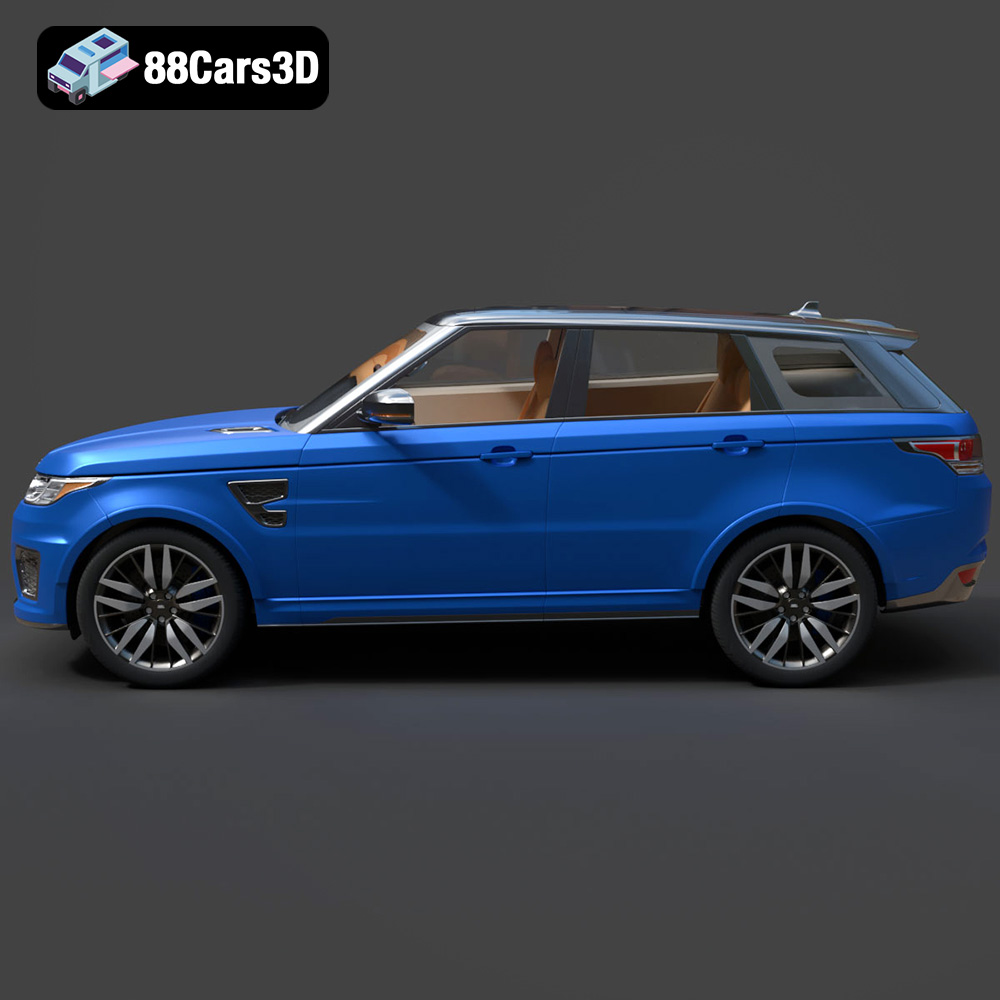
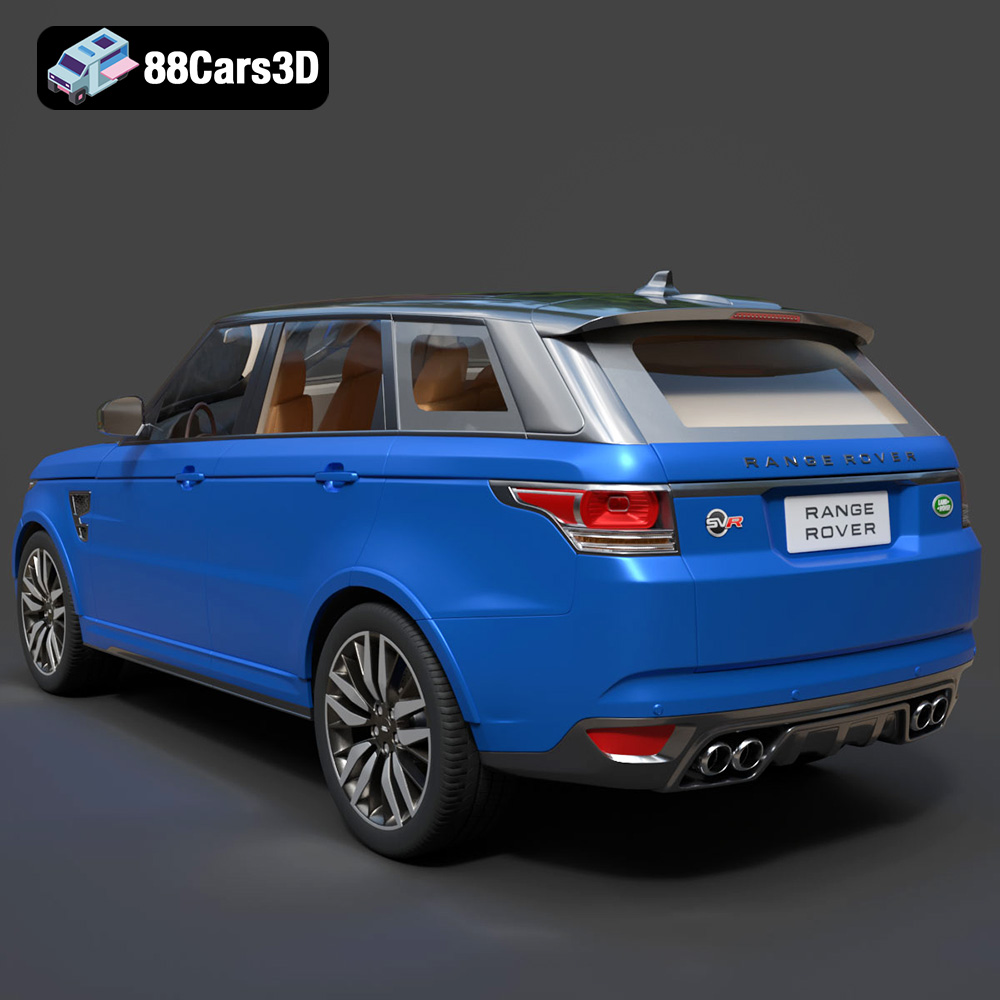
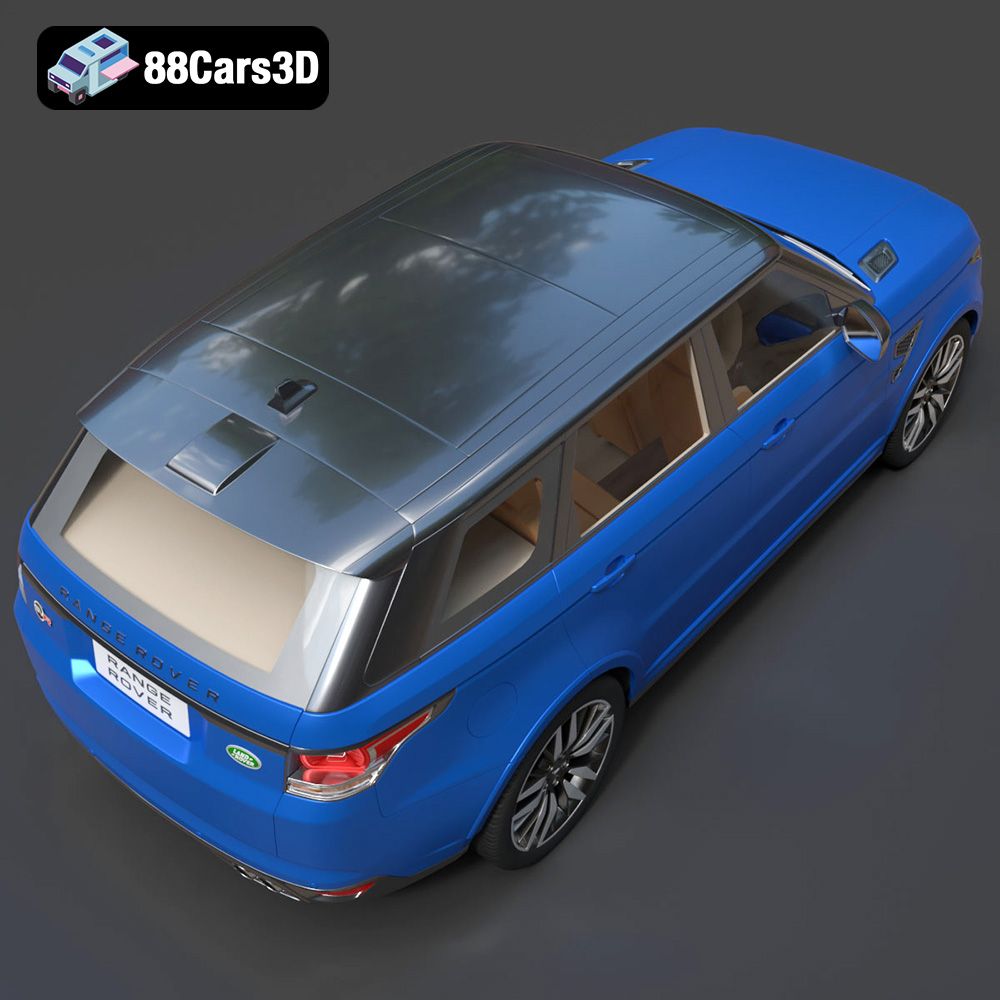
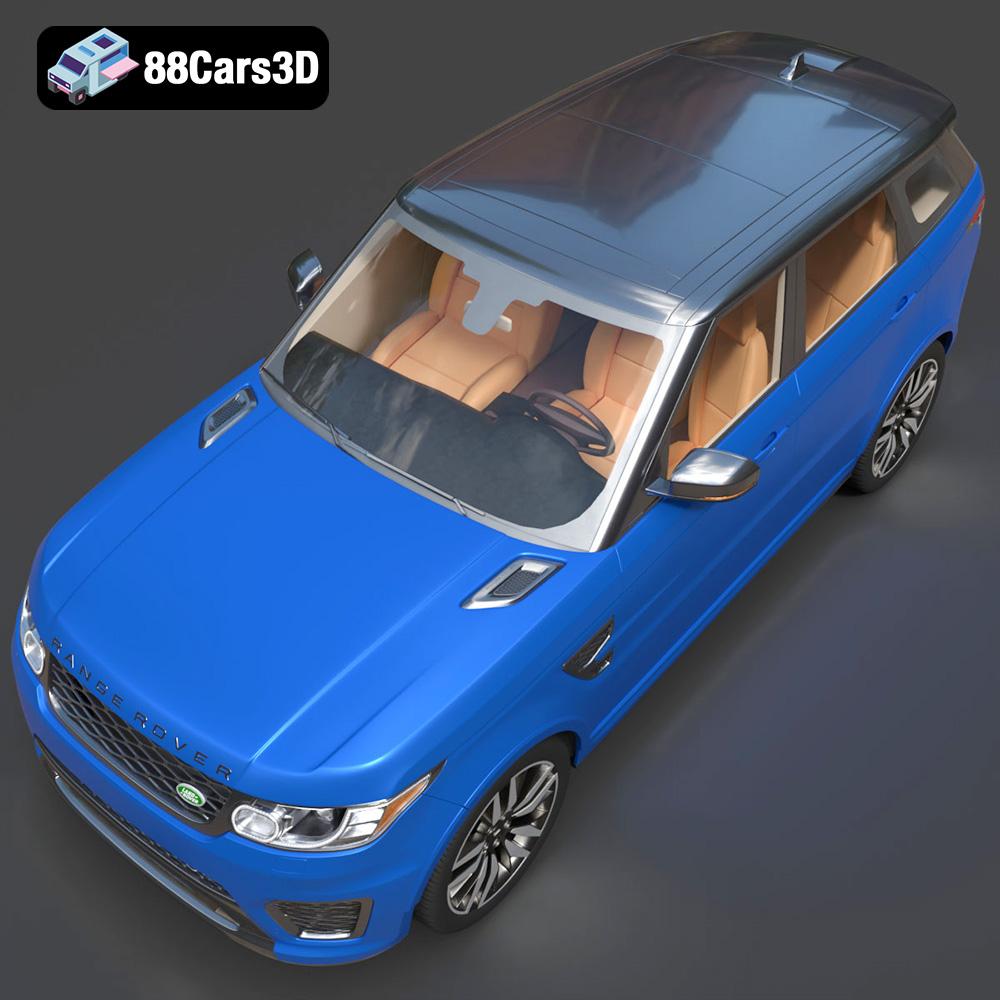
Experience unparalleled realism with the Land Rover Range Rover Sport SVR 2015 3D model. Designed to meet the demanding requirements of modern digital environments, this asset delivers an exceptionally accurate representation of the iconic performance SUV, capturing its aggressive styling, aerodynamic contours, and detailed interior.
Built with professional quality in mind, the model features clean geometry, an optimized polygon count, and realistic materials. Every curve and surface has been meticulously crafted to ensure flawless reflections and lighting interactions, making it suitable for close-up shots and demanding technical projects.
This versatile 3D model is perfect for a wide range of professional applications, including game development, automotive rendering, AR/VR experiences, simulation environments, and commercial visualizations.
$39.99
.arvr
.blend
.car3dmodel
.fbx
.gameasset
.glb
.landrover
.luxurysuv
.max
.obj
.ply
.rangerover
.rendering
.simulation
.sport
.sportSUV
.stl
.svr
.unreal
SUV