Get 20% OFF All Premium 3D & STL Models!

In the rapidly evolving landscape of digital content creation, the demand for exceptionally realistic and versatile 3D assets has never been higher. From breathtaking automotive visualizations to immersive game environments and cutting-edge AR/VR experiences, high-quality 3D car models are the bedrock of compelling digital narratives. Professionals across industries continually seek assets that not only look authentic but are also meticulously engineered for seamless integration into complex workflows.
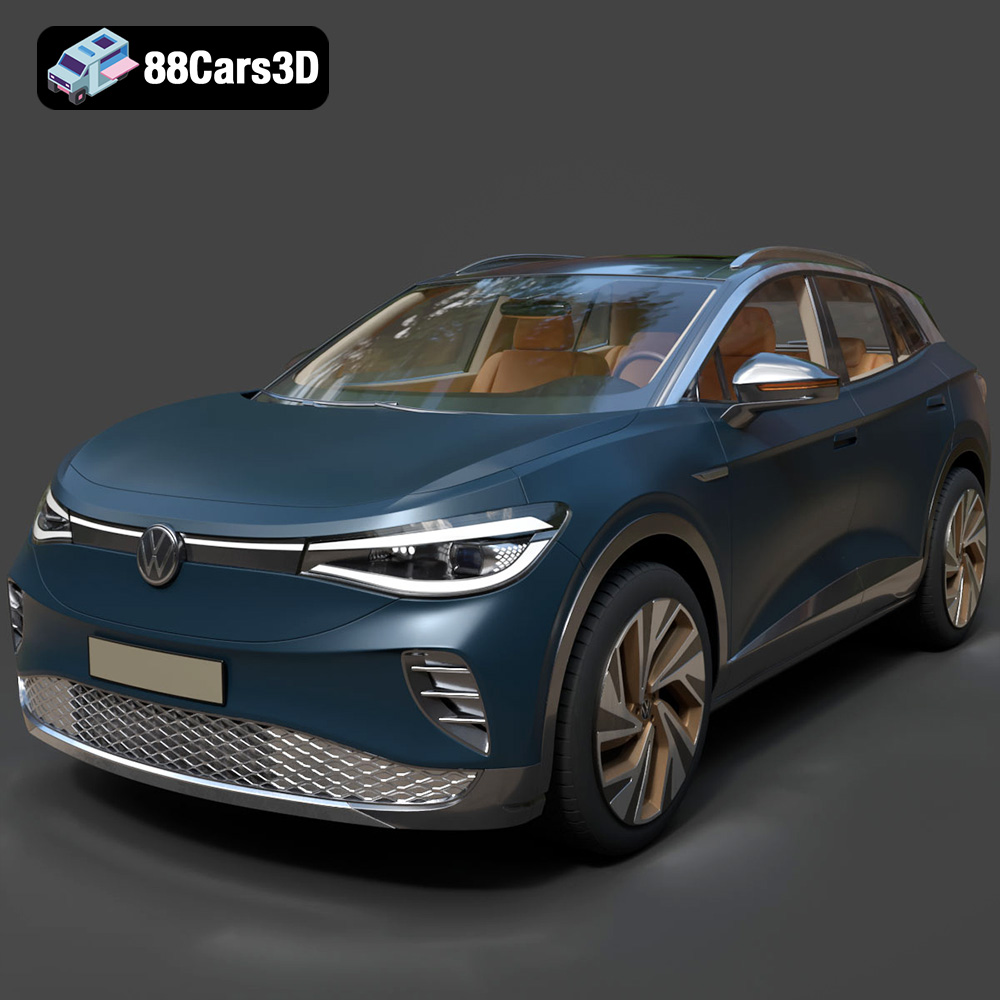
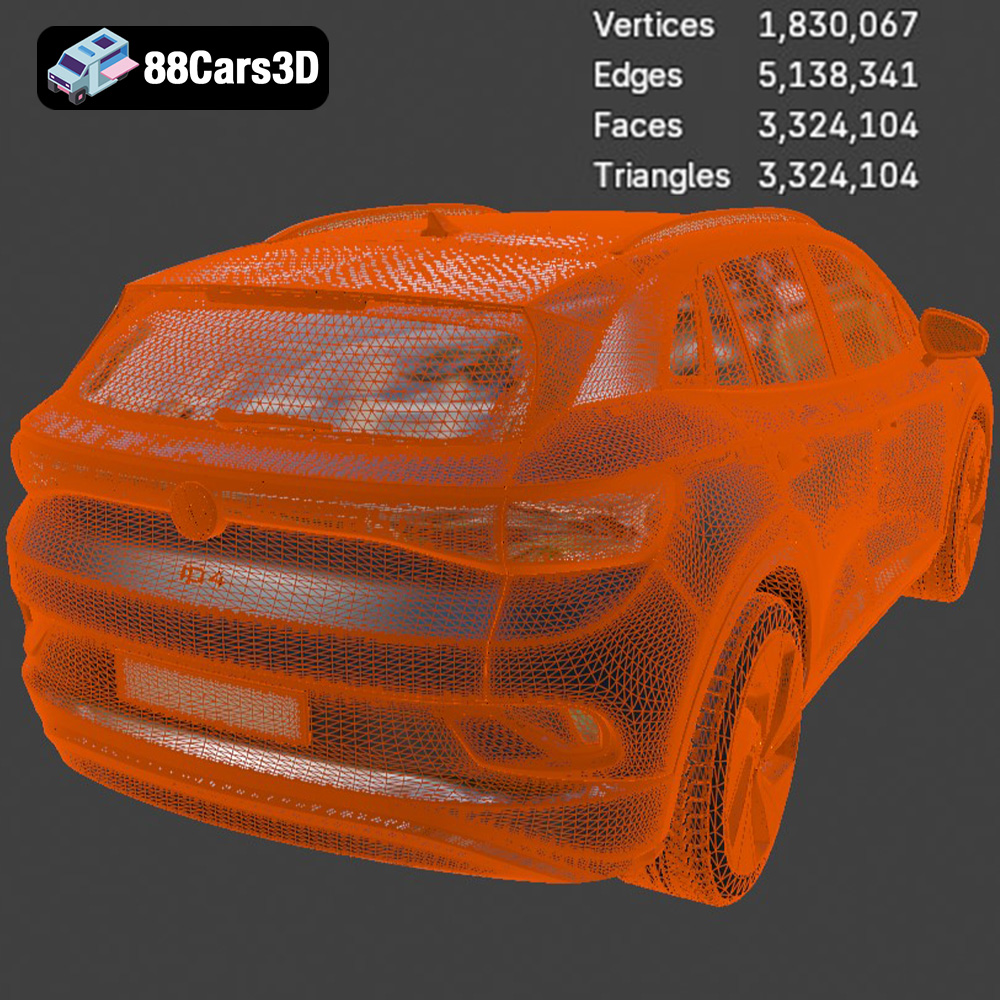
This is where specialist marketplaces like 88cars3d.com shine, offering a curated selection of premium 3D models designed to meet rigorous industry standards. Among these, the Volkswagen ID4 2021 3D Model stands out as a prime example of an asset engineered for excellence. This extensively detailed model perfectly captures the aerodynamic curves and modern design of the popular electric vehicle, providing an accurate representation suitable for a wide array of professional digital environments. Its precision engineering, clean geometry, and realistic materials make it an invaluable tool for any artist or developer aiming for the pinnacle of digital realism.
Creating a convincing 3D car model is far more than just sculpting a shape. It’s a complex blend of artistic vision and technical precision, requiring a deep understanding of automotive design, topology, material science, and rendering techniques. A truly high-fidelity model transcends mere visual appeal; it’s a robust digital twin capable of performing across diverse platforms and applications, from real-time simulations to photorealistic marketing campaigns.
For automotive designers and marketing agencies, visualization is key. Before a physical prototype is even built, a 3D model allows for iterative design reviews, material studies, and even virtual test drives. A model like the Volkswagen ID4 2021 3D Model, with its accurate proportions and intricate detailing, enables stakeholders to experience the vehicle in a virtual space with unparalleled realism. This precision extends to every curve, panel gap, and lighting element, ensuring that the digital representation is indistinguishable from its real-world counterpart. Such models are vital for conveying design intent, showcasing features, and engaging potential customers long before a car hits the showroom floor. The ability to render a vehicle in various environments, under different lighting conditions, and with customizable paint and trim options provides an invaluable tool for decision-makers and marketers alike.
Beyond aesthetics, a well-constructed 3D car model significantly boosts efficiency in production pipelines. Developers building game assets or AR/VR experiences need models that are optimized for performance without sacrificing visual quality. This means clean, quad-based topology, efficient UV mapping, and well-structured material setups that can be easily adapted or tweaked. A model that comes “game-engine ready” or “rendering-ready” saves countless hours of optimization and conversion, allowing artists and developers to focus on creative tasks rather than technical troubleshooting. When a model is supplied with multiple file formats, as with the Volkswagen ID4 2021 3D Model, it ensures broad compatibility and reduces the overhead associated with preparing assets for different software packages or rendering engines. This inherent versatility makes it a valuable investment, accelerating project timelines and reducing development costs.
The world of 3D modeling relies heavily on file formats, each designed with specific purposes, compatibilities, and technical characteristics. Choosing the right format is critical for workflow efficiency, preserving data integrity, and ensuring optimal performance in your target application. The Volkswagen ID4 2021 3D Model, available on 88cars3d.com, exemplifies this versatility by offering a comprehensive suite of formats, catering to virtually any professional need. Understanding each one is paramount for digital artists and developers.
.blend – Fully editable Blender scene with materials: Blender’s native file format is a powerhouse for users of this popular open-source 3D software. A .blend file typically contains not just the raw geometry but also materials, textures, lighting setups, camera positions, animations, and even physics simulations. This format offers the deepest level of editability, allowing artists to modify every aspect of the model, from topology adjustments to advanced shader creation. When you acquire a .blend file like that for the Volkswagen ID4 2021, you receive a complete, ready-to-render scene, providing an excellent starting point for custom projects or learning from professional setups.
.max – Editable 3ds Max project for animation and rendering: Similar to .blend for Blender, the .max format is the native file type for Autodesk 3ds Max, a long-standing industry standard, especially in architectural visualization, automotive rendering, and animation. A .max file encapsulates the entire scene, including complex modifiers, advanced material networks (like V-Ray or Corona setups), lighting, rigging, and animation data. For professionals entrenched in the Autodesk ecosystem, the .max version of the Volkswagen ID4 2021 3D Model offers unparalleled flexibility for high-end rendering, complex scene integration, and detailed animation sequences.
.fbx – Ideal for Unreal, Unity, and real-time pipelines: Developed by Autodesk, FBX (Filmbox) is a widely adopted proprietary interchange format known for its ability to store a broad range of 3D data, including geometry, materials, textures, animations, and rigging. Its robust nature makes it the go-to format for transferring assets between different 3D applications and, crucially, into game engines like Unreal Engine and Unity. The .fbx version of the Volkswagen ID4 2021 is typically optimized for real-time performance, with considerations for polygon count, material assignments, and often pre-exported animations or LODs (Levels of Detail).
.obj – Universal format for cross-software compatibility: OBJ (Wavefront Object) is one of the most widely supported 3D file formats, making it a universal choice for basic geometry exchange. It stores vertex positions, UV coordinates, vertex normals, and faces, often linking to an accompanying .mtl (Material Template Library) file for basic material properties and texture references. While .obj does not support animations or advanced scene data, its simplicity and widespread compatibility ensure that virtually any 3D software can import and work with the Volkswagen ID4 2021 model in this format, making it excellent for general 3D work or as a fallback.
.glb – Optimized for AR, VR, and browser-based display: GLB (GL Transmission Format Binary) is the binary version of glTF, an open-standard format developed by the Khronos Group specifically for efficient transmission and loading of 3D scenes and models by engines and applications. GLB files are self-contained, embedding all textures, animations, and material data directly within the single file. This makes them incredibly lightweight and performant, ideal for web-based 3D viewers, AR/VR applications, and mobile platforms. The .glb version of the Volkswagen ID4 2021 is tailored for interactive, real-time experiences where speed and file size are critical.
.stl – Suitable for 3D printing output: STL (Stereolithography) is the standard file format for 3D printing and rapid prototyping. It represents a 3D model as a series of connected triangles, describing only the surface geometry without color, texture, or internal structure. For designers looking to physically prototype or print a scaled version of the Volkswagen ID4 2021, the .stl format provides the clean, watertight mesh required for additive manufacturing processes.
.ply – Precision mesh format for CAD or analysis: PLY (Polygon File Format) is another format for storing 3D data, particularly useful for scanned models and scientific applications. It can store various properties beyond just geometry, such as color per vertex, normal vectors, and even transparency. While less common for general rendering, the .ply format offers precision and flexibility for specific applications like reverse engineering, metrology, or advanced CAD integration of the Volkswagen ID4 2021 3D Model.
.unreal – Engine-ready asset for real-time environments: While “.unreal” isn’t a standalone file extension in the same way .fbx or .blend is, it signifies an asset that has been specifically configured and prepared for direct use within Unreal Engine. This often means the model (likely imported as .fbx) has been meticulously set up with appropriate materials, PBR shaders, collision meshes, LODs (Levels of Detail), and potentially even Blueprint integrations. When you see an “.unreal” option for the Volkswagen ID4 2021, it means the developers at 88cars3d.com have gone the extra mile to provide a truly plug-and-play solution for Unreal Engine users, saving immense setup time and ensuring optimal performance and visual quality within the engine.
The true value of a premium 3D asset lies in its seamless integration into diverse professional workflows. The Volkswagen ID4 2021 3D Model is designed with this versatility in mind, offering a robust foundation for projects ranging from cinematic renderings to interactive game environments. Its comprehensive file format support ensures that artists and developers can leverage its details regardless of their preferred software.
For photorealistic automotive rendering, 3ds Max and Blender stand as titans in the industry. The Volkswagen ID4 2021 3D Model, with its native .max and .blend files, provides an ideal starting point. In 3ds Max, artists can utilize advanced rendering engines like V-Ray or Corona Renderer to achieve stunning, physically accurate results. The included .max file likely contains pre-configured materials that translate directly into these renderers, allowing for immediate setup of studio lighting or environmental HDRI setups. Animators can rig the vehicle for dynamic shots, showcasing suspension articulation or door movements, adding another layer of realism to marketing materials or architectural visualizations that feature the car.
Similarly, Blender users benefit from the native .blend file, which often includes Cycles or Eevee-ready materials and possibly even a basic lighting rig. This allows artists to dive straight into scene composition, creating dramatic product shots or integrating the ID4 into complex environments. Blender’s powerful modeling and sculpting tools also mean that if any specific customization or damage modeling is required, it can be done directly within the native file, leveraging the model’s clean topology. The attention to detail in the included assets means that aspects like tire tread, brake calipers, and intricate headlight designs are already modeled to a high standard, reducing the need for extensive post-modeling work.
Game development and real-time visualization demand highly optimized assets. The .fbx and specific “.unreal” options for the Volkswagen ID4 2021 3D Model are critical here. When importing the .fbx into Unreal Engine, developers typically expect proper UV unwrapping for texture mapping, a manageable poly count that can be further optimized with LODs, and clean material IDs for applying PBR (Physically Based Rendering) shaders. The “engine-ready” Unreal asset goes a step further, often arriving with pre-configured PBR materials, collision meshes, and potentially even simple interactive elements or blueprint setups.
This level of preparation drastically cuts down on the iterative process of optimizing and configuring a model for real-time performance. Game designers can quickly integrate the ID4 into virtual environments, populate open-world maps, or use it as a hero vehicle in racing simulations. For architectural walkthroughs or interactive product configurators built in Unreal, having a ready-to-use, high-quality car model like the ID4 can elevate the entire experience, adding a touch of realism and aspiration to virtual scenes.
Augmented Reality (AR), Virtual Reality (VR), and browser-based 3D (WebGL) are rapidly expanding frontiers where efficient, high-quality 3D assets are paramount. The .glb file format, specifically optimized for these applications, makes the Volkswagen ID4 2021 3D Model an excellent choice for these mediums. The .glb format is compact and self-contained, embedding textures and animations within a single file, which is crucial for fast loading times and smooth performance on mobile devices or web browsers.
Imagine an AR application where a customer can virtually place the ID4 in their driveway, or a VR experience allowing them to explore the interior of the car before it’s even released. The optimized geometry and PBR materials provided ensure that the model looks great even on less powerful hardware, maintaining visual fidelity while delivering a fluid interactive experience. For automotive brands looking to create engaging digital showrooms or interactive configurators directly on their websites, the .glb version of the ID4 model offers a streamlined path to deployment, eliminating complex server-side rendering or heavy downloads.
The description of the Volkswagen ID4 2021 3D Model highlights “clean geometry,” “accurate proportions,” and “realistic materials.” These aren’t just buzzwords; they represent fundamental technical pillars that distinguish a professional-grade 3D asset from a mediocre one. Understanding these elements is crucial for anyone evaluating or utilizing 3D car models in demanding production environments.
Clean Geometry: This refers to the underlying mesh structure of the model. A premium 3D car model, such as the Volkswagen ID4 2021, will feature predominantly quad-based topology. Quads (four-sided polygons) are preferred over triangles (three-sided) or n-gons (more than four-sided) because they deform more predictably during animation, subdivide smoothly, and are easier for artists to work with. Clean geometry also implies an optimized polygon count – high enough to capture intricate details like panel gaps and complex curves, but not excessively high to burden real-time applications. The balance ensures both visual fidelity for close-up renders and performance efficiency for game engines.
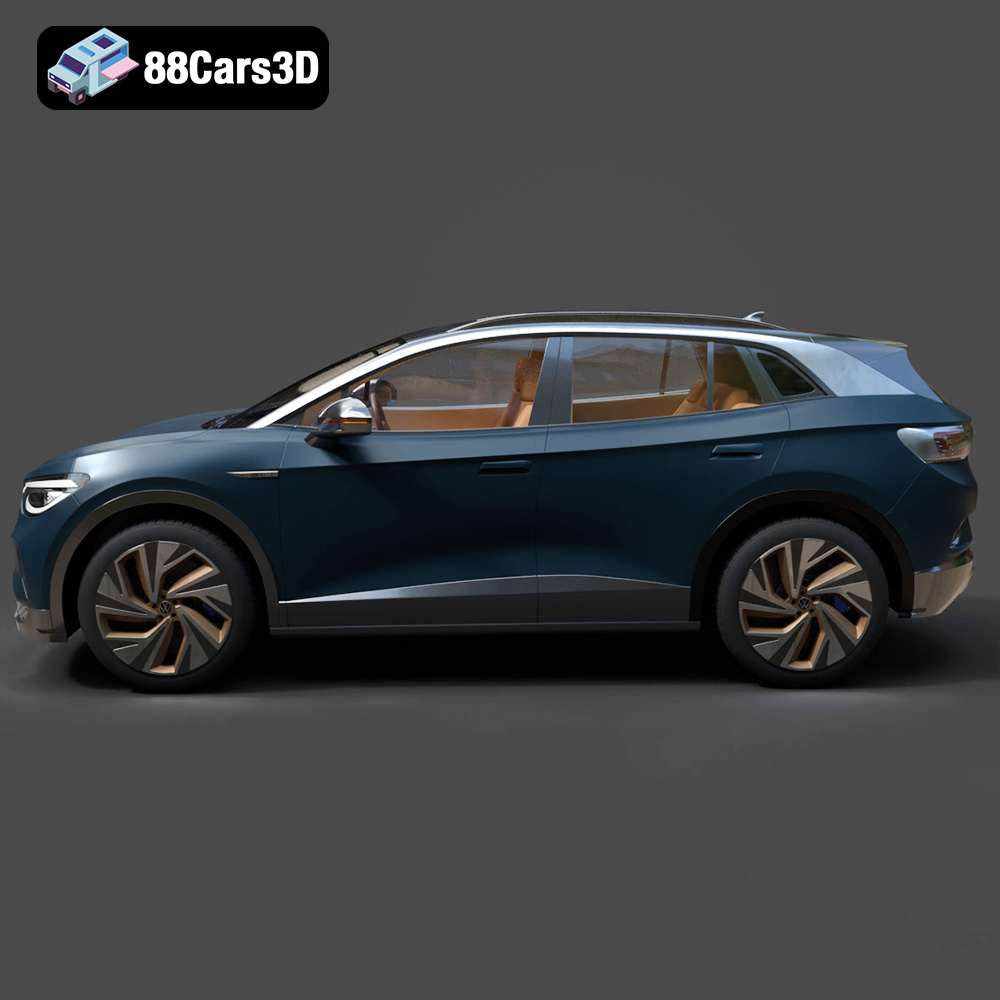
Accurate Proportions: This is fundamental for automotive models. The Volkswagen ID4 2021 3D Model’s claim of accurate proportions means it has been carefully crafted using real-world schematics, blueprints, and photographic references. Every dimension, from wheelbase to body height and the curvature of the windshield, precisely matches the actual vehicle. This accuracy is vital for architectural visualizations where the car needs to fit realistically into a scene, for configurators where precise scale is paramount, and for simulations where physical accuracy affects dynamics.
UV Unwrapping: UV mapping is the process of flattening the 3D surface of a model into a 2D plane, creating a map that tells the software how to apply textures without stretching or distortion. For a complex object like a car, proper UV unwrapping is critical. A high-quality model will have clean, non-overlapping UVs across all its components, allowing for precise texture painting and the application of complex PBR material maps. This ensures that details like paint reflections, headlight textures, or interior fabric patterns render flawlessly.
Realistic materials are paramount for achieving photorealism. The Volkswagen ID4 2021 3D Model is engineered with precision and features realistic materials, implying the use of Physically Based Rendering (PBR) workflows. PBR materials simulate how light interacts with surfaces in the real world, based on physical properties like roughness, metallicness, and normal maps. This approach ensures that the car looks correct under any lighting condition, whether it’s a sunny outdoor scene or a dimly lit interior.
A premium PBR material setup typically includes multiple texture maps:
The quality of these maps, combined with an intelligent shader network, allows the Volkswagen ID4 2021 to exhibit convincing paint reflections, realistic tire rubber, authentic glass transparency, and finely detailed interior textures, all contributing to an exceptional level of realism.
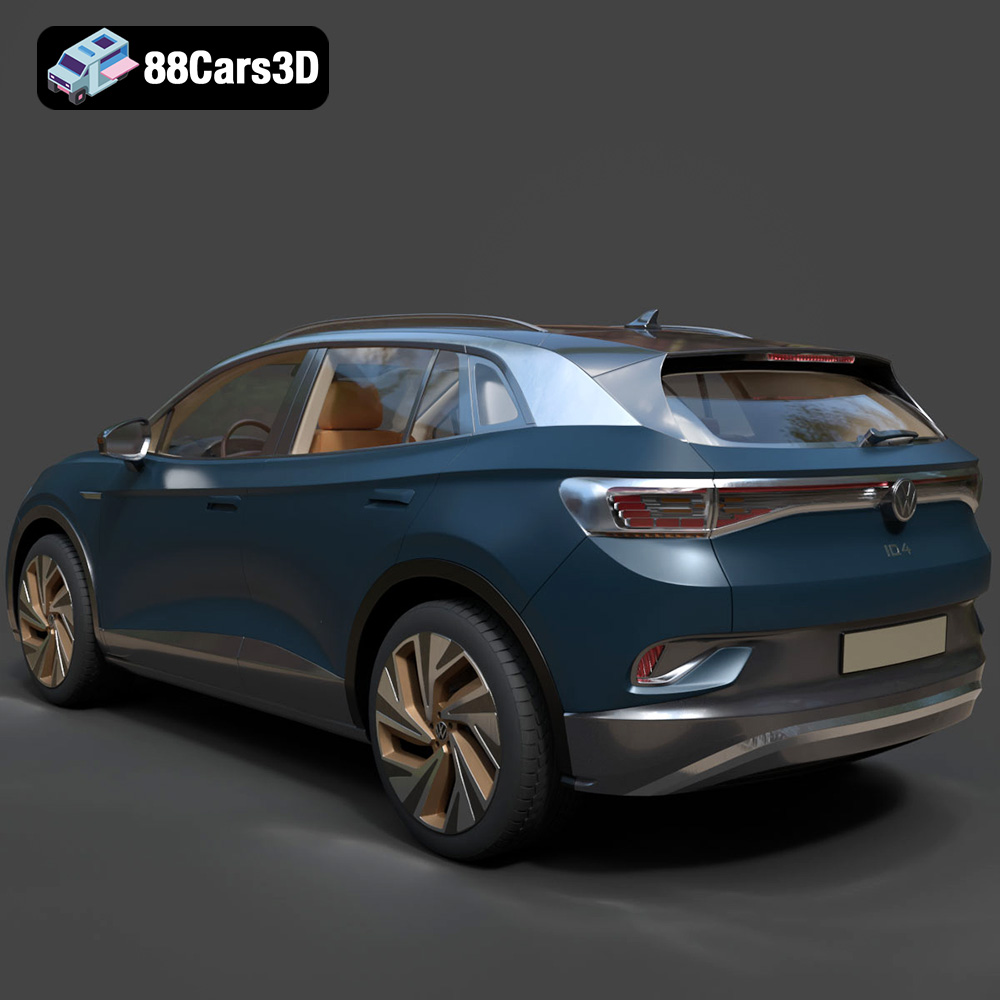
“Intricately modeled interior and exterior elements” means that the model doesn’t cut corners on visibility. For the exterior, this includes accurate panel gaps, detailed headlights and taillights with internal reflectors, realistic wheel and tire models (including tread patterns), and meticulously modeled emblems and badging. Every vent, sensor, and trim piece is accounted for, ensuring that even in close-up beauty shots, the car holds up to scrutiny.
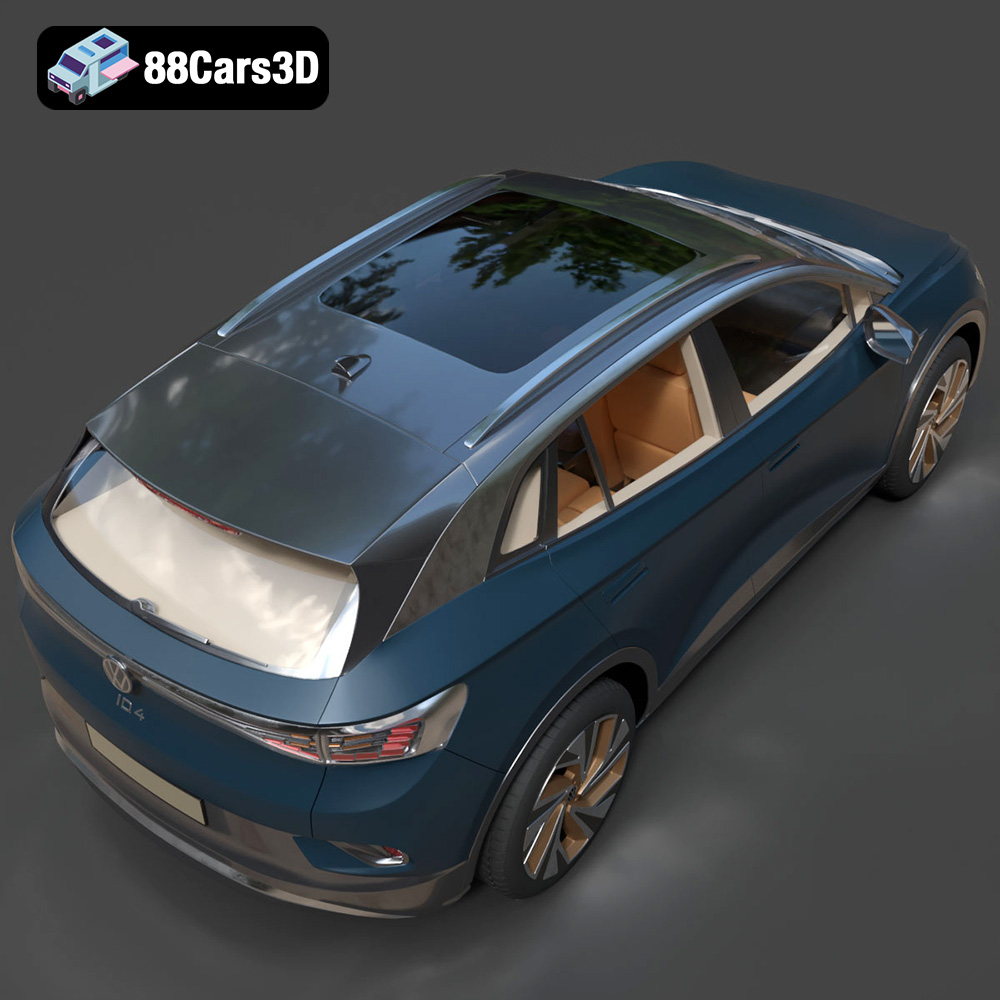
The interior detailing is often even more challenging. A high-fidelity model will feature a fully modeled dashboard with legible gauges and screens, accurate seat stitching and contours, detailed door panels with handles and window controls, and even subtle textures for various materials like leather, plastic, and chrome. This level of detail is crucial for VR experiences, interior configurators, or any shot that involves opening the car doors. The Volkswagen ID4 2021 3D Model provides a robust foundation for scenes demanding full authenticity, ensuring seamless integration into close-up shots and demanding digital scenes.
The versatility and technical quality of the Volkswagen ID4 2021 3D Model make it suitable for a wide range of professional scenarios. Let’s explore some hypothetical but realistic case studies demonstrating its immense value across various industries.
Imagine a leading automotive marketing agency tasked with launching a new campaign for the Volkswagen ID4. They need stunning visuals for brochures, online advertisements, and an interactive web configurator. Instead of expensive photoshoots with physical vehicles, which are limited by location, lighting, and vehicle availability, they turn to 88cars3d.com for the Volkswagen ID4 2021 3D Model.
Using the .max or .blend file, their visualization artists can render the ID4 in a variety of idealized settings – cruising through a futuristic city, parked elegantly in a suburban driveway, or charging at a scenic overlook. They can easily swap out paint colors, wheel options, and interior trims, generating hundreds of unique high-resolution images and even animated commercials. For the web configurator, the optimized .glb version allows prospective buyers to spin the car 360 degrees in their browser, open doors, explore the interior, and customize features in real-time, providing an engaging and accessible pre-purchase experience without ever leaving home. This workflow significantly reduces costs and accelerates time-to-market for marketing assets.
A major game studio is developing an open-world driving simulator set in a near-future metropolis. They need a diverse fleet of realistic electric vehicles for players to drive and for AI traffic. Acquiring a high-quality, game-engine-ready asset like the Volkswagen ID4 2021 3D Model (especially the .fbx or .unreal variant) saves their development team hundreds of hours.
The model’s optimized geometry and clean UVs are ideal for game integration. Developers can apply their game’s custom PBR shaders, add robust collision meshes, and set up multiple Levels of Detail (LODs) to ensure smooth performance across various gaming platforms. The intricately modeled interior means that even from a first-person driver’s perspective, the car looks authentic and immersive. This allows players to experience the ID4 in a dynamic, interactive environment, from high-speed chases to leisurely cruises, enhancing the realism and replayability of the game.
An architectural firm is presenting a new sustainable residential development, featuring state-of-the-art charging stations and eco-friendly landscaping. To fully convey the lifestyle and aesthetic, they need to populate their renderings with modern, environmentally conscious vehicles. The Volkswagen ID4 2021 3D Model is a perfect fit.
Using the .max or .blend file, the visualization specialists can seamlessly integrate the ID4 into their architectural scenes. Whether it’s parked outside a futuristic smart home, charging in a communal garage, or driving along a tree-lined street, the model adds a touch of realism and context. Its accurate proportions ensure it scales correctly within the architectural environment, and its realistic materials catch the light naturally, enhancing the overall photorealism of the renders. This allows the architects to present a complete vision, demonstrating how their designs cater to a modern, eco-conscious demographic, and ultimately helping clients visualize themselves within the proposed space.
The digital realm thrives on realism and precision, especially when it comes to intricate subjects like modern automotive design. High-fidelity 3D car models are no longer just supplementary assets; they are foundational tools empowering artists, developers, and marketers to create compelling, immersive, and functional digital experiences. The comprehensive technical specifications, versatile file format support, and meticulous attention to detail embodied by models like the Volkswagen ID4 2021 3D Model exemplify what it means to be a truly professional-grade asset.
From cinematic automotive rendering in 3ds Max and Blender to optimizing game assets for Unreal Engine, or developing lightweight AR/VR applications with .glb, the Volkswagen ID4 2021 3D Model provides a robust and flexible solution. Its clean geometry, accurate proportions, and realistic PBR materials ensure that whether your project demands close-up beauty shots or seamless real-time performance, this model delivers. For those seeking to elevate their digital projects with top-tier 3D car models, 88cars3d.com continues to be a go-to resource, offering assets that meet the exacting standards of the industry’s leading professionals. Investing in such quality assets is not just about aesthetics; it’s about investing in efficiency, versatility, and the ultimate success of your digital endeavors.
Experience exceptional realism with the Volkswagen ID4 2021 3D Model. This extensively detailed model perfectly captures the aerodynamic curves and modern design of the popular electric vehicle, providing an accurate representation suitable for professional digital environments.
Engineered with precision, this model features clean geometry, accurate proportions, and realistic materials. The intricately modeled interior and exterior elements ensure seamless integration into close-up shots and demanding digital scenes.
Ideal for a wide range of professional applications, this model is perfect for automotive visualization, game development, rendering, AR/VR experiences, and interactive simulations.
$39.99
.arvr
.blend
.car3dmodel
.crossover
.electricvehicle
.ev
.fbx
.gameasset
.glb
.id4
.max
.obj
.ply
.rendering
.simulation
.stl
.unreal
.volkswagen
SUV