Get 20% OFF All Premium 3D & STL Models!

In the vast and ever-evolving landscape of 3D modeling, the ability to accurately capture the essence of a real-world object is paramount. This holds especially true for automotive design, where precision, historical accuracy, and aesthetic fidelity can elevate a digital asset from a mere representation to a powerful tool for visualization, gaming, and even preservation. Classic cars, in particular, present a unique challenge and opportunity, embodying eras of design philosophy and engineering prowess that resonate deeply with enthusiasts and professionals alike.
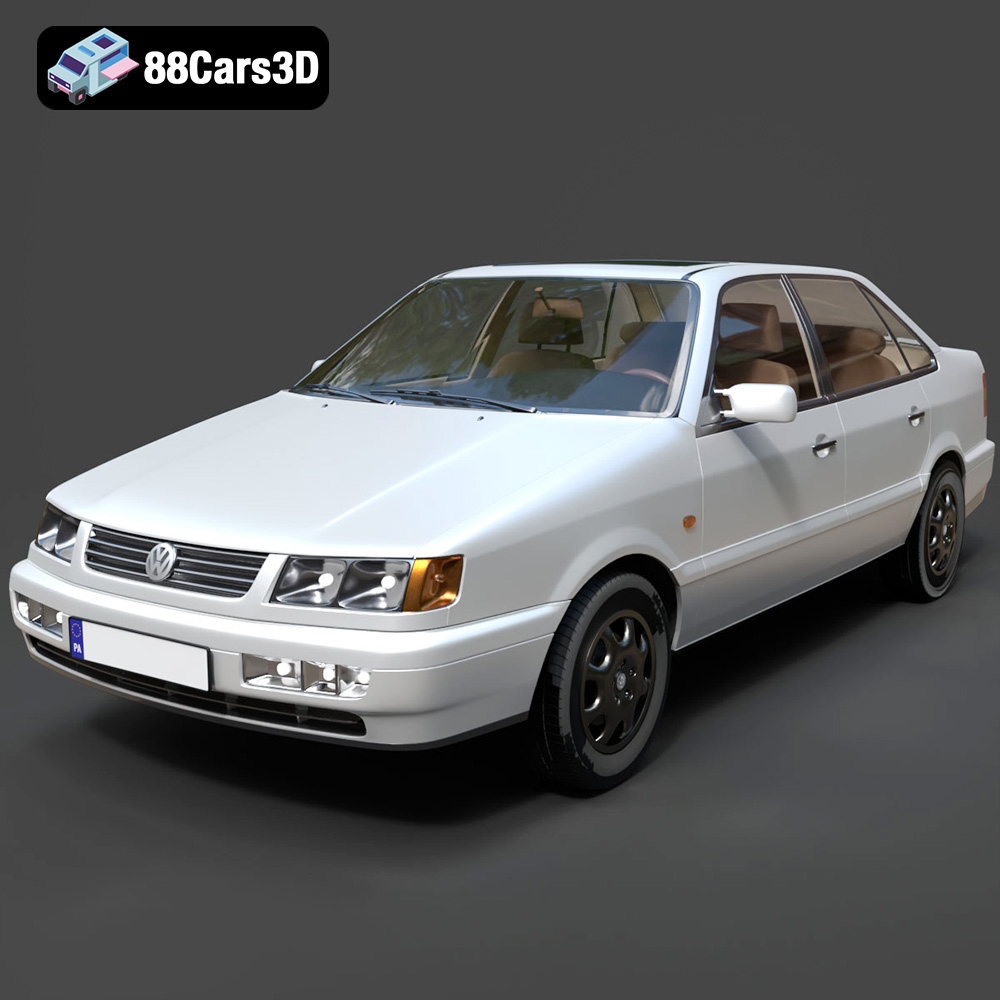
Consider the humble yet iconic Volkswagen Passat Mk4 B4 Sedan from 1993. This vehicle, while not a supercar, represents a significant chapter in German automotive history, known for its robust engineering and understated elegance. For 3D artists, game developers, and visualization specialists, having access to a high-quality, meticulously crafted 3D model of such a car opens up a myriad of creative possibilities. Whether it’s populating a realistic 90s street scene in an open-world game, creating an architectural visualization with period-accurate traffic, or simply appreciating the design evolution, a well-executed 3D model like the Volkswagen Passat Mk4 B4 Sedan 1993 3D Model from 88cars3d.com becomes an indispensable asset.
This article delves into the technical intricacies and creative potential that high-fidelity 3D car models offer, using the 1993 Volkswagen Passat Mk4 B4 Sedan as a prime example. We’ll explore the importance of diverse file formats, discuss the technical specifications required for various applications, and outline how such assets seamlessly integrate into professional workflows across rendering, game development, and more. Join us as we navigate the digital highways of automotive design.
The success of any 3D project often hinges on the compatibility and suitability of its assets. A single 3D model, such as the Volkswagen Passat Mk4 B4 Sedan 1993, needs to be versatile enough to transition between different software environments and deployment platforms. This is where a comprehensive understanding of various 3D model file formats becomes critical. Each format serves a specific purpose, catering to different stages of the production pipeline, from initial modeling to real-time rendering and even physical fabrication.
For artists and studios working within established ecosystems, native project files are invaluable. The .blend format provides a fully editable Blender scene, preserving materials, textures, lighting, and animation setups. This means an artist can download the Passat model and immediately begin customizing it within Blender, leveraging its robust toolset for further detailing or integrating it into a larger scene. Similarly, the .max format offers the same level of deep integration for 3ds Max users, providing an editable project file that maintains all hierarchical data, modifiers, and rendering settings. This is particularly useful for animation studios or architectural visualization firms that rely heavily on 3ds Max for their final renders. These native formats ensure maximum flexibility and direct access to the model’s construction, making them ideal for professionals who need to make significant modifications or integrate the model into complex existing scenes.
When it comes to portability and performance across different software and especially real-time engines, specific formats rise to prominence. .fbx (Filmbox) is an industry-standard format, revered for its robust support of geometry, materials, animations, and skeletal data. It is the go-to format for exporting assets between different 3D applications and is exceptionally well-suited for game engines like Unreal Engine and Unity. The Passat Mk4 B4 Sedan 3D Model, when supplied in FBX, ensures efficient data transfer and accurate material interpretation, which is crucial for game development and interactive experiences. The .glb (GL Transmission Format Binary) is increasingly popular for web-based 3D, AR, and VR applications. It’s a self-contained binary file that includes models, textures, and animations, optimized for quick loading and efficient parsing. For projects requiring the Passat to appear in a browser-based configurator or a mobile AR experience, GLB offers unparalleled performance. Finally, the .unreal format signifies an asset that is specifically packaged and optimized for direct import into Unreal Engine projects. This often means pre-configured materials, collision meshes, and LODs (Levels of Detail) are already set up, significantly accelerating the integration process for game developers. These formats are designed to minimize friction and maximize performance in dynamic, real-time environments.
Beyond digital rendering, 3D models also serve as blueprints for physical objects. The .stl (Stereolithography) format is the undisputed standard for 3D printing. It represents 3D surfaces as a series of connected triangles, making it ideal for conveying geometry to 3D printers. For hobbyists or professionals looking to print a scale model of the Volkswagen Passat Mk4 B4 Sedan 1993, the STL file provides the necessary data. However, it typically lacks color or texture information. The .ply (Polygon File Format) is another precision mesh format often used in CAD, 3D scanning, and scientific visualization. It can store not only geometry but also color, transparency, and other properties per vertex or face. While less common for direct 3D printing than STL, PLY offers a richer dataset for certain engineering or analytical applications, ensuring high fidelity for complex mesh data. The availability of these formats means the Passat model can transition from virtual pixels to tangible plastic, offering diverse avenues for its utility.
The comprehensive range of file formats available for the Volkswagen Passat Mk4 B4 Sedan 1993 3D Model ensures that regardless of your project’s demands—be it a high-end cinematic render, a robust game asset, or a physical prototype—you have the right tools at your disposal. This versatility is a hallmark of high-quality 3D car models found on platforms like 88cars3d.com.
Creating a 3D car model that excels across various applications requires a meticulous approach to technical specifications. It’s not just about aesthetics; it’s about performance, scalability, and seamless integration. The Volkswagen Passat Mk4 B4 Sedan 1993 3D Model exemplifies this balance, engineered to deliver both visual fidelity and optimal performance, especially critical for today’s demanding real-time environments.
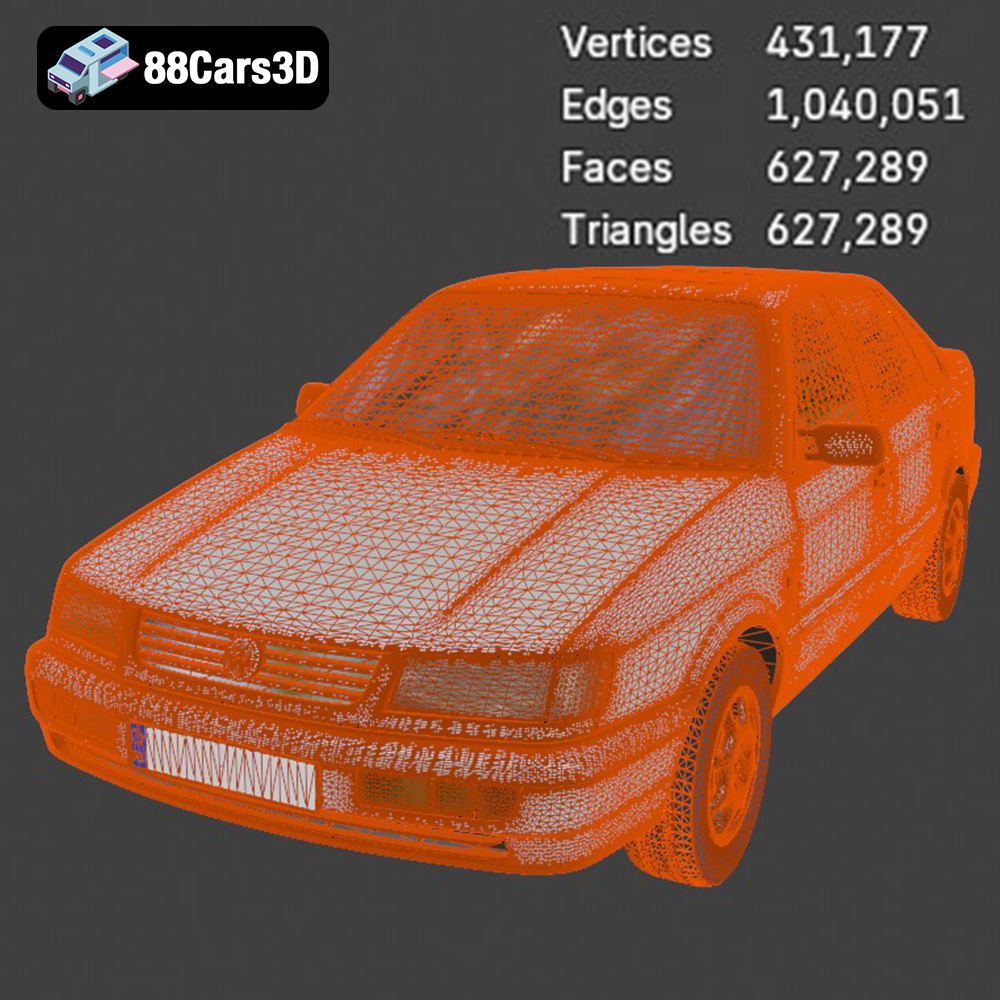
One of the primary considerations for any 3D asset, particularly 3D car models for game development, is its polygon count (or triangle count). High poly counts can lead to stunning visual detail but cripple real-time performance, while excessively low poly counts can result in blocky, unrealistic models. The Passat Mk4 B4 Sedan 3D Model strikes an ideal balance, boasting an optimized triangle count of 50,000-80,000. This range ensures that the model maintains sufficient detail for close-up shots and accurate reflections without imposing a heavy load on rendering engines. Furthermore, the topology—the arrangement of polygons—is clean and efficient. Good topology is essential for proper deformation during animation, realistic shading, and efficient UV unwrapping. For a vehicle, this means smooth curves, crisp edges where needed, and a mesh that responds predictably to lighting, crucial for automotive rendering.
Accuracy in scale is non-negotiable for realistic scenes. The Volkswagen Passat Mk4 B4 Sedan 1993 3D Model is built to real-world scale, matching the actual vehicle’s dimensions. This attention to detail ensures that when the model is placed within an architectural visualization or a game environment, it fits naturally without requiring manual scaling adjustments that can often lead to proportion inaccuracies. Beyond static scale, the model features proper pivot setups for crucial components: wheels are correctly aligned for rotation, suspension elements are ready for dynamic compression and extension, and steering components are articulated for realistic turning. This ‘game-ready’ articulation is invaluable for developers creating driving simulators, cinematic sequences, or interactive experiences where the car needs to respond realistically to user input or environmental factors.
The true test of a game-ready asset lies in its ease of integration and performance within game engines. The technical specifications of the Passat model, including its optimized poly count, efficient topology, and proper pivot setups, make it an ideal candidate for engines like Unreal Engine and Unity. When imported, the model’s materials are designed to be easily configurable within the engine’s shader system, allowing for quick adjustments to paint reflectivity, glass transparency, and tire textures. The inclusion of an .unreal format option further streamlines this process, potentially offering pre-configured assets that conform to engine best practices, including LODs for performance optimization at varying distances. This focus on engine compatibility means developers can spend less time on asset preparation and more time on game logic and creative iteration, bringing 90s-themed street scenes or retro driving simulators to life efficiently.
High-quality 3D car models are not merely decorative elements; they are foundational components in a multitude of professional digital workflows. The Volkswagen Passat Mk4 B4 Sedan 1993 3D Model, with its detailed design and versatile file formats, offers significant advantages across various industries, from advertising to interactive entertainment.
For advertising agencies, automotive design studios, and visualization artists, photorealistic rendering is key. The Passat model provides a solid foundation for achieving stunning visual results in popular rendering packages like 3ds Max (with V-Ray or Corona) and Blender (with Cycles or Eevee). Artists can leverage the model’s accurate geometry and clean topology to apply sophisticated materials—from metallic car paints with clear coat reflections to realistic glass, rubber, and plastic textures. The separation of wheels, suspension, and body allows for individual material assignment and easy animation for turntable renders or dynamic scene compositions. For instance, an artist might create a stylized studio render showcasing the car’s classic lines, or integrate it into a hyper-realistic outdoor scene, complete with environmental reflections and intricate lighting, demonstrating the power of high-quality 3D car models for compelling automotive rendering.
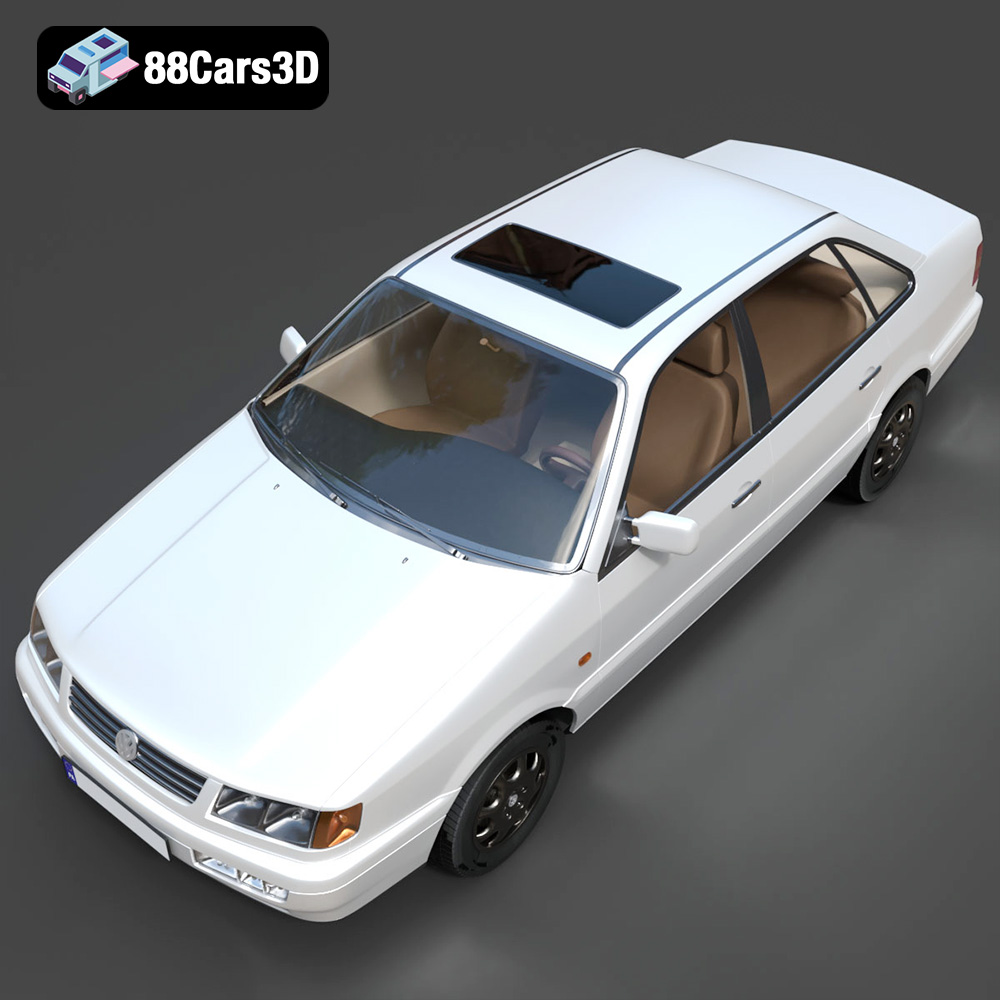
In game development, speed and efficiency are paramount, alongside visual quality. The Volkswagen Passat Mk4 B4 Sedan 1993 3D Model is explicitly designed as a game asset, optimized with a triangle count that fits within typical performance budgets for modern open-world games and racing titles. Its game-ready topology and proper pivot setups simplify integration into engines like Unreal Engine and Unity. Developers can quickly implement physics, set up collision meshes, and apply vehicle controls. This model is perfect for populating background traffic in a vast urban environment, featuring as a playable vehicle in a period-correct racing game, or even as a prop in a narrative-driven adventure set in the 90s. The interior details, optimized for first-person POV, allow for immersive cockpit views, crucial for driving simulators. By starting with a pre-optimized model, development teams save valuable time on asset creation and can focus on gameplay mechanics and world-building.
Architectural visualization (ArchViz) often requires realistic context to bring proposed designs to life. Integrating the Passat Mk4 B4 Sedan into an ArchViz scene can instantly establish a sense of time and place, anchoring a building design within a believable environment. Whether it’s parked outside a retro-styled apartment building or driving down a digital street, the car adds a layer of authenticity that generic models simply cannot. The model’s real-world scale and accurate proportions ensure it sits credibly within any architectural context. Furthermore, for urban planning simulations or environmental renders, having a diverse library of period-appropriate 3D car models is essential for creating dynamic and lifelike streetscapes, showcasing how human activity and infrastructure interact.
The utility of a high-quality 3D model extends far beyond traditional screen-based rendering and game engines. Modern technologies like 3D printing, Augmented Reality (AR), and Virtual Reality (VR) are opening new frontiers for digital assets, allowing for both physical realization and immersive interactive experiences. The Volkswagen Passat Mk4 B4 Sedan 1993 3D Model is versatile enough to thrive in these cutting-edge applications.
For enthusiasts, designers, or educators, the ability to transform a digital model into a tangible object is incredibly exciting. The inclusion of an .stl format for the Passat model means it’s ready for 3D printing. This allows for the creation of display-scale models, collector’s items, or even functional prototypes. The product description provides clear recommendations for optimal 3D print settings, such as scale (1:12, 1:18, 1:24), layer height (0.04–0.12 mm, with resin printing recommended for fine details), and infill. Crucially, it advises on wall thickness, support structures for delicate parts (like mirrors and exhaust tips), and print orientation for structural integrity. Post-processing steps like sanding, priming, and painting can further enhance the realism, allowing hobbyists to recreate the authentic factory colors and metallic finishes of the original 1993 Passat, effectively bridging the gap between the digital and physical worlds.
Augmented Reality (AR) and Virtual Reality (VR) are transforming how we interact with digital content. For automotive companies, configurators, or even historical exhibitions, a high-quality 3D model like the Passat Mk4 B4 is a cornerstone of immersive experiences. In AR, the Passat could be placed virtually in a real-world environment through a smartphone or tablet, allowing users to “see” the car in their driveway or on a tabletop, examining its details from every angle. In VR, the model could be part of a virtual museum, a driving simulation, or even a virtual showroom where users can “step inside” and explore the interior in first-person, interacting with elements like the dashboard and steering wheel. The optimized geometry and clean topology of this 3D car model make it ideal for the performance demands of AR/VR, ensuring smooth frame rates and realistic visuals, which are critical for preventing motion sickness and maximizing user engagement.
Beyond its default state, the Volkswagen Passat Mk4 B4 Sedan 1993 3D Model is designed for customization. This adaptability is vital for various creative and commercial projects. Users can easily change body colors to match factory options or introduce custom finishes, experiment with different tire textures (e.g., all-season versus performance variants), and adjust material properties like matte, gloss, or metallic finishes for plastic trims. Furthermore, artists can adapt the lighting to suit different environments, from bright outdoor scenes to moody studio setups. This flexibility means the model isn’t a static asset but a dynamic foundation that can be tailored to meet specific project requirements, ensuring its relevance across a wide spectrum of visual styles and technical needs. Whether for a nostalgic rendering, a historically accurate game level, or an interactive AR experience, the ability to customize enhances its value significantly.
The digital realm continues to expand, and with it, the demand for exceptionally crafted 3D assets grows exponentially. As we’ve explored through the lens of the Volkswagen Passat Mk4 B4 Sedan 1993 3D Model, the intersection of historical automotive design and cutting-edge digital technology creates immense value for professionals across various industries. From the meticulous detail required for automotive rendering and the rigorous optimization for game development to the transformative potential of 3D printing and immersive AR/VR experiences, a high-quality 3D car model is more than just a collection of polygons—it’s a versatile tool that drives innovation and creativity.
The comprehensive file format support, from editable .blend and .max files to game-ready .fbx, .glb, and .unreal, and even print-ready .stl, ensures that this Passat model is equipped for virtually any pipeline imaginable. Its balanced poly count, real-world scale, and articulated components highlight a commitment to both visual fidelity and practical usability. For anyone seeking to infuse their projects with a touch of 90s European motoring charm, whether it’s for background traffic, interactive configurators, or detailed close-up rendering, the Volkswagen Passat Mk4 B4 Sedan 1993 3D Model from 88cars3d.com stands as a testament to the power of expertly crafted 3D assets. Investing in such quality means investing in efficiency, realism, and boundless creative potential.
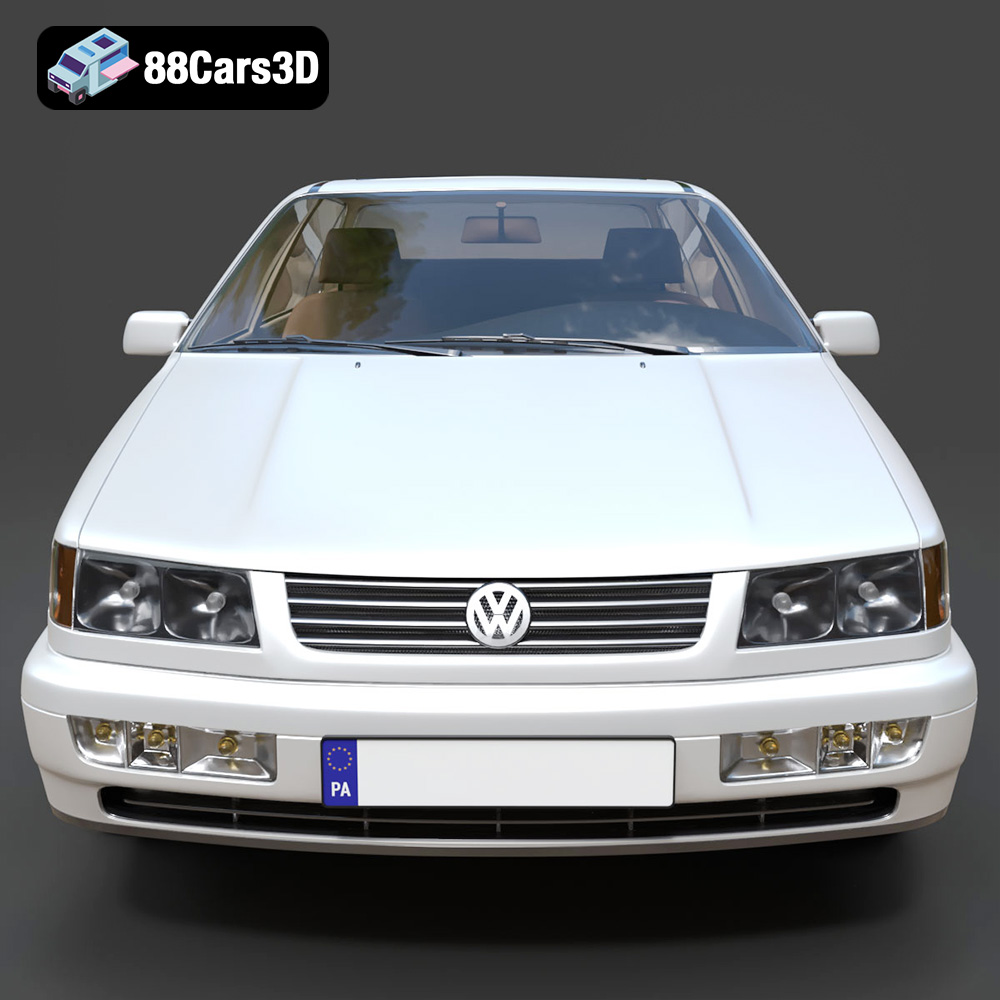
The 1993 Volkswagen Passat Mk4 (B4) Sedan represents a pivotal moment in German automotive design, blending practical family hauling capabilities with robust, reliable engineering. Known for its clean, understated aesthetic and the distinct introduction of a traditional front grille compared to its B3 predecessor, this classic sedan has cemented its legacy as an icon of 90s European motoring. The model captures the quintessential utilitarian charm, featuring the accurate sedan roofline, distinctive halogen headlight housings, and classic factory wheel options that defined mid-90s Volkswagen styling. This 3D model boasts exceptional quality with optimized topology and a game-ready triangle count. The geometry strikes the ideal balance between high visual fidelity and performance efficiency, ensuring seamless integration into modern real-time engines. Whether utilized for background traffic generation, interactive configurators, or detailed close-up rendering, the model maintains crisp reflections and accurate proportions across the board. Perfect for 90s-themed street scenes, retro driving simulators, architectural visualizations, and immersive virtual environments.
$39.99
.blend
.fbx
.glb
.max
.obj
.passat
.ply
.rendering
.sedan
.stl
.unreal
.volkswagen
1993
b4
car-3d-model
classic-car
family-car
game asset
game-ready
low-poly
mk4
optimized
VR/AR