Get 20% OFF All Premium 3D & STL Models!

In the dynamic world of 3D visualization, game development, and advanced simulation, the demand for exceptionally realistic and meticulously crafted automotive assets continues to soar. From creating stunning cinematic renders to developing immersive virtual environments and even prototyping physical components, the quality of a 3D car model can profoundly impact the success and credibility of a project. Professional artists and developers understand that time is a precious commodity, and building a vehicle from scratch, while rewarding, is often not the most efficient path to delivering high-caliber results.
This is where expertly engineered, ready-to-use 3D car models become indispensable. They serve as the bedrock for countless creative endeavors, providing a shortcut to realism and precision without compromising on detail. Today, we’re diving deep into the technical intricacies and versatile applications of such an asset, using the
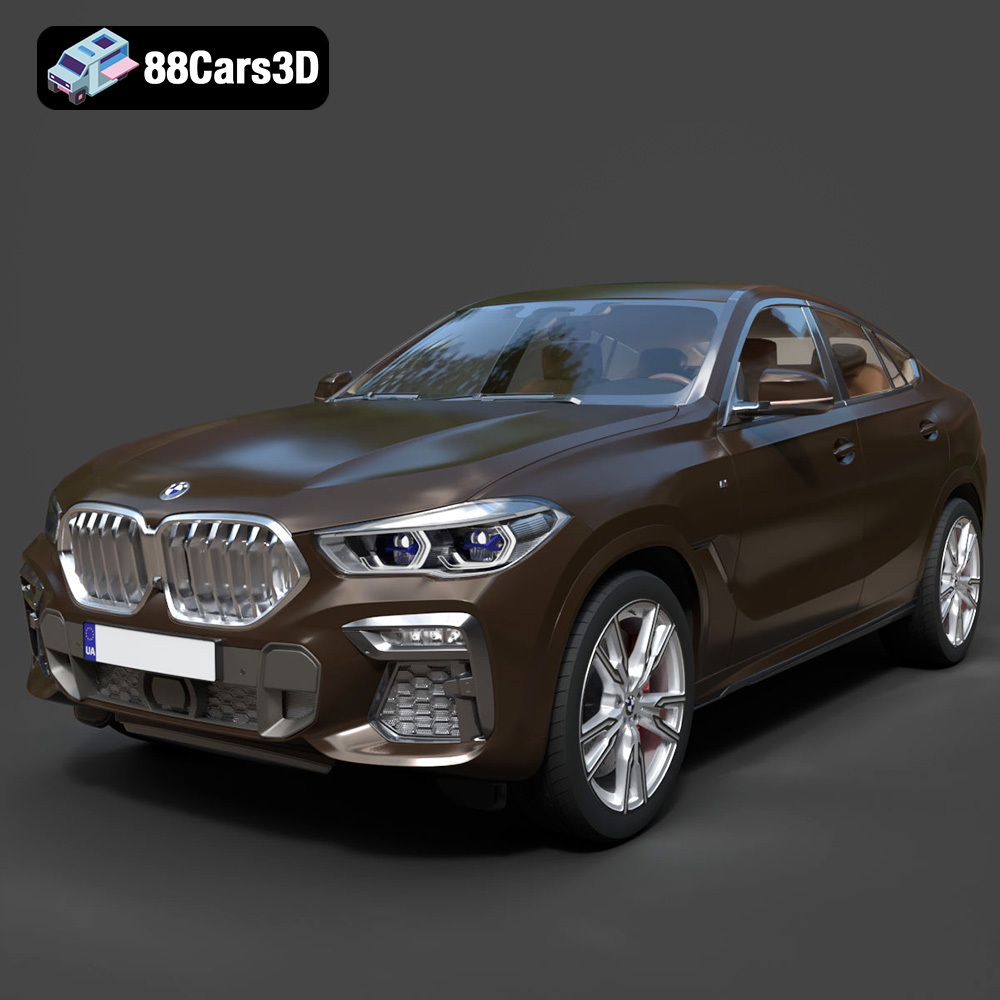
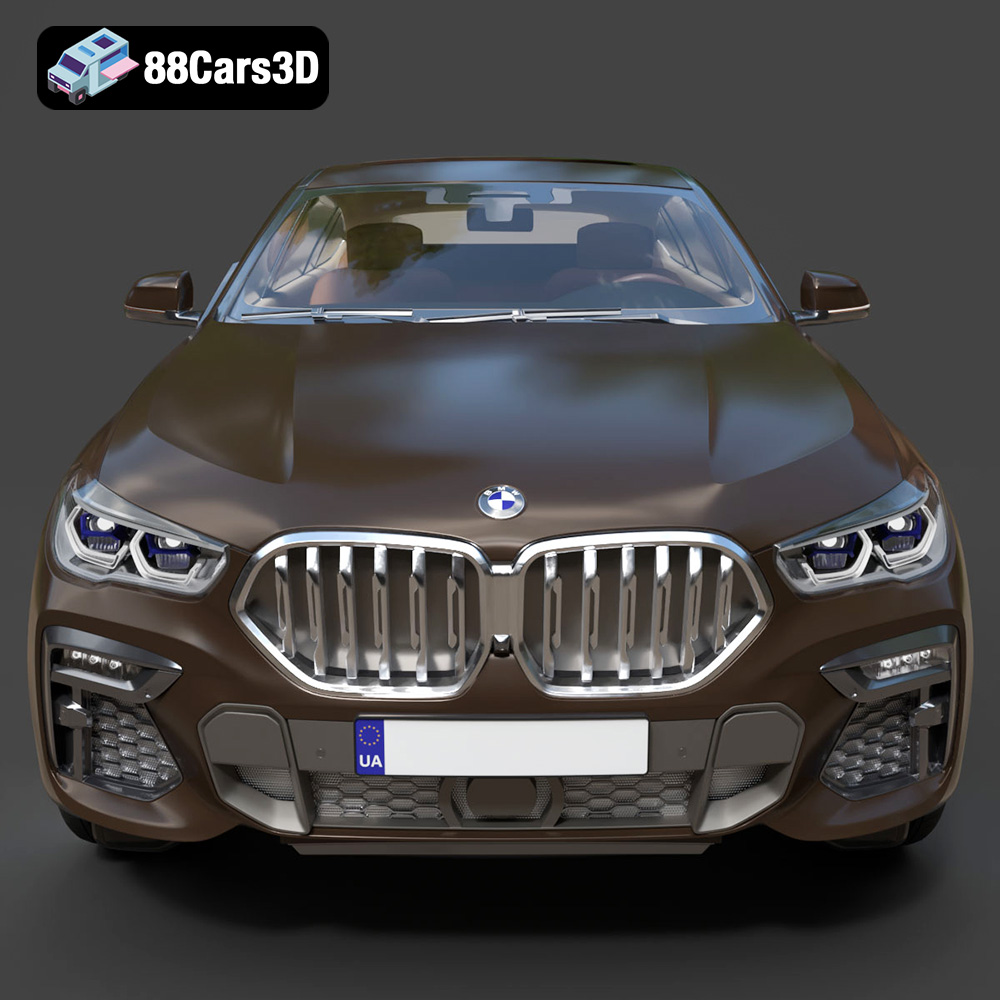
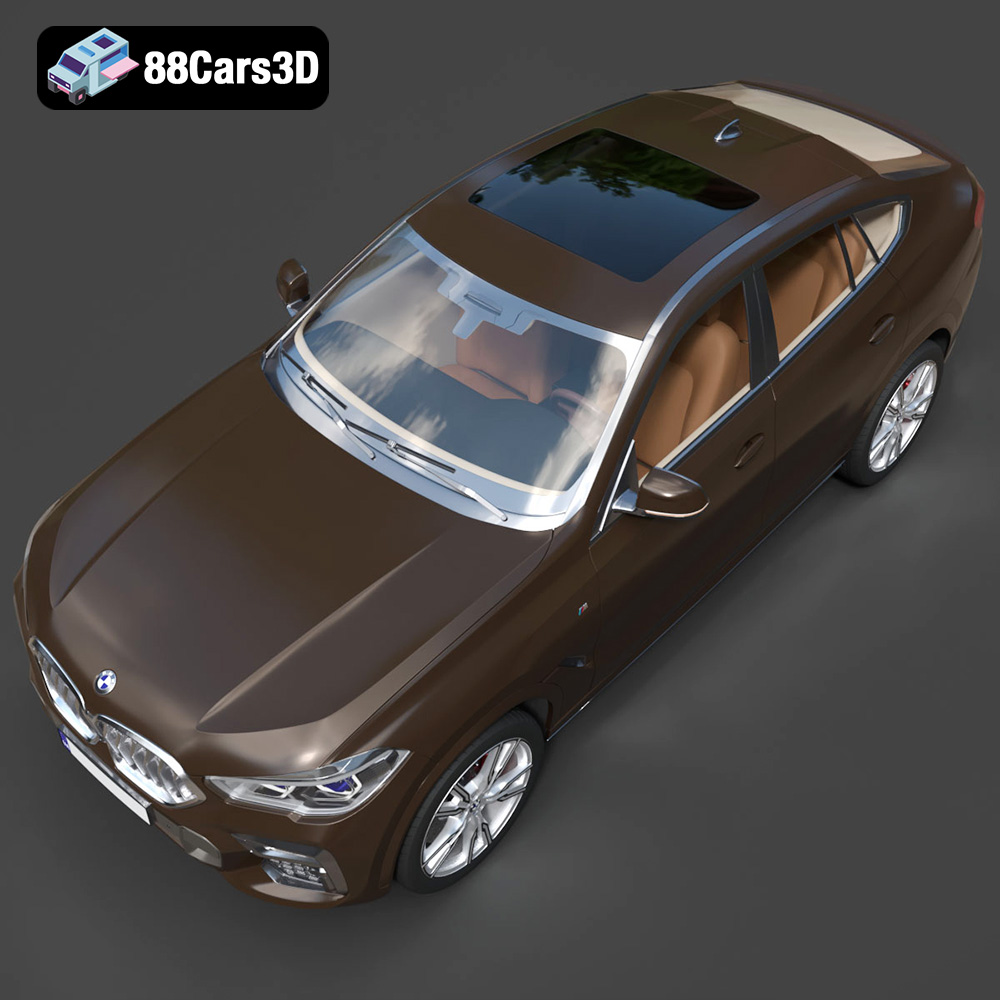
BMW X6 (Mk3) (G06) M Sport 2020 3D Model
as our prime example. This model, available on 88cars3d.com, encapsulates the pinnacle of digital automotive artistry, offering unparalleled realism and flexibility for a broad spectrum of professional workflows.
The first step in any successful 3D project is understanding the various file formats available and selecting the right one for your specific needs. The
BMW X6 (Mk3) (G06) M Sport 2020 3D Model
package is thoughtfully designed to accommodate virtually any pipeline by including a comprehensive suite of industry-standard formats. Each format has unique characteristics, strengths, and ideal use cases, making this breadth of options a crucial advantage for professional creators.
The .blend format is native to Blender, the powerful open-source 3D creation suite. When you receive a .blend file for a 3D car model, you’re getting more than just the mesh; you’re often getting a fully editable scene. This includes not only the geometry of the BMW X6 but also its materials, textures, lighting setups, and even camera configurations. For artists working primarily in Blender, this format offers unparalleled flexibility for further customization, animation, or rendering with Cycles or Eevee. It maintains all scene data, including modifiers, constraints, and custom properties, allowing for non-destructive editing and deep integration into Blender-centric projects.
.fbx (Filmbox) is arguably the most widely adopted interchange format in the 3D industry, especially for animation and game development. Its strength lies in its ability to store not only mesh data but also animation, cameras, lights, and PBR (Physically Based Rendering) material information. For integrating the
BMW X6 (Mk3) (G06) M Sport 2020 3D Model
into game engines like Unreal Engine and Unity, or animation software such as Maya and Cinema 4D, .fbx is often the preferred choice. It ensures that crucial data, like smoothing groups and UV layouts, are preserved during export and import, making it a robust solution for complex asset pipelines.
.obj (Wavefront OBJ) is a universal 3D model format renowned for its widespread compatibility. Nearly every 3D software application can import and export .obj files. It primarily stores geometric data (vertices, faces, normals, UV coordinates) and can reference external .mtl (material) files for basic material properties. While it doesn’t support animation or advanced scene data like .fbx, its simplicity and universal acceptance make it an excellent choice for straightforward mesh transfer between different software packages. It’s a reliable fallback when other formats encounter compatibility issues, ensuring your BMW X6 model can be used almost anywhere.
.glb is the binary version of the glTF (GL Transmission Format) standard, which is quickly becoming the “JPEG of 3D.” Optimized for efficient transmission and loading in web-based and real-time applications, .glb packages all necessary model data (geometry, materials, textures, animation) into a single, self-contained file. This makes it ideal for AR/VR experiences, web viewers, and browser-based configurators where performance and ease of deployment are paramount. The
BMW X6 (Mk3) (G06) M Sport 2020 3D Model
in .glb format allows for quick integration into AR apps on mobile devices or interactive web experiences, offering a seamless viewing experience.
.stl (Stereolithography) is the de facto standard for 3D printing. It represents a 3D model as a series of connected triangles, forming the surface geometry. While it lacks color, texture, or material information, its simplicity makes it universally compatible with 3D printers and slicing software. For rapid prototyping, creating physical models of the BMW X6, or exploring design variations through additive manufacturing, the .stl format is essential. It provides a watertight mesh, crucial for successful print outcomes.
.ply (Polygon File Format) is another format for storing 3D data, particularly popular for models generated from 3D scanners or scientific applications. It can store a wider range of properties than .obj, including color per vertex, normal information, and confidence values. While less common for general-purpose asset transfer, its inclusion in the BMW X6 model package speaks to its versatility, allowing for advanced analysis or integration into specific pipelines where such detailed per-vertex data is required.
The .unreal format signifies that the asset has been specifically pre-configured and optimized for direct use within Unreal Engine. This often means the model comes with proper material setups (PBR, instanced materials), optimized collision meshes, LOD (Level of Detail) groups, and possibly even basic blueprint integration. For game developers or real-time visualization artists leveraging Unreal Engine, this format drastically reduces setup time and ensures optimal performance, making the
BMW X6 (Mk3) (G06) M Sport 2020 3D Model
truly “game-engine ready” out of the box.
Finally, the .max format is the native scene file for Autodesk 3ds Max, a leading software for 3D modeling, animation, and rendering in architectural visualization and product design. A .max file of the BMW X6 (Mk3) (G06) M Sport 2020 model means you get a fully editable project, complete with all lights, cameras, modifiers, and high-fidelity materials often configured for renderers like V-Ray or Corona. This offers maximum control for professional users who demand the highest level of customization and photorealistic rendering capabilities within a familiar environment.
Automotive rendering is a specialized discipline that blends artistic vision with technical precision. It’s about more than just placing a 3D car model in a scene; it’s about evoking emotion, highlighting design, and achieving a level of photorealism that blurs the line between digital and physical. The
BMW X6 (Mk3) (G06) M Sport 2020 3D Model
provides an exceptional foundation for this, thanks to its meticulously crafted geometry and realistic materials.
The cornerstone of modern photorealistic rendering lies in Physically Based Rendering (PBR) materials. These materials simulate how light interacts with surfaces in the real world, based on physical properties like metallicness, roughness, and normal maps. The BMW X6 (Mk3) (G06) M Sport 2020 3D Model features PBR-ready materials that accurately capture the intricate reflections of its paintwork, the subtle sheen of its chrome accents, and the texture of its tires. This means that when integrated into renderers like V-Ray, Corona, or Cycles, the model will react authentically to diverse lighting scenarios, producing highly convincing visual results right out of the box.
Effective lighting is paramount for showcasing a vehicle’s design and surface qualities. Professional automotive renderings often employ a combination of HDRI (High Dynamic Range Image) environments for realistic ambient lighting and reflections, coupled with strategic studio lights to emphasize contours and details. For the BMW X6 model, experimenting with different lighting scenarios – from a dramatic sunset backdrop to a sleek studio environment with softbox lighting – can dramatically alter its perceived presence. The model’s clean geometry and precise edge flow ensure that light and shadow play across its surfaces exactly as they would on the real car, revealing every intentional design line and curve.
Whether your preferred rendering powerhouse is 3ds Max or Blender, the BMW X6 model integrates seamlessly. In 3ds Max, artists can leverage its robust modeling and animation tools, combining the model with V-Ray or Corona Renderer for industry-leading photorealistic outputs. The included .max file likely contains pre-configured materials, accelerating the setup process. For Blender users, the .blend file provides a native starting point, allowing them to utilize Cycles or Eevee for rendering. The model’s clean topology translates directly into superior subdivision surface results, crucial for extremely close-up renders where every detail matters. This flexibility ensures that professionals can achieve stunning automotive rendering results regardless of their software preference.
Game development demands a delicate balance between visual fidelity and performance optimization. High-quality 3D car models are essential for creating immersive gaming experiences, but they must be efficiently structured for real-time engines. The
BMW X6 (Mk3) (G06) M Sport 2020 3D Model
is engineered to meet these rigorous demands, making it an excellent asset for game developers.
For game assets, optimization is key. While the BMW X6 model boasts incredible detail, its design also considers efficiency. This means features like clean geometry, precise edge flow, and potentially multiple Levels of Detail (LODs) are crucial. LODs allow the game engine to swap out higher-polygon versions of the model for lower-polygon versions as the player moves further away, significantly reducing draw calls and maintaining high frame rates. Optimized UV maps are also vital for efficient texture packing, which minimizes memory usage and enhances rendering performance without sacrificing visual quality. The “game-engine ready” .fbx and .unreal formats are specifically tailored for this purpose.
The provided .fbx and .unreal formats streamline the integration process into leading game engines like Unreal Engine and Unity. For Unreal Engine, the pre-configured .unreal asset often includes proper material setups, collision meshes, and sometimes even basic vehicle blueprints, allowing developers to drop the BMW X6 directly into their scene and begin testing physics and interactions immediately. Similarly, importing the .fbx into Unity allows for straightforward material assignment and component setup. Both engines benefit from the model’s clean topology and PBR materials, ensuring that the luxury vehicle looks exceptional within any real-time environment, whether it’s a racing simulator or an open-world adventure.
The visual quality of in-game vehicles directly impacts player immersion. A high-fidelity model like the BMW X6 (Mk3) (G06) M Sport 2020 significantly elevates the aesthetic appeal of a game, contributing to a more believable and engaging experience. Beyond aesthetics, the accurate proportions and detailed components of such models are critical for realistic physics simulations and collision detection. Whether used as player-controlled vehicles, AI traffic, or detailed background elements, premium 3D car models like those found on 88cars3d.com provide developers with the tools to create visually stunning and functionally robust game worlds, enhancing the overall gameplay experience.
The versatility of a high-quality 3D car model extends far beyond conventional rendering and game development. With the rapid evolution of technology, assets like the
BMW X6 (Mk3) (G06) M Sport 2020 3D Model
are finding critical applications in emerging fields such as augmented reality (AR), virtual reality (VR), advanced simulation, and even 3D printing, opening new avenues for creativity and utility.
Augmented Reality (AR) and Virtual Reality (VR) environments demand highly optimized and realistic 3D assets to create truly immersive experiences. The .glb format, specifically designed for web and AR/VR applications, makes the BMW X6 model an ideal candidate. Imagine using AR to place the virtual X6 in your driveway, examining its details at real-world scale, or experiencing it firsthand in a VR showroom. The model’s optimized geometry and PBR materials ensure that it renders smoothly and convincingly in these interactive environments, allowing users to explore its luxurious detailing and aggressive styling in a completely new dimension. This is invaluable for automotive configurators, interactive marketing, and virtual training simulations.
Simulation plays a crucial role across various industries, from automotive engineering to urban planning and autonomous vehicle development. Accurate 3D car models are foundational for creating believable and precise simulations. The
BMW X6 (Mk3) (G06) M Sport 2020 3D Model
, with its precise proportions and detailed geometry, can be integrated into driving simulators for driver training, used in virtual environments to test autonomous driving algorithms, or even deployed for traffic flow analysis. The model’s clean topology ensures predictable behavior under physics simulations, providing reliable data for engineering and research purposes, where accuracy is non-negotiable.
While often associated with digital applications, 3D models can bridge the gap to the physical world through 3D printing. The .stl format included with the BMW X6 (Mk3) (G06) M Sport 2020 3D Model is perfectly suited for this. Engineers and designers can utilize this format to rapidly prototype scaled versions of the vehicle, test aerodynamic concepts, or even create custom parts and accessories for existing models. This capability streamlines the design verification process, reduces development cycles, and provides tangible representations for client presentations or internal reviews. The precision of the digital model translates directly into the accuracy of the physical print, demonstrating the multifaceted utility of a professional 3D asset.
In the realm of 3D modeling, “quality” is a term often thrown around, but what does it truly signify, especially when it comes to complex assets like the
BMW X6 (Mk3) (G06) M Sport 2020 3D Model
? It refers to the sum of countless meticulous details, expert craftsmanship, and a deep understanding of both aesthetics and technical constraints. Investing in high-quality 3D car models from reputable sources like 88cars3d.com isn’t just a purchase; it’s an investment in efficiency, realism, and professional integrity.
A premium 3D car model like the BMW X6 doesn’t materialize overnight. It is the result of painstaking effort, starting with extensive reference gathering, including blueprints, photographs, and real-world observations. Skilled 3D artists then painstakingly translate this data into a digital form, focusing on accurate proportions, precise panel gaps, and faithful reproduction of every curve and detail. This involves not only sculpting the exterior but also crafting a fully detailed interior, replicating stitching, dashboard layouts, and material textures. This human-driven attention to detail is what distinguishes a truly professional asset from a hastily constructed one, ensuring the digital replica is indistinguishable from its physical counterpart.
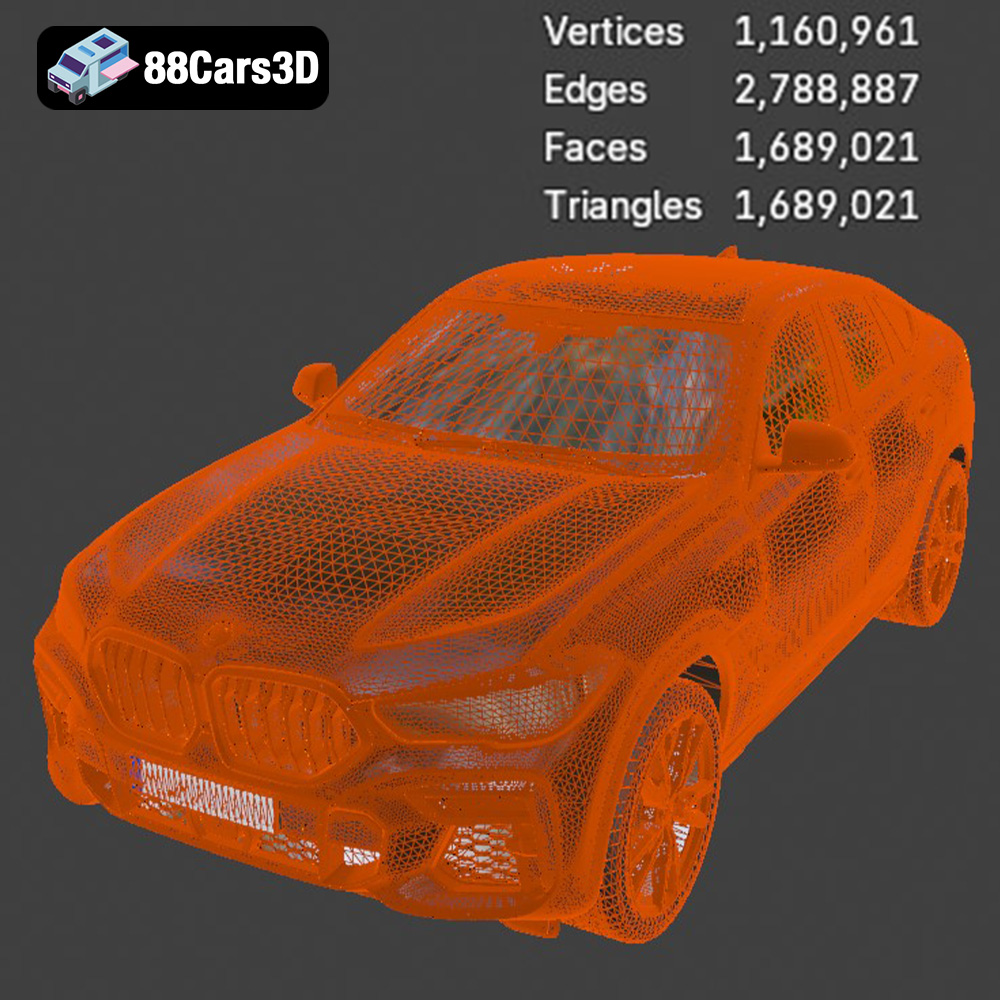
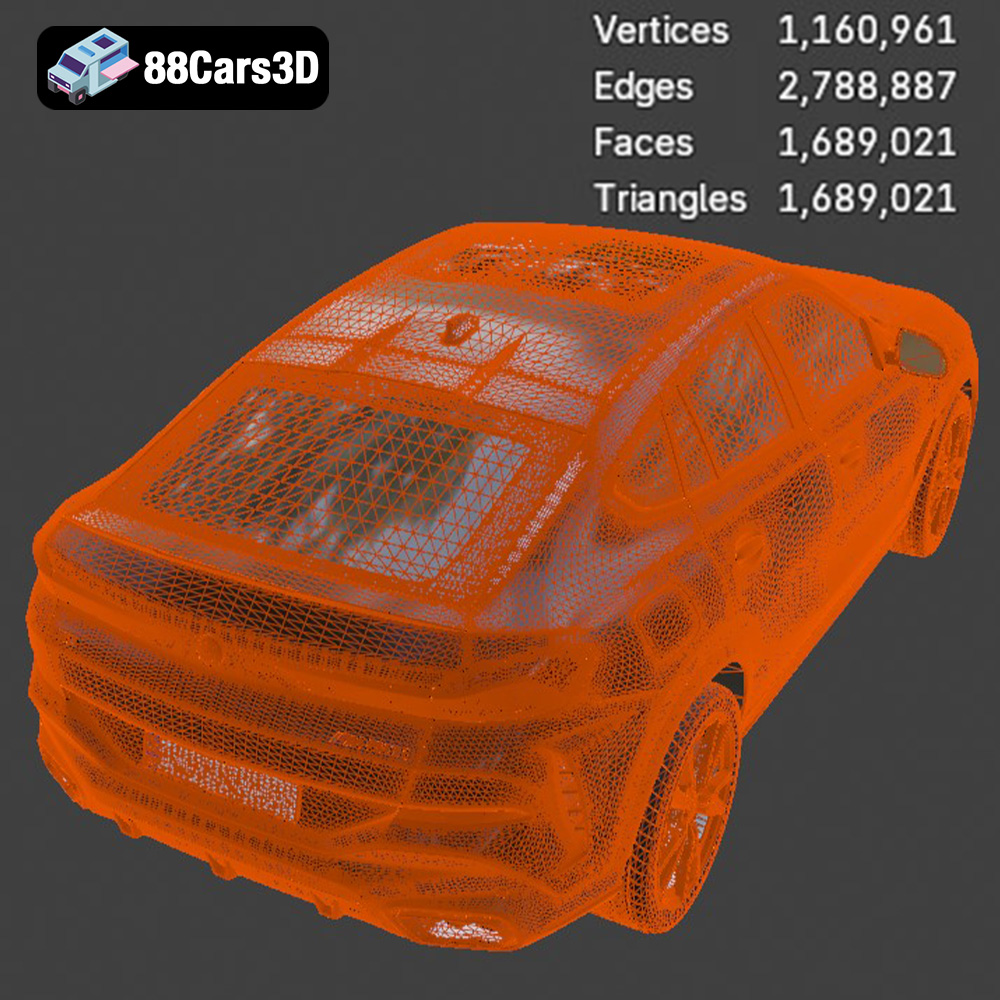
The product description for the BMW X6 (Mk3) (G06) M Sport 2020 3D Model highlights its “exceptionally clean geometry” and “precise edge flow.” These aren’t just buzzwords; they are fundamental indicators of a superior 3D asset. Clean geometry means the mesh is optimized, with quads where possible, minimal triangles (unless necessary for optimization), and proper edge loops that support smooth deformation and subdivision. This prevents artifacts during rendering, makes animation easier, and facilitates seamless texturing. Similarly, optimized UV layouts ensure textures are applied without stretching or distortion, maximizing visual fidelity and reducing render times. A model with poor topology can lead to endless headaches, whereas a clean model provides a smooth, predictable workflow.
Perhaps the most significant value proposition of a high-quality, ready-to-use 3D car model is the immense amount of time and resources it saves. Creating a vehicle like the BMW X6 (Mk3) (G06) M Sport 2020 from scratch, to this level of detail and across multiple optimized formats, could take a single artist hundreds of hours. For studios and individual professionals, this translates into substantial labor costs and extended project timelines. By acquiring a professional-grade asset from 88cars3d.com, creators can bypass the modeling phase entirely, allowing them to focus on lighting, staging, animation, or game integration. This accelerates project delivery, reduces overhead, and ultimately allows artists to concentrate on their creative vision rather than getting bogged down in foundational asset creation.
The landscape of 3D content creation is continuously evolving, with an ever-increasing demand for realism, efficiency, and versatility. High-quality 3D car models are no longer just supplementary assets; they are essential components that drive innovation across industries. From cinematic automotive rendering to engaging game development, immersive AR/VR experiences, and practical 3D printing applications, the foundational quality of your 3D assets dictates the success of your final output.
The
BMW X6 (Mk3) (G06) M Sport 2020 3D Model
exemplifies what a premium 3D vehicle asset should be: meticulously crafted, technically robust, and supplied in a comprehensive range of industry-standard formats. Its clean geometry, precise detailing, and realistic materials make it an indispensable resource for professionals seeking to elevate their projects. By choosing such high-caliber assets, you not only save valuable time and resources but also ensure that your visualizations, simulations, and interactive experiences stand out with unparalleled authenticity and visual fidelity. Explore this and many other top-tier 3D car models to unlock new creative possibilities for your next project at 88cars3d.com.
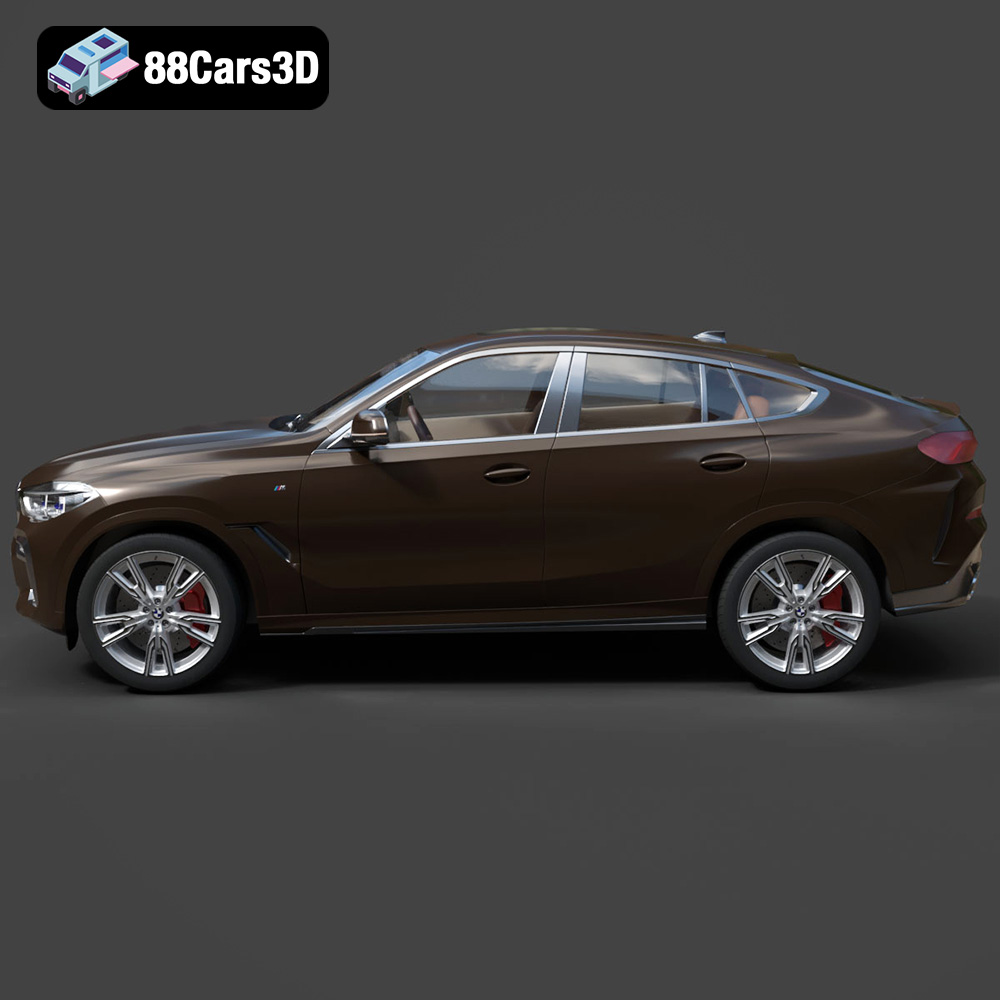
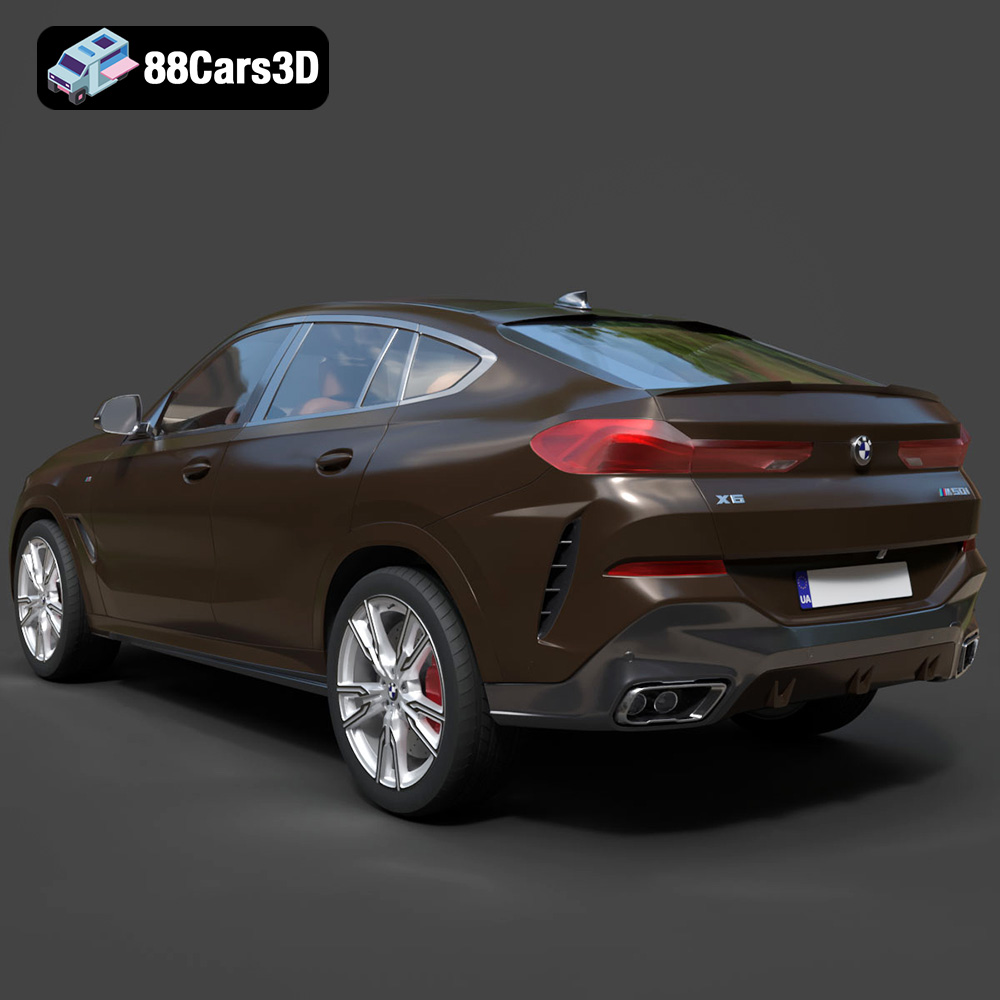
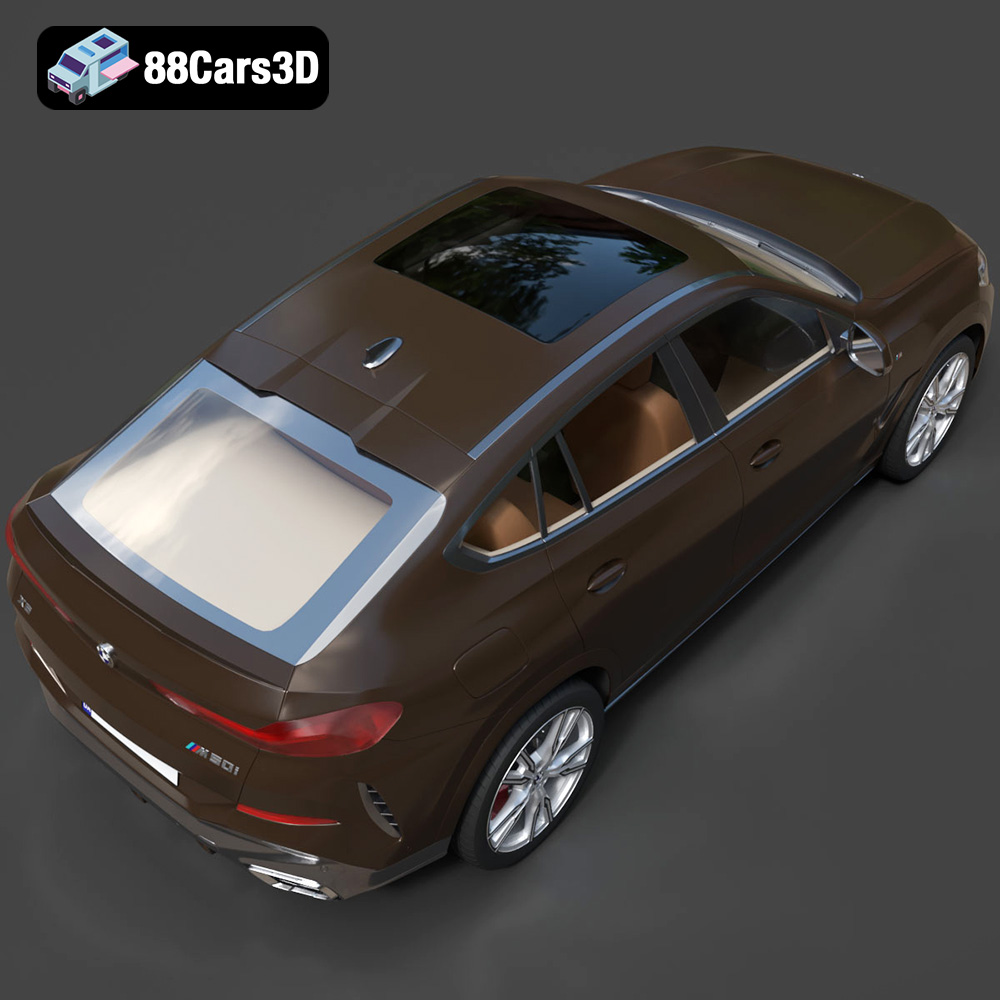
Experience unparalleled realism with the BMW X6 (Mk3) (G06) M Sport 2020 3D Model. This meticulously crafted digital asset accurately replicates the distinct proportions, aggressive styling, and luxurious detailing of the renowned sports activity coupe. Engineered with precision, this model provides an exceptional level of accuracy, making it an indispensable resource for creators seeking top-tier automotive models.
Key features include exceptionally clean geometry, precise edge flow, and realistic materials that seamlessly interact with diverse lighting scenarios. The accurately modeled exterior and fully detailed interior components guarantee outstanding results, even in close-up renders. Optimized for seamless integration into various pipelines, this model sets a professional standard for 3D vehicle assets.
This versatile 3D model is ideal for a broad spectrum of applications, including advanced visualization, game development, realistic rendering, and simulation projects. Whether deployed in augmented and virtual reality (AR/VR) environments or used for cinematic productions and architectural visualizations, it delivers consistent, professional-grade performance.
The package includes a comprehensive selection of industry-standard file formats to accommodate any workflow:
$39.99
.arvr
.blend
.bmw
.car3dmodel
.fbx
.g06
.gameasset
.glb
.luxurycar
.max
.mk3
.msport
.obj
.ply
.rendering
.simulation
.sportSUV
.stl
.unreal
.x6
SUV