Get 20% OFF All Premium 3D & STL Models!

In the rapidly evolving world of digital visualization, the demand for photorealistic assets is at an all-time high. From blockbuster game titles and cinematic automotive commercials to immersive AR/VR experiences and precise engineering simulations, the quality of a 3D model can significantly impact the overall project outcome. A truly exceptional 3D car model goes beyond mere visual appeal; it embodies meticulous craftsmanship, technical accuracy, and an understanding of diverse professional pipelines.
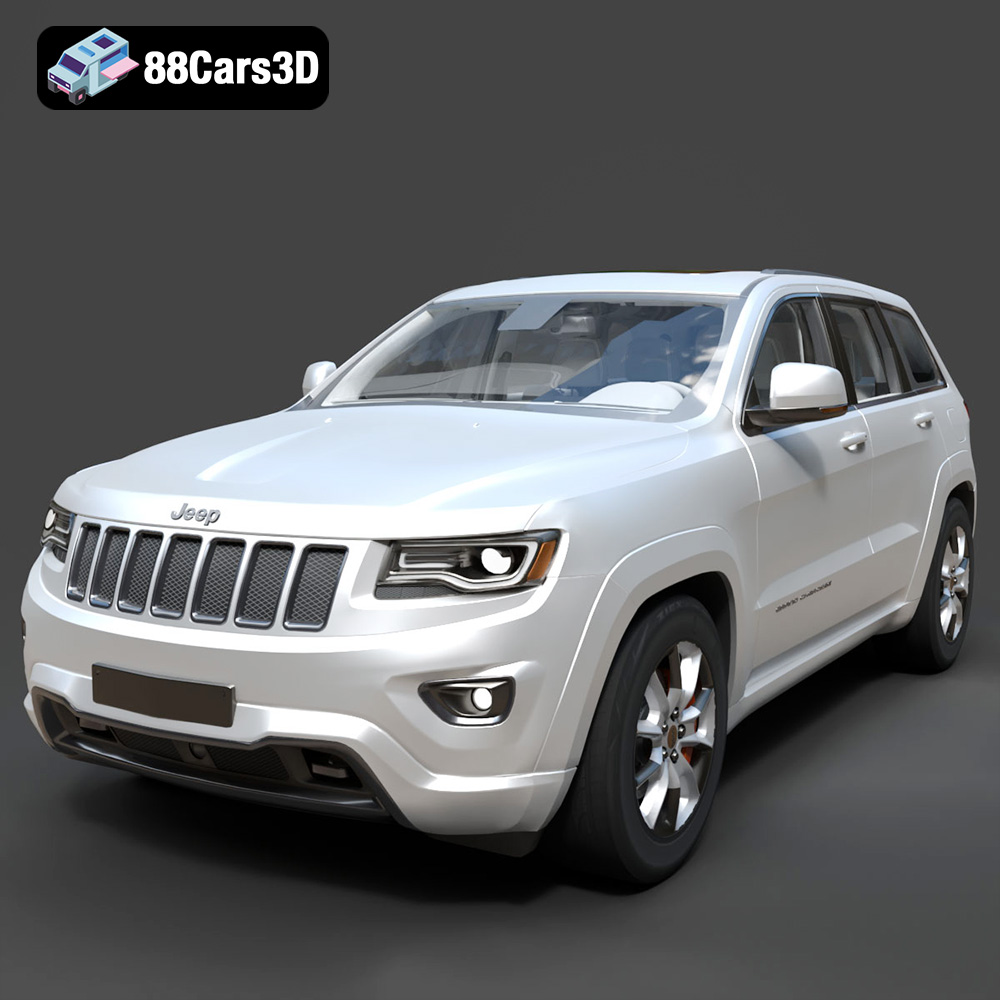
Today, we delve into the intricacies of what makes a 3D car model truly stand out, exploring the technical nuances that elevate an asset from good to indispensable. We’ll examine specific workflows, discuss critical file formats, and highlight how a meticulously crafted asset, such as the Jeep Grand Cherokee Limited 2017 3D Model available on 88cars3d.com, serves as a cornerstone for various professional applications. This particular model exemplifies the blend of aesthetic precision and technical optimization that professionals seek, providing an accurate exterior and interior representation, clean geometry, and PBR-ready materials, making it a versatile choice for any demanding project.
The choice of file format is a critical decision in any 3D workflow, directly impacting compatibility, performance, and the integrity of your asset. Each format serves specific purposes, optimized for different software, engines, or end-use scenarios. Understanding their strengths and limitations is key to a streamlined and efficient production pipeline. The Jeep Grand Cherokee Limited 2017 3D Model, for instance, is offered in a comprehensive suite of formats, ensuring its adaptability across virtually any professional application.
The .blend format is the native file type for Blender, an incredibly powerful and popular open-source 3D creation suite. When you acquire a .blend file, you’re getting a complete Blender scene, often including the original mesh data, materials, textures, lighting setups, and even animation rigs. This offers unparalleled flexibility for artists who use Blender, allowing for direct editing, customization, and seamless integration into existing Blender projects. For the Jeep Grand Cherokee Limited 2017, the .blend file provides a fully editable environment, perfect for custom renders, modifications, or incorporating it into a larger scene with minimal setup.
.fbx (Filmbox) is a proprietary file format developed by Autodesk, widely adopted as a standard for interoperability between 3D software and, crucially, game engines. It’s renowned for its ability to store a vast array of 3D data, including geometry, materials, textures, animations, and even rigging information, all within a single file. This makes .fbx the go-to format for transferring assets to real-time engines like Unreal Engine and Unity. Its robust nature ensures that complex models, such as high-detail 3D car models, retain their integrity and hierarchy when moved between applications, making it an essential component for game asset development.
The .obj (Wavefront OBJ) format is one of the oldest and most universally supported 3D file formats. It’s a simple, text-based format primarily used to store 3D geometry data (vertices, normals, texture coordinates, and faces). While it doesn’t typically store advanced features like animation or rigging, its widespread compatibility makes it an excellent choice for transferring raw mesh data between different 3D software applications without loss of core geometry. If you need to import the Jeep Grand Cherokee into a less common 3D application, .obj is often the most reliable fallback.
.glb (GL Transmission Format Binary) is the binary version of glTF, a royalty-free specification for 3D scenes and models. Designed for efficient transmission and loading of 3D content, .glb packages all necessary data (geometry, materials, textures, animations) into a single, self-contained binary file. This optimization makes it perfect for web-based 3D viewers, AR/VR applications, and mobile platforms where file size and loading speed are paramount. For showcasing the Jeep Grand Cherokee Limited 2017 in an interactive AR experience or a web configurator, the .glb format is ideal.
.stl (STereoLithography) is the standard file format for 3D printing. It represents a 3D model as a series of connected triangles, essentially describing the surface geometry of an object without color, texture, or other properties. While simple, its ubiquity in additive manufacturing means that if you’re planning to create a physical scale model or prototype of the Jeep Grand Cherokee, an .stl file is what you’ll need to feed into your 3D printer slicing software.
.ply (Polygon File Format, or Stanford Triangle Format) is another format used for storing 3D data, often acquired from 3D scanners. It can store more complex information than .obj, including color, transparency, and different data types (e.g., properties like confidence values for each vertex). It’s commonly used in applications requiring precise mesh data for scientific visualization, CAD, or analysis, where detailed geometric information is critical.
The .unreal format signifies an asset that has been specifically packaged and optimized for direct import and use within Unreal Engine. This often means it’s pre-configured with materials, textures, and perhaps even basic collision or LOD setups that align with Unreal Engine’s conventions. This dramatically accelerates workflow for Unreal developers, minimizing the setup time required before the Jeep Grand Cherokee Limited 2017 model can be fully integrated into a project.
Finally, the .max format is the native file type for Autodesk 3ds Max, a leading software for 3D modeling, animation, and rendering. Similar to .blend, a .max file contains the complete scene data, including geometry, materials, lighting, cameras, and animation curves. For professionals using 3ds Max for high-end automotive rendering or detailed animations, having the native .max file for the Jeep Grand Cherokee Limited 2017 provides the highest degree of control and flexibility for customization and advanced rendering techniques.
By offering this diverse range of formats, the Jeep Grand Cherokee Limited 2017 3D Model from 88cars3d.com ensures maximum compatibility and utility, catering to the specific needs of different pipelines and software environments.
Creating a high-fidelity 3D car model is an intricate process that demands both artistic vision and technical precision. It’s about more than just replicating a vehicle’s form; it’s about capturing its essence and ensuring it performs flawlessly across various digital applications. The Jeep Grand Cherokee Limited 2017 3D Model exemplifies these qualities, offering a benchmark for professional-grade assets.
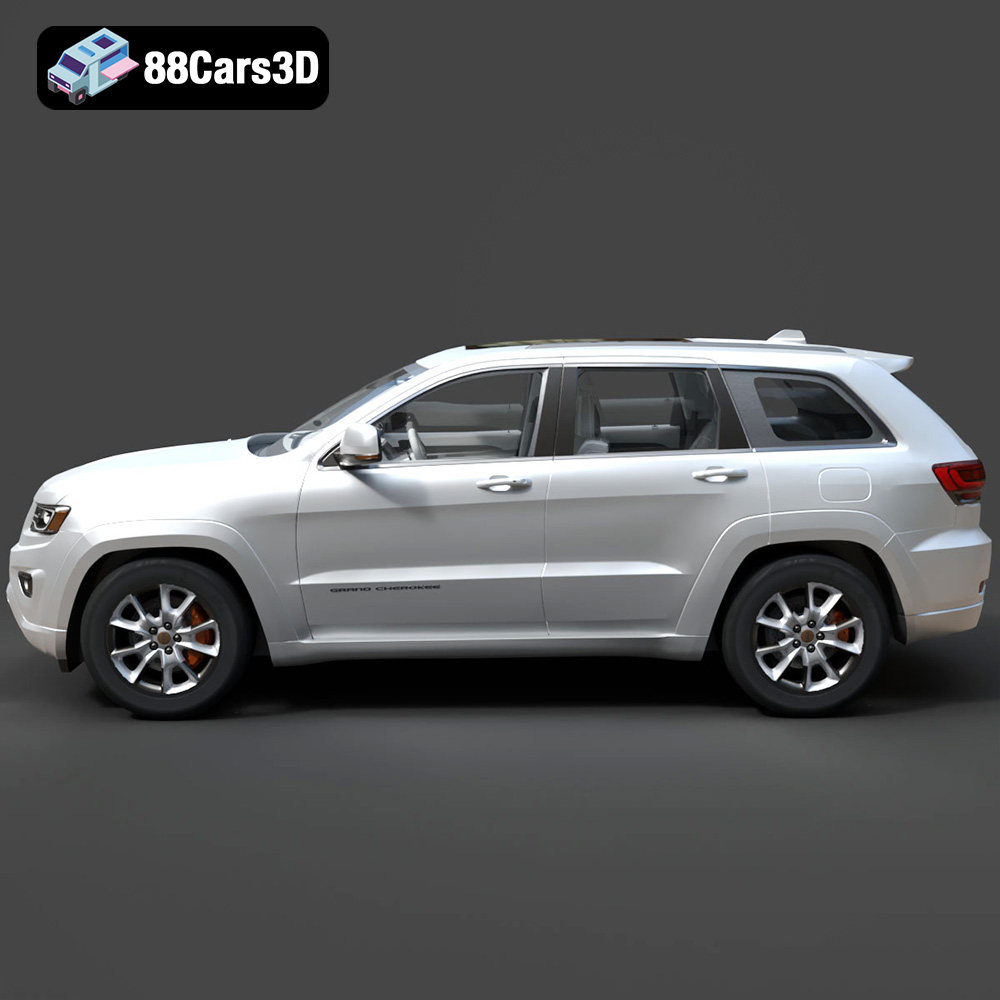
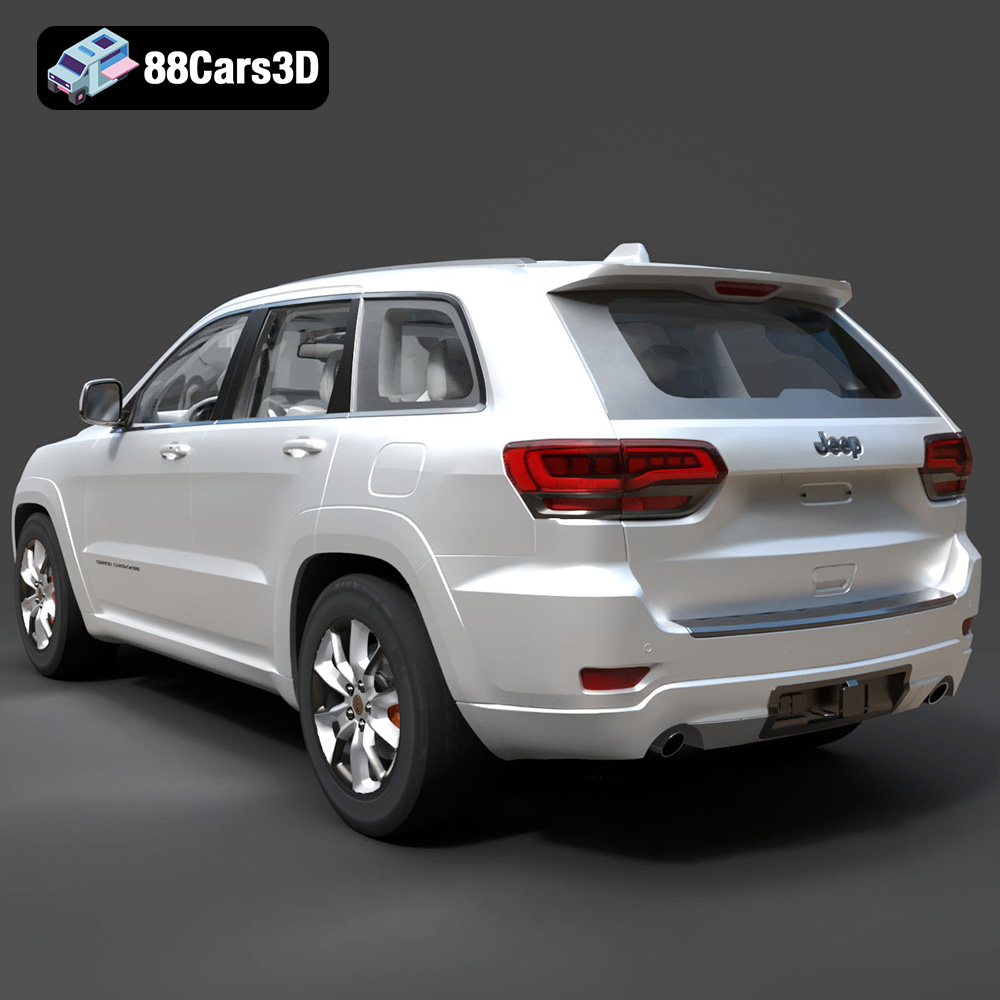
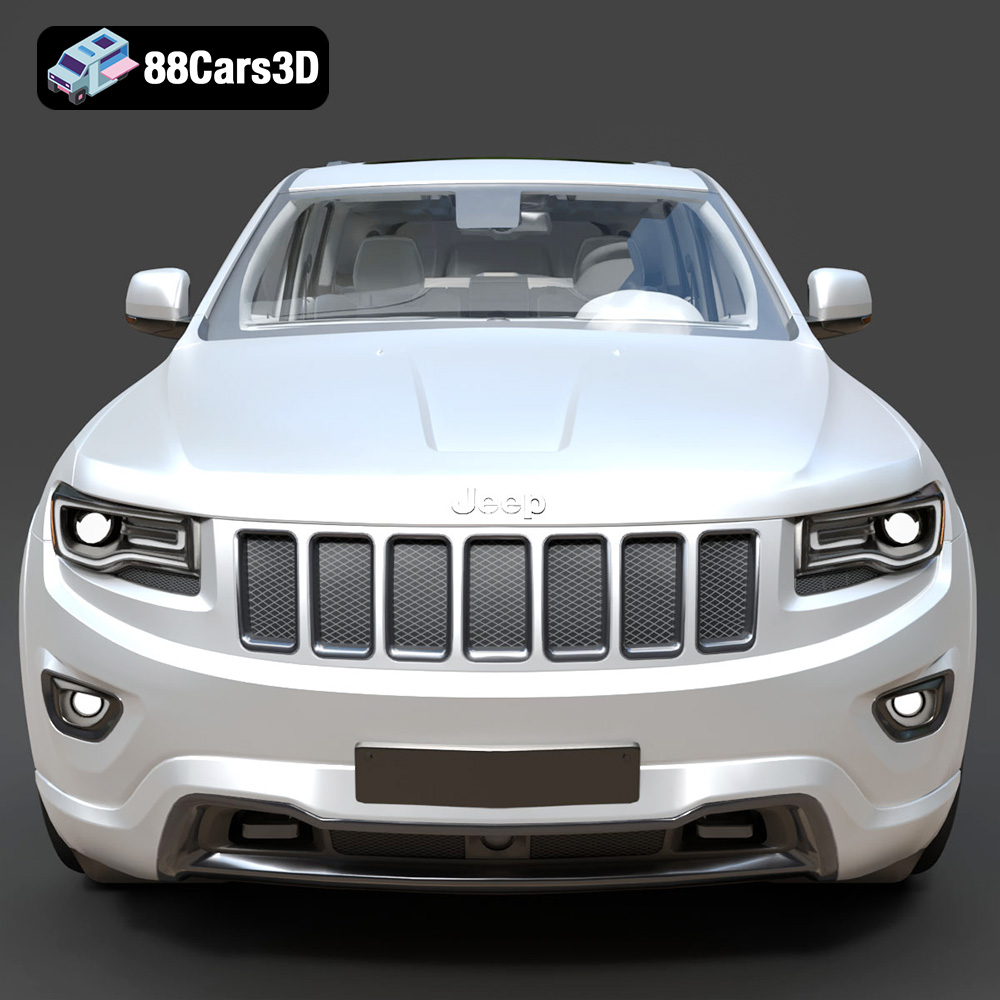
The first impression of any 3D car model comes from its exterior. Achieving photorealism here requires an obsessive attention to detail. This starts with accurate proportions, meticulously matching real-world blueprints and photographic references. Every curve, panel gap, and hard edge must be precisely recreated. For a model like the Jeep Grand Cherokee Limited 2017, this means replicating the distinctive grille, headlight clusters, wheel designs, and body lines with absolute fidelity. Deviations, however minor, can break immersion in a high-end render or a detailed simulation.
Beyond the primary forms, secondary details are crucial: the texture of the tires, the intricate design of the brake calipers, the subtle reflections in the chrome trim, and the way light interacts with the paintwork. These elements, often overlooked in lower-quality models, are what give a vehicle its personality and realism. The Jeep Grand Cherokee model’s robust aesthetic is captured through these precise details, ensuring it looks authentic whether viewed up close or from a distance.
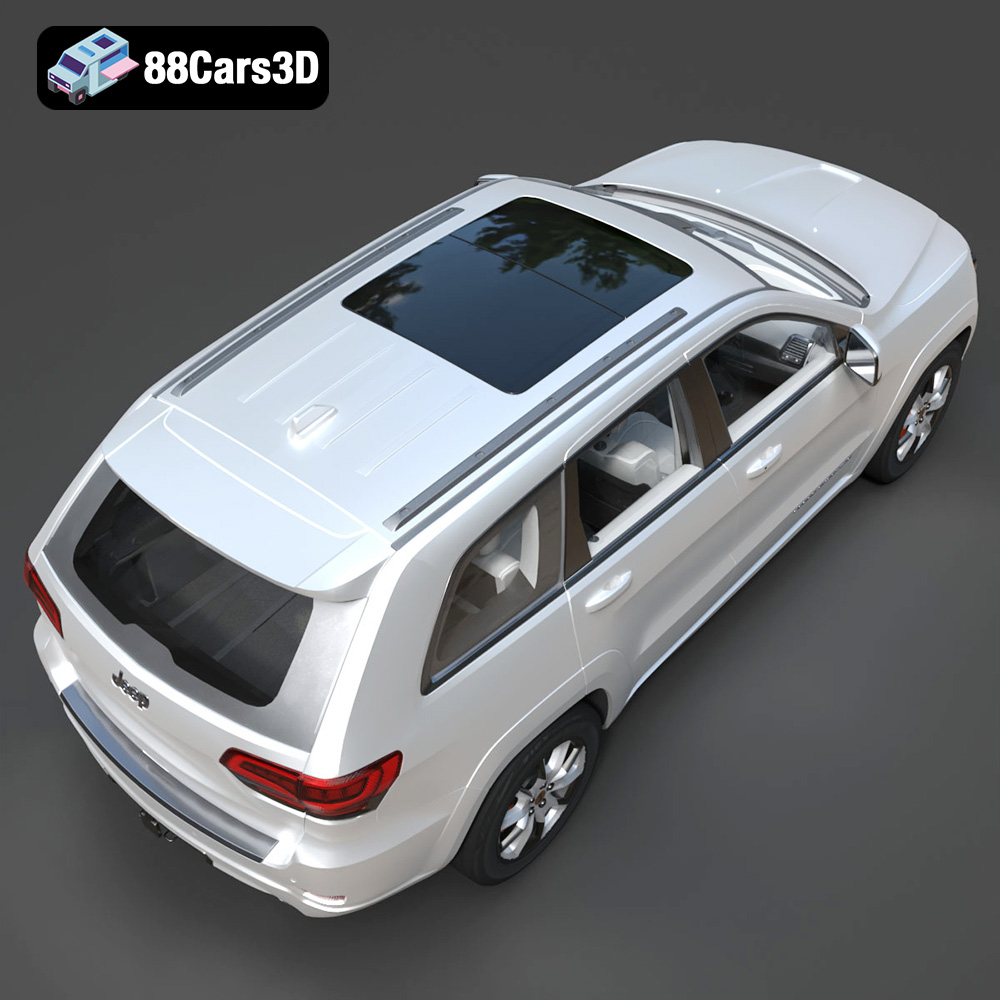
While the exterior often grabs immediate attention, a high-quality interior is what truly elevates a 3D car model, especially for interactive experiences like AR/VR showrooms, architectural visualizations, or cinematic close-ups. Recreating an automotive interior involves an even greater level of intricacy, dealing with smaller, more numerous parts and a wider array of materials.
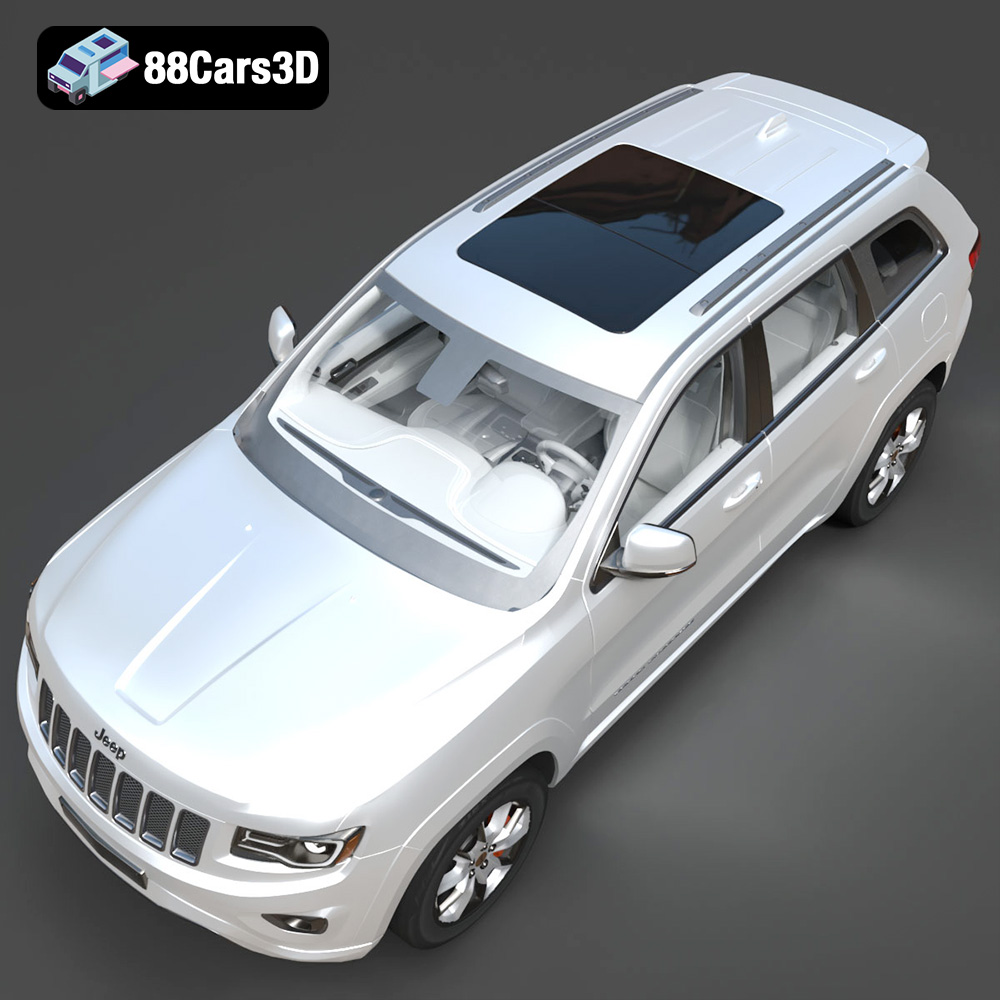
The dashboard, steering wheel, seats, door panels, and center console all require careful modeling. This includes replicating buttons, dials, stitching patterns on upholstery, and the textures of various plastics, leathers, and metallic accents. For the Jeep Grand Cherokee Limited 2017, the model’s accurate interior representation ensures that users can “step inside” and experience the vehicle’s cockpit with digital realism. This level of detail is paramount for virtual reality tours or detailed product showcases, where every element contributes to a sense of presence and authenticity.
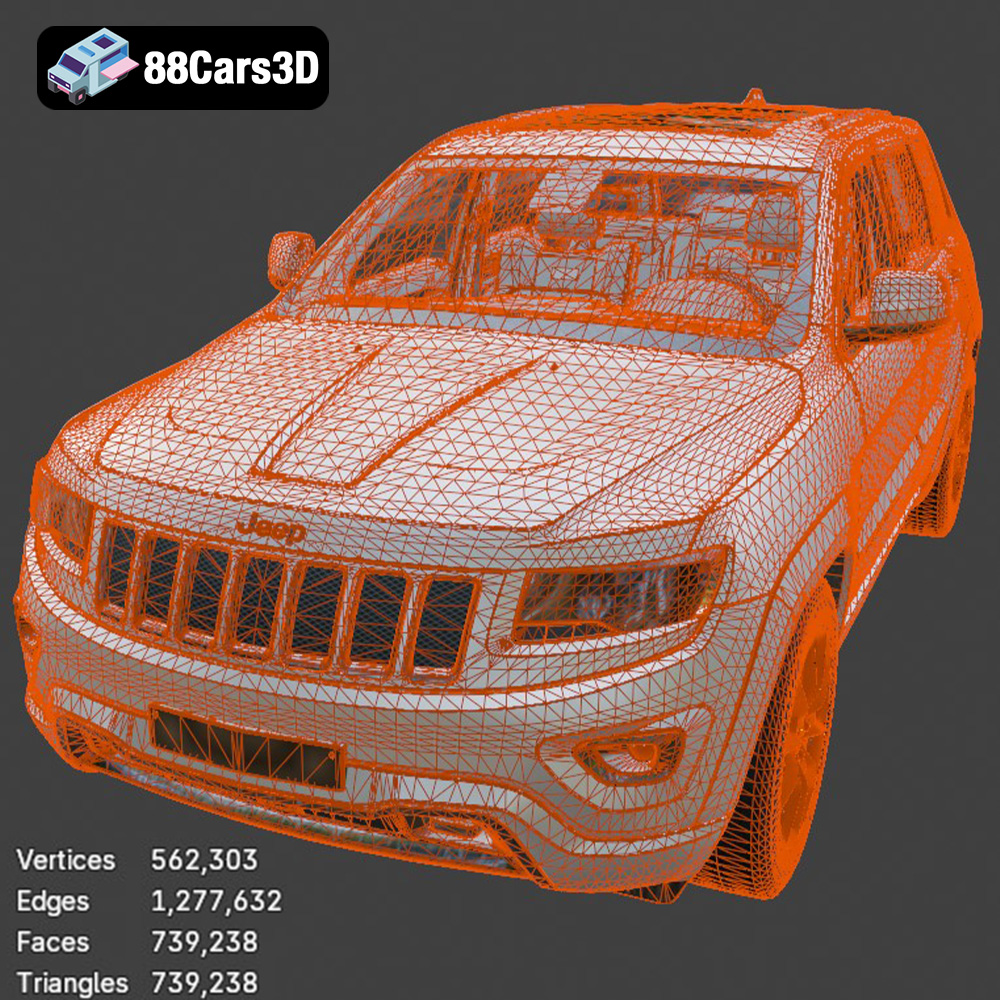
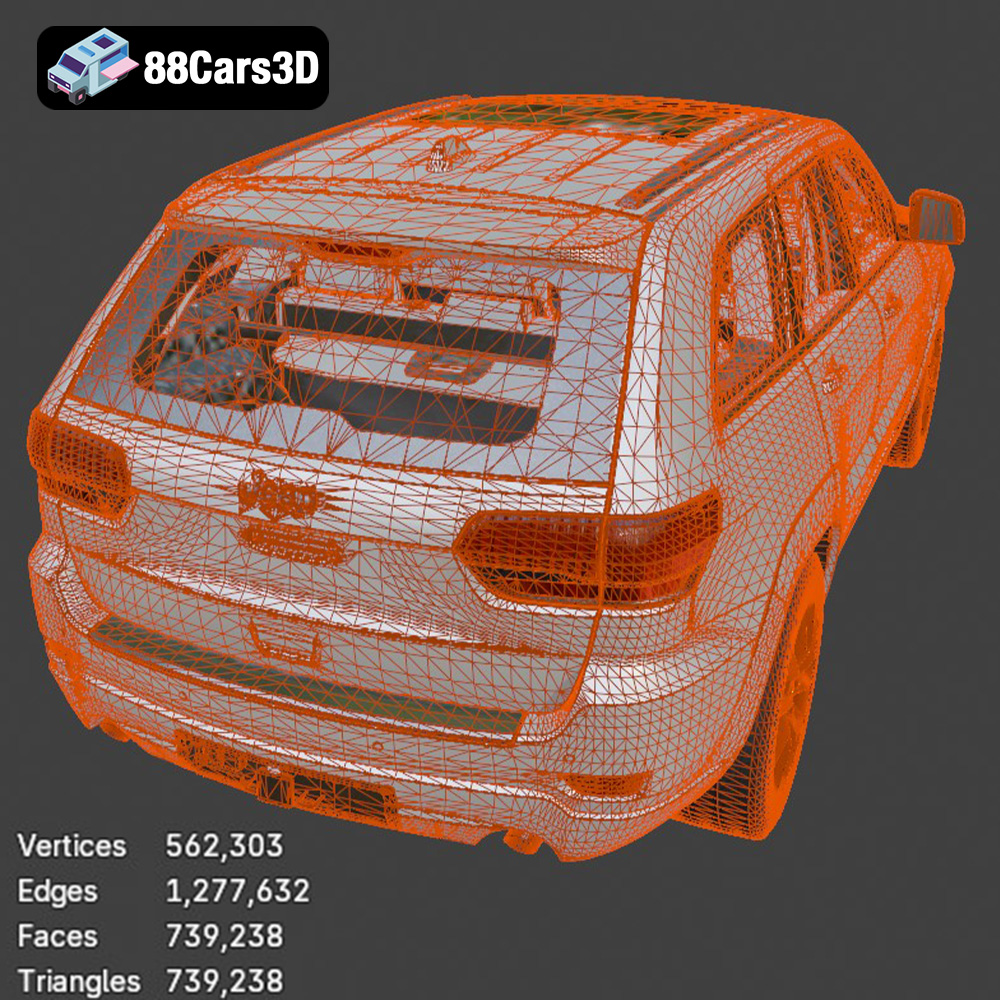
Underneath the surface, the technical foundation of a 3D model lies in its topology and UV mapping. Clean topology refers to the organized and efficient arrangement of polygons (usually quads) that make up the mesh. Good topology ensures smooth deformations for animation, precise light reflections across surfaces, and easier editing. It avoids common issues like pinching, artifacting, or stretched textures. The “professional topology” of the Jeep Grand Cherokee Limited 2017 3D Model means it is built for optimal performance and visual integrity, guaranteeing smooth reflections and an efficient workflow for artists.
UV mapping is the process of unwrapping the 3D mesh into a 2D space, allowing textures to be accurately applied to the surface without distortion. Efficient UV layouts maximize texture resolution, minimize texture stretching, and are crucial for the proper application of PBR materials. Well-organized UVs are also essential for baking lighting information or creating custom paint jobs. A model with clean topology and expertly crafted UVs saves artists countless hours in post-production and ensures high-quality results in any rendering engine or real-time environment.
To truly achieve visual fidelity in modern 3D graphics, relying on advanced material systems is non-negotiable. Physically Based Rendering (PBR) has become the industry standard, transforming how light interacts with surfaces in digital environments. High-quality 3D car models, such as the Jeep Grand Cherokee Limited 2017, come equipped with PBR-ready materials, ensuring outstanding results under any lighting condition.
PBR is a rendering approach that aims to simulate how light behaves in the real world, based on actual physics. Instead of simply dictating a color, PBR materials define surface properties like albedo (base color), roughness (how light scatters), metallic (whether a surface is a metal or dielectric), normal maps (surface detail without extra geometry), and ambient occlusion. These properties are represented by separate texture maps, which are then interpreted by a PBR shader. The result is materials that react consistently and realistically to various lighting scenarios, from bright daylight to moody interiors. For automotive rendering, this means car paint gleams correctly, tires have the right amount of matte rubber texture, and chrome reflects light with genuine metallic qualities. The included PBR-ready materials for the Jeep Grand Cherokee Limited 2017 ensure that its surfaces behave exactly as they would in reality, lending unparalleled realism to renders.
Professional rendering software like Autodesk 3ds Max and Blender are powerhouses for generating high-quality automotive visualizations. Each offers robust rendering engines and comprehensive material editors to leverage PBR assets effectively.
Both software packages allow artists to create stunning visualizations, leveraging the optimized geometry and PBR textures of models found on marketplaces like 88cars3d.com.
Beyond the technical setup, achieving truly cinematic automotive renders requires artistic finesse. This involves careful consideration of camera angles, composition, and storytelling. Utilizing techniques like dynamic camera moves, subtle depth of field, and volumetric lighting can add drama and emotion to a scene. Environment integration is also key; placing the Jeep Grand Cherokee Limited 2017 model in a realistic digital environment – be it an urban street, a rugged off-road track, or a minimalist studio – ensures that the vehicle feels grounded and believable. Post-processing in image editing software can further enhance renders with color grading, lens effects, and atmospheric elements, transforming a raw render into a polished, print-ready image or a captivating frame in an animation.
In the realm of interactive entertainment, 3D car models are the backbone of racing simulations, open-world adventures, and vehicle-centric gameplay. However, integrating these complex assets into real-time game engines like Unreal Engine and Unity presents its own unique set of challenges and requirements. The Jeep Grand Cherokee Limited 2017 3D Model is engineered to meet these demands, offering an optimal balance between visual fidelity and computational performance.
Unlike offline rendering, where computation time is less critical, game engines operate under strict real-time performance budgets. This necessitates meticulous optimization without sacrificing visual quality. Key aspects include:
The Jeep Grand Cherokee Limited 2017 model’s professional topology contributes significantly to its optimization potential, allowing for efficient LOD generation and clean collision mesh creation.
Unreal Engine is a leading platform for developing high-fidelity games and simulations. Integrating a 3D car model like the Jeep Grand Cherokee into Unreal typically follows these steps:
The “game-engine ready format” of the Jeep Grand Cherokee Limited 2017 ensures that developers can quickly move from import to integration, focusing on gameplay rather than asset preparation.
For racing simulations, every detail matters. The visual fidelity of the vehicle, combined with realistic physics and sound design, creates a truly immersive experience. Assets like the Jeep Grand Cherokee Limited 2017 3D Model contribute directly to this immersion, allowing developers to create next-generation racing simulations or to populate vast open worlds with believable traffic. Its detailed interior even allows for engaging first-person driving perspectives, enhancing the player’s connection to the virtual world. Whether it’s a high-octane race or a serene drive through a virtual landscape, the quality of the 3D car models fundamentally shapes the user’s perception and enjoyment.
The utility of a high-quality 3D car model extends far beyond traditional rendering and game development. With the advent of new technologies, these versatile assets are finding critical applications in augmented reality, virtual reality, 3D printing, and various forms of professional visualization. The Jeep Grand Cherokee Limited 2017 3D Model, with its diverse file formats, is ideally positioned to meet these expanding needs.
Augmented Reality (AR) and Virtual Reality (VR) are transforming how consumers interact with products, especially in the automotive industry. Imagine “sitting” inside a virtual Jeep Grand Cherokee Limited 2017 from the comfort of your home, exploring every interior detail, or projecting the SUV onto your driveway in AR to see how it looks. This requires 3D models that are not only visually stunning but also highly optimized for real-time performance on mobile devices or VR headsets.
The .glb format, offered for the Jeep Grand Cherokee model, is specifically optimized for these applications. Its compact size and self-contained nature make it perfect for rapid loading in AR/VR viewers or web-based configurators. In a virtual showroom, users can interact with the vehicle, change colors, open doors, and even test different accessories – all driven by the underlying high-fidelity 3D model. This technology provides an unparalleled level of engagement and personalization, redefining the car buying experience.
While often associated with digital displays, 3D car models also bridge the gap to the physical world through 3D printing. Engineers, designers, and hobbyists can leverage precise 3D models to create physical prototypes, scale models, or even custom parts. The .stl format, provided for the Jeep Grand Cherokee Limited 2017, is the industry standard for 3D printing. This allows for the creation of tangible representations of the digital model, whether for design review, educational purposes, or simply as a highly detailed collectible.
Furthermore, the .ply format offers a detailed polygon mesh suitable for reverse engineering or manufacturing analysis. While less common for consumer 3D printing, it is valuable in industrial contexts where precise surface data is required for CAD integration or quality control processes. This versatility underscores the comprehensive nature of a well-prepared 3D asset.
Architectural visualization (ArchViz) benefits immensely from realistic contextual elements, and vehicles are often a crucial component. Populating an architectural render with accurate 3D car models adds a layer of realism, scale, and dynamism to static building designs. A high-quality SUV like the Jeep Grand Cherokee Limited 2017 can instantly convey a lifestyle, enhance the visual narrative of a scene, or simply make a digital city street feel lived-in.
Whether it’s showcasing a new dealership, rendering a luxurious garage, or illustrating how a building interacts with traffic flow, integrating a detailed 3D car model elevates the overall presentation. The diverse formats (e.g., .max, .blend, .fbx) ensure that architects and visualization artists can easily drop the Jeep model into their preferred software, apply their specific lighting and rendering settings, and achieve a photorealistic result that complements their architectural masterpiece.
The journey through the creation and application of high-quality 3D car models reveals a fascinating intersection of artistry and technical prowess. From the meticulous detailing of exteriors and interiors to the foundational importance of clean topology, PBR materials, and format flexibility, every element plays a crucial role in delivering a truly professional-grade asset.
The Jeep Grand Cherokee Limited 2017 3D Model stands as a testament to this commitment to excellence. Its careful craftsmanship, optimized geometry, realistic PBR-ready materials, and comprehensive suite of file formats (including .blend, .fbx, .obj, .glb, .stl, .ply, .unreal, and .max) position it as an invaluable resource for automotive visualization professionals, game developers, AR/VR creators, and 3D artists across various industries. Whether you’re aiming for cinematic renders, immersive game experiences, interactive AR showrooms, or even physical prototypes, this model is built to meet the most demanding production pipelines.
Investing in such a robust and versatile 3D car model accelerates your workflow, elevates the quality of your output, and ensures seamless integration into any project. Explore this exceptional model and more at 88cars3d.com, where quality and versatility drive digital creativity.
Experience unparalleled digital realism with the Jeep Grand Cherokee Limited 2017 3D Model. Carefully crafted to mirror the exact proportions, design elements, and robust aesthetic of the real-world SUV, this digital asset is the perfect choice for automotive visualization professionals, game developers, and 3D artists. The model delivers an accurate exterior and interior representation, complete with meticulously detailed fixtures, making it ideal for close-up shots and cinematic rendering.
Built with clean, optimized geometry and utilizing realistic materials, this model ensures seamless integration into your existing projects. The professional topology guarantees smooth reflections and an efficient workflow, while the included PBR-ready materials provide outstanding results under any lighting condition. It strikes an optimal balance between visual fidelity and computational performance.
Whether you are developing next-generation racing simulations, crafting an interactive AR/VR showroom experience, producing commercial visualizations, or populating urban environments in architectural renders, this versatile Jeep Grand Cherokee Limited 2017 model is ready to meet the demands of any professional production pipeline.
Available file formats include:
Tags: .jeep, .grandcherokee, .limited, .suv, .offroad, .car3dmodel, .rendering, .simulation, .gameasset, .arvr, .blend, .fbx, .obj, .glb, .stl, .ply, .unreal, .max
$39.99
.arvr
.blend
.car3dmodel
.fbx
.gameasset
.glb
.grandcherokee
.jeep
.limited
.max
.obj
.offroad
.ply
.rendering
.simulation
.stl
.unreal
SUV