Get 20% OFF All Premium 3D & STL Models!

In the dynamic world of 3D content creation, the demand for realistic and performant assets continues to soar across industries. From cinematic automotive advertisements to immersive virtual reality experiences and hyper-realistic video games, the quality of a 3D model directly impacts the final output. Creating these intricate digital replicas from scratch is a time-consuming and often complex endeavor, requiring specialized skills in modeling, texturing, and optimization.
This is where pre-made, high-quality 3D car models become invaluable tools for professionals. They offer a significant advantage, allowing artists and developers to integrate stunning visuals quickly and efficiently into their projects. Today, we’re taking an in-depth look at a prime example of such an asset: the Lexus LX Mk3f J200 2016 3D Model. This meticulously crafted digital replica of the iconic luxury SUV embodies the blend of detail and optimization crucial for modern 3D pipelines, offering unparalleled versatility for a wide range of applications from rendering to game development.
The success of any 3D project, particularly those involving photorealistic vehicles, hinges on the underlying quality of its assets. A well-constructed 3D car model is more than just a mesh; it’s a meticulously engineered digital object designed to perform flawlessly across various platforms and applications.
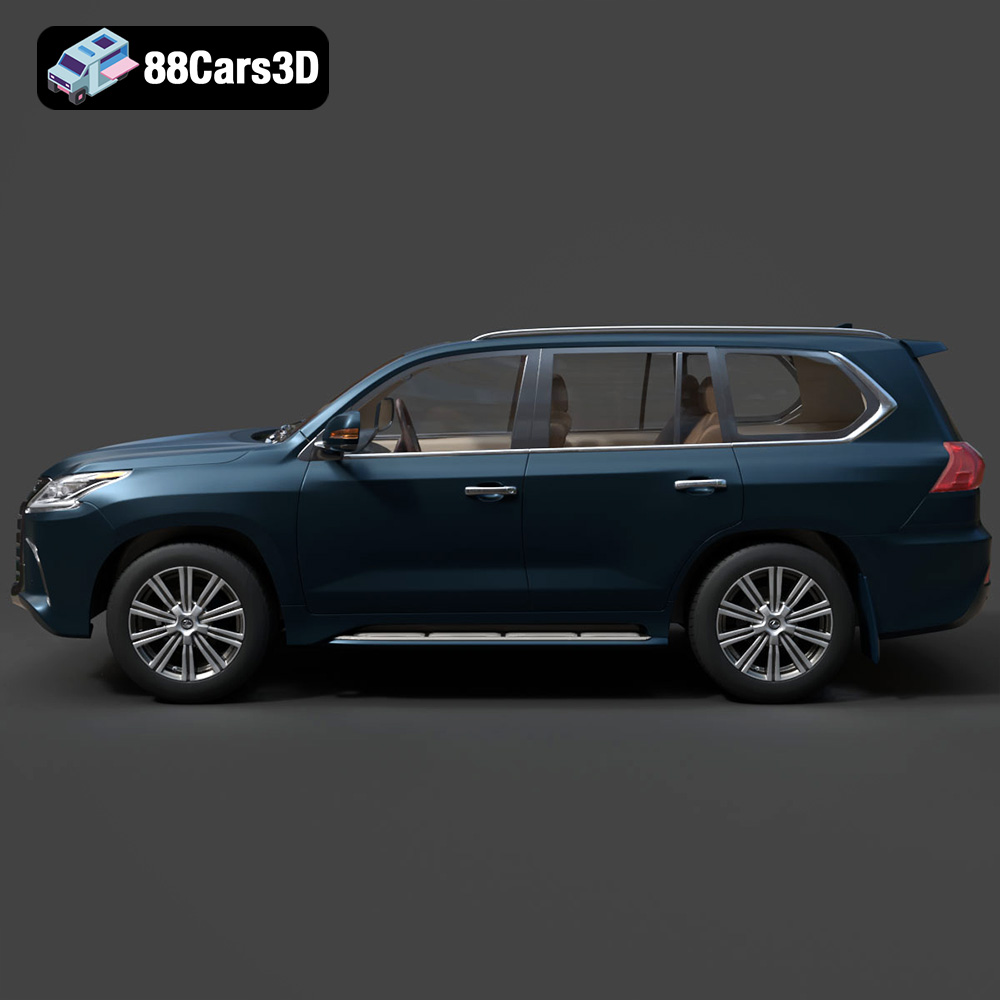
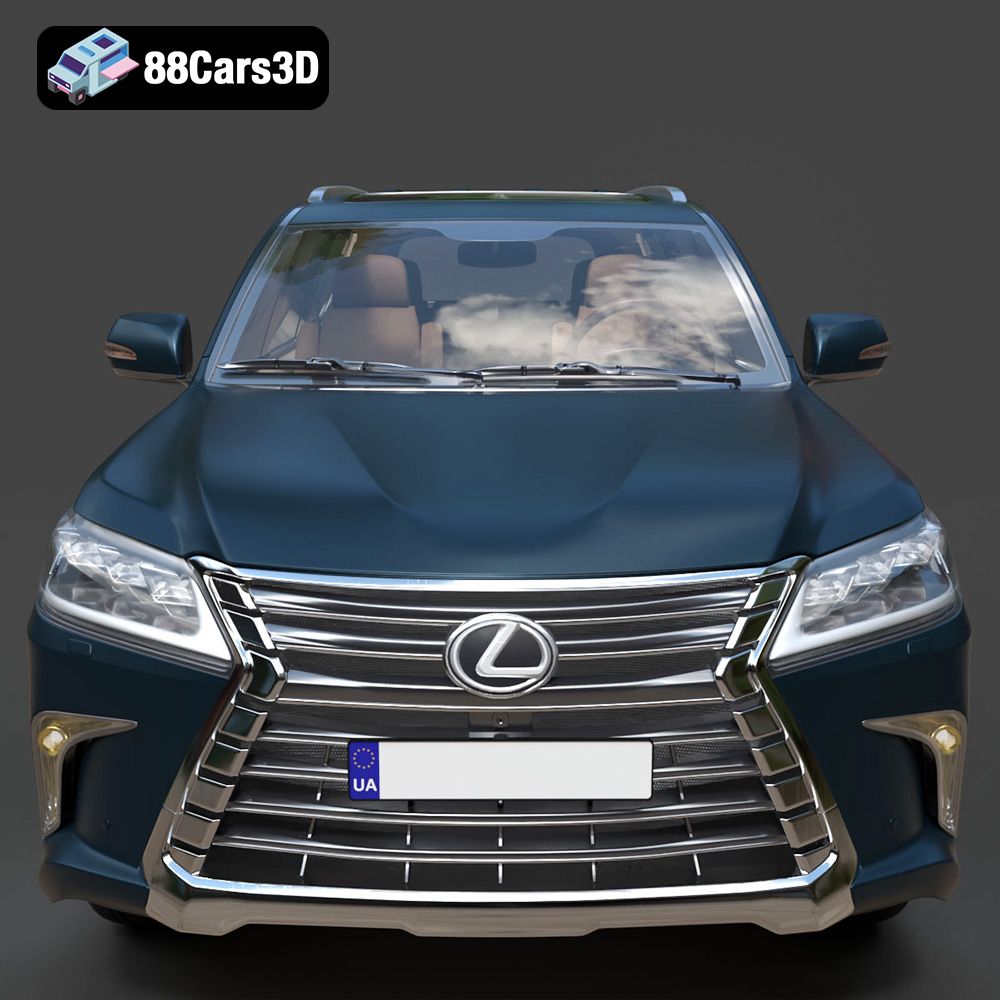
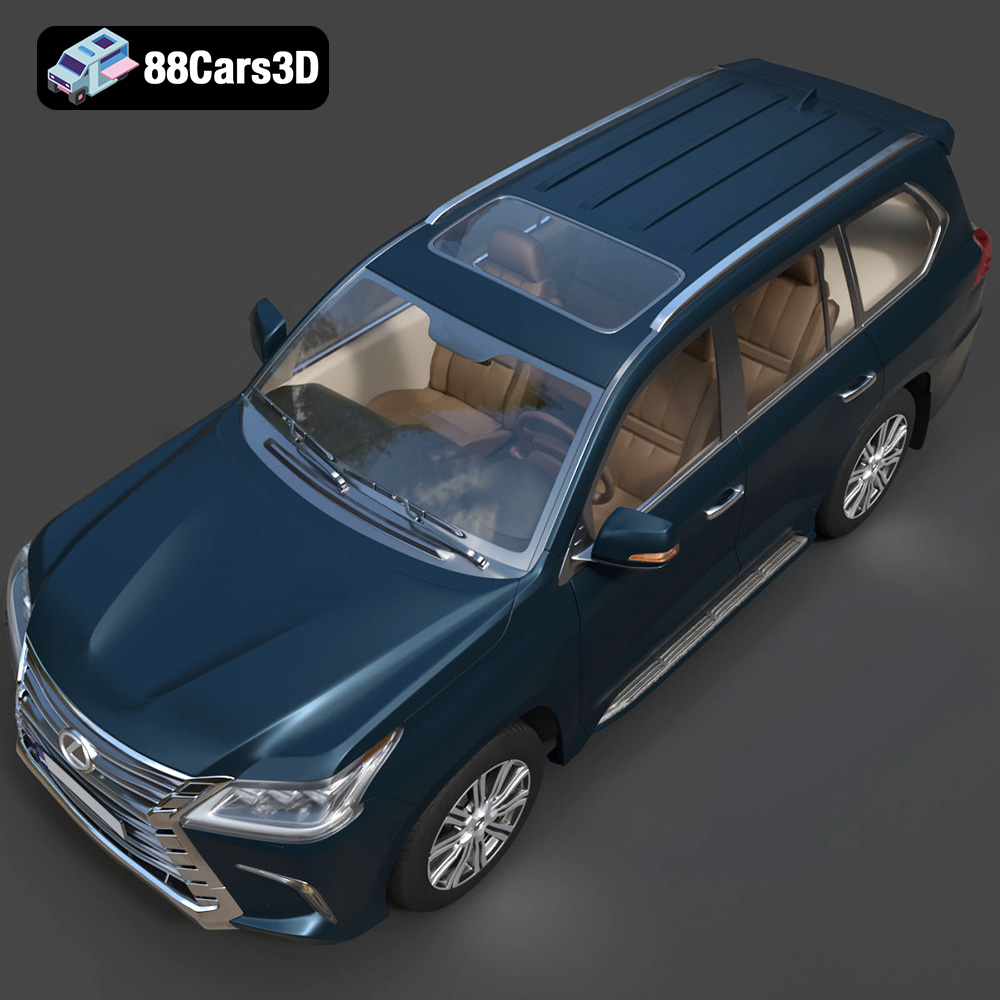
For high-end automotive rendering, accuracy is paramount. Every curve, panel gap, and material finish must be painstakingly reproduced to achieve photorealism. The Lexus LX Mk3f J200 2016 3D Model exemplifies this commitment to detail. Its accurate frame geometry and proportions, true to the real vehicle chassis, ensure that the rendered output is indistinguishable from a photograph. The model includes intricate details such as the bold spindle grille, sharp L-shaped LED lighting signatures, authentic 20-inch alloy wheel designs with realistic tire treads, and even a detailed 5.7L V8 engine bay layout. Inside, premium quilted leather seating, wood-grain accents on the multi-function steering wheel, and a fully realized center console elevate its realism, making it perfect for brand campaigns, virtual automotive showrooms, and lifestyle rendering projects.
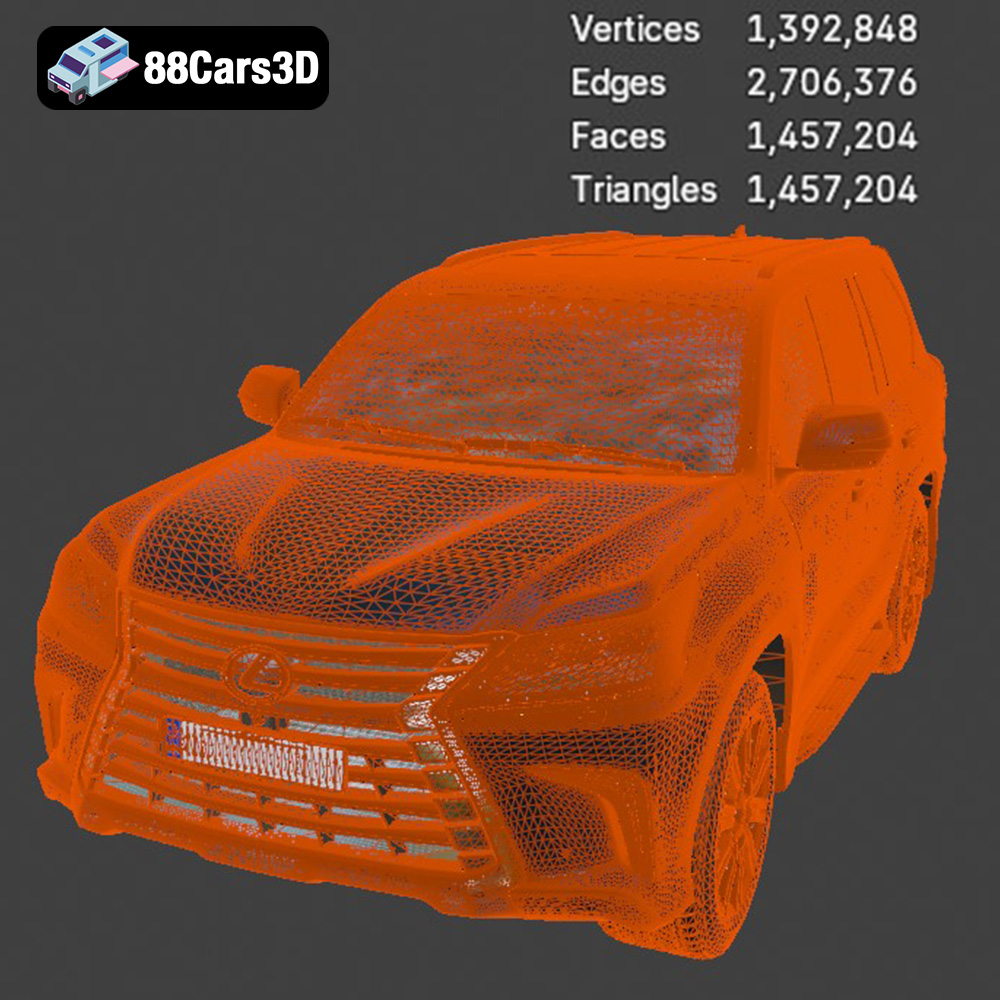
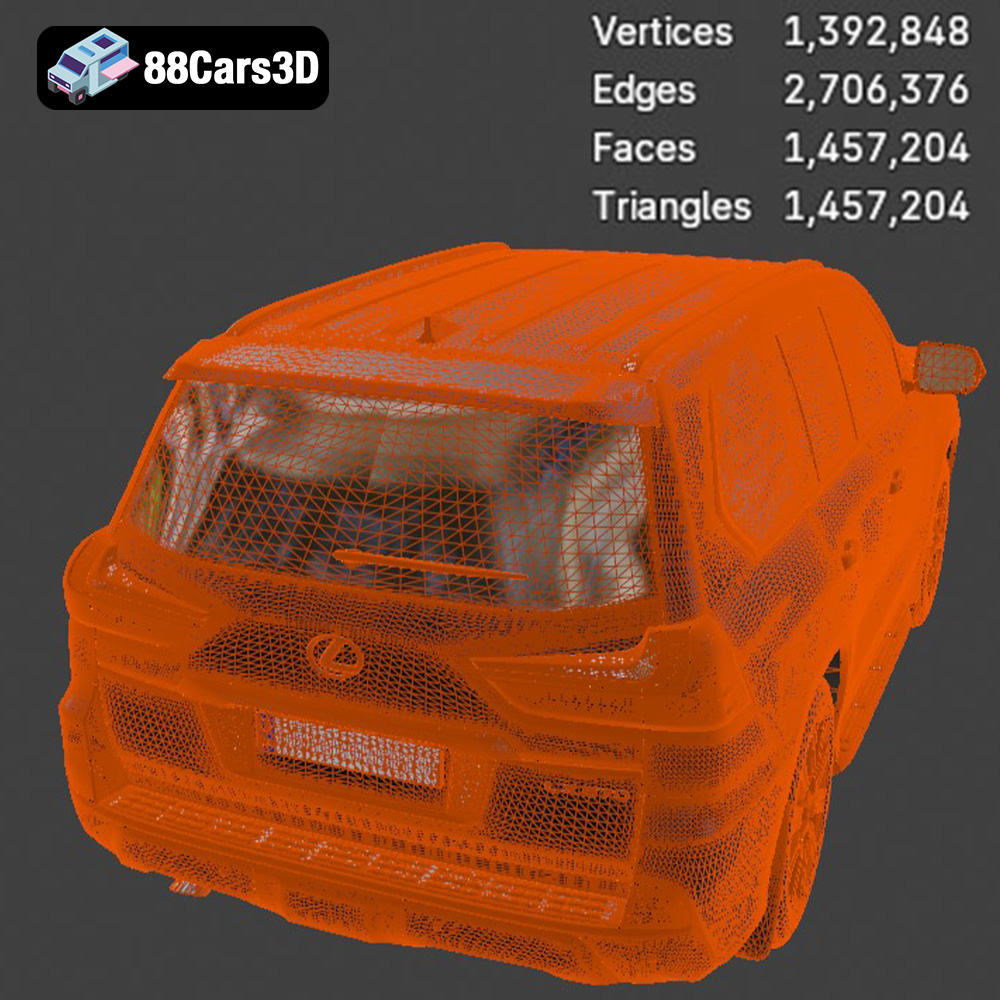
While visual fidelity is critical, performance is equally important, especially in real-time environments like video games, AR/VR simulations, and interactive configurators. This necessitates a delicate balance between detail and optimization. The Lexus LX Mk3f J200 model strikes this balance with a game-ready optimization, featuring a ~500k triangle count. This poly count is high enough to maintain excellent visual realism and crisp exterior paneling, yet optimized enough for superior performance in demanding real-time engines such as Unreal Engine and Unity. Furthermore, proper pivot setups for steering, wheel rotation, and suspension travel are included, which are essential for believable vehicle dynamics in interactive applications, allowing developers to implement realistic animations and physics without extensive re-rigging.
Navigating the diverse ecosystem of 3D software and applications often means dealing with a variety of file formats. Each format has its strengths, ideal use cases, and specific technical implications. A versatile 3D asset, like the Lexus LX Mk3f J200 2016 3D Model available at 88cars3d.com, provides a comprehensive suite of formats, ensuring maximum compatibility and utility for any project.
Let’s break down the most common and important 3D file formats included with this model:
The native file format for Blender, a powerful open-source 3D creation suite. A .blend file typically contains everything related to the scene: geometry, materials, textures, lighting, cameras, animation data, and even physics simulations. This format is ideal for Blender users who need full control over the model. It allows for complete editing of the mesh, modification of materials using Blender’s node-based shader editor (compatible with Cycles and Eevee renderers), and leveraging Blender’s robust animation tools. For the Lexus LX model, the .blend file provides a ready-to-render scene, making it incredibly convenient for artists already working within the Blender ecosystem to jump straight into customization or integration.
Developed by Autodesk, FBX (Filmbox) is one of the most widely supported 3D file formats. It excels at transferring data between different 3D software applications and is the industry standard for game development. An .fbx file can encapsulate geometry, materials, textures (often embedded or referenced), rigging, animation, and even lights and cameras. Its robust support for animation makes it invaluable for game engines like Unreal Engine and Unity, where vehicles need to move and interact realistically. When importing the Lexus LX .fbx into a game engine, developers can expect efficient integration of the mesh, UVs, and skeletal data (if included), simplifying the process of setting up collision, physics, and character interactions.
OBJ (Object) is a simple, universal 3D data format developed by Wavefront Technologies. It primarily stores geometric data – vertices, faces, UV coordinates, and normals – and can reference external .mtl (material) files for basic material properties like color and texture maps. While it doesn’t support animation or complex material setups, its widespread compatibility makes it a go-to for transferring static meshes between almost any 3D software. For the Lexus LX, the .obj format serves as a reliable fallback, ensuring that artists using less common software or needing a clean mesh for sculpting or retopology can always access the core geometry.
GLB (GL Transmission Format Binary) is a 3D model format designed for efficient transmission and loading of 3D scenes and models in web and mobile applications. It’s the binary version of glTF, packing all necessary assets (geometry, materials, textures, animation) into a single file. .glb is quickly becoming the standard for augmented reality (AR), virtual reality (VR), and browser-based 3D viewers due to its small file size and quick loading times. The Lexus LX .glb file is perfect for creating immersive virtual showrooms accessible directly through a web browser or integrating into mobile AR apps, offering a lightweight yet visually appealing representation of the vehicle.
STL (Stereolithography) is the most common file format for 3D printing. It represents a 3D model as a series of connected triangles, describing only the surface geometry of an object without color, texture, or material information. While less useful for rendering, it’s essential for bringing digital models into the physical world. The Lexus LX Mk3f J200 2016 3D Model, when converted to .stl, becomes a tangible object. Hobbyists can print scaled replicas, requiring careful consideration of print settings like scale, layer height, wall thickness, and supports, especially for fine details like exhaust outlets and mirrors.
PLY (Polygon File Format) is another format that describes a 3D object as a collection of polygons. It’s often used for storing 3D scanner data and is known for its ability to store various properties like color, transparency, and confidence values for each vertex or face. While not as universally used as .fbx or .obj, .ply can be beneficial in certain scientific, CAD, or analysis workflows where precise mesh information and additional per-vertex data are critical. It offers an alternative for highly detailed geometric analysis of the Lexus LX model.
While not a traditional file extension for general asset transfer (Unreal typically imports .fbx), “unreal” here implies a pre-packaged or optimized asset directly configured for Unreal Engine. This often means the model has already been imported, materials set up with PBR (Physically Based Rendering) shaders, LODs (Levels of Detail) generated, collision meshes created, and possibly even basic blueprints or animations integrated. This format signifies an asset that has been specifically prepared and tested for Unreal Engine, providing a significant head start for developers. For the Lexus LX, this means minimal setup time within Unreal, allowing immediate use in virtual production, game levels, or architectural visualization projects.
The native file format for Autodesk 3ds Max, a leading software for 3D modeling, animation, and rendering. A .max file, similar to .blend, contains the entire scene data, including geometry, complex material setups (e.g., V-Ray, Corona), lighting, camera, and animation timelines. This format is crucial for professionals who rely on 3ds Max for high-end rendering and detailed animation sequences. The Lexus LX .max file allows artists to leverage 3ds Max’s powerful modeling and rendering capabilities, apply custom modifiers, integrate it into complex scene compositions, or produce cinematic animations with sophisticated rendering engines.
The inclusion of such a diverse range of formats for the Lexus LX Mk3f J200 2016 3D Model highlights its professional-grade utility, making it adaptable to virtually any creative pipeline an artist might use. This versatility is a hallmark of high-quality 3D car models found on platforms like 88cars3d.com.
A truly valuable 3D asset proves its worth through seamless integration into existing professional pipelines. The Lexus LX Mk3f J200 2016 3D Model has been designed with this principle in mind, making it a powerful addition for various disciplines.
Game developers constantly seek optimized yet visually stunning assets. The Lexus LX model, with its ~500k triangle count, strikes an excellent balance. In Unreal Engine or Unity, developers would typically import the .fbx file, which carries the geometry and UV data. PBR materials would then be set up, utilizing textures for albedo, normal, roughness, metallic, and ambient occlusion maps to achieve realistic surface properties. The included proper pivot setup for wheels and suspension significantly accelerates the implementation of vehicle physics and animation, allowing for quick deployment into racing titles, open-world environments, or simulation games. The optimized geometry ensures smooth performance even in complex scenes, making it a perfect asset for an open-world driving experience or a sophisticated simulation scenario where multiple vehicles might be present.
For cinematic rendering, maximum detail and flexible material control are essential. Artists working in 3ds Max can utilize the .max file, leveraging its native setup. This allows for fine-tuning materials with advanced renderers like V-Ray or Corona, setting up realistic studio lighting or environmental HDRI (High Dynamic Range Image) backgrounds to achieve a captivating look. In Blender, the .blend file provides a similar advantage, offering full editability and compatibility with Cycles or Eevee renderers. The Lexus LX’s detailed interior, complete with premium quilted leather and wood-grain accents, comes alive under professional lighting, making it ideal for creating high-impact brand advertisements, virtual photography, or showcasing luxury automotive design in a stunning portfolio piece.
The utility of high-quality 3D car models extends far beyond traditional rendering and game development, venturing into cutting-edge immersive technologies and even physical fabrication.
Augmented Reality (AR) and Virtual Reality (VR) demand highly optimized assets that can be rendered in real-time on various devices. The Lexus LX Mk3f J200 2016 3D Model is ideally suited for these applications. For web-based AR/VR experiences or mobile applications, the .glb format is a crucial asset, providing a lightweight, single-file solution that loads quickly and efficiently. Imagine a virtual car configurator where potential buyers can explore the Lexus LX in full 3D, changing colors, inspecting the detailed interior, or even placing the virtual vehicle in their driveway via AR. For higher-fidelity VR experiences, integrating the optimized .fbx into Unreal Engine or Unity allows for fully immersive virtual showrooms where users can walk around, open doors, and even ‘sit’ inside the meticulously recreated cockpit.
The ability to convert a digital model into a tangible object opens up a world of possibilities for designers, engineers, and hobbyists. The inclusion of the .stl format for the Lexus LX model directly supports 3D printing. This allows enthusiasts to create physical display models, scale prototypes, or even custom parts. When preparing for 3D printing, careful attention must be paid to settings such as scale (e.g., 1:12, 1:18, 1:24), layer height (0.04–0.12 mm recommended for resin printing to capture fine details), wall thickness, and infill. Support structures are often required for overhangs and intricate components like the exhaust, mirrors, and steering wheel. After printing, post-processing steps like sanding, priming, and painting with authentic factory colors can bring the physical model to a stunning finish, mirroring the digital fidelity of the original 3D asset from 88cars3d.com.
While a high-quality base model is essential, the ability to customize and fine-tune its appearance is what truly allows artists to achieve unique and compelling visuals tailored to specific project needs.
The realism of a 3D model largely comes down to its materials and textures. The Lexus LX Mk3f J200 2016 3D Model provides a robust foundation for extensive customization. Artists can easily change body colors, applying a wide array of factory colors or bespoke custom finishes. Modifying tire textures to represent off-road variants or street-specific treads allows for adapting the vehicle to different environments. Adjusting material finishes—from matte to gloss to various metallic paints—can dramatically alter the perceived luxury and style. Utilizing PBR workflows, artists can tweak roughness, metallic, normal, and displacement maps to perfectly simulate the subtle nuances of metal, plastic, leather, and glass, ensuring every surface reacts realistically to light.
No matter how detailed a 3D model is, its appearance is profoundly influenced by the lighting and environment it’s placed in. Professional artists leverage sophisticated lighting techniques to enhance realism and evoke specific moods. Using HDRI maps can accurately simulate real-world lighting conditions, from a sunny desert landscape to a gloomy city street. For studio-style renders, setting up three-point lighting, rim lights, and reflection planes can highlight the vehicle’s form and exquisite details. Adapting the lighting for different environments—whether a pristine automotive showroom, a rugged off-road trail, or a sleek urban setting—allows the Lexus LX Mk3f J200 3D Model to truly shine, showcasing its versatility and robust design in any context.
In the fast-paced world of 3D content creation, access to high-quality, meticulously optimized 3D car models like the Lexus LX Mk3f J200 2016 is not just a convenience; it’s a competitive advantage. This model exemplifies the crucial balance between breathtaking visual fidelity and game-ready performance, making it an indispensable asset for a diverse range of applications. From enhancing the realism of cinematic renders in 3ds Max and Blender, to boosting performance in Unreal Engine and Unity for cutting-edge games, to enabling immersive AR/VR experiences and even providing a base for detailed 3D prints, its versatility is unmatched.
The inclusion of a wide array of file formats, from .blend and .max for complete scene control to .fbx and .glb for seamless real-time integration, underscores its professional utility. By leveraging such well-crafted assets, artists and developers can significantly reduce production times, maintain consistent quality, and focus their creative energy on bringing their unique visions to life. Explore the potential of the Lexus LX Mk3f J200 2016 3D Model and a vast collection of other premium 3D car models at 88cars3d.com, and elevate your projects to the next level of digital realism.
Experience luxury and capability with the highly detailed Lexus LX Mk3f J200 2016 3D model. Representing the iconic third facelift of the acclaimed J200 generation, this full-size luxury SUV perfectly captures the bold spindle grille, sharp L-shaped LED lighting signatures, and robust, imposing stance. Renowned for its legendary 5.7-liter V8 engine and unmatched off-road prowess combined with premium refinement, this digital replica brings the flagship Lexus SUV to life in stunning detail.
Constructed with meticulous attention to detail, this model features game-ready optimization and a balanced triangle count for superior performance in real-time engines. It delivers incredible visual fidelity with accurate proportions, crisp exterior paneling, and high-quality topology. Designed specifically for versatile integration, it excels in demanding production environments including game development, AR/VR simulations, animation, and high-end visualization.
Perfect for open-world games, architectural visualizations, virtual automotive showrooms, and lifestyle rendering projects.
.blend, .fbx, .obj, .glb, .stl, .ply, .unreal, .max
Tags:
lexus, lx, mk3f, j200, 2016, suv, luxury-suv, game-ready, low-poly, optimized, car-3d-model, game-asset, rendering, vr-ar, blend, fbx, obj, glb, stl, ply, unreal, maxVespa VNB 125-B 3D Model 3D Printable STL
$39.99
.2016
.blend
.fbx
.glb
.lexus
.luxury suv
.lx
.max
.obj
.ply
.rendering
.stl
.unreal
car-3d-model
game asset
game-ready
j200
low-poly
mk3f
optimized
SUV
VR/AR