Get 20% OFF All Premium 3D & STL Models!

In the rapidly evolving landscape of digital media, from immersive video games to cutting-edge architectural visualization and interactive AR/VR experiences, the demand for exceptionally detailed and performance-optimized 3D car models has never been higher. These aren’t just static images; they are intricate digital sculptures, engineered for specific applications and designed to captivate audiences with their realism and functional versatility.
The modern automotive industry, particularly in the electric vehicle (EV) sector, showcases a blend of design prowess and technological innovation. Models like the Polestar 2 2020 epitomize this fusion, presenting a sleek, minimalist aesthetic combined with sustainable performance. Translating such a sophisticated vehicle into a compelling 3D asset requires meticulous attention to detail, adherence to technical specifications, and a deep understanding of various digital pipelines. This article delves into the complexities of creating and utilizing premium 3D car models, highlighting how a meticulously crafted asset, such as the Polestar 2 2020 3D Model available on 88cars3d.com, serves as an invaluable tool for professionals across diverse industries.
The choice of a 3D model file format is far more than a simple preference; it dictates compatibility, functionality, and performance across various software and platforms. Professionals must understand the nuances of each format to ensure their assets seamlessly integrate into their specific workflows. The Polestar 2 2020 3D Model, for instance, comes with an impressive array of formats, each serving a distinct purpose.
The .blend format is the native file type for Blender, the popular open-source 3D creation suite. A .blend file is a complete package, containing not just the mesh data but also materials, textures, lighting setups, camera positions, animations, rigging, modifiers, and even custom scripts. This makes it an ideal starting point for artists who primarily work within Blender, offering full editability and the ability to leverage all of Blender’s powerful features. For the Polestar 2 2020 model, having a .blend file means artists can easily tweak the Scandinavian vegan interior, adjust wheel settings, or reconfigure lighting for specific renders, all within a familiar and highly customizable environment.
.fbx (Filmbox) is Autodesk’s proprietary format but has become an industry standard for interoperability between different 3D software applications and game engines. It is a robust format that supports not only geometry but also complex animations, skeletons, skinning, blend shapes, lights, and cameras. Its strength lies in its ability to transfer rich scene data accurately between programs like Maya, 3ds Max, Cinema 4D, and into real-time engines like Unreal Engine and Unity. For game developers and animation studios, an .fbx version of the Polestar 2 2020 is crucial for importing the vehicle with its detailed suspension, separate wheels, and potentially rigged components directly into their project for immediate use.
.obj (Wavefront OBJ) is one of the oldest and most widely supported 3D file formats. It is a simple, plain-text format that primarily stores geometric data: vertices, UV coordinates, vertex normals, and faces. Material properties are typically stored in a companion .mtl (Material Template Library) file. While it doesn’t support animations, rigging, or advanced scene information, its universality makes it excellent for static meshes and for ensuring cross-software compatibility. If you need to import the Polestar 2 2020 into almost any 3D package for basic rendering or modeling, the .obj format is a reliable choice.
.glb (GL Transmission Format Binary) is the binary version of glTF, a royalty-free specification for the efficient transmission and loading of 3D scenes and models by applications. It packages geometry, materials, textures, and animations into a single, self-contained file, making it highly optimized for web-based 3D, AR (Augmented Reality), and VR (Virtual Reality) applications. Its compact size and rapid parsing capabilities are perfect for showcasing the Polestar 2 2020 in a virtual showroom on a website or deploying it in a mobile AR experience where performance and loading speed are paramount.
.stl (Stereolithography) is the standard format for 3D printing. It represents the surface geometry of a 3D object using a collection of interconnected triangles. The .stl format lacks color, texture, or any scene information, focusing solely on the object’s form for physical manufacturing. For hobbyists or product designers looking to create a physical scale model of the Polestar 2 2020, the .stl file provides the necessary data for slicing software and 3D printers, translating digital design into tangible reality.
.ply (Polygon File Format) is a file format for storing graphical objects that are described as a collection of polygons. It is particularly known for its ability to store properties beyond just x, y, z coordinates and normal vectors, such as color, transparency, texture coordinates, and even reliability information for each vertex and face. Developed for storing data from 3D scanners, .ply is often used in scientific visualization, CAD, and applications requiring highly precise mesh data, offering another robust option for the Polestar 2 2020’s detailed geometry.
While not a standalone file extension in the same vein as .fbx or .obj, “.unreal” typically denotes an asset that has been specifically prepared and optimized for direct import or use within Unreal Engine. This often means the included .fbx file is configured with appropriate scale, pivots, and possibly collision meshes, or it could even be an Unreal Engine asset pack (.uasset) containing the vehicle’s blueprints, materials, and textures pre-setup. For developers aiming to integrate the Polestar 2 2020 into a racing game or a virtual production scene, this “engine-ready” designation ensures a smooth and efficient workflow, minimizing setup time and maximizing performance within the Unreal ecosystem.
Finally, the .max format is the native scene file for Autodesk 3ds Max, a leading software for 3D modeling, animation, and rendering. Similar to .blend, a .max file stores all aspects of a 3ds Max scene, including geometry, modifiers, materials (V-Ray, Corona, Arnold), lighting, cameras, animation timelines, and scene hierarchy. It offers the highest level of flexibility and detail for users operating within the 3ds Max environment, allowing for comprehensive scene construction, high-end rendering of the Polestar 2 2020, and complex animation sequences.
The inclusion of this diverse set of formats for the Polestar 2 2020 3D Model underscores its versatility and value, providing professionals with the right tools for virtually any digital or physical application.
Creating a premium 3D car model, especially one as distinctive as the Polestar 2 2020, is a highly specialized craft that balances artistic interpretation with technical precision. It’s about more than just replicating a shape; it’s about capturing the vehicle’s spirit, its design philosophy, and its functional elements in a digital medium.
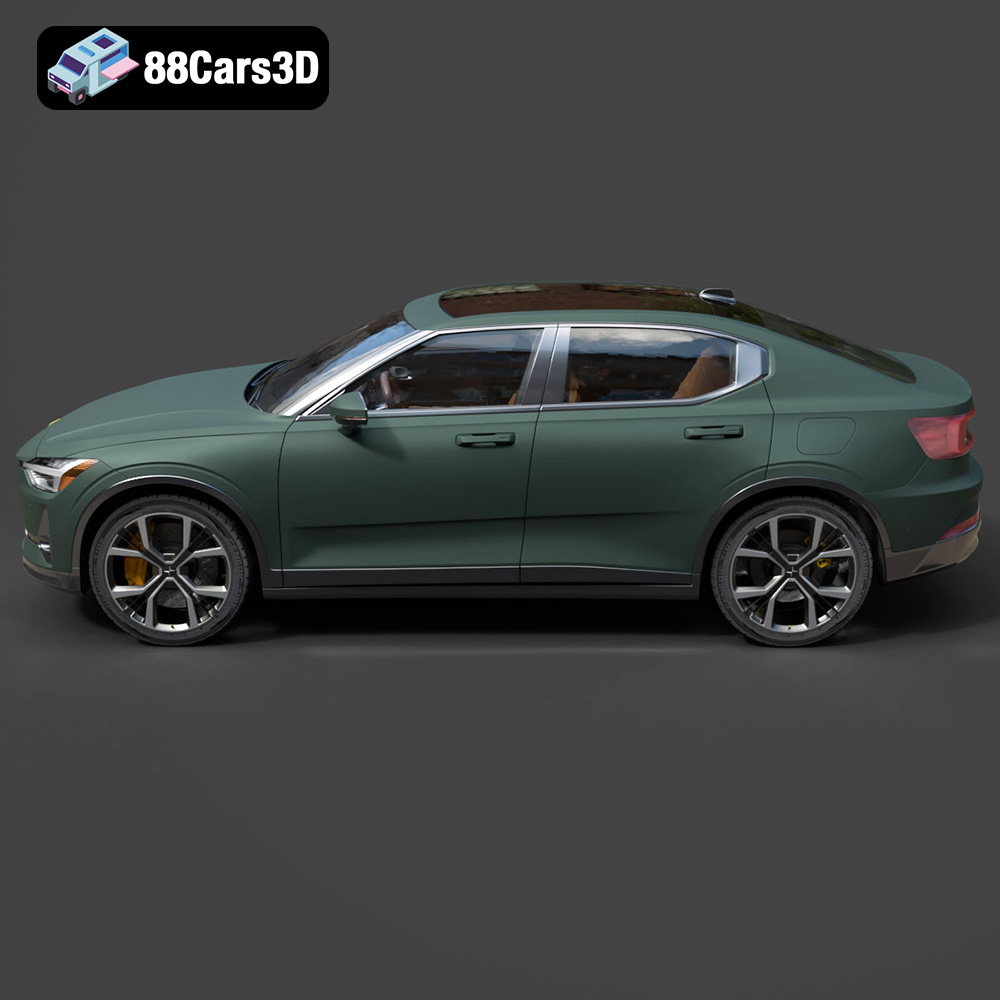
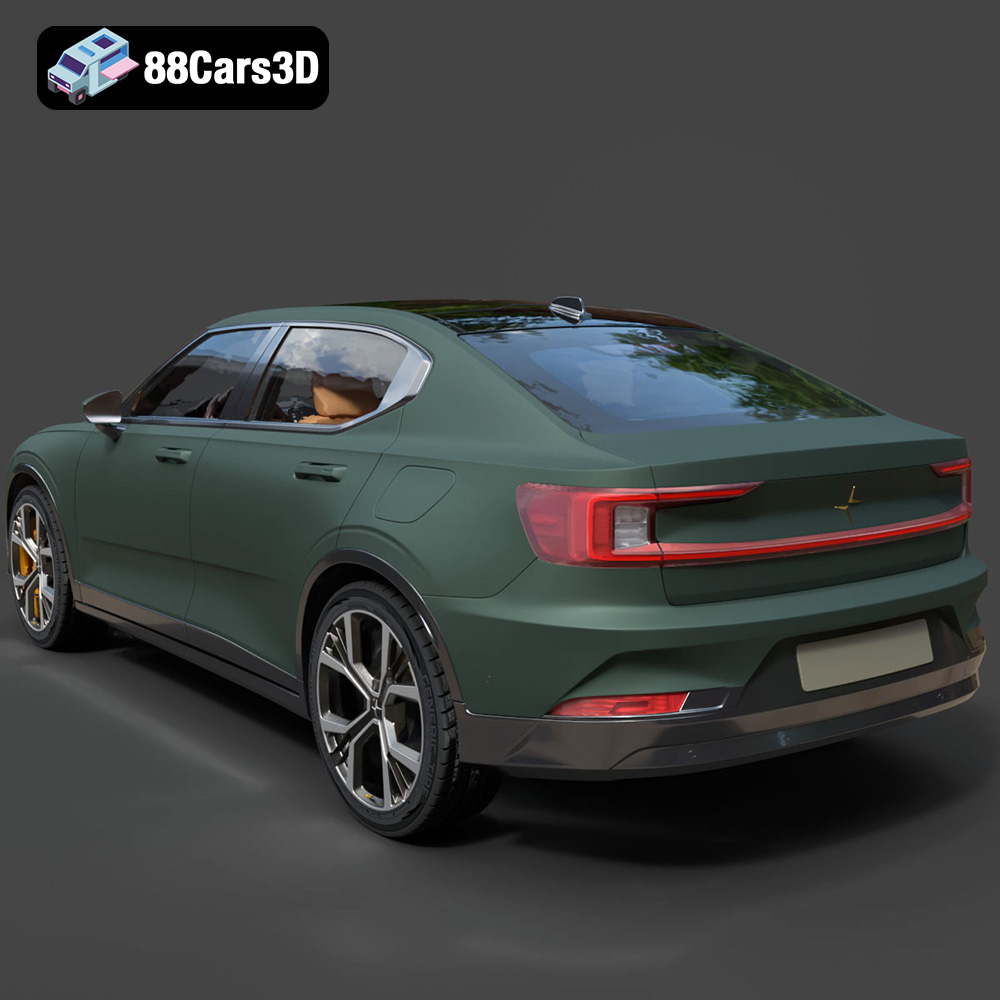
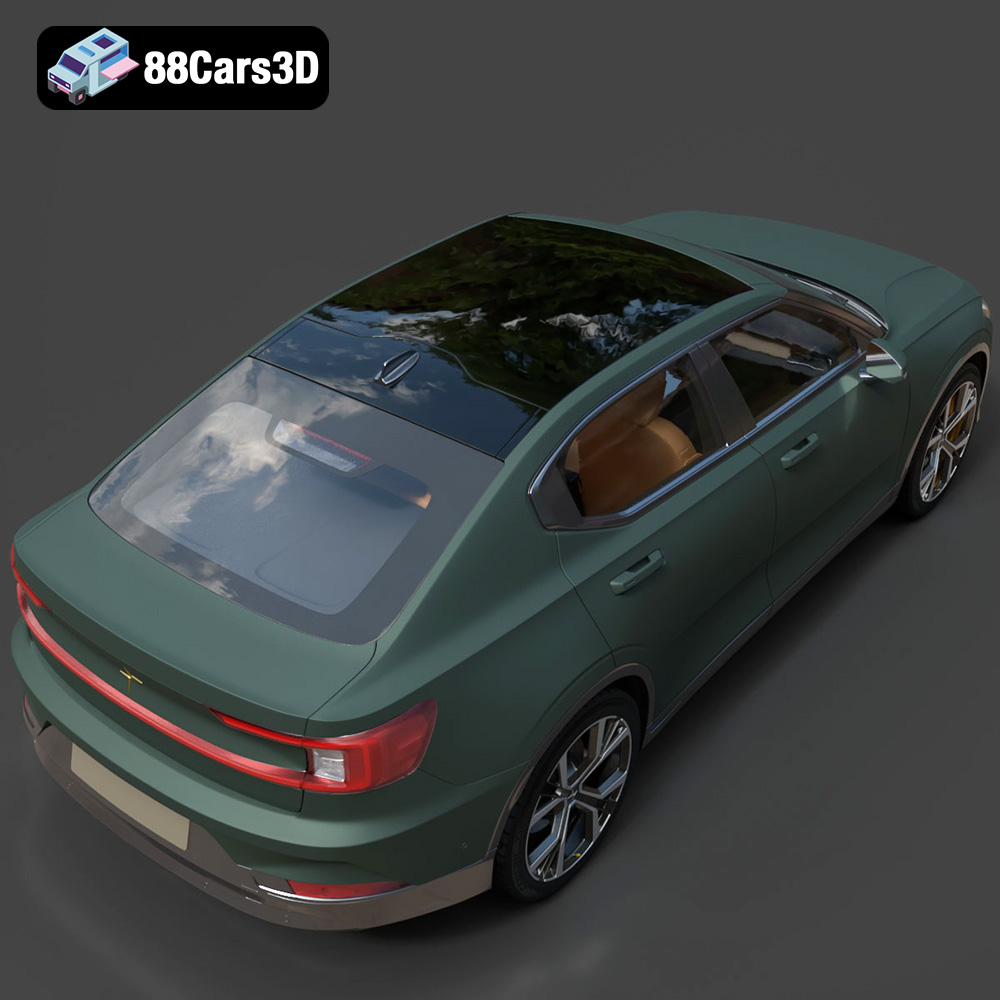
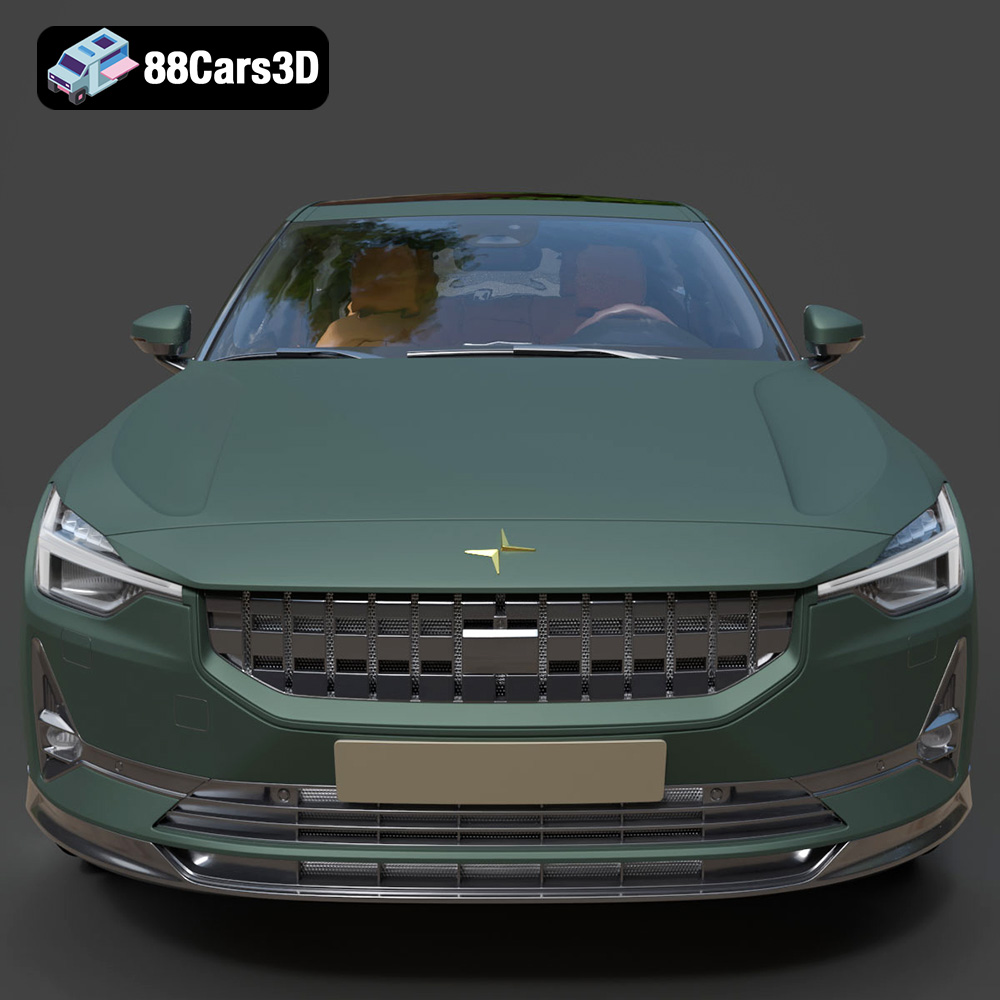
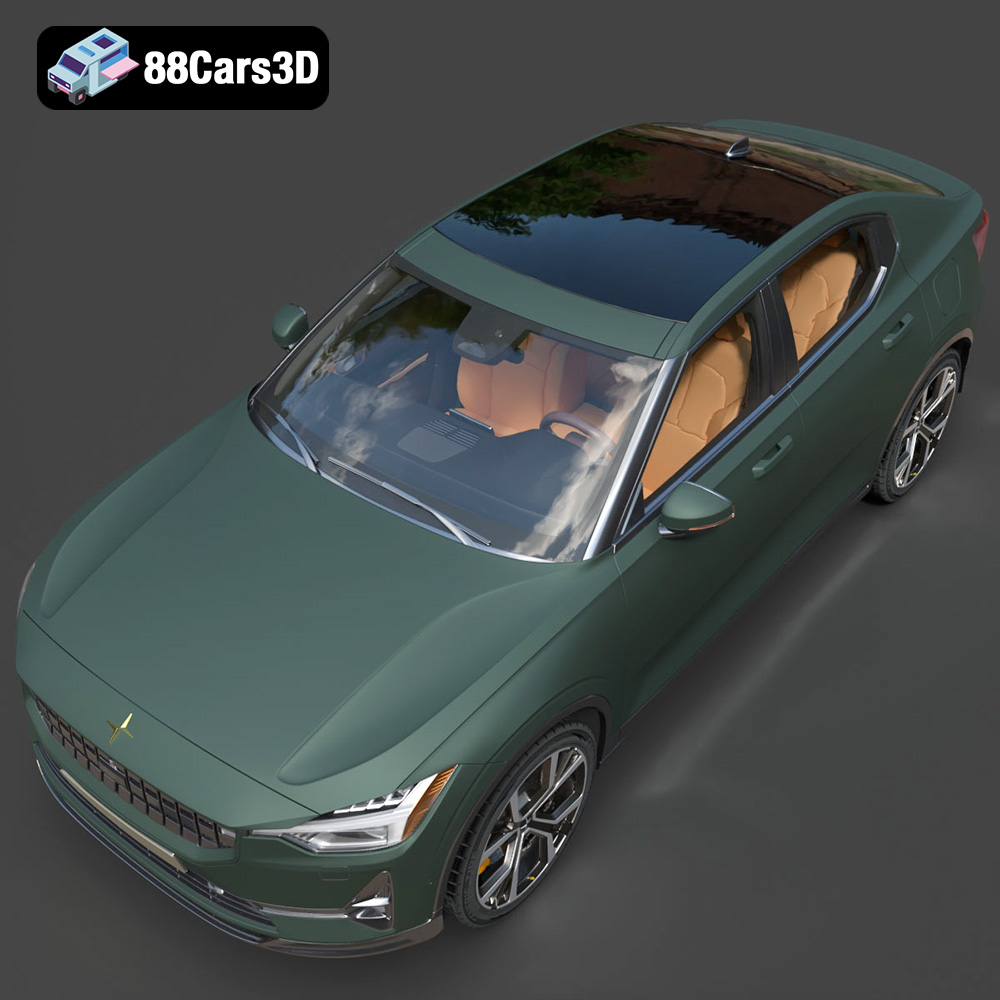
The Polestar 2 2020 is defined by its sleek lines, aerodynamic profile, and signature elements like pixel LED headlights and a full-width taillight blade. Translating these features into a 3D model requires meticulous poly-modeling, ensuring that every curve, panel gap, and ventilation detail accurately reflects the real-world counterpart. The featured model from 88cars3d.com excels in this, boasting accurate fastback body geometry and aerodynamic proportions. The inclusion of detailed EV battery pack placement and undercarriage further enhances realism, particularly for close-up shots or interactive inspections. These granular details, like frameless side mirrors and panoramic roof detailing, are crucial for achieving photorealistic renders and believable in-game environments.
Beyond the exterior, the interior of a vehicle is often where users spend significant interactive time, whether driving in a game or exploring in VR. The Polestar 2’s minimalist Scandinavian vegan interior presents its own set of modeling challenges, requiring accurate representation of materials, textures, and functional components. The model includes an accurately modeled steering wheel, digital instrument cluster, and the distinctive portrait-oriented infotainment touchscreen. For gaming applications, especially those supporting first-person POV, optimized geometry for the cockpit ensures smooth performance without sacrificing crucial detail, allowing players to feel truly immersed in the Polestar 2’s sophisticated cabin.
In the realm of real-time applications like video games and interactive simulations, performance is paramount. A high-fidelity model must also be highly optimized to run smoothly across various hardware configurations. This balance between visual quality and performance is a defining characteristic of professional 3D car models.
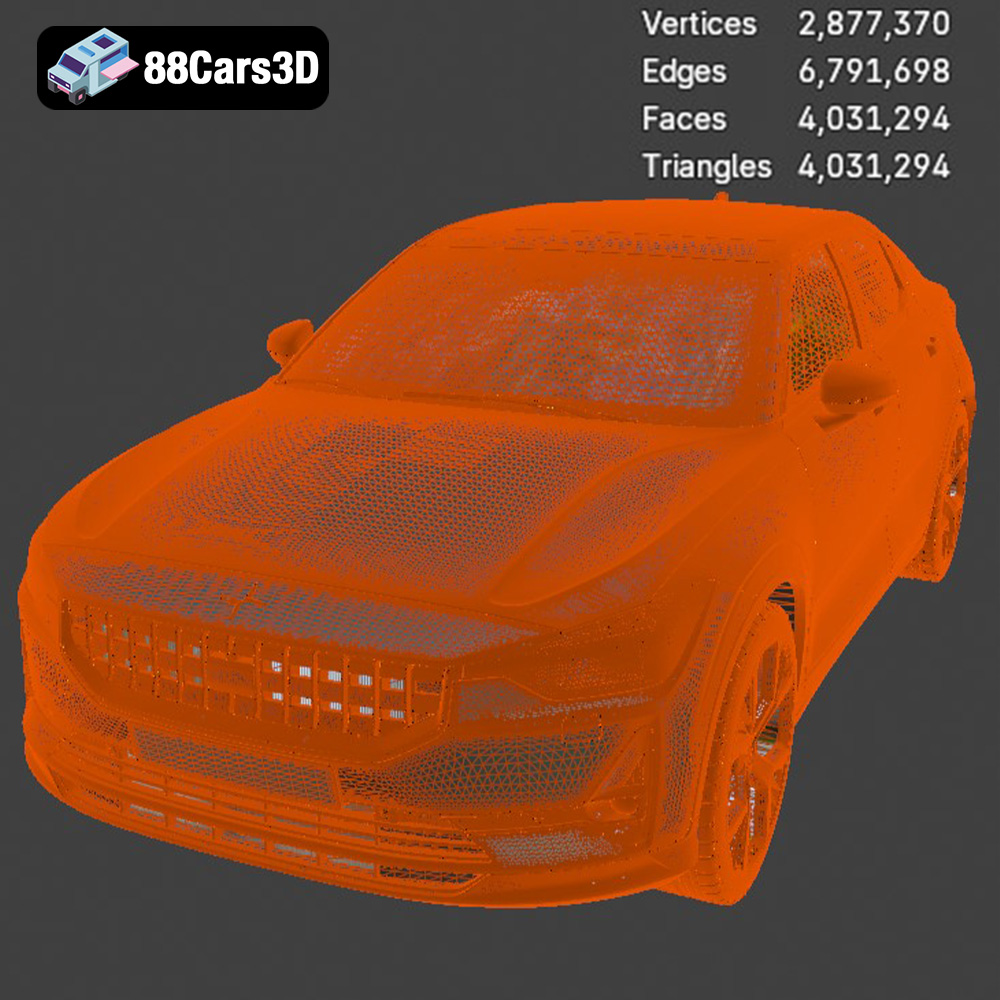
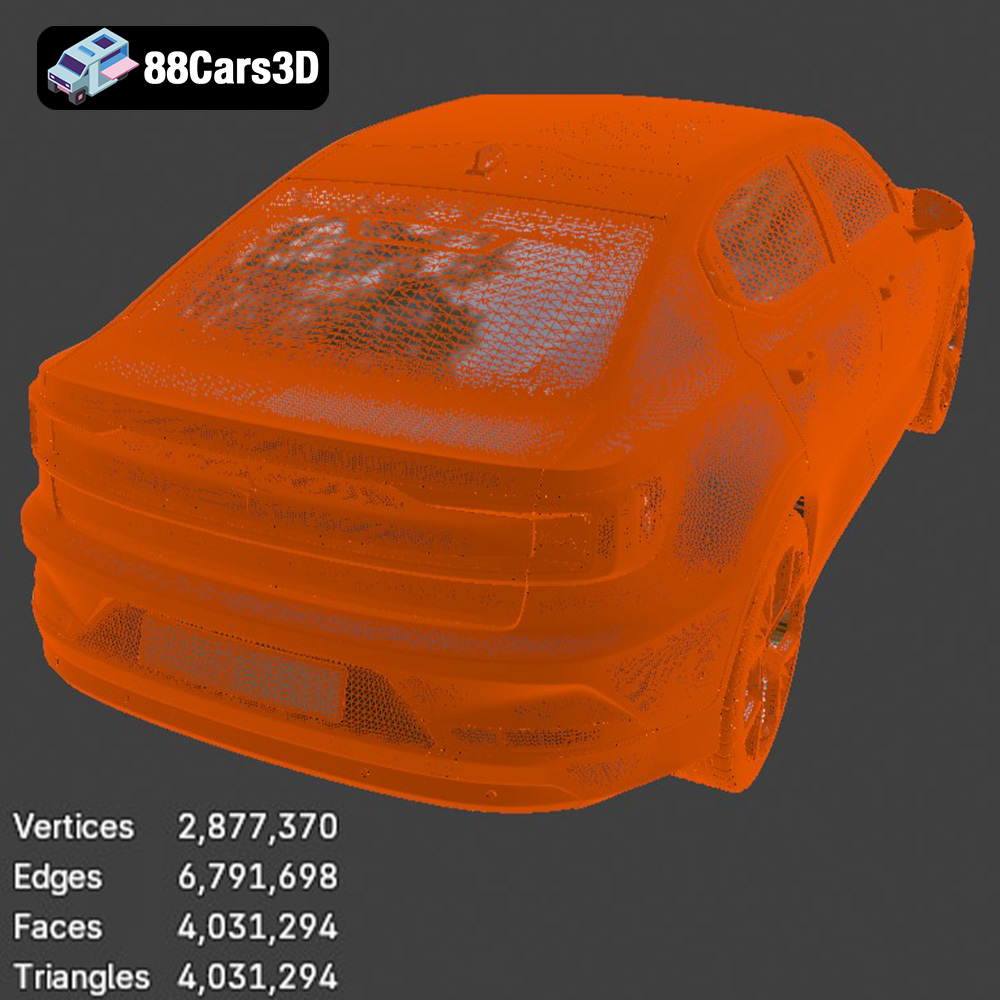
The Polestar 2 2020 3D Model strikes an excellent balance with an estimated triangle count of ~120,000. This polycount is considered game-ready, meaning it’s optimized enough to be integrated into modern game engines like Unreal Engine and Unity without causing significant performance bottlenecks, yet detailed enough to maintain high-end visual realism. Efficient topology, characterized by clean quad-based meshes where possible, allows for smooth deformation if the model is animated and ensures proper subdivision if higher detail is required for cinematic renders. Understanding UV mapping and efficient texture atlasing (which would be inherent in a model of this quality) further aids in performance by reducing draw calls and optimizing material rendering.
Accuracy in 3D modeling extends to real-world scale. The Polestar 2 model’s adherence to actual vehicle chassis dimensions ensures that it looks correct when placed next to other assets or within a virtual environment. Furthermore, proper pivot setup for steering, wheel rotation, and suspension travel is critical for interactive applications. This allows for realistic vehicle dynamics in a game engine, enabling authentic driving experiences where the car responds predictably to physics simulations and player input. These are the details that separate a high-quality professional asset from a hastily constructed one.
The utility of a versatile 3D car model like the Polestar 2 extends far beyond traditional screens, opening up new possibilities in immersive technologies and physical production.
Augmented Reality (AR) and Virtual Reality (VR) are revolutionizing how we interact with digital content. For automotive brands, this means creating virtual showrooms, immersive configurators, and mobile AR experiences where customers can explore a vehicle in their own driveway. The optimized polycount and included .glb format of the Polestar 2 2020 3D Model make it ideal for these applications. Imagine a potential buyer walking around a virtual Polestar 2, changing colors and inspecting the interior, all before visiting a dealership. This level of engagement is a powerful marketing tool made possible by robust 3D assets.
The ability to convert a high-quality 3D model into a physical object via 3D printing offers unique value, particularly for enthusiasts, product designers, or even for creating physical prototypes. The Polestar 2 model includes an .stl format, specifically tailored for 3D printing. The provided print settings – recommended scales (1:12 / 1:18 / 1:24), layer height, wall thickness, infill, and support requirements – guide users toward achieving a successful print. Resin printing is recommended for capturing the fine details, ensuring that the signature pixel LED headlights and detailed interior components translate accurately into a tangible model. This dual utility, digital and physical, truly showcases the model’s comprehensive design.
For marketing campaigns, lifestyle scenes, and architectural visualizations, photorealistic renders are essential. The Polestar 2 2020 3D Model is an excellent asset for these scenarios. Its detailed geometry, accurate materials (which can be customized for different finishes like matte, gloss, or metallic), and ability to adapt lighting for various environments mean it can be seamlessly integrated into a wide range of visual narratives. Whether showcasing a modern EV charging station or a sleek urban streetscape, the model elevates the visual impact, lending credibility and aesthetic appeal to any scene. From automotive rendering to product showcases, the quality is evident.
Professional workflows demand efficiency and flexibility. A well-constructed 3D asset must integrate smoothly into diverse software pipelines, empowering artists and developers rather than hindering them with compatibility issues.
For studios leveraging Blender, the .blend file provides a complete starting point. Artists can take the Polestar 2 model and immediately begin customizing it. This could involve creating unique animation sequences for commercials, integrating it into a complex scene with other vehicles and environments, or even developing custom game logic around its components. The flexibility of Blender, combined with a clean, editable base model, allows for unparalleled creative freedom without the need for extensive re-topology or material setup.
In game development, time is money. An “engine-ready” asset, often facilitated by .fbx or .unreal formats, significantly accelerates the production pipeline. Developers using the Polestar 2 2020 3D Model in Unreal Engine or Unity can typically import it with minimal effort, knowing that the scale, pivots, and basic material assignments are already configured. They can then quickly set up physics assets, add custom scripts for interaction, and integrate it into their game world. This efficiency is critical for meeting deadlines and maintaining a high standard of quality in racing titles, open-world games, and vehicle simulators.
Architectural visualization firms and product rendering specialists often rely on 3ds Max paired with renderers like V-Ray or Corona. The .max file for the Polestar 2 2020 3D Model offers these professionals the full scope of editability within their native environment. They can easily swap out standard materials for V-Ray or Corona variants, apply advanced lighting techniques to achieve hyper-realistic reflections on the car’s body, and integrate it into detailed architectural scenes. The model’s robust geometry ensures clean reflections and shadows, which are crucial for high-end visualization where every detail contributes to the overall realism.
The digital content marketplace is vast, but discerning professionals understand that not all 3D car models are created equal. The difference between a generic asset and a premium, technically sound model can significantly impact project quality, development time, and ultimately, user experience.
A product like the Polestar 2 2020 3D Model exemplifies the commitment to quality found on 88cars3d.com. Its optimized topology, accurate real-world scale, and meticulously detailed features mean that artists and developers spend less time fixing issues and more time creating. The careful balance between high visual fidelity and game-ready performance is not easily achieved; it requires expertise in modeling, texturing, and understanding the demands of various platforms.
The provision of multiple file formats (.blend, .fbx, .obj, .glb, .stl, .ply, .unreal, .max) is a testament to the model’s versatility. It ensures that regardless of a professional’s preferred software or intended application – be it cinematic rendering, real-time game development, immersive AR/VR, or 3D printing – the Polestar 2 model can be integrated seamlessly. This broad compatibility makes it a truly universal asset for any digital project requiring a modern, high-quality electric vehicle.
Ultimately, investing in a high-quality 3D car model from a trusted source like 88cars3d.com empowers creators. It provides a solid foundation upon which to build stunning visualizations, engaging games, and innovative interactive experiences. It removes the technical hurdles, allowing creative energy to be focused on storytelling, design, and user interaction, rather than on endless model optimization or conversion problems.
The landscape of 3D content creation is constantly pushing boundaries, demanding assets that are not only visually stunning but also technically robust and versatile. The Polestar 2 2020 3D Model stands as a prime example of such an asset, meticulously crafted for a diverse range of professional applications, from high-end automotive rendering to game development and immersive AR/VR experiences. Its optimized polycount, accurate detailing, and extensive file format support make it an indispensable tool for anyone looking to integrate a modern, high-fidelity electric vehicle into their projects.
By understanding the intricacies of file formats, the importance of optimization, and the potential for real-world application, professionals can leverage such premium 3D car models to elevate their work, drive innovation, and create truly unforgettable digital experiences. Whether you’re a game developer, an architectural visualizer, or an AR/VR content creator, the Polestar 2 2020 3D Model from 88cars3d.com offers the quality, flexibility, and performance required to bring your creative visions to life in the most impactful way possible.
Discover the sleek and innovative Polestar 2 2020, a premium all-electric fastback that redefines Scandinavian minimalist design and sustainable performance. This cutting-edge EV features iconic visual elements such as signature pixel LED headlights, a striking full-width taillight blade, frameless mirrors, and a distinctively aerodynamic profile that sets it apart in the modern electric vehicle market. This premium 3D model boasts an optimized topology with an estimated triangle count of 120,000, striking the perfect balance between high-end visual fidelity and game-ready performance. Crafted with exceptional attention to detail, it is perfectly suited for high-end game development, interactive AR/VR experiences, animation, and hyper-realistic visualization. Perfect for urban racing games, sustainable tech showcases, architectural visualizations, and virtual showrooms.
$39.99
.blend
.ev
.fastback
.fbx
.glb
.max
.obj
.ply
.polestar
.rendering
.stl
.unreal
car-3d-model
electric-car
game asset
game-ready
low-poly
optimized
polestar-2
VR/AR