Get 20% OFF All Premium 3D & STL Models!

In the rapidly evolving landscapes of automotive design, game development, cinematic rendering, and immersive AR/VR experiences, the quality of 3D assets stands as a paramount factor for success. A meticulously crafted 3D model isn’t just a digital representation; it’s the foundation upon which photorealistic visualizations, seamless interactive environments, and compelling narratives are built. For professionals aiming to achieve unparalleled realism and performance, selecting the right assets is non-negotiable.
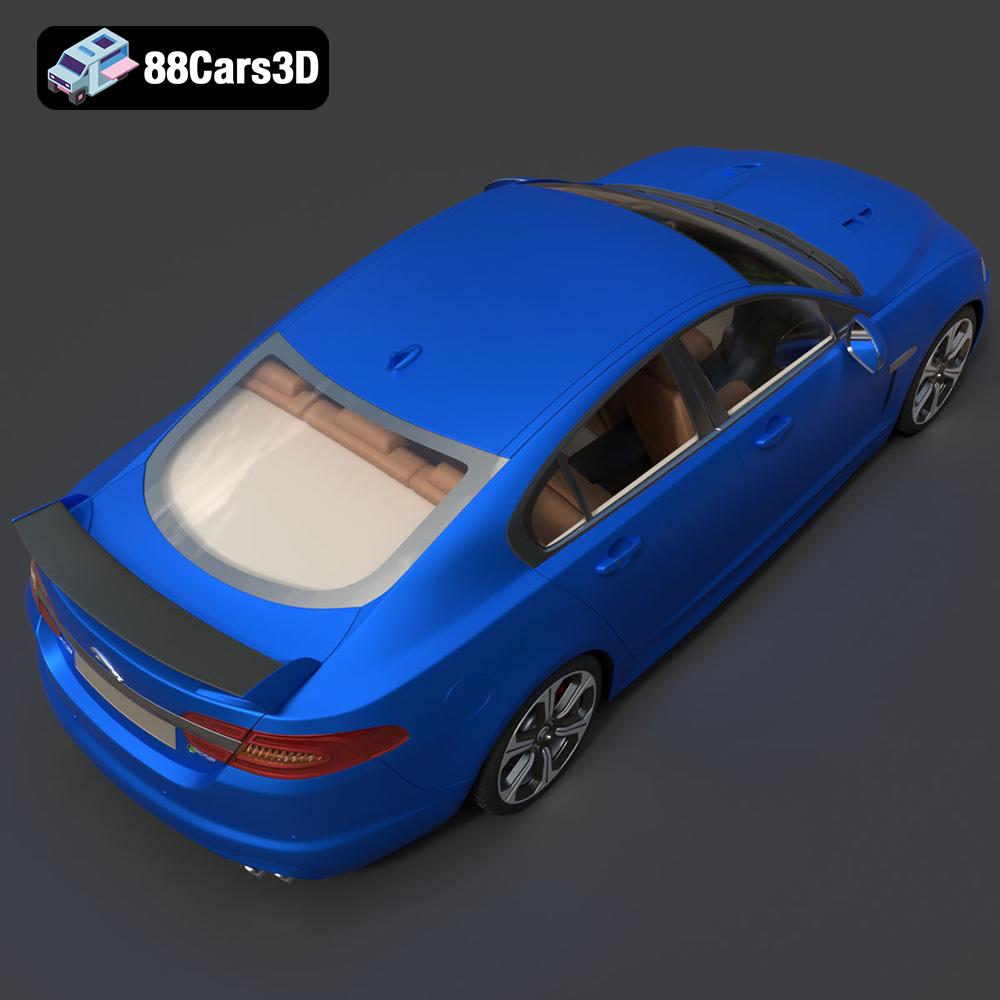
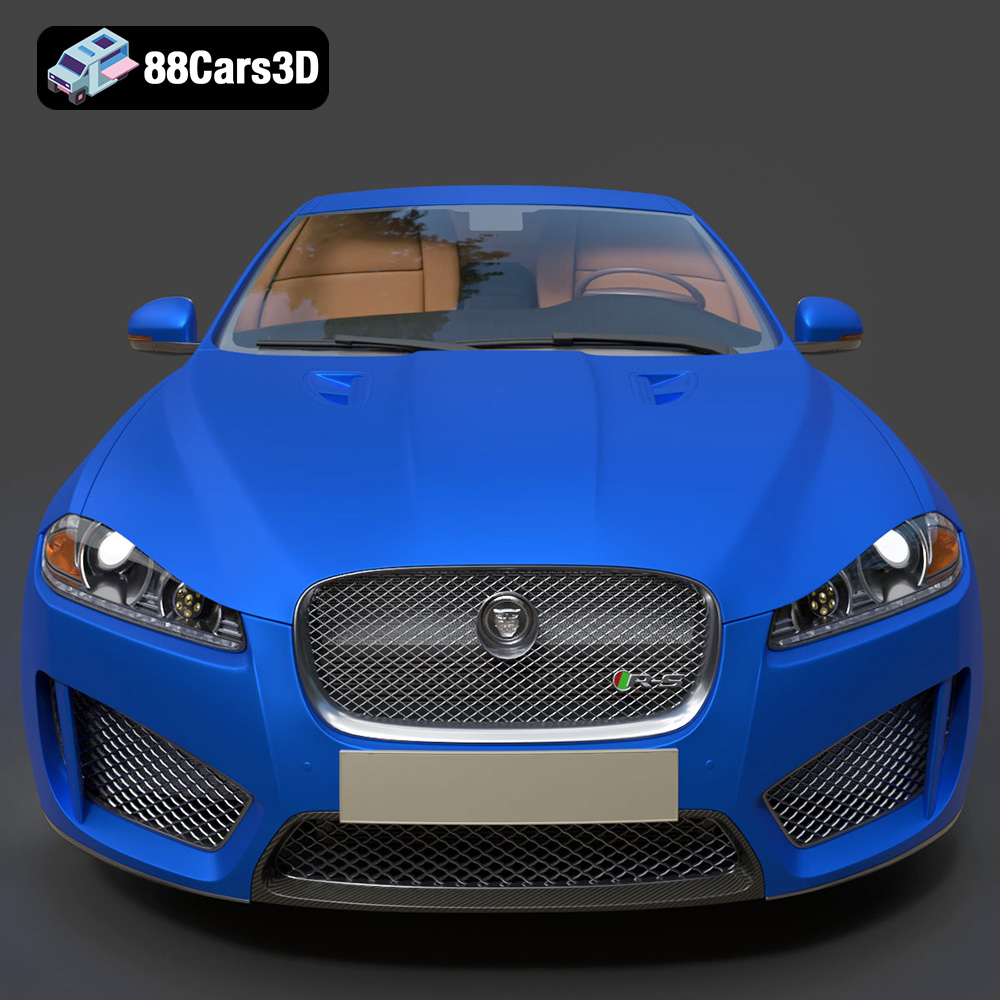
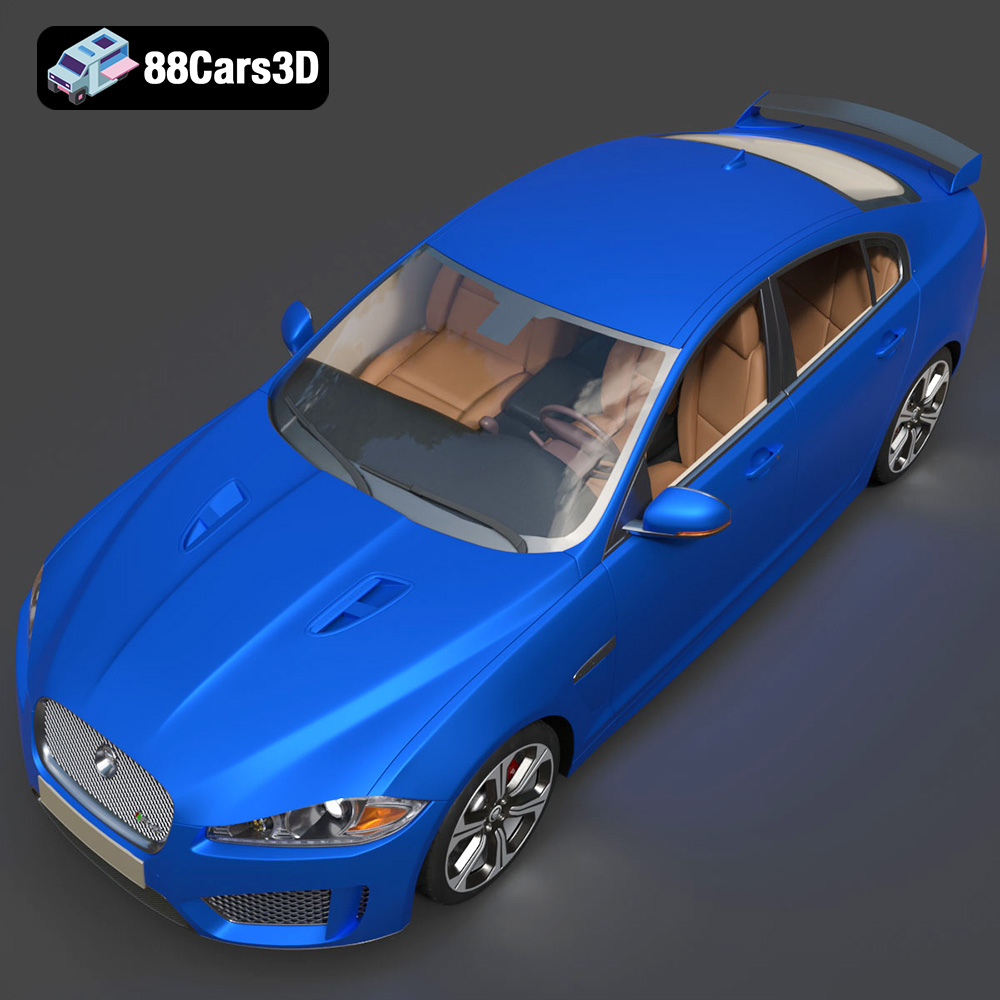
Consider the sleek lines, aggressive stance, and luxurious detailing of a modern performance sedan. Replicating such an intricate machine in the digital realm demands an exceptional level of precision and artistic skill. This is precisely where models like the Jaguar XFR-S 2014 3D Model from 88cars3d.com truly shine. This particular asset exemplifies professional-grade quality, capturing the essence of the iconic Jaguar XFR-S with clean geometry, optimized polygon count, and realistic materials. Whether you’re a seasoned game developer, an automotive visualiser, or a VR/AR content creator, understanding the technical intricacies and versatile applications of such models is key to elevating your projects from good to extraordinary.
The pursuit of realism in digital content is an ongoing journey, and for industries deeply rooted in design and visuals, such as automotive, film, and gaming, high-fidelity 3D car models are indispensable. These assets serve as the bedrock for creating convincing virtual worlds, engaging marketing campaigns, and accurate product simulations.
For automotive studios and marketing agencies, 3D car models are vital tools throughout the design and promotional lifecycle. Before a single physical prototype is built, designers rely on these digital assets to iterate, refine, and visualize concepts. High-quality models allow for accurate material studies, aerodynamic simulations, and ergonomic assessments in a virtual environment. When it comes to visualization, a model like the Jaguar XFR-S 2014 3D Model, with its “meticulously crafted realistic materials” and “fully modeled interior and detailed exterior,” provides the necessary fidelity for breathtaking photorealistic renders. This enables clients to experience a vehicle long before its production, showcasing its every curve and feature with stunning clarity, whether for a commercial, a showroom configurator, or a concept presentation.
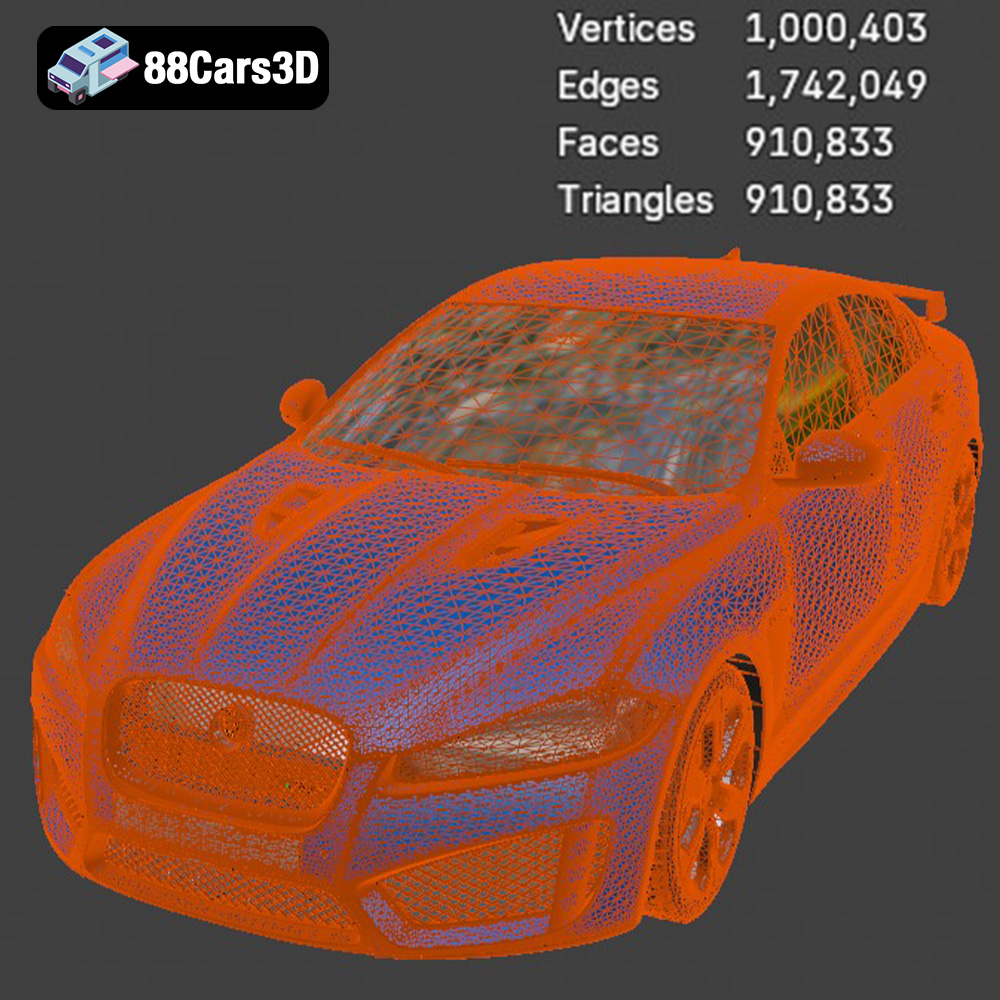
While cinematic renders demand absolute detail, real-time applications like game development, AR/VR, and interactive configurators prioritize performance without sacrificing visual integrity. This necessitates a careful balance of polygon count, texture resolution, and efficient material setups. An “optimized polygon count” in a 3D car model ensures that the asset can be rendered smoothly at high frame rates, preventing performance bottlenecks in demanding interactive environments. Moreover, clean topology and efficient UV mapping are critical for baking lighting information, applying PBR (Physically Based Rendering) textures, and creating levels of detail (LODs) that seamlessly swap models of varying complexity depending on their distance from the camera. This optimization makes assets like those found on 88cars3d.com incredibly versatile, allowing for seamless integration into game engines like Unreal Engine and Unity.
High-quality 3D car models act as a crucial bridge between abstract design concepts and tangible, real-world products. They enable a comprehensive understanding of form, function, and aesthetics during the conceptual phase. For engineers, accurate models can be used for structural analysis or crash simulations. For product designers, they facilitate detailed examination of components and assemblies. When the digital model can be accurately 3D printed, as with the .stl format included in the Jaguar XFR-S 2014 3D Model, this bridge becomes literal, allowing for rapid prototyping and tangible evaluation of design iterations. This holistic utility underscores why investment in superior 3D assets is not just about aesthetics, but about fundamental workflow efficiency and innovation.
The versatility of a professional 3D car model is significantly enhanced by its compatibility across various software and platforms. This hinges on the array of file formats it supports. Each format is designed with specific use cases and technical considerations in mind, making the choice of format crucial for different stages of a production pipeline. The Jaguar XFR-S 2014 3D Model from 88cars3d.com, for instance, comes with a comprehensive suite of formats, ensuring maximum utility for any project.
The .blend file format is the native file type for Blender, a powerful and increasingly popular open-source 3D creation suite. A .blend file typically contains not just the mesh data, but also materials, textures, lighting setups, cameras, animations, and even scene organization and modifiers. When a 3D car model is provided as a .blend file, such as with the Jaguar XFR-S, it offers the highest degree of editability and flexibility for Blender users. Artists can delve into the original scene, modify topology, adjust materials, re-rig components, or set up custom renders using Blender’s Cycles or Eevee render engines. This is ideal for those who prefer to work within the Blender ecosystem and need full control over the asset.
Creating photorealistic renders of vehicles is an art form that blends technical proficiency with an eye for aesthetic detail. The quality of the source 3D car model is paramount, and the Jaguar XFR-S 2014 3D Model provides an excellent canvas for achieving stunning results in high-end rendering applications.
For many automotive visualization professionals, 3ds Max coupled with V-Ray or Corona Renderer forms the backbone of their workflow. When integrating a model like the Jaguar XFR-S, the process begins with importing the .max or .fbx file. The model’s “clean geometry” ensures that subdivision surfaces will behave predictably, yielding smooth, precise curves. A typical studio setup involves an infinite backdrop, a multi-light rig (e.g., three-point lighting, or an HDRI-driven setup with supplemental area lights), and a calibrated camera. The XFR-S model’s “meticulously crafted realistic materials” mean that much of the groundwork for paint, glass, chrome, and tire textures is already in place. Artists can then fine-tune these materials, adjusting reflections, refractions, and anisotropy for paint finishes to perfectly mimic real-world automotive coatings under various lighting conditions, resulting in breathtaking visuals.
True photorealism in automotive rendering goes beyond basic material application. It involves a deep understanding of Physically Based Rendering (PBR) principles, where materials react to light in a physically accurate manner. The Jaguar XFR-S model, with its pre-configured materials, serves as an excellent starting point for PBR workflows. This means the metallic, roughness, and normal maps are likely already set up, allowing artists to focus on environmental lighting. Using high-dynamic-range image (HDRI) maps of real-world environments (e.g., studio, urban street, natural landscape) is crucial for accurate reflections and global illumination. Paired with volumetric lighting effects, depth of field, and subtle post-processing, the inherent quality of the 3D car model allows artists to produce renders indistinguishable from actual photographs, suitable for high-impact marketing and advertising campaigns.
In film and animation, 3D car models are often subjected to dynamic camera movements and integrated into complex visual effects shots. The “fully modeled interior and detailed exterior” of the Jaguar XFR-S 2014 3D Model makes it ideal for these demanding scenarios. Directors and VFX artists can confidently use this asset for close-up interior shots, high-speed chase sequences, or even subtle background elements. The model’s optimized topology also facilitates rigging for animation, allowing for opening doors, steering, wheel rotation, and suspension compression. For seamless integration into live-action plates, accurate shadow casting, reflection matching, and color grading are crucial, all of which are made significantly easier when starting with a high-fidelity, well-structured 3D asset like those available on 88cars3d.com.
Game development demands a unique blend of visual fidelity and uncompromising performance. A high-quality 3D car model must look stunning while adhering to strict polygon budgets and rendering requirements. The Jaguar XFR-S 2014 3D Model is built with these considerations in mind, making it a powerful asset for interactive experiences.
Integrating a detailed 3D car model into a game engine like Unreal Engine or Unity requires specific optimization strategies. While the Jaguar XFR-S model boasts an “optimized polygon count,” further adjustments may be necessary depending on the game’s target platform and genre. This often involves creating multiple Levels of Detail (LODs) – lower-polygon versions of the model that automatically swap in as the car moves further from the camera, drastically reducing rendering load. Clean UV mapping, essential for applying textures, is equally critical for lightmap UVs, which store pre-baked lighting information to enhance realism without runtime calculations. A well-prepared model will also have efficient material slots, preventing excessive draw calls, and potentially pre-calculated ambient occlusion maps. The .fbx and .unreal formats provided are specifically tailored to streamline this complex process for game developers.
Once imported and optimized, the Jaguar XFR-S 3D Model can be brought to life within the game engine. This involves setting up car physics, which can range from arcade-style handling to realistic simulation, requiring accurate mass, inertia, and suspension parameters. Customizing interactive elements like opening doors, working headlights, and interior gauges adds to the immersion. For racing games or open-world environments, the XFR-S can be integrated into AI driving systems or player-controlled vehicles. Its “fully modeled interior” means players can experience the car from a first-person perspective, enhancing the sense of presence and detail within the virtual world. The quality of the base mesh and materials provided by 88cars3d.com allows developers to focus more on gameplay mechanics and less on asset reconstruction.
Modern game engines heavily rely on PBR workflows to achieve a consistent and realistic look across all assets. The “realistic materials” of the Jaguar XFR-S 2014 3D Model are designed with PBR principles in mind, meaning they come with maps for albedo (color), roughness, metallic, normal, and ambient occlusion. These maps dictate how light interacts with the surface, ensuring that the car looks correct under diverse lighting conditions, from bright sunlight to moody nighttime scenes. Game artists can further enhance these materials, perhaps adding procedural dirt, wear, or environmental reflections through advanced shader networks within the engine. The precise UVs and clean geometry of the model are crucial for these PBR maps to project accurately and seamlessly onto the car’s surface, preventing visual artifacts and maintaining a high level of fidelity.
The utility of high-quality 3D car models extends far beyond conventional rendering and game development, venturing into cutting-edge domains like augmented reality, virtual reality, and physical prototyping. The Jaguar XFR-S 2014 3D Model’s comprehensive file format support makes it exceptionally versatile for these innovative applications.
Augmented Reality (AR) and Virtual Reality (VR) offer unparalleled opportunities for immersive experiences, especially in automotive showcase and training. Imagine placing the Jaguar XFR-S 2014 3D Model directly into your driveway via AR on a smartphone, or exploring its fully modeled interior in a VR showroom. The .glb file format, specifically optimized for AR/VR and web-based visualization, is crucial here. It allows for efficient loading and rendering of complex 3D models in real-time, even on mobile devices, ensuring smooth interaction and high visual quality. Automotive brands can leverage these models for interactive product launches, virtual test drives, or even configurators where customers can customize and view a car in a true-to-life scale before making a purchase. The model’s “detailed exterior” and “fully modeled interior” are essential for these up-close, immersive interactions.
The ability to transform a digital design into a physical object has revolutionized product development. For car enthusiasts, collectors, or designers working on scale models, the Jaguar XFR-S 2014 3D Model provides a perfect starting point for 3D printing. The inclusion of the .stl and .ply file formats is specifically for this purpose. The .stl format is the standard for additive manufacturing, representing the model as a mesh of triangles. While it doesn’t carry color or texture, it provides the precise geometric data needed for a 3D printer to build a physical replica layer by layer. The .ply format, offering a “detailed polygon mesh,” can also be converted for printing or used for more precise engineering analysis of the digital form before physical fabrication. This capability allows for rapid prototyping of components, creating intricate scale models, or even producing bespoke automotive accessories based on the exact digital dimensions of the car.
Beyond AR/VR, the .glb format is transforming how 3D content is presented on the web. Instead of static images or videos, websites can now host interactive 3D models that users can rotate, zoom, and explore directly in their browser without requiring plugins. For marketplaces like 88cars3d.com, this means potential buyers can get a real-time, interactive preview of the Jaguar XFR-S 2014 3D Model before purchase. Automotive manufacturers can embed these models on their product pages, allowing customers to dynamically configure colors, wheels, and interior options, greatly enhancing the online shopping experience. This broad accessibility and interactive nature make the .glb format a powerful tool for modern digital marketing and product display.
In a creative industry where time is money and quality is paramount, having access to a reliable source of professional-grade 3D assets is a significant advantage. 88cars3d.com positions itself as such a resource, offering meticulously crafted models like the Jaguar XFR-S 2014 3D Model that meet the rigorous demands of various production pipelines.
The true value of a premium 3D model lies not just in its visual appeal, but in its underlying technical quality. “Clean geometry” means the model has a well-structured mesh, free from issues like non-manifold edges, overlapping faces, or excessive triangulation. This ensures smooth deformations during animation, predictable subdivision, and error-free export to different platforms. Similarly, “meticulously crafted realistic materials” and clean UV mapping are critical. Proper UVs ensure textures wrap seamlessly around the model, preventing stretching or distortion, and are essential for light baking in game engines. When you acquire a model from 88cars3d.com, you’re investing in an asset that saves you countless hours of cleanup and optimization, allowing you to focus on the creative aspects of your project rather than fixing fundamental technical flaws.
Time is a precious commodity in any production environment. Starting a project with a high-quality, “game-engine ready” and “pre-configured for Unreal Engine use” asset like the Jaguar XFR-S 2014 3D Model significantly streamlines workflow. Instead of spending weeks or months modeling a car from scratch, artists and developers can drop a finished, optimized model directly into their scene. The comprehensive suite of included file formats (.blend, .fbx, .obj, .glb, .stl, .ply, .unreal, .max) means that regardless of your preferred software or target application, you’ll have an immediately usable asset. This accelerates iteration cycles, reduces production costs, and allows teams to deliver projects faster without compromising on visual fidelity.
Whether you’re building a massive open-world game, an architectural visualization project, or a portfolio of stunning renders, a diverse library of 3D car models is invaluable. 88cars3d.com provides a curated selection of high-quality vehicles, allowing professionals to expand their asset library with confidence. From classic sports cars to modern luxury sedans like the Jaguar XFR-S, these assets offer a consistent level of quality and optimization, ensuring that all components of a scene integrate seamlessly. This consistency is crucial for maintaining a unified aesthetic and performance profile across large-scale projects, making 88cars3d.com a go-to resource for premium automotive 3D assets.
The digital frontier continues to expand, demanding ever-increasing levels of detail, realism, and performance from 3D assets. For industries ranging from automotive design and cinematic production to cutting-edge game development and AR/VR experiences, the strategic selection of high-quality 3D car models is no longer an option, but a necessity. These assets are the backbone of compelling visuals and efficient workflows, empowering creators to bring their visions to life with unparalleled fidelity.
The Jaguar XFR-S 2014 3D Model stands as a prime example of what a professional-grade asset should embody. Its meticulous detailing, optimized geometry, realistic materials, and versatile file format support (.blend, .fbx, .obj, .glb, .stl, .ply, .unreal, .max) ensure it’s not just a model, but a robust toolkit for any digital artist or developer. By providing assets that are ready for diverse applications, from high-end rendering in 3ds Max to real-time game engines like Unreal, and even 3D printing or AR/VR deployment, 88cars3d.com demonstrates a clear understanding of modern production demands.
Investing in such high-caliber 3D car models streamlines production, enhances visual quality, and ultimately elevates the impact of your projects. Explore the comprehensive collection at 88cars3d.com to discover how premium assets can transform your creative endeavors and drive innovation forward.
The Jaguar XFR-S 2014 3D Model delivers an exceptionally realistic representation of the iconic performance sedan. Designed with precision, this asset captures the aggressive styling, aerodynamic profile, and distinct characteristics of the XFR-S. Featuring clean geometry, meticulously crafted realistic materials, and an optimized polygon count, this model ensures professional-grade performance. The fully modeled interior and detailed exterior make it versatile for close-up shots and expansive scenes. Perfectly suited for game development, architectural visualization, cinematic rendering, and AR/VR applications, it provides a seamless integration into any production pipeline.
$39.99
.arvr
.blend
.car3dmodel
.fbx
.gameasset
.glb
.jaguar
.luxurycar
.max
.obj
.ply
.rendering
.sedan
.simulation
.sportssedan
.stl
.unreal
.xfrs