Get 20% OFF All Premium 3D & STL Models!

In the dynamic world of digital content creation, the demand for authentic and highly optimized 3D car models is ever-present. From the high-octane excitement of virtual racing simulations to the meticulous detail required for architectural visualization and cutting-edge augmented reality experiences, a premium 3D vehicle asset serves as the cornerstone of visual fidelity. Professionals across industries continually seek models that not only capture the essence of a real-world vehicle but are also engineered for seamless integration into diverse pipelines.
Today, we delve into the comprehensive capabilities of such a model: the Mitsubishi Outlander GT 2010 3D Model. This meticulously crafted asset, available on 88cars3d.com, stands as a prime example of how an expertly designed 3D car model can elevate projects, offering both stunning visual accuracy and the technical optimization crucial for modern digital workflows. Whether your goal is to populate a virtual city, render a photorealistic advertisement, or bring an iconic SUV to life in an interactive experience, understanding the nuances of such an asset is key.
The choice of file format for a 3D model is far more than a mere technicality; it dictates compatibility, functionality, and performance across various software, engines, and applications. For professionals working with 3D car models, a deep understanding of common formats is essential for efficient workflows and successful project delivery. The Mitsubishi Outlander GT 2010 3D Model, for instance, is offered in a comprehensive range of formats, ensuring its utility for virtually any project.
The .blend format represents a fully editable Blender scene. When you download a .blend file, you’re getting not just the raw mesh data, but also all associated materials, textures, lighting setups, cameras, animations, and even modifiers, all within the native Blender environment. This format is ideal for artists who primarily work in Blender, offering maximum flexibility for customization, rigging, animation, and rendering with Cycles or Eevee. For the Outlander model, the .blend file would provide complete access to its internal structure, allowing for deep modifications or integration into existing Blender projects.
.fbx (Filmbox) is arguably the most widely adopted 3D asset exchange format, particularly for real-time applications like Unreal Engine and Unity. It excels at storing not only geometric data (meshes, vertices, polygons) but also complex scene information such as materials, textures, lights, cameras, animations, and skeletal data. Its robust support for animation makes it indispensable for character rigs, animated props, and, in the case of our Outlander model, pre-rigged wheels, steering, and suspension. If you’re exporting an automotive rendering project to a game engine, .fbx is usually your first choice due to its balance of data fidelity and engine compatibility.
The .obj (Wavefront OBJ) format is a highly universal and widely supported format known for its simplicity and robustness. It primarily stores geometric data, including vertex positions, UV coordinates, normals, and polygon faces, often accompanied by a separate .mtl (material) file for basic material definitions. While .obj doesn’t typically support animations or advanced scene data, its widespread compatibility makes it excellent for static mesh exchange between virtually any 3D software. For archivists or users needing a clean, mesh-focused import into a new application, .obj is a reliable fallback, making the Mitsubishi Outlander GT 2010 model accessible to a broad audience.
.glb (GL Transmission Format Binary) is a relatively newer format, rapidly gaining traction as the standard for 3D web content, augmented reality (AR), and virtual reality (VR). It’s a binary container format that bundles 3D models, textures, animations, and other scene data into a single, self-contained file. This optimization makes .glb files incredibly efficient for streaming and display in web browsers without requiring external dependencies, ensuring quick load times and smooth performance. For showcasing the Outlander GT in an interactive web configurator or an AR app, the .glb format is indispensable.
.stl (Stereolithography) is the de facto standard for 3D printing. It represents a 3D model as a series of connected triangles, defining only the surface geometry without color, texture, or internal structure. While not ideal for visual rendering, its simplicity makes it perfect for additive manufacturing, instructing the printer how to build the object layer by layer. The inclusion of an .stl file for the Mitsubishi Outlander GT 2010 model means it’s ready for enthusiasts and designers to bring the digital car into the physical world as a scaled model.
.ply (Polygon File Format) is another format primarily used for storing 3D scanner data and meshes, often with additional properties like color per vertex, normal information, or even transparency. It’s common in scientific, engineering, and reverse-engineering applications where precise geometric data is paramount. While less common for general animation or rendering, it offers a robust solution for specific CAD workflows or for analyzing intricate mesh details of the Outlander model.
The .unreal format, often referring to a project file or asset package specifically prepared for Unreal Engine, signifies an asset that has undergone extensive optimization and setup. This includes proper material setup using Unreal’s PBR workflow, collision meshes, LODs (Levels of Detail), and potentially Blueprints for interactive elements or animations. An .unreal asset, like the Mitsubishi Outlander GT 2010, is essentially plug-and-play, saving countless hours for game developers by providing a pre-configured and engine-tested vehicle ready for immediate use in their projects.
Finally, the .max format is the native file type for Autodesk 3ds Max, a leading software for 3D modeling, animation, and rendering. Similar to .blend, a .max file contains the complete scene, including geometry, materials, lighting, cameras, animations, and modifiers. It provides full editability and is essential for professionals who use 3ds Max for high-end automotive rendering, detailed animation sequences, or integration into complex visualization scenes. The .max file for the Outlander GT allows artists to leverage all the powerful tools within 3ds Max to customize and render the vehicle to their exact specifications.
Creating a truly exceptional 3D car model is a delicate balance between artistic interpretation and precise technical engineering. It demands an understanding of automotive design principles, real-world physics, and the constraints of digital performance. The Mitsubishi Outlander GT 2010 3D Model from 88cars3d.com exemplifies this intricate craft.
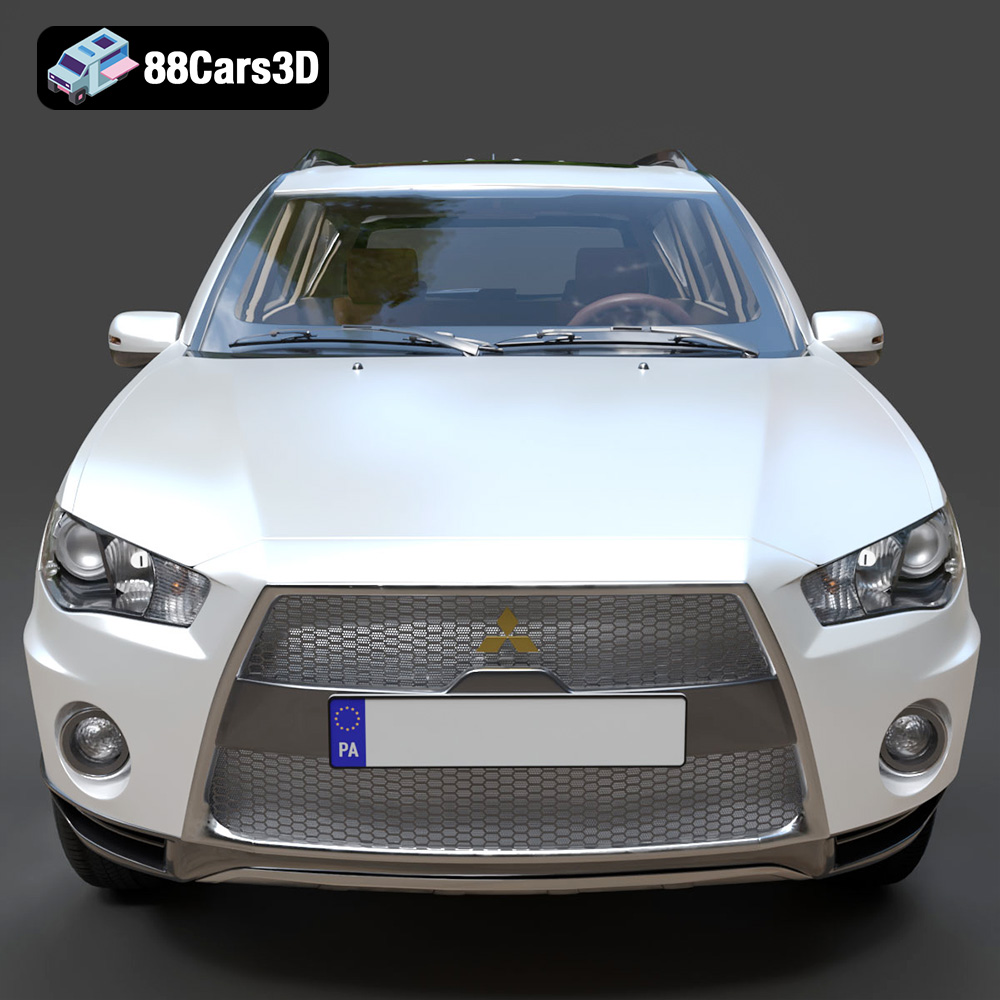
The initial impression of any 3D car model hinges on its authenticity. For the Mitsubishi Outlander GT 2010, this begins with its distinctive “Jet Fighter” front grille, a design cue borrowed from the iconic Lancer Evolution. The 3D model meticulously replicates this aggressive aesthetic, alongside other signature exterior features:
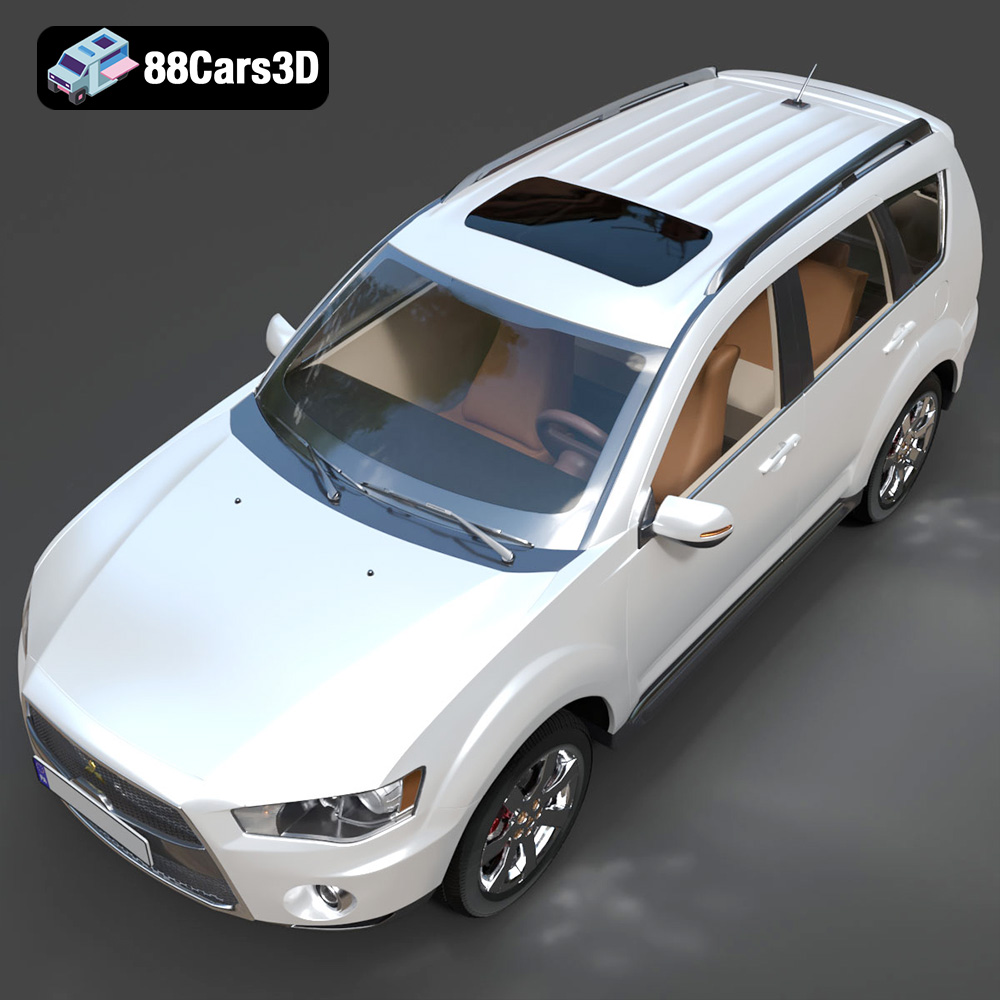
The attention to detail extends seamlessly into the cockpit and interior, which is often overlooked in game-ready assets but is vital for immersive experiences:
This level of detailed modeling ensures the Outlander isn’t just a prop, but a character in its own right, ready for close-up renders and immersive virtual drives.
Beyond visual fidelity, technical optimization is paramount, especially for real-time applications. The Mitsubishi Outlander GT 2010 3D Model strikes an impressive balance with approximately 180,000 triangles. This specific poly count is not arbitrary; it’s a carefully chosen sweet spot that ensures:
Furthermore, the model boasts proper pivot setups for crucial components: steering, wheel rotation, and suspension travel. This seemingly minor detail is fundamental for realistic animations and dynamic simulations, allowing the vehicle to behave authentically within a digital environment without extensive re-rigging.
The true measure of a high-quality 3D car model lies in its ability to seamlessly integrate into various professional workflows. The Mitsubishi Outlander GT 2010 3D Model, with its diverse file formats and optimized structure, is designed precisely for this purpose.
For game developers, time is a critical resource. Importing raw CAD data and optimizing it for real-time engines can be a monumental task. This is where pre-optimized 3D car models shine. Using the .fbx or the dedicated .unreal format for the Outlander model streamlines the process significantly.
The availability of such a polished asset liberates developers to focus on gameplay and immersive experiences, rather than wrestling with asset preparation, truly embodying what a game-ready asset should be.
In the realm of automotive rendering and visualization, precision and aesthetic appeal are paramount. Marketers, designers, and architects demand visuals that are indistinguishable from reality. The .max (3ds Max) and .blend (Blender) formats of the Mitsubishi Outlander GT 2010 model cater directly to these needs.
The high fidelity and clean topology ensure that even extreme close-ups maintain visual integrity, crucial for showcasing the vehicle in high-resolution marketing materials.
Augmented Reality (AR) and Virtual Reality (VR) are transforming how consumers interact with products. Automotive configurators, virtual showrooms, and immersive brand experiences are becoming standard. The .glb format, specifically designed for these applications, makes the Mitsubishi Outlander GT 2010 3D Model an ideal choice.
The model’s optimized geometry ensures quick loading and smooth interaction, essential for maintaining user engagement in these cutting-edge digital spaces.
While the digital realm is vast, there’s a unique satisfaction in holding a physical representation of a digital creation. The inclusion of the .stl and .ply formats for the Mitsubishi Outlander GT 2010 3D Model opens up avenues for 3D printing and tangible prototyping.
For hobbyists, educators, or design studios, 3D printing offers a way to produce physical scale models for display, conceptual design, or even as collectible items. The .stl format is universally recognized by 3D printing software and allows for direct fabrication.
This attention to 3D print readiness makes the Mitsubishi Outlander GT 2010 model versatile beyond purely digital applications.
Bringing a 3D print to life involves more than just the printing process. Post-processing is crucial for achieving a professional finish:
This capability allows enthusiasts to create their own custom dioramas or display pieces, offering a tangible connection to the digital asset.
A truly versatile 3D car model is one that allows for extensive customization, empowering artists and developers to tailor it to their specific project needs without starting from scratch. The Mitsubishi Outlander GT 2010 3D Model is built with this flexibility in mind.
The ability to modify aesthetic elements is crucial for diverse applications, from marketing campaigns requiring specific branding to game environments with varied visual styles:
These customization options ensure that the Outlander model can serve a multitude of creative purposes, providing a solid foundation that can be easily adapted to specific project requirements.
For any project requiring dynamic movement, the model’s structure for animation is critical. The Mitsubishi Outlander GT 2010 3D Model features:
Such inherent animation readiness significantly reduces production time and effort, making the model a powerful asset for any project involving dynamic vehicle movement.
The journey through the intricacies of the Mitsubishi Outlander GT 2010 3D Model reveals far more than just a digital representation of a vehicle. It showcases a masterclass in 3D asset creation, where meticulous attention to real-world detail converges with advanced technical optimization. Whether your field is high-end automotive rendering, cutting-edge game development, immersive AR/VR experiences, or even detailed 3D printing, this model stands as a testament to what a professionally crafted 3D car model can offer.
Its comprehensive file format support, from editable .blend and .max scenes to game-ready .fbx and .unreal packages, and even .stl for physical production, ensures unparalleled versatility. The balanced polygon count, authentic detailing, and animation-ready components make it a robust and reliable choice for any demanding project. When seeking high-quality 3D car models that deliver on both visual excellence and technical performance, discerning professionals consistently turn to resources like 88cars3d.com.
Elevate your next project with assets engineered for success. Discover the Mitsubishi Outlander GT 2010 3D Model and a wide array of other premium 3D car models at 88cars3d.com, where quality meets unparalleled adaptability for the modern digital creator.
Discover the dynamic and versatile 2010 Mitsubishi Outlander GT, a highly acclaimed crossover SUV known for its aggressive Lancer Evolution-inspired ‘Jet Fighter’ front grille and advanced S-AWC all-wheel-drive system. Our meticulously crafted 3D model perfectly captures the vehicle’s sporty aesthetic, featuring accurate exterior lines, a robust V6 engine profile, and its signature dual exhaust setup. Engineered with highly optimized topology and an efficient triangle count, this game-ready asset guarantees exceptional visual fidelity without compromising real-time performance. Designed to meet the stringent demands of modern 3D engines, it acts as a plug-and-play solution for game development, AR/VR experiences, animation, and architectural visualization.
$39.99
.2010
.blend
.crossover
.fbx
.glb
.max
.mitsubishi
.obj
.outlander
.ply
.rendering
.stl
.unreal
car-3d-model
game asset
game-ready
low-poly
optimized
outlander-gt
SUV
VR/AR