Get 20% OFF All Premium 3D & STL Models!

In the dynamic world of digital content creation, the difference between good and exceptional often lies in the quality of your foundational assets. For professionals in automotive rendering, game development, architectural visualization, and interactive experiences, having access to meticulously crafted 3D models is not just a luxury, but a necessity. Imagine bringing an iconic piece of design history, revered for its elegance and engineering, into your digital projects with unparalleled realism. This is precisely what a high-quality asset like the Vespa 946 3D Model offers. It’s more than just a model; it’s a gateway to elevating your visual narratives and technical simulations.
The Vespa 946, a modern interpretation of a timeless classic, embodies a unique blend of heritage and contemporary design. Replicating this complexity in a digital environment requires extraordinary attention to detail, from its distinctive monocoque steel body to its sophisticated suspension. This article delves into the technical intricacies and professional applications of such a model, exploring how a premium asset, like the Vespa 946 3D Model available at 88cars3d.com, can revolutionize your workflow and the final output of your projects.
Creating a truly authentic 3D vehicle model is an intricate process that blends artistic vision with rigorous technical execution. It goes far beyond simply shaping polygons; it involves understanding real-world mechanics, material properties, and the nuances of light interaction. For a revered design like the Vespa 946, this means capturing every curve, reflection, and shadow with absolute precision.
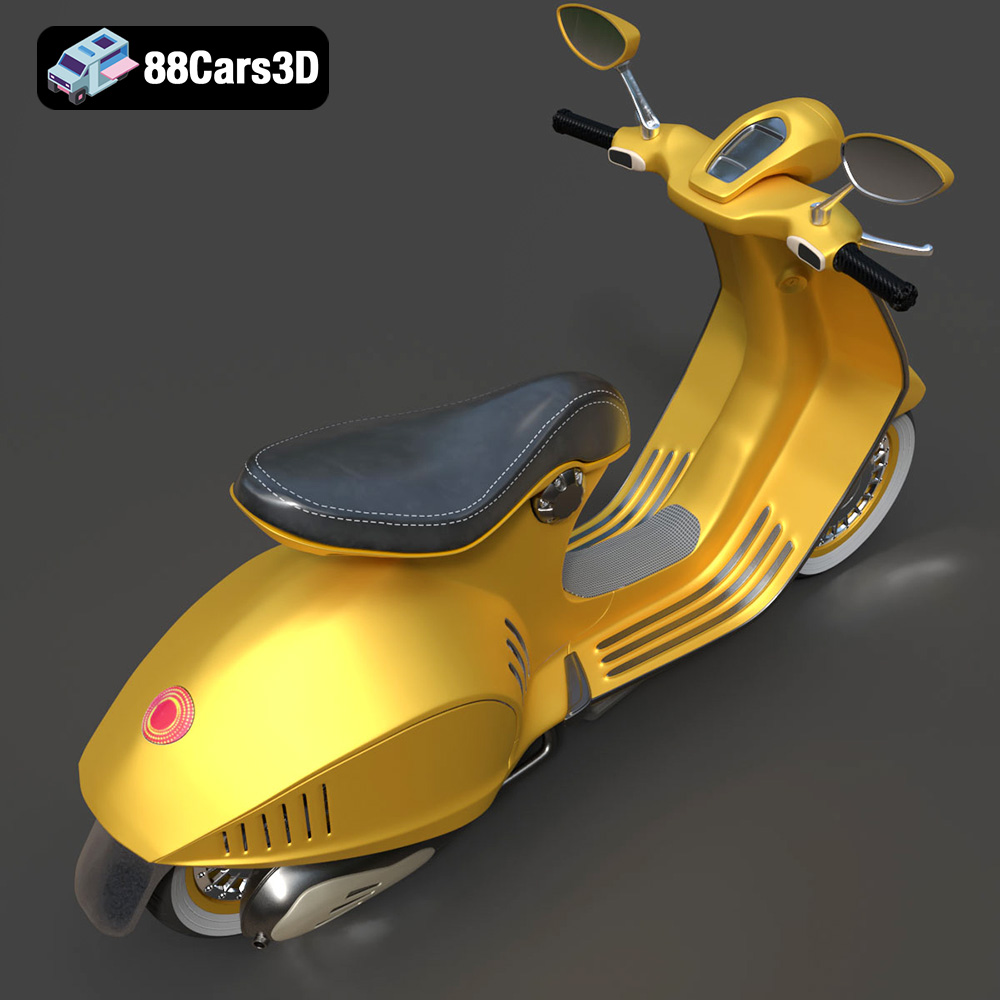
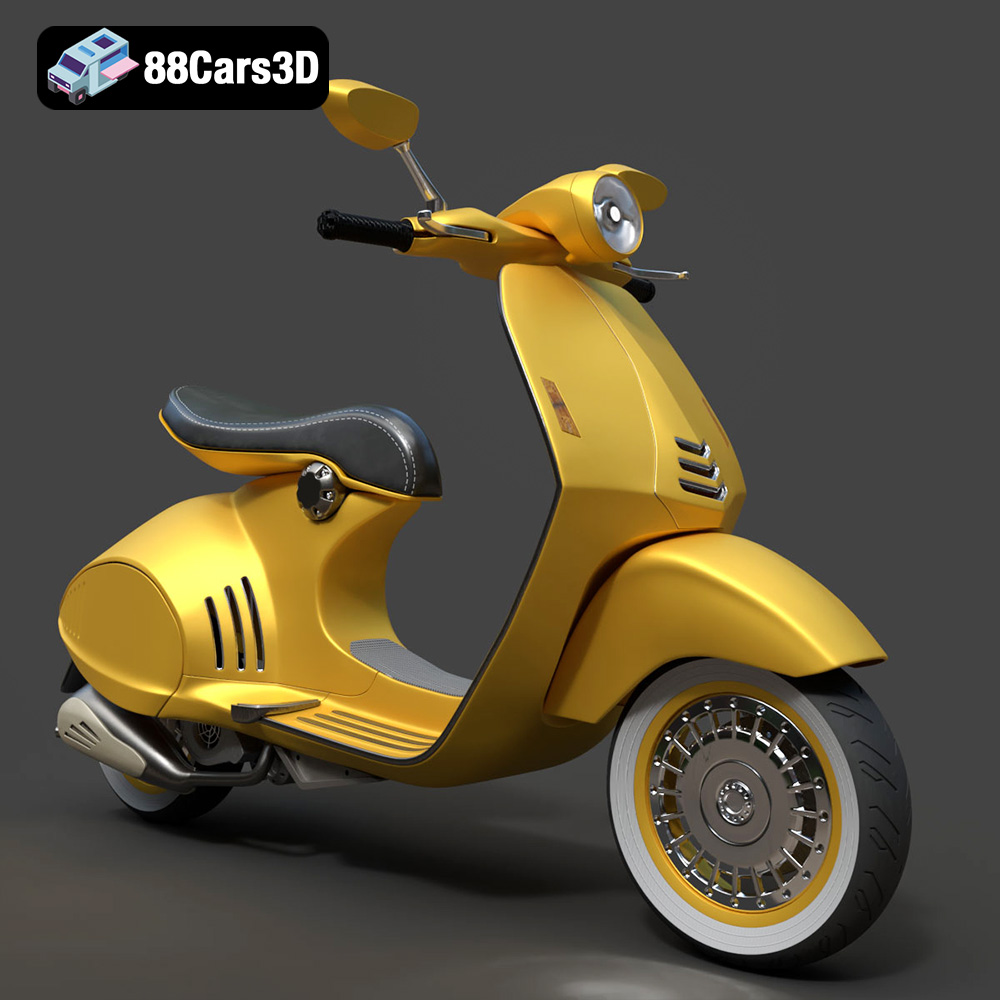
The foundation of any exceptional 3D model lies in its accuracy. For the Vespa 946 3D Model, this translates to true-to-life dimensions, proportions, and surface continuity. Artists utilize blueprints, reference photographs, and even laser scans of the physical vehicle to ensure every aspect, from the distinct seating to the polished chassis, mirrors its real-world counterpart. This meticulous approach ensures that whether the model is viewed in a close-up studio render or as part of a bustling urban environment, its authenticity remains unquestionable. The subtle imperfections and manufacturing details that give an object character are often painstakingly reproduced, adding an extra layer of realism that distinguishes a professional asset.
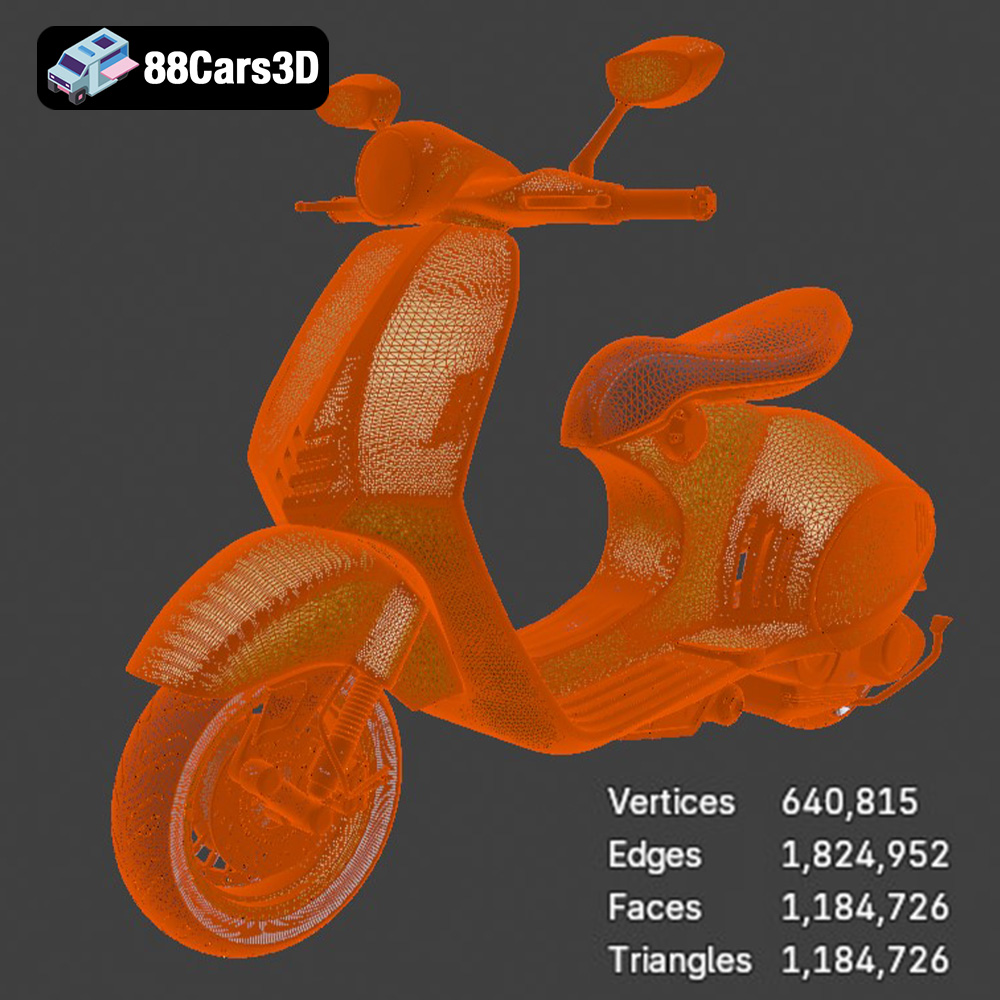
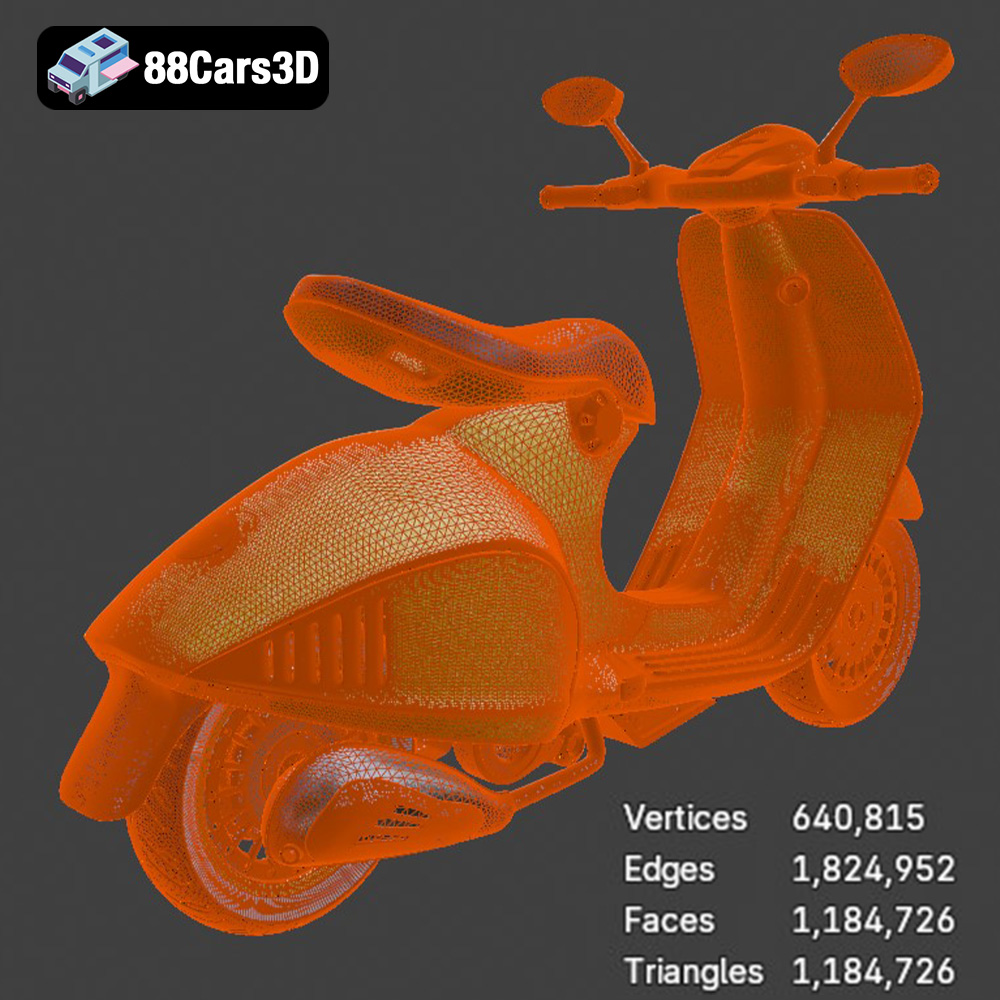
Beyond visual accuracy, the underlying technical structure of a 3D model is paramount for its usability and performance. Clean geometry with optimized polygon counts is crucial, particularly for high-fidelity assets destined for real-time applications or smooth subdivision rendering. The Vespa 946 3D Model, for instance, is built with professional-grade topology, meaning its mesh flows logically, allowing for seamless deformation during animation and efficient rendering. This structured approach helps prevent artifacts like pinching or stretching, which can detract from realism. Complementing this is precise UV mapping, which unwraps the 3D model’s surfaces into a 2D layout for texture application. High-quality UVs ensure that textures align perfectly, minimizing seams and allowing for detailed material work without distortion, a critical factor for achieving photorealistic automotive rendering.
The versatility of a professional 3D model is often defined by the range and quality of its supported file formats. Each format serves a specific purpose, offering unique advantages for different stages of a production pipeline, from initial modeling to final rendering, interactive experiences, or even physical fabrication. Understanding these formats is crucial for any professional working with 3D assets, as selecting the right one can significantly impact workflow efficiency and the ultimate quality of the output.
The Vespa 946 3D Model exemplifies this versatility by providing a comprehensive suite of formats, ensuring it integrates seamlessly into virtually any professional environment. Let’s explore these essential formats in detail:
The .blend format is native to Blender, one of the most powerful and widely used open-source 3D creation suites. When you acquire a .blend file for the Vespa 946, you’re not just getting the model; you’re getting a complete, editable scene. This typically includes the model’s geometry, all materials and textures meticulously set up within Blender’s shader nodes, potential lighting setups, camera angles, and even animation data if applicable. For artists working primarily in Blender, this format offers the highest degree of flexibility for modifications, rigging, custom rendering, and further development. It’s the go-to format for full creative control and serves as a robust starting point for many projects.
FBX (Filmbox) is a proprietary file format owned by Autodesk, widely recognized as the industry standard for interoperability between 3D software and game engines. It’s renowned for its ability to store not just mesh data, but also complex animation, rigging, skinning, materials, and even camera information. For game development with engines like Unreal Engine and Unity, the .fbx version of the Vespa 946 3D Model is game-engine ready. Its robustness in handling complex data makes it incredibly efficient for exporting assets with all their associated properties intact, ensuring a smooth transition into real-time environments where performance and fidelity are critical.
OBJ (or .obj) is a simple, universal 3D data format developed by Wavefront Technologies. It stores geometric data such as vertices, normals, UV coordinates, and faces, and can reference an external .mtl (material) file for basic material properties. The .obj format for the Vespa 946 offers unparalleled compatibility across virtually all major 3D software packages, including 3ds Max, Maya, Cinema 4D, and Blender. While it doesn’t support advanced features like animation or rigging, its simplicity and widespread adoption make it an excellent choice for basic model exchange, archival, or when you need a clean mesh to start a new project in an unfamiliar software.
GLB (GL Transmission Format Binary) is the binary version of glTF, a royalty-free specification for the efficient transmission and loading of 3D scenes and models by applications. GLB files package the 3D model, textures, and animations into a single file, making them highly optimized for web-based applications, augmented reality (AR), and virtual reality (VR) experiences. The .glb version of the Vespa 946 is perfect for interactive product viewers on websites, mobile AR apps, or lightweight VR presentations, offering quick loading times and excellent visual quality within these performance-sensitive contexts.
STL (STereoLithography) is a standard file format used for 3D printing and CAD software. It represents a 3D object as a raw, unstructured triangular mesh, without color or texture information. For those looking to physically prototype or fabricate the Vespa 946, the .stl format provides the necessary geometric data for 3D printers. It’s a critical format for designers, engineers, and hobbyists who need to move from digital design to tangible product, ensuring the physical replica accurately matches the digital form.
PLY (Polygon File Format or Stanford Triangle Format) is another format that describes 3D objects as a collection of polygons. It is often used for scanned 3D data and can store more complex properties than STL, such as color, transparency, and even confidence values (for scanned data). For the Vespa 946, a .ply file might be preferred in engineering analysis, precise measurement, or academic visualization where detailed mesh integrity and additional per-vertex or per-face data are important for CAD or simulation software.
While often referring to an FBX imported and optimized *within* Unreal Engine, some asset providers, like 88cars3d.com, may offer a pre-configured .unreal file or project package. This format signifies an asset that has been specifically prepared and tested for Unreal Engine, potentially including optimized materials, collision meshes, LODs (Levels of Detail), and blueprint setups. This dramatically reduces the integration time for developers, allowing the Vespa 946 to be dropped directly into an Unreal project with minimal setup, ready for game levels, cinematics, or interactive architectural visualization.
The .max format is the native file type for Autodesk 3ds Max, a leading software for 3D modeling, animation, rendering, and visualization. Like the .blend file, a .max file of the Vespa 946 provides a fully editable scene, including all geometric data, materials (V-Ray, Corona, Arnold, etc., depending on setup), lighting, cameras, and animation data. It’s the preferred format for users of 3ds Max who require maximum flexibility for advanced rendering (e.g., photorealistic automotive rendering), complex animation sequences, or detailed environmental setups. It ensures full compatibility with 3ds Max’s extensive toolset and plugin ecosystem.
The availability of such a diverse array of formats for the Vespa 946 3D Model highlights its professional-grade quality and the foresight of its creators. This comprehensive support empowers artists and developers to integrate the model effortlessly into their preferred pipelines, maximizing efficiency and creative potential.
The true value of a versatile 3D asset like the Vespa 946 3D Model shines through its seamless integration into various professional workflows. From high-octane game development to serene architectural visualizations, its adaptability is a significant advantage.
For game developers and AR/VR creators, performance is paramount. The Vespa 946 3D Model, with its optimized polygon counts and clean topology, is perfectly suited for real-time environments. In engines like Unreal Engine and Unity, the included .fbx and .unreal formats allow for immediate deployment. Developers can quickly import the model, set up physics, add interactive elements, and integrate it into expansive virtual worlds. Whether it’s a drivable asset in an open-world game, a static prop in a virtual museum, or an interactive AR experience showcasing the scooter’s design, its game-ready nature minimizes post-import optimization, saving invaluable development time and ensuring smooth frame rates. This directly contributes to immersive player or user experiences.
When it comes to creating stunning visual content for advertising, film, or product showcases, photorealism is key. The .blend and .max formats of the Vespa 946 3D Model provide artists with complete control in industry-standard software like Blender and 3ds Max. Artists can leverage powerful rendering engines such as V-Ray, Corona Renderer, Octane, or Cycles to produce breathtaking automotive rendering. The clean geometry ensures smooth subdivisions, enabling high-resolution renders for close-ups that reveal every detail, from the gleam of the chrome to the texture of the seat. For animation, the robust topology allows for easy rigging of moving parts like wheels, steering, and suspension, facilitating dynamic sequences that bring the scooter to life in a digital narrative.
Beyond screen-based applications, the Vespa 946 3D Model offers tangible benefits for physical production. The inclusion of .stl and .ply formats makes it an invaluable tool for industrial designers, engineers, and product developers. These formats are directly compatible with 3D printing software, allowing for the creation of physical prototypes or scale models. This can be crucial for design review, ergonomic testing, or even creating custom accessories. From rapid prototyping for design iterations to producing exhibition-quality physical models, the precision of the digital asset translates directly into the accuracy of the physical output, bridging the gap between digital ideation and physical realization.
The perception of realism in a 3D model hinges heavily on how its materials, textures, and lighting are handled. A high-quality asset like the Vespa 946 3D Model comes with these elements pre-configured, but understanding their role allows for deeper customization and truly stunning results.
Physically Based Rendering (PBR) is the cornerstone of modern photorealism in 3D. PBR materials accurately simulate how light interacts with surfaces in the real world, taking into account properties like reflectivity (metallic/roughness workflows), diffuse color, normal maps for surface detail, and emissive properties. The Vespa 946 3D Model features realistic materials meticulously created using PBR principles. This means the polished chrome behaves like chrome, the paint reflects light authentically, and the rubber tires have the correct subsurface scattering and texture. These materials, often provided in the .blend and .max files, are typically set up with advanced shader nodes or material editors, allowing artists to fine-tune every aspect for specific rendering conditions or stylistic choices without breaking realism.
Once PBR materials are applied, the magic truly happens within advanced rendering engines. Software like V-Ray, Corona Renderer, Arnold, Octane, and Blender’s Cycles or Eevee are designed to interpret these complex material properties and simulate global illumination, reflections, refractions, and atmospheric effects with incredible accuracy. For automotive rendering, this means creating realistic environments with HDRI (High Dynamic Range Image) lighting for true-to-life reflections on the Vespa’s sleek surfaces. Adding volumetric fog, depth of field, and motion blur can further enhance the cinematic quality. The pre-optimized nature of the Vespa 946 3D Model ensures that it interacts efficiently with these powerful engines, minimizing rendering times while maximizing visual fidelity, making it an ideal choice for professional advertising and cinematic projects.
A versatile and high-fidelity 3D model like the Vespa 946 finds its place across a multitude of industries, proving its worth in diverse applications that demand both technical precision and visual appeal.
In architectural visualization, the goal is often to create compelling narratives around spaces. The Vespa 946 3D Model can serve as an exquisite lifestyle element, transforming a sterile architectural render into a vibrant, lived-in scene. Imagine a luxurious loft apartment scene where the Vespa is parked elegantly by a large window, suggesting a sophisticated urban lifestyle. Or a cafe exterior where the scooter adds a touch of European charm and authenticity. Its iconic design instantly conveys a sense of style, freedom, and aspiration, enriching the visual story of the architecture. The detailed model ensures it stands up to close-ups, making it suitable for high-resolution marketing materials for real estate or interior design firms.
The world of advertising thrives on captivating visuals, and the Vespa 946 3D Model is a perfect fit for this arena. For car 3D model animation or cinematic sequences, the scooter can be featured prominently in commercials, music videos, or even feature films. Its clean topology and accurate textures mean it can be rigged for dynamic camera shots, chase sequences, or simply as a visually striking prop. Advertisers can leverage the model for product placements, virtual showrooms, or creating entirely CGI commercials that showcase the Vespa in fantastical or impossible settings, all while maintaining absolute realism. The control offered by the .max or .blend files allows for limitless creative possibilities in narrative storytelling.
Beyond static renders and linear animations, the Vespa 946 3D Model can be integrated into interactive experiences, offering a new dimension of engagement. For instance, in virtual showrooms, customers could customize the scooter in real-time, changing colors, accessories, and viewing it from every angle in a photorealistic environment. For training simulations, such as teaching mechanics about the Vespa’s internal components, the detailed model can be exploded, dissected, and interacted with in VR, providing an invaluable learning tool without the need for a physical scooter. These interactive applications leverage the model’s optimized nature and engine-ready formats (.fbx, .unreal, .glb) to deliver seamless, engaging, and educational experiences.
Choosing the right source for your 3D assets is as crucial as the assets themselves. 88cars3d.com prides itself on providing high-quality 3D car models and other vehicle assets, designed to meet the rigorous demands of professional projects. The Vespa 946 3D Model is a prime example of the commitment to excellence you can expect.
In a fast-paced production environment, time is money. Manually modeling and optimizing a complex vehicle like the Vespa 946 from scratch can take hundreds of hours for even experienced artists. By investing in a pre-optimized asset from 88cars3d.com, you acquire a model that is already built with clean geometry, optimized polygon counts, accurate UVs, and realistic materials. This means less time spent on technical corrections and more time dedicated to creative endeavors – rendering, animation, scene setup, or game logic. The included variety of formats ensures that the model is ready-to-use in virtually any professional pipeline without extensive conversion or re-setup.
The immediate availability and high quality of assets like the Vespa 946 3D Model directly contribute to streamlining project timelines. For studios working on tight deadlines, the ability to drop a production-ready asset into a scene eliminates a significant bottleneck in the development process. Whether you’re working on a short-form advertisement, a major game title, or a detailed architectural visualization, having a reliable library of assets from 88cars3d.com empowers teams to iterate faster, experiment more freely, and deliver exceptional results consistently. It frees up internal resources to focus on unique project-specific elements, ultimately increasing efficiency and output quality across the board.
In the expansive and increasingly demanding landscape of 3D content creation, the importance of high-quality, versatile assets cannot be overstated. A meticulously crafted 3D model like the Vespa 946 offers more than just visual appeal; it provides a robust, technically sound foundation for a vast array of professional applications. From realistic automotive rendering and immersive game development to precise architectural visualization and tangible 3D printing, its value reverberates across industries.
The availability of multiple industry-standard file formats – .blend, .fbx, .obj, .glb, .stl, .ply, .unreal, and .max – ensures that this iconic scooter integrates effortlessly into any pipeline, empowering artists and developers with maximum flexibility and efficiency. When you choose a premium asset like the Vespa 946 3D Model from 88cars3d.com, you’re not just purchasing a file; you’re investing in a cornerstone asset that will elevate the visual fidelity, performance, and overall impact of your digital creations, allowing you to focus on innovation and creativity.
Explore the Vespa 946 3D Model today and experience how a truly professional asset can transform your projects.
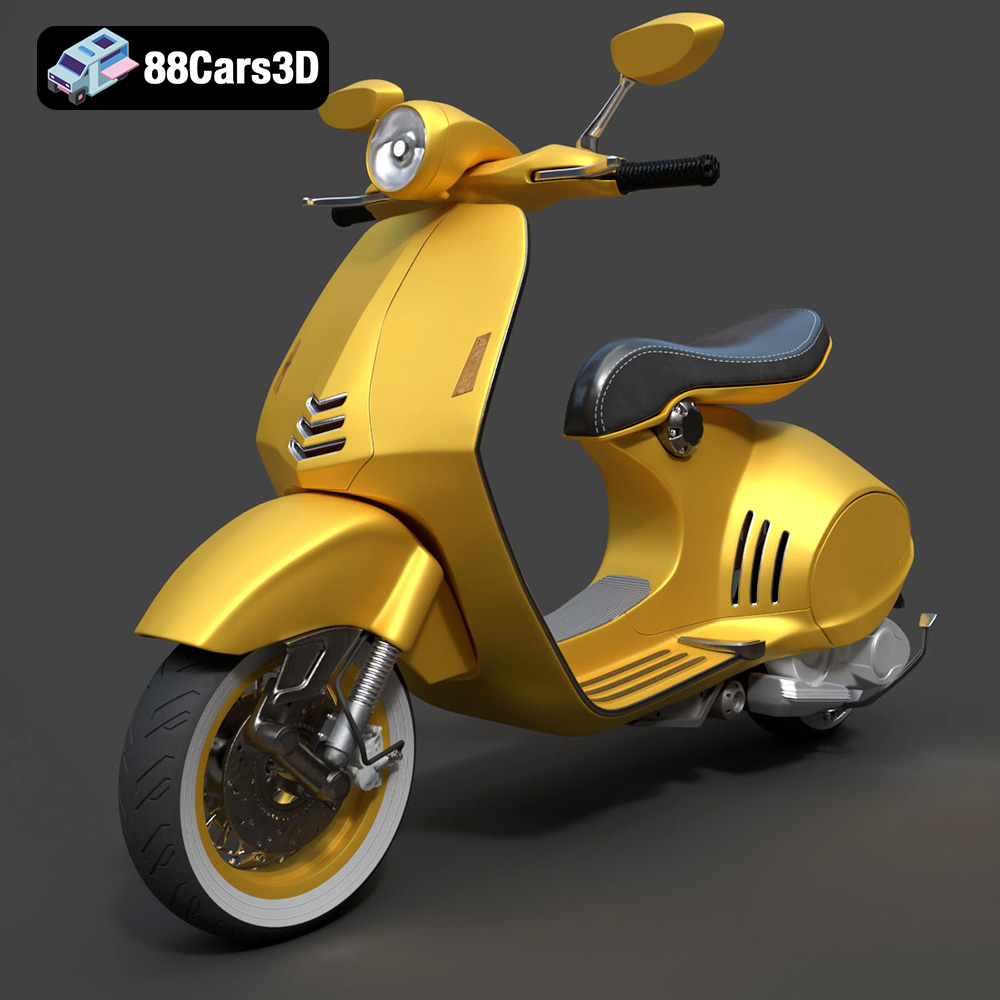
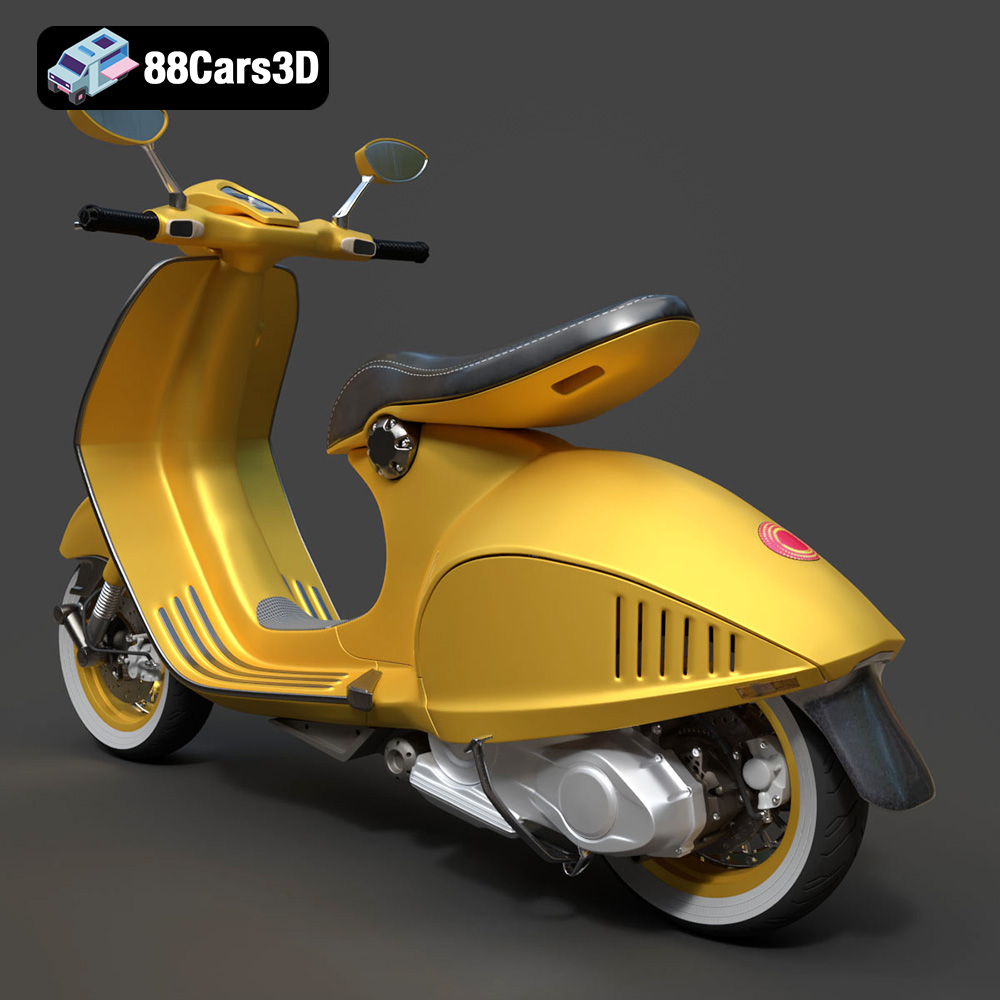
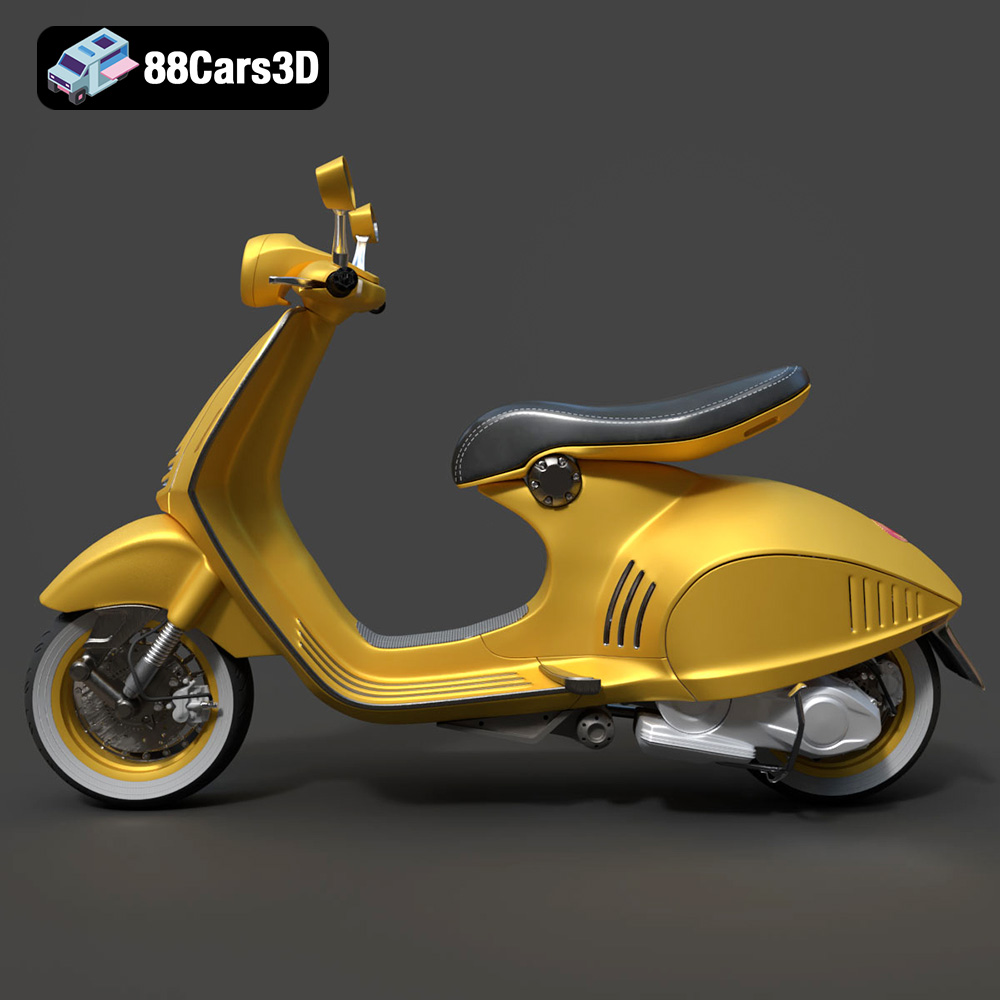
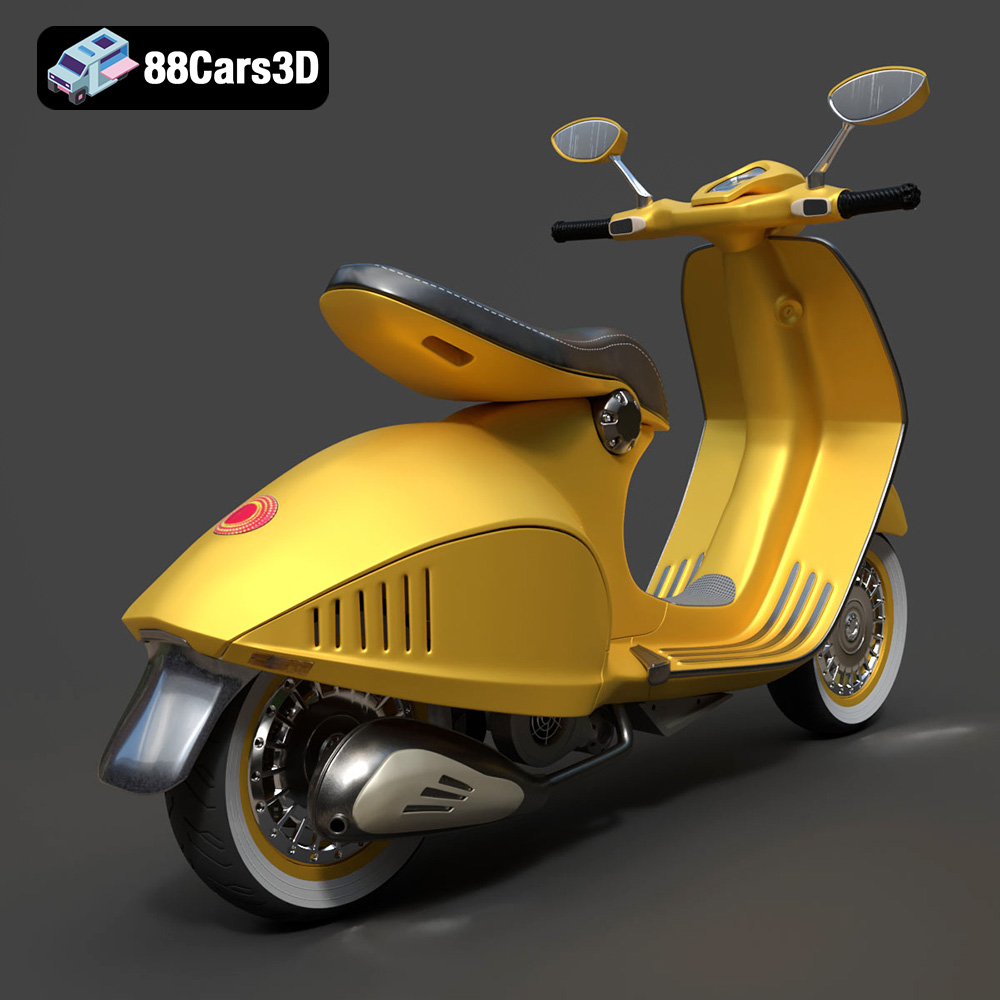
Experience the iconic elegance of the Vespa 946 with this meticulously crafted 3D model. Designed to replicate the authentic curves and refined aesthetics of the renowned scooter, this asset provides true-to-life realism for professional projects. Whether for close-up studio renders or dynamic environments, every detail from the distinct seating to the polished chassis has been modeled with precision.
Built with clean geometry and optimized polygon counts, this model ensures seamless integration into various pipelines. It features realistic materials, accurate texturing, and a highly detailed structure, making it a perfect choice for demanding digital creations. The professional-grade topology guarantees smooth subdivisions and optimal performance.
This Vespa 946 3D model is highly versatile and ideal for a wide range of applications, including game development, architectural visualization, AR/VR experiences, animation, and realistic rendering. It provides creators with a ready-to-use asset that elevates the visual fidelity of any scene.
Included file formats:
Tags:
.vespa, .946, .scooter, .motorcycle, .car3dmodel, .rendering, .simulation, .gameasset, .arvr, .blend, .fbx, .obj, .glb, .stl, .ply, .unreal, .max
$39.99
.946
.arvr
.blend
.car3dmodel
.fbx
.gameasset
.glb
.max
.motorcycle
.obj
.ply
.rendering
.scooter
.simulation
.stl
.unreal
.vespa