Get 20% OFF All Premium 3D & STL Models!

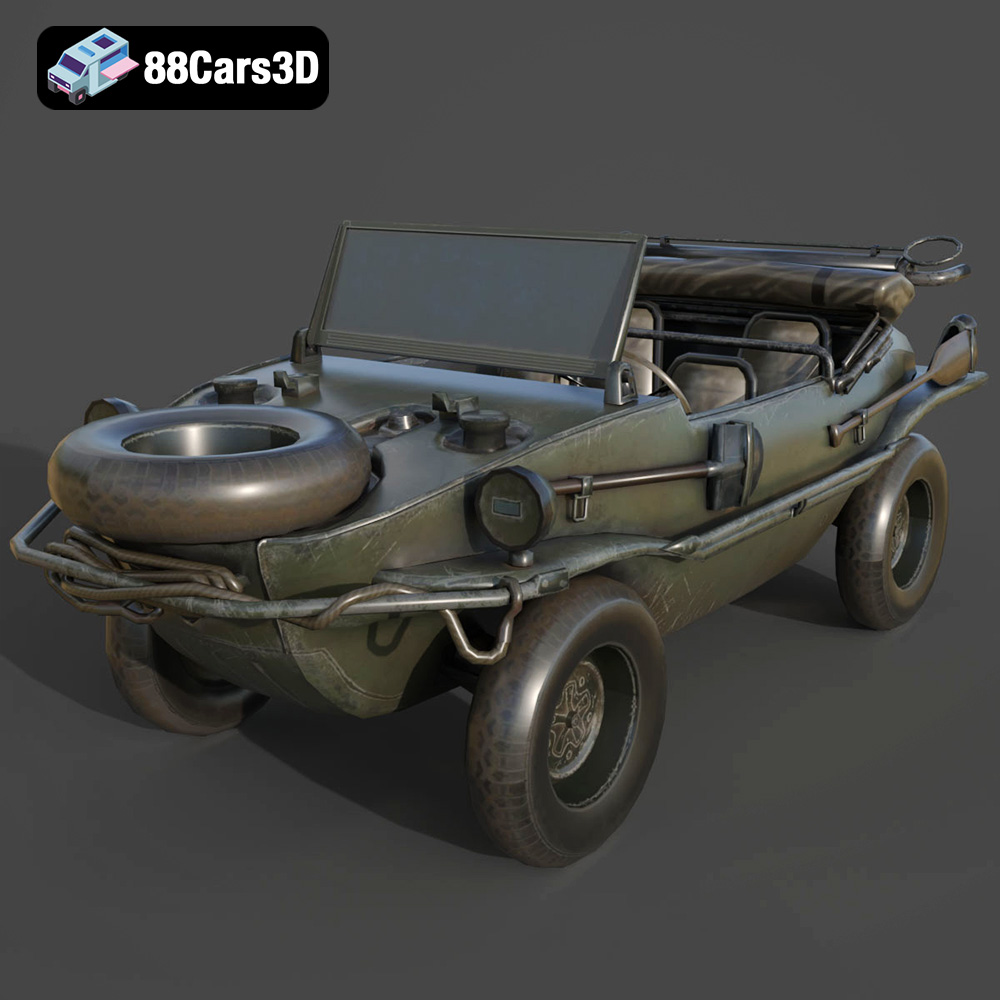
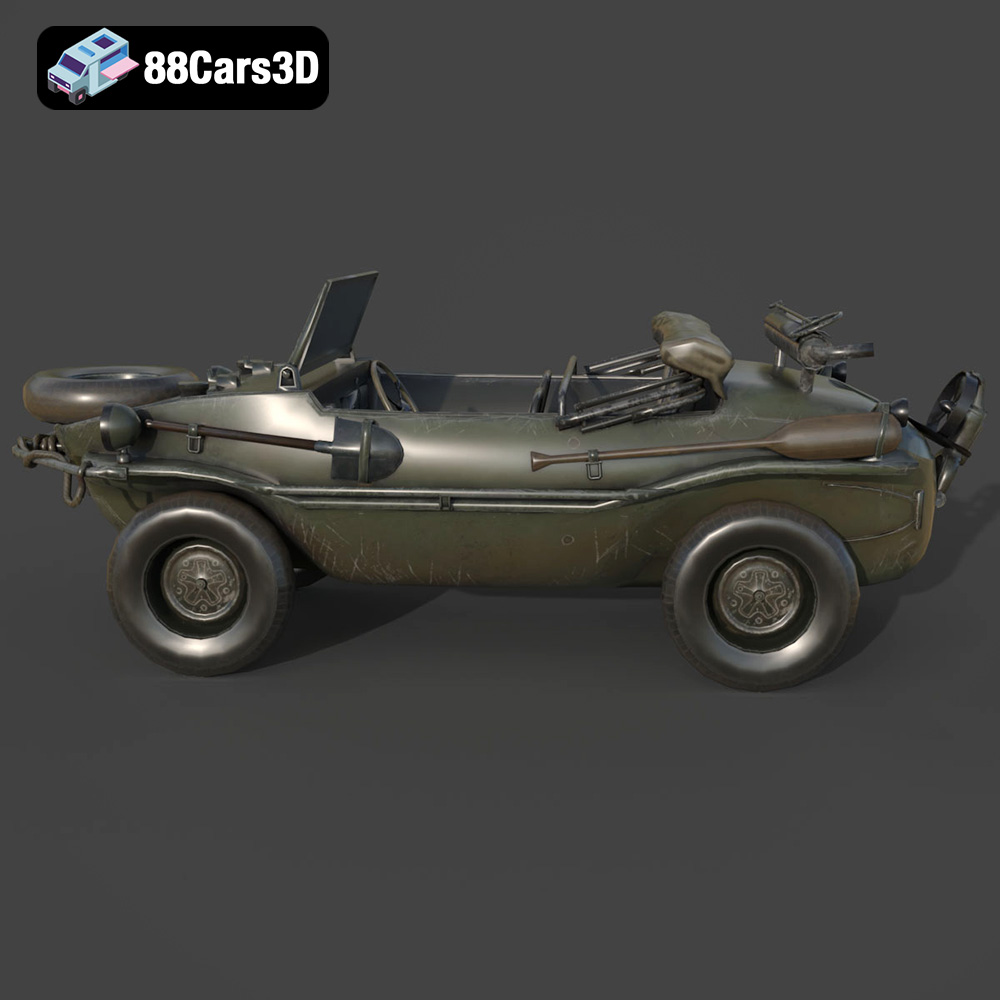
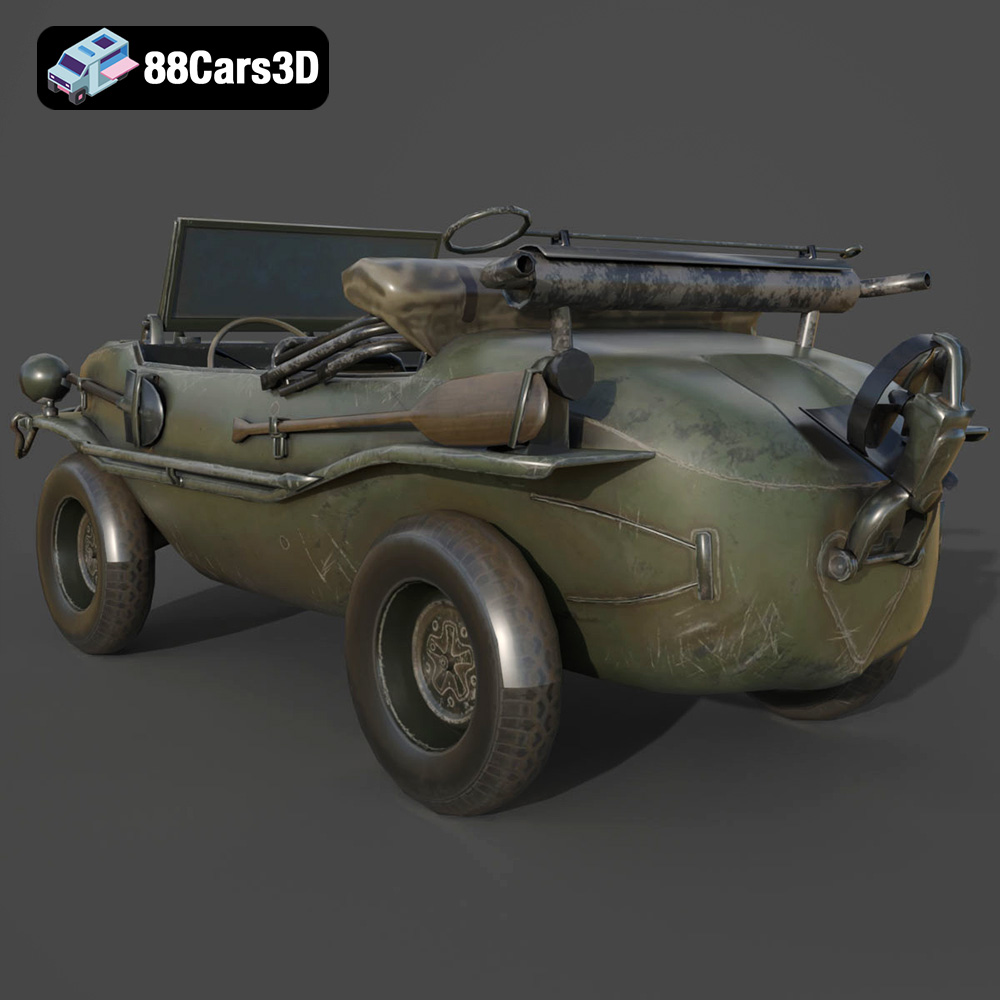
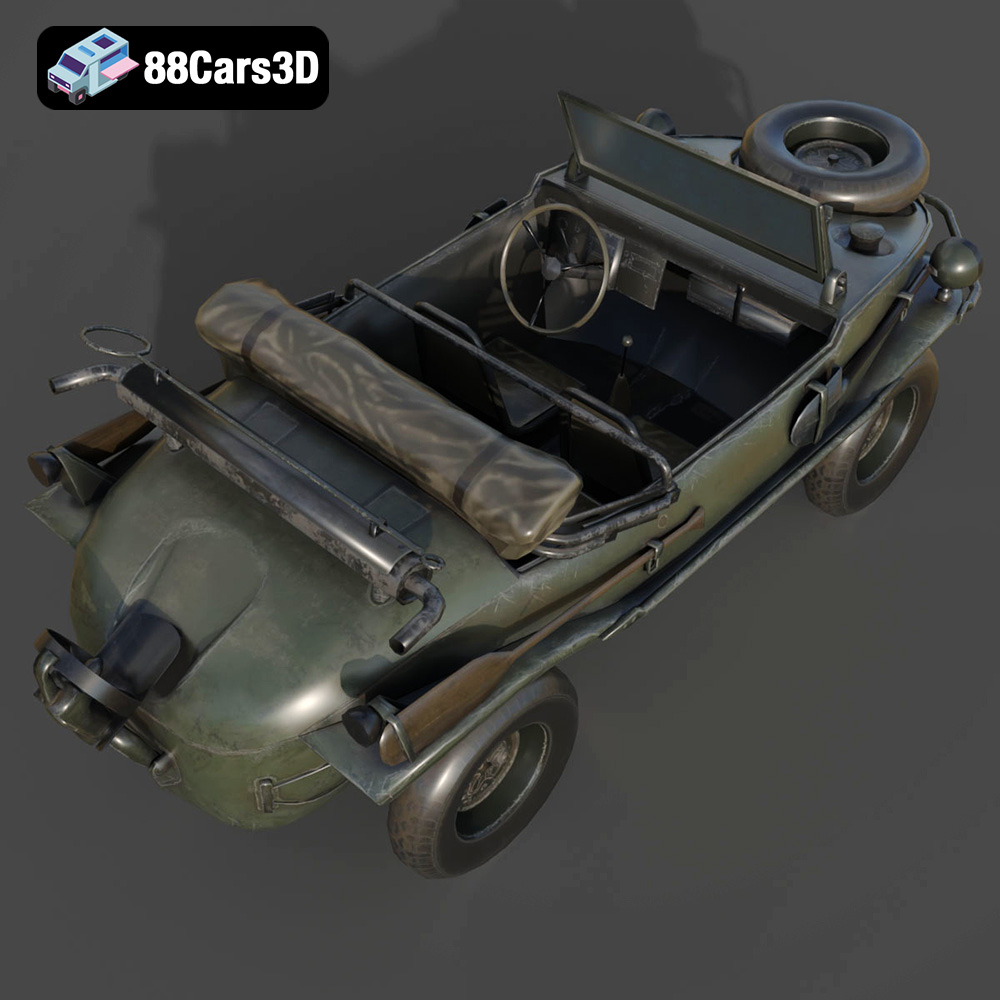
The Volkswagen Schwimmwagen Typ 166 is a testament to wartime ingenuity, an amphibious vehicle equally at home on land and in water. Now, thanks to readily available 3D models, you can bring this historical icon to life through the magic of 3D printing. This guide will walk you through the process of 3D printing a detailed Schwimmwagen model, focusing on achieving a high-quality result that captures the vehicle’s rugged charm. We’ll explore everything from selecting the right materials and printer settings to post-processing techniques that will elevate your finished model. Models like the Volkswagen Schwimmwagen Typ 166 available on platforms like 88cars3d.com are meticulously designed for optimal 3D printing and other uses.
Selecting the appropriate 3D printer and material is crucial for achieving a satisfactory result when printing the Volkswagen Schwimmwagen Typ 166. Different technologies offer varying levels of detail and strength.
* FDM (Fused Deposition Modeling): FDM printers are a popular choice due to their affordability and ease of use. They work by extruding melted plastic filament layer by layer. For the Schwimmwagen, FDM printing is suitable for larger scale models where absolute detail isn’t paramount. PLA (Polylactic Acid) is a common FDM material, offering good printability and environmental friendliness. PETG (Polyethylene Terephthalate Glycol) provides better strength and heat resistance than PLA, making it a good alternative for parts that might be subjected to stress.
* Resin Printing (SLA/DLP/MSLA): Resin printers use liquid resin cured by UV light to create highly detailed parts. This technology excels at producing intricate features and smooth surfaces, making it ideal for smaller scale Schwimmwagen models where capturing fine details like the engine components and interior elements is important. Resin materials tend to be more brittle than FDM filaments, so consider using a tough resin blend for increased durability.
* PLA: Easy to print, good for beginners, but can be brittle.
* PETG: Stronger and more heat-resistant than PLA, ideal for functional parts.
* ABS: Durable and heat-resistant, but requires a heated bed and good ventilation.
* SLA Resin: High detail, excellent surface finish, but can be brittle and requires careful handling.
* Tough Resin: Offers increased impact resistance and flexibility compared to standard resins.
When it comes to preparing your Volkswagen Schwimmwagen Typ 166 3D model for printing, understanding the different file formats is essential. The format you choose can impact the print quality, the ease of use within slicing software, and even the color capabilities of your final 3D printed product.
The STL (Stereolithography) file format is the workhorse of 3D printing. It represents the surface geometry of a 3D object as a collection of triangles. This simplicity makes it universally compatible with virtually all 3D printers and slicing software. STL files are mesh-only, meaning they contain no color or texture information. While the STL format has served the 3D printing community well for decades, its lack of color support is a key limitation. Despite this, it’s the go-to format for most 3D printing projects, especially those focusing on structural accuracy and ease of use. The STL files available on 88cars3d.com are optimized for clean and efficient 3D printing. When working with STL files, ensure that the mesh quality is sufficient for your desired level of detail. A higher triangle count results in a smoother surface but can increase file size and processing time.
OBJ (or .OBJ) files are a more advanced format compared to STL. They not only store the 3D geometry but also support color and texture information. This means you can potentially print a multi-colored Schwimmwagen model if your printer has the capability. OBJ files use a more complex structure than STL, typically storing vertices, faces, texture coordinates, and surface normals separately. This makes them more versatile for rendering and animation as well as 3D printing. However, not all slicing software fully supports OBJ files with textures, so it’s important to check compatibility before using this format for printing.
PLY (Polygon File Format or Stanford Triangle Format) is designed to store 3D data acquired from 3D scanners. It’s capable of capturing high-resolution mesh data, including color and other properties, making it suitable for reproducing complex details accurately. While primarily used in scanning and research, it can also be used for 3D printing, especially when dealing with models that require capturing intricate surface details. However, the large file size and potential compatibility issues with some slicing software can be drawbacks.
.Blend files are the native file format for Blender, a popular open-source 3D creation suite. These files contain the entire Blender scene, including the model’s geometry, textures, materials, lighting, and animation data. If you plan to modify the Volkswagen Schwimmwagen Typ 166 before printing, having the .blend file gives you complete control over the model. You can adjust its design, add details, or even create variations of the vehicle. Before 3D printing a .blend file, you’ll need to export it to a compatible format like STL or OBJ.
FBX (Filmbox) is a proprietary file format developed by Autodesk. It’s commonly used for exchanging 3D data between different software applications, particularly in the game development and animation industries. FBX files can store geometry, textures, materials, animations, and even camera and lighting information. For 3D printing, FBX files can be useful if you need to import a model into slicing software while preserving material assignments. However, not all slicers support FBX, and those that do might not interpret the material information correctly. It’s best to convert FBX files to STL if you are only interested in the geometry of the model.
GLB (GL Transmission Format Binary) is a file format designed for efficient transmission and loading of 3D models, especially in web and mobile applications. It’s often used for Augmented Reality (AR) and Virtual Reality (VR) applications because it can store everything needed to display a 3D model – geometry, textures, materials, and animations – in a single file. While not directly used for 3D printing, GLB files can be valuable for previewing the Volkswagen Schwimmwagen Typ 166 in AR before committing to a print. This allows you to visualize the model in your physical environment and assess its size and appearance.
Similar to .blend, .max files are the native format for 3ds Max, another industry-standard 3D modeling and animation software package. These files contain the entire 3ds Max project, allowing for extensive customization and modification of the 3D model. If you have access to 3ds Max and the necessary skills, a .max file gives you the freedom to refine the Schwimmwagen model to your exact specifications before exporting it for 3D printing.
Once you have the 3D model file in a suitable format (ideally STL), you’ll need to prepare it for printing using slicing software.
* Choosing a Slicer: Popular slicing software options include Cura, PrusaSlicer, Simplify3D, and Chitubox (for resin printing). Each offers a range of settings and features, so experiment to find the one that best suits your needs and printer.
* Importing and Scaling: Import the Schwimmwagen model into your chosen slicer. Based on the recommended scales (1:16, 1:35, or 1:24), scale the model accordingly. Ensure uniform scaling to maintain the proportions of the vehicle.
* Orientation and Support Generation: The orientation in which you print the model can significantly impact the quality and strength of the final product. Orient the Schwimmwagen chassis at an angle to minimize the need for supports and improve the surface finish on critical areas. Use support structures judiciously, focusing on areas like the exhaust, propeller, and steering wheel.
* Hollowing (Resin Printing): If you are using resin printing, hollow the chassis to reduce material consumption and printing time. Leave sufficient wall thickness (around 1.5-2mm) to maintain structural integrity. Add drain holes to allow resin to escape after printing.
* Mesh Analysis: Use the slicing software’s mesh repair tools to identify and fix any errors in the model, such as non-manifold edges or holes.
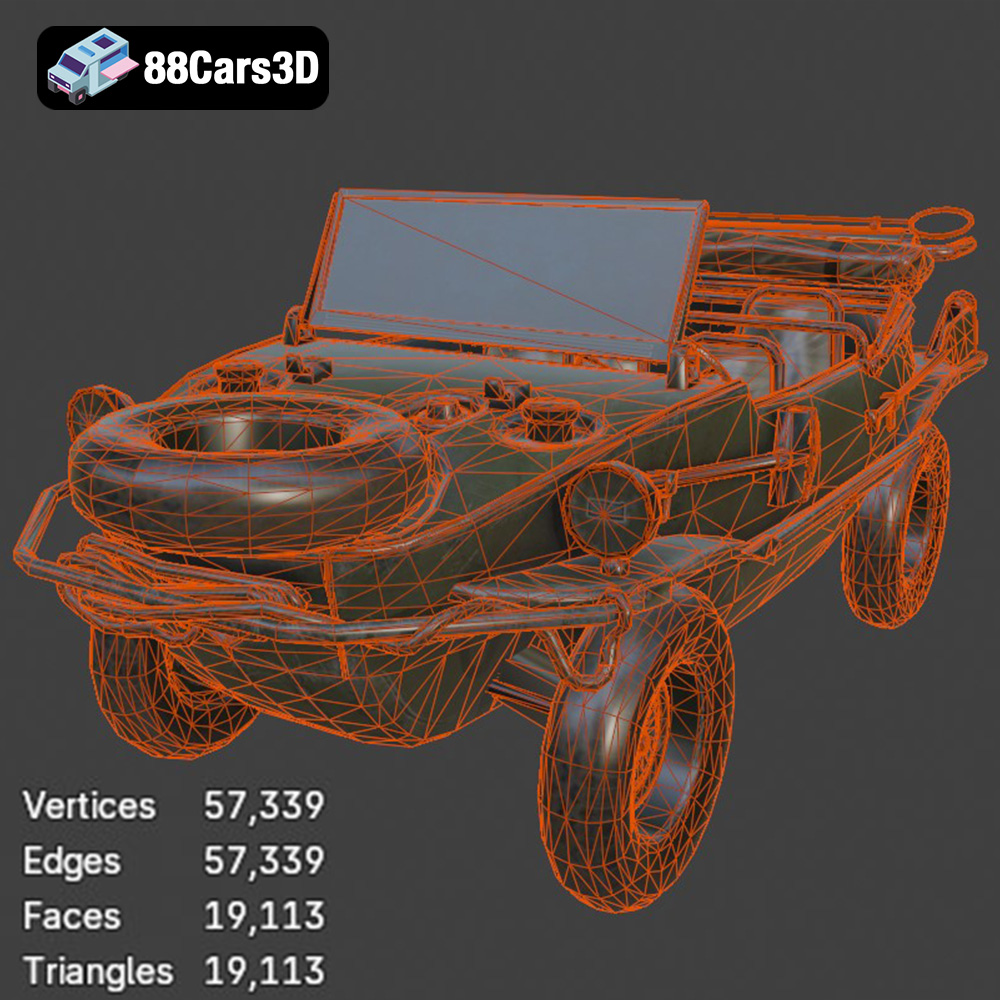
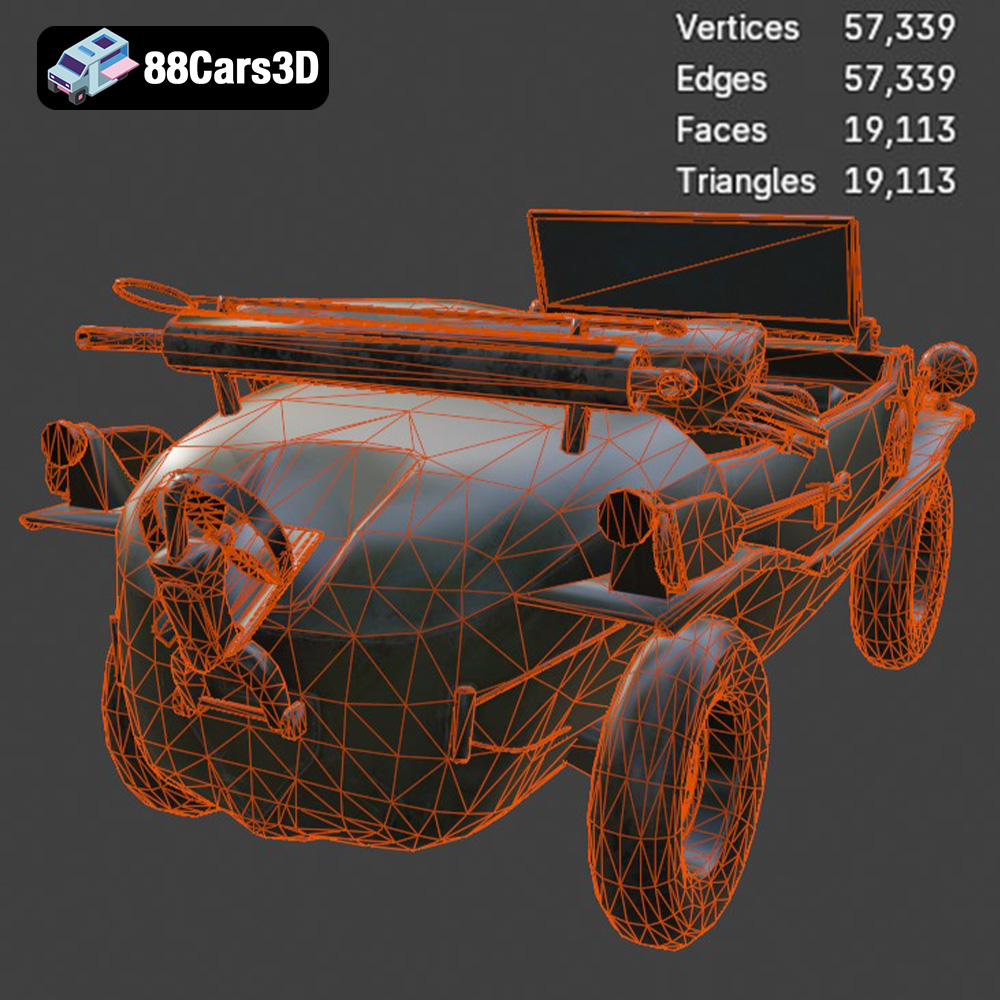
* Polygon Reduction: While the Schwimmwagen model is already optimized with a reasonable polygon count (~150,000 triangles), you might consider further reducing the polygon count if you are printing at a very small scale or have limited processing power. Be careful not to reduce it so much that you lose important details.
Fine-tuning your printer settings is crucial to achieving a high-quality 3D printed Schwimmwagen.
* FDM Printing: A layer height of 0.1-0.2mm offers a good balance between detail and print time. For finer details, you can reduce the layer height to 0.05-0.1mm, but this will increase print time.
* Resin Printing: Layer heights of 0.025-0.05mm are typical for resin printing, resulting in smooth surfaces and highly detailed features.
* Infill Density: 20-30% infill is generally sufficient for the Schwimmwagen chassis. Increase the infill density for parts that require greater strength, such as the wheels or axles.
* Infill Pattern: Choose an infill pattern that provides good strength and support, such as gyroid, honeycomb, or rectilinear.
* Print Speed: Adjust the print speed based on the material and printer capabilities. A slower print speed generally results in better quality, especially for intricate details.
* Temperature: Follow the material manufacturer’s recommendations for nozzle and bed temperature (FDM) or exposure time (resin).
The Volkswagen Schwimmwagen Typ 166 model is typically designed with separate components for easier printing and assembly.
* Print the chassis at an angle to minimize support material and maximize structural integrity.
* Ensure adequate bed adhesion to prevent warping, especially with larger prints.
* Print the wheels separately for optimal detail and roundness.
* Consider using a raft or brim for improved bed adhesion.
* Print smaller parts like the exhaust, propeller, and steering wheel at a higher resolution to capture fine details.
* Use support structures carefully to avoid damaging delicate features.
Post-processing is essential for achieving a professional finish on your 3D printed Schwimmwagen.
* Carefully remove support structures using pliers, a hobby knife, or other suitable tools.
* Clean the model thoroughly to remove any remaining support material or resin.
* Sand the model to smooth out layer lines and imperfections. Start with coarse sandpaper and gradually move to finer grits.
* Consider using filler primer to fill in any gaps or imperfections before sanding.
* Apply a primer coat to prepare the model for painting.
* Use appropriate paints and techniques to replicate the original Schwimmwagen’s colors and finishes. Consider authentic factory colors and weathering effects for added realism.
* Apply decals or stencils for accurate markings.
* Carefully assemble the individual parts using glue or other suitable adhesives.
* Ensure proper alignment and fitment for a seamless finish.
Even with careful preparation, you might encounter some common 3D printing issues.
* Ensure proper bed adhesion by using a heated bed, applying adhesive, or using a brim or raft.
* Adjust the print temperature and cooling settings.
* Reduce the nozzle temperature or retraction settings.
* Ensure the filament is dry.
* Check the belt tension and tighten if necessary.
* Reduce the print speed.
* Increase the support density or thickness.
* Adjust the support placement.
The print time and material costs for the Volkswagen Schwimmwagen Typ 166 will vary depending on the size, resolution, and material you choose. A typical 1:24 scale model printed in PLA could take 20-30 hours and use 200-300g of filament. Resin printing might take a similar amount of time but use less resin, around 100-200ml. Always factor in the cost of electricity and post-processing materials.
The Volkswagen Schwimmwagen Typ 166 is an iconic World War II amphibious off-road vehicle, celebrated for its rugged durability and unique boat-like hull design. Serving as one of the most mass-produced amphibious cars in history, it features a distinctive rear-mounted air-cooled flat-four engine, a fold-down propeller system, and four-wheel drive capability. This highly accurate 3D model meticulously captures its utilitarian military aesthetics, from the riveted watertight chassis to the spare tire mounted on the sloping front hood.
$39.99
3D printing the Volkswagen Schwimmwagen Typ 166 is a rewarding project that combines historical appreciation with the power of additive manufacturing. By carefully selecting your printer and materials, optimizing your slicer settings, and mastering post-processing techniques, you can create a stunning replica of this iconic vehicle. Remember to consult resources like 88cars3d.com for high-quality 3D models and inspiration for your next 3D printing adventure. The ability to download STL files and bring these historical models to life is a testament to the power of 3D printing technology.
.blend
.fbx
.glb
.max
.obj
.ply
.rendering
.stl
.unreal
.volkswagen
amphibious-vehicle
car-3d-model
classic-car
game asset
game-ready
low-poly
military-vehicle
off-road
optimized
schwimmwagen-typ-166
VR/AR
ww2-vehicle