Get 20% OFF All Premium 3D & STL Models!

In the ever-evolving landscape of digital content creation, the demand for high-fidelity 3D assets is paramount. From immersive video games and breathtaking cinematic sequences to precise architectural visualizations and tactical simulations, the quality of a 3D model can make or break a project’s impact. Automotive rendering, in particular, requires an exceptional level of detail and accuracy to truly resonate with audiences. This is where professional-grade 3D car models become indispensable, providing the foundational realism that sophisticated projects demand.
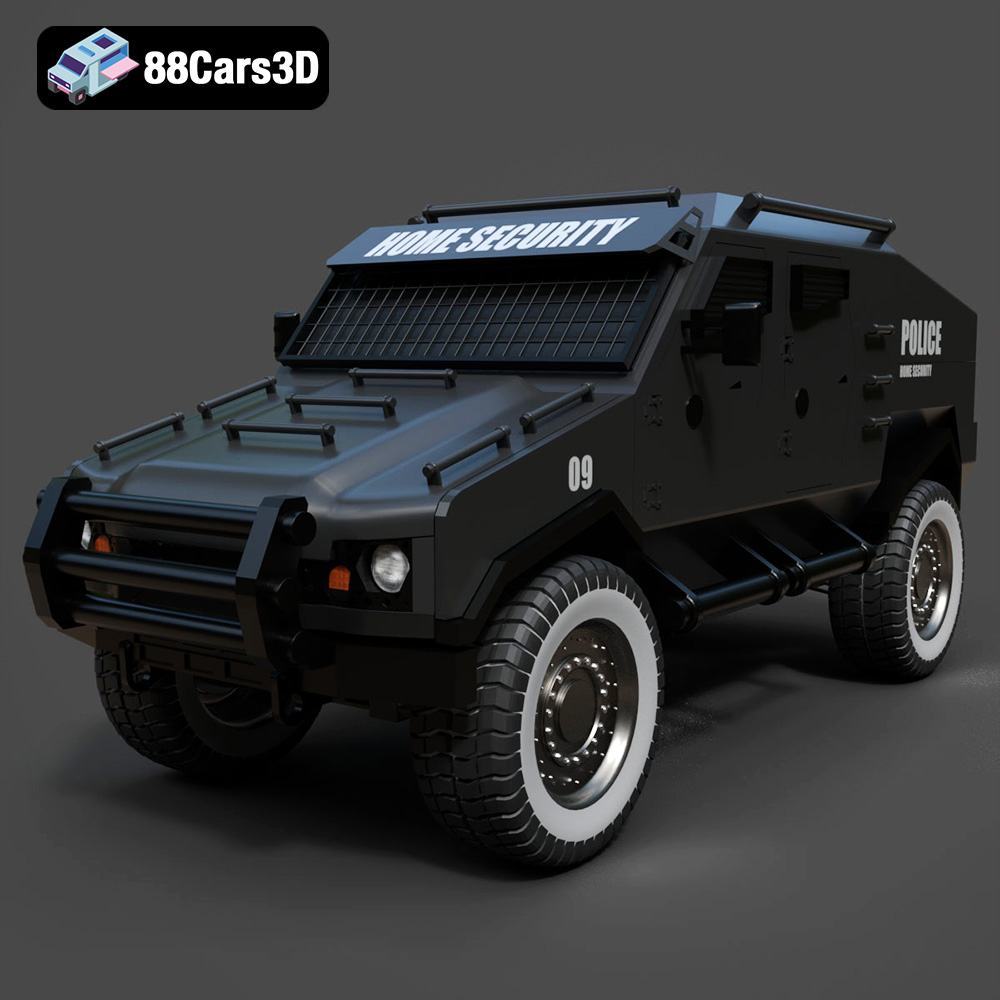
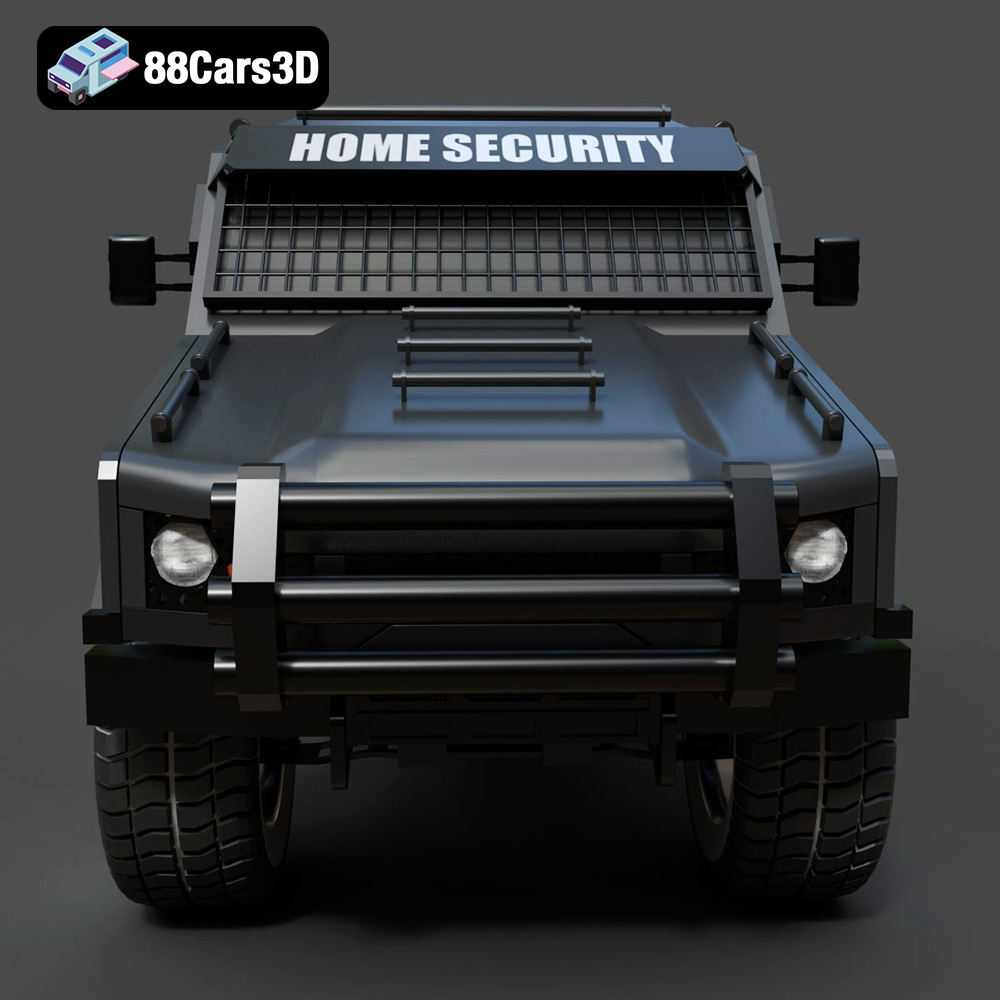
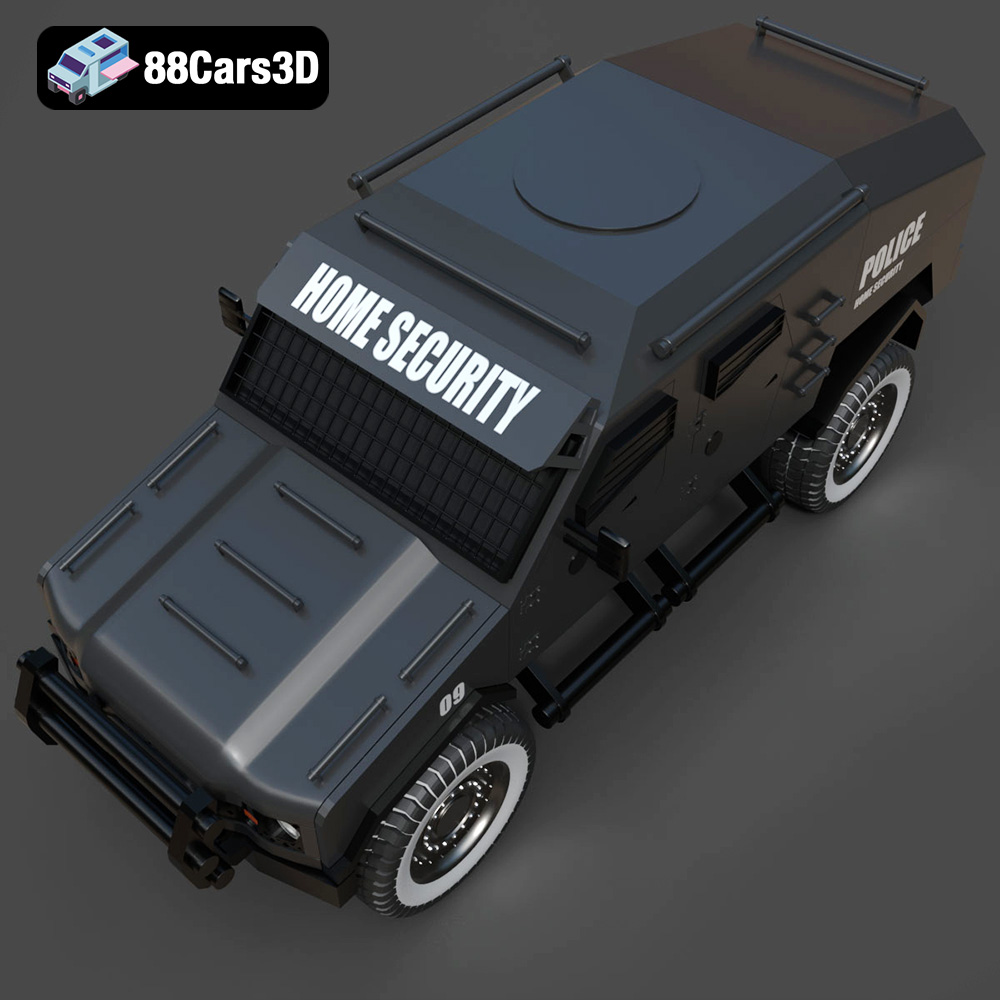
Imagine the challenge of recreating a robust military vehicle, every panel, bolt, and piece of heavy-duty suspension meticulously detailed, ready for deployment in a high-stakes virtual environment. This level of precision is not easily achieved, often requiring hundreds of hours of expert modeling and texturing. Fortunately, resources like 88cars3d.com bridge this gap, offering meticulously crafted assets that empower creators. One such exemplary product is the Armoured Vehicle 001 3D Model, an asset engineered to exact standards, representing the rugged exterior and functional design inherent in modern tactical transport vehicles. Its blend of clean geometry, realistic materials, and versatile file formats makes it a cornerstone for a multitude of digital applications, streamlining workflows and enhancing visual fidelity across the board.
The versatility of a 3D model is often defined by the range of file formats it supports. Each format is designed with specific use cases in mind, offering unique advantages for different stages of a production pipeline. Knowing which format to use and when is crucial for efficient workflow and optimal results. The Armoured Vehicle 001 3D Model from 88cars3d.com exemplifies this versatility by providing a comprehensive suite of industry-standard formats, ensuring seamless integration into virtually any creative environment.
The .blend format is the native file type for Blender, a powerful and popular open-source 3D creation suite. When you receive a .blend file, you’re not just getting a static model; you’re often getting a fully editable scene. This typically includes the model’s geometry, its associated PBR (Physically Based Rendering) materials and textures, lighting setups, camera positions, and even animation rigs if applicable. For the Armoured Vehicle 001, the .blend file would provide direct access to the model’s intricate structure, allowing artists to modify specific components, adjust materials, or reconfigure the lighting to suit a particular scene. This format is ideal for artists who primarily work in Blender and require maximum flexibility for customization and further development.
Autodesk’s .fbx (Filmbox) format has become a de facto standard for exchanging 3D data between different software applications and is particularly favored in game development. It is renowned for its ability to store a wide array of 3D data, including geometry, materials, textures, animations, and skeletal deformation information. For real-time engines like Unreal Engine and Unity, .fbx is the go-to format due to its robust support for mesh hierarchies, UV mapping, and animation data. The .fbx version of the Armoured Vehicle 001 3D Model would be optimized for game-engine readiness, ensuring efficient import and correct material assignments, making it easy to drop into a game level and begin immediate interaction or simulation.
The .obj (Wavefront OBJ) format is one of the oldest and most widely supported 3D file formats. Its strength lies in its simplicity and universal compatibility. Almost every 3D software package can import and export .obj files. While it primarily stores geometric data (vertices, normals, texture coordinates, and faces), it can reference external material (.mtl) files to define surface properties. The .obj version of the Armoured Vehicle 001 is perfect for users who need a clean, stable mesh that can be easily imported into any 3D application for rendering, sculpting, or further modification, providing a reliable foundation regardless of the chosen software.
.glb (GL Transmission Format Binary) is a modern, compact, and efficient format that encapsulates 3D models, materials, textures, and animations into a single binary file. It is specifically designed for real-time viewing in web browsers, augmented reality (AR), and virtual reality (VR) applications. Its compact size and self-contained nature make it ideal for quick loading and deployment on various devices. For the Armoured Vehicle 001, a .glb file would enable interactive 3D viewing directly on a website, integration into AR mobile apps, or seamless use in VR environments, offering a streamlined path for immersive visualization experiences.
The .stl (STereoLithography) format is the standard for 3D printing. It represents a 3D model as a series of connected triangles (a tessellated surface) without any color or texture information. Its primary purpose is to define the surface geometry of a 3D object for manufacturing. While the Armoured Vehicle 001 3D Model is highly detailed, its .stl variant would be specifically prepared to ensure a watertight mesh, crucial for successful 3D printing. This allows for physical prototyping or creating miniature models of the vehicle, bridging the gap between digital design and tangible objects.
The .ply (Polygon File Format) is another common format for storing 3D data, often used in scientific and engineering applications, especially for data from 3D scanners. It can store not only geometric information but also color, transparency, and sometimes even normal vectors per vertex or face. Its extensibility allows for more complex data representation than .obj. For the Armoured Vehicle 001, the .ply format could be valuable for detailed mesh analysis, reverse engineering workflows, or integration into CAD software where precise surface data is required.
While .fbx is generally used for importing into Unreal Engine, some asset providers, including 88cars3d.com, may offer a .unreal file. This typically signifies an asset that has been pre-configured and packaged specifically for Unreal Engine. It might include not just the mesh and textures, but also pre-set materials, collision meshes, Level of Detail (LOD) setups, and even blueprints or other engine-specific configurations. This dramatically speeds up integration, as the Armoured Vehicle 001 would be ready to use immediately upon import, minimizing setup time and potential issues.
Similar to .blend for Blender, the .max format is the native file type for Autodesk 3ds Max, a leading software for 3D modeling, animation, and rendering. A .max file of the Armoured Vehicle 001 would contain the complete 3ds Max scene, including all geometry, materials, textures, lighting, cameras, and any animation or rigging information. This format offers full editability for 3ds Max users, allowing them to leverage the software’s powerful rendering capabilities (such as V-Ray or Corona Renderer) and animation tools to create stunning visuals or integrate the vehicle into complex simulations.
Achieving truly convincing digital automotive rendering relies heavily on the underlying quality of the 3D model itself. It’s not just about polygon count, but how those polygons are structured, how materials interact with light, and the overall integrity of the asset. The Armoured Vehicle 001 3D Model exemplifies this commitment to foundational quality, ensuring that every detail contributes to a believable and performant digital representation.
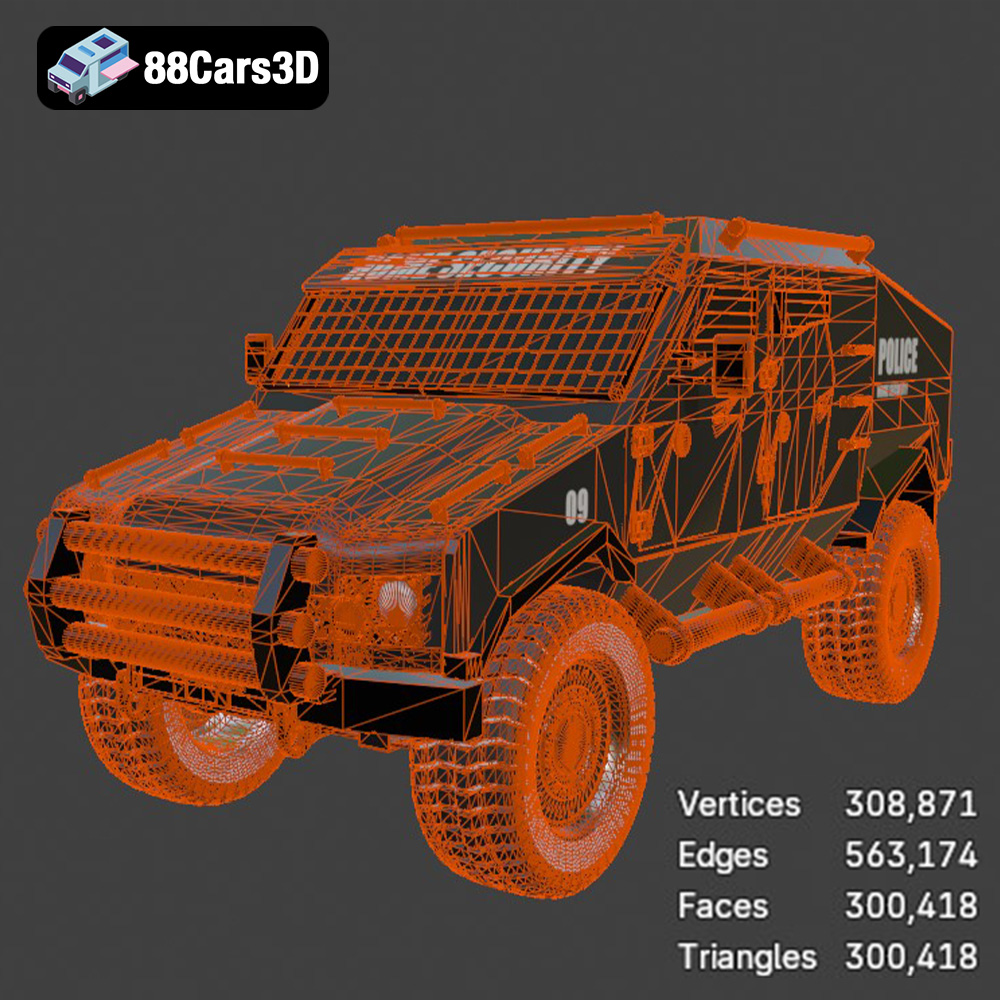
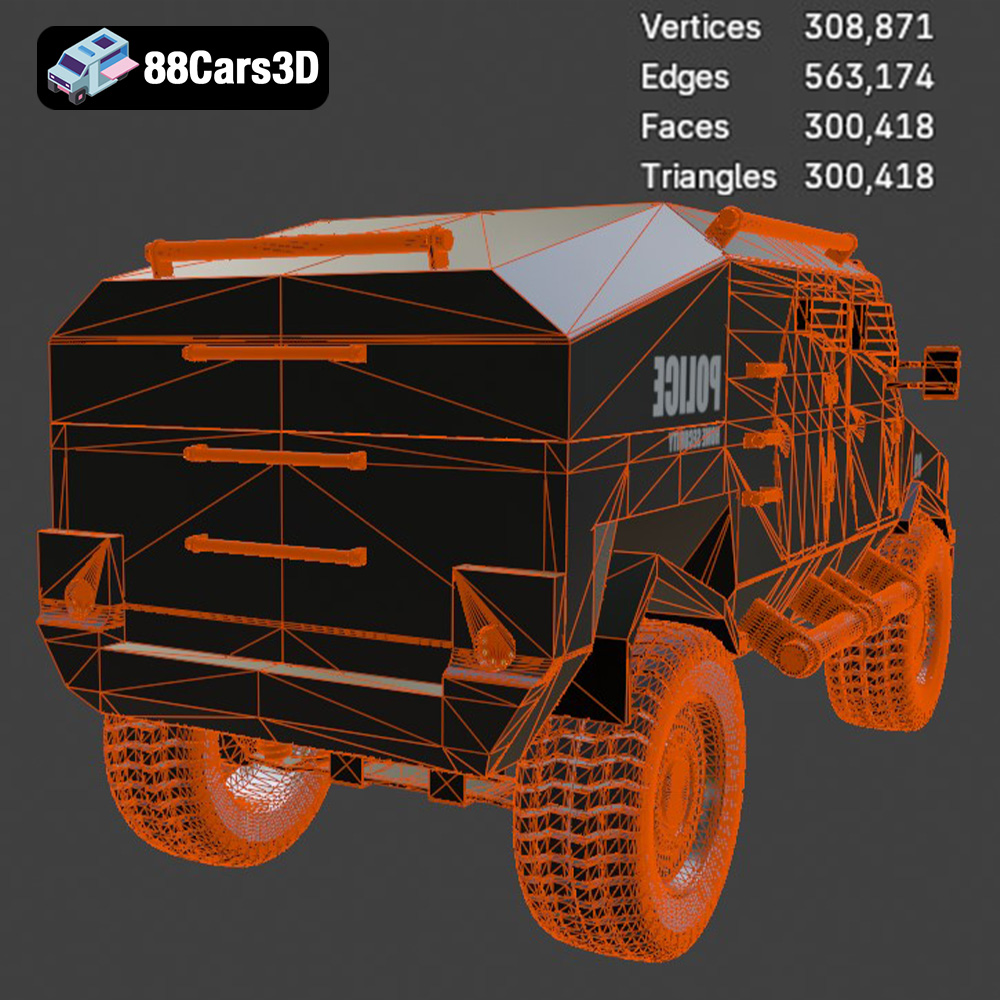
Professional 3D models are built with “clean geometry” and “meticulously organized mesh,” as highlighted in the description of the Armoured Vehicle 001. This refers to the topology – the arrangement of polygons (usually quads for animation and deformation, or triangles for real-time rendering) that make up the model’s surface. Good topology ensures smooth deformations during animation, prevents shading artifacts, and is crucial for efficient UV mapping. For complex assets like an armoured vehicle, optimized topology means balancing visual detail with performance constraints. This involves careful consideration of polygon density in different areas – higher density for intricate details like panel lines or suspension components, and lower density for flatter, less critical surfaces. This ensures the model runs efficiently in real-time applications like games or interactive simulations without sacrificing the “rugged exterior and functional design” that makes it authentic.
Beyond the mesh, the surface properties of a 3D model are what truly bring it to life. Physically Based Rendering (PBR) materials are the industry standard for achieving photorealistic results. PBR workflows simulate how light interacts with real-world materials, using maps for properties like albedo (base color), roughness, metallic, normal, and ambient occlusion. For the Armoured Vehicle 001, its “realistic materials and textures” mean that the armor plating will reflect light appropriately, the tires will have a rubbery grip, and metal components will gleam or appear weathered as intended. This level of detail in texturing, often involving intricate wear and tear, dirt, and scuff marks, is critical for achieving an “authentic visual experience” in any rendering engine, from V-Ray in 3ds Max to Unreal Engine’s native renderer.
Game development demands a unique blend of visual fidelity and technical optimization. A compelling game asset like the Armoured Vehicle 001 3D Model must look exceptional while also performing smoothly within the constraints of real-time engines. Its design for “game development” and being “fully optimized for real-time engines” means it’s built to meet these rigorous demands head-on.
For developers working with Unreal Engine, importing the Armoured Vehicle 001 is a streamlined process thanks to its availability in .fbx and dedicated .unreal formats. The typical workflow involves importing the .fbx file, which brings in the mesh, PBR materials, and textures. Artists then verify material assignments, ensure UV maps are correctly interpreted for lighting and texturing, and set up collision meshes. The “clean geometry” and “meticulously organized mesh” of the Armoured Vehicle 001 significantly reduce post-import cleanup. Once in Unreal, the vehicle can be integrated into Blueprints for interactive controls, dynamic suspension, and combat mechanics, making it ready for “military simulations, tactical training modules, or action-packed cinematic sequences” within the game engine itself. Its “detailed interior” also opens up possibilities for first-person views or complex interactive elements.
Even a well-optimized model needs further preparation for varying distances in a game. This is where Level of Detail (LOD) models come into play. LODs are simplified versions of the main model that are automatically swapped in by the game engine as the vehicle moves further from the camera, reducing polygon count and improving performance without noticeable visual degradation. A professional asset like the Armoured Vehicle 001 would typically be structured to facilitate LOD creation, or even come with pre-made LODs. Additionally, accurate collision meshes are vital for realistic physics and player interaction. These are simplified, invisible meshes that define the vehicle’s physical boundaries, preventing unwanted clipping and ensuring realistic impacts. The “professional-grade topology” of the Armoured Vehicle 001 makes it easy to generate precise collision meshes, contributing to a seamless and immersive gameplay experience.
Beyond interactive environments, high-quality 3D assets are crucial for creating stunning pre-rendered content. The “Armoured Vehicle 001 3D Model” is not just for games; its “professional-grade topology” and “realistic materials and textures” make it equally suited for “cinematic rendering” and even “architectural visualization” where a strong, impactful vehicle is needed to contextualize a scene.
For cinematic productions or high-end visualizations, offline renderers like V-Ray, Corona Renderer, Arnold, or Redshift are the tools of choice. These renderers leverage advanced lighting algorithms, global illumination, and sophisticated material shaders to produce photorealistic images and animations. The Armoured Vehicle 001, provided in .max (for 3ds Max) and .blend (for Blender) formats, offers full compatibility with these renderers. Artists can import the model, apply or refine its PBR materials, set up complex lighting scenarios – perhaps a dramatic sunset in an urban environment or stark studio lighting – and render out sequences with unparalleled detail. The “attention to detail in the armor plating, heavy-duty suspension, and strategic window placements” ensures that every close-up shot will hold up to cinematic scrutiny.
In architectural visualization, a vehicle can breathe life into a static building rendering, suggesting activity, purpose, or a particular mood. An armoured vehicle, in particular, could evoke themes of security, specific operational zones, or even futuristic scenarios. For cinematics, the Armoured Vehicle 001 becomes a character in itself, capable of conveying power, urgency, or defense. With its “fully crafted exterior and a detailed interior,” animators can create dynamic shots, from wide establishing scenes of the vehicle traversing “urban environments or off-road terrains” to intimate interior shots emphasizing the crew. The flexibility provided by a meticulously modeled asset allows for endless creative possibilities in visual storytelling, creating “dynamic animations” that captivate and engage audiences.
The utility of a robust 3D model extends far beyond traditional screens. Augmented Reality (AR) and Virtual Reality (VR) are transforming how we interact with digital content, while 3D printing offers a tangible bridge between the virtual and physical worlds. The Armoured Vehicle 001 3D Model is engineered to excel in these emerging fields, showcasing its true versatility.
AR and VR experiences demand models that are both visually rich and performant. The .glb format, included with the Armoured Vehicle 001, is specifically “optimized for AR/VR and web-based visualization,” making it an ideal choice for these applications. In AR, users can place a realistic, scaled-down version of the armoured vehicle into their real-world environment via a smartphone or tablet, creating interactive demonstrations or educational tools. Imagine a military strategist reviewing vehicle deployment in a virtual sandbox, or a product designer showcasing a new vehicle concept in an interactive 3D space. The model’s “clean geometry” ensures quick loading and smooth interaction, crucial for maintaining immersion in these interactive applications.
The “Armoured Vehicle 001 3D Model” also offers an avenue for physical manifestation through 3D printing, thanks to its inclusion of the .stl format, which is “suitable for 3D printing and prototyping.” While the digital model is packed with intricate textures and materials, the .stl version focuses purely on the watertight geometry required for additive manufacturing. This capability allows for the creation of physical prototypes for design review, scale models for tabletop games or dioramas, or even custom parts for hobbyists. From a technical standpoint, ensuring a clean, manifold mesh in the original model, as described in the product description, is critical for a successful 3D print, preventing errors and ensuring a solid output. This dual capability—digital and physical—underscores the comprehensive utility of such a high-quality 3D asset.
In a world overflowing with digital content, the choice of your 3D assets can significantly impact project timelines, budget, and overall quality. Opting for professional, pre-engineered models from a trusted source like 88cars3d.com offers distinct advantages, especially when it comes to specialized assets like the Armoured Vehicle 001 3D Model.
Creating a detailed 3D car model, particularly something as complex and precise as an armoured vehicle, is an incredibly time-consuming and skill-intensive process. It requires expertise in hard-surface modeling, intricate texturing, UV mapping, and optimization for various platforms. By purchasing the Armoured Vehicle 001 3D Model, creators bypass potentially hundreds of hours of development time. This model comes with “clean geometry and a meticulously organized mesh,” “realistic materials and textures,” and “professional-grade topology” – all hallmarks of an asset built to exacting standards. This inherent quality means less time spent on fixes and adjustments, and more time focused on creative implementation, ensuring an “authentic visual experience” right out of the box.
The true power of a professional 3D asset lies in its ability to seamlessly integrate into diverse production pipelines. The Armoured Vehicle 001 3D Model’s availability in multiple “industry-standard file formats” – from .blend and .max for extensive editing to .fbx and .unreal for game engines, and .glb for AR/VR – ensures maximum compatibility. This eliminates the headache of format conversions, potential data loss, and compatibility issues that often plague projects using less robust assets. Whether you’re a solo indie developer, part of a large studio, or a visualization specialist, this model is “fully optimized for real-time engines and offline renderers,” ensuring “seamless integration into your existing pipeline.” This efficiency directly translates to faster project completion and higher quality output, allowing teams to deliver impressive results without the burden of starting complex models from scratch.
The digital frontier continues to expand, demanding increasingly sophisticated and realistic assets across every sector, from dynamic game environments to compelling cinematic narratives and immersive AR/VR experiences. The foundation of success in these endeavors often rests on the quality and versatility of the 3D models employed.
The Armoured Vehicle 001 3D Model stands as a testament to what high-quality digital assets can achieve. Its meticulous detailing, professional-grade topology, and comprehensive suite of optimized file formats (including .blend, .fbx, .obj, .glb, .stl, .ply, .unreal, and .max) ensure that it is not merely a model, but a robust tool engineered for diverse professional applications. Whether your project involves “automotive rendering” for a next-gen game, a detailed “military simulation,” or a groundbreaking “AR/VR” application, this model provides the realism and flexibility necessary to elevate your vision.
Investing in pre-engineered, high-fidelity “3D car models” from a reputable source like 88cars3d.com allows creators to focus on innovation and storytelling, rather than the intricate complexities of asset creation. With assets like the Armoured Vehicle 001, the path to stunning digital realism is not just attainable, but efficient and rewarding.
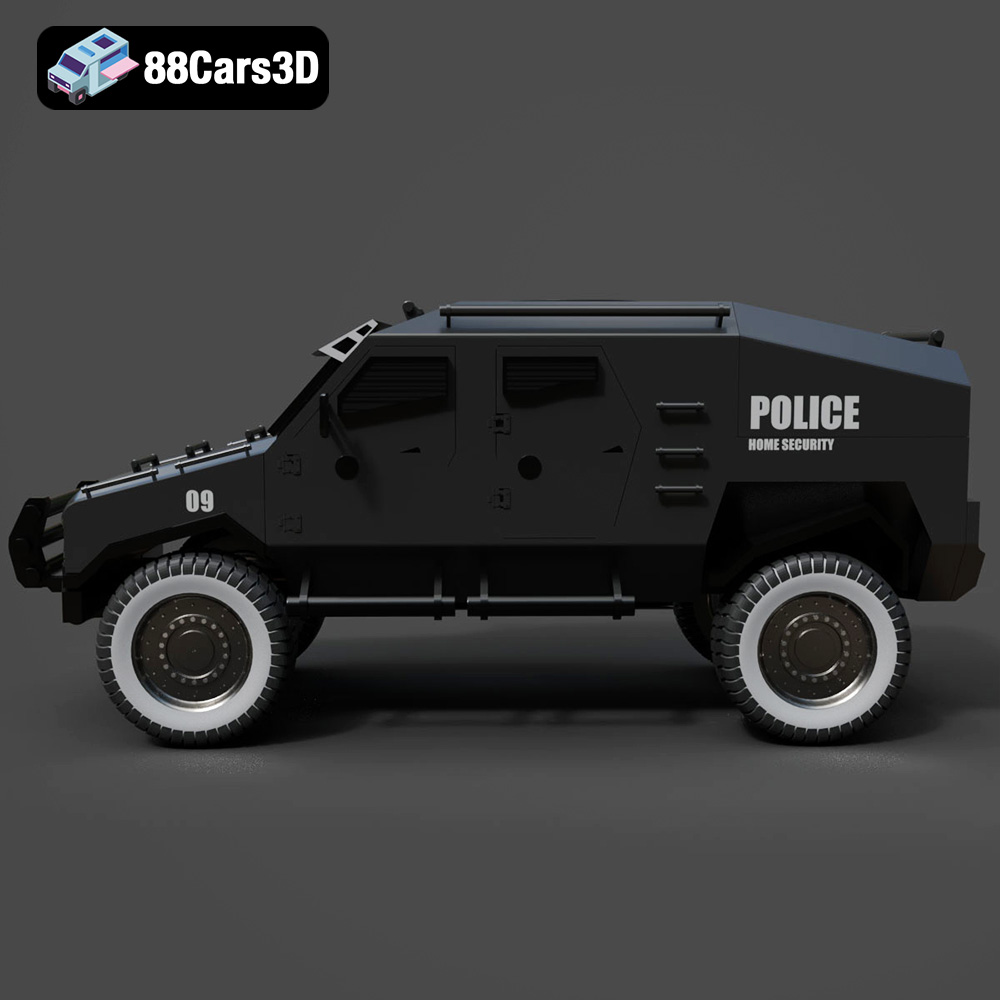
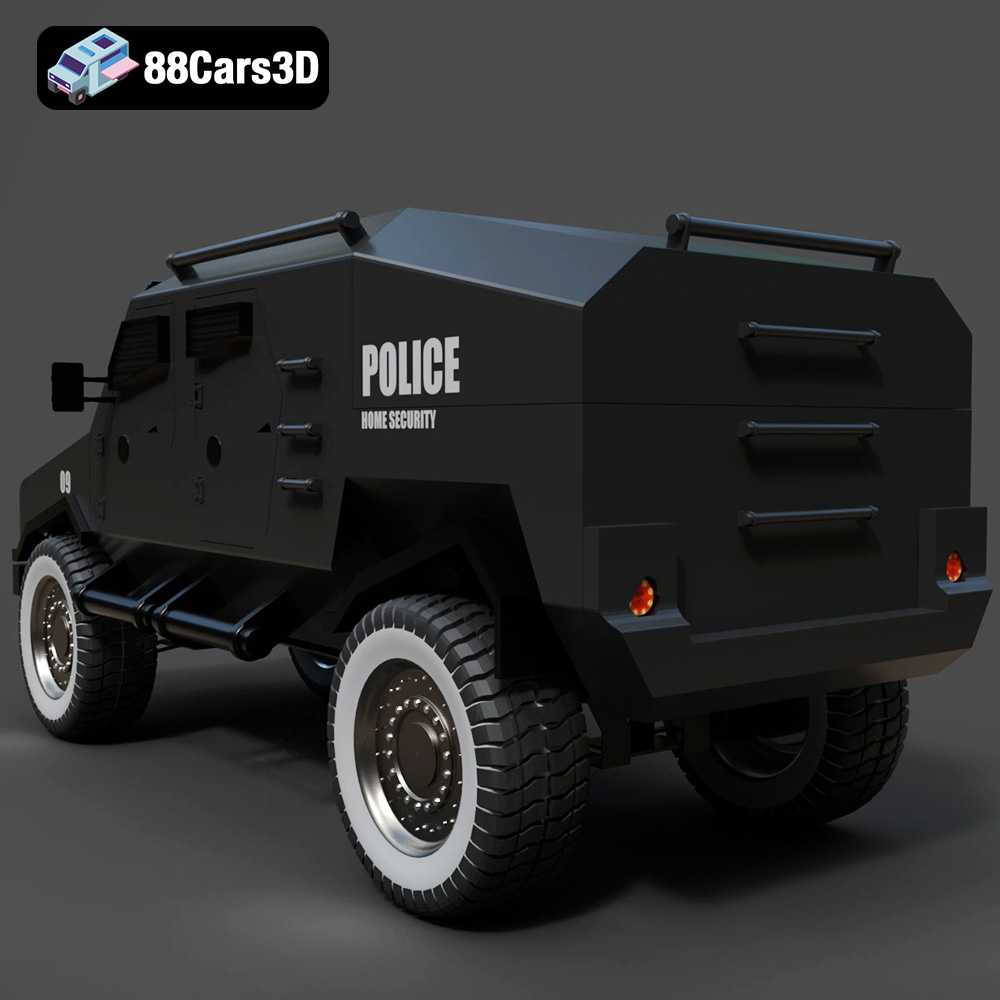
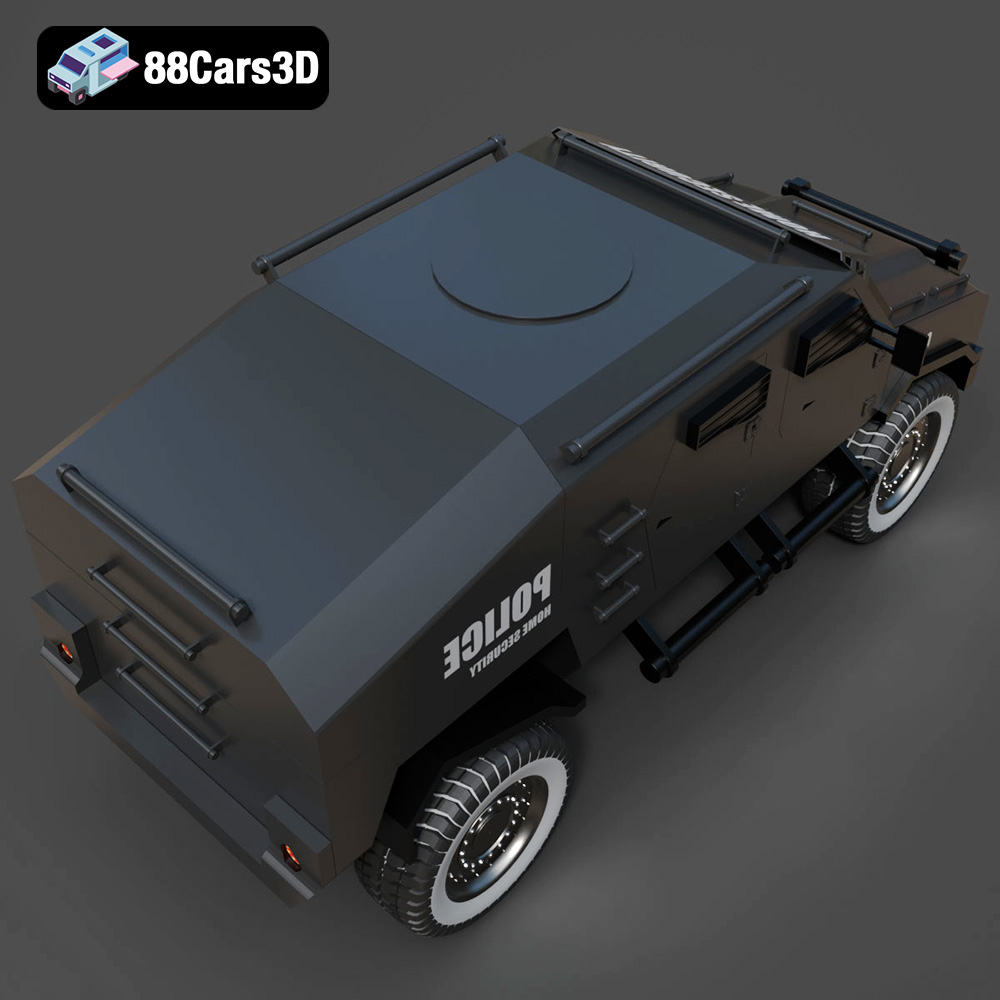
Discover the realism and precision of the Armoured Vehicle 001 3D Model. Engineered to exact standards, this digital asset accurately represents the rugged exterior and functional design inherent in modern tactical transport vehicles. Whether deployed in urban environments or off-road terrains, the attention to detail in the armor plating, heavy-duty suspension, and strategic window placements ensures an authentic visual experience. Built with clean geometry and a meticulously organized mesh, this 3D model features realistic materials and textures that elevate any digital scene. The professional-grade topology guarantees smooth performance without sacrificing visual fidelity. The model includes a fully crafted exterior and a detailed interior, giving creators the flexibility needed for close-up shots, dynamic animations, and interactive applications. This versatile asset is perfect for a wide range of applications, including game development, cinematic rendering, architectural visualization, and AR/VR experiences. It is fully optimized for real-time engines and offline renderers, ensuring seamless integration into your existing pipeline for military simulations, tactical training modules, or action-packed cinematic sequences. The Armoured Vehicle 001 3D Model is provided in multiple industry-standard file formats to suit any workflow: .blend – Editable Blender file with materials and lighting setup; .fbx – Game-engine ready format for Unreal Engine and Unity; .obj – Standard 3D model format compatible with all major software; .glb – Optimized for AR/VR and web-based visualization; .stl – Suitable for 3D printing and prototyping; .ply – Detailed polygon mesh for analysis and visualization; .unreal – Pre-configured for Unreal Engine use; .max – Editable 3ds Max file for rendering and animation.
$39.99
.armoredcar
.armoured
.arvr
.blend
.car3dmodel
.fbx
.gameasset
.glb
.max
.military
.obj
.ply
.rendering
.simulation
.stl
.tactical
.unreal
.vehicle001