Get 20% OFF All Premium 3D & STL Models!

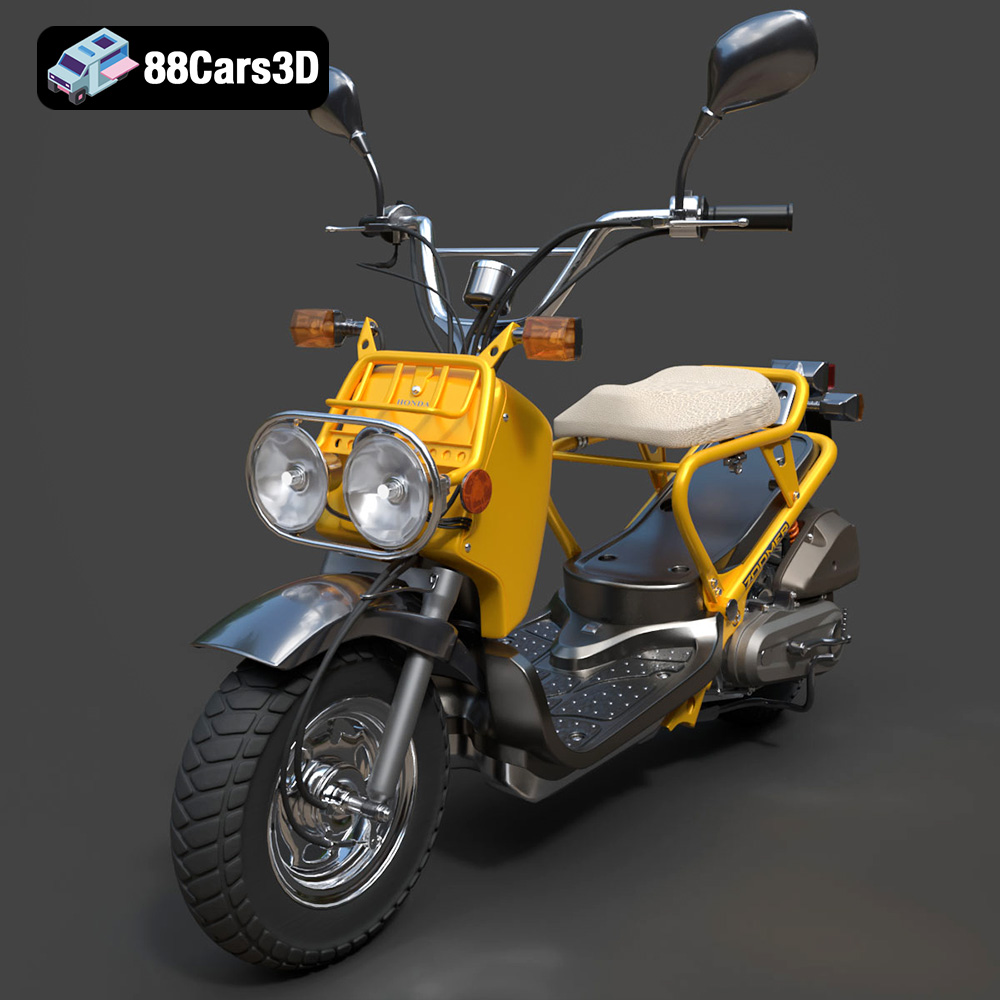
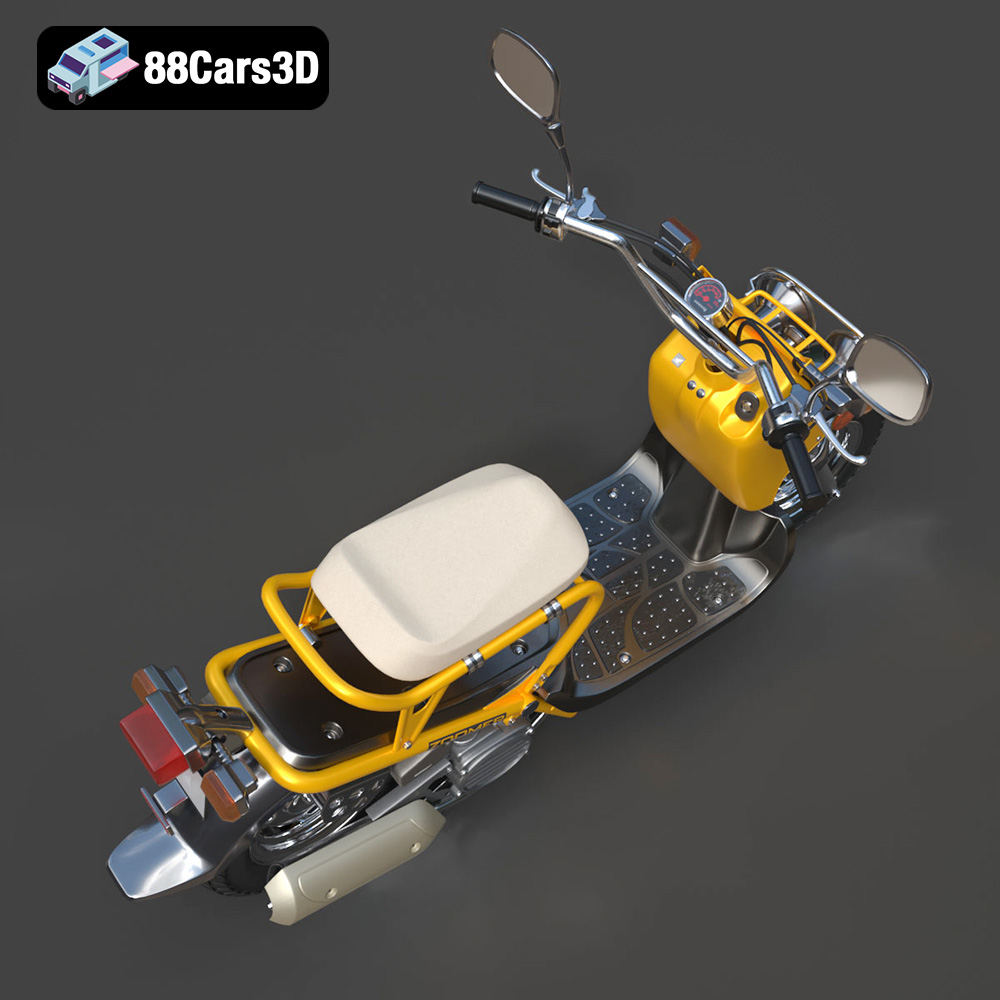
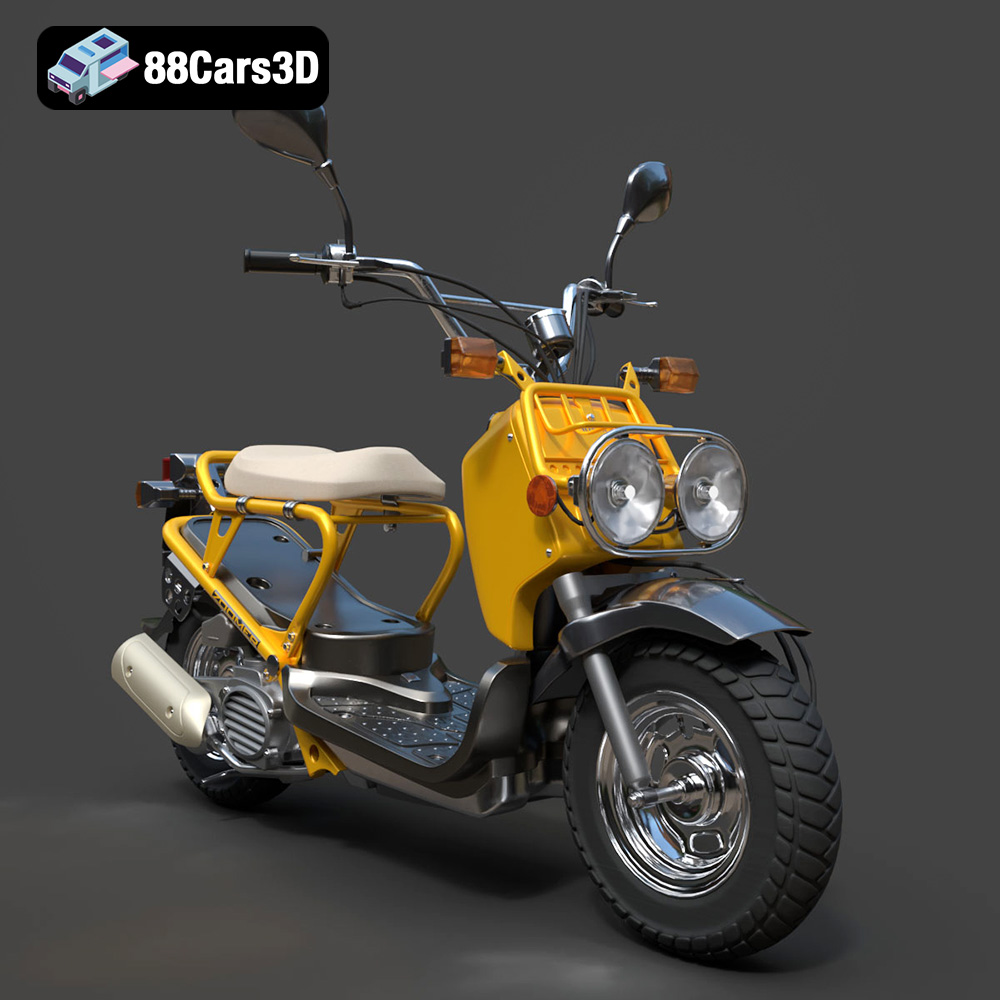
In the dynamic world of digital content creation, the difference between a good project and an outstanding one often lies in the quality of its foundational assets. For automotive enthusiasts, game developers, architectural visualizers, and AR/VR innovators, a meticulously crafted 3D model of a vehicle isn’t just a prop—it’s the core of their narrative. These assets demand precision, realism, and adaptability, serving as the digital DNA for everything from cinematic renders to interactive simulations. The quest for such quality often leads professionals to specialized marketplaces, and today, we’re diving deep into an example that perfectly illustrates this demand: the exceptional Honda Zoomer 50 2005 3D Model, available at 88cars3d.com.
This iconic rugged scooter, known for its distinctive design and urban utility, has been brought to life in a digital format that meets the rigorous standards of modern 3D production. Whether you’re aiming to populate a bustling virtual street scene, develop a realistic racing game, or create a compelling product visualization, the quality of your 3D car models is paramount. Let’s explore how a model like the Honda Zoomer 50 2005 3D Model can elevate your projects and the technical intricacies that make it an invaluable asset.
The digital landscape is increasingly demanding photorealism and immersive experiences. For anything involving vehicles, generic or low-quality models simply won’t cut it. Modern audiences expect intricate details, accurate proportions, and materials that react convincingly to light. This is where high-fidelity 3D car models become indispensable.
In the realm of automotive rendering, realism isn’t just a luxury; it’s a necessity. Architects showcasing a new building need vehicles that blend seamlessly into the environment, adding life without distracting. Advertisers require stunning visuals that highlight product features with absolute clarity. The Honda Zoomer 50 2005 3D Model, with its clean geometry and realistic materials, is designed to meet these exact needs. Its carefully constructed mesh allows for smooth subdivisions, yielding impeccable surface quality under any rendering engine. From the subtle glint of chrome on its handlebars to the texture of its tires, every element is designed to contribute to a photorealistic final image, whether you’re using V-Ray, Corona, Arnold, or Cycles.
For game developers and creators of AR/VR experiences, the challenge is twofold: achieving visual fidelity while maintaining optimal performance. High-quality 3D car models like the Honda Zoomer 50 must be optimized for real-time engines, meaning efficient polygon counts, clean UV layouts, and PBR (Physically Based Rendering) ready materials. A well-optimized model ensures smooth frame rates without sacrificing visual appeal, making virtual worlds believable and interactive. Imagine a mobile game where players can customize their scooter, or an AR application that lets customers preview the Zoomer in their driveway—the underlying 3D asset’s quality dictates the entire experience. This model is perfectly suited to be a high-quality game asset, ready for engines like Unreal and Unity.
Beyond games and renders, high-quality 3D models form the backbone of professional visualization across numerous industries. Product design reviews, engineering simulations, forensic reconstructions, and educational content all benefit immensely from accurate digital representations. The structural integrity and attention to detail in a model like the Honda Zoomer 50 2005 3D Model mean it can be used not just for aesthetic purposes, but also for more technical analyses where precise dimensions and component relationships are critical. This versatility makes such an asset a truly valuable investment for any professional workflow.
Navigating the landscape of 3D production often involves juggling various software packages and platforms, each with its preferred or optimized file formats. Understanding these formats is crucial for ensuring compatibility, preserving data integrity, and streamlining your workflow. The Honda Zoomer 50 2005 3D Model from 88cars3d.com comes with a comprehensive suite of file formats, making it incredibly versatile for almost any professional application. Let’s break down these essential formats in detail:
The **.blend** file is Blender’s native format and offers a complete, editable scene. When you download a .blend file, you’re getting more than just the mesh; you typically receive the entire setup, including materials, textures, lighting, cameras, and potentially even animation data or modifiers. This format is ideal for users working primarily in Blender, allowing for maximum flexibility to modify the model, adjust shaders, or integrate it into an existing Blender project with minimal fuss. It ensures that all scene data, from intricate node-based materials to object hierarchies, is preserved exactly as intended by the artist. For the Honda Zoomer 50 2005 3D Model, the .blend file provides an editable Blender scene with materials and lighting setup, making it immediately ready for rendering or further customization within the Blender ecosystem.
Autodesk’s **.fbx** (Filmbox) format has become an industry standard, particularly for transferring 3D data between different software applications and, crucially, into game engines like Unreal Engine and Unity. FBX files can store a vast amount of data, including geometry, materials, textures, animations, rigging, and even camera information. Its widespread adoption stems from its robust handling of complex scenes and its ability to maintain scene hierarchy and transformations. While not always fully editable in every program, its strength lies in its ability to transport ready-to-use assets. For game developers seeking to integrate the Honda Zoomer 50, the .fbx format is game-engine ready, ensuring a smooth import process into their real-time environments.
The **.obj** (Wavefront OBJ) format is one of the oldest and most universally supported 3D file types. It’s a simple, text-based format that primarily stores geometry data (vertices, normals, texture coordinates, and faces). While it doesn’t typically embed material definitions directly (these are often stored in a separate .mtl file), its simplicity ensures broad compatibility across virtually all 3D software packages, from CAD programs to modeling applications. The .obj format is excellent for cross-software compatibility, serving as a reliable backbone for exchanging basic mesh data. The Honda Zoomer 50 2005 3D Model’s .obj variant provides a standard 3D model format compatible with all major software, a true workhorse for any pipeline.
**.glb** (GL Transmission Format Binary) is a relatively newer format optimized for efficient transmission and loading of 3D scenes and models in web and AR/VR applications. It’s a binary container that can hold 3D models, textures, animations, and PBR materials in a single, self-contained file. Its efficiency and comprehensive nature make it the go-to format for displaying 3D content directly in browsers (using WebGL) or within augmented and virtual reality platforms. If you’re building a web-based configurator or an AR experience with the Honda Zoomer 50, the .glb format is optimized precisely for these uses, offering quick loading times and excellent visual quality.
The **.stl** (Stereolithography) format is the de facto standard for 3D printing and rapid prototyping. It describes only the surface geometry of a 3D object using a collection of interconnected triangles. It does not carry color, texture, or material information. Its primary purpose is to provide a watertight mesh that can be sliced and sent to a 3D printer. For engineers, product designers, or hobbyists looking to create a physical miniature of the Honda Zoomer 50 2005, the .stl file is the suitable output for 3D printing and prototyping, ensuring accurate physical reproduction.
The **.ply** (Polygon File Format) is another widely used format for storing 3D data, often employed for scanned data, point clouds, and general mesh data. Unlike .stl, .ply can store a wider range of information, including color, transparency, normals, texture coordinates, and even properties per vertex or face. This makes it particularly useful for scientific data, reverse engineering, and applications requiring detailed geometric analysis. For specialized visualization or analysis of the Honda Zoomer 50’s mesh, the .ply format offers a detailed polygon mesh for precision work.
The **.unreal** format signifies a pre-configured asset specifically designed for Unreal Engine. While often derived from an .fbx import, an .unreal asset typically implies that the model has already been imported, optimized, and set up within the Unreal Engine editor. This could include pre-assigned materials, basic collision meshes, LODs (Levels of Detail), and correct scaling. Using an .unreal file or an asset designated as “Unreal-ready” significantly cuts down on setup time for developers. For the Honda Zoomer 50 2005 3D Model, having an “unreal” option means it’s pre-configured and optimized, offering a streamlined workflow for anyone working in Epic Games’ powerful real-time environment.
Finally, the **.max** file is the native project format for Autodesk 3ds Max. Similar to .blend, it contains the entire scene, including geometry, modifiers, materials, textures, lighting, cameras, animation, and rendering settings specific to 3ds Max. This format is invaluable for professionals whose primary workflow revolves around 3ds Max, offering the highest level of editability and control over every aspect of the scene. The .max file for the Honda Zoomer 50 2005 3D Model provides an editable 3ds Max project, perfect for high-end rendering and animation within this industry-leading software.
By offering this comprehensive array of formats, 88cars3d.com ensures that the Honda Zoomer 50 2005 3D Model is not just a high-quality asset, but also an incredibly flexible one, ready to integrate into virtually any professional 3D pipeline.
The true value of a premium 3D model lies in its underlying construction. It’s not just about how it looks from a distance, but how it holds up under scrutiny, how easily it integrates into different scenes, and how efficiently it renders. The Honda Zoomer 50 2005 3D Model exemplifies this commitment to quality.
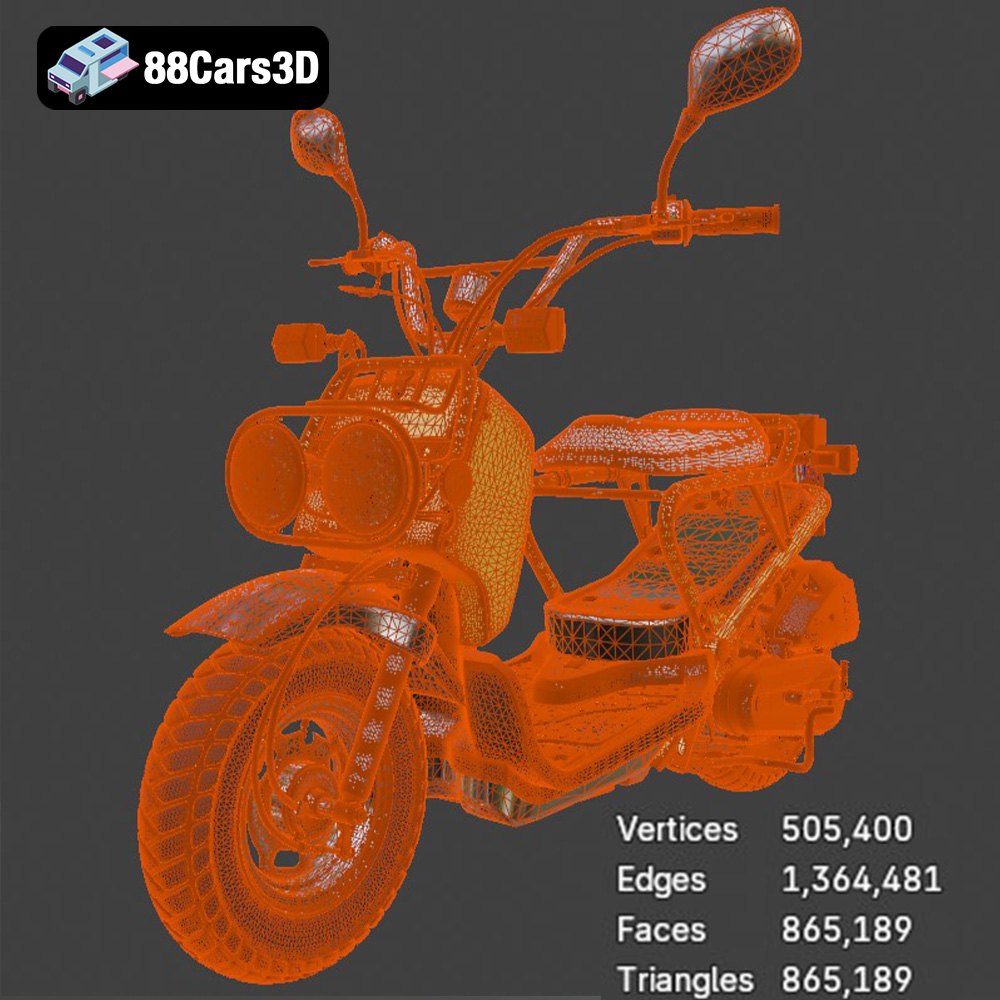
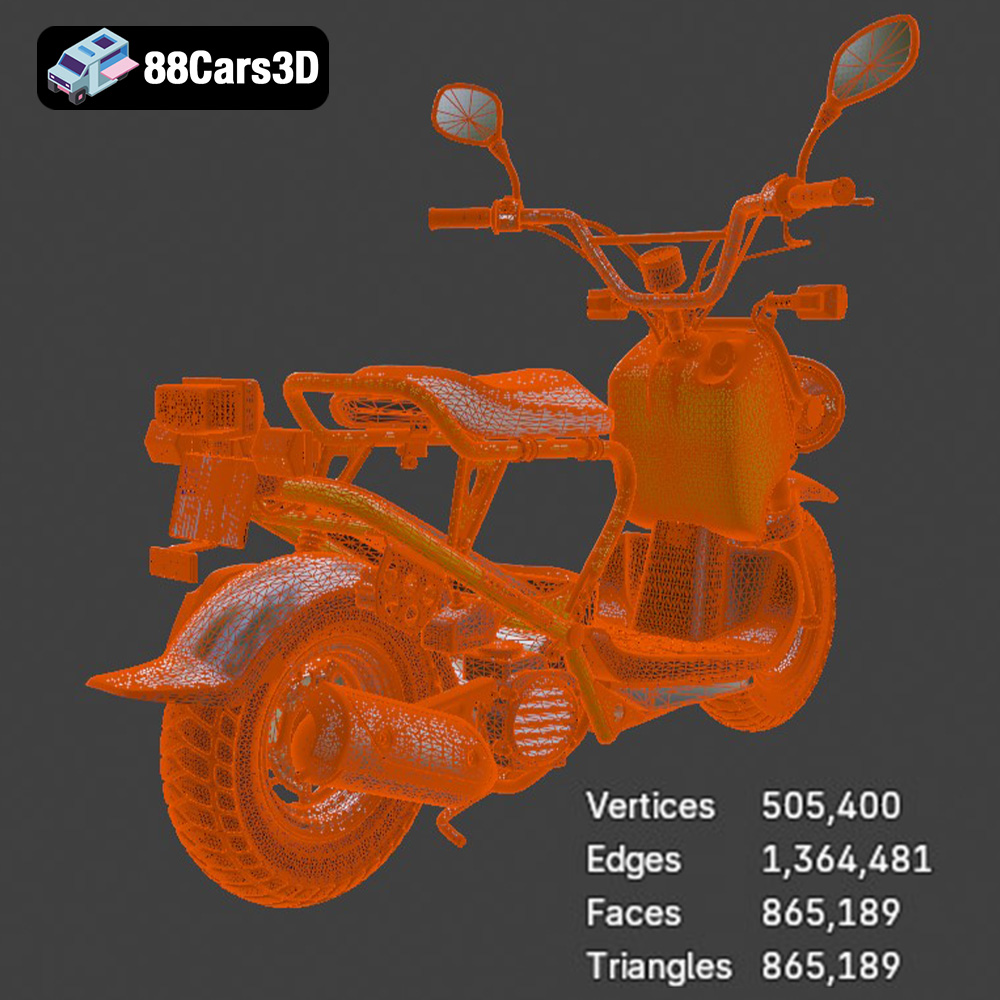
At the heart of any excellent 3D model is its geometry. The Honda Zoomer 50 2005 3D Model boasts clean, optimized topology. This means the mesh is constructed with well-distributed quads (four-sided polygons), minimizing triangles where possible, and flowing logically to define the scooter’s curves and sharp edges. This clean geometry is crucial for several reasons:
* **Subdivision Readiness:** It allows for smooth subdivision (e.g., using a Turbosmooth modifier in 3ds Max or a Subdivision Surface in Blender) to achieve ultra-high detail for close-up renders without introducing artifacts.
* **Deformation Quality:** If the model were to be animated or deformed (e.g., suspension compression), clean topology ensures natural-looking movement.
* **Performance Optimization:** While detailed, the model is constructed with an eye towards efficiency, providing a balance between visual fidelity and polygon count, making it suitable for both high-end rendering and real-time applications. Expect a reasonable poly count that allows for detailed representation without excessive overhead.
A model’s realism is significantly amplified by its materials. The Honda Zoomer 50 2005 3D Model features realistic PBR (Physically Based Rendering) materials. This modern approach to texturing accurately simulates how light interacts with surfaces, resulting in highly believable reflections, refractions, and diffuse properties. Key material maps typically include:
* **Albedo (Base Color):** The pure color of the surface.
* **Normal Map:** Adds fine surface detail without increasing polygon count, simulating bumps, scratches, and panel lines.
* **Roughness Map:** Controls the microsurface detail, determining how blurry or sharp reflections are.
* **Metallic Map:** Defines which parts of the surface are metallic and which are dielectric.
* **Ambient Occlusion (AO) Map:** Simulates subtle shadows in crevices and corners, enhancing depth.
These maps are carefully crafted to mimic the various surfaces of the actual Honda Zoomer, from the matte plastics and textured rubber of the tires to the painted metal and chromed accents. This meticulous texturing ensures the model looks authentic under any lighting condition.
UV mapping is the process of flattening the 3D surface onto a 2D plane, allowing textures to be applied accurately. The Honda Zoomer 50 2005 3D Model features professional-quality UVs that are clean, non-overlapping, and efficiently packed. This is critical for:
* **Texture Fidelity:** Ensures textures are applied without stretching or distortion.
* **Lightmap Generation:** For game engines, clean UVs are essential for generating accurate lightmaps, which are pre-rendered lighting solutions that significantly enhance realism and performance. The model likely includes a second UV channel specifically for this purpose.
* **Material Efficiency:** Well-organized UVs allow for texture atlases, where multiple smaller textures are combined into one larger map, reducing draw calls in game engines and improving performance.
The attention to these details—geometry, materials, and UVs—is what truly sets this model apart as a professional-grade asset, ready for the most demanding production pipelines.
The true measure of a high-quality 3D model lies in its seamless integration into diverse professional workflows. The Honda Zoomer 50 2005 3D Model is designed for maximum versatility, making it a powerful asset across various industries.
For architectural visualization, product showcases, or advertising, the Honda Zoomer 50 2005 3D Model excels in a rendering environment like 3ds Max, often paired with V-Ray or Corona Renderer. The .max file provided offers direct access to the model within its native software, allowing artists to leverage its clean geometry and PBR materials.
* **Workflow:** Import the model, apply or adjust the provided materials (often optimized for standard PBR workflows, making them easily adaptable to V-Ray or Corona’s respective material systems), set up your lighting (HDRI environments are excellent for realistic reflections), and place your cameras. The model’s detailed geometry will respond beautifully to global illumination, producing stunningly realistic results.
* **Case Study:** An architect could drop the Zoomer into a street scene outside a new residential complex, bringing life and context to their visualization. An advertising agency might use it as the hero prop in a lifestyle campaign, emphasizing its urban appeal. The accuracy and detail mean minimal cleanup and maximum impact.
The gaming industry demands optimized assets that look great without crippling performance. The Honda Zoomer 50 2005 3D Model, particularly through its .fbx and .unreal formats, is an ideal game asset.
* **Workflow:** Import the .fbx file into Unreal Engine 5. The engine will guide you through setting up materials (often creating PBR material instances automatically). You can then create LODs (Levels of Detail) to ensure optimal performance at varying distances, add collision meshes for physics interactions, and integrate it into game logic. The “unreal” specific file or setup means even less time spent on initial configuration.
* **Technical Considerations:** The model’s clean UVs are crucial for generating efficient lightmaps in Unreal, ensuring realistic static lighting. Its optimized poly count means it can be instantiated multiple times without a significant performance hit.
* **Case Study:** Imagine a sprawling open-world game set in a city where players can ride the Honda Zoomer 50. Or perhaps a vehicle-focused mobile game where the Zoomer is a customizable option. Its realistic appearance and game-ready optimization make it a prime candidate for enhancing player immersion.
The demand for interactive, real-time experiences is growing exponentially. The Honda Zoomer 50 2005 3D Model, with its .glb format, is perfectly positioned for AR/VR applications and web-based real-time viewers.
* **Workflow:** The .glb format is designed for efficiency and ease of use in web and immersive platforms. It often comes as a single, self-contained file with embedded textures and PBR materials, ready for direct integration into WebGL viewers, Three.js projects, or AR frameworks like ARKit/ARCore.
* **Technical Considerations:** The compact nature of .glb ensures quick loading times, essential for fluid AR/VR experiences. The model’s optimized mesh and PBR materials translate directly to high visual quality in real-time environments.
* **Case Study:** A digital showroom could allow customers to spin the Honda Zoomer 50 2005 3D Model in 360 degrees on a website. An AR app could let users place the virtual scooter in their driveway to see how it looks in real-world scale, offering an unparalleled pre-purchase experience.
While often associated with digital visualization, high-quality 3D models have a significant impact on the physical world. The Honda Zoomer 50 2005 3D Model, with its robust construction and specific file formats, extends its utility beyond pixels and into tangible objects through 3D printing and prototyping.
The inclusion of **.stl** and **.ply** formats for the Honda Zoomer 50 2005 3D Model opens up exciting possibilities for physical creation.
* **STL for 3D Printing:** The .stl file is the standard for almost all 3D printers. It represents the model’s surface as a collection of triangles, which the printer then translates into layers of material. For the Zoomer model, a well-constructed .stl ensures a watertight, manifold mesh, free of errors that could cause printing failures. Artists and designers can scale the model to create anything from small desktop collectibles to larger, detailed prototypes. This allows for a tangible representation of the digital asset, which can be invaluable for presentations, physical mock-ups, or even merchandise.
* **PLY for Precision Analysis:** While .stl is common for printing, the .ply format offers a more detailed representation of the mesh, including vertex colors and normals, which can be useful for advanced 3D printing techniques that might leverage color information or for inspection workflows before printing. It’s particularly valuable for quality control or for applications where the precise geometric data of the model is needed for detailed analysis before committing to a physical print.
The ability to 3D print the Honda Zoomer 50 2005 3D Model directly translates to rapid prototyping and the creation of scale models.
* **Product Prototyping:** While the full-scale scooter is a complex assembly, individual components or scaled versions of the entire model can be printed for design review. This allows designers to quickly iterate on aesthetic choices, check ergonomic considerations on a smaller scale, or simply have a physical object to interact with during the design process.
* **Scale Models for Display:** For enthusiasts or collectors, having a highly accurate physical scale model of the Honda Zoomer 50 can be a prized possession. The digital fidelity translates directly to the physical model, showcasing every curve and detail that was meticulously crafted in 3D. This offers a unique way to bridge the digital and physical realms, turning a virtual asset into a tangible piece of art or a functional prototype.
The provision of these specialized formats underscores the comprehensive utility of the Honda Zoomer 50 2005 3D Model, making it a versatile asset not just for screens but for the real world too.
In a crowded marketplace, choosing the right source for your 3D assets is critical. 88cars3d.com distinguishes itself by focusing on professional-grade quality and offering a curated selection of 3D car models designed to meet the rigorous demands of various industries.
The Honda Zoomer 50 2005 3D Model is a testament to the commitment to quality found at 88cars3d.com. Every model undergoes meticulous crafting, from initial polygon construction to final material setup. This adherence to professional standards ensures that you receive:
* **Clean Geometry:** Models are optimized for performance and visual fidelity, with proper topology for subdivision and deformation.
* **Accurate Proportions:** Every vehicle is modeled to real-world scale, ensuring seamless integration into scenes without manual resizing or guesswork.
* **PBR-Ready Materials:** Materials are set up using modern PBR workflows, guaranteeing consistent and realistic rendering across different engines and lighting conditions.
* **Comprehensive File Formats:** As demonstrated with the Honda Zoomer, a wide array of formats are provided, maximizing compatibility and workflow flexibility.
This level of quality assurance means less time spent on cleaning up imperfect models and more time dedicated to creative endeavors, ultimately saving valuable production hours and budget.
While the Honda Zoomer 50 2005 3D Model offers specific utility, 88cars3d.com provides a broad spectrum of 3D car models, from classic vehicles to modern marvels. This diverse range allows artists and developers to find the perfect asset for any project, whether it’s a bustling city scene, a historical documentary, or a futuristic concept. The consistent quality across their offerings ensures that once you understand the technical benefits of one model, you can confidently integrate others from their collection into your pipeline. This seamless integration, coupled with high-resolution textures and robust model construction, makes 88cars3d.com a go-to resource for premium automotive 3D assets.
In the fast-evolving landscape of digital content, the demand for high-quality, versatile 3D assets is unwavering. The Honda Zoomer 50 2005 3D Model stands as a prime example of what a meticulously crafted asset can bring to the table, empowering professionals across rendering, game development, AR/VR, and even 3D printing. Its clean geometry, realistic PBR materials, and comprehensive suite of file formats—including .blend, .fbx, .obj, .glb, .stl, .ply, .unreal, and .max—ensure it integrates effortlessly into virtually any workflow.
From populating a detailed architectural visualization in 3ds Max to serving as a hero vehicle in an Unreal Engine game, or even being brought to life as a physical prototype, this model offers unparalleled precision and flexibility. By choosing assets like the Honda Zoomer 50 2005 3D Model from reputable sources like 88cars3d.com, you’re investing in quality, efficiency, and the undeniable visual impact that truly distinguishes professional-grade projects. Elevate your next project by incorporating assets that are built for excellence, ensuring your digital creations resonate with realism and detail.
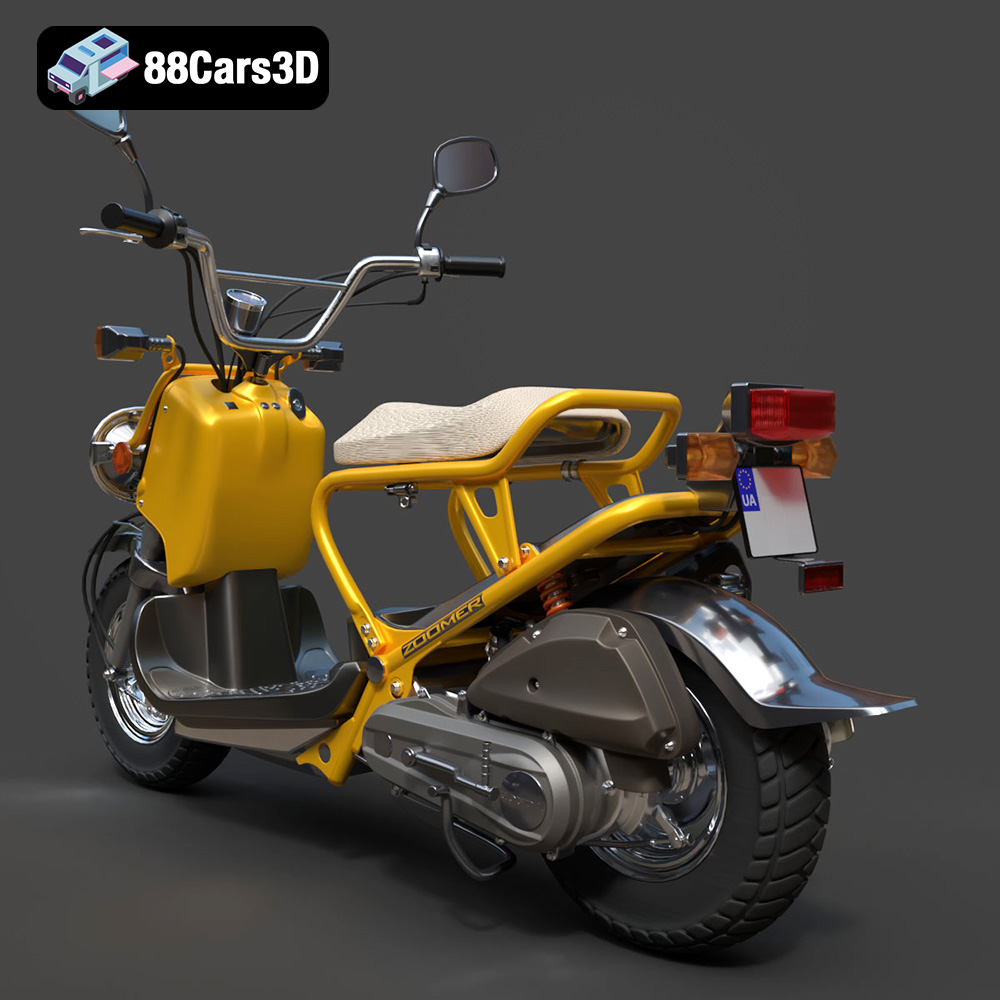
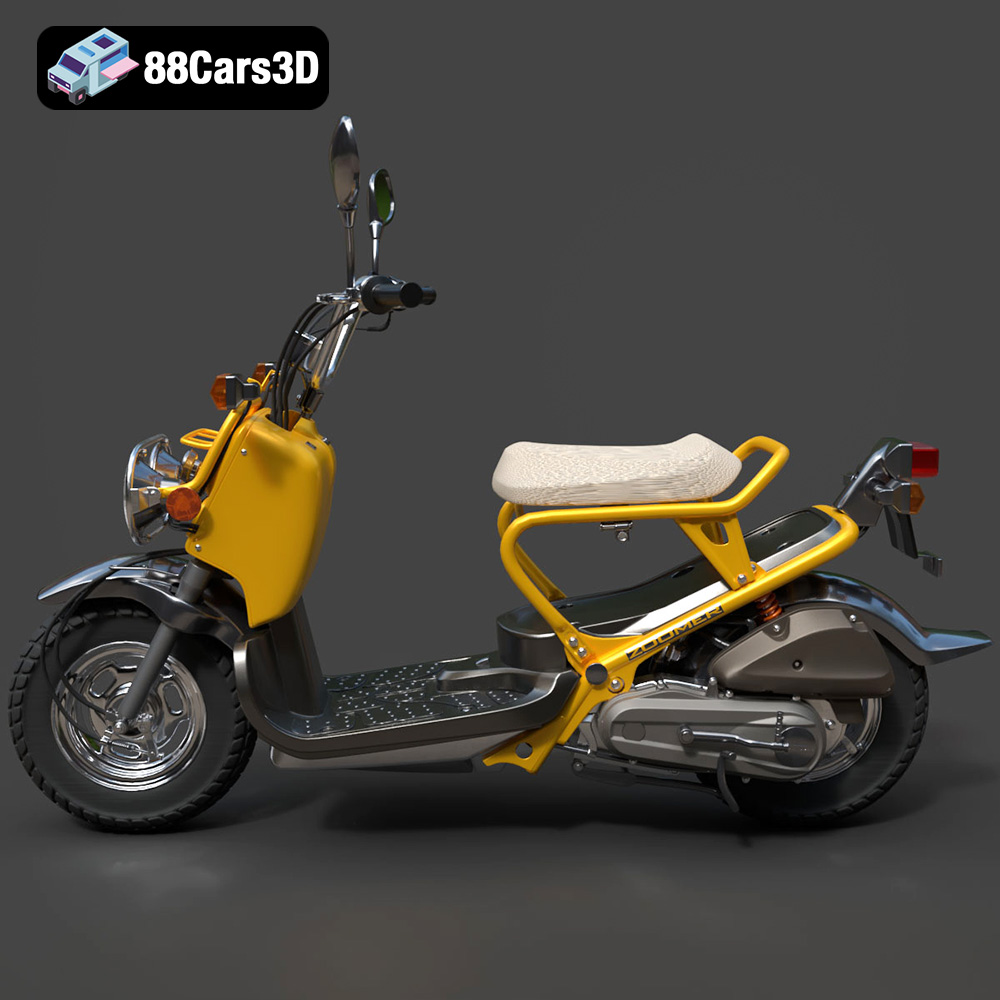
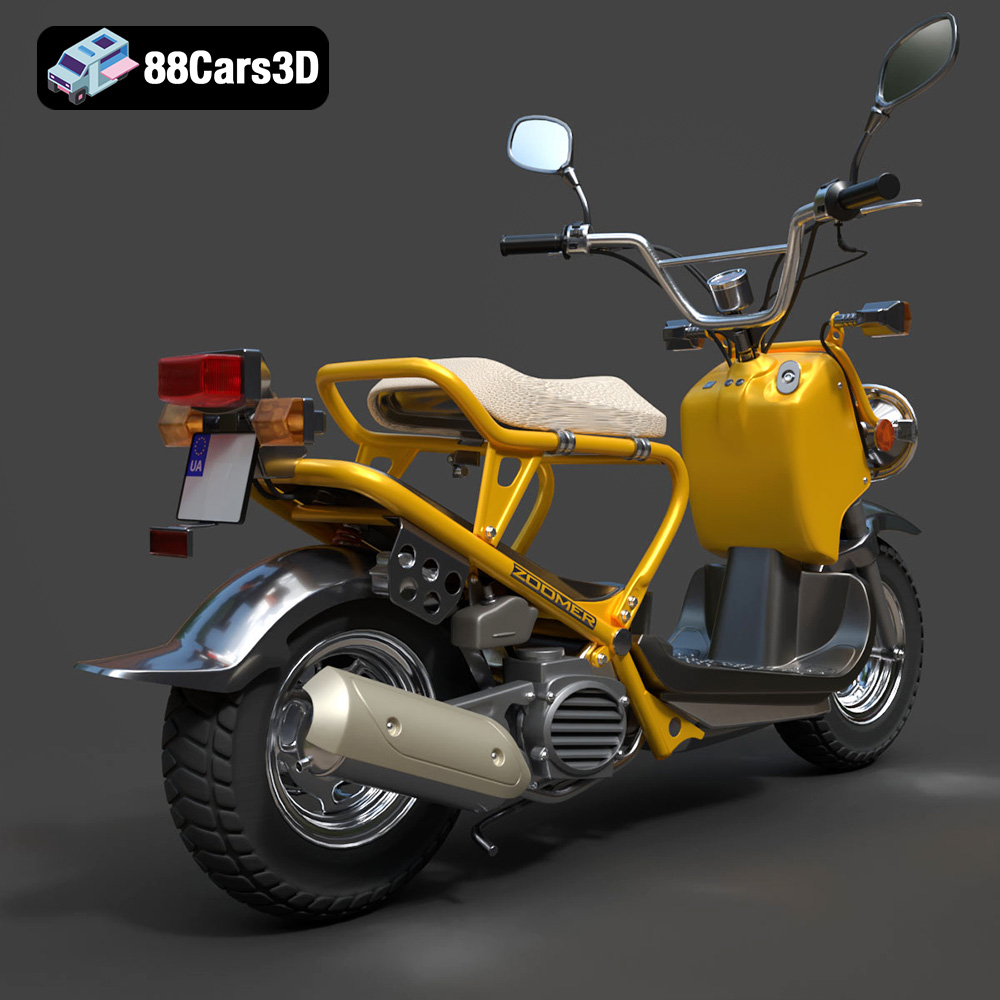
Discover the realistic Honda Zoomer 50 2005 3D Model, meticulously crafted to represent the iconic rugged scooter. This model delivers unparalleled precision, making it an excellent choice for detailed visualizations and dynamic projects.
Key features include clean geometry, realistic materials, and professional quality construction. The structural components are modeled with strict attention to detail, ensuring seamless integration into varied environments.
This 3D model is perfect for diverse applications, including game development, rendering, AR/VR experiences, and visualization. Whether used in a street scene simulation or a dedicated showcase, it provides exceptional results.
Available file formats include:
$39.99
.arvr
.blend
.car3dmodel
.fbx
.gameasset
.glb
.honda
.max
.moped
.motorcycle
.obj
.ply
.rendering
.scooter
.simulation
.stl
.unreal
.zoomer50