Get 20% OFF All Premium 3D & STL Models!

In the dynamic world of digital content creation, the foundation of any truly compelling visual experience lies in the quality of its assets. From breathtaking cinematic sequences to immersive real-time simulations, and from detailed product visualizations to cutting-edge AR/VR environments, the demand for meticulously crafted 3D models has never been higher. Automotive design, in particular, thrives on precision and realism, requiring models that capture every curve, every reflection, and every nuance of a vehicle’s character.
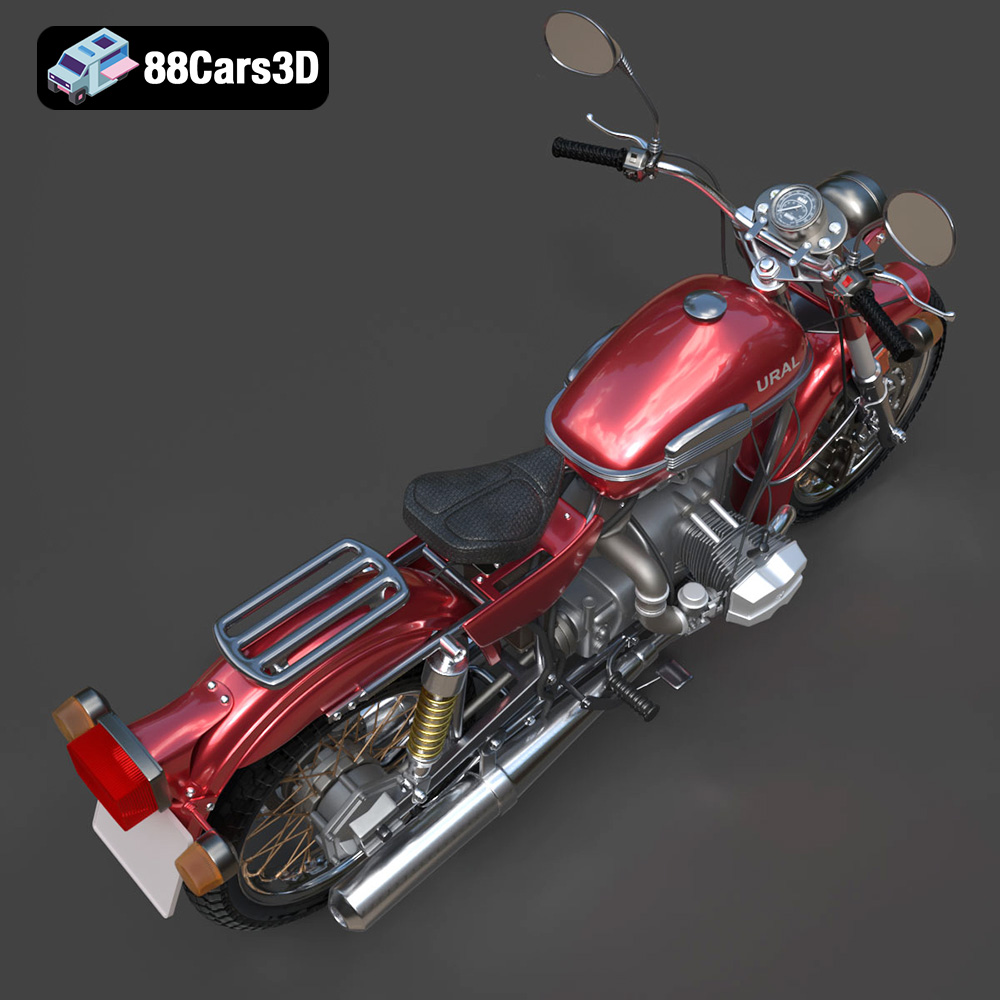
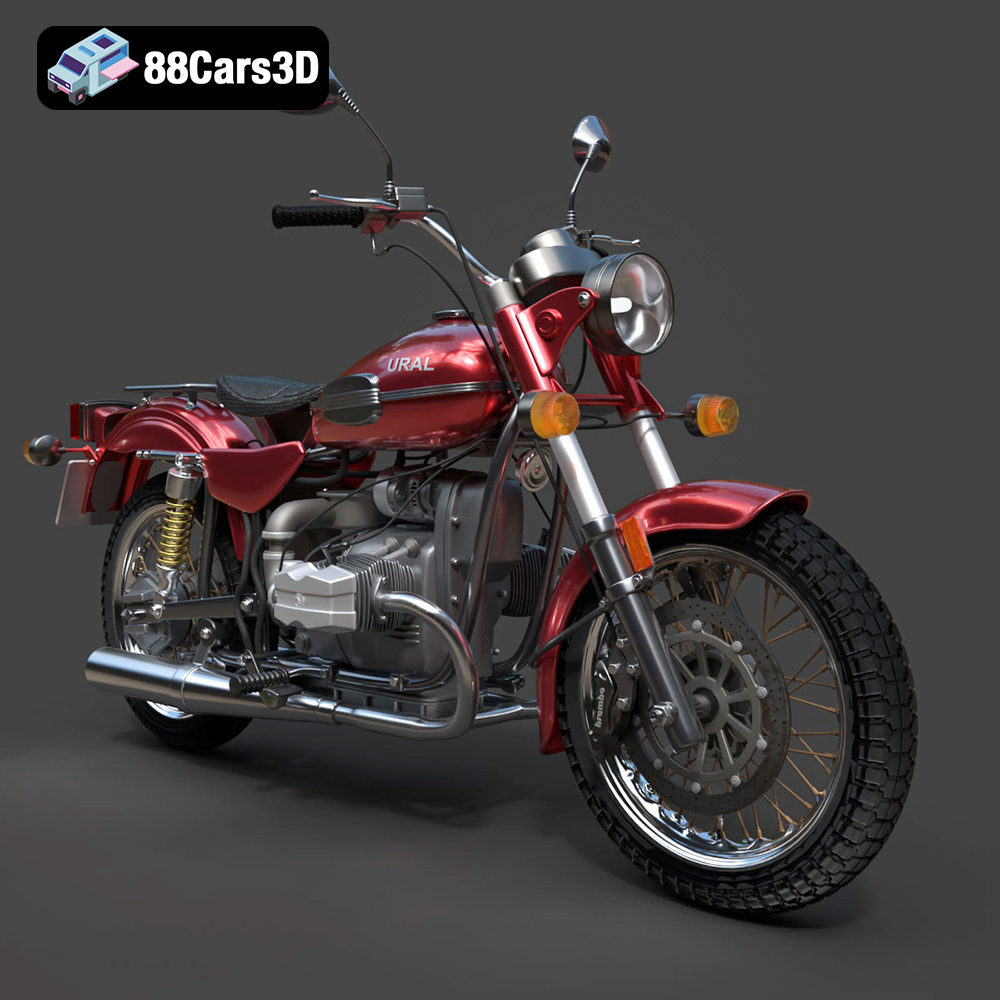
At the heart of many professional pipelines, a high-fidelity 3D car model serves as the cornerstone, enabling artists and developers to bring their visions to life with unparalleled authenticity. Whether you’re an automotive designer showcasing a new concept, a game developer building a realistic racing environment, or an architect integrating vehicles into a visualization, the right 3D model can significantly elevate your project. Today, we’re diving deep into the technical intricacies and creative potential unlocked by such assets, using the exceptional Ural Solo sT 3D Model as our prime example. This carefully crafted digital asset, available on 88cars3d.com, encapsulates the rugged design and iconic presence of the Ural Solo sT, delivering exceptional detail suitable for a vast array of demanding digital pipelines and rendering setups.
One of the most crucial aspects of working with 3D car models is understanding the various file formats available and their specific applications. A high-quality model, like the Ural Solo sT, often comes packaged with multiple formats, ensuring maximum compatibility and utility across different software and platforms. This versatility is key for professional workflows, allowing seamless integration whether you’re focusing on rendering, game development, AR/VR, or 3D printing.
The .blend format is native to Blender, the popular open-source 3D creation suite. When you receive a .blend file, you’re not just getting the raw mesh; you’re typically getting a fully editable Blender scene complete with materials, textures, lighting setups, and sometimes even animation rigs. This makes it incredibly powerful for artists who use Blender, as they can directly open the file and immediately begin tweaking, re-lighting, or re-texturing the model without any import issues. For the Ural Solo sT 3D Model, the .blend file provides a ready-to-render scene, saving significant setup time.
.fbx (Filmbox) is a proprietary file format owned by Autodesk and is widely considered an industry standard for exchanging 3D data between various software applications. It’s particularly ideal for game engines like Unreal Engine and Unity, as it efficiently stores not only geometric data (meshes, polygons) but also materials, textures, animations, and even skeletal data. Its robust nature makes it an excellent choice for real-time pipelines where maintaining data integrity across different tools is paramount. When working with the Ural Solo sT for game development, the .fbx format ensures all necessary components transfer smoothly.
The .obj (Wavefront OBJ) format is a simple, universal geometry definition file. It’s supported by virtually all 3D software applications, making it a truly cross-software compatible format. While it doesn’t typically store advanced scene information like lights or cameras, it excels at defining the geometric shape of the model, including vertices, faces, normals, and UV coordinates. Textures and material properties are usually referenced in a separate .mtl (material library) file. For general 3D work or when you need a clean mesh to start from in any software, the .obj version of the Ural Solo sT is an excellent, reliable choice.
.glb (GL Transmission Format Binary) is the binary version of glTF, a royalty-free specification for the efficient transmission and loading of 3D scenes and models by applications. It’s rapidly becoming the “JPEG of 3D” due to its optimization for AR, VR, and browser-based display. A .glb file packages all necessary data (geometry, materials, textures, animations) into a single file, making it incredibly easy to share and integrate into web applications or augmented reality experiences. The Ural Solo sT’s .glb format is perfect for showcasing it in a browser or bringing it into a mobile AR app.
The .stl (STereoLithography) format is the standard file type for 3D printing. It represents a 3D model as a series of connected triangles, defining only the surface geometry of a three-dimensional object without any color or texture information. For manufacturing and rapid prototyping, .stl is essential. If you plan to 3D print a miniature version of the Ural Solo sT, the .stl file provided ensures a watertight, manifold mesh ready for your additive manufacturing process.
.ply (Polygon File Format, or Stanford Triangle Format) is a file format for storing graphical objects that are described as a collection of polygons. It’s often used in CAD, 3D scanning, and scientific visualization due to its ability to store a wide range of properties for each vertex and face, including color, transparency, normals, and texture coordinates. It’s a precision mesh format suitable for applications requiring detailed analysis or highly specific data representation of the Ural Solo sT.
The .unreal format, or more accurately, an asset specifically configured for Unreal Engine, means the model has been optimized, scaled, and potentially set up with materials within the Unreal Engine environment itself. While not a standalone file type like .fbx, having an “Unreal-ready” asset for the Ural Solo sT implies it comes pre-configured for seamless import and immediate use in an Unreal project, often leveraging its powerful material editor and rendering capabilities.
Lastly, the .max format is native to Autodesk 3ds Max, a leading software for 3D modeling, animation, rendering, and visualization. Similar to .blend, a .max file contains the entire scene data, including geometry, materials, lighting, cameras, and animation. For professionals heavily invested in the Autodesk ecosystem, the .max version of the Ural Solo sT offers complete editability and access to 3ds Max’s extensive toolset for detailed rendering and complex animation sequences.
Having the Ural Solo sT 3D Model available in such a comprehensive array of formats dramatically enhances its utility, allowing creators to pick the perfect file for their specific needs without compromise, reinforcing the value of high-quality assets from 88cars3d.com.
Automotive rendering is an exacting discipline, demanding a perfect blend of technical expertise and artistic vision. The goal is often photorealism, where the digital car becomes indistinguishable from a photograph of its real-world counterpart. This is where a meticulously crafted 3D model like the Ural Solo sT truly shines. Its clean geometry, accurate proportions, and realistic materials provide the perfect canvas for stunning visualizations.
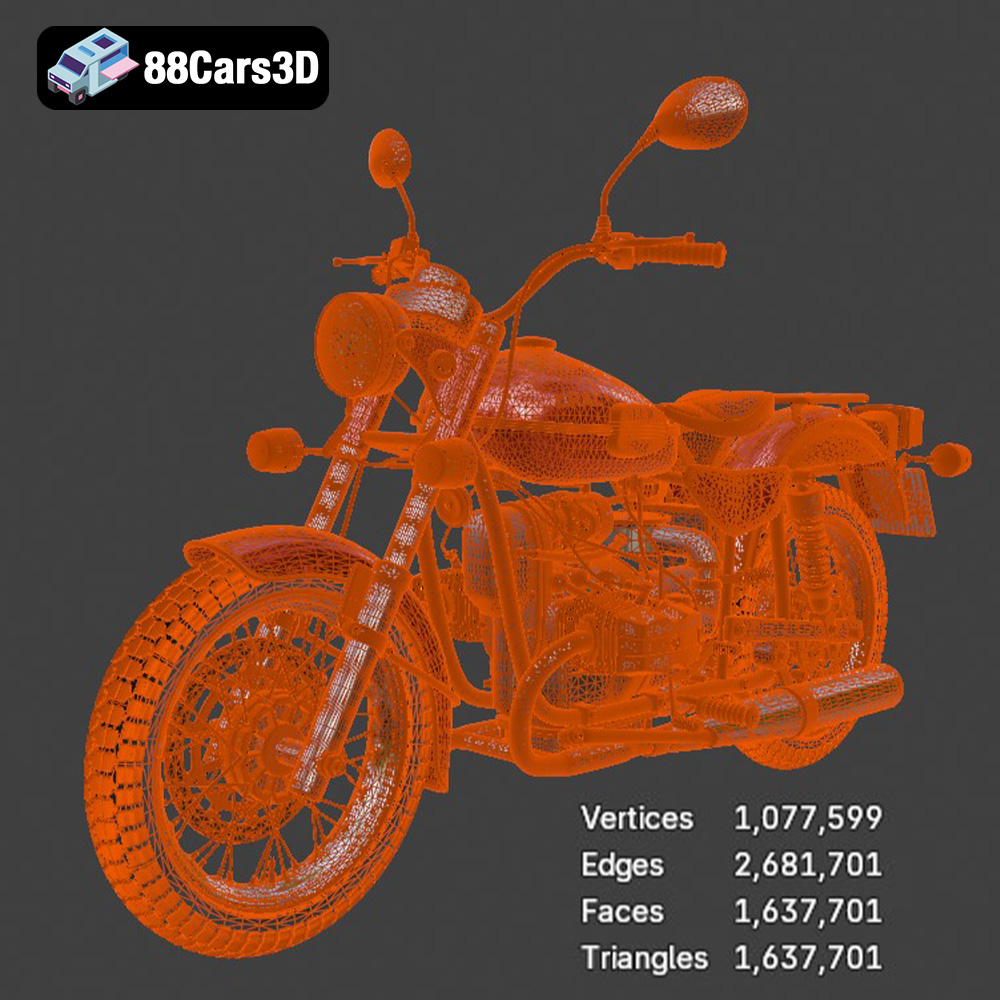
The foundation of photorealistic rendering lies in physically-based rendering (PBR) materials. PBR workflows simulate how light interacts with surfaces in the real world, accounting for properties like albedo (base color), roughness, metallicness, normal maps, and ambient occlusion. For the Ural Solo sT 3D Model, this means carefully crafted textures and shaders that mimic the paint’s reflectivity, the chrome’s gleam, the tire rubber’s subtle texture, and the intricate details of the engine components. Using professional rendering engines like V-Ray, Corona Renderer (for 3ds Max), or Cycles/Eevee (for Blender), artists can apply these PBR materials to the model, bringing an incredible depth of realism to every surface. The well-structured topology of the Ural Solo sT ensures flawless subdivision, allowing for incredibly smooth surfaces even in extreme close-up shots, which is crucial for capturing the essence of its iconic design.
Lighting is arguably the most critical element in rendering, capable of transforming a good model into an exceptional render. Professional automotive rendering often employs a combination of techniques:
The interaction of light with the model’s realistic materials is what ultimately sells the illusion of reality, making every reflection and shadow count towards the overall aesthetic.
Game development presents a unique set of challenges compared to static rendering, primarily due to the need for real-time performance. High-quality 3D car models are essential for creating immersive gaming experiences, but they must be optimized to run smoothly within game engines like Unreal Engine and Unity. The Ural Solo sT 3D Model is built with professional quality in mind, making it an excellent choice for a variety of demanding digital pipelines, including interactive gaming.
When incorporating a 3D model into a game engine, optimization is paramount. While a model for a cinematic render might have millions of polygons, a game asset needs to balance visual fidelity with performance constraints.
Integrating a 3D car model like the Ural Solo sT into game engines typically follows a well-defined workflow:
The quality of the initial 3D model, such as those found on 88cars3d.com, significantly streamlines this process, allowing game developers to focus on gameplay and interaction rather than asset cleanup.
The applications for high-quality 3D car models extend far beyond static renders and traditional games. Augmented Reality (AR), Virtual Reality (VR), and complex simulation environments are rapidly growing fields that demand equally robust and optimized 3D assets. The versatility of the Ural Solo sT 3D Model makes it perfect for these diverse applications.
AR/VR experiences aim to create a sense of presence and immersion, which relies heavily on high-performance 3D models.
Simulation, whether for training, engineering analysis, or autonomous vehicle development, demands an extremely high degree of accuracy and realism from its 3D assets.
The journey of a 3D model doesn’t always end on a screen. For many industries, the ability to physically manifest a digital design is crucial. 3D printing, or additive manufacturing, has revolutionized prototyping, custom fabrication, and even end-use product creation. High-quality 3D car models, like the Ural Solo sT, are perfect candidates for this transition from digital to physical.
Not every 3D model is immediately ready for 3D printing. Specific criteria must be met to ensure a successful print:
3D printing plays a vital role in the automotive industry, from concept design to functional prototypes:
The availability of the Ural Solo sT 3D Model in the .stl format broadens its utility significantly, bridging the gap between digital design and tangible reality.
In a saturated market of digital assets, discerning creators understand that not all 3D models are created equal. The difference between a generic, low-quality model and a meticulously crafted, professional-grade asset can be the difference between a mediocre project and an award-winning one. This is precisely where marketplaces like 88cars3d.com distinguish themselves.
Choosing premium 3D car models from 88cars3d.com offers several undeniable advantages:
For anyone serious about producing top-tier automotive rendering, game assets, or advanced visualizations, the value of reliable, high-quality 3D car models from a trusted source like 88cars3d.com cannot be overstated. They are not just models; they are foundations for innovation and keys to unlocking new creative possibilities.
The world of 3D modeling is constantly evolving, but the core principles of quality, precision, and versatility remain timeless. As we’ve explored, a truly exceptional 3D asset, such as the Ural Solo sT 3D Model, serves as a cornerstone for success across a myriad of digital applications. From producing stunning photorealistic renders and crafting immersive game environments to developing cutting-edge AR/VR experiences and facilitating physical prototypes through 3D printing, the impact of a well-engineered model is profound.
The availability of such models in a comprehensive range of file formats – from editable .blend and .max scenes to game-engine-ready .fbx and .unreal, web-optimized .glb, universal .obj, and 3D print-ready .stl – empowers creators with unparalleled flexibility. It minimizes technical hurdles and maximizes creative output, allowing professionals to focus on artistic expression and project innovation rather than foundational asset creation.
Ultimately, investing in high-quality 3D car models from reputable sources like 88cars3d.com is a strategic decision that pays dividends in both efficiency and visual excellence. The Ural Solo sT 3D Model stands as a testament to the level of detail and professional quality available, ready to integrate seamlessly into your workflow and elevate your next project to new heights of realism and immersion.
Experience true realism with the Ural Solo sT 3D Model. This carefully crafted digital asset captures the rugged design and iconic presence of the Ural Solo sT, delivering exceptional detail for your projects. Ideal for both close-up shots and expansive environments, this model brings authentic structural precision to any scene.
Built with professional quality in mind, the model features clean geometry, accurate proportions, and realistic materials. The well-structured topology ensures smooth performance and flawless subdivision, making it an excellent choice for a variety of demanding digital pipelines and rendering setups.
This versatile 3D model is perfect for diverse applications, including game development, automotive rendering, AR/VR experiences, and simulation visualization. It integrates seamlessly into your workflow, providing a ready-to-use solution for creators, designers, and developers alike.
$39.99
.arvr
.blend
.car3dmodel
.cruiser
.fbx
.gameasset
.glb
.max
.motorcycle
.obj
.ply
.rendering
.simulation
.solost
.stl
.unreal
.ural