Get 20% OFF All Premium 3D & STL Models!

In the vibrant world of 3D visualization, automotive models stand as a cornerstone, embodying a unique blend of engineering precision and artistic flair. From the sleek lines of a modern supercar to the nostalgic curves of a vintage classic, these digital assets are indispensable across a multitude of industries. Whether you’re a game developer crafting immersive open worlds, an architect visualizing urban streetscapes, a marketing professional creating captivating campaigns, or an AR/VR designer building interactive experiences, high-quality 3D car models are the engines that drive visual excellence.
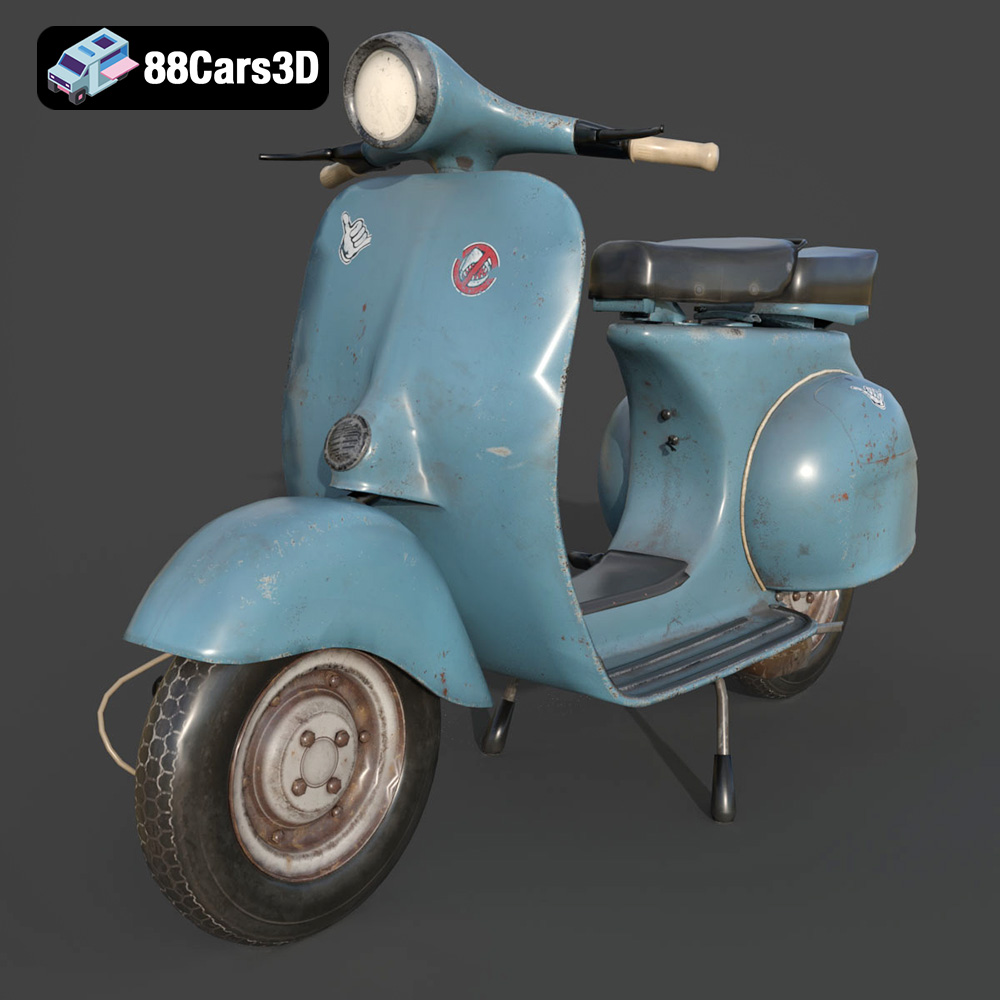
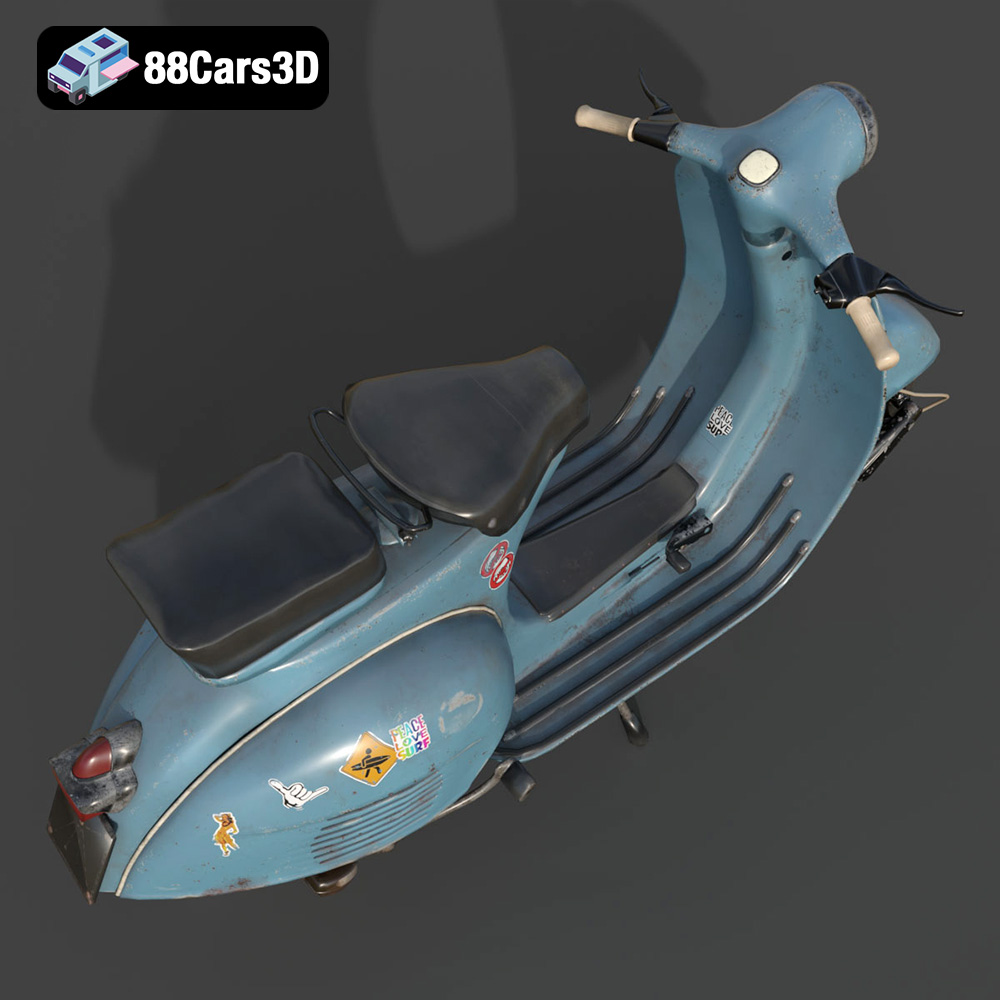
At 88cars3d.com, we understand this critical demand for detail and versatility. That’s why we offer a meticulously curated selection of 3D vehicle assets designed to elevate any project. Take, for instance, our featured Vintage Vespa 3D Model Download. This isn’t just a simple mesh; it’s a digital homage to Italian “La Dolce Vita,” meticulously recreated to capture the iconic design heritage of a timeless classic. With its faithfully preserved pressed steel monocoque chassis, sweeping side cowls, and signature step-through frame, this model provides an immediate injection of character and authenticity into any scene. The attention to detail extends from the authentic retro headlamp down to the detailed engine side casing and vintage exhaust system, ensuring every angle tells a story of classic elegance. Such an asset doesn’t just fill a space; it defines it, setting a mood and anchoring your narrative in a rich historical context.
The choice of a 3D model file format is far more than a technicality; it’s a strategic decision that impacts compatibility, workflow efficiency, and the ultimate utility of your digital asset. Different formats excel in different scenarios, and understanding their strengths and limitations is crucial for any professional working with 3D content. Our Vintage Vespa 3D Model, for example, is available in a comprehensive suite of formats, ensuring maximum flexibility for any project requirement.
The .blend file is Blender’s native format, offering a complete, fully editable scene. When you download a .blend file, you’re not just getting the model geometry; you’re getting the entire Blender project. This typically includes materials, textures, lighting setups, camera positions, animations, modifiers, and even custom scripts. It’s the ideal format for Blender users who need full control over the asset, allowing for easy modifications, re-texturing, or integration into existing Blender scenes without any loss of data or fidelity. It’s perfect for artists who want to delve deep into the model’s construction or adapt it extensively.
.fbx (Filmbox) is arguably the most widely adopted proprietary 3D file format for exchanging models between different 3D software applications and game engines. Developed by Autodesk, FBX supports a vast array of data, including geometry, materials, textures, animations, rigging, and even entire scenes. It’s the go-to format for pipelines involving Unreal Engine, Unity, 3ds Max, Maya, and Cinema 4D, making it incredibly versatile for game development, architectural visualization, and cinematic rendering. Its robust support for animation and skeletal data makes it indispensable for animated characters or vehicles with moving parts, like the articulated wheels and suspension of the Vintage Vespa.
.obj (Wavefront OBJ) is a universal, open-standard format renowned for its simplicity and broad compatibility. It primarily stores geometric data – vertices, normals, UV coordinates, and faces. While it doesn’t embed textures or animations directly, it typically references external .mtl (material template library) files for basic material properties and texture paths. OBJ files are excellent for static meshes and are supported by virtually every 3D software application, making them a safe choice for cross-software compatibility when complex animations or advanced material setups are not a primary concern. It’s a reliable choice for foundational geometry import.
.glb (GL Transmission Format Binary) is a modern, royalty-free format specifically designed for efficient transmission and loading of 3D scenes and models on the web and in AR/VR applications. It’s a binary format that embeds all necessary assets—geometry, materials, textures, animations—into a single, self-contained file. This makes .glb incredibly efficient for browser-based viewers, mobile AR experiences, and platforms like Google Poly, ensuring fast loading times and minimal network requests. For projects targeting immersive virtual showrooms or configurators, the Vintage Vespa 3D Model in .glb format is an optimized powerhouse.
.stl (Stereolithography) is the de facto standard format for 3D printing. It represents a 3D model as a series of connected triangles, describing only the surface geometry of an object without color, texture, or other properties. While simple, its ubiquity in manufacturing and rapid prototyping makes it essential for physical output. For hobbyists or professionals looking to bring the Vintage Vespa into the physical realm, the .stl version provides the triangulated mesh ready for slicing and printing, ensuring that the classic lines can be appreciated tangibly.
.ply (Polygon File Format) is a flexible format often used for storing 3D data from 3D scanners, CAD applications, and scientific visualization tools. Unlike STL, PLY can store various properties beyond just geometry, including color per vertex or face, normals, transparency, and even material properties. It’s a more detailed mesh format, making it suitable for applications requiring higher precision or additional data points alongside the mesh, such as reverse engineering or detailed analysis of geometric forms.
While “.unreal” isn’t a standalone file format in the same way FBX or OBJ are, its inclusion signifies an asset specifically prepared and optimized for direct use within Unreal Engine. This typically means the model has been imported into Unreal, properly scaled, had its materials and textures set up, collisions generated, and potentially even LODs (Levels of Detail) configured. It often implies a direct Unreal Engine project file or asset package that can be dropped into an existing Unreal project with minimal setup, representing significant time savings for game developers and real-time visualization artists. The Vintage Vespa 3D Model, being “game-ready,” emphasizes this ease of integration into demanding real-time environments.
Similar to .blend for Blender, the .max file is the native format for Autodesk 3ds Max. It contains an entire 3ds Max scene, including the model geometry, modifiers stack, materials, textures, lighting, cameras, animation data, and render settings. For artists and studios whose primary workflow revolves around 3ds Max, the .max file offers the highest degree of editability and direct integration, preserving all the nuances and specific setups created within the software. It’s perfect for detailed rendering projects or complex scene construction within the 3ds Max ecosystem.
The creation of a truly compelling 3D asset goes far beyond simply building geometry. It involves a deep understanding of the subject, an eye for historical detail, and a commitment to technical excellence. The Vintage Vespa 3D Model from 88cars3d.com exemplifies this philosophy, capturing the very essence of its real-world counterpart with remarkable fidelity.
What sets this model apart is its unwavering commitment to authenticity. The developers have gone to great lengths to recreate the Vintage Vespa’s distinctive silhouette, from its iconic pressed steel monocoque chassis to the beautifully sweeping side cowls and the signature step-through frame. These aren’t generic vehicle parts; they are specific design elements that define the Vespa’s identity. Furthermore, the model includes a detailed 2-stroke engine casing complete with characteristic cooling fins and a classic curved exhaust system with authentic mounting. The iconic round headlamp and retro taillight housing are faithfully reproduced, along with vintage stamped steel wheels fitted with classic tread tires. Even the signature single-sided trailing-link front suspension has been accurately modeled, providing not just visual realism but also functional accuracy for animation purposes.
The attention to detail isn’t limited to the exterior. The cockpit and interior features of the Vintage Vespa 3D Model have been designed to offer an equally immersive experience. The authentic sprung saddle features beautifully stitched details, inviting a closer look. The chrome tubular handlebar, complete with iconic grips and switches, the vintage analog instrument cluster and speedometer, and the original clutch lever, brake lever, and twist-gear selector all contribute to a sense of genuine retro craftsmanship. For game developers, this level of detail is critical, as optimized geometry for first-person POV ensures that players will experience a convincing and engaging interaction with the scooter, whether they’re riding it or simply admiring it in a virtual garage.
The true value of a high-quality 3D model like the Vintage Vespa lies in its seamless integration into diverse professional pipelines. Developers and artists need assets that are not just beautiful, but also production-ready. This model has been engineered with versatility in mind, making it an ideal choice for a variety of software environments.
For users of Autodesk 3ds Max, the included .max file offers maximum flexibility. Artists can directly open the scene, which often comes with pre-configured materials and possibly even basic lighting. From here, the Vintage Vespa 3D Model can be easily integrated into complex architectural visualizations, product showcases, or cinematic sequences. Imagine this classic scooter parked elegantly in front of an Italian villa in an arch-viz render, or starring in a vintage-themed animation. With 3ds Max’s robust rendering engines like V-Ray or Corona, artists can achieve photorealistic results, leveraging the model’s detailed geometry and accurate materials to cast realistic reflections on its polished surfaces and capture the subtle imperfections that bring a render to life. The separate wheels, suspension, and steering components are especially useful for animating subtle movements or incorporating it into a dynamic scene.
Blender users benefit from the native .blend file, providing full access to the model’s structure within Blender’s powerful open-source ecosystem. Artists can quickly append or link the Vespa into their existing projects. This allows for rapid scene composition, whether it’s populating an urban environment, creating a stylized diorama, or even using it as a prop in a short film. Blender’s Cycles and Eevee renderers can then be utilized to achieve stunning visuals, from highly realistic ray-traced renders to real-time PBR setups. The optimized topology, with its balanced triangle count, ensures smooth viewport performance even in crowded scenes, facilitating creative iteration without performance bottlenecks.
The “game-ready” designation of the Vintage Vespa 3D Model is particularly significant for Unreal Engine developers. The inclusion of an .unreal or optimized .fbx file, combined with its ~150,000 triangle count, strikes an excellent balance between visual fidelity and real-time performance. For open-world games, racing titles, or interactive simulations, this model can be imported directly, often with correctly set up materials and pivot points. The proper pivot setup for steering, wheel rotation, and suspension travel is critical for implementing realistic vehicle physics and animations within Unreal Engine. This means less time spent on asset preparation and more time on gameplay development, making it an invaluable asset for creating immersive and responsive virtual environments.
A truly versatile 3D asset is one that transcends its initial purpose, finding utility across various digital frontiers. The Vintage Vespa 3D Model is a prime example, designed with a breadth of applications in mind, from interactive experiences to physical fabrication.
The game-ready nature of this model makes it an indispensable asset for developers. With an optimized polycount of approximately 150,000 triangles, it maintains high-end visual realism without sacrificing the critical real-time performance demanded by modern game engines like Unreal and Unity. Imagine populating the bustling streets of a retro-futuristic city, adding a touch of European charm to an adventure game, or featuring it as a collectible vehicle in a racing title. The separate, animatable components (wheels, suspension, steering) mean it’s ready for physics-based interactions and complex animations, breathing life into any virtual environment. This level of optimization translates directly into smoother frame rates and a more immersive player experience.
Augmented Reality and Virtual Reality are rapidly expanding fields where high-quality 3D models are paramount for creating believable and engaging experiences. The Vintage Vespa 3D Model, particularly in its optimized .glb format, is perfect for virtual showrooms, interactive configurators, or mobile AR experiences. Users could virtually place the Vespa in their living room, examine it from every angle, or even customize its colors in real-time. The meticulous detailing ensures that even under close inspection in VR, the model holds up, maintaining a strong sense of presence and realism, which is crucial for suspension of disbelief in immersive environments.
For hobbyists, collectors, or designers looking to bridge the gap between digital and physical, the inclusion of the .stl format opens up the world of 3D printing. The model is prepared for physical fabrication, with recommendations for scaling (1:12 / 1:18 / 1:24), layer height, wall thickness, infill, and crucially, support structures and print orientation. Resin printing is recommended for capturing the fine details, ensuring that the elegant curves and intricate components of the Vintage Vespa are faithfully reproduced. This allows enthusiasts to own a tangible piece of automotive history, perhaps as a display model or a component in a larger diorama, adding another dimension to the model’s utility.
In the world of 3D, striking the perfect balance between visual fidelity and performance is a constant challenge. The Vintage Vespa 3D Model demonstrates a mastery of this balance, making it a truly professional-grade asset ready for demanding projects.
The model boasts approximately 150,000 triangles, a figure carefully chosen to deliver stunning visual fidelity without overbearing real-time engines. This “game-ready” optimization is critical. A model with too few polygons might appear blocky or lack detail, especially in close-up shots. Conversely, an excessively high polycount can severely impact frame rates, leading to stuttering or slow loading times, particularly in interactive applications like games or AR/VR. The 150,000 triangle count for this Vespa ensures that its classic curves and intricate details, from the engine fins to the handlebar grips, are smoothly rendered while remaining efficient enough for demanding real-time environments. This intelligent topology means cleaner meshes, easier UV unwrapping, and more predictable deformation if animated.
Accuracy extends beyond just visual details to the fundamental dimensions and functionality of the model. Built to real-world scale, the Vintage Vespa 3D Model seamlessly integrates into scenes alongside other assets, eliminating the need for tedious scaling adjustments. This is particularly important for architectural visualization, where precise spatial relationships are key, and for simulations where physical accuracy matters. Furthermore, the proper pivot setup for steering, wheel rotation, and suspension travel is a subtle yet powerful technical advantage. This allows animators and game developers to easily articulate the scooter’s moving parts with realistic motion, rather than having to manually adjust pivot points, saving countless hours in the animation pipeline and enabling dynamic interactions within game engines.
While the product description highlights the geometry, the underlying strength of a 3D model also relies heavily on its texturing and material work. The model implicitly uses well-crafted UV maps to allow for the application of high-resolution textures. These textures, combined with PBR (Physically Based Rendering) materials, give the Vespa its lifelike appearance. PBR materials accurately simulate how light interacts with surfaces, accounting for properties like albedo, roughness, metallicness, and normal maps to create realistic reflections, shadows, and surface details. This ensures that whether rendered in an offline engine like V-Ray or in real-time within Unreal Engine, the Vespa will react to light in a physically accurate and visually convincing manner, showcasing its vintage paint, chrome accents, and rubber tires with remarkable fidelity.
A high-quality 3D model serves as an excellent foundation, but true creative power often comes from the ability to customize and adapt it to specific project requirements. The Vintage Vespa 3D Model offers numerous opportunities for personalization, enabling artists and designers to truly make it their own.
One of the most immediate and impactful customization options is changing the body and tank colors. Whether you want to restore it to authentic factory colors like the classic Rosso Corsa or Verde Pastello, or envision it in a bold, custom finish, the model’s material setup allows for easy alteration. Beyond color, modifying material finishes—from a high-gloss sheen to a matte contemporary look, or adding metallic flake for a premium feel—can dramatically alter the scooter’s character. This flexibility is invaluable for marketing campaigns where a brand might have specific color palettes, or for game environments where environmental wear and tear needs to be simulated through material roughness adjustments.
Adapting the lighting is crucial for seamlessly integrating the Vespa into different environments. A sunny outdoor scene in a Mediterranean town will require different lighting than a moody, rainy urban nightscape. The model’s materials are designed to respond realistically to various lighting conditions, allowing artists to play with different key lights, fill lights, and ambient occlusion settings to achieve the desired mood and atmosphere. Furthermore, the ability to modify tire textures—swapping classic street treads for a more rugged, off-road variant, for instance—can subtly yet effectively change the narrative of the model, allowing it to fit into diverse settings from dusty country roads to pristine city streets.
The intelligent separation of components, such as wheels, suspension, and steering, further enhances customization and animation potential. This modularity means artists aren’t limited to a static pose. They can animate the Vespa driving, leaning into turns, or even showing off its suspension travel. For complex projects, this also allows for easy replacement of parts – perhaps adding a custom luggage rack or a different mirror design, if required. This level of granular control empowers creators to not just use the model, but to actively build upon it, ensuring it remains relevant and adaptable across a multitude of creative endeavors.
In the dynamic world of 3D content creation, the demand for high-quality, versatile assets is constant. The Vintage Vespa 3D Model Download stands as a testament to meticulous craftsmanship and technical foresight, delivering an asset that is as visually stunning as it is functionally adaptable. We’ve explored how its authentic design captures the spirit of Italian heritage, from its iconic chassis to the intricate cockpit details. We’ve delved into the strategic importance of various file formats – from the editable .blend and .max files to the industry-standard .fbx, the web-optimized .glb, the 3D print-ready .stl, and the game-ready .unreal package – emphasizing the model’s readiness for any project.
Its optimized topology and balanced polycount (~150,000 triangles) ensure seamless integration into professional workflows, whether you’re aiming for cinematic realism in 3ds Max, artistic freedom in Blender, or real-time performance in Unreal Engine. Beyond traditional rendering, its versatility extends to game development, immersive AR/VR experiences, and even tangible 3D prints, proving its value across diverse digital and physical applications. Furthermore, the inherent customization options for colors, finishes, and environmental integration empower artists to truly make this classic scooter their own.
Investing in a premium 3D asset like this Vintage Vespa 3D Model from 88cars3d.com isn’t just about acquiring geometry; it’s about gaining a piece of digital art engineered for efficiency, realism, and boundless creative potential. It’s a foundational element that can elevate your projects, imbue them with character, and ensure your visualizations resonate with an audience. Explore this and other exceptional 3D car models at 88cars3d.com, and bring a touch of timeless elegance to your next creation.
Capture the essence of Italian La Dolce Vita with this meticulously crafted Vintage Vespa 3D model. Celebrating decades of iconic design heritage, this classic scooter is immediately recognizable by its pressed steel monocoque chassis, beautifully sweeping side cowls, and signature step-through frame. From the authentic retro headlamp to the detailed engine side casing and vintage exhaust system, every element has been faithfully recreated to preserve the timeless elegance of this two-wheeled legend. Engineered for maximum versatility, this model features highly optimized topology with a balanced triangle count (~150,000 triangles), delivering stunning visual fidelity without compromising real-time performance. Whether you are building an interactive environment, rendering a highly realistic cinematic, or designing an immersive VR experience, this game-ready asset provides exceptional detail right out of the box. Perfect for urban environments, European street scenes, retro dioramas, and lifestyle visualizations.
$39.99
.blend
.fbx
.glb
.max
.obj
.ply
.rendering
.scooter
.stl
.unreal
.vespa
classic-scooter
game asset
game-ready
low-poly
motorcycle-3d-model
optimized
retro-vehicle
vintage-vespa
VR/AR