Get 20% OFF All Premium 3D & STL Models!

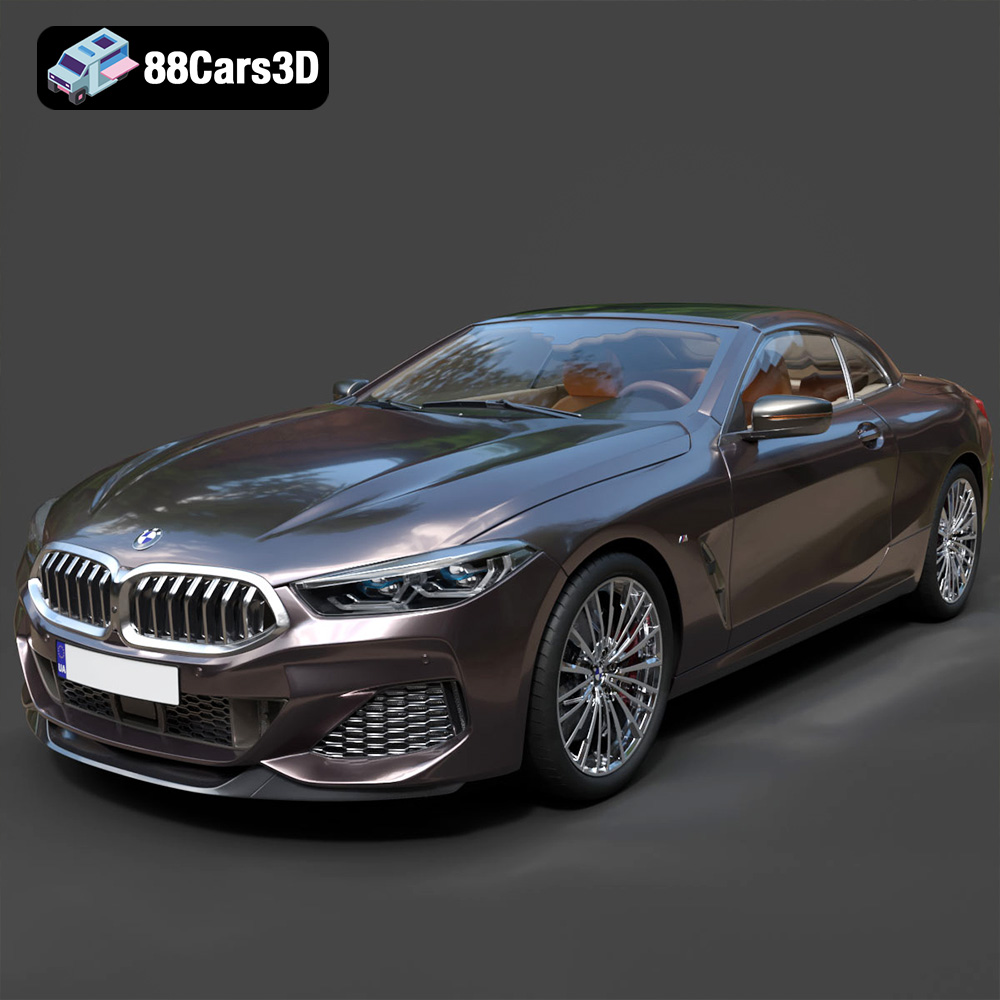
In the dynamic worlds of automotive design, game development, cinematic rendering, and advanced visualization, the quality of your 3D assets can make or break a project. Precision, fidelity, and versatility are paramount. Professionals constantly seek models that not only look stunning but are also technically robust, seamlessly integrating into complex pipelines. Today, we’re taking an in-depth look at what defines a truly exceptional automotive 3D model, using a prime example from 88cars3d.com: the BMW 8-Series G14 Convertible M850i 2019 3D Model.
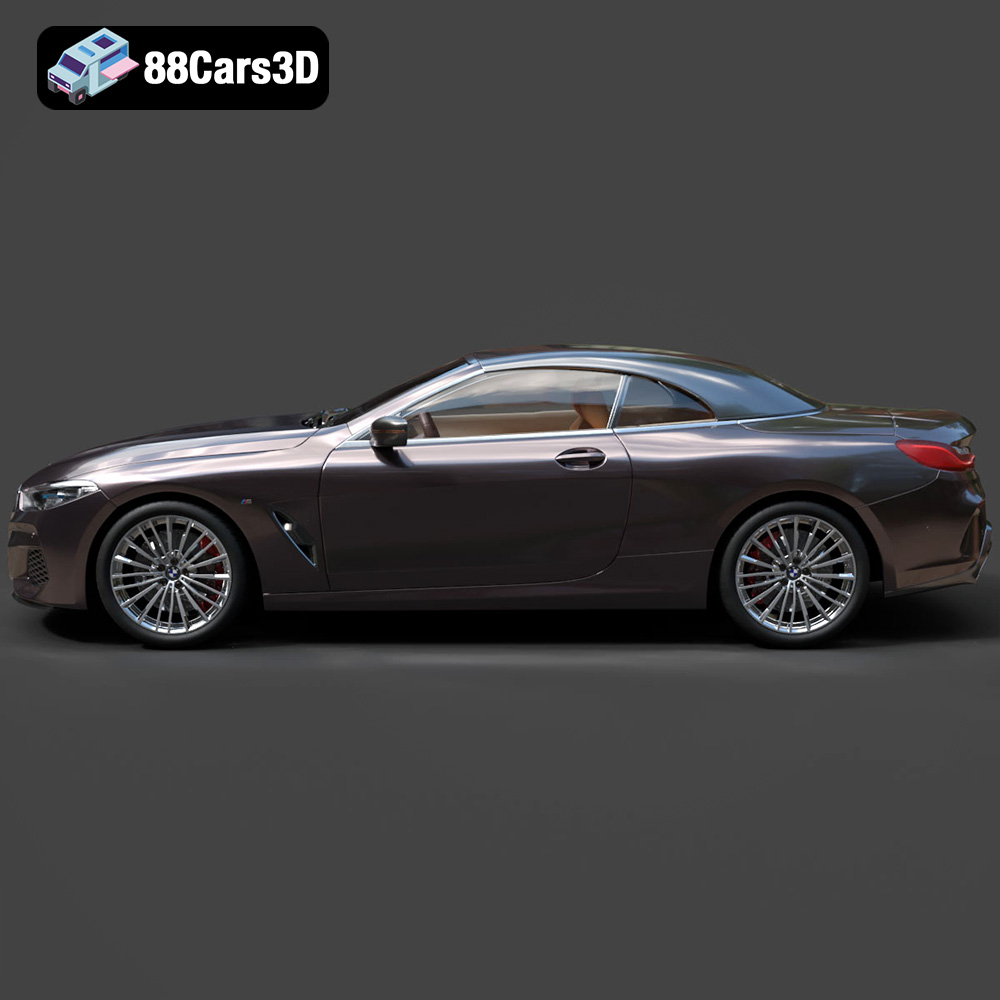
This isn’t just a digital replica; it’s a meticulously engineered asset designed to empower creators across various industries. From its sleek, aggressive lines to its luxurious open-top profile and fully modeled interior, the BMW 8-Series G14 Convertible M850i 2019 3D Model encapsulates the sophisticated engineering of its real-world counterpart. Understanding the intricate details behind such a model and its role in diverse workflows is crucial for anyone striving for excellence in 3D production.
The journey of a 3D model, from creation to implementation, often involves navigating a landscape of various file formats. Each format serves a specific purpose, offering unique advantages in terms of compatibility, data preservation, and workflow efficiency. For a high-quality asset like the BMW 8-Series G14 Convertible M850i 2019 3D Model, availability in a comprehensive suite of industry-standard formats is a testament to its professional utility. Let’s break down the most crucial ones.
The .blend format is the native file type for Blender, a powerful and increasingly prevalent open-source 3D creation suite. When you acquire a .blend file, you’re getting more than just geometry; you’re receiving a fully editable Blender scene. This typically includes the model’s mesh data, materials (often set up for Cycles or Eevee renderers), lighting configurations, camera setups, and even animation data if present. For users deeply integrated into the Blender ecosystem, a .blend file offers unparalleled flexibility for customization, rendering, and further development without any loss of information during import/export. It’s ideal for artists who want to dissect, learn from, or modify the original artist’s setup.
Autodesk’s .fbx (Filmbox) format is arguably the most widely adopted proprietary 3D interchange format, particularly in game development and animation pipelines. Its strength lies in its ability to store a vast array of 3D data, including geometry, materials, textures, animations, skinning information, and even scene hierarchy. For the BMW 8-Series G14, an .fbx file is often optimized for direct import into game engines like Unreal Engine and Unity. It ensures that crucial elements like UV maps, material assignments, and potentially even LOD (Level of Detail) setups are preserved. While it can be large due to its comprehensive data storage, its robustness makes it indispensable for transferring complex assets between different 3D applications and real-time environments.
The .obj (Wavefront OBJ) format is a venerable and highly compatible format, often considered the “universal donor” of 3D geometry. It primarily stores vertex positions, UV coordinates, normals, and polygon faces. It’s an excellent choice for straightforward mesh transfer between almost any 3D software, ensuring geometry fidelity. However, .obj files typically handle materials and textures in a more basic way, often referencing external .mtl (material) files and texture images. While it lacks advanced features like animation or rigging, its simplicity and widespread support make it a reliable fallback for cross-software compatibility, especially when the primary concern is the exact geometric representation of a model like the BMW 8-Series G14.
.glb (GL Transmission Format Binary) is the binary version of glTF, a royalty-free specification for 3D scenes and models. Designed for efficient transmission and loading, .glb files package all necessary data—geometry, materials, textures, and animations—into a single binary file. This makes them incredibly efficient for web-based 3D viewers, augmented reality (AR), and virtual reality (VR) applications where file size and quick loading times are critical. For showcasing the BMW 8-Series G14 in an online configurator or an immersive AR experience, .glb offers an optimized, compact solution.
The .stl (Stereolithography) format is the de facto standard for 3D printing. Unlike other formats that store complex mesh data, .stl represents a 3D model as a series of connected triangles (a tessellation) that define its surface geometry. It lacks color, texture, or material information. For designers looking to physically prototype the BMW 8-Series G14, perhaps a scaled model or specific components, an .stl file ensures the model’s watertightness and manifold geometry required for successful 3D printing. Its simplicity makes it universally compatible with 3D printing software and hardware.
The .ply (Polygon File Format or Stanford Triangle Format) is another widely used format for storing 3D data, particularly from 3D scanners or for CAD applications. It can store a variety of properties including color, transparency, surface normals, and range data, making it excellent for scientific and engineering visualization. While less common for general rendering or gaming, its precision in representing point clouds and mesh data makes it suitable for detailed analysis or when integrating a model like the BMW 8-Series G14 into a CAD environment for further engineering studies.
While not a standalone file format in the strictest sense, an .unreal asset typically refers to a model or asset package specifically pre-configured and optimized for direct import or integration into Unreal Engine projects. This might involve an .fbx file alongside specific Unreal Engine material setups, blueprints, collision meshes, LODs, and proper asset naming conventions, all designed to minimize setup time and maximize performance within the engine. For immediate deployment of the BMW 8-Series G14 Convertible M850i 2019 into a real-time environment, an Unreal-ready package provides significant efficiency gains for game developers and real-time visualization artists.
The .max format is the native file type for Autodesk 3ds Max, a leading software for 3D modeling, animation, and rendering. Similar to .blend for Blender, a .max file contains the complete scene data, including geometry, modifiers, materials (often V-Ray, Corona, or Arnold specific), lighting, cameras, and animation curves. For professionals using 3ds Max, this format offers the highest level of editability and ensures that all intricate details and setups, particularly for advanced rendering and animation, are preserved. Working with the .max version of the BMW 8-Series G14 allows for full control over the model’s complex material shaders and scene composition for photorealistic renders.
The availability of the BMW 8-Series G14 Convertible M850i 2019 3D Model in such a comprehensive suite of formats underscores its versatility and value. It means that no matter your preferred software or project requirements, you’ll have an optimized file ready to go, directly from 88cars3d.com.
What sets a premium 3D car model apart from a basic one? It’s a combination of meticulous craftsmanship, technical foresight, and an understanding of diverse production needs. The BMW 8-Series G14 Convertible M850i 2019 3D Model exemplifies these qualities, showcasing the depth of detail required for professional use.
At its core, a 3D model is a collection of vertices, edges, and faces. High-quality automotive models boast clean, efficient topology. This means:
Beyond geometry, materials and textures are what give a 3D model its visual punch. Modern workflows rely heavily on Physically Based Rendering (PBR) materials, which accurately simulate how light interacts with surfaces in the real world.
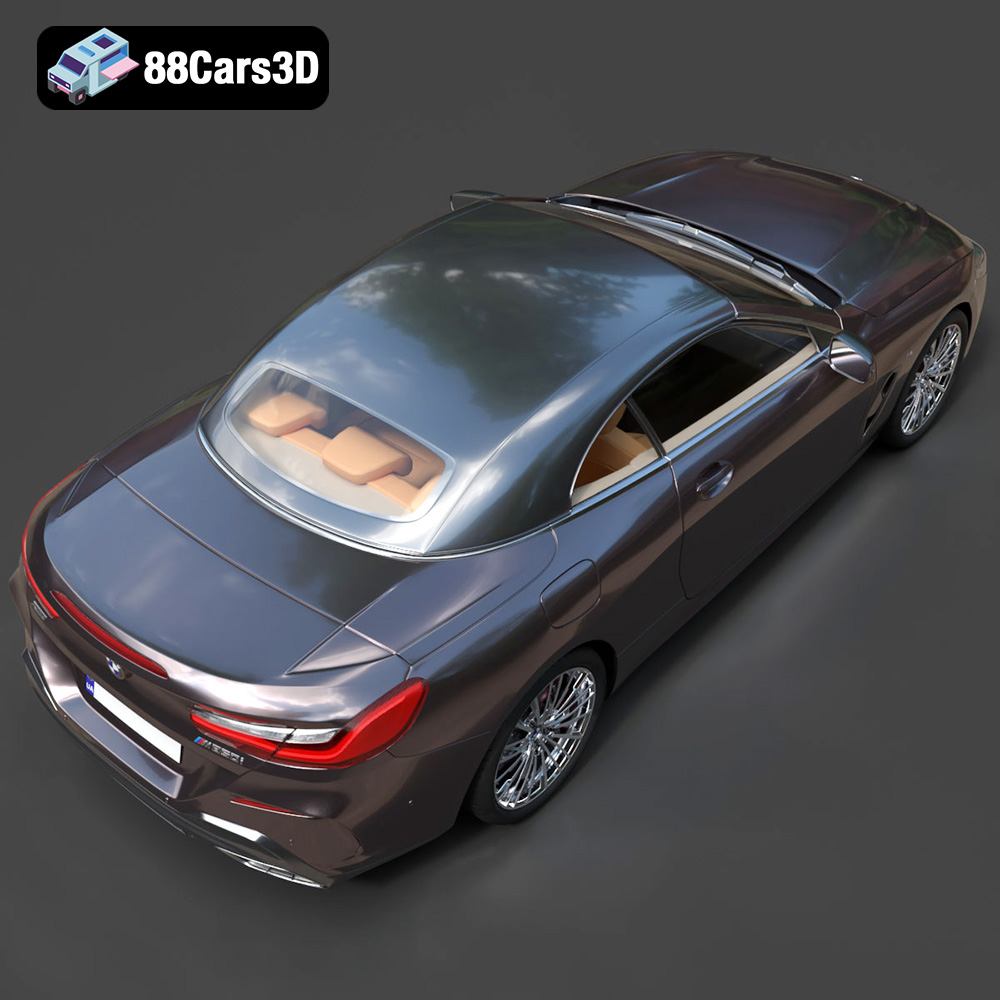
The description of the BMW 8-Series G14 Convertible M850i 2019 3D Model highlights its “fully modeled interior.” This is a significant differentiator. Many models only focus on the exterior, but for immersive experiences, product configurators, or detailed cinematic shots, a complete interior is non-negotiable. This includes:
The true value of a premium 3D asset lies in its seamless integration into diverse professional pipelines. The BMW 8-Series G14 Convertible M850i 2019 3D Model, available on 88cars3d.com, is built with this versatility in mind.
For advertising, marketing, or cinematic visuals, photorealism is the ultimate goal. Software like 3ds Max and Blender, paired with powerful renderers (V-Ray, Corona, Cycles, Redshift), are the tools of choice.
The demand for immersive, interactive experiences is skyrocketing. Game engines like Unreal Engine and Unity are at the forefront, requiring optimized assets for smooth performance.
High-quality 3D car models are not just for eye-candy; they are vital tools for engineers, urban planners, and product designers.
The versatility of a professional 3D asset like the BMW 8-Series G14 Convertible M850i 2019 3D Model truly shines when applied to real-world scenarios. Here are a few hypothetical, yet highly plausible, case studies:
Imagine a global automotive brand launching its latest campaign for a new luxury convertible. Instead of expensive physical photoshoots in exotic locations, which are logistically challenging and costly, they opt for a fully digital approach. Using the BMW 8-Series G14 Convertible M850i 2019 3D Model, a team of artists creates stunning photorealistic renders for print ads, animated commercials, and social media content. They can place the car in any virtual environment – from a sunset drive along the Amalfi Coast to a chic urban cityscape – all rendered with perfect lighting and reflections, showcasing every curve and detail of the vehicle. This approach offers unparalleled creative control, faster iterations, and significant cost savings.
A leading game studio is developing a new open-world racing title. They need a fleet of high-performance luxury cars that look incredible and perform flawlessly in a real-time environment. By acquiring the BMW 8-Series G14 Convertible M850i 2019 3D Model, they gain an immediate, engine-ready asset. The developers can quickly integrate the .fbx or .unreal version, apply game-specific physics, set up multiple LODs for optimal performance across various platforms, and even add custom damage models. The fully modeled interior allows for immersive first-person cockpit views, enhancing the player’s sense of speed and luxury. This significantly accelerates their development timeline, allowing their artists to focus on environmental design and unique game mechanics rather than starting vehicle modeling from scratch.
An automotive design firm is in the early stages of concepting a new luxury car. While the BMW 8-Series G14 Convertible M850i 2019 is an existing model, the ability to rapidly integrate and modify a high-fidelity base model for conceptual purposes is invaluable. Designers can import the .max or .blend file, quickly tweak body lines, experiment with different headlight designs, or visualize new interior layouts. Furthermore, a highly accurate .stl version could be used to 3D print scaled physical models for tactile reviews, complementing the virtual design process. This blend of digital and physical prototyping streamlines the design review process, allowing for faster feedback and iteration cycles before costly physical prototypes are built.
For any professional in the 3D industry, time is a precious commodity. The decision to purchase a pre-made 3D model, especially one as detailed as the BMW 8-Series G14 Convertible M850i 2019 3D Model, comes down to balancing quality, cost, and efficiency. This is where marketplaces like 88cars3d.com prove invaluable.
Modeling a complex vehicle like the BMW 8-Series G14 from scratch can take hundreds, if not thousands, of hours for a skilled 3D artist. This involves meticulous blueprint matching, intricate surface modeling, UV unwrapping, material creation, and optimization. By purchasing a high-quality, production-ready asset from 88cars3d.com, individuals and studios can drastically cut down on development time and associated labor costs. This allows them to allocate resources to other critical aspects of their project, such as creative direction, animation, or rendering the final scenes. The value proposition is clear: invest in a proven asset and get to market faster.
When you acquire a model from a reputable source like 88cars3d.com, you’re investing in quality assurance. These models are typically created by experienced artists who adhere to industry best practices regarding topology, UV mapping, and material setup. This ensures that the model will behave predictably in your chosen software, avoiding common issues like messy geometry, broken UVs, or non-PBR materials that would require significant cleanup. The BMW 8-Series G14 Convertible M850i 2019 3D Model, for instance, is described with “clean topology, accurate geometry, and realistic materials tailored for advanced digital environments,” guaranteeing a professional starting point for any project.
As discussed with the file formats, a premium asset offers broad compatibility. The comprehensive suite of formats – .blend, .fbx, .obj, .glb, .stl, .ply, .unreal, and .max – means that no matter your preferred 3D software or intended application, you’ll have an optimized file ready to integrate. This eliminates the headache of format conversions, potential data loss, or compatibility issues that can plague lesser models. Such versatility ensures that the BMW 8-Series G14 Convertible M850i 2019 3D Model is truly a versatile asset, ready for rendering, game development, AR/VR, 3D printing, and visualization tasks.
The digital frontier of automotive visualization and interactive experiences demands nothing less than perfection. High-quality 3D car models are the bedrock upon which stunning renders, immersive games, and insightful simulations are built. The BMW 8-Series G14 Convertible M850i 2019 3D Model stands as an exemplary product, embodying the precision, detail, and versatility that professionals require.
Whether you are crafting a photorealistic advertising campaign in 3ds Max, developing the next-generation racing game in Unreal Engine, or exploring innovative AR/VR applications, investing in a meticulously crafted asset like this from 88cars3d.com provides a significant competitive edge. It’s about saving time, ensuring technical reliability, and ultimately, elevating your creative vision to its highest potential. In a world where digital realism reigns supreme, a truly exceptional 3D car model is more than just an asset; it’s a catalyst for innovation.
Experience unmatched realism and precision with the BMW 8-Series G14 Convertible M850i 2019 3D Model. Designed for professionals and enthusiasts, this exceptionally detailed vehicle replica captures the sleek, aggressive lines and luxurious open-top profile of the iconic sports car. From its meticulously crafted exterior to a fully modeled interior, every element reflects the sophisticated engineering of the original design. This model features clean topology, accurate geometry, and realistic materials tailored for advanced digital environments. The meticulously optimized mesh structure ensures seamless performance, allowing you to focus on your creative vision. Whether you are developing dynamic racing games, producing photorealistic renders, creating immersive AR/VR experiences, or running simulations, this versatile asset delivers exceptional visual fidelity and technical reliability. Available in a comprehensive suite of industry-standard file formats, this model ensures maximum compatibility across all major 3D software applications and game engines:
$39.99