Get 20% OFF All Premium 3D & STL Models!

In the exhilarating world of 3D visualization, the demand for highly detailed and technically accurate assets is ever-growing. From cinematic automotive rendering to immersive game development and pioneering AR/VR experiences, the foundation of any successful project lies in the quality of its 3D models. When it comes to capturing the raw power and iconic aesthetics of a legendary machine, compromise is not an option. This is precisely where meticulously crafted assets, like the Yamaha R1 3D model available on 88cars3d.com, stand apart, offering unparalleled realism and performance for professionals and enthusiasts alike.
The Yamaha R1 is more than just a motorcycle; it’s a testament to engineering excellence, a superbike revered for its track dominance and distinctive design. Translating such an intricate piece of machinery into a functional and visually stunning 3D model requires a deep understanding of both artistic fidelity and technical optimization. This article will delve into the complexities of creating and utilizing high-quality 3D automotive models, exploring the specific features that make the Yamaha R1 model an invaluable asset for diverse creative pipelines, and demonstrating how it seamlessly integrates into various professional workflows.
The landscape of 3D modeling is rich with various file formats, each designed with specific purposes, compatibilities, and advantages. Choosing the correct format for your project is crucial for efficient workflow, optimal performance, and successful delivery. The Yamaha R1 3D model comes packaged with a comprehensive array of formats, ensuring maximum flexibility for any professional application.
The .blend file format is native to Blender, a powerful open-source 3D creation suite. When you receive a .blend file, you’re getting a fully editable Blender scene. This includes not just the mesh geometry, but also materials, textures, lighting, cameras, animations, and even physics simulations. For artists working primarily in Blender, this format offers the most flexibility for customization. You can easily modify the model’s topology, adjust materials, rig for animation, or integrate it directly into an existing Blender project. It’s the ideal choice for deep-level editing and intricate scene setup within the Blender ecosystem, allowing creators to leverage Blender’s robust toolset.
FBX (Filmbox) is a proprietary file format owned by Autodesk, widely adopted across the 3D industry for its excellent interoperability. It’s often the go-to format for transferring 3D data between different software applications like 3ds Max, Maya, Cinema 4D, and particularly, real-time engines such as Unreal Engine and Unity. FBX supports not only mesh data but also animations, skinning, rigging, cameras, and lights, making it ideal for complex animated scenes and game assets. Its ability to maintain hierarchical structures and animation curves makes it indispensable for character animation and vehicle dynamics in real-time pipelines.
OBJ (Object) is one of the oldest and most universally supported 3D file formats. It’s a simple, text-based format that primarily stores geometric data: vertices, UV coordinates, and normals. While it doesn’t typically store animation or rigging information, it’s exceptionally reliable for static mesh transfers between almost any 3D software. For the Yamaha R1 model, the .obj format is perfect for ensuring cross-software compatibility, allowing users of less common 3D applications or those who only need the raw geometry to import the model without issues. It’s often accompanied by an .mtl (material) file that defines basic material properties.
GLB (GL Transmission Format Binary) is the binary version of glTF, a royalty-free specification for the efficient transmission and loading of 3D scenes and models by applications. GLB is particularly optimized for augmented reality (AR), virtual reality (VR), and browser-based display. It packages all necessary assets (geometry, textures, animations) into a single, self-contained file, making it incredibly easy to share and deploy. Its efficiency and widespread support make it perfect for mobile AR configurators, interactive web viewers, and lightweight VR experiences, ensuring quick loading times and broad accessibility for the Yamaha R1 model in emerging digital platforms.
STL (Stereolithography) is the standard file format used for 3D printing. It describes only the surface geometry of a 3D object using a mesh of triangular facets, without any color, texture, or other CAD attributes. For hobbyists or professionals looking to physically manifest the Yamaha R1 3D model, the .stl format is essential. It’s the language understood by 3D printers and slicing software, allowing you to bring the virtual design into the tangible world. Precision and manifold geometry are key here, ensuring a successful print.
PLY (Polygon File Format) is another format that stores 3D data, often used for scanned data, CAD, and scientific applications where precision and detailed mesh information are critical. It can store various properties, including color, transparency, surface normals, and range data, making it more versatile than .obj for certain analytical tasks. While less common for general game assets, its inclusion for the Yamaha R1 model demonstrates a commitment to providing options for high-precision applications or specific engineering analyses.
The .unreal format, or more accurately, assets packaged and optimized specifically for Unreal Engine, represents a highly integrated and performance-tuned asset. While Unreal Engine primarily imports .fbx, having a model pre-configured as an “unreal” asset means it’s likely set up with proper materials, collision meshes, LODs (Levels of Detail), and pivot points directly within an Unreal project structure or ready for seamless drag-and-drop import. This significantly reduces the setup time for game developers, allowing them to instantly integrate the Yamaha R1 into their real-time environments with minimal adjustments for lighting and physics.
The .max file format is native to Autodesk 3ds Max, a leading 3D modeling, animation, rendering, and compositing software. Similar to .blend files, a .max file contains a complete 3ds Max scene, including geometry, materials, textures, lighting, cameras, and animation data. For users of 3ds Max, this format provides the most comprehensive access to the model, allowing for full customization, advanced rendering setups with V-Ray or Corona, and intricate animation sequences. It’s perfect for high-fidelity studio rendering and complex visual effects production.
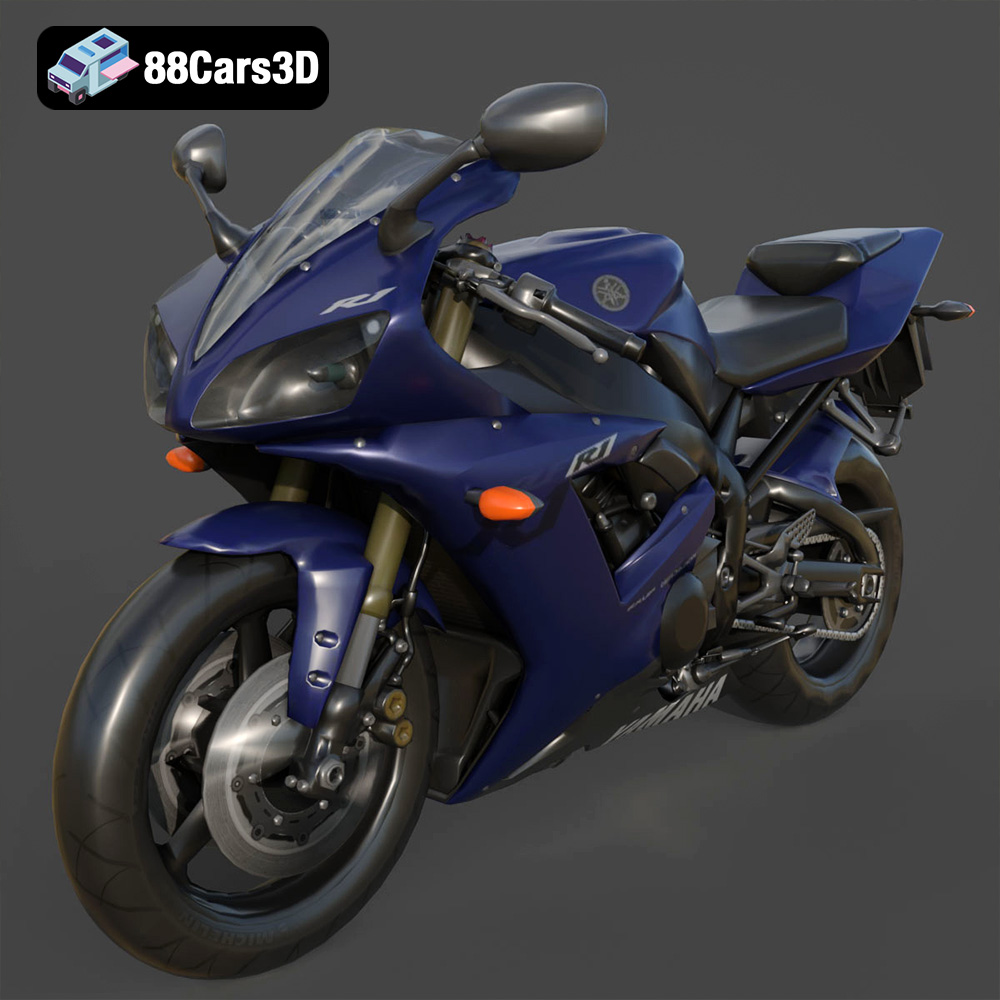
Recreating an iconic superbike like the Yamaha R1 in the digital realm demands an unparalleled commitment to accuracy and detail. The designers at 88cars3d.com have meticulously captured every nuance, ensuring the 3D model is not merely a representation but a faithful digital twin of the real machine. This attention to detail extends from the sweeping lines of its aggressive fairing to the intricate engineering of its powerplant.
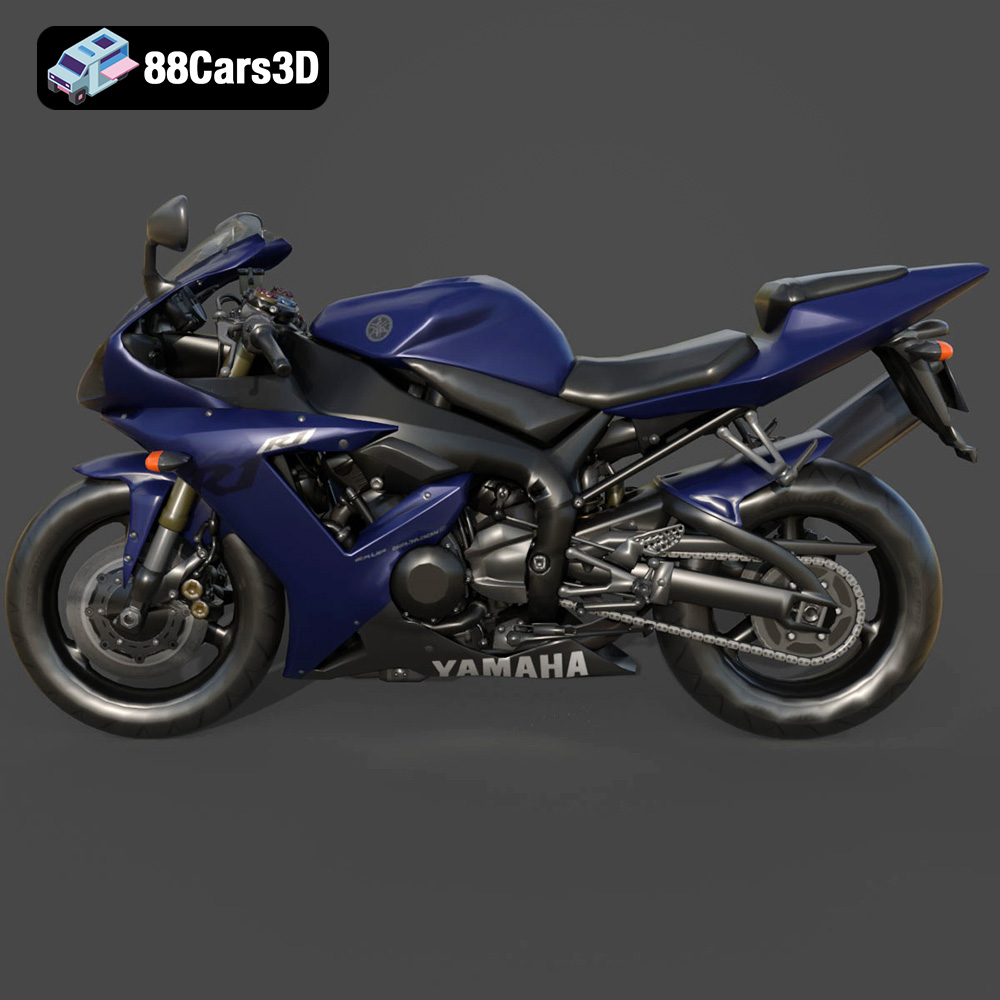
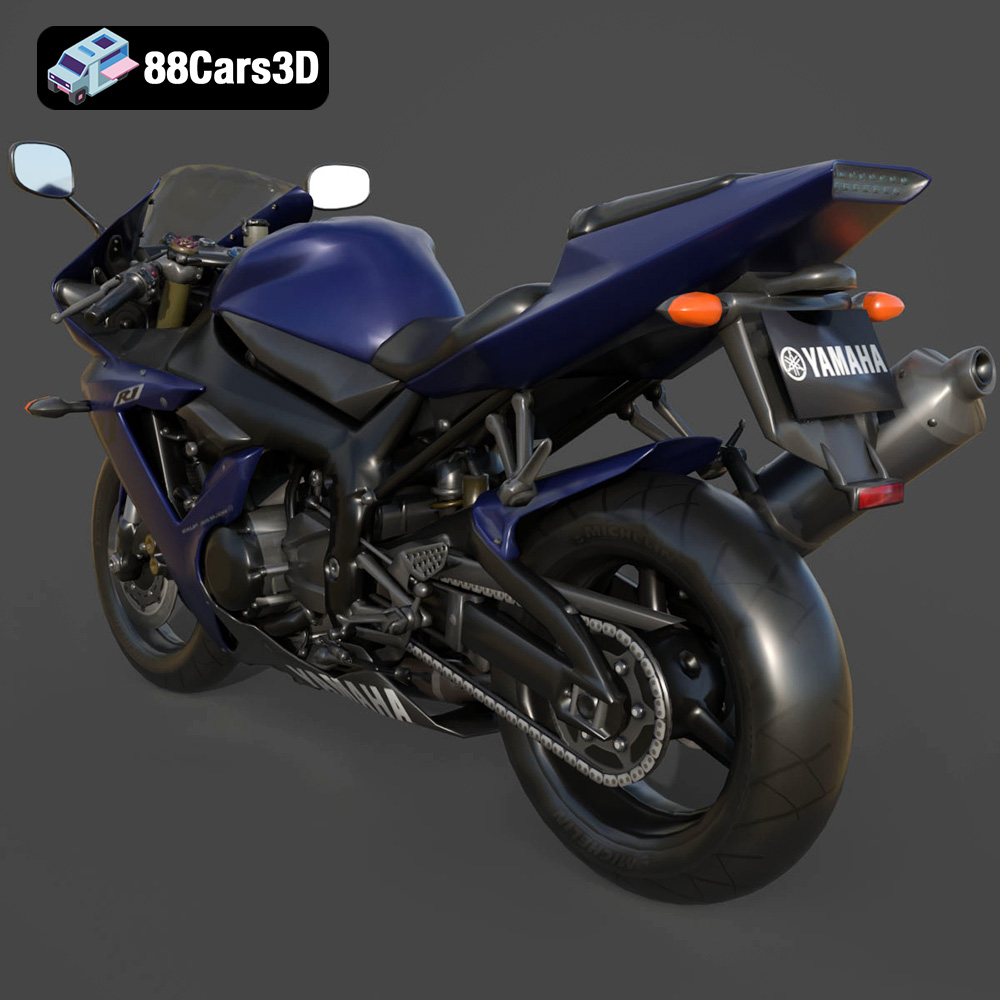
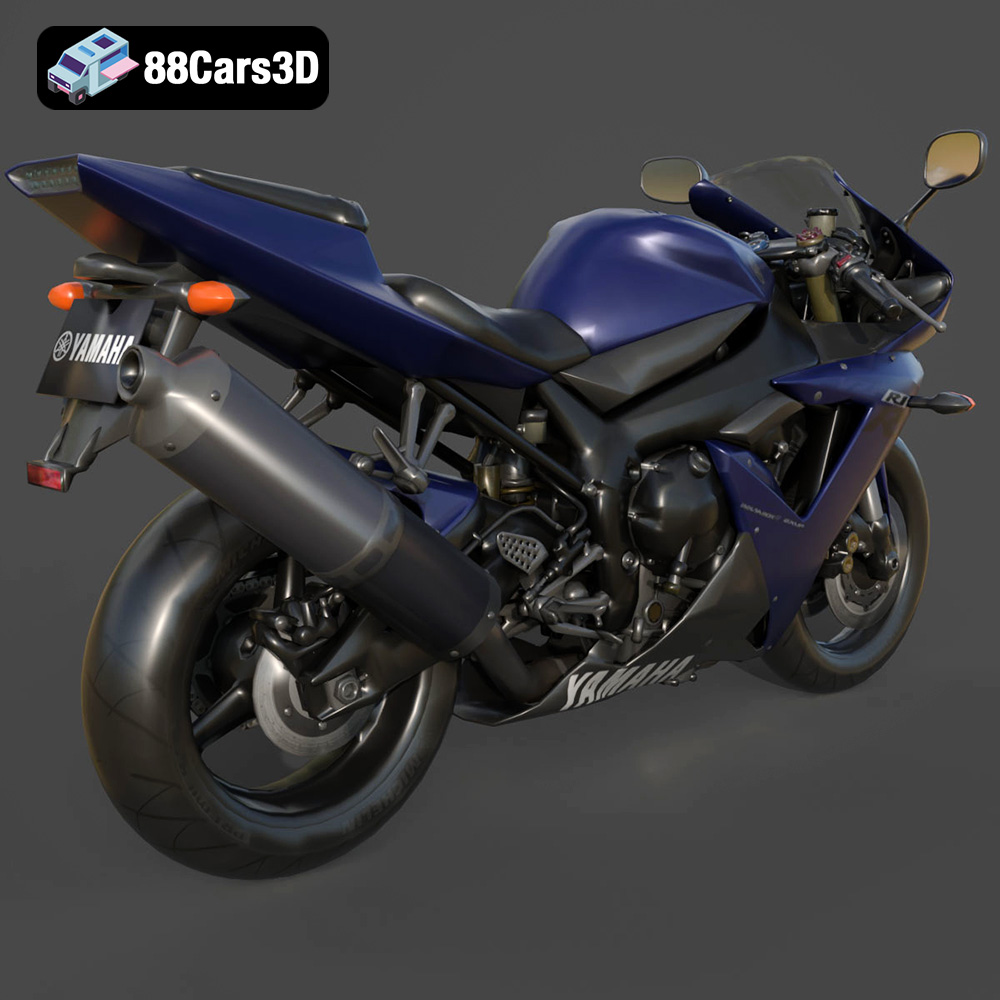
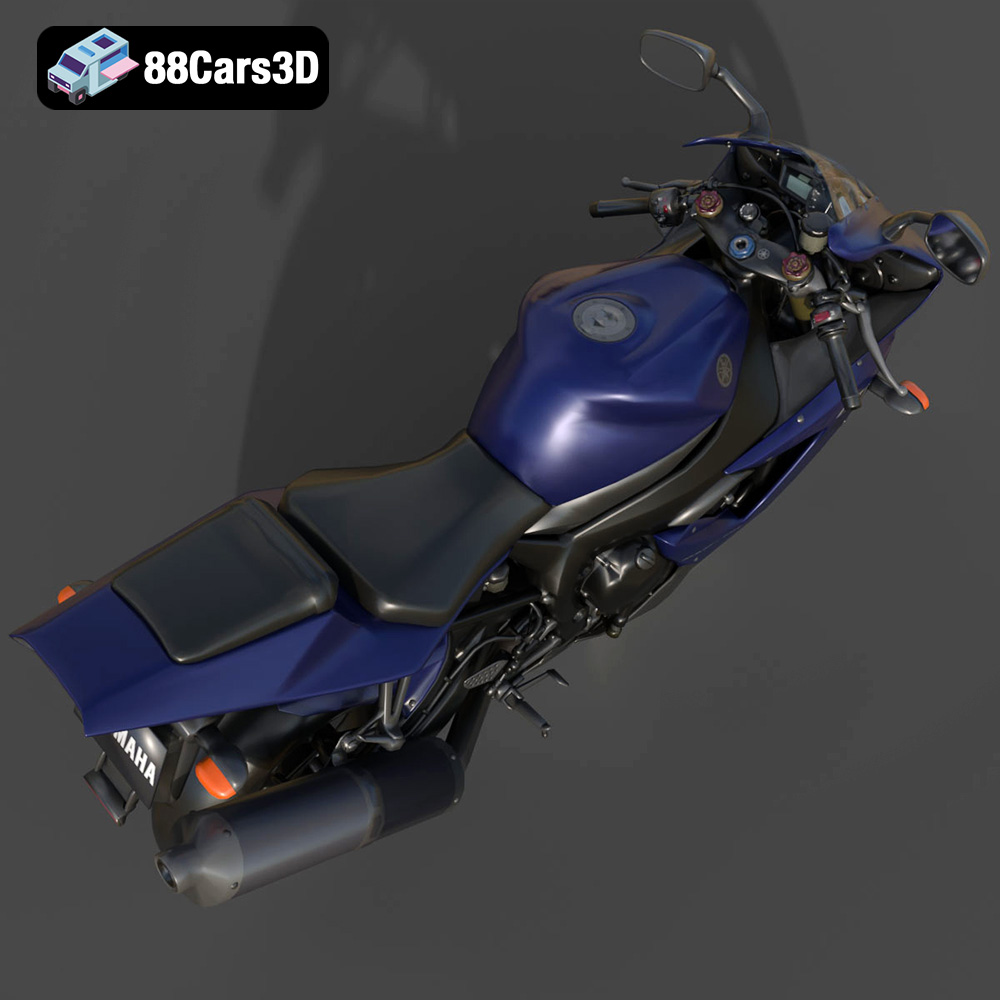
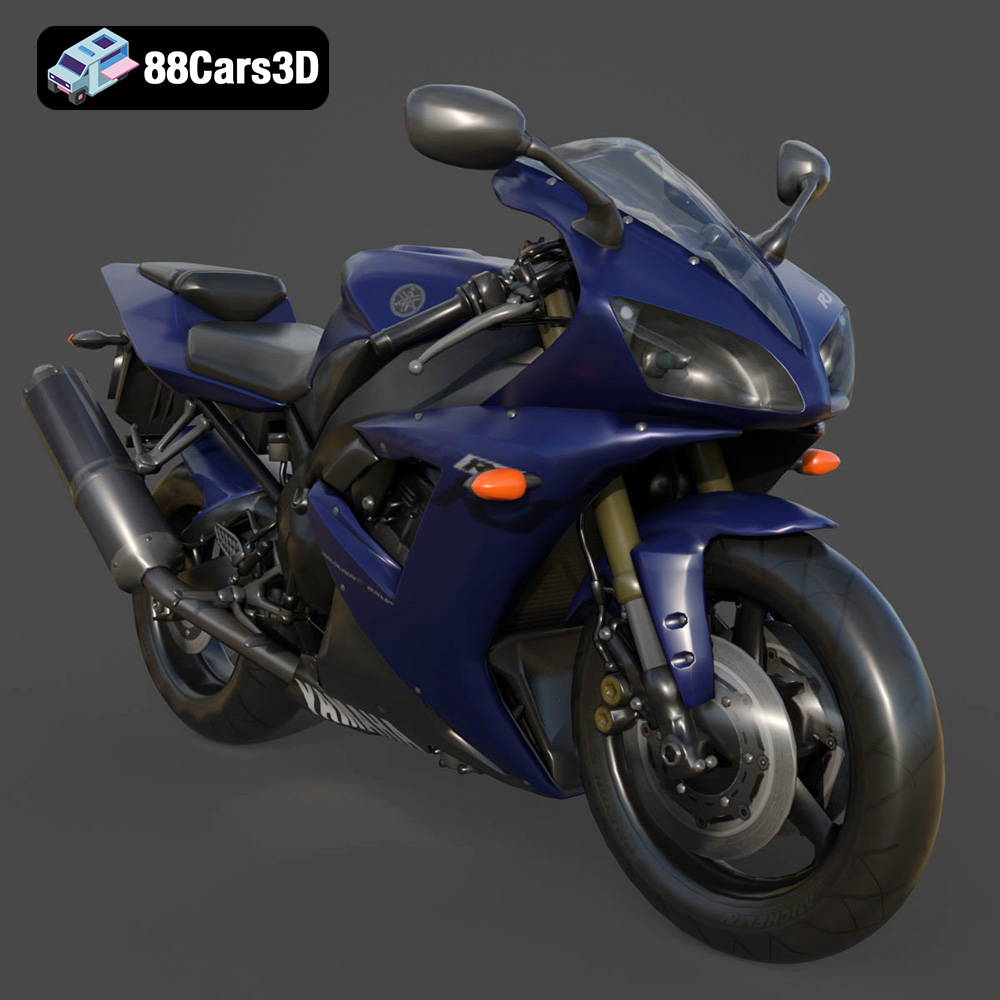
The Yamaha R1’s aggressive aerodynamic styling is instantly recognizable, and this 3D model renders it with striking precision. The distinctive twin-eye LED headlights, a signature feature, are accurately modeled, along with the integrated taillight, enhancing realism in any lighting scenario. The dynamic fairing vents, crucial for both aesthetics and performance on the actual bike, are also faithfully replicated. Beyond superficial details, the model boasts accurate Yamaha R1 Deltabox frame geometry and proportions, which form the structural backbone of the superbike. The engine block, featuring the iconic 998cc inline-4 crossplane design, is rendered with meticulous care, revealing the complex interplay of components. Even the precision-modeled titanium-style exhaust system and sleek muffler contribute significantly to the model’s authentic visual appeal, allowing for close-up renders that showcase engineering artistry. Furthermore, lightweight magnesium-style multi-spoke wheels with high-grip track tires, coupled with highly detailed inverted front fork suspension and rear monoshock assembly, complete the exterior’s robust and dynamic presentation.
The experience of a superbike isn’t just about its exterior; it’s about the connection between rider and machine. The Yamaha R1 3D model extends its attention to detail into the cockpit, offering a truly immersive experience. The ergonomic, track-focused rider saddle and contoured pillion seat are accurately modeled, providing a realistic foundation for any rider animation or virtual showroom exploration. Detailed clip-on handlebars with accurate grips and switchgear allow for believable hand placements and interactive elements in game environments. A high-resolution digital TFT instrument cluster representation offers a clear and authentic display, crucial for first-person perspectives in gaming. Precision-modeled rearset footpegs, shift lever, and brake/clutch controls further enhance the sense of realism, ensuring that every interaction feels authentic. This optimized geometry for first-person POV makes the model an exceptional asset for driving simulators, racing games, or even VR training modules, where the rider’s view is paramount.
In the realm of 3D assets, achieving a balance between stunning visual fidelity and optimal performance is a continuous challenge, especially for real-time applications. The Yamaha R1 3D model exemplifies this balance, engineered to be game-ready without compromising the intricate details that make the superbike so iconic. This technical prowess ensures seamless integration into demanding pipelines like game development and interactive visualizations.
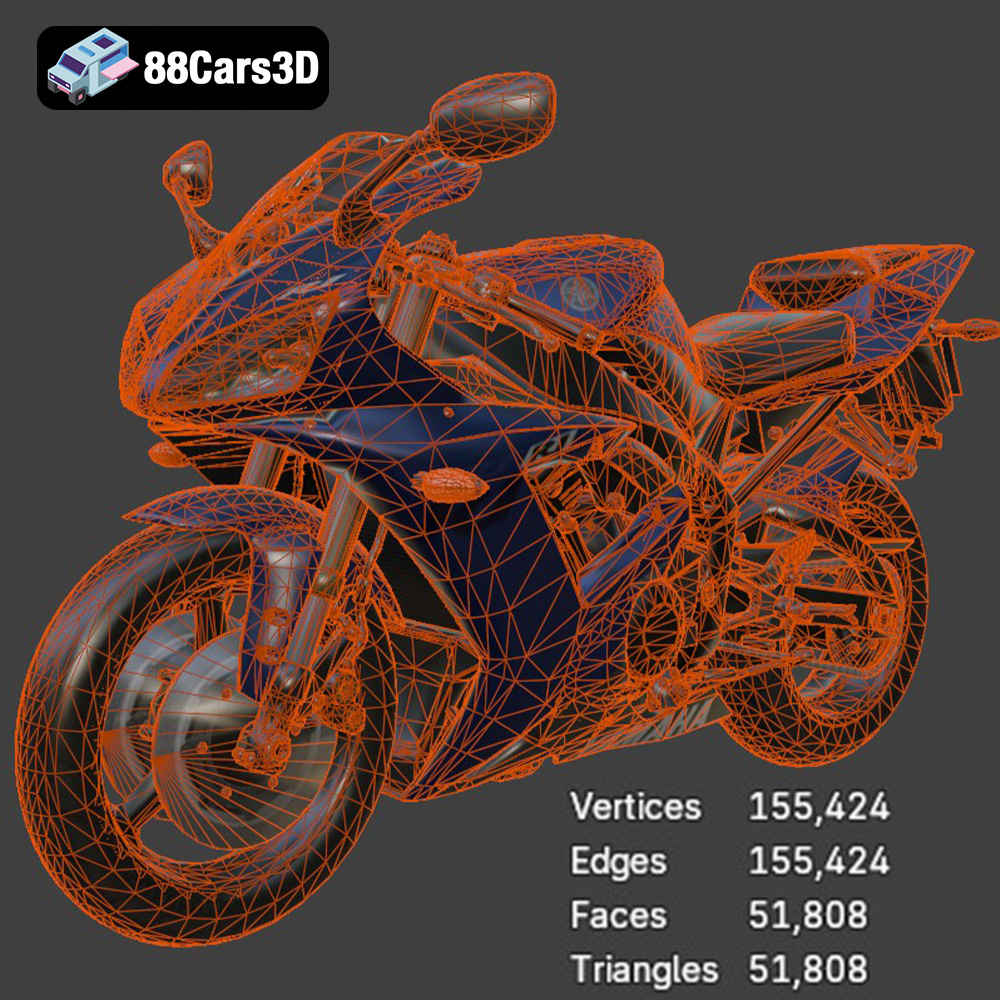
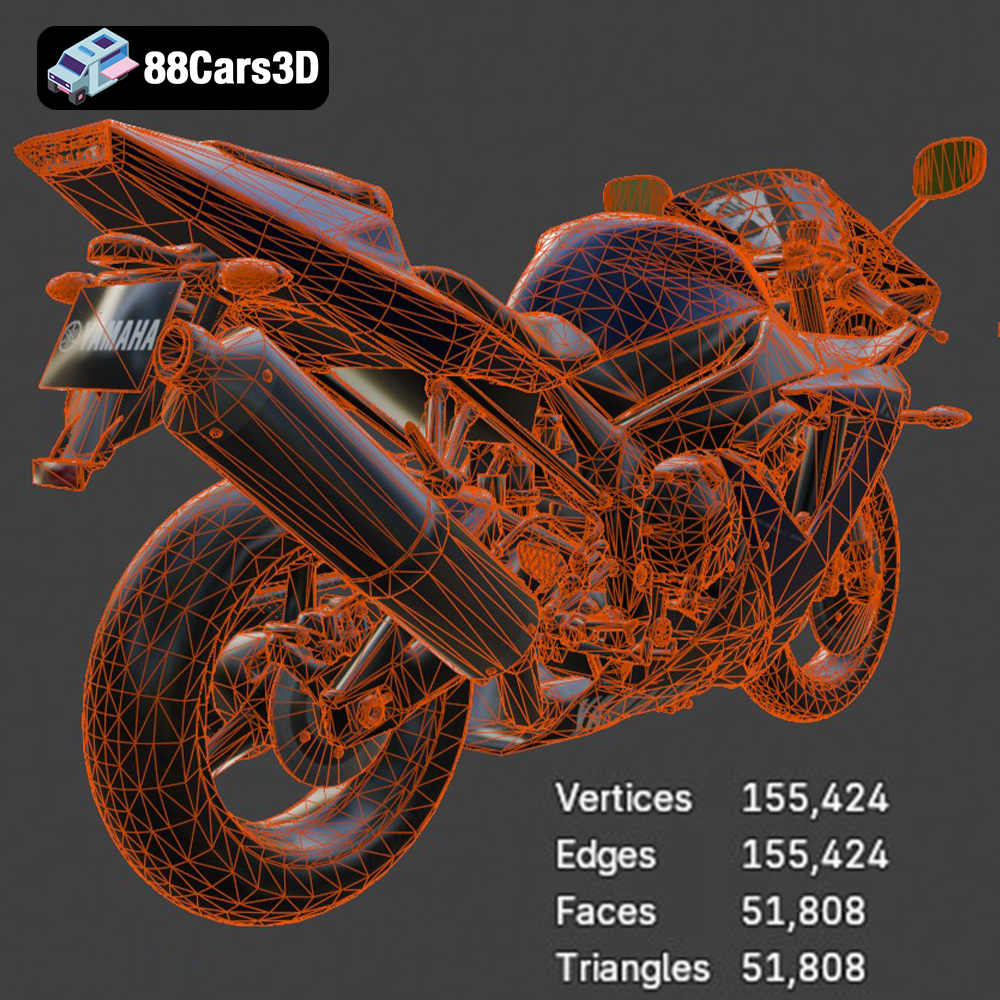
One of the most critical technical specifications for any game-ready asset is its polycount, measured in triangles. The Yamaha R1 model strikes a perfect balance with approximately 180,000 triangles. This figure is low enough to ensure efficient real-time rendering in engines like Unreal and Unity, preventing frame rate drops and ensuring smooth performance even in complex scenes with multiple vehicles. Simultaneously, it’s high enough to maintain the high-end visual realism expected of a premium model, capturing intricate details without resorting to excessive tessellation. This optimized topology, combined with a clean mesh structure, facilitates easy UV mapping, texture application, and ensures that the model deforms predictably if animated. A well-optimized mesh is fundamental for reducing draw calls and memory usage, making this Yamaha R1 a highly efficient game asset.
Beyond static beauty, the utility of a 3D vehicle model often lies in its ability to be animated. The Yamaha R1 model is built with animation in mind. It features separate wheels, suspension, and steering components, each with proper pivot setup, allowing for realistic wheel rotation, authentic suspension travel, and accurate steering movements. This modularity empowers animators and developers to create dynamic sequences, from high-speed turns to suspension compression over bumps, without needing to perform extensive rigging work. Furthermore, the model is built to real-world scale accuracy, based on actual vehicle chassis dimensions. This precision is vital for realism in simulators, architectural visualizations, and any application where accurate spatial relationships are crucial. Real-world scale ensures that the model looks correct alongside other assets and interacts realistically with physics engines, providing a solid foundation for immersive digital experiences.
The strength of a high-quality 3D model, such as the Yamaha R1 from 88cars3d.com, lies in its versatility. Engineered for both visual fidelity and technical performance, it transcends a single use case, proving to be an invaluable asset across a spectrum of professional industries, from the cutting-edge of gaming to the tactile reality of 3D printing.
For game developers, the Yamaha R1 3D model is a dream asset. Its optimized polycount of approximately 180,000 triangles makes it perfectly suited for demanding real-time environments. Whether it’s an open-world adventure game, a high-octane racing title, or a hyper-realistic simulator, this model integrates seamlessly. The clean mesh structure and detailed textures ensure that it looks fantastic even at close inspection, while its performance-ready topology prevents any hitches. Developers can leverage the accurate physics setup, with separate components for steering, wheels, and suspension, to create dynamic and believable vehicle handling. This capability allows players to experience the thrill of the Yamaha R1’s superbike heritage directly, making it an ideal choice for next-gen racing games where realism and responsiveness are paramount.
The future of digital interaction is increasingly moving towards augmented reality (AR) and virtual reality (VR). The Yamaha R1 model is perfectly poised for these immersive technologies. Its optimized geometry and comprehensive file format support, including .glb, make it ideal for virtual showrooms, where potential buyers can explore the bike in 3D from any angle. Imagine an AR configurator on a mobile device, allowing users to customize the bike’s colors or components in real-time, overlaid onto their physical environment. For brand visualizations, the model excels in creating compelling marketing content. High-fidelity studio rendering, lifestyle scenes, and intricate lighting setups benefit immensely from the model’s detailed textures and accurate reflections. This translates into stunning visuals for advertising campaigns, product launches, or any scenario where showcasing the R1’s elegance and power is key.
Beyond the digital screen, the Yamaha R1 3D model offers the unique opportunity to become a tangible object through 3D printing. The inclusion of the .stl format, specifically tailored for additive manufacturing, opens up new avenues for hobbyists and collectors. The recommended scales (1:12, 1:18, 1:24) allow for detailed display models, perfect for desks or shelves. For successful printing, careful consideration of settings is provided: layer heights between 0.04-0.12 mm (with resin printing recommended for the finest details), wall thickness of 1.2-2.0 mm, and an infill of 20-30%. Critical parts like the exhaust, mirrors, and handlebars will require supports, and specific print orientations (e.g., frame angled, wheels separately) are advised for structural integrity and detail preservation. Post-processing, including sanding, priming, and painting with authentic factory colors, can transform a raw print into a stunning miniature replica, celebrating the R1’s design in a physical form.
The true measure of a high-quality 3D asset lies in its seamless integration into established professional workflows. The Yamaha R1 3D model, with its array of file formats and optimized structure, is designed to be a plug-and-play solution for various industry-standard software packages, minimizing setup time and maximizing creative output.
For 3D artists and animators, working within their preferred software environment is paramount. The Yamaha R1 3D model provides direct support for two of the most popular platforms: 3ds Max and Blender. The inclusion of a native .max file ensures that 3ds Max users can immediately open a fully configured scene, complete with materials, textures, and potentially lighting setups. This allows for instant access to the model’s hierarchical structure, making it easy to animate individual components like wheels, suspension, and steering. Complex rendering scenarios using V-Ray or Corona Renderer can be set up quickly, leveraging the model’s clean geometry for pristine ray-traced visuals. Similarly, the .blend file offers Blender artists the same level of native integration. All materials are typically pre-assigned, and the model is ready for rendering with Cycles or Eevee. Blender’s robust toolset for modeling, sculpting, and texturing means deep customization is straightforward, whether you’re adjusting body panels, refining material shaders, or integrating the bike into a larger animated short. The clean mesh structure in both formats minimizes cleanup work, allowing artists to focus on creative enhancements rather than technical corrections.
Real-time game development and interactive experiences heavily rely on game engines, with Unreal Engine being a dominant force. The Yamaha R1 3D model is specifically tailored for this environment, often including a pre-optimized “unreal” package or a highly compatible .fbx. When importing the .fbx into Unreal Engine, developers will find that the model’s clean topology, proper pivot points, and separated components translate perfectly. This means that setting up vehicle physics, animating suspension, and integrating steering input is significantly streamlined. Textures and materials can be quickly applied and adjusted within Unreal’s material editor, taking advantage of PBR (Physically Based Rendering) workflows to achieve photorealistic results in real-time. The optimized polycount ensures that the Yamaha R1 can be deployed in large, open-world environments or detailed racing tracks without compromising frame rates. Furthermore, the model’s design is ideal for creating Level of Detail (LOD) meshes, allowing the engine to swap to simpler versions of the bike when it’s far from the camera, further boosting performance without a noticeable drop in visual quality. This meticulous preparation makes the Yamaha R1 an invaluable asset for creating compelling and performant interactive experiences.
In the fast-paced world of 3D content creation, efficiency and quality are paramount. The Yamaha R1 3D model from 88cars3d.com stands as a testament to these principles, offering a meticulously detailed, game-ready, and highly versatile asset that caters to a broad spectrum of professional applications. From high-fidelity automotive rendering and cutting-edge game development to immersive AR/VR experiences and even tangible 3D prints, this model provides the foundational quality needed to elevate any project. Its extensive file format support and optimized technical specifications ensure seamless integration into industry-standard workflows, empowering creators to bring their visions to life with unparalleled realism and performance. Whether you’re a seasoned professional or an aspiring enthusiast, investing in such a high-caliber asset simplifies your pipeline and dramatically enhances your final output. Explore this exceptional model and more high-quality 3D car models at 88cars3d.com to accelerate your creative projects.
Experience the thrill of the track with this meticulously crafted 3D model of the legendary Yamaha R1. Known for its superbike heritage and uncompromising performance, the R1 features aggressive aerodynamic styling, a commanding Deltabox frame, and the iconic 998cc inline-4 crossplane engine. This model perfectly captures the essence of the real-world machine, highlighting key visual elements like the distinctive twin-eye LED headlights, dynamic fairing vents, and a high-performance exhaust system. Engineered with exceptional attention to detail, this 3D model boasts a highly optimized topology of approximately 180,000 triangles, making it fully game-ready without sacrificing visual fidelity. The clean mesh structure and detailed textures ensure seamless integration into real-time rendering engines and complex animation pipelines. Whether you are developing a high-speed racing simulation, an immersive virtual showroom, or a high-end cinematic render, this asset delivers unparalleled realism and performance.
$19.99
.blend
.fbx
.glb
.max
.motorcycle
.obj
.ply
.rendering
.sportbike
.stl
.superbike
.unreal
.yamaha
game asset
game-ready
low-poly
motorcycle-3d-model
optimized
r1
VR/AR
yamaha-r1