Get 20% OFF All Premium 3D & STL Models!

In the dynamic world of 3D visualization, automotive design, and game development, the demand for exceptionally detailed and technically sound 3D car models has never been higher. From crafting photorealistic marketing renders to populating vast virtual landscapes in the latest AAA titles, the quality of a 3D vehicle asset can define the success of an entire project. Professionals constantly seek models that not only capture aesthetic accuracy but also deliver on performance and versatility across diverse applications. It’s a meticulous balance of artistry and technical precision, a balance perfectly struck by premium assets like the Toyota RAV4 LE 2019 3D Model. This comprehensive guide will navigate the intricate landscape of 3D car model production, deployment, and optimization, revealing how high-fidelity assets are indispensable tools for serious creators.
The world of 3D modeling is rich with various file formats, each designed with specific purposes, advantages, and compatibilities. Understanding these formats is crucial for any professional working with 3D car models, as selecting the right format can significantly streamline workflows and ensure optimal performance in your target application. The Toyota RAV4 LE 2019 3D Model, for instance, offers a comprehensive suite of formats, catering to virtually every professional need.
The .blend file format is the native format for Blender, the powerful open-source 3D creation suite. When you acquire a .blend file like that for the Toyota RAV4 LE 2019, you gain access to a fully editable scene, complete with materials, textures, lighting, cameras, and potentially even rigging or animation data. This format is ideal for artists who primarily work within Blender and require deep customization. It preserves all scene information, modifiers, and node-based materials, allowing for intricate adjustments, geometry modifications, and the creation of unique renders without data loss typically associated with export formats. It offers the most flexibility for those who want to dissect, learn from, or extensively modify the original asset.
FBX (Filmbox) is a proprietary file format owned by Autodesk and is arguably the most widely adopted interchange format in the 3D industry. It excels at transferring data between different 3D software applications and real-time engines like Unreal Engine and Unity. An .fbx file can encapsulate a wide range of data, including mesh geometry, materials (with texture references), skeletal animations, blend shapes, cameras, and even light data. Its robustness makes it the go-to choice for complex animated models and game assets. For the Toyota RAV4 LE 2019, the .fbx version ensures seamless integration into most professional pipelines, preserving crucial details and hierarchies for animation.
The OBJ (Wavefront Object) format is one of the oldest and most universal 3D file formats. It’s a simple, text-based format primarily used to store 3D geometry – vertices, UV coordinates, normals, and face information. While it doesn’t typically store advanced features like animation or complex material definitions directly (it often references an accompanying .mtl file for basic materials), its widespread compatibility makes it a fantastic fallback for cross-software compatibility. If you need a clean mesh to start a new project in an obscure software, .obj is a reliable choice.
GLB (GL Transmission Format Binary) is a relatively newer format, gaining rapid traction, especially in augmented reality (AR), virtual reality (VR), and web-based 3D applications. It’s a binary version of the glTF format, designed to be compact, load quickly, and represent 3D models with PBR (Physically Based Rendering) materials efficiently. A .glb file bundles all necessary data – geometry, materials, textures, animations – into a single file, making it incredibly convenient for distribution and display on platforms like Sketchfab, Facebook 3D Posts, or within AR/VR viewers. The Toyota RAV4 LE 2019 in .glb format is perfectly optimized for immersive virtual showrooms and mobile AR experiences.
STL (Stereolithography) is the de facto standard file format for 3D printing. It represents a 3D model as a series of connected triangles, defining only the surface geometry without color, texture, or other CAD attributes. For hobbyists and professionals looking to produce a physical model of the Toyota RAV4 LE 2019, the .stl format is essential. It requires a manifold mesh (watertight with no holes or self-intersections) to ensure a successful print.
PLY (Polygon File Format) is another format that stores 3D data, often used in applications that involve scanning, scientific visualization, or CAD. It can store not only geometry but also color, transparency, and sometimes even confidence values for scanned data points. While less common for general 3D asset exchange than .fbx or .obj, it offers a more robust representation for precise mesh data and is often favored in fields requiring analytical accuracy or detailed surface reconstruction.
The .unreal format, or more accurately, an Unreal Engine Asset Package, refers to models specifically prepared and exported for direct integration into Unreal Engine. This often implies not just the raw mesh but also properly set up materials, collision meshes, LODs (Levels of Detail), and optimized textures, all pre-configured to Unreal’s specifications. While often derived from an .fbx import, having an “unreal” specific package suggests an even higher level of optimization and engine-readiness, minimizing setup time for developers. The Toyota RAV4 LE 2019 model in this format saves significant development cycles.
Similar to .blend for Blender, .max is the native project file format for Autodesk 3ds Max, a leading software for 3D modeling, animation, and rendering in architectural visualization, product design, and game development. A .max file contains the complete scene information, including geometry, modifiers, materials (especially V-Ray or Corona setups), lighting, cameras, and animation keyframes. It offers maximum flexibility for 3ds Max users to modify or render the Toyota RAV4 LE 2019 within their preferred ecosystem.
Creating a 3D car model that stands out in today’s demanding market requires more than just artistic flair; it necessitates a deep understanding of technical specifications, real-world engineering, and optimization strategies. The Toyota RAV4 LE 2019 3D Model exemplifies this synthesis, offering a robust foundation for various professional applications.
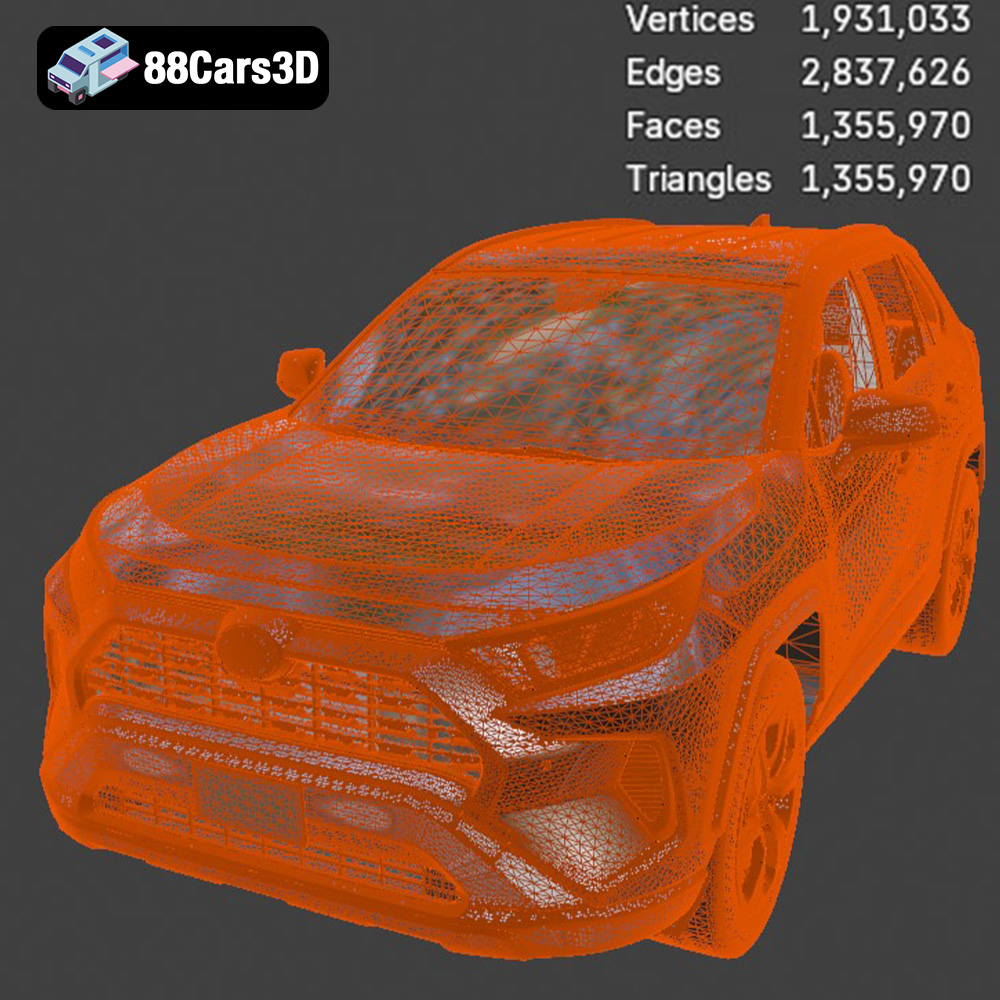
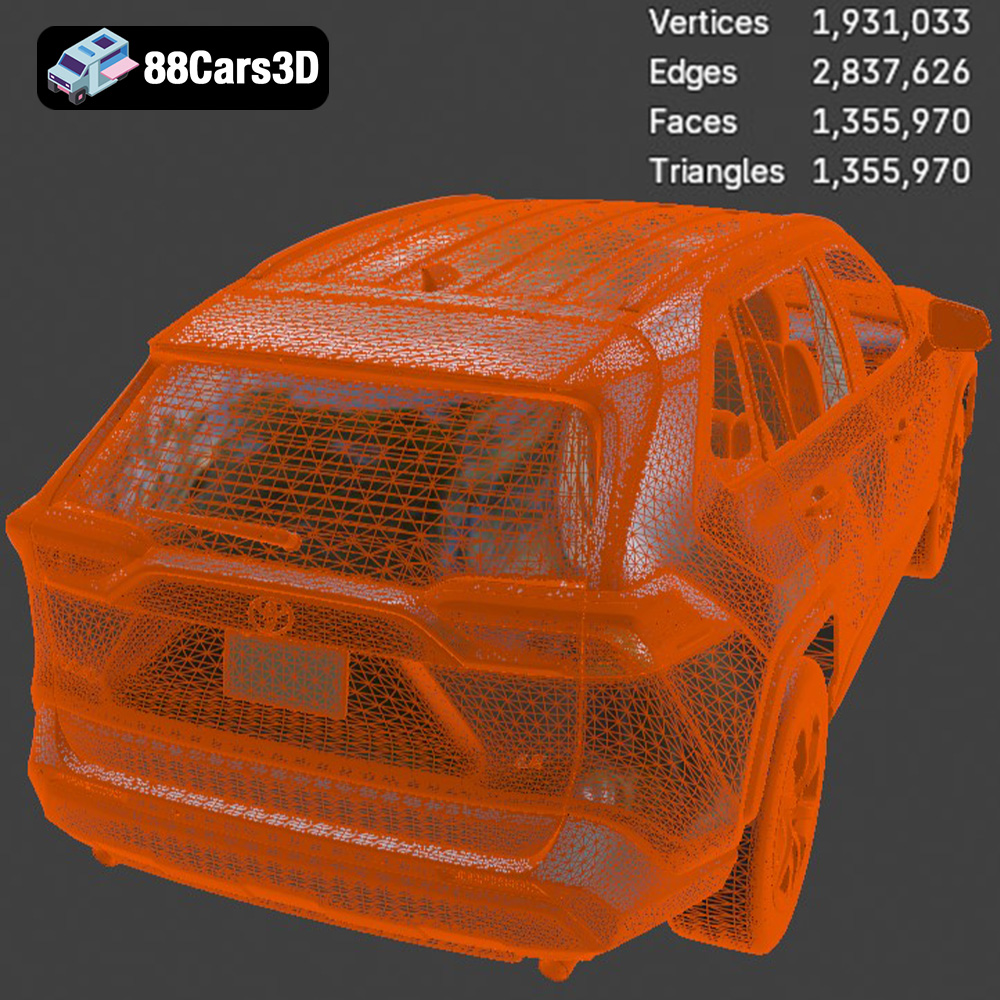
At the core of any high-quality 3D model lies its topology – the arrangement of vertices, edges, and faces that define its surface. For automotive models, clean, efficient topology is paramount. It dictates how well the model deforms if animated, how easily it can be modified, and crucially, its performance in real-time engines. A model like the RAV4 LE 2019 is engineered with an optimized triangle count, typically around 200,000 triangles. This strikes a perfect balance: enough polygons to capture the rugged, chiseled styling and intricate curves without overwhelming graphics processors in games or AR/VR applications. This “game-ready” optimization is a critical advantage, ensuring smooth frame rates and efficient rendering across diverse platforms. Proper poly flow ensures smooth reflections on car paint, crucial for photorealistic automotive rendering.
True fidelity in 3D car models extends beyond just shape; it dives into the minute details that bring a vehicle to life. The Toyota RAV4 LE 2019 3D Model shines in this regard, meticulously replicating the actual vehicle’s features.
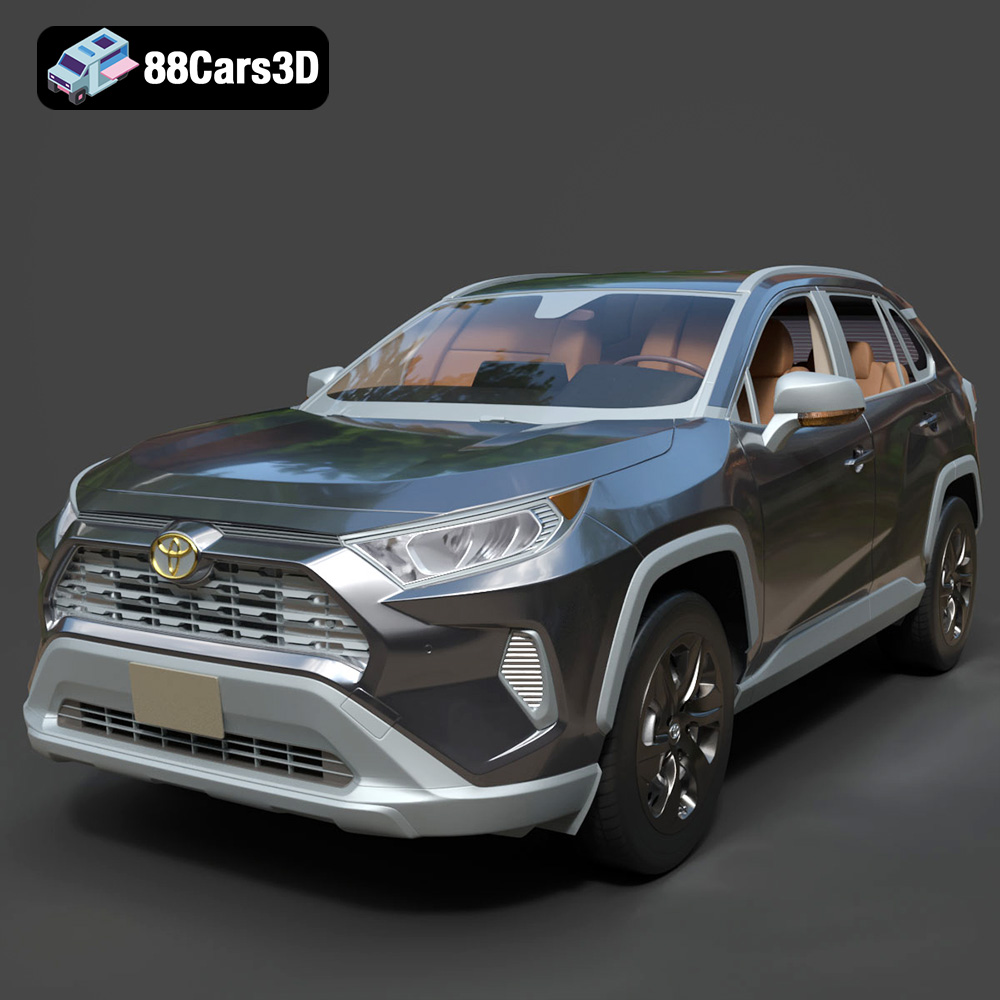
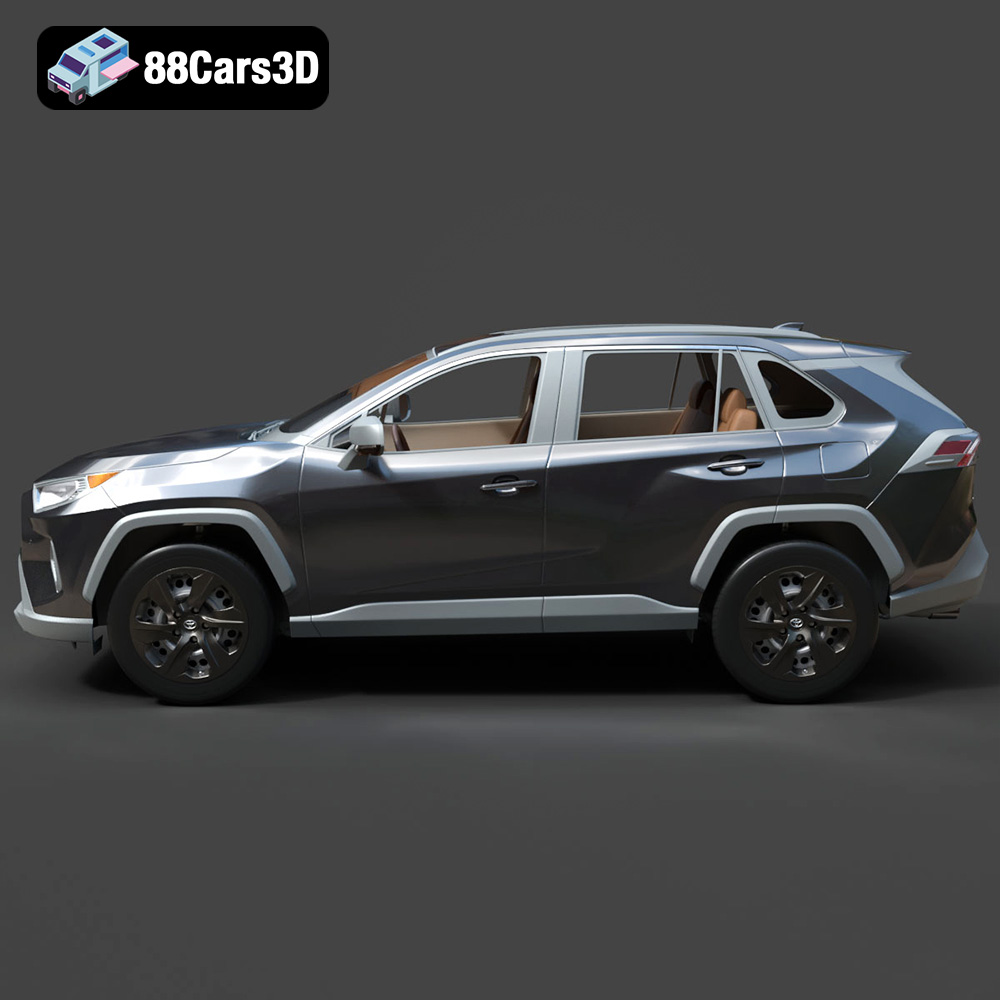
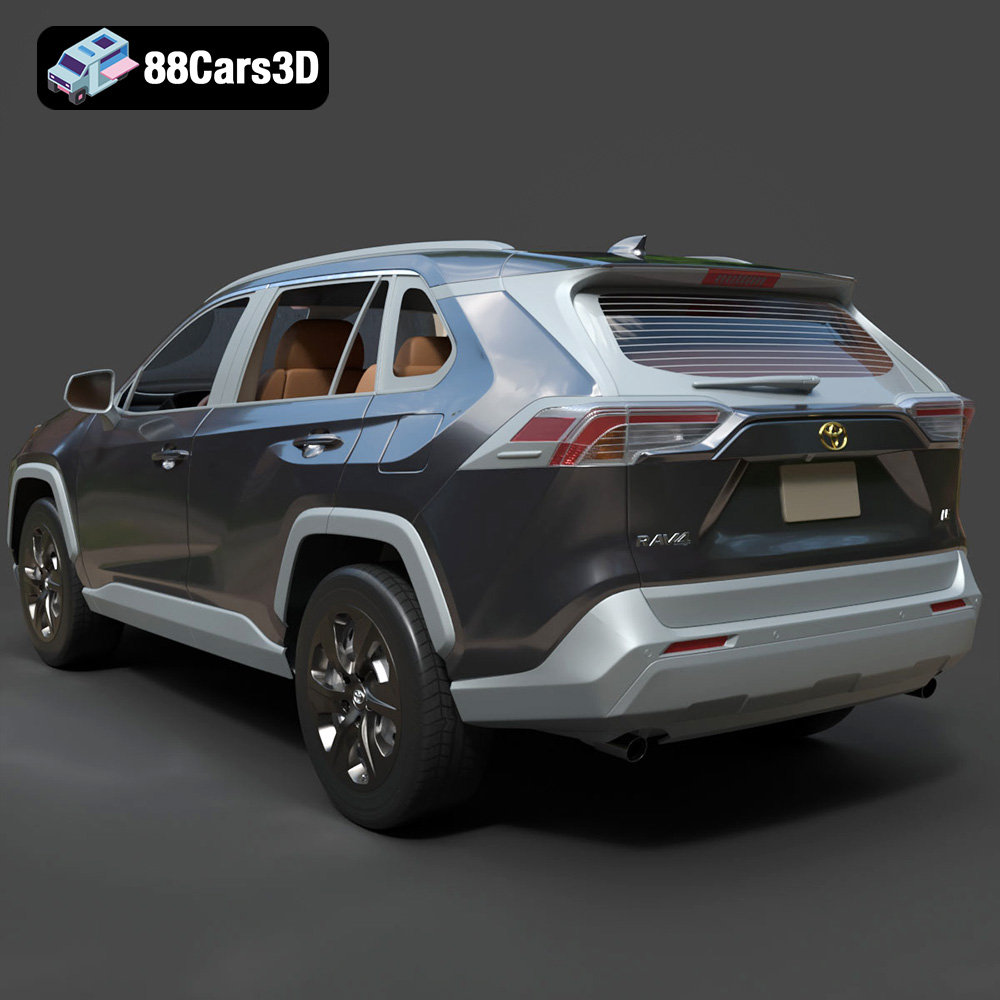
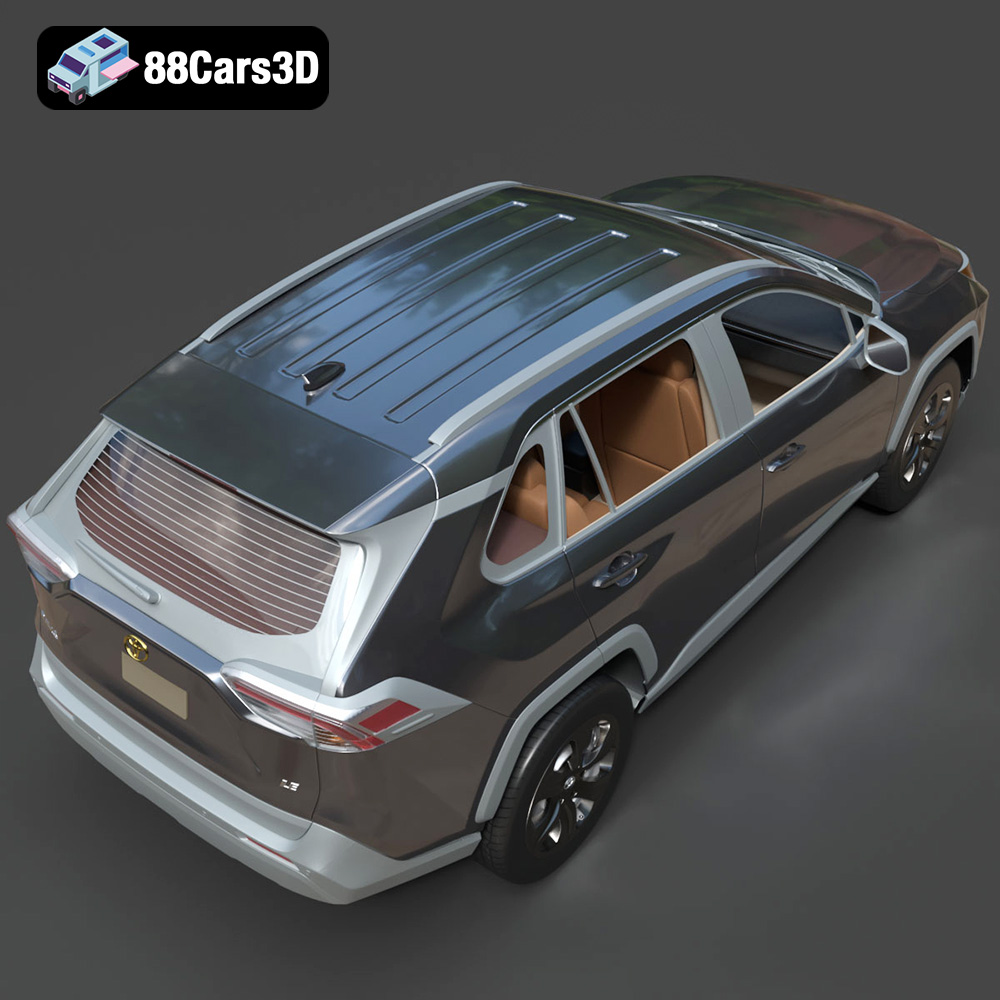
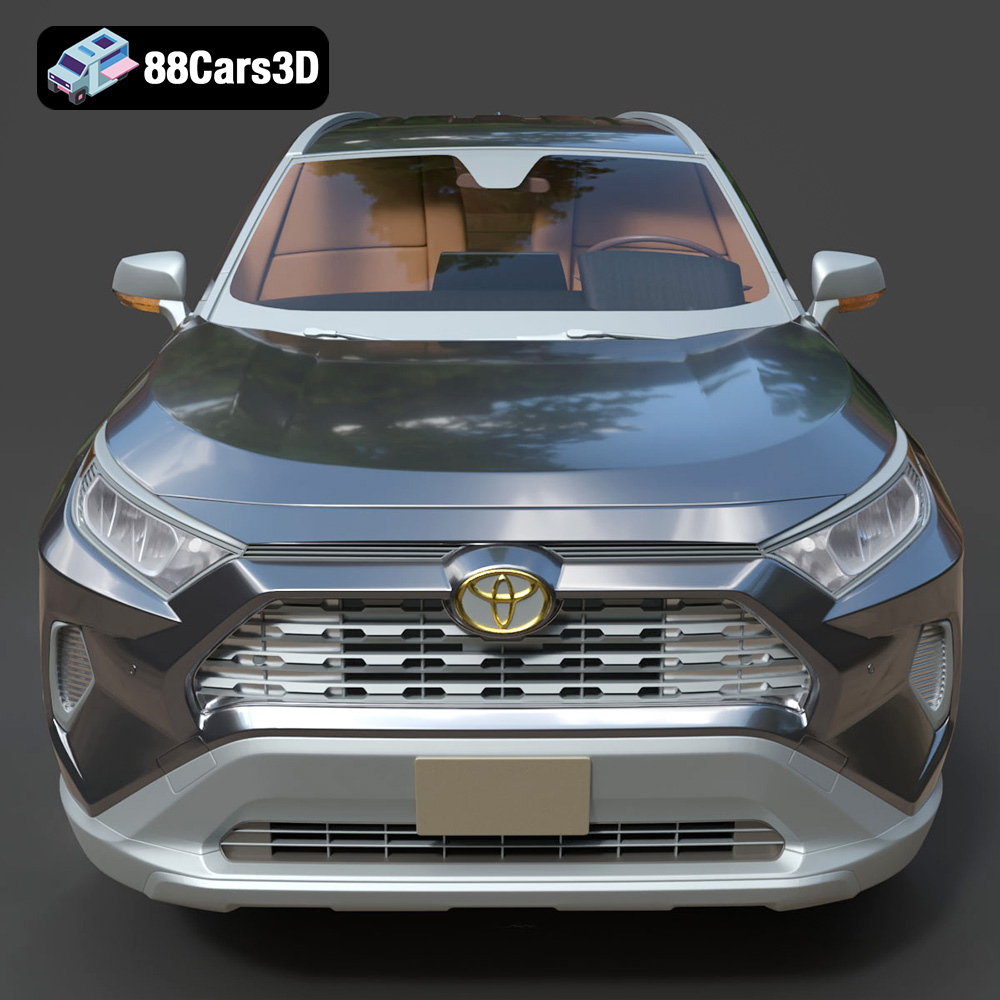
From the distinctive front grille and striking LED headlights to the aerodynamic profile and realistic dual exhaust styling, every element of the RAV4 LE 2019’s exterior geometry and proportions is accurately captured. This includes intricate headlight and taillight assemblies with their specific LED signatures, accurate 17-inch steel wheel designs with detailed tire treads, and even the independent MacPherson strut front suspension. Critically, components like wheels, suspension, and steering are separated, providing essential pivot setups for realistic animation and interactive simulations.
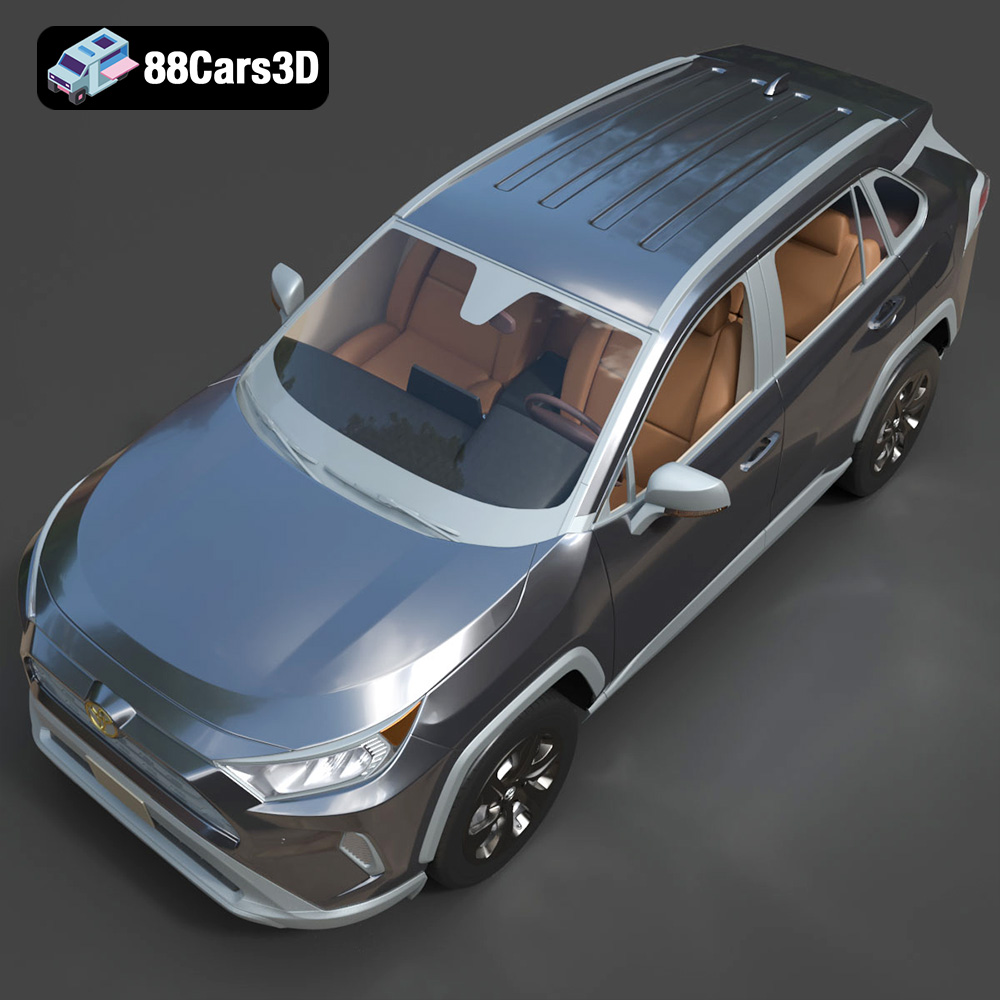
The interior often defines a user’s immersive experience, especially in first-person perspectives for gaming or virtual showrooms. The RAV4 LE 2019 model features an accurately modeled fabric-trimmed seating, a detailed multi-function steering wheel, a high-fidelity digital and analog instrument cluster, and a precise center console with climate controls, pedals, and shifter. This optimized interior geometry ensures that whether viewed from outside or from the driver’s seat, the model maintains a high level of visual realism without unnecessary polygon overhead.
The true value of a versatile 3D asset like the Toyota RAV4 LE 2019 lies in its adaptability across a spectrum of professional applications. Its multi-format availability and optimized structure make it a cornerstone for various production pipelines.
High-quality 3D car models are the bedrock of automotive rendering. In software like 3ds Max, Blender, or Maya, paired with rendering engines such as V-Ray, Corona, Cycles, or Redshift, models can be brought to photorealistic life.
Professionals utilize the RAV4 LE 2019 model in sophisticated studio lighting setups, employing HDRI (High Dynamic Range Image) environments for realistic reflections and global illumination. Material setup, adhering to PBR (Physically Based Rendering) principles, is crucial for simulating authentic paint clear coats, rubber textures, chrome, and glass. The model’s clean topology ensures that light reflects accurately off its surfaces, contributing to stunning visual fidelity. These renders are indispensable for brand campaigns, virtual showrooms, and lifestyle scenes where the vehicle needs to be presented in its best light. 88cars3d.com offers a range of models, including the RAV4, that are perfect for these high-stakes visualization projects.
Beyond dedicated car renders, these models are frequently integrated into broader architectural visualizations, placing the vehicle in driveways, parking lots, or urban scenes to provide context and scale. For product visualization, the RAV4 LE 2019 could be featured alongside compatible accessories or lifestyle items, creating compelling narratives for marketing collateral.
Game development presents unique challenges, balancing visual quality with stringent performance requirements. The Toyota RAV4 LE 2019 3D Model is specifically designed with these demands in mind.
For Unreal Engine, the .fbx or even the dedicated .unreal format (if provided as a pre-packaged asset) streamlines the import process. Developers can quickly set up PBR materials, utilizing Unreal’s robust material editor to create physically accurate shaders for car paint, glass, and tires. Critical elements for gameplay include setting up collision meshes to ensure realistic interactions with the environment and implementing LODs (Levels of Detail). LODs automatically swap out higher-polygon versions of the model for lower-polygon ones as the camera moves further away, maintaining performance without a noticeable drop in visual quality. The RAV4’s proper pivot setup for steering, wheel rotation, and suspension travel is a huge asset for programmers, simplifying the implementation of realistic vehicle physics and animations.
Due to its optimized polycount and meticulous detailing, the RAV4 LE 2019 is ideal for populating open-world games, acting as AI traffic, player vehicles, or environmental dressing. In racing titles and simulators, its accurate physical dimensions and animatable components contribute to an authentic driving experience.
The rise of augmented reality and virtual reality demands highly optimized 3D assets that can perform on diverse hardware, from high-end VR headsets to mobile smartphones.
The .glb format, included with the RAV4 LE 2019 model, is specifically tailored for these use cases. Its compact, single-file nature makes it perfect for quick loading in web-based AR applications, mobile AR (ARKit, ARCore), and VR environments. This allows for the creation of immersive virtual showrooms, interactive vehicle configurators, or engaging mobile AR experiences where users can place the RAV4 in their real-world environment. Performance considerations here are paramount, as even a slightly heavy model can cause lag and break immersion.
The utility of a high-quality 3D model extends beyond digital displays, reaching into the realm of physical creation through 3D printing. The Toyota RAV4 LE 2019 3D Model offers an excellent foundation for fabricating tangible representations.
For 3D printing, the .stl format is the standard. However, simply converting a visualization model to .stl isn’t always enough. The model must have “manifold” geometry, meaning it must be a completely watertight mesh with no holes, inverted normals, or overlapping faces. These issues, while often invisible in digital renders, can cause print failures.
The product’s technical specifications offer clear guidance:
Once printed, the physical model requires careful post-processing to achieve a professional finish. This involves sanding to remove layer lines, applying primer to create a uniform surface, and then painting with authentic factory colors or custom finishes. Metallic finishes, accurately applied, can mimic the car’s original paintwork. This meticulous process transforms a raw 3D print into a display-worthy replica, appealing to hobbyists, collectors, and designers who need physical prototypes for concept validation.
The inherent flexibility of a professionally crafted 3D model like the Toyota RAV4 LE 2019 allows for extensive customization, empowering artists and developers to tailor the asset to their specific project requirements.
One of the most common and impactful customizations is altering the vehicle’s appearance through material adjustments. This includes:
The importance of well-structured UVs (Unwrap UVW) cannot be overstated here. Clean, non-overlapping UVs ensure that textures map correctly and can be easily modified without distortion. Properly assigned material IDs also simplify the process of targeting specific parts for material changes.
A vehicle model rarely exists in a vacuum. Its visual impact is heavily influenced by the environment it’s placed in and the lighting conditions. The Toyota RAV4 LE 2019 can be seamlessly adapted to various environmental lighting scenarios:
Compositing techniques further enhance realism, blending the rendered vehicle seamlessly into photographic backgrounds or real-time footage. This adaptability makes the RAV4 LE 2019 an incredibly versatile asset for diverse marketing campaigns, virtual photography, and cinematic productions.
The journey of a 3D car model from concept to a deployable asset is a complex one, demanding an intricate blend of artistic skill, technical acumen, and a keen understanding of diverse industry pipelines. High-quality 3D car models are not just digital representations; they are robust tools that save countless hours of development, enhance visual fidelity, and provide unparalleled flexibility for customization. The Toyota RAV4 LE 2019 3D Model stands as a prime example of such an asset – meticulously detailed, technically optimized, and available in a wide array of formats to serve game developers, automotive renderers, AR/VR creators, and even 3D printing enthusiasts. Whether you are aiming for a photorealistic advertisement, an immersive gaming experience, or a physical prototype, investing in a professionally crafted 3D model ensures you have a solid foundation for achieving exceptional results. Explore the vast potential of premium 3D models and elevate your projects by visiting 88cars3d.com, where quality and versatility drive innovation.
The Toyota RAV4 LE 2019 represents a bold, dynamic shift in the compact SUV segment. Known for its rugged, chiseled styling inspired by Toyota’s off-road heritage, this 3D model captures the essence of the LE trim with its distinctive front grille, striking LED headlights, and aerodynamic profile. Crafted with precision, this high-quality 3D model features excellent topology with an optimized triangle count, ensuring game-ready performance without compromising visual fidelity. It is perfectly suited for use in real-time engines, game development, AR/VR experiences, and high-end architectural or lifestyle visualizations. Perfect for urban driving simulations, virtual showrooms, suburban environment renderings, and interactive vehicle configurators.
$39.99
.blend
.fbx
.glb
.max
.obj
.ply
.rendering
.stl
.toyota
.unreal
car-3d-model
compact-suv
game asset
game-ready
low-poly
optimized
rav4
rav4-le-2019
SUV
VR/AR