Get 20% OFF All Premium 3D & STL Models!

In the dynamic world of digital visualization, the demand for breathtaking realism and unparalleled detail in 3D assets continues to soar. From blockbuster films and cutting-edge game titles to compelling advertising campaigns and immersive virtual experiences, high-quality 3D car models are no longer a luxury but a fundamental necessity. These digital masterpieces serve as the cornerstone for creative professionals looking to bring their automotive visions to life with precision and authenticity.
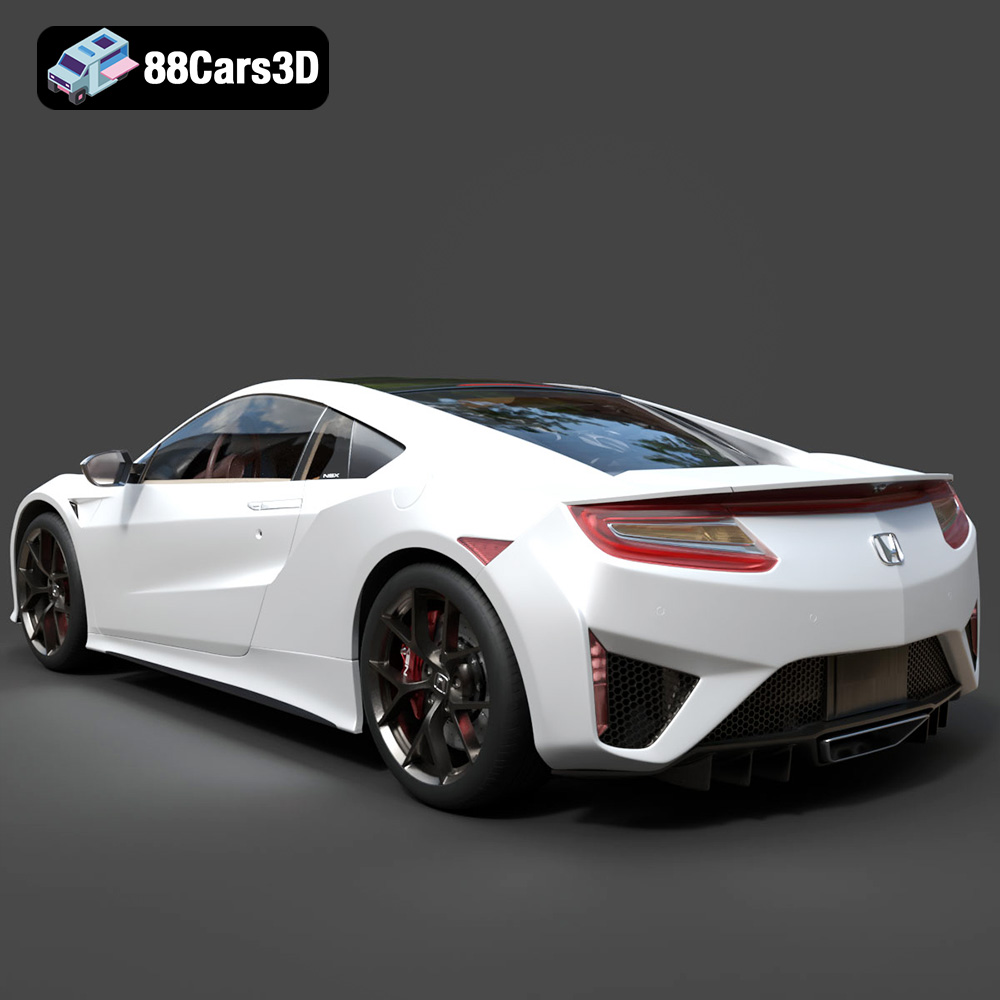
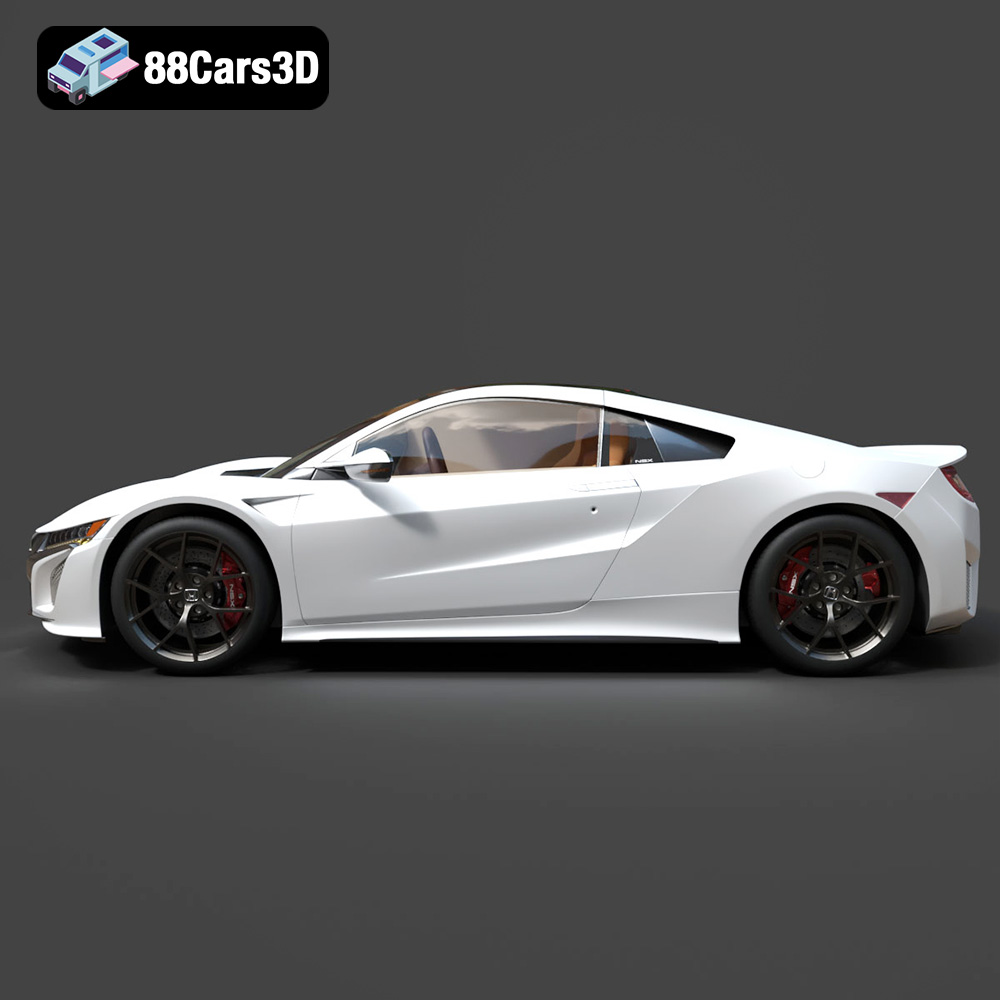
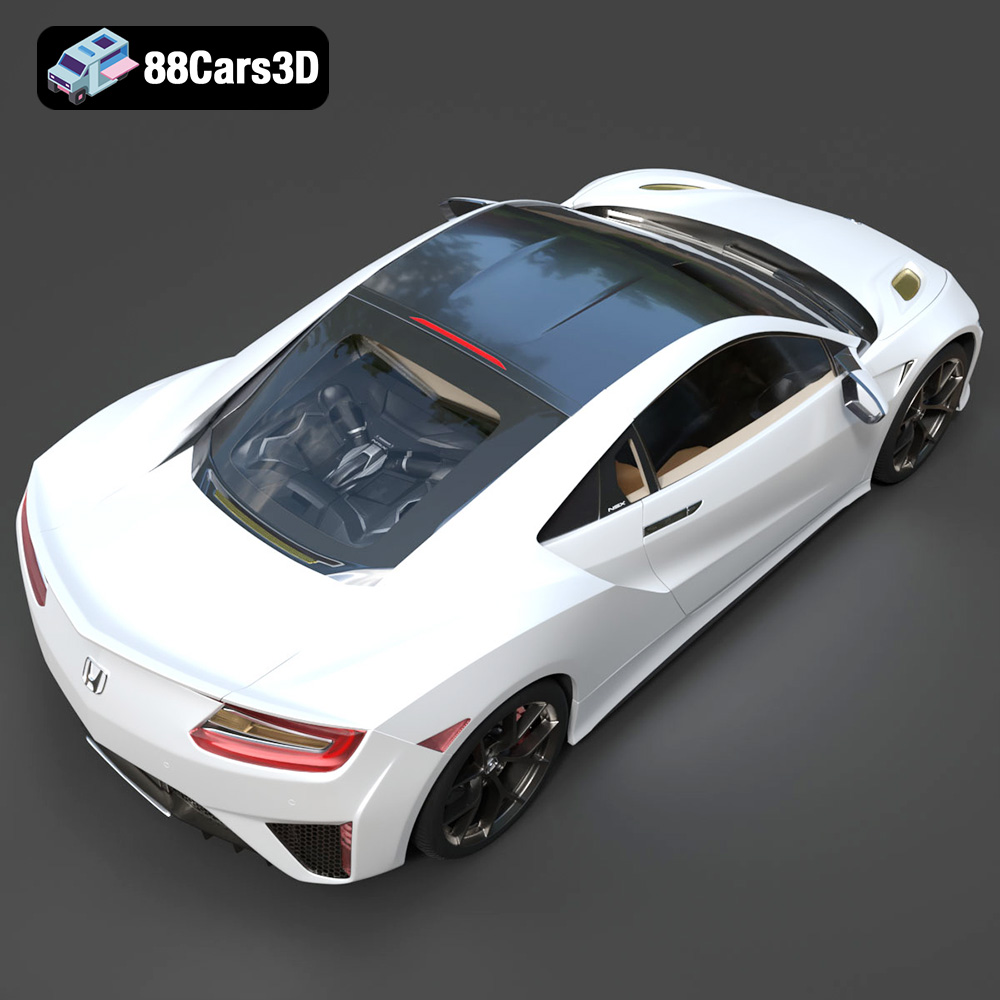
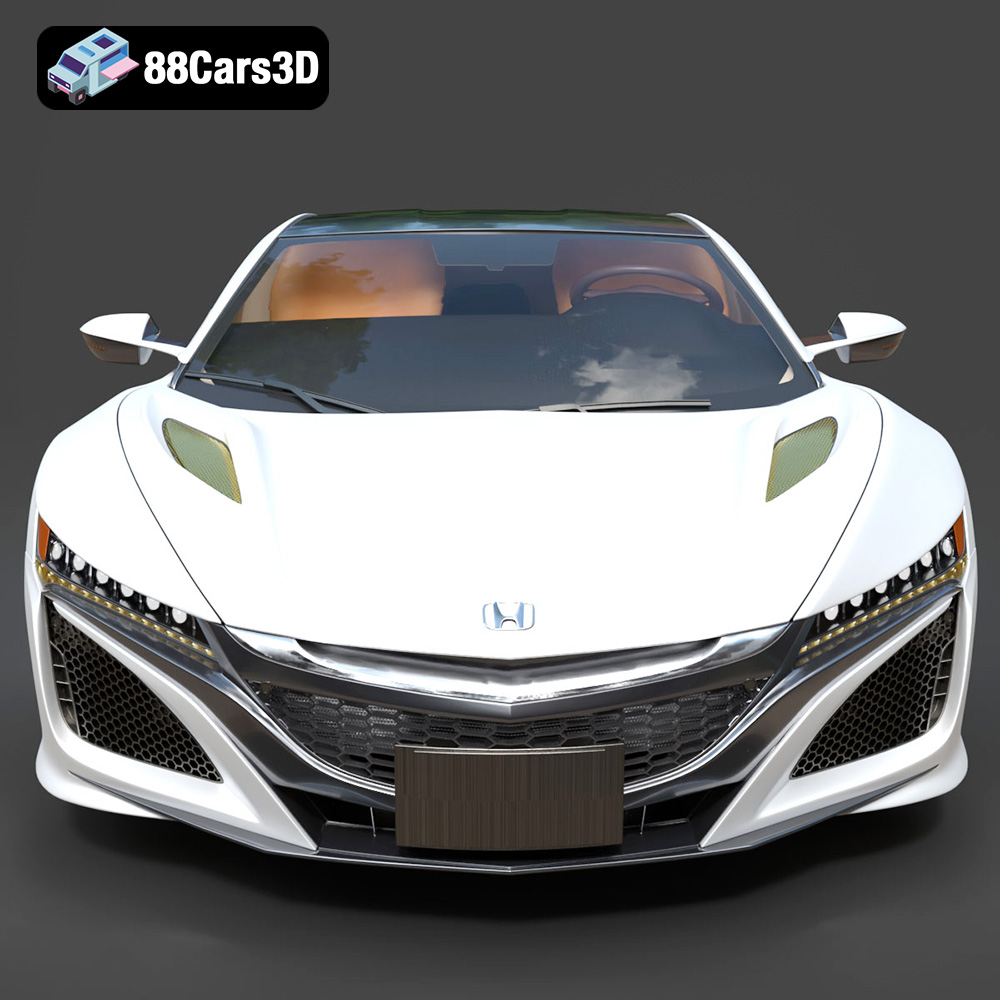
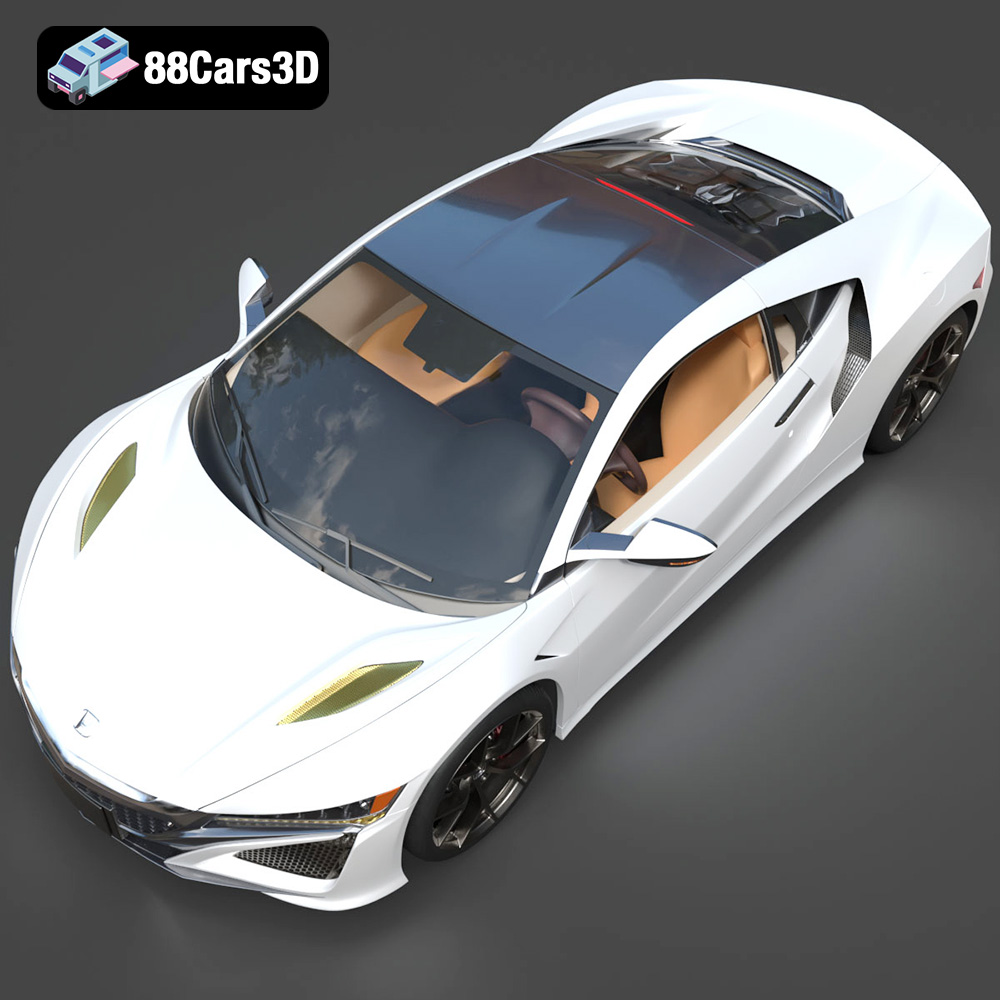
A prime example of such an asset is the Honda NSX 2017 3D Model, a meticulously crafted representation of one of the most iconic hybrid sports cars. Its intricate detailing and versatile compatibility make it an invaluable resource for a myriad of projects. This article delves into the technical aspects, professional workflows, and diverse applications of premium 3D car models, illustrating how assets like the Honda NSX 2017 3D Model empower artists and developers to achieve stunning results across various industries.
The automotive industry has embraced 3D visualization with open arms, transforming how vehicles are designed, marketed, and experienced. The ability to create, iterate, and showcase cars in a digital environment offers unparalleled flexibility and cost-efficiency.
At every stage of a vehicle’s lifecycle, 3D models play a critical role. Designers use them for initial concept sketching and detailed CAD work, visualizing forms and functions long before physical prototypes are built. Engineers leverage these models for aerodynamics simulations and structural analysis. Marketing teams then take over, using these assets to generate photorealistic images and animations for advertisements, configurators, and virtual showrooms. The Honda NSX 2017, known for its striking design and advanced engineering, perfectly exemplifies a vehicle whose digital representation can inspire and inform at every phase.
In a competitive market, realism is paramount. Consumers expect to see vehicles presented with impeccable detail, from the reflections on the paintwork to the stitching on the interior upholstery. High-fidelity 3D car models ensure brand consistency and emotional engagement. For game developers, accurate models contribute to immersive gameplay, while for cinematic artists, they provide the visual fidelity needed for believable storytelling. The Honda NSX 2017 3D Model, with its “unparalleled realism” and “meticulously crafted” details, stands as a testament to this crucial demand for authenticity, making it an ideal choice for high-end automotive rendering projects.
The versatility of a professional 3D model is often defined by the range of file formats it supports. Each format is designed with specific use cases and technical considerations in mind, ensuring compatibility across different software and platforms. The Honda NSX 2017 3D Model, available on 88cars3d.com, exemplifies this by offering a comprehensive suite of industry-standard formats, making it adaptable for virtually any project.
The .blend format is the native file type for Blender, a powerful open-source 3D creation suite. When you receive a model in .blend format, you’re getting an entire Blender scene, complete with the model’s geometry, materials, textures, lighting setups, and sometimes even animation data. This format is ideal for Blender users who need full editability, allowing them to modify the mesh, adjust materials, re-rig, or integrate the model into a larger Blender project without any conversion losses. Technical users appreciate the ability to dive deep into the model’s construction, understand its shader networks, and adapt it precisely to their needs.
FBX (Filmbox) is an Autodesk-developed proprietary file format widely recognized as the industry standard for 3D data exchange, particularly within game development and real-time applications. It supports geometry, materials (though material translation can be tricky between software), textures, bones, skinning, and animation data. Its robust support for animation and scene hierarchy makes it the go-to choice for importing models into game engines like Unreal Engine and Unity. When using an .fbx for the Honda NSX 2017 3D Model, developers can expect a smooth import process, retaining much of the original asset’s integrity for creating compelling game assets.
OBJ (or .obj) is one of the oldest and most widely supported 3D file formats, making it a universal choice for simple geometry exchange. It stores vertex positions, UV coordinates, normals, and face information. Material properties are typically referenced in a separate .mtl (Material Template Library) file. While it doesn’t support animation or complex scene data, its simplicity ensures compatibility across virtually all 3D software packages, from ZBrush to Maya to 3ds Max. For static renders or base meshes, the .obj version of the Honda NSX 2017 3D Model provides a clean, universally accessible foundation.
GLB is the binary version of glTF (GL Transmission Format), an open-standard 3D file format developed by the Khronos Group. It’s designed for efficient transmission and loading of 3D scenes and models by applications, particularly in web-based, AR, and VR environments. A .glb file encapsulates geometry, materials (often PBR-ready), textures, and animation into a single, compact file. This “all-in-one” package makes it incredibly convenient for quick integration into platforms requiring optimized, real-time rendering, such as those used for interactive product viewers or virtual showrooms.
STL (STereoLithography) is the most common file format for 3D printing. It represents a 3D object as a series of connected triangles (tessellation) without any color, texture, or material information. While simplistic, its ubiquity in manufacturing workflows means that any model destined for physical output, like a miniature prototype of the Honda NSX, will likely need to be converted or provided in .stl format. Precision and watertight meshes are crucial for successful 3D prints.
PLY (Polygon File Format) is another common format for storing 3D data, particularly useful for scanned data, CAD models, and scientific applications. It’s more versatile than .stl, as it can store not only geometry but also color, transparency, normals, texture coordinates, and even data like confidence values for each vertex. This makes .ply a valuable format for detailed analysis, reverse engineering, or when preserving intricate mesh attributes from a scan of a real car, for instance.
This isn’t a standalone file format in the traditional sense, but rather a descriptor for a model that has been pre-configured and packaged specifically for Unreal Engine. It implies the model has been imported into Unreal, potentially set up with appropriate materials, LODs (Levels of Detail), physics assets, and even basic Blueprints for interactive functionality. For developers working with Unreal Engine, an “.unreal” version of the Honda NSX 2017 3D Model provides a significant head start, saving hours of configuration time and ensuring optimal performance within the engine.
The .max file is the native format for Autodesk 3ds Max, a leading software for 3D modeling, animation, and rendering. Similar to .blend, a .max file contains the complete scene data, including geometry, modifiers, materials (V-Ray, Corona, Arnold, etc.), lighting, cameras, and animation keyframes. For professionals in architectural visualization or high-end cinematic production using 3ds Max, this format offers maximum control and flexibility, allowing for complex scene assembly, advanced material tweaking, and sophisticated animation sequences for the Honda NSX 2017 3D Model.
The availability of these diverse formats, as provided for the Honda NSX 2017 3D Model on 88cars3d.com, underscores the commitment to professional utility and broad compatibility, ensuring that artists and developers have the right tool for every job.
What truly distinguishes a premium 3D car model from a mediocre one lies in its technical foundation. Quality isn’t just about how it looks, but how it’s built.
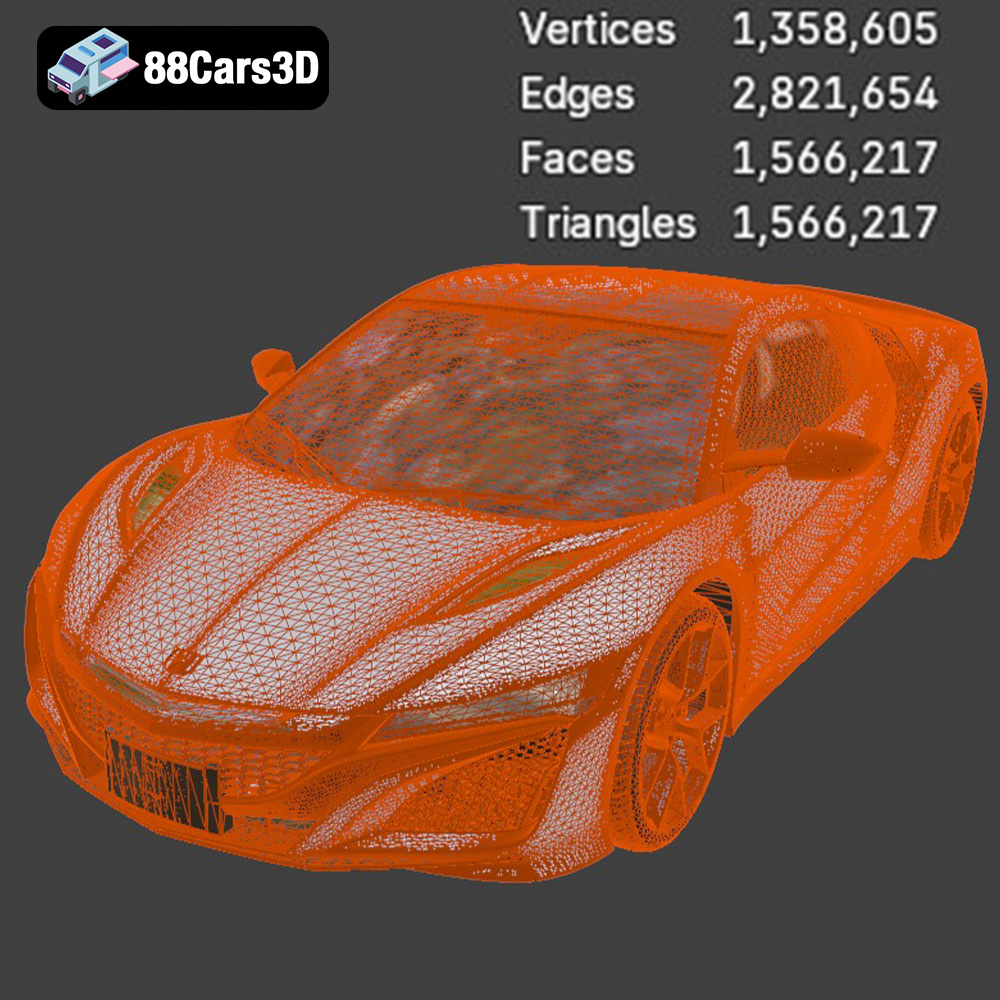
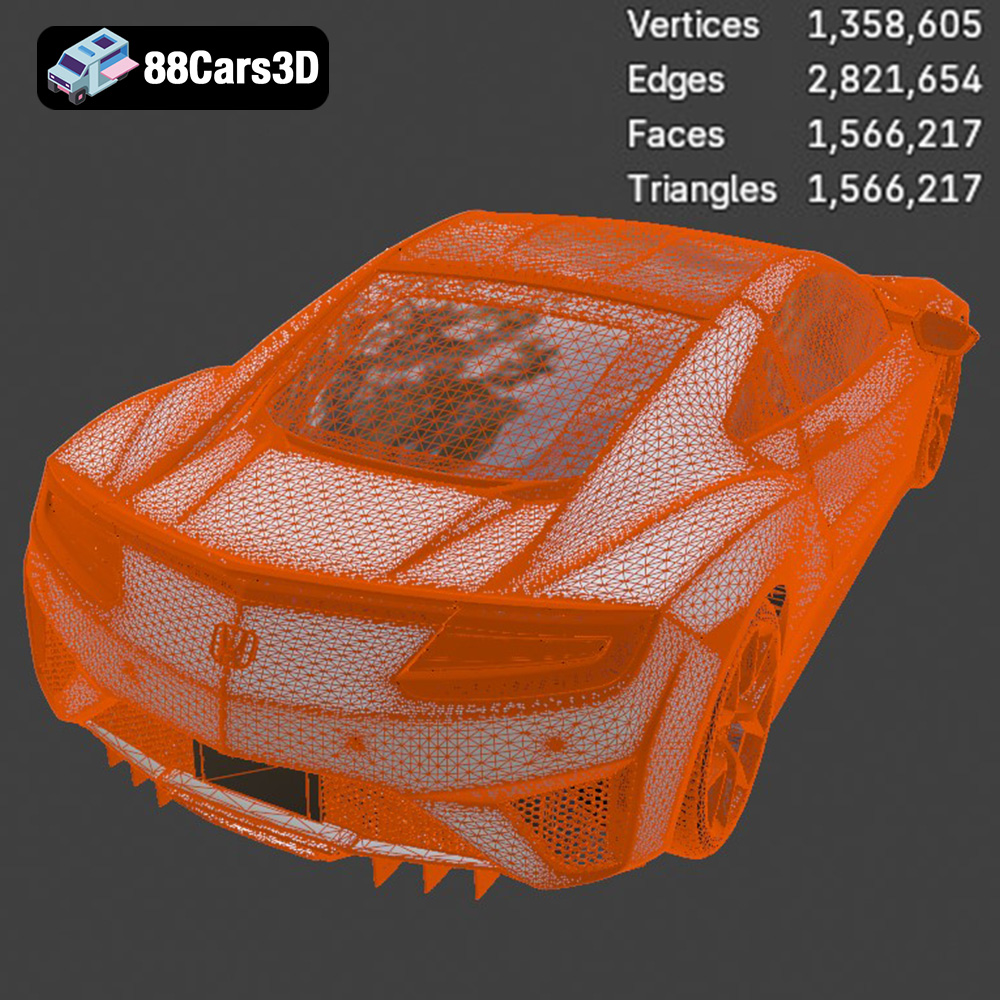
The “clean geometry” and “professional-grade polygon structures” mentioned in the Honda NSX 2017 3D Model‘s description are critical. High-quality models are built with efficient quad-based topology, meaning the mesh consists primarily of four-sided polygons. This ensures smooth subdivision, crucial for creating photorealistic surfaces, and prevents pinching or artifacts during deformation or animation. A clean mesh also has an optimized poly count – high enough for intricate detail, but not so excessive that it bogs down performance in real-time applications. Understanding this balance is key for creating versatile `game assets` and rendering-ready models.
Realistic materials are achieved through physically based rendering (PBR) workflows, which accurately simulate how light interacts with surfaces. This involves diffuse, metallic, roughness, normal, and ambient occlusion maps. A premium model will have carefully crafted PBR textures at appropriate resolutions (e.g., 4K or 8K). Equally important is professional UV mapping – the process of unwrapping the 3D mesh onto a 2D plane so textures can be applied without stretching or distortion. Non-overlapping UVs are essential for baking lighting and avoiding issues in game engines. The Honda NSX 2017 3D Model boasts “realistic materials” and aims for “true-to-life reflections,” indicating meticulous attention to these details.
For demanding applications like game development or large-scale virtual environments, optimization is paramount. High-quality 3D car models often include multiple Levels of Detail (LODs). These are progressively simpler versions of the model that are swapped in and out based on the camera’s distance, drastically improving performance without sacrificing visual quality up close. Further optimization includes efficient material instancing, draw call reduction, and careful use of transparency, all of which contribute to a model’s seamless integration into any visual environment.
The true power of a versatile 3D asset like the Honda NSX 2017 3D Model lies in its ability to integrate effortlessly into various professional production pipelines. Let’s explore some common workflows.
For cinematic quality visuals and advertising campaigns, 3ds Max and Blender are often the software of choice for automotive rendering.
3ds Max Workflow: Importing the .max file of the Honda NSX 2017 3D Model provides a ready-to-render setup. Artists can leverage powerful renderers like V-Ray or Corona to achieve photorealistic results. This involves fine-tuning material parameters, setting up complex studio lighting, adding environmental reflections, and choosing ideal camera angles. The editable nature of the .max file allows for intricate adjustments to geometry, custom animations of doors or wheels, and integration into detailed scenes with environments and characters.
Blender Workflow: Using the .blend file, Blender users can immediately access the pre-configured model within Cycles or Eevee. The scene might already contain basic lighting and materials, allowing artists to focus on refining the aesthetics. Blender’s node-based material system offers immense flexibility for creating custom paint shaders, realistic glass, and intricate interior fabrics. Combining the NSX model with Blender’s animation tools enables the creation of dynamic camera movements, car turntable presentations, or even complex chase sequences, all with stunning visual fidelity.
When developing immersive games or real-time interactive experiences, models need to be optimized for performance. The Honda NSX 2017 3D Model‘s .fbx or .unreal formats are specifically tailored for this.
Unreal Engine Integration: The .fbx file can be directly imported into Unreal Engine, where artists can then set up PBR materials, add collision meshes, and configure LODs for optimal performance. The pre-configured .unreal asset takes this a step further, potentially offering a drag-and-drop solution with materials, textures, and even basic interaction blueprints already set up. Developers can then integrate the NSX into a driving simulation, an open-world game, or a virtual showroom, complete with interactive elements like opening doors or custom paint jobs. The “game-engine ready format” ensures this model functions as a top-tier `game asset`.
For augmented reality (AR), virtual reality (VR), and interactive web-based visualizations, efficiency and portability are paramount. The .glb format of the Honda NSX 2017 3D Model shines here.
Leveraging .glb: This compact, self-contained format is ideal for rapidly deploying the NSX into AR apps on mobile devices, VR experiences for headsets, or interactive 3D viewers directly within a web browser. Its PBR material support ensures realistic appearance even in these lighter-weight environments. Imagine a prospective buyer viewing the NSX in their driveway via AR, or exploring its interior in a fully immersive VR showroom – the .glb model makes these experiences seamless and visually compelling.
High-quality 3D car models like the Honda NSX 2017 3D Model are versatile tools that find applications across numerous sectors, pushing the boundaries of what’s possible in digital content creation.
Before a single physical vehicle rolls off the assembly line, `3D car models` are used to generate stunning marketing collateral. From glossy brochure images and captivating TV commercials to dynamic online configurators that allow customers to customize their dream car, digital models provide unparalleled flexibility. Companies can showcase different paint colors, wheel options, and interior trims without manufacturing physical prototypes, saving immense time and cost. The Honda NSX 2017 3D Model, with its “exceptional detail,” is perfect for creating these high-impact visuals that define a product’s launch campaign.
Beyond marketing, realistic 3D car models are vital in simulation and training. Flight simulators have long utilized detailed aircraft models, and the automotive world is no different. Driver training programs, autonomous vehicle development, and even virtual testing of vehicle dynamics rely on accurate digital representations. These simulations provide a safe, controlled, and repeatable environment to test scenarios that would be dangerous or impractical in the real world. The precision of a model like the NSX allows engineers to simulate its performance characteristics with high fidelity.
The rise of AR/VR technology has opened new avenues for customer engagement. Virtual showrooms powered by assets from marketplaces like 88cars3d.com allow potential buyers to explore a vehicle’s features and design in an immersive digital space from anywhere in the world. They can walk around the car, open doors, inspect the interior, and even take it for a virtual test drive. These interactive experiences leverage high-quality `game assets` to provide a truly engaging pre-purchase journey, giving consumers an unprecedented level of interaction with a product like the Honda NSX 2017 3D Model.
The utility of high-quality 3D models extends beyond purely digital realms, bridging the gap between virtual design and physical realization.
With the advent of advanced 3D printing technologies, precise digital models can be transformed into tangible objects. The .stl and .ply formats of the Honda NSX 2017 3D Model are critical here. Designers can print scale models for physical review, create custom parts, or even produce prototypes for wind tunnel testing. This rapid prototyping capability significantly accelerates the design cycle, allowing for quick iteration and validation of physical forms and ergonomic considerations.
Having a physical model derived directly from the digital design offers invaluable tactile feedback. Artists and engineers can assess proportions, surface continuity, and overall aesthetic appeal in a way that’s difficult to fully grasp on a 2D screen. This physical validation ensures that the final product meets both aesthetic and functional requirements, making the initial investment in a detailed 3D model like the NSX a versatile asset for both digital and physical design processes.
The journey from conceptual design to stunning digital presentation, and even physical prototyping, is intrinsically linked to the quality of 3D assets. High-fidelity `3D car models` are the backbone of modern visualization, empowering professionals across various industries to achieve unparalleled realism and efficiency. Whether for breathtaking `automotive rendering`, robust `game assets`, or innovative AR/VR experiences, the technical prowess and versatility of these models are indispensable.
The Honda NSX 2017 3D Model stands as an exemplary representation of what a premium asset should be: meticulously detailed, professionally structured, and offered in a multitude of formats to suit any workflow. It embodies the precision and fidelity required for top-tier production, proving that investing in quality digital assets is an investment in the success and realism of your projects. For artists and developers seeking to elevate their creations, exploring a curated selection of professional-grade 3D car models, such as those available on 88cars3d.com, is a fundamental step towards achieving visual excellence.
Experience unparalleled realism with the Honda NSX 2017 3D Model. Meticulously crafted to capture the sleek, aerodynamic lines and iconic stance of this legendary hybrid sports car, this model delivers exceptional detail for all your digital projects.
Key features include clean geometry, realistic materials, and professional-grade polygon structures. Every curve, panel, and interior element is designed to ensure seamless integration into any visual environment, providing true-to-life reflections and accurate proportions.
Perfect for a wide range of applications, this model excels in game development, architectural visualization, cinematic rendering, and AR/VR experiences. Whether used as a hero asset in an animation or an interactive vehicle in a virtual environment, it offers the fidelity required for professional production.
The model is delivered in multiple industry-standard file formats to ensure maximum compatibility:
$39.99
.arvr
.blend
.car3dmodel
.fbx
.gameasset
.glb
.honda
.max
.nsx
.obj
.ply
.rendering
.simulation
.sportsCar
.stl
.supercar
.unreal