Get 20% OFF All Premium 3D & STL Models!

In the vibrant world of 3D artistry and digital design, the allure of classic vehicles remains undiminished. Recreating an iconic automobile, motorcycle, or scooter in perfect digital fidelity is a demanding task, requiring not just technical skill but a deep appreciation for the original design. These digital assets are the backbone of everything from cinematic rendering and immersive game worlds to virtual reality experiences and intricate 3D prints. Among the pantheon of timeless designs, the Vespa GS 150 stands out as a true masterpiece—a symbol of Italian elegance, engineering, and a defining era in two-wheeled transport.
For designers, game developers, architects, and visualization specialists, having access to meticulously crafted 3D models of such legendary vehicles is invaluable. It saves countless hours of modeling from scratch, allowing more focus on creative implementation and project delivery. This is where a high-quality asset like the Vespa GS 150 3D Model from 88cars3d.com becomes an indispensable tool. It’s more than just a mesh; it’s a meticulously engineered digital replica, ready to be integrated into diverse professional workflows, from game development and cinematic automotive rendering to AR/VR applications and physical 3D printing.
The versatility of any professional 3D asset lies not just in its geometric accuracy and textual detail, but crucially, in the range of file formats it supports. Different stages of a production pipeline, different software applications, and different end-use cases demand specific formats, each with its own advantages and technical nuances. The Vespa GS 150 3D Model exemplifies this flexibility by offering a comprehensive suite of file formats, ensuring seamless integration into virtually any workflow.
The .blend format is native to Blender, one of the most powerful and widely used open-source 3D creation suites. When you download a .blend file, you’re not just getting a mesh; you’re receiving a complete Blender scene. This typically includes the model, its materials, textures, lighting setups, cameras, and even animation data if present. For artists primarily working in Blender, this format offers maximum editability. You can easily modify the topology, adjust materials, rig components, or port existing scene elements, making it ideal for deep customization and complex scene development.
.fbx (Filmbox) is a proprietary file format owned by Autodesk, but it has become an industry standard for interoperability, especially in game development and animation. It’s excellent for transferring 3D models, animation, and scene data between different software applications like Maya, 3ds Max, Blender, and crucially, game engines such as Unreal Engine and Unity. Its strength lies in its ability to encapsulate mesh, materials, textures, bone rigs, and animations into a single package. For the Vespa GS 150, the .fbx ensures that its optimized geometry, separate animatable parts, and material assignments are cleanly imported into real-time environments, maintaining performance and visual integrity.
The .obj (Wavefront Object) format is one of the oldest and most universal 3D file formats. It’s known for its simplicity and wide compatibility, making it a reliable choice for transferring geometric data between almost any 3D software. An .obj file primarily stores vertex positions, UV coordinates, normals, and face information. Material properties are typically referenced via a separate .mtl (Material Template Library) file. While it doesn’t support animation or rigging, its widespread support makes it an excellent fallback or starting point for users needing to import the Vespa GS 150 into less common software or for simpler static renders.
.glb (GL Transmission Format Binary) is the binary version of glTF, a royalty-free specification for the efficient transmission and loading of 3D scenes and models by applications. Think of it as the “JPEG for 3D.” It’s highly optimized for web-based 3D, AR (Augmented Reality), and VR (Virtual Reality) applications, as it packs geometry, materials, textures, and animation into a single, compact file. Its small file size and rapid loading capabilities make the Vespa GS 150 model perfect for virtual showrooms, interactive web experiences, and mobile AR apps where performance is paramount.
The .stl (Stereolithography) format is the de facto standard for 3D printing. It represents 3D surfaces as a series of connected triangles (a tessellation) without color, texture, or other CAD attributes. For hobbyists or professionals looking to physically manifest the Vespa GS 150, the .stl file is what they’ll feed into their slicer software. While it loses aesthetic data, it provides a robust, watertight mesh suitable for additive manufacturing, allowing for display-scale replicas or custom parts.
.ply (Polygon File Format or Stanford Triangle Format) is another format for storing 3D data, particularly useful for scanned data, CAD, and scientific applications where precision and additional per-vertex or per-face data (like color, transparency, or confidence values) might be needed. While less common for general artistic asset transfer than .fbx or .obj, its inclusion with the Vespa GS 150 offers an alternative for highly technical uses or specific data analysis workflows.
The inclusion of an .unreal file (often an asset package or a specific import setup for Unreal Engine) signifies that the model is already tailored for this powerful real-time engine. This could mean pre-configured materials, collision meshes, LODs (Levels of Detail), or even a basic Blueprint setup. For developers working with Unreal, this format dramatically accelerates the integration process, reducing the need for extensive post-import optimization and setup, ensuring the Vespa GS 150 is ready to roll into your virtual world with minimal fuss.
Finally, the .max format is the native file type for Autodesk 3ds Max, a long-standing industry standard for architectural visualization, automotive design, and animation. A .max file contains the complete scene, including models, materials, textures, lighting, cameras, and animation. For users deeply integrated into the 3ds Max ecosystem, this format offers the highest level of detail and control, perfect for high-fidelity rendering, complex scene construction, and advanced animation sequences featuring the Vespa GS 150.
The true value of a premium 3D asset lies in its meticulous attention to detail and technical craftsmanship. The Vespa GS 150 3D Model is a testament to this, offering an unparalleled digital recreation of this iconic scooter, balanced with optimization for modern pipelines.
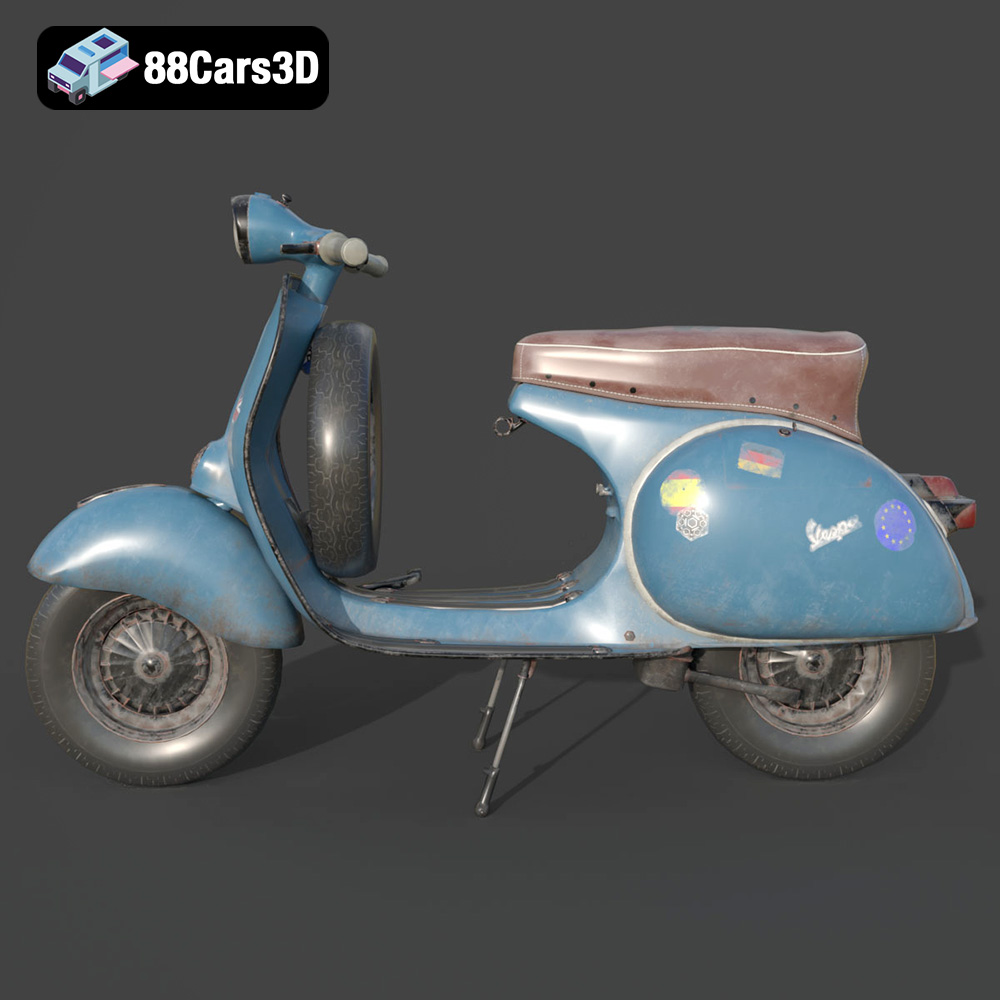
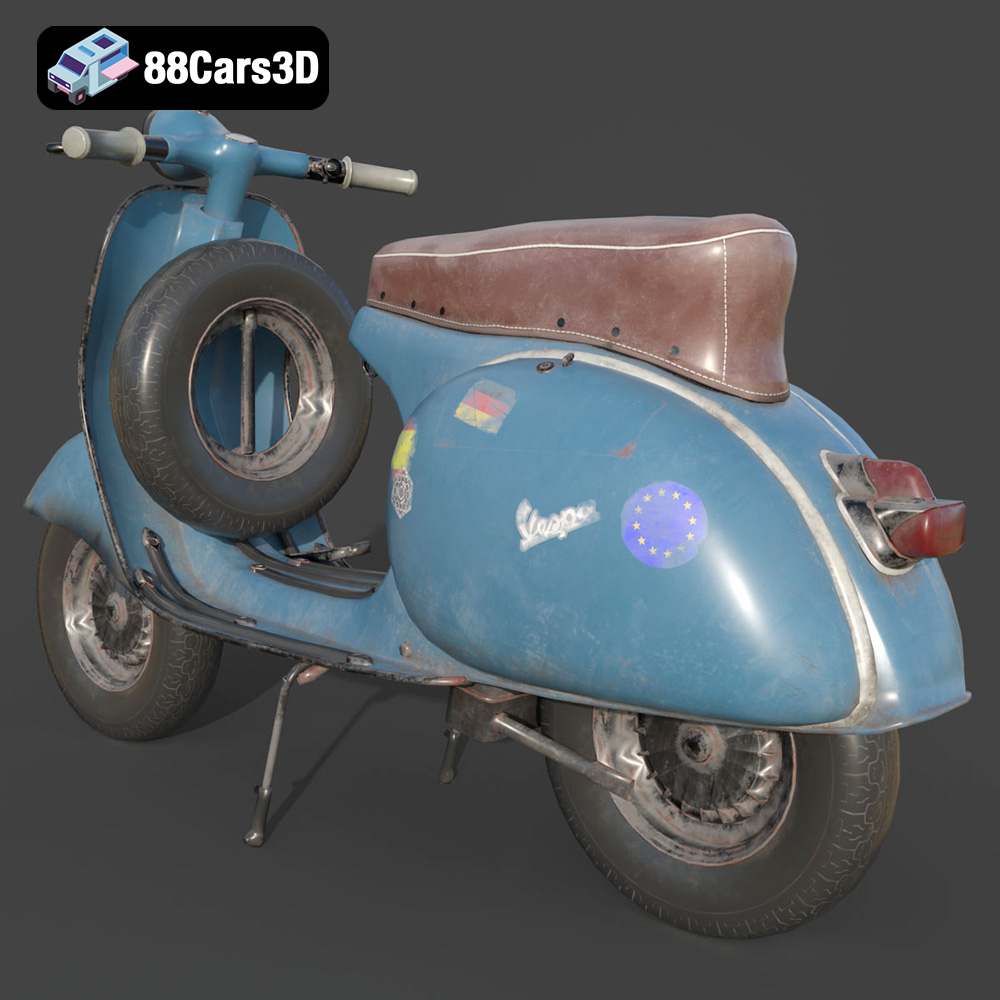
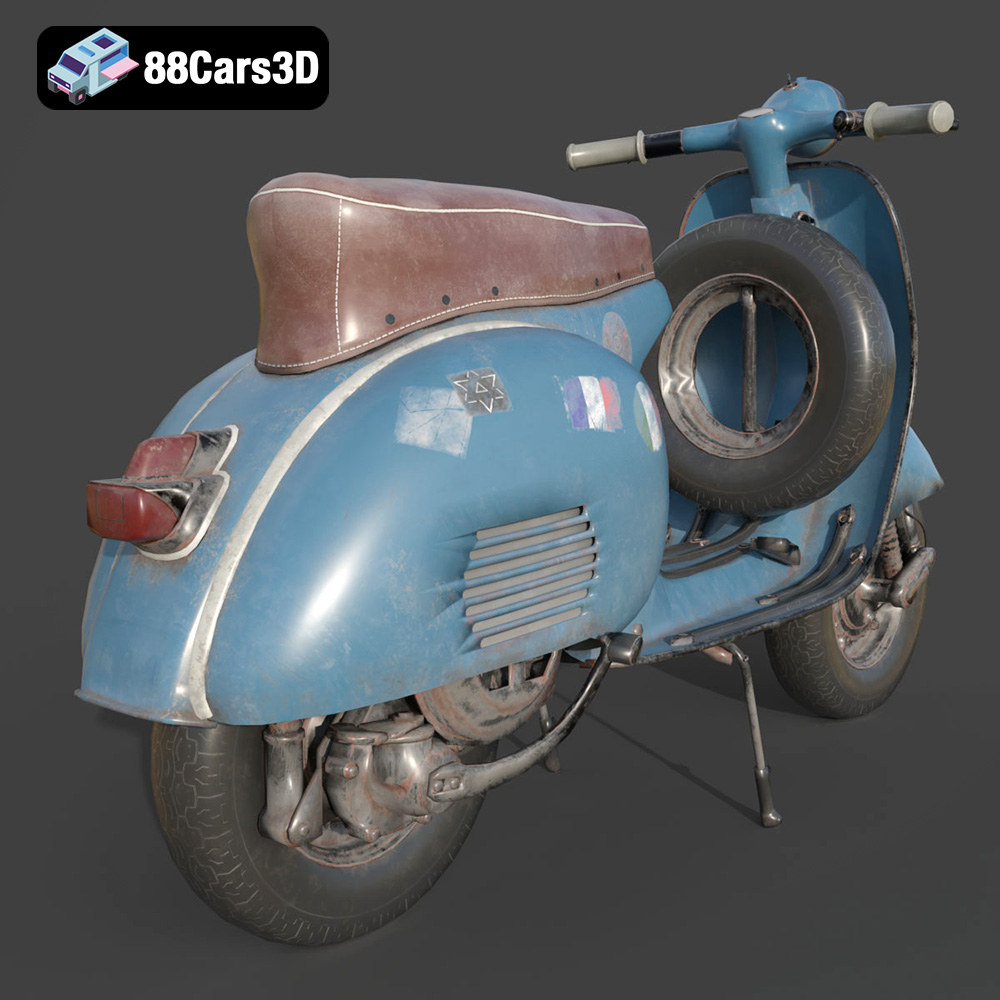
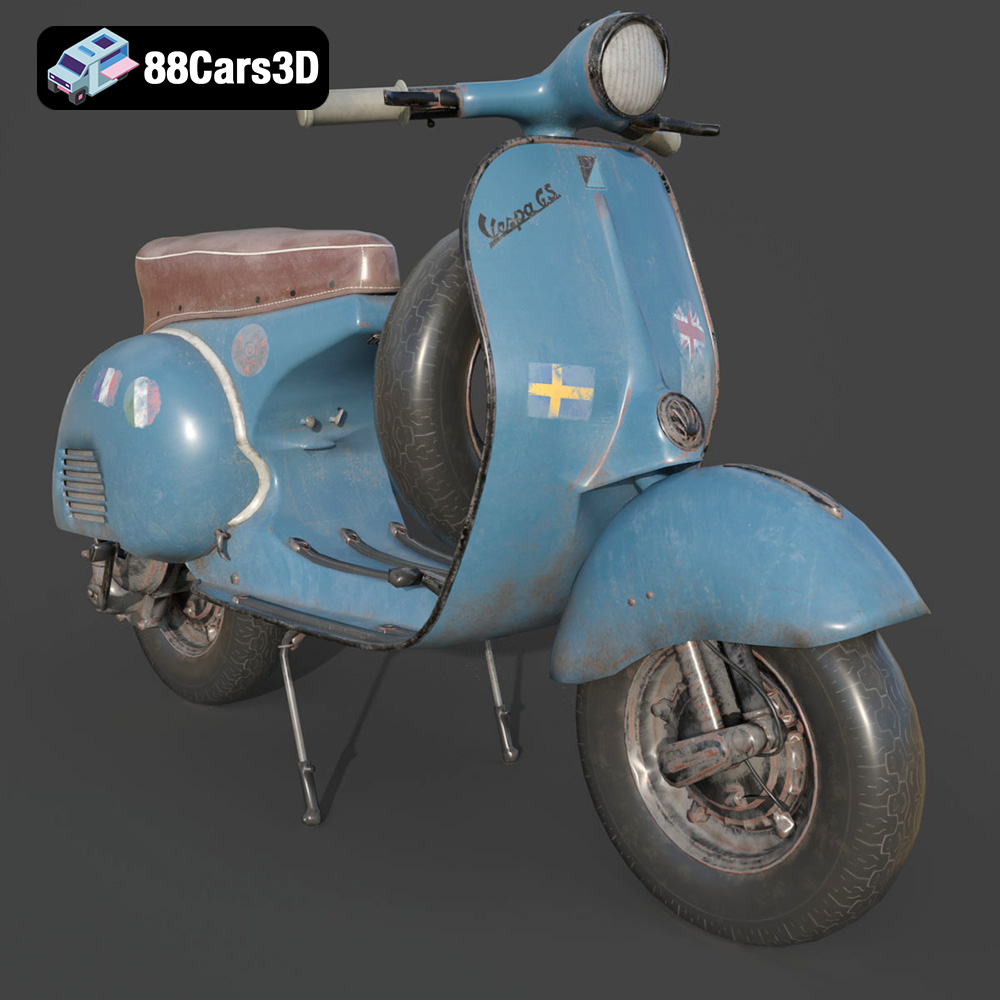
The Vespa GS 150 is renowned for its elegant aerodynamic curves and distinctive silhouette. This 3D model accurately captures its unique unibody frame geometry and proportions, which are crucial for authentic visual representation. Every exterior feature, from the detailed engine block featuring the 150cc 2-stroke casing and cooling fins to the classic sweeping exhaust system with authentic muffler details, is faithfully recreated. The model includes an authentic round headlamp, sleek teardrop taillight, and signature front trailing-link suspension, all contributing to its historical accuracy. Even the 10-inch wheels with classic tread patterns and hubcaps are painstakingly modeled, ensuring that the essence of this mid-century marvel is preserved. The separation of wheels, suspension, and steering components provides essential flexibility for animation, a critical aspect for dynamic scenes or interactive applications.
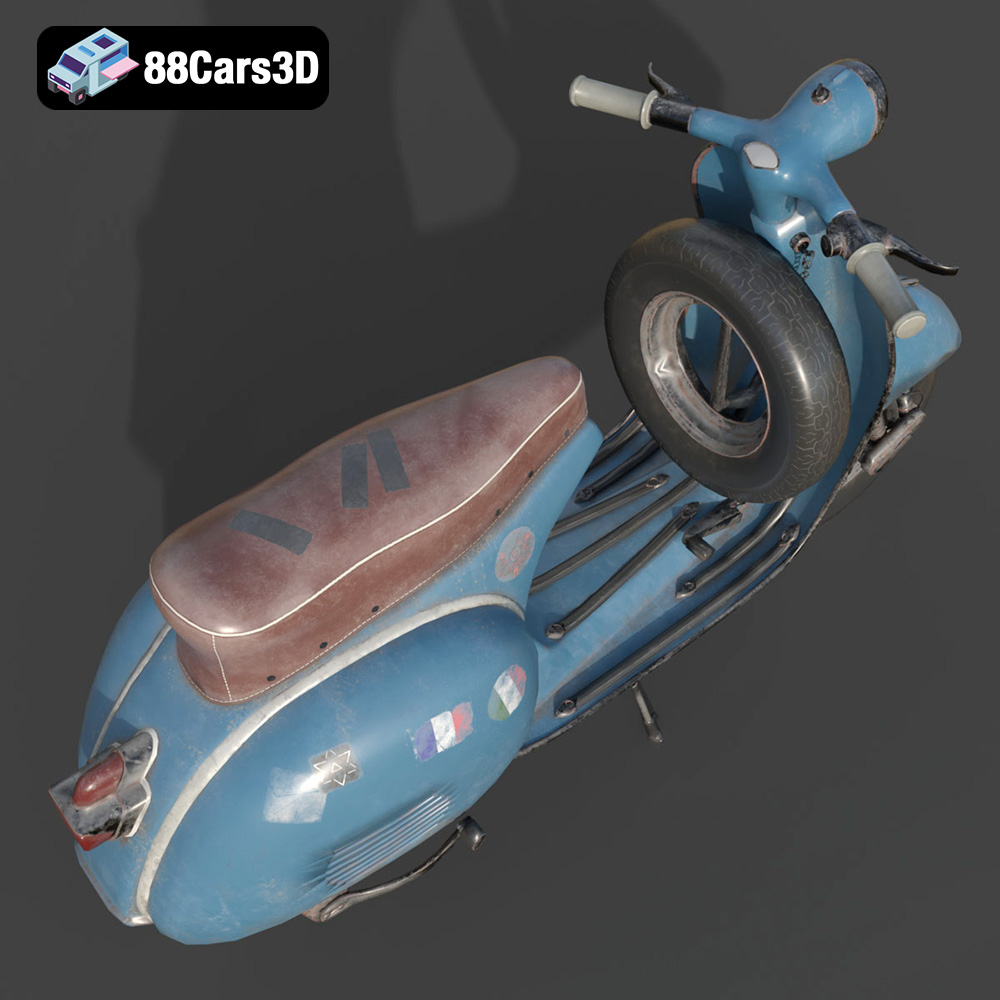
Beyond the exterior, the model extends its precision to the cockpit and interior features. Artists will appreciate the classic dual saddle or long bench seat details with rich texturing, the detailed tubular handlebars with an integrated speedometer, and the original Piaggio-style instrument cluster. Accurate hand grips, clutch/brake levers, and floorboard footbrakes complete the authentic rider experience. Critically, the model’s geometry is optimized for first-person POV in gaming, making it ideal for immersive driving simulations or interactive virtual tours.
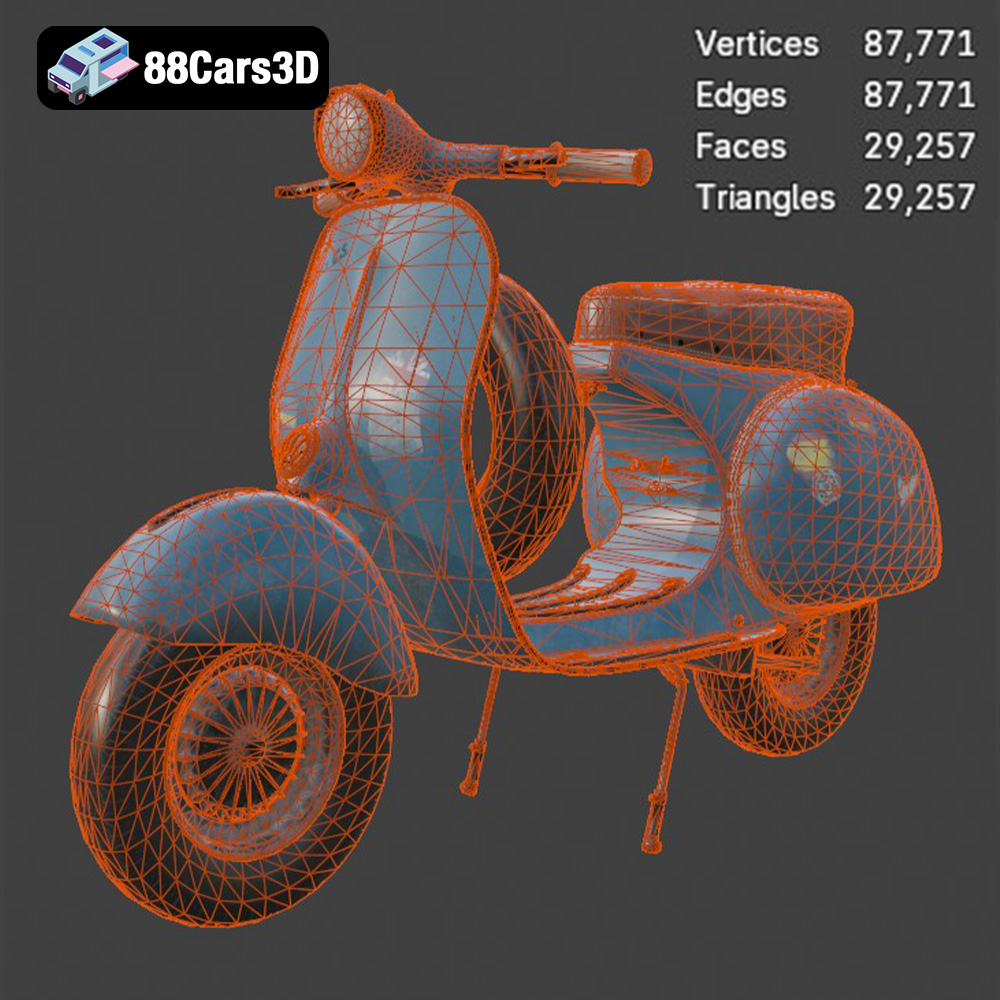
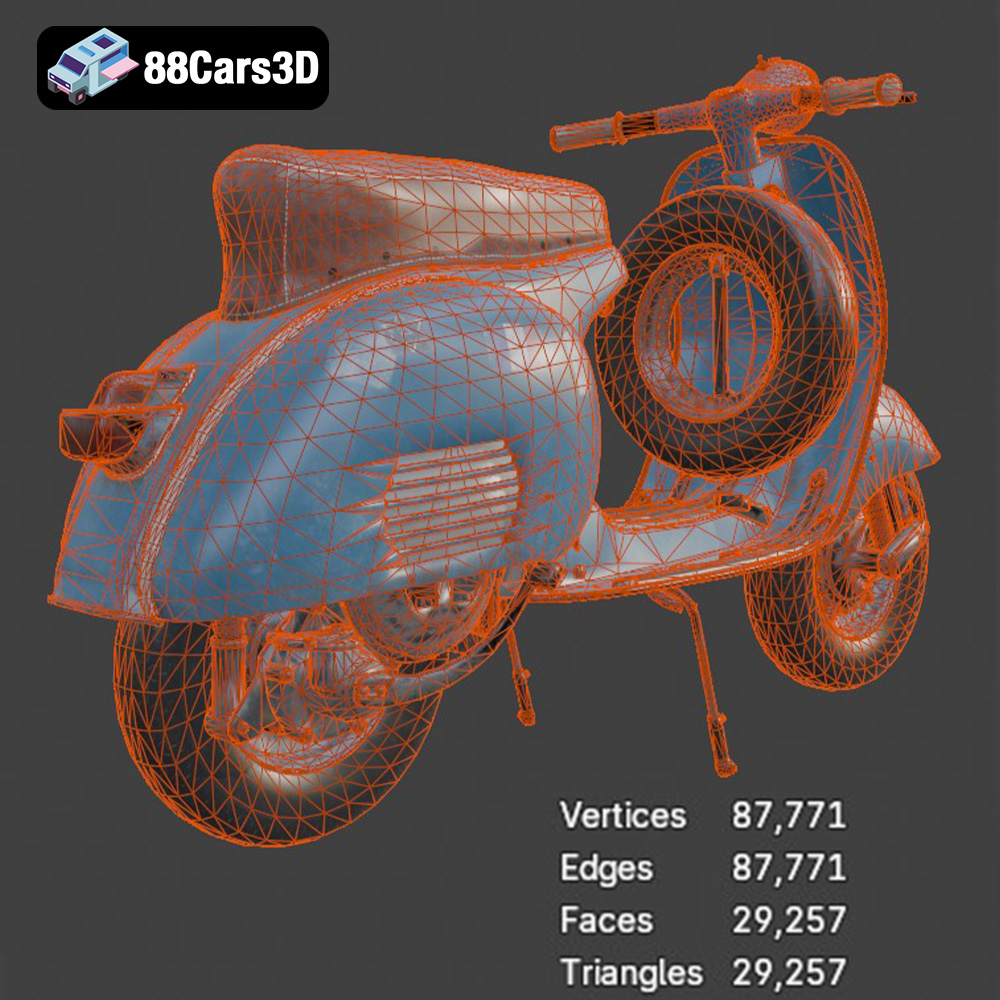
Technically, the model boasts approximately 200,000 triangles. This polycount strikes an excellent balance, providing exceptional visual fidelity required for close-up renders and detailed visualization, while remaining “game-ready” for real-time engines like Unreal and Unity. Real-world scale accuracy, based on the actual vehicle chassis, ensures seamless integration into environments. Furthermore, the proper pivot setup for steering, wheel rotation, and suspension travel is implemented, simplifying animation and interaction development, proving its worth as a robust automotive asset.
The true power of a high-quality 3D model like the Vespa GS 150 lies in its ability to enhance diverse professional pipelines. Its carefully structured geometry and extensive file format support make it a flexible asset for various industries.
For game developers, efficiency and performance are paramount. The Vespa GS 150 3D Model, with its optimized ~200,000 triangle count, is perfectly suited as a game asset. Its ‘game-ready’ status means it maintains high-end visual realism without bogging down engine performance, making it ideal for open-world games, racing titles, and simulators where multiple vehicles and complex environments are common. The inclusion of .fbx and .unreal formats significantly streamlines the import process. Developers can import the .fbx into Unreal Engine or Unity, utilizing its embedded material and texture data. Once imported, setting up materials for a PBR (Physically Based Rendering) workflow is straightforward, followed by collision meshes for physical interaction. The properly set up pivots for wheels and steering components allow for quick rigging and basic animation, bringing the scooter to life in a virtual environment. Assets from 88cars3d.com are designed to minimize artist intervention, allowing developers to focus on gameplay and immersive experiences.
For cinematics, advertising, and architectural visualization, photorealism is the ultimate goal. The Vespa GS 150 excels in these applications, particularly when utilized in software like 3ds Max or Blender. The native .max and .blend files provide maximum control over every aspect of the model. Artists can set up sophisticated studio lighting, experiment with various material finishes (matte, gloss, metallic) to highlight the scooter’s iconic curves, and fine-tune camera angles for stunning product shots or lifestyle scenes. Imagine the Vespa nestled in a classic European street scene, bathed in golden hour light, or showcasing its pristine form in a virtual showroom. The model’s intricate details, from the engine fins to the seat textures, shine in these high-fidelity renders, making it an excellent choice for brand campaigns and premium visualizations.
The rapidly expanding fields of Augmented Reality (AR) and Virtual Reality (VR) demand models that are both visually engaging and highly efficient. The .glb format, optimized for web and real-time display, makes the Vespa GS 150 a perfect candidate for immersive experiences. Developers can integrate the model into virtual showrooms, allowing users to interact with a life-sized representation, inspect details, or even customize colors in real-time. For mobile AR applications, the compact .glb file ensures fast loading times and smooth performance, letting users place the classic scooter directly into their physical environment through a smartphone or tablet. This opens up new possibilities for interactive marketing, virtual tours, and engaging educational content.
The versatility of a well-crafted 3D model extends beyond digital screens. For enthusiasts, collectors, and prototyping professionals, the ability to bring a digital asset into the physical world through 3D printing offers a unique and tangible connection to the design.
The inclusion of the .stl format with the Vespa GS 150 3D Model is a boon for 3D printing aficionados. However, successful 3D printing requires careful attention to specific settings. Recommended scales typically range from 1:12 to 1:24, offering a good balance between detail and print size. For optimal fidelity, especially with the scooter’s fine details like cooling fins and handlebar controls, resin printing is highly recommended over FDM (Fused Deposition Modeling), which can struggle with intricate features. Layer heights should be between 0.04–0.12 mm for smooth surfaces. Wall thickness is critical for structural integrity, with 1.2–2.0 mm being a good range. Infill of 20–30% generally suffices for display models. Supports will be required for detailed parts such as the exhaust, mirrors, and handlebars, due to their overhangs. For the main frame, printing it at an angle can enhance structural integrity, while wheels should generally be printed separately for best results. Post-processing, including sanding, priming, and painting with authentic factory colors and metallic finishes, transforms the raw print into a museum-quality display piece.
For hobbyists, 3D printing the Vespa GS 150 allows for the creation of unique display models, custom dioramas, or even functional parts for scale models. Imagine a highly detailed replica gracing a desk, a shelf, or integrated into a meticulously crafted diorama of a classic Italian street scene. Collectors can create bespoke additions to their collections, or simply enjoy the process of building and finishing a physical representation of this automotive icon. This bridge between the digital and physical realms highlights the comprehensive utility of the Vespa GS 150 3D Model, catering to a wide spectrum of creative and technical pursuits.
A truly professional 3D asset provides a robust foundation, but also offers the flexibility for artists to imprint their unique vision. The Vespa GS 150 3D Model is designed with this adaptability in mind, allowing for extensive customization.
One of the most straightforward yet impactful customization options is changing the body and tank colors. Artists can easily switch between authentic factory colors to replicate historical accuracy, or venture into custom finishes to create unique, stylized versions of the scooter. Beyond color, modifying tire textures can adapt the model for different scenarios—from classic street variants to off-road interpretations, if desired. Adjusting material finishes, such as shifting between matte, gloss, or metallic looks, can dramatically alter the perception and mood of the model, allowing it to fit diverse artistic styles and project requirements. This level of aesthetic control ensures that the Vespa GS 150 can be tailored to match any creative brief.
The flexibility extends to how the model integrates into its environment. Artists can adapt lighting setups to create different atmospheres—be it a sunny, vibrant European street, a moody, rain-slicked alley, or a sterile, futuristic showroom. By adding diverse scene elements, the Vespa GS 150 can tell myriad stories. It can be the star of a retro lifestyle visualization, a background element in a bustling city scene, or the focus of a historic racing game. This adaptability makes the model an incredibly versatile asset for any designer looking to create compelling visual narratives.
The digital realm offers unprecedented opportunities to appreciate and utilize iconic designs from automotive history. The Vespa GS 150 3D Model stands as a prime example of a meticulously crafted asset that bridges the gap between historical accuracy and modern technical requirements. Its optimized geometry, comprehensive detail, and extensive file format support (.blend, .fbx, .obj, .glb, .stl, .ply, .unreal, .max) ensure its utility across a vast array of applications—from game development and high-end automotive rendering to AR/VR experiences and tangible 3D prints.
For any professional seeking to elevate their projects with a touch of timeless Italian style, this model provides an indispensable foundation. It frees artists and developers from the arduous task of creating complex assets from scratch, empowering them to focus on creativity and innovation. Whether you’re building a vibrant virtual world, crafting a photorealistic advertisement, or simply admiring a classic, the Vespa GS 150 3D Model from 88cars3d.com is a testament to quality and versatility, ready to accelerate your next creative endeavor. Explore this and many other high-quality 3D car models to find the perfect asset for your vision.
The Vespa GS 150 (Gran Sport) is widely regarded as one of the most beautiful and iconic scooters ever produced. Known for its elegant aerodynamic curves, historical significance as the first mass-market sports Vespa, and unparalleled Italian styling, this classic masterpiece defined a generation. It features the signature swept-back leg shield, rounded side panels, and the distinctive 150cc two-stroke engine layout.
This high-quality 3D model features a well-optimized topology (~200,000 triangles), ensuring exceptional visual fidelity while maintaining game-ready performance. The model is meticulously crafted to capture the essence of the classic scooter, making it a perfect asset for close-up renders, real-time engines, and detailed environment populating.
Perfect for classic European street scenes, retro lifestyle visualizations, virtual showrooms, and historic racing games.
.blend, .fbx, .obj, .glb, .stl, .ply, .unreal, .max
Tags:
vespa, gs-150, scooter, classic-scooter, retro-scooter, game-ready, low-poly, optimized, scooter-3d-model, motorcycle-3d-model, game-asset, rendering, vr-ar, blend, fbx, obj, glb, stl, ply, unreal, maxVespa VNB 125-B 3D Model 3D Printable STL
$39.99
.blend
.fbx
.glb
.max
.obj
.ply
.rendering
.scooter
.stl
.unreal
.vespa
classic-scooter
game asset
game-ready
gs-150
low-poly
motorcycle-3d-model
optimized
retro-scooter
scooter-3d-model
VR/AR