Driving Digital Realism: The Essential Guide to High-Quality 3D Car Models for Professional Workflows
In the rapidly evolving world of digital visualization, the demand for hyper-realistic and functionally optimized 3D assets has never been higher. From breathtaking cinematic renders to immersive real-time game environments and critical architectural visualizations, the quality of your 3D models directly impacts the final output. Automotive models, in particular, present unique challenges due to their intricate designs, reflective surfaces, and the need for absolute precision.
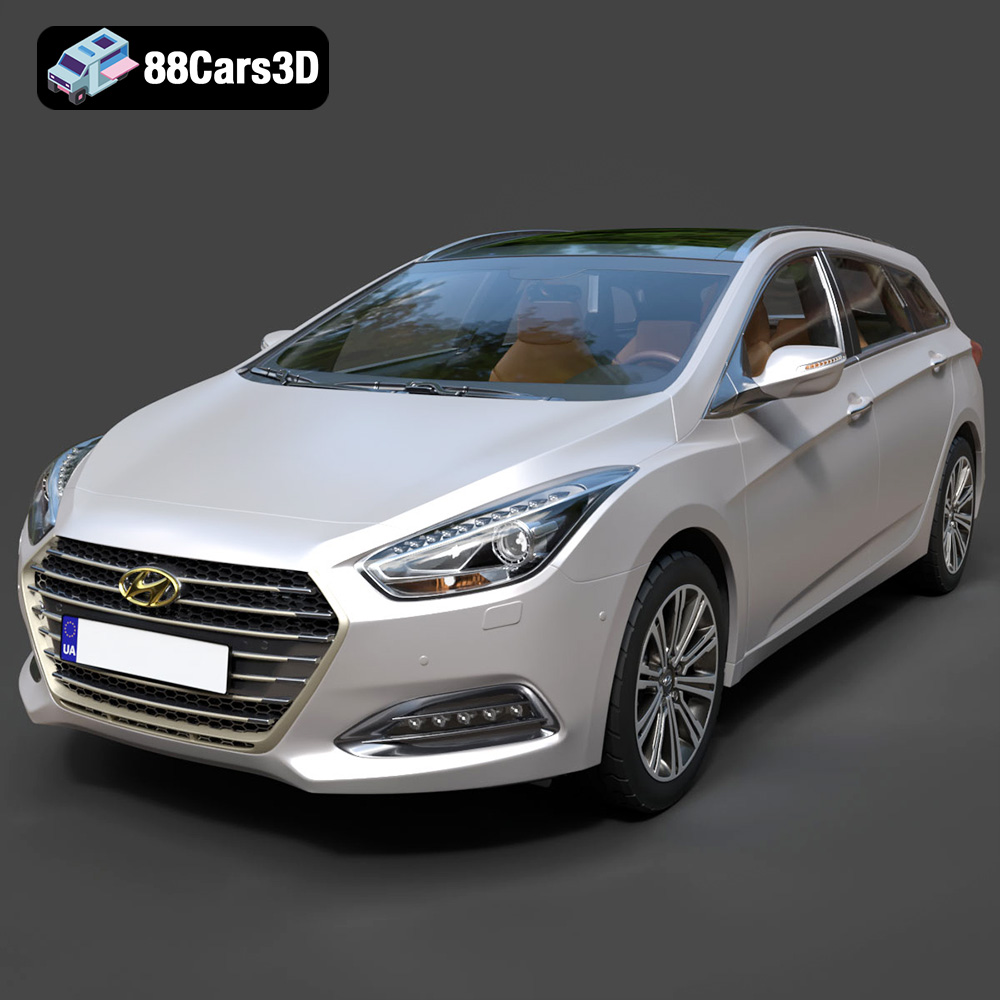
Today, we delve into the power of a meticulously crafted 3D vehicle asset, exemplified by the Hyundai i40 Wagon 2015 3D Model. This model isn’t just a static representation; it’s a versatile tool engineered to elevate projects across various industries. We’ll explore what makes such a model indispensable, how it integrates into diverse professional workflows, and the technical considerations that empower artists and developers to achieve stunning results. Whether you’re an experienced 3D artist, a game developer, or an architect seeking to populate your scenes with believable elements, understanding the nuances of high-quality 3D car models is paramount.
Understanding 3D Model File Formats: The Backbone of Digital Asset Interoperability
The versatility of a 3D model like the Hyundai i40 Wagon 2015 is largely defined by the array of file formats it supports. Each format is designed with specific use cases and technical considerations in mind, ensuring seamless integration into various software and pipelines. Understanding these formats is crucial for optimizing your workflow, avoiding compatibility headaches, and leveraging the full potential of your 3D car models.
- .blend – Fully Editable Blender Scene with Materials: The native file format for Blender, the popular open-source 3D creation suite. A `.blend` file is a comprehensive package, containing not just the mesh data but also materials, textures, lighting setups, camera positions, animations, and even physics simulations. For the Hyundai i40 Wagon 2015, the `.blend` file offers a fully editable scene, allowing artists to delve deep into the model’s construction, modify its materials, adjust lighting, or re-render it directly within Blender’s Cycles or Eevee engines. It’s ideal for those who prefer working in Blender or need maximum flexibility for customization.
- .fbx – Ideal for Unreal, Unity, and Real-Time Pipelines: Developed by Autodesk, FBX (Filmbox) has become an industry-standard interchange format. It’s exceptionally robust for transferring 3D models between different software applications, supporting geometry, materials, textures, animations, and rigging. For game development, the `.fbx` format is king. Both Unreal Engine and Unity have highly optimized `.fbx` importers, making it the go-to choice for bringing game assets like the Hyundai i40 into real-time environments. Its efficiency and comprehensive data support make it invaluable for character animation and vehicle physics integration.
- .obj – Universal Format for Cross-Software Compatibility: The Wavefront .obj format is one of the oldest and most widely supported 3D file formats. While it doesn’t typically store animation or rigging data, it excels at representing geometric shapes with vertex positions, UV coordinates, and normal information. Its strength lies in its universal compatibility; virtually every 3D software application can import and export `.obj` files. This makes it an excellent fallback or primary choice when broad compatibility is needed, ensuring that the Hyundai i40 Wagon 2015 can be opened and worked with in almost any 3D package, albeit often requiring manual setup of materials and textures if not accompanied by an .mtl file.
- .glb – Optimized for AR, VR, and Browser-Based Display: GLB (GL Transmission Format Binary) is the binary version of glTF, a royalty-free specification for the efficient transmission and loading of 3D scenes and models by applications. GLB is particularly optimized for web and real-time applications, packing all necessary assets (geometry, materials, textures, animations) into a single, compact file. This makes it perfect for AR/VR experiences, web-based 3D viewers, and mobile applications where file size and loading speed are critical. When deploying the Hyundai i40 in a WebGL experience or an augmented reality app, the `.glb` format provides unmatched performance and ease of integration.
- .stl – Suitable for 3D Printing Output: STL (Stereolithography) is the standard file format for 3D printing. It represents a 3D model as a series of connected triangles (a tessellated surface) without color, texture, or material information. For designers looking to create a physical prototype or scale model of the Hyundai i40 Wagon 2015, the `.stl` format is essential. It directly translates the digital geometry into instructions for a 3D printer, making it a critical step in product design, prototyping, and educational applications.
- .ply – Precision Mesh Format for CAD or Analysis: PLY (Polygon File Format), also known as the Stanford Triangle Format, is another format for storing 3D data from 3D scanners. It supports vertex properties (color, normals) and face properties, making it more flexible than STL for certain applications. While less common for general 3D model exchange, it’s often used in scientific computing, CAD, and precise mesh analysis where detailed vertex and face information, often including color per vertex, is important. For specialized analysis of the Hyundai i40’s geometry, `.ply` can be a valuable asset.
- .unreal – Engine-Ready Asset for Real-Time Environments: Specifically tailored for Unreal Engine, an `.unreal` asset refers to a fully integrated and optimized asset package within the Unreal ecosystem. While often derived from an `.fbx` import, an `.unreal` asset implies it has undergone the necessary setup within the engine, including material assignments, collision meshes, LODs (Levels of Detail), and potentially even Blueprint integrations. For immediate deployment of the Hyundai i40 into an Unreal project, this format saves significant setup time and ensures adherence to engine best practices.
- .max – Editable 3ds Max Project for Animation and Rendering: The native file format for Autodesk 3ds Max, a powerful 3D modeling, animation, rendering, and compositing software. Similar to `.blend`, a `.max` file contains all scene information, including geometry, materials, textures, lighting, cameras, and animation data. For professionals utilizing 3ds Max for high-end automotive rendering or complex animation sequences involving the Hyundai i40 Wagon 2015, the `.max` file provides complete access to the original project, allowing for intricate adjustments and specialized rendering setups with renderers like V-Ray or Corona.
The availability of such a comprehensive suite of formats for the Hyundai i40 Wagon 2015 3D Model underscores its adaptability and value as a premium asset, ensuring it fits seamlessly into virtually any professional 3D pipeline.
Crafting Realism: The Hyundai i40 Wagon 2015 in Exquisite Detail
Achieving truly convincing 3D automotive models goes far beyond simply replicating a car’s shape. It demands an intricate understanding of geometry, material science, and the subtle nuances that define real-world aesthetics. The Hyundai i40 Wagon 2015 3D Model stands as a testament to this commitment to realism, meticulously crafted to represent every aspect of the popular estate vehicle with professional precision.
Geometry and Topology for Optimal Performance
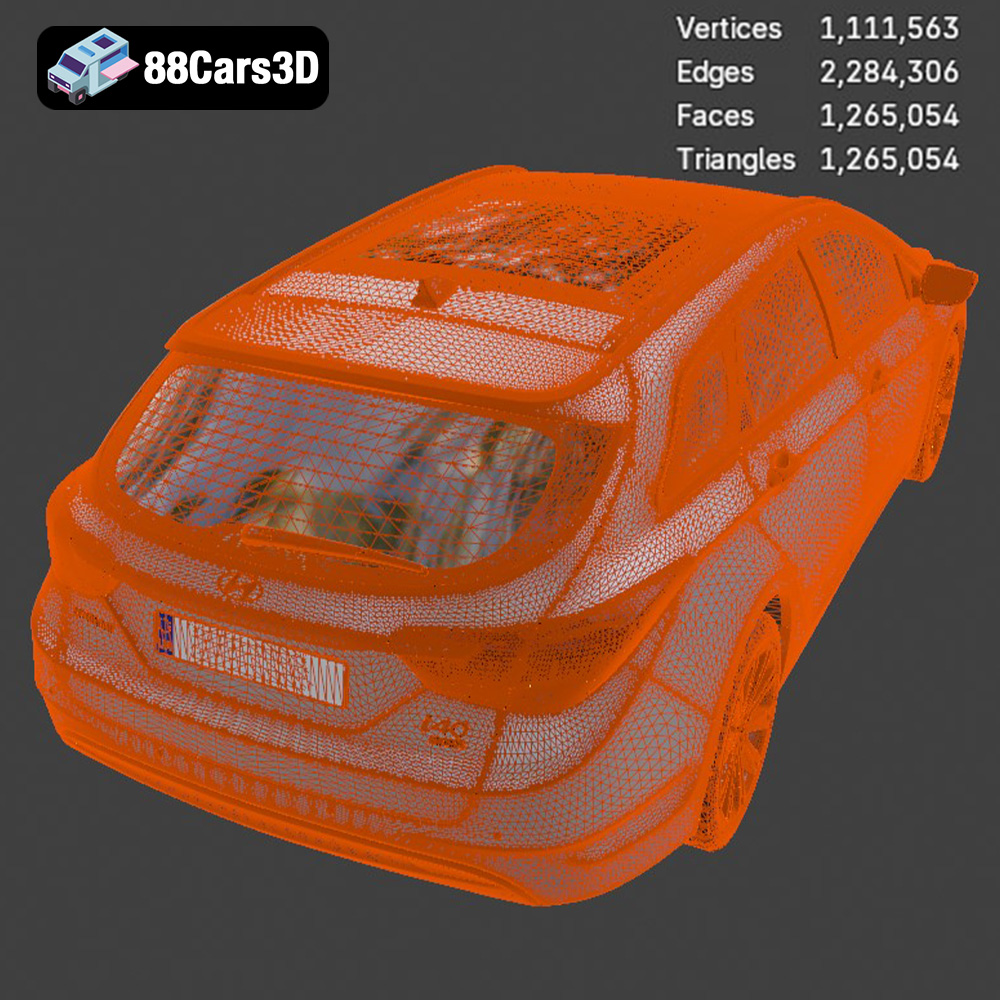
The foundation of any high-quality 3D model is its geometry and topology. For the Hyundai i40 Wagon 2015, this means clean, efficient mesh data that strikes a balance between visual fidelity and performance. A well-constructed model will feature organized polygon flows, primarily using quads (four-sided polygons) where possible, to facilitate smooth subdivision and deformation. This clean topology is crucial for:
- Smooth Shading: Properly aligned polygons ensure that normal maps and subdivision surfaces render flawlessly, avoiding unsightly artifacts or pinched geometry.
- Efficient UV Mapping: A clean mesh allows for seamless unwrapping of UV coordinates, essential for applying high-resolution textures without distortion.
- Optimized Performance: While detailed, the geometry is optimized to be performant, especially for real-time applications. This involves careful polygon budgeting, ensuring that critical details are preserved without excessive poly counts that could hinder frame rates. For rendering, a higher poly count or subdivision can be tolerated, but efficiency remains key.
Such meticulous attention to geometric detail ensures that the Hyundai i40 looks stunning from any angle, whether viewed up close in a static render or as part of a dynamic, moving scene.
Materials, Textures, and Shading for Visual Fidelity
Beyond the raw geometry, it’s the materials and textures that truly bring a 3D car model to life. The Hyundai i40 Wagon 2015 3D Model employs realistic material setups, typically leveraging Physically Based Rendering (PBR) workflows. PBR materials accurately simulate how light interacts with surfaces in the real world, resulting in highly convincing reflections, refractions, and diffuse properties. Key elements include:
- Car Paint Shaders: Complex multi-layered shaders simulate the depth and metallic flake of automotive paint, reacting realistically to light sources.
- Glass and Chrome: Accurate refractive and reflective properties for windows, headlights, and chrome trim add a layer of authenticity.
- Rubber and Plastics: Subtly textured materials for tires, seals, and interior plastics contribute to the overall realism, preventing a “plastic toy” look.
- High-Resolution Textures: For details like tire treads, emblems, and interior fabrics, high-resolution textures (diffuse, normal, roughness, metallic, ambient occlusion maps) are applied to add fine surface details without increasing polygon count unnecessarily.
The combination of precise geometry and sophisticated PBR materials ensures that the Hyundai i40 Wagon 2015 3D Model will integrate seamlessly into any lighting environment, always looking photo-realistic.
Accuracy and Proportions: The Foundation of Believability
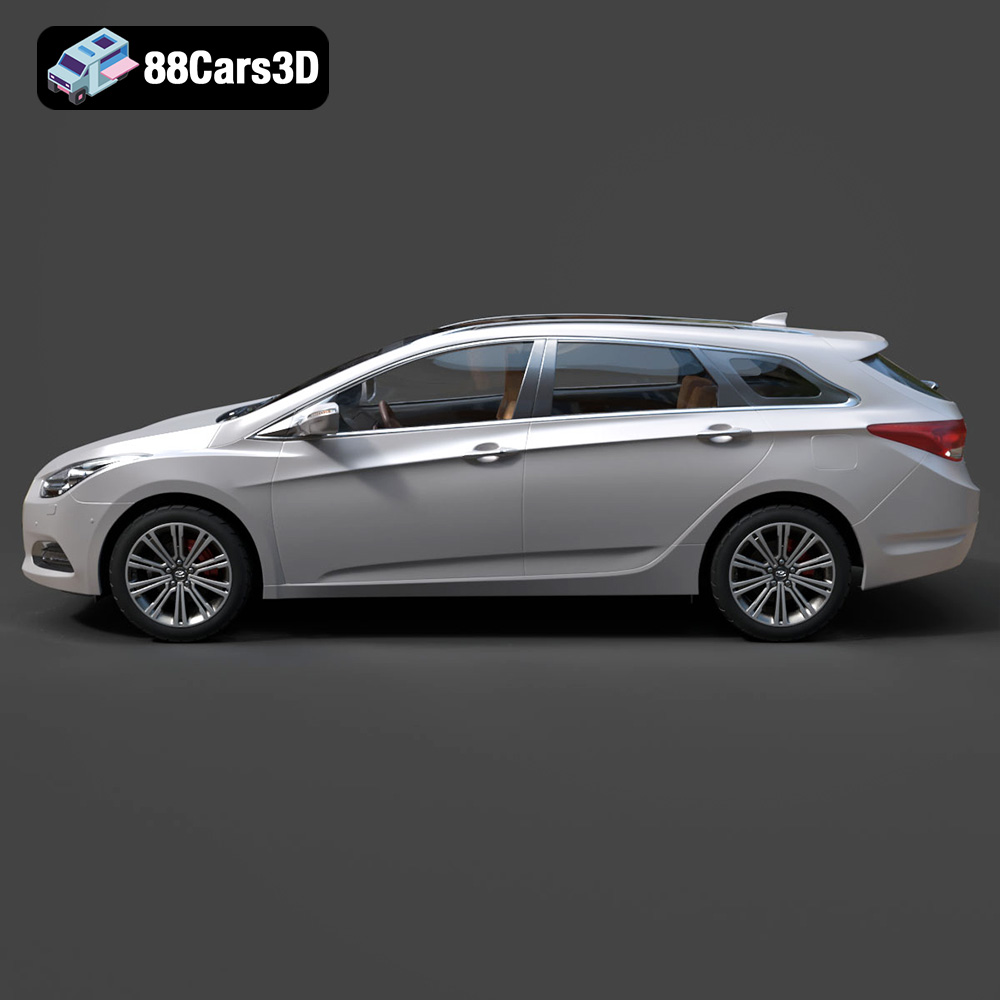
For an automotive model, accurate dimensions and proportions are non-negotiable. Any deviation can immediately break immersion and make the model appear “off.” The Hyundai i40 Wagon 2015 is crafted with true-to-life proportions, ensuring it accurately represents the real vehicle’s scale and form. This precision is vital for several reasons:
- Seamless Integration: When placing the model into an architectural visualization scene or a game world, correct dimensions ensure it fits naturally within its digital environment without looking oversized or undersized.
- Realistic Physics: In simulations and game development, accurate dimensions contribute to more believable physics and collision detection.
- Professional Credibility: For marketing materials, product showcases, or design reviews, an accurately scaled model reflects professionalism and attention to detail.
This commitment to accurate representation is what elevates the Hyundai i40 Wagon 2015 3D Model from a mere digital object to a powerful asset for serious professional use.
Professional Workflows: Integrating the Hyundai i40 Wagon
The true value of a versatile 3D asset lies in its ability to adapt to various professional pipelines. The Hyundai i40 Wagon 2015 3D Model, with its comprehensive file format support and optimized structure, is engineered for seamless integration into the most demanding workflows, from high-fidelity rendering to real-time interactive experiences.
Automotive Rendering with 3ds Max and Blender
For artists focused on producing stunning, photorealistic images or cinematic animations, 3ds Max and Blender are often the tools of choice. The Hyundai i40 Wagon 2015 comes with dedicated `.max` and `.blend` files, offering artists native scene setups ready for fine-tuning.
- 3ds Max Workflow: Utilizing the `.max` file, artists can leverage powerful renderers like V-Ray or Corona. The workflow typically involves loading the scene, adjusting lighting (e.g., using HDRI environments for realistic reflections and illumination), setting up camera angles, and refining materials. Professional 3D car models like this one often come with PBR materials pre-configured, allowing artists to focus on scene composition, atmospheric effects, and post-production. You can easily animate the car, set up complex camera movements, or integrate it into a larger scene with other assets.
- Blender Workflow: The `.blend` file provides a fully editable scene within Blender. Artists can use Blender’s native Cycles for unbiased, photorealistic rendering or Eevee for fast, real-time feedback. Customization options are vast: from tweaking existing materials to adding procedural textures, setting up complex node-based shaders, or even integrating advanced physics simulations if desired. The flexibility of Blender, combined with a high-quality base model, empowers artists to achieve unique and compelling results for automotive rendering.
Game Development with Unreal Engine and Unity
The world of game development demands not only visual fidelity but also exceptional performance. The Hyundai i40 Wagon 2015 is specifically optimized for real-time engines, offering both `.fbx` and pre-configured `.unreal` formats.
- Unreal Engine Integration: The `.unreal` file streamlines the process, providing an engine-ready asset with appropriate material setups, collision meshes, and potentially even LODs (Levels of Detail). If starting from `.fbx`, the process involves importing the model, creating material instances from master materials, and setting up collision geometry. Game developers can then integrate the car into vehicle blueprints, set up realistic physics, and use it for AI-driven traffic, player-controlled vehicles, or cinematic sequences within the game world. The optimization ensures minimal performance impact.
- Unity Engine Integration: Importing the `.fbx` file into Unity is straightforward. Developers would then assign PBR materials, set up colliders (mesh colliders or primitive colliders for performance), and integrate the model with Unity’s physics engine or third-party vehicle control systems. The clean geometry of the Hyundai i40 Wagon 2015 makes it an ideal candidate for further optimization, such as creating multiple LODs for distant views to maximize frame rates in large open-world games. This model serves as an excellent foundation for any interactive driving experience.
AR/VR and WebGL Applications
Immersive technologies like Augmented Reality (AR) and Virtual Reality (VR), along with web-based 3D experiences, require highly optimized assets due to their strict performance budgets. The `.glb` format offered for the Hyundai i40 Wagon 2015 is perfectly suited for these applications.
- Leveraging .glb for Efficiency: The `.glb` file packs all necessary model data (geometry, materials, textures) into a single, compact binary file. This format is designed for efficient transmission and rapid loading in browsers or AR/VR viewers. Developers can integrate the Hyundai i40 into WebGL applications (e.g., product configurators), mobile AR experiences (e.g., visualizing a car in your driveway), or VR showrooms, offering users an interactive and realistic view of the vehicle without compromising performance.
- Performance Considerations: In AR/VR, polygon count and texture resolution are critical. The inherent optimization of the Hyundai i40 Wagon 2015 3D Model ensures it meets these demanding requirements, providing a smooth, high-fidelity experience across various devices.
Beyond Visualization: Practical Applications of 3D Car Models
While often associated with entertainment and marketing, high-quality 3D car models like the Hyundai i40 Wagon 2015 extend their utility far beyond pure visualization. They serve as critical components in diverse industries, enabling advanced analysis, prototyping, and immersive training solutions.
Architectural Visualization (Arch-Viz)
Architects and urban planners rely heavily on realistic context to present their designs. Placing a believable 3D car model within an architectural rendering can drastically enhance its realism and sense of scale. The Hyundai i40 Wagon 2015, with its accurate proportions and photorealistic materials, is perfect for:
- Populating Scenes: Adding vehicles to street scenes, parking lots, or driveways immediately brings life and a sense of activity to architectural renders.
- Establishing Scale: A familiar object like a car helps viewers grasp the scale of a building or urban environment more effectively than abstract dimensions.
- Enhancing Ambiance: The reflections on a car’s surface can interact with the environment, picking up ambient light and colors, further grounding the scene in reality. This model can transform a static building render into a vibrant, believable setting.
Product Prototyping and 3D Printing
The journey from digital design to physical prototype is facilitated by specialized 3D formats. The inclusion of `.stl` and `.ply` files for the Hyundai i40 Wagon 2015 opens doors for physical manifestation and detailed analysis.
- 3D Printing for Prototyping: The `.stl` format is the industry standard for 3D printing. Designers can use this file to print scaled-down physical models of the i40, useful for ergonomic studies, aerodynamic testing (at a conceptual level), or simply creating a tangible representation of the digital asset. This is invaluable in the automotive design process for quick iterations and reviews.
- Precision Mesh Analysis: The `.ply` format, with its robust support for vertex and face data, is excellent for more technical analysis. Engineers or designers might use it for mesh integrity checks, surface deviation analysis, or reverse engineering tasks, ensuring the digital model meets precise manufacturing specifications.
Training and Simulation
For industries that require realistic training scenarios or complex simulations, accurate 3D vehicle assets are paramount. The Hyundai i40 Wagon 2015 3D Model can be a cornerstone for:
- Driver Training Simulators: Developing realistic driving simulators for new drivers, emergency services, or professional racers requires highly accurate vehicle models that interact realistically with the environment and physics engines.
- Autonomous Vehicle Development: Training and testing autonomous driving algorithms relies heavily on synthetic data generated from detailed 3D environments populated with accurate vehicle models. The i40 can be used to simulate various road conditions and traffic scenarios.
- Logistics and Urban Planning Simulations: Modeling traffic flow, parking dynamics, or public transport routes in urban environments benefits from a diverse range of realistic vehicles, providing critical data for infrastructure development.
By providing a high-fidelity, versatile asset, the Hyundai i40 Wagon 2015 3D Model supports these advanced applications, extending its value beyond aesthetic appeal to practical, problem-solving uses.
The Advantage of High-Quality 3D Car Models from 88cars3d.com
In the demanding world of 3D production, time is money, and quality is king. While custom modeling a complex vehicle like the Hyundai i40 Wagon 2015 from scratch can take hundreds of hours for even an experienced artist, purchasing a pre-made, professional-grade asset offers significant advantages. This is where marketplaces like 88cars3d.com become indispensable resources for 3D artists and developers.
- Time-Saving Efficiency: The most immediate benefit is the colossal saving in development time. Instead of spending weeks on modeling, UV unwrapping, texturing, and rigging, you can acquire a production-ready model instantly. This allows you to focus your efforts on scene composition, lighting, animation, or game logic, significantly accelerating project timelines.
- Cost-Effective Solutions: The cost of an expertly crafted 3D model from 88cars3d.com is a fraction of what it would cost to commission a custom model or to pay an artist to create it from scratch. This makes high-quality assets accessible even for projects with tighter budgets.
- Consistent Professional Quality: When you purchase from a reputable source like 88cars3d.com, you are guaranteed a certain level of quality. Models like the Hyundai i40 Wagon 2015 are created by skilled artists with an eye for detail and technical precision, ensuring clean geometry, optimized topology, and realistic PBR materials. This eliminates the uncertainty of inconsistent quality often associated with less curated sources.
- Broad Compatibility and Versatility: As demonstrated by the comprehensive list of file formats for the Hyundai i40, these models are designed for maximum compatibility across various software and engines. This versatility ensures that your investment can be utilized in multiple projects and pipelines without extensive conversion or re-setup.
- Focus on Creativity: By offloading the fundamental asset creation, artists and developers are free to dedicate more time and creative energy to the unique aspects of their projects. Whether it’s crafting a compelling narrative, designing innovative gameplay mechanics, or perfecting a unique rendering style, a pre-made asset provides a solid foundation.
88cars3d.com provides a curated selection of premium 3D car models, ensuring that professionals have access to the highest standards of digital automotive assets. The Hyundai i40 Wagon 2015 3D Model is a prime example of the caliber of products available, offering a reliable and high-performance solution for any demanding 3D project.
Conclusion: Empowering Your Projects with Premium 3D Car Models
The journey through the intricacies of high-quality 3D car models reveals a critical truth: precision, versatility, and technical robustness are paramount for professional success. The Hyundai i40 Wagon 2015 3D Model stands as a shining example of an asset engineered to meet these demanding criteria. From its meticulously crafted geometry and photorealistic PBR materials to its extensive support for industry-standard file formats, it provides a comprehensive solution for a multitude of applications.
Whether you are producing breathtaking automotive renders in 3ds Max or Blender, developing immersive game environments in Unreal Engine or Unity, creating engaging AR/VR experiences, or requiring precise models for architectural visualization and 3D printing, this Hyundai i40 model offers an uncompromising visual experience while maintaining optimized performance. It eliminates the exhaustive and costly process of creating a complex vehicle from scratch, empowering artists and developers to focus on creativity and project execution.
Investing in high-quality 3D car models like the Hyundai i40 Wagon 2015 from trusted sources such as 88cars3d.com is not just a purchase; it’s a strategic decision that enhances efficiency, elevates visual fidelity, and expands creative possibilities across all facets of 3D production. Explore this exceptional model and discover how it can accelerate your next project.
Featured 3D Model
Hyundai i40 Wagon 2015 3D Model
Experience true-to-life automotive design with the Hyundai i40 Wagon 2015 3D Model. Carefully crafted to represent the sleek contours and practical elegance of this popular estate vehicle, this digital asset delivers exceptional realism for any demanding project.
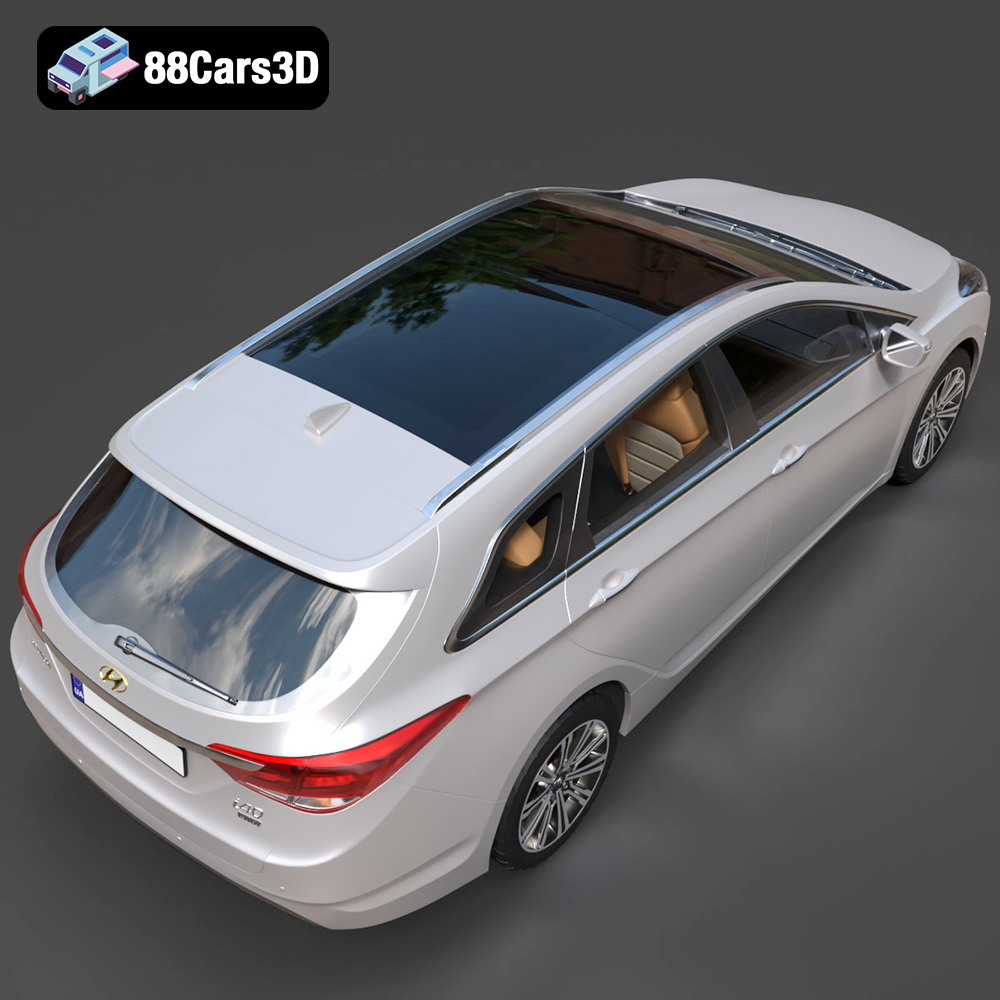
Constructed with professional precision, the model features clean geometry and realistic materials. The meticulously detailed exterior and well-proportioned dimensions ensure seamless integration into digital environments, offering an uncompromising visual experience while maintaining optimized performance.
Perfectly suited for a wide range of professional applications, this vehicle asset is ideal for game development, cinematic rendering, architectural visualization, and immersive AR/VR experiences. Whether deployed in dynamic interactive simulations or static professional renders, its versatile design meets the rigorous standards of 3D artists and developers.
Available in a comprehensive suite of file formats to guarantee compatibility across diverse software pipelines:
- .blend – Editable Blender file with materials and lighting setup
- .fbx – Game-engine ready format for Unreal Engine and Unity
- .obj – Standard 3D model format compatible with all major software
- .glb – Optimized for AR/VR and web-based visualization
- .stl – Suitable for 3D printing and prototyping
- .ply – Detailed polygon mesh for analysis and visualization
- .unreal – Pre-configured for Unreal Engine use
- .max – Editable 3ds Max file for rendering and animation
Tags: .hyundai, .i40, .wagon, .stationwagon, .estate, .familycar, .car3dmodel, .rendering, .simulation, .gameasset, .arvr, .blend, .fbx, .obj, .glb, .stl, .ply, .unreal, .max
Tags:
.hyundai, .i40, .wagon, .stationwagon, .estate, .familycar, .car3dmodel, .rendering, .simulation, .gameasset, .arvr, .blend, .fbx, .obj, .glb, .stl, .ply, .unreal, .maxMercedes Benz CLS 500 3D Model 3D Printable STL
$39.99
View This Model
Related Tags
.arvr
.blend
.car3dmodel
.estate
.familycar
.fbx
.gameasset
.glb
.hyundai
.i40
.max
.obj
.ply
.rendering
.simulation
.stationwagon
.stl
.unreal
.wagon