Get 20% OFF All Premium 3D & STL Models!

In the vibrant world of 3D visualization, the demand for highly detailed, optimized, and versatile assets is ever-growing. From the exhilarating virtual racetracks of modern video games to the immersive showcases of augmented reality, a meticulously crafted 3D model serves as the cornerstone of captivating digital experiences. Automotive and motorcycle design, in particular, requires an unparalleled level of precision, capturing not just the form but the very spirit of the vehicle.
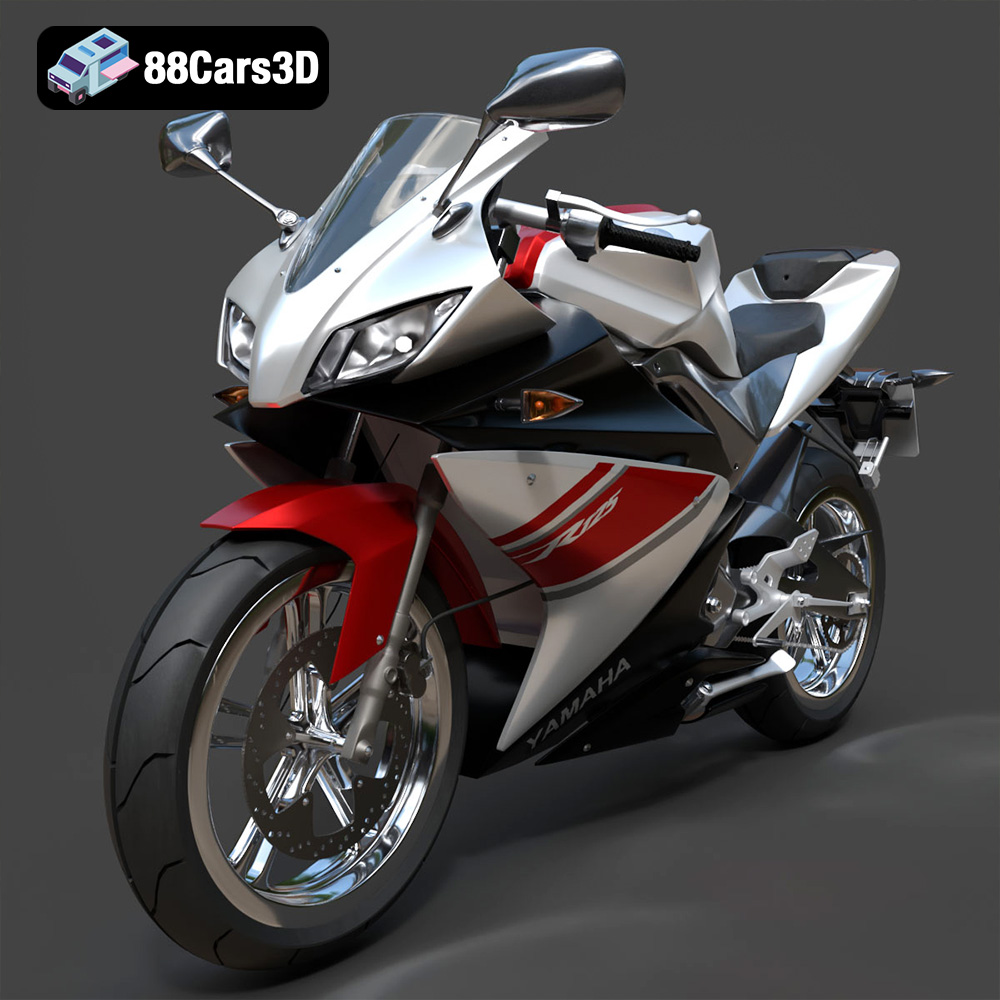
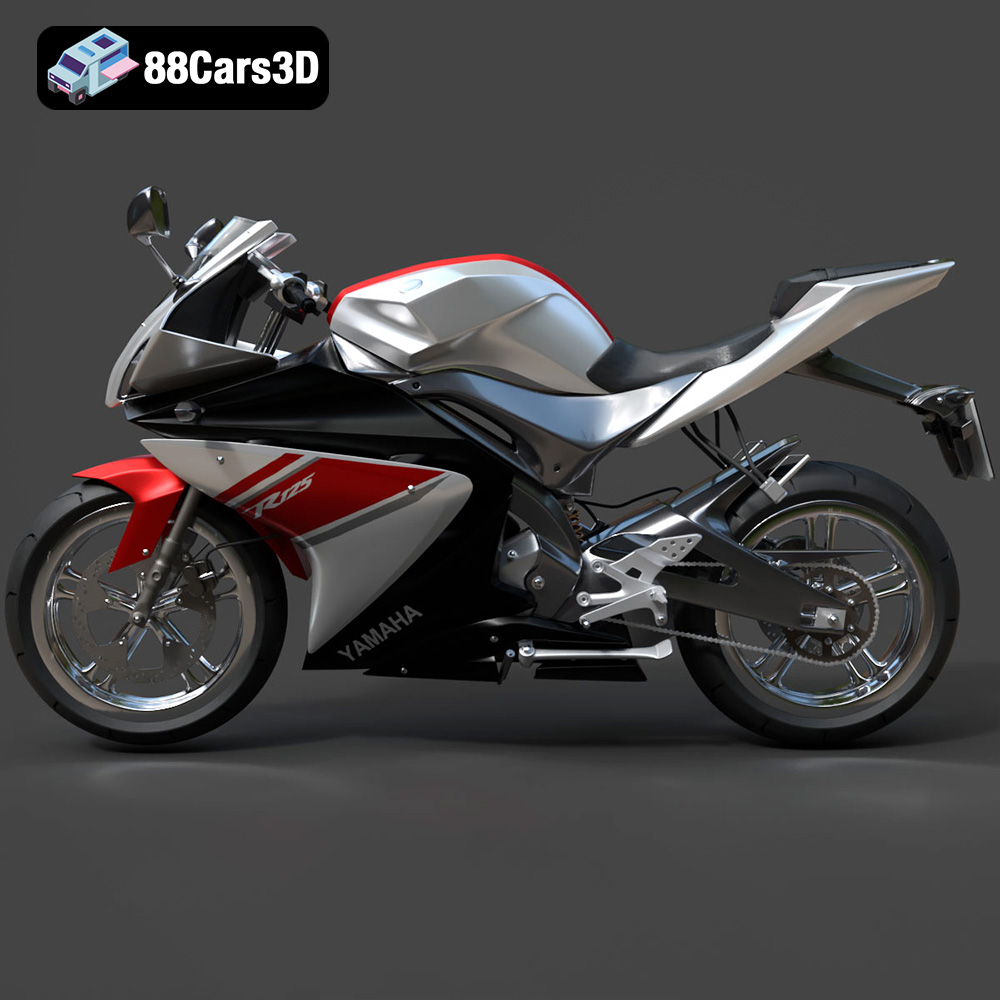
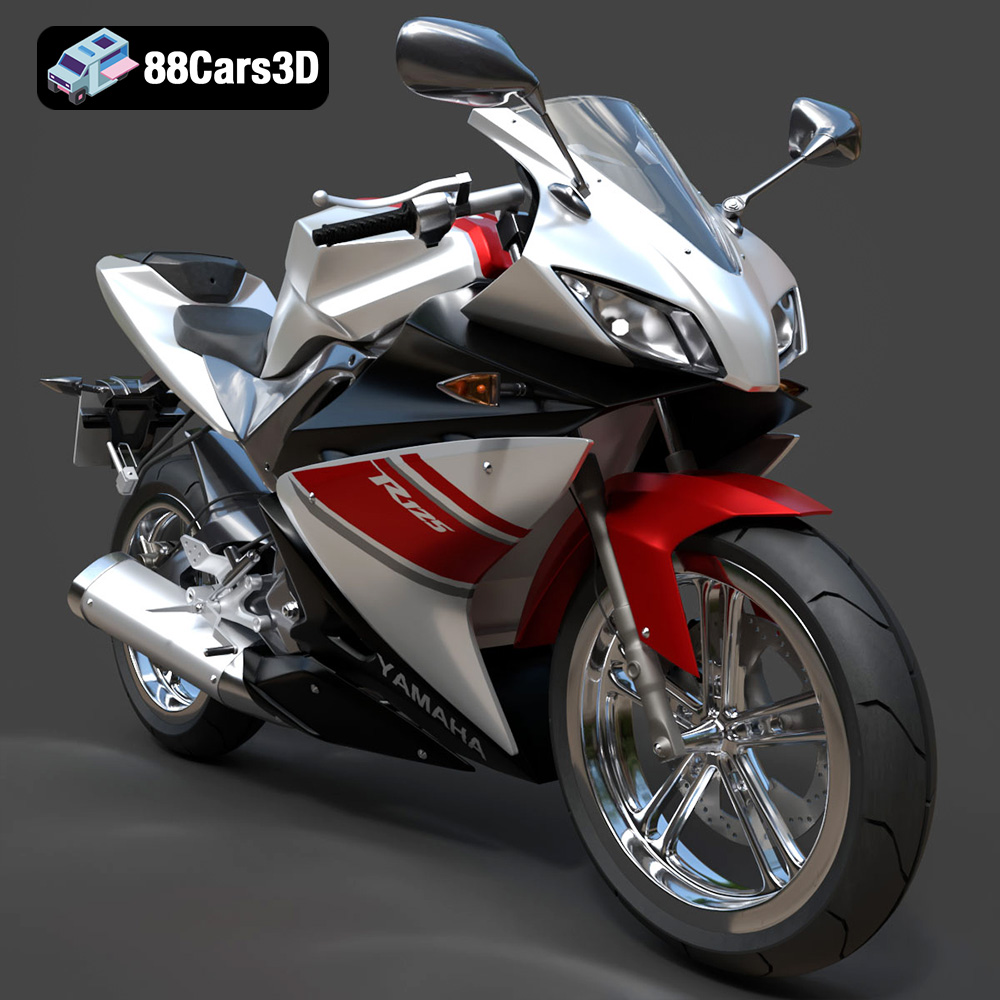
Today, we’re diving deep into what makes a truly exceptional 3D vehicle asset, exemplified by the stunning Yamaha YZF-R125 EU 3D Model. This lightweight supersport motorcycle, renowned for its aggressive R-Series DNA and thrilling performance, has been meticulously translated into a digital format. It represents a benchmark for game-ready optimization, visual fidelity, and broad application across various creative and professional pipelines. Whether you’re a game developer seeking the perfect street racer, an architectural visualizer needing authentic urban props, or an AR/VR innovator crafting the next immersive experience, understanding the intricacies of such a model is crucial for maximizing its potential.
The flexibility and utility of any 3D asset are heavily dependent on the file formats it supports. A high-quality model, such as the Yamaha YZF-R125 EU, provides a comprehensive suite of formats, each serving a specific purpose and optimized for different stages of a creative workflow. Choosing the right format is paramount for efficiency, compatibility, and achieving the desired outcome.
The .blend format is the native file type for Blender, one of the most powerful and widely used open-source 3D creation suites. When you download a .blend file, you’re getting a complete, editable scene. This means access to the original mesh geometry, intricate material setups (often leveraging Blender’s Cycles or Eevee render engines), lighting, camera setups, and any associated modifiers or animation rigs. For users primarily working within Blender, this format offers the ultimate flexibility for customization, re-texturing, animation, and scene integration without any loss of data or conversion artifacts. It’s the starting point for deep dives into the model’s construction, allowing artists to fine-tune every detail from the Deltabox frame geometry to the liquid-cooled engine block’s components.
.fbx (Filmbox) is a proprietary file format developed by Autodesk, serving as a critical interchange format for 3D data. Its strength lies in its ability to store a vast array of 3D information, including models, animations, cameras, lights, and even skeletal deformation data. This makes it ideal for transferring assets between different 3D software packages like 3ds Max, Maya, and Blender, and crucially, into real-time game engines like Unreal Engine and Unity. For game development, .fbx is often the go-to because it efficiently packages meshes, UVs, basic materials (often converting to engine-specific material definitions), and animation data, ensuring a smooth transition into the game pipeline without significant data loss.
The .obj (Wavefront Object) format is a widely supported and highly universal format for exchanging 3D geometry data. It stores vertex positions, UV coordinates, normals, and face information, often accompanied by a .mtl (material library) file for basic material properties. While .obj doesn’t typically carry animation data or complex material graphs like .fbx or .blend, its simplicity and ubiquitous support make it an excellent choice for basic mesh exchange across almost any 3D software. It’s particularly useful for artists who need a clean mesh to work with in a different program or for those performing retopology or sculpting operations.
.glb (GL Transmission Format Binary) is the binary version of glTF, a royalty-free specification for the efficient transmission and loading of 3D scenes and models by applications. Think of it as the “JPEG for 3D.” It bundles everything needed for a 3D model – geometry, materials, textures, animations – into a single, self-contained file. This optimization makes .glb an indispensable format for web-based 3D applications, augmented reality (AR), virtual reality (VR), and mobile experiences where file size and quick loading times are critical. The Yamaha YZF-R125 EU 3D model in .glb format would be perfect for embedding into a website for a virtual showroom or deploying in a mobile AR configurator.
.stl (STereoLithography) is the standard file format for 3D printing. It represents a 3D model as a series of connected triangles, defining only the surface geometry without color, texture, or other CAD attributes. While not ideal for rendering or animation due to its lack of surface detail, it is precisely what 3D printers need to understand the shape of an object for physical fabrication. The YZF-R125 EU model, convertible to .stl, opens up possibilities for hobbyists and professionals to create physical prototypes or display models, allowing for tangible interaction with the digital design.
.ply (Polygon File Format) is another format primarily used for storing 3D data from 3D scanners, CAD systems, and other precision applications. Similar to .obj, it defines geometry, but it can also store additional properties like color, transparency, and even specific data for each vertex or face. While less common for general artistic exchange compared to .fbx or .obj, it’s valuable in scientific, engineering, and certain manufacturing pipelines where accurate data acquisition and analysis are paramount.
While not a universal file format in the same vein as .fbx or .obj, the inclusion of an .unreal designation typically signifies that the asset has been specifically prepared and optimized for direct integration into Unreal Engine projects. This might mean pre-configured materials using Unreal’s PBR workflow, optimized collision meshes, level of detail (LOD) setups, and proper import settings. It streamlines the workflow for Unreal Engine developers, ensuring that the model is truly “plug-and-play” within the engine’s ecosystem, from the initial import to final scene placement and rendering.
The .max file is the native project file for Autodesk 3ds Max, a leading software for 3D modeling, animation, rendering, and visualization. Similar to .blend for Blender, a .max file offers full editability within 3ds Max, including access to all scene elements: geometry, materials (using V-Ray, Corona, or Arnold renderers), lighting setups, cameras, and animation keyframes. For professionals working in architectural visualization, product design, or animation studios that standardize on 3ds Max, this format provides the most comprehensive and flexible starting point for integrating the Yamaha YZF-R125 EU into high-fidelity rendering projects or complex animations.
Creating a high-quality 3D model like the Yamaha YZF-R125 EU isn’t just about recreating its visual form; it’s about engineering a digital asset that performs flawlessly across diverse applications. This involves a meticulous approach to topology, scale, and animation readiness.
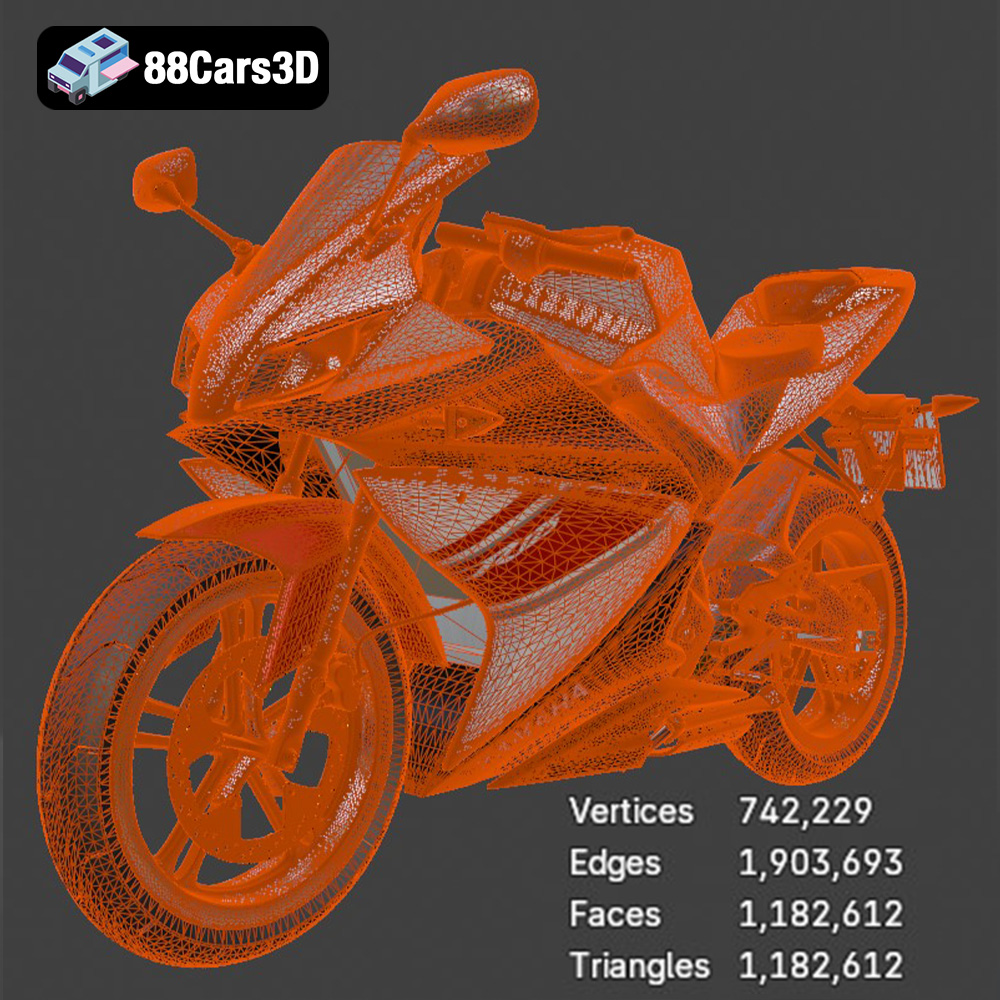
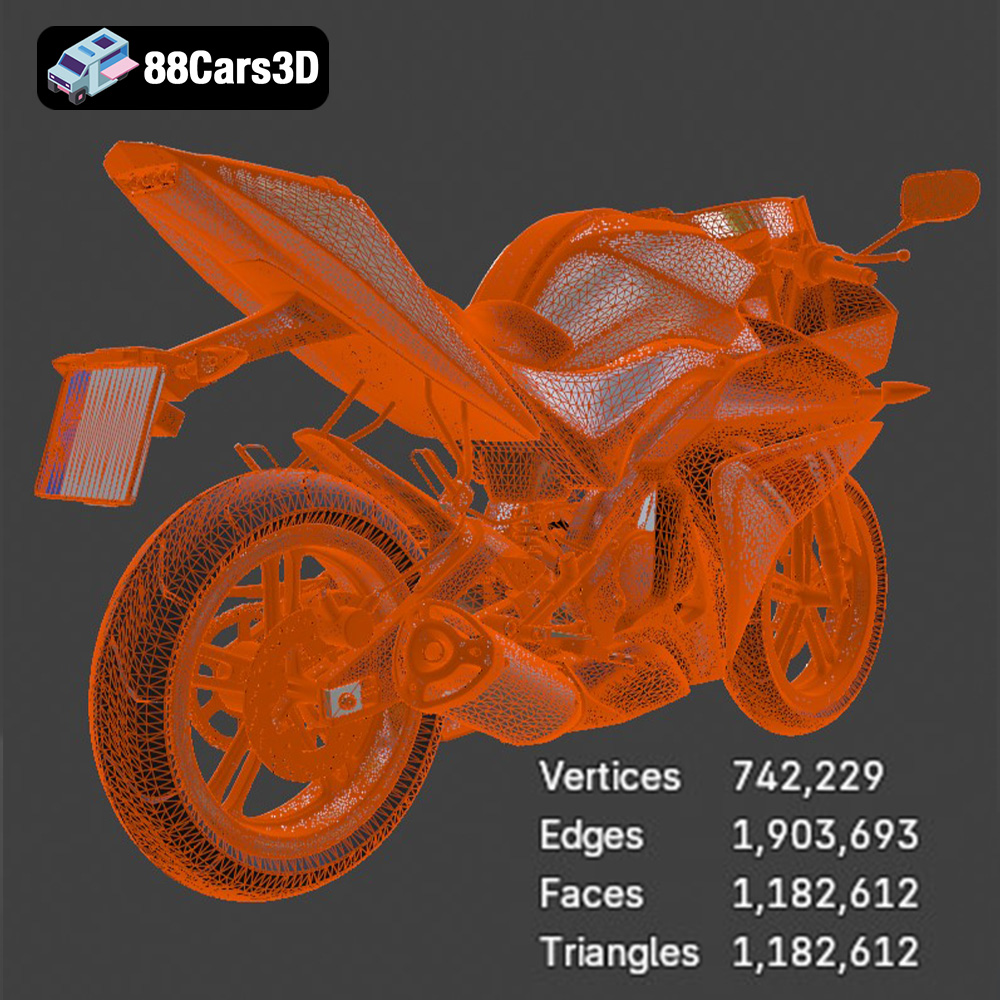
At the heart of any game-ready asset is its topology – the arrangement of vertices, edges, and faces that form the 3D mesh. The YZF-R125 EU model, with its optimized ~100,000 triangles, strikes a perfect balance. For real-time engines like Unreal and Unity, an efficient polycount is crucial for maintaining high frame rates. Too many polygons can bog down performance, especially in scenes with multiple detailed assets. Conversely, too few can result in a blocky, unrealistic appearance. The stated triangle count ensures high-end visual realism, capturing the aggressive styling and intricate details of the YZF-R125, such as the aerodynamic fairing and detailed engine block, without sacrificing performance. This optimization means that the model is suitable for everything from close-up shots in cinematics to distant elements in open-world environments, often leveraging LODs (Levels of Detail) to further reduce complexity as the camera moves away.
Accuracy is paramount in automotive visualization and game development. The Yamaha YZF-R125 EU 3D model is built to accurate real-world scale, based on actual vehicle chassis dimensions. This attention to detail is vital for several reasons: it ensures proper physics simulation in games, correct proportions when integrated into architectural scenes, and believability in AR/VR experiences. Imagine placing the YZF-R125 into a virtual showroom; if it’s not scaled correctly, it instantly breaks immersion. This commitment to accurate scale extends to every exterior feature, from the Deltabox frame geometry to the 41mm upside-down front forks, ensuring that every curve and component reflects its real-world counterpart faithfully.
A static model is only half the story. For games, simulations, and animations, the ability to move and interact with the vehicle is essential. The YZF-R125 EU model is designed with animation in mind, featuring separate wheels, suspension, and steering components. Crucially, it boasts proper pivot setups for steering, wheel rotation, and suspension travel. This pre-rigged structure saves countless hours for animators and developers, allowing them to directly implement vehicle physics, create realistic turning motions, and simulate suspension compression without needing to dismantle and re-rig the model from scratch. The detailed cockpit features, including clip-on handlebars with switchgear, further enhance the potential for first-person POV animations and interactive experiences.
The versatility of the Yamaha YZF-R125 EU 3D model extends across various software and engine ecosystems, empowering creators with diverse toolsets to achieve stunning results.
For game developers, the availability of game-ready assets like the Yamaha YZF-R125 EU is a game-changer. Using the provided .fbx or .unreal formats, developers can seamlessly import the model into Unreal Engine or Unity. The optimized polycount (~100k triangles) ensures that it runs efficiently even in complex game worlds. In Unreal Engine, developers can leverage Nanite for even greater fidelity and performance optimization for static meshes, or implement advanced vehicle physics systems with the proper pivot setups for steering and suspension. Unity users can integrate it into their vehicle controllers, applying realistic driving mechanics. The separate components and well-defined pivots simplify the process of rigging the model to an existing vehicle blueprint or creating a new one, enabling players to race the YZF-R125 through virtual cities or on dedicated tracks.
For artists focused on photorealistic visualizations and animations, the .max and .blend files offer unparalleled control. In 3ds Max, users can tap into the power of renderers like V-Ray or Corona to produce breathtaking images and cinematic sequences. The detailed geometry of the YZF-R125 EU, from its engine block to the aerodynamic fairing, shines through under professional lighting setups. Artists can adjust material finishes – experimenting with matte, gloss, or metallic paints, and even custom racing liveries – to achieve precise visual effects. Similarly, Blender users benefit from the native .blend file, enabling them to work with Cycles or Eevee, utilizing advanced PBR (Physically Based Rendering) materials to replicate the authentic factory colors and metallic finishes of the motorcycle. This flexibility makes the model an excellent choice for brand campaigns, lifestyle scenes, and studio lighting setups.
The burgeoning fields of Augmented Reality (AR) and Virtual Reality (VR) demand highly optimized assets that can be rendered smoothly on various devices, from high-end VR headsets to mobile smartphones. The .glb format, included with the Yamaha YZF-R125 EU 3D model, is specifically designed for this purpose. Its compact, self-contained nature allows for rapid deployment in AR configurators, virtual showrooms, or immersive VR experiences. Imagine a virtual dealership where prospective buyers can walk around the YZF-R125, inspect its features in 3D, and even change its fairing colors in real-time on their phone or through a VR headset. The optimized geometry ensures that these experiences are fluid and responsive, offering a true sense of presence with the digital motorcycle.
The utility of a comprehensive 3D model extends beyond digital displays into the tangible realm of physical objects through 3D printing. The Yamaha YZF-R125 EU model’s adaptability for .stl conversion unlocks this exciting dimension.
While the digital model is optimized for screens, preparing it for 3D printing requires specific considerations. The included .stl format is crucial here. However, even with an .stl, understanding print settings is vital. The recommendation of printing the frame angled for structural integrity and wheels separately highlights the nuanced approach needed. This ensures that delicate parts, such as the exhaust system, mirrors, and handlebars, have adequate support during the printing process, minimizing the risk of warping or breakage. The ability to produce physical replicas allows for educational models, desktop display pieces, or even prototyping for customization ideas.
For enthusiasts looking to 3D print the YZF-R125 EU, the detailed print settings provide an excellent starting point. Recommended scales (1:12, 1:18, 1:24) cater to various display needs, while layer height recommendations (0.04–0.12 mm) underscore the desire for fine detail, particularly if using resin printing. Wall thickness and infill guidelines ensure structural integrity. Post-processing, including sanding, priming, and painting with authentic factory colors and metallic finishes, transforms a raw print into a museum-quality miniature. This hands-on customization extends the creative process beyond the digital canvas, offering a unique blend of digital artistry and traditional craftsmanship.
A truly valuable 3D asset provides a foundation, not a limitation. The Yamaha YZF-R125 EU 3D model offers extensive customization options, allowing artists to tailor it to their specific project needs.
The ability to change fairing colors – from standard Icon Blue and Tech Black to custom racing liveries – provides immense creative freedom. This is crucial for game developers who might want to offer players personalized bikes, or for advertising agencies creating unique brand campaigns. Modifying tire textures, for instance, between track and street variants, adds another layer of realism and context. Furthermore, adjusting material finishes (matte, gloss, metallic, or adding carbon fiber accents) allows artists to achieve specific aesthetic goals, from a showroom-pristine look to a rugged, battle-tested appearance. This modularity in materials ensures the model can adapt to any artistic direction.
The YZF-R125 EU 3D model isn’t just a standalone object; it’s designed to integrate seamlessly into various environments. Its real-world scale and optimized geometry make it perfect for urban environment street scenes, adding a dynamic element to architectural visualizations. Developers can adapt lighting to different environments – whether it’s the harsh sunlight of a racing track, the subtle glow of a virtual showroom, or the atmospheric lighting of a nighttime city street. This adaptability means the model can contribute to a wide array of visual narratives, enhancing storytelling and realism across projects.
In conclusion, the Yamaha YZF-R125 EU 3D model is more than just a digital replica; it’s a versatile, high-performance asset engineered for the demands of modern 3D production. Its game-ready optimization, accurate real-world scale, comprehensive file format support, and animation readiness make it an invaluable tool for a broad spectrum of creative professionals.
For game developers, AR/VR creators, and visualization artists, time is often the most critical resource. Investing in a pre-optimized, high-quality asset like the YZF-R125 EU significantly accelerates production workflows. Instead of spending weeks on modeling, texturing, and optimizing a complex vehicle, teams can immediately integrate this asset into their projects, dedicating more time to gameplay mechanics, scene composition, or advanced rendering effects. This efficiency is a cornerstone of professional pipelines and a key advantage offered by assets available on platforms like 88cars3d.com.
Whether you’re crafting an adrenaline-pumping racing simulator, designing a cutting-edge virtual showroom, or creating photorealistic architectural renders, this model expands your creative possibilities. Its detailed exterior and cockpit features, coupled with extensive customization options, allow for truly unique and compelling digital narratives. The ability to seamlessly switch between formats, from .blend for deep creative exploration to .glb for instant AR deployment, empowers artists to explore new mediums and deliver diverse experiences. The Yamaha YZF-R125 EU 3D model, available on 88cars3d.com, stands as a testament to the power of well-crafted digital assets in driving innovation across the 3D industry.
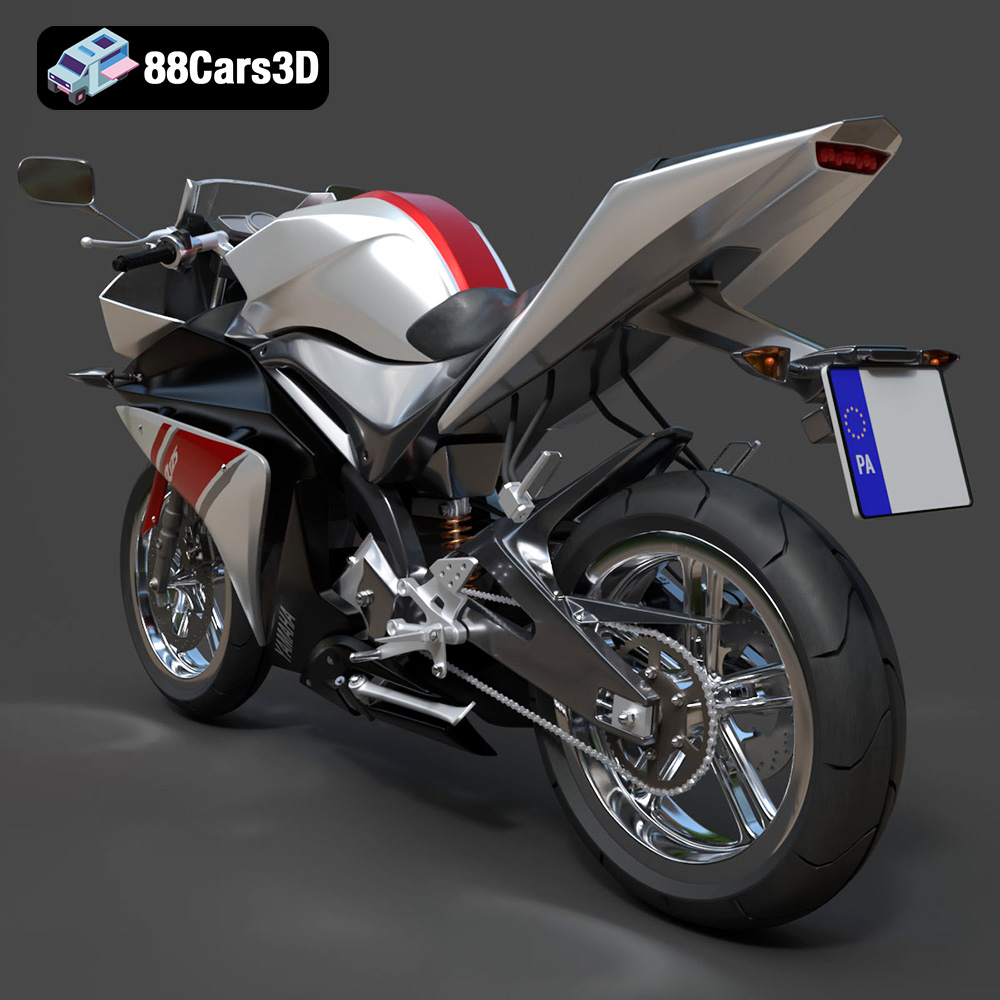
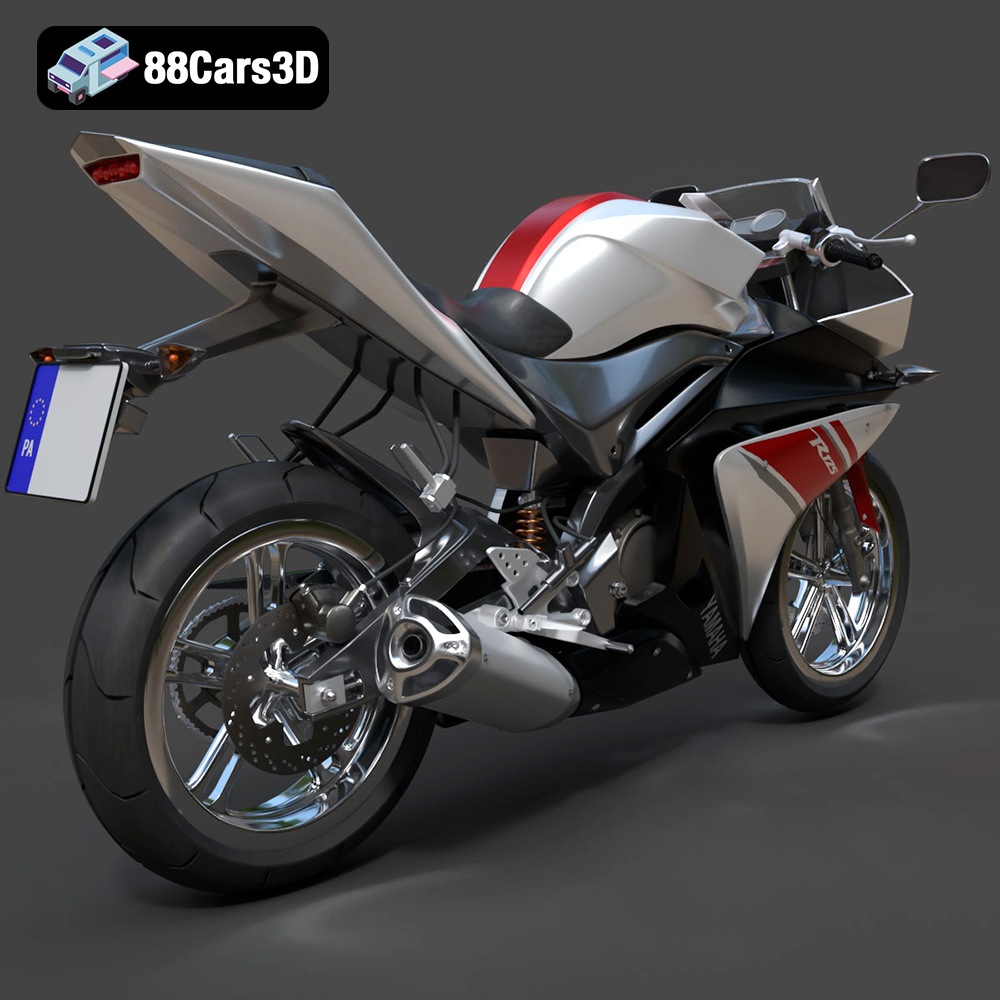
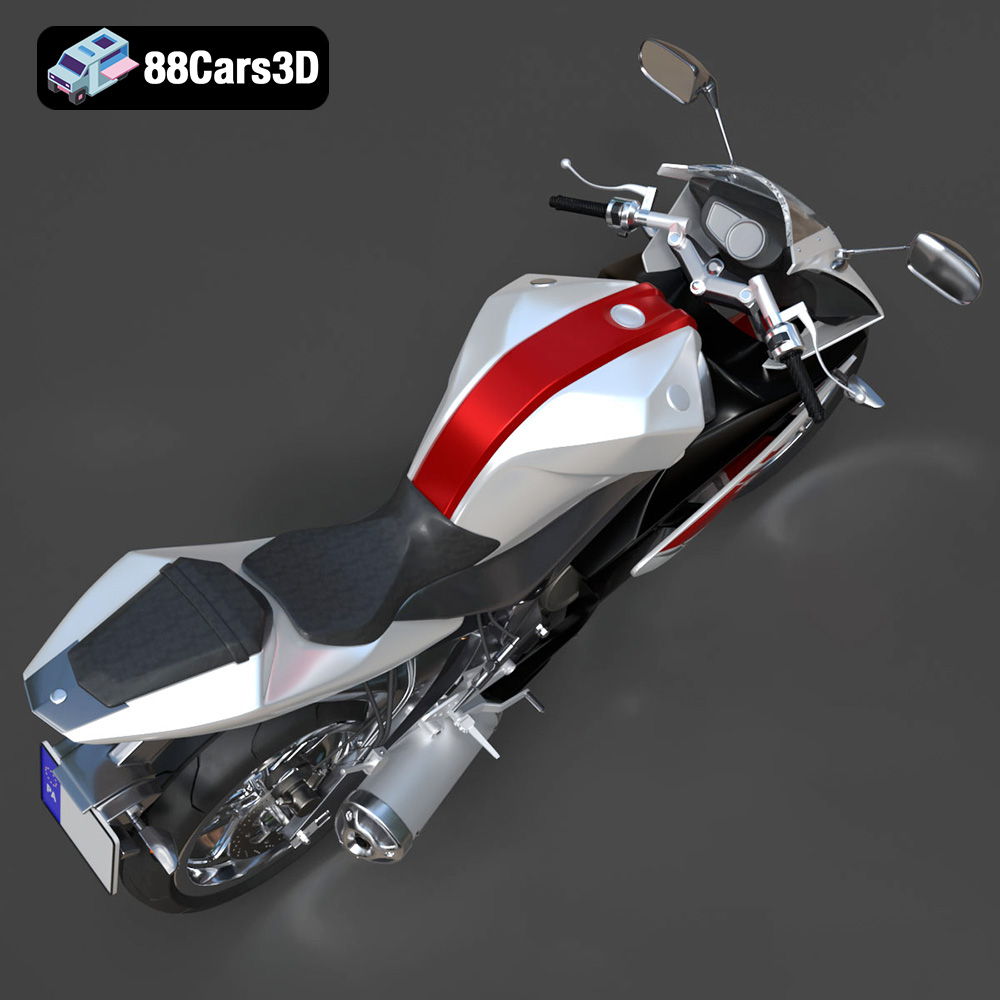
The Yamaha YZF-R125 EU is a lightweight supersport motorcycle that brings authentic R-Series DNA to the A1 license class. Renowned for its aggressive styling inspired by the iconic R1, this dynamic sportbike features a high-revving 125cc liquid-cooled engine with Variable Valve Actuation (VVA), a sculpted aerodynamic fairing, and a lightweight twin-spar Deltabox frame. Every aspect of this motorcycle is designed to deliver a thrilling, high-performance riding experience, making it a standout in the entry-level sportbike category. This high-quality 3D model features optimized game-ready topology, ensuring a perfect balance between high-end visual fidelity and real-time performance. Built to accurate real-world scale, the mesh is intelligently structured to maximize detail where it matters while keeping the triangle count efficient. It is an outstanding asset for game development, AR/VR experiences, high-fidelity animations, and photorealistic visualizations. Perfect for high-adrenaline racing simulators, urban environment street scenes, virtual dealership showrooms, and mobile AR configurators.
$19.99
.blend
.fbx
.glb
.max
.obj
.ply
.rendering
.stl
.supersport
.unreal
.yamaha
game asset
game-ready
low-poly
motorcycle-3d-model
optimized
sports-bike
VR/AR
yzf-r125
yzf-r125-eu