Get 20% OFF All Premium 3D & STL Models!

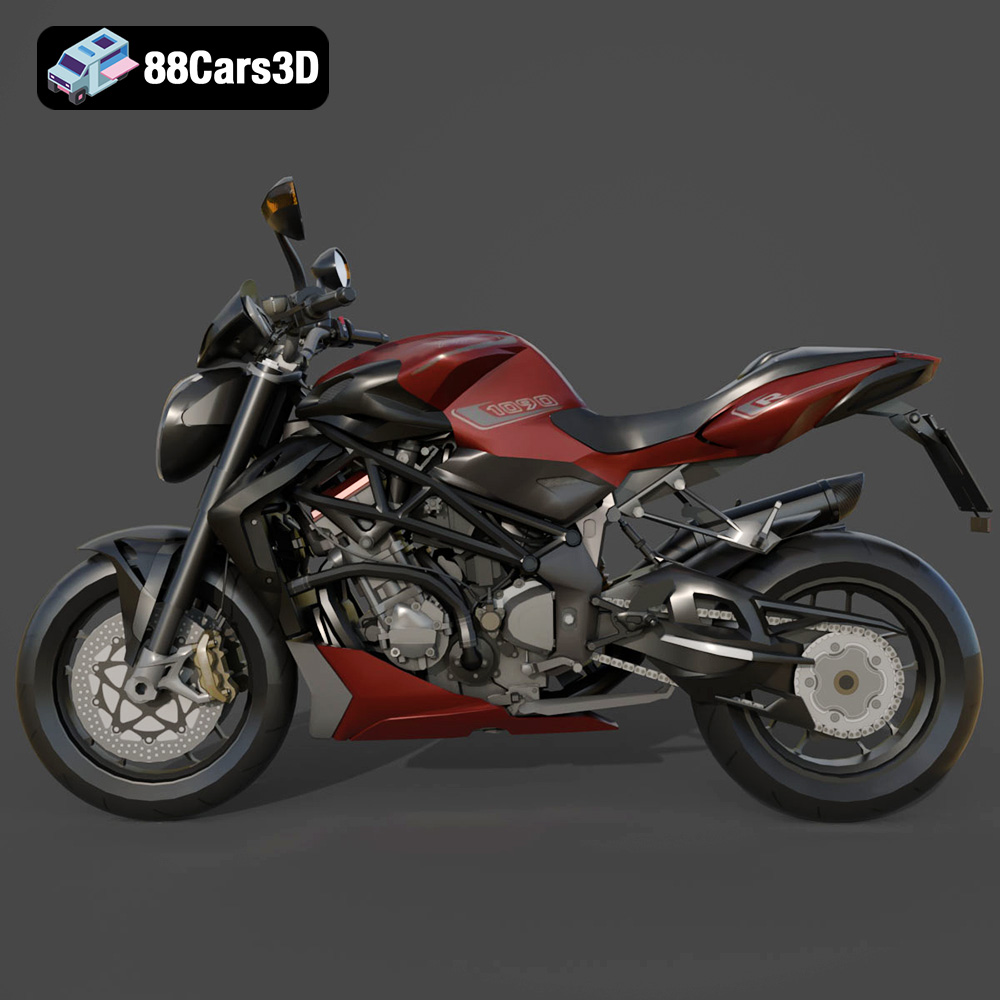
In the world of high-performance motorcycles, the MV Agusta Brutale 1090 R stands as a testament to Italian design, raw power, and an unmistakable aggressive aesthetic. It’s a machine that demands attention, both on the road and, increasingly, in the dynamic landscapes of 3D visualization. From hyper-realistic automotive rendering to immersive game environments and cutting-edge AR/VR experiences, the demand for meticulously crafted 3D car models – and in this case, a truly iconic motorcycle – has never been higher. Professionals across various creative industries are constantly seeking assets that combine visual fidelity with technical optimization.
This pursuit of digital perfection is precisely where a premium 3D model like the MV Agusta Brutale 1090 R comes into play. It’s not just a digital replica; it’s a foundation for innovation, designed to accelerate workflows and elevate project quality. Whether you’re a game developer needing a high-speed racing asset, an architect integrating a lifestyle element into a visualization, or a marketing agency crafting a compelling product launch, the right 3D asset can make all the difference. At 88cars3d.com, we understand this critical need, offering a curated selection of high-quality models that meet the rigorous demands of professional production pipelines.
Navigating the diverse landscape of 3D software and its myriad applications requires a clear understanding of file formats. Each format serves a specific purpose, offering unique advantages for different stages of the 3D pipeline, from initial modeling to real-time deployment and even physical fabrication. The MV Agusta Brutale 1090 R 3D model exemplifies this versatility by being offered in a comprehensive suite of formats, ensuring maximum compatibility and utility for any project. Choosing the correct format is crucial for maintaining data integrity, optimizing performance, and achieving desired project outcomes.
The .blend format is the native file type for Blender, the powerful open-source 3D creation suite. A .blend file typically contains the complete scene, including mesh data, materials, textures, lighting, cameras, animation data, and even physics simulations. This makes it an incredibly robust format for users working primarily within Blender, allowing for full editability and seamless continuation of any project. For the MV Agusta Brutale model, the .blend file would provide direct access to all its components, allowing artists to easily adjust materials, modify geometry, or even re-rig components within Blender’s familiar environment, making it ideal for those seeking comprehensive control and flexibility.
.fbx (Filmbox) is arguably the most widely adopted proprietary file format for 3D asset exchange, developed by Autodesk. Its strength lies in its ability to store not just mesh data, but also complex animation, rigging, materials, and textures in a single file. This makes .fbx the go-to format for transferring assets between different 3D software packages (like 3ds Max, Maya, Blender, Cinema 4D) and, critically, into game engines such as Unreal Engine and Unity. For the MV Agusta Brutale 1090 R, the .fbx version is perfectly optimized for game-ready pipelines, ensuring that the separate wheels, suspension, and steering components retain their animation-ready pivot points and hierarchy when imported into a real-time environment.
The .obj (Wavefront OBJ) format is a simple, universal geometry definition file. It primarily stores 3D model geometry (vertices, normals, texture coordinates, and faces) and can also reference external material files (.mtl) for basic color and texture information. While it lacks support for animation, rigging, or advanced materials, its simplicity makes it exceptionally compatible across virtually all 3D software. For the MV Agusta model, the .obj file serves as a reliable fallback for cross-software compatibility, ensuring that the core mesh data can be imported and worked with in almost any 3D application, regardless of its native format support.
.glb (GL Transmission Format Binary) is the binary version of glTF, an open-standard 3D file format for scenes and models. It is specifically designed for efficient transmission and loading of 3D models in web applications, augmented reality (AR), and virtual reality (VR) environments. A .glb file encapsulates all model data – geometry, materials, textures, and even animation – into a single, compact binary file, minimizing file size and improving loading times. This optimization makes the MV Agusta Brutale .glb model ideal for interactive web experiences, mobile AR apps, or virtual showrooms where performance and quick delivery are paramount.
.stl (Stereolithography) is the most common file format used for 3D printing. It represents a 3D model as a series of connected triangles (a triangulated surface), without any color or texture information. While simplistic, its ubiquity makes it the de facto standard for almost all 3D printers and slicing software. The MV Agusta Brutale 1090 R model, being convertible to .stl, opens up possibilities for hobbyists and professionals alike to physically manifest the digital design. The product description’s recommendations for scale, layer height, and support structures are critical technical details for achieving a successful physical print.
The .ply (Polygon File Format or Stanford Triangle Format) is a versatile format that can store 3D data from a variety of sources, including 3D scanners. Beyond geometry, it can store properties like color, transparency, surface normals, and texture coordinates for each vertex or face. While less common for general asset exchange than FBX or OBJ, .ply is valuable in scientific, engineering, and CAD applications where precise mesh data, often with per-vertex attributes, is crucial for analysis or measurement. For the Brutale, a .ply file would be useful in scenarios demanding high precision mesh data, perhaps for reverse engineering or detailed surface analysis.
While not a universal file extension in the same vein as .fbx or .obj, the inclusion of .unreal implies a pre-packaged, engine-ready asset specifically configured for Epic Games’ Unreal Engine. This often means the model has already been imported, scaled, had its materials set up with Unreal’s Physically Based Rendering (PBR) system, and potentially even had basic collision meshes generated. For a game development team, this significantly reduces the time spent on initial asset integration for the MV Agusta Brutale, allowing for immediate placement and interaction within an Unreal project. It signifies a high level of optimization and preparation by the model creator.
Finally, the .max format is the native file type for Autodesk 3ds Max, a powerful 3D modeling, animation, and rendering software. Similar to Blender’s .blend, a .max file contains the complete scene, including geometry, materials, textures, lights, cameras, animation, and scene settings. It offers full editability within 3ds Max, making it the ideal choice for artists who wish to leverage 3ds Max’s extensive toolset for rendering the MV Agusta Brutale in V-Ray or Corona, modifying its components, or incorporating it into complex animation sequences.
Capturing the essence of a machine as iconic as the MV Agusta Brutale 1090 R in a 3D model requires more than just artistic flair; it demands rigorous technical execution. This specific 3D model is a prime example of balancing visual authenticity with performance considerations, making it an invaluable asset for various professional applications.
The foundation of any high-quality 3D car model – or motorcycle in this case – is accurate geometry. This model boasts “accurate MV Agusta Brutale 1090 R frame geometry and proportions” and “real-world scale accuracy.” This means that the digital rendition faithfully replicates the physical dimensions of the actual motorcycle. Such precision is crucial for:
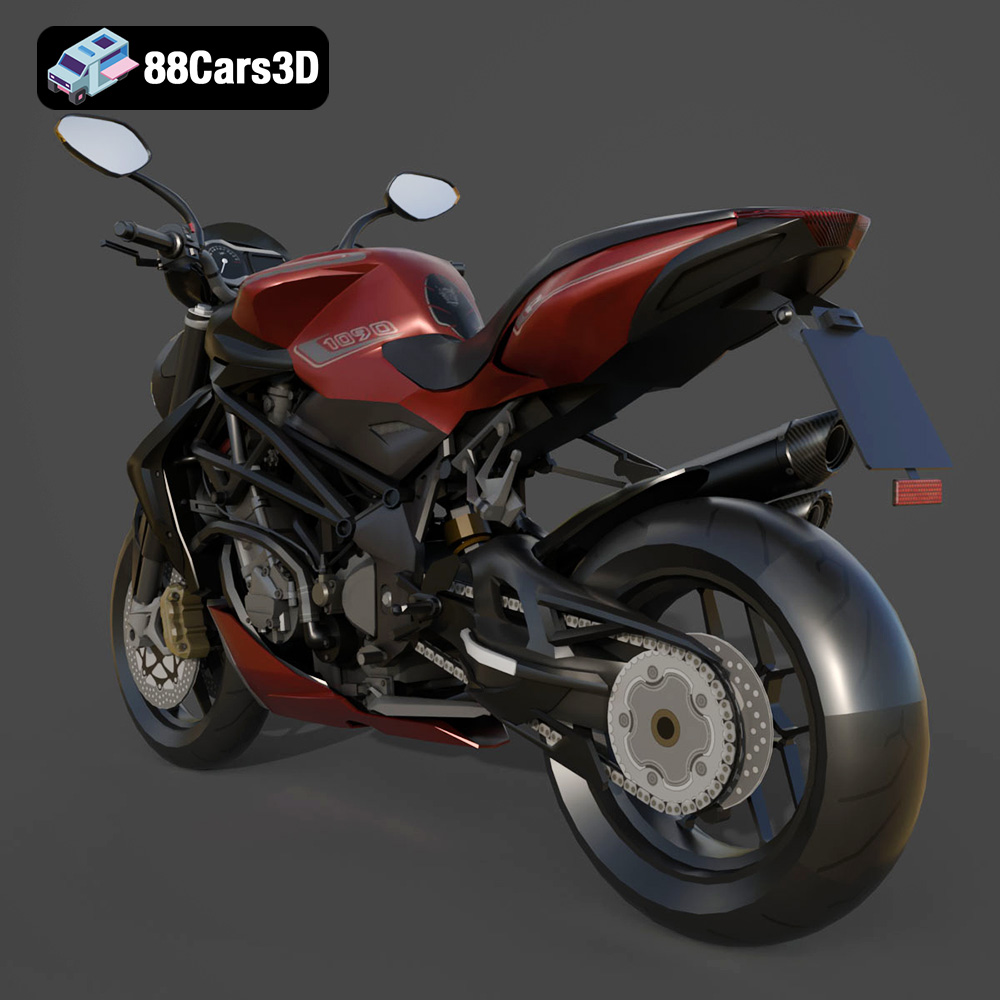
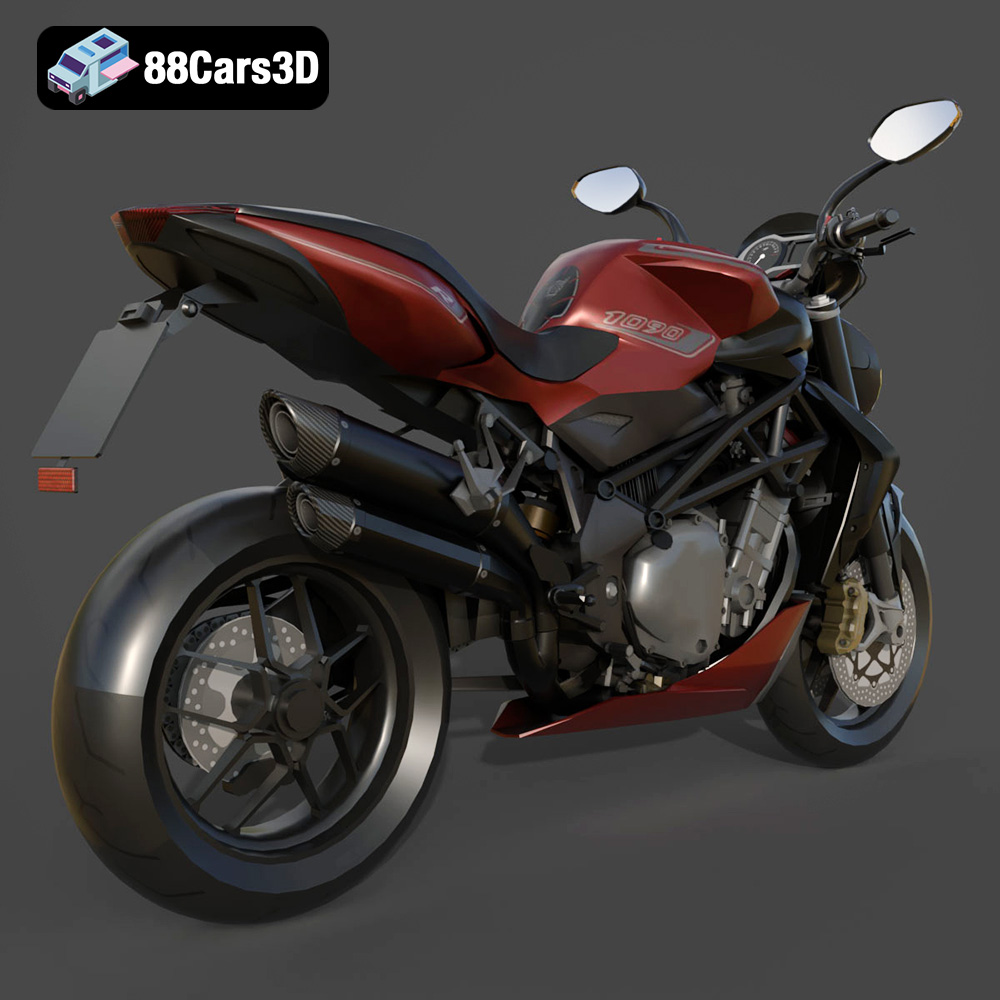
The detailed engine block, signature dual-pipe stacked exhaust system, teardrop headlight, and intricate alloy wheels are all meticulously modeled, based on the 1078cc inline-four engine, bringing an unparalleled level of realism. This attention to detail extends to the front upside-down fork and rear single-sided swingarm suspension, crucial elements for both visual accuracy and potential animation.
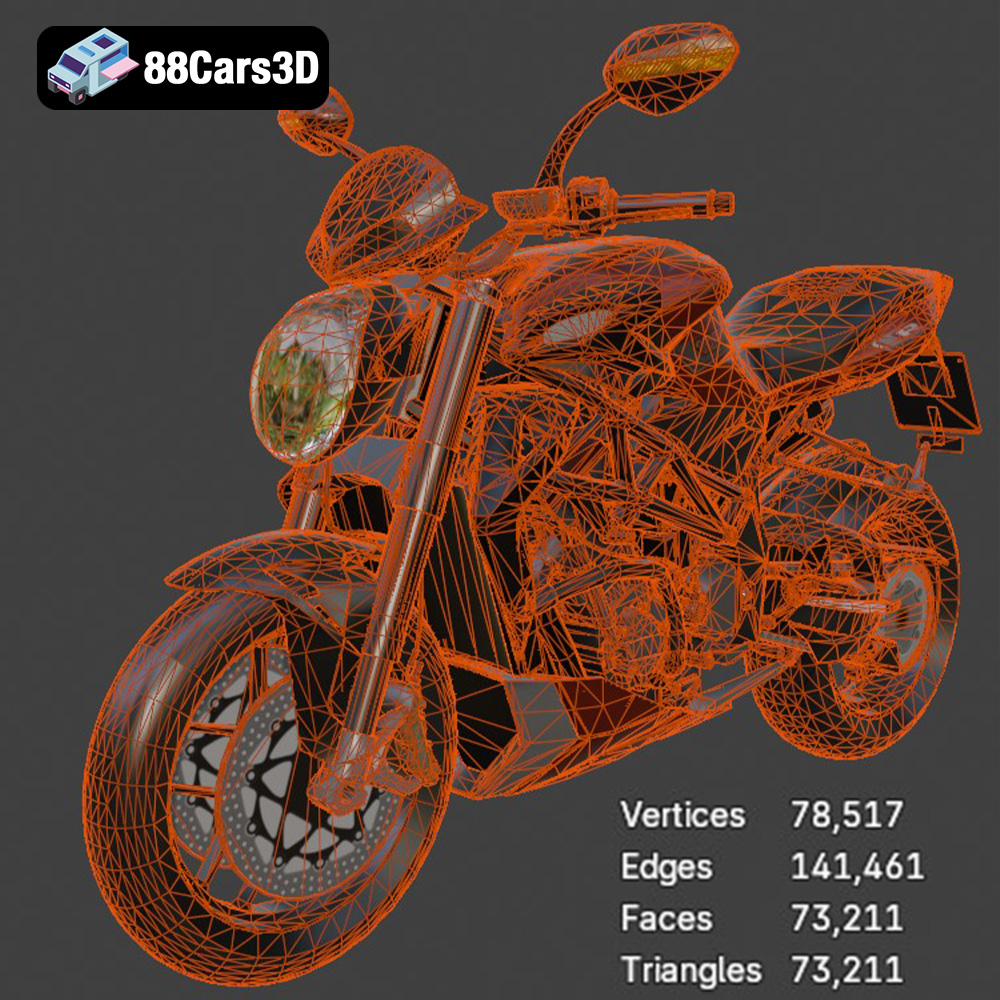
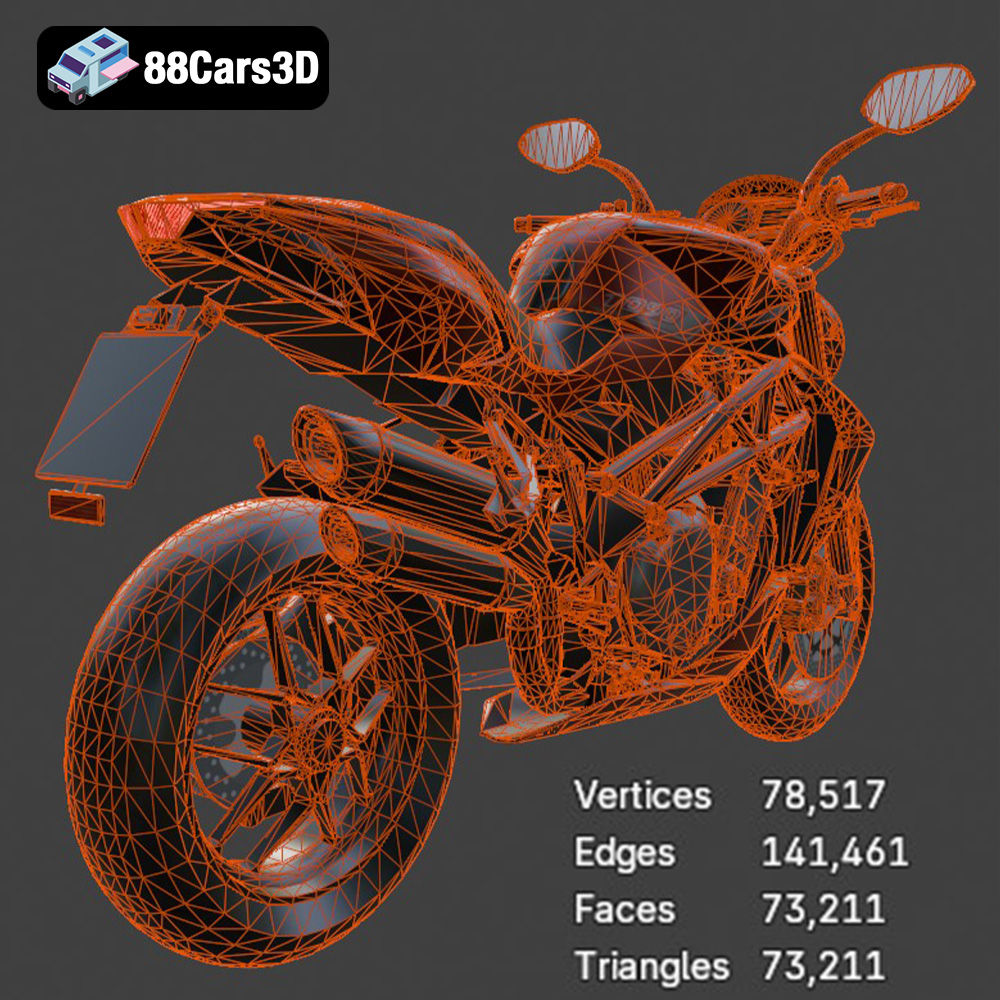
One of the most significant technical advantages of this MV Agusta Brutale 3D model is its optimized topology of “approximately 200,000 triangles.” This polycount strikes a perfect balance: it’s detailed enough for “stunning visual fidelity” in high-end rendering, yet lean enough to be “fully game-ready” and suitable for real-time engines like Unreal and Unity. This optimization is key because:
Furthermore, the “ergonomically sculpted rider and pillion split seat,” “detailed digital instrument cluster,” and “accurate control levers, footpegs, and gear shifter” demonstrate that the optimization doesn’t come at the expense of crucial details, particularly for first-person POV in gaming or close-up renders.
In the fast-paced realms of interactive media, a 3D model’s technical specifications are just as critical as its visual appeal. The MV Agusta Brutale 1090 R 3D model is purpose-built for high performance, making it an exceptional choice for demanding real-time environments.
For game developers, the term “game-ready” is a badge of honor, signifying that an asset has been prepared to meet the strict performance requirements of modern game engines. The approximately 200,000 triangle count of the Brutale model is ideally suited for this. In game development, every triangle counts, and this polycount allows for impressive visual detail without bogging down the rendering pipeline. Considerations like “proper pivot setup for steering, wheel rotation, and suspension travel” are absolutely vital for:
Whether it’s for high-speed racing simulations or integrating into an urban environment within an open-world title, this model is designed to drop directly into game engines and perform without significant overhead.
Augmented Reality (AR) and Virtual Reality (VR) represent the frontier of immersive experiences, and they demand exceptionally optimized 3D assets. The MV Agusta Brutale 3D model excels in this arena due to its balanced polycount and comprehensive file format support, particularly .glb.
The “optimized geometry for first-person POV” also ensures that if a user is “sitting” on the virtual bike in VR, the cockpit details like the digital instrument cluster and control levers appear sharp and immersive.
While digital visualization is a primary use case, the utility of high-quality 3D models extends into the physical realm through 3D printing. The MV Agusta Brutale 1090 R 3D model, with its robust detailing and .stl format compatibility, offers an exciting pathway for creating tangible replicas.
3D printing allows designers, hobbyists, and engineers to move from the virtual to the physical. For a model like the Brutale, this means being able to produce a physical display piece, a scale model for a diorama, or even a prototype for custom accessories. The product description provides specific, crucial technical details for successful 3D printing:
The journey from a raw 3D print to a museum-quality model doesn’t end when the print is finished. Post-processing is key, and the guidelines provided are highly relevant:
This level of detailed guidance transforms the 3D model from a mere digital file into a comprehensive blueprint for physical creation, catering to both digital artists and physical model enthusiasts.
Professional 3D artists and developers rely on efficient workflows and seamless asset integration. The MV Agusta Brutale 1090 R 3D model, with its diverse file format offerings and game-ready optimization, is designed to enhance productivity across leading software platforms.
For artists working in industry-standard software like 3ds Max or the versatile open-source Blender, the MV Agusta Brutale model offers direct compatibility and robust features.
In both environments, the ability to “change body/tank colors,” “modify tire textures,” and “adjust material finishes (matte, gloss, metallic)” provides immense creative freedom, allowing artists to adapt the motorcycle to specific project requirements or client branding.
Unreal Engine is a powerhouse for real-time rendering, game development, and high-fidelity cinematic experiences. The MV Agusta Brutale 1090 R model is exceptionally well-suited for Unreal Engine, thanks to its “game-ready & optimized” nature and the inclusion of the specific .unreal and .fbx formats.
The journey to creating breathtaking 3D visualizations, engaging games, or compelling AR/VR applications often begins with the right assets. For professionals, the quality, optimization, and versatility of these assets are paramount. This is precisely where a dedicated marketplace like 88cars3d.com distinguishes itself, offering a gateway to high-quality 3D models that meet the rigorous demands of professional production pipelines.
The MV Agusta Brutale 1090 R 3D model exemplifies the commitment to quality found on 88cars3d.com. It’s not merely a surface-level representation but a deeply considered asset:
Time is a valuable commodity in any creative industry. Sourcing pre-made, high-quality 3D car models like this MV Agusta allows studios and individual artists to:
The comprehensive file format support, including .blend, .fbx, .obj, .glb, .stl, .ply, .unreal, and .max, further underscores the commitment to workflow efficiency, ensuring compatibility with virtually any professional 3D software or engine. This level of preparation means artists can focus on creativity, not conversion headaches.
The world of 3D modeling is constantly evolving, with new technologies and demands pushing the boundaries of realism and interactivity. For professionals in automotive rendering, game development, AR/VR, and beyond, the need for high-quality, optimized 3D assets is more critical than ever. The MV Agusta Brutale 1090 R 3D model stands as a prime example of such an asset – a meticulously crafted digital twin of an iconic motorcycle, engineered for versatility and performance across diverse applications.
From its optimized ~200,000 triangle count perfect for real-time engines to its accurate geometry and animation-ready components, this model is designed to be a powerful addition to any creative pipeline. Whether you’re aiming for a photorealistic rendering in 3ds Max, an immersive racing experience in Unreal Engine, an interactive AR configurator using the .glb format, or even a tangible 3D-printed replica, this model provides the technical foundation and creative freedom you need. Understanding the nuances of file formats, as we’ve explored, further empowers artists to leverage such assets to their fullest potential.
Investing in professionally made 3D car models and motorcycle assets not only saves invaluable time but also elevates the overall quality and impact of your projects. For those seeking to bring their digital visions to life with unparalleled detail and technical excellence, exploring the offerings at 88cars3d.com, including this remarkable MV Agusta Brutale 1090 R 3D model, is an essential step towards achieving creative success.
The MV Agusta Brutale 1090 R is a masterpiece of Italian motorcycle engineering, renowned for its aggressive naked bike styling, thrilling performance, and iconic exposed trellis frame. This 3D model perfectly captures the essence of the Brutale lineage, featuring its signature muscular fuel tank, distinctive teardrop headlight assembly, and the raw mechanical beauty of its 1078cc inline-four engine. This meticulously crafted 3D model boasts an optimized topology of approximately 200,000 triangles, ensuring a perfect balance between stunning visual fidelity and real-time performance. It is fully game-ready and ideally suited for high-end rendering, animation, virtual reality (VR), and augmented reality (AR) applications. Perfect for high-speed racing simulations, urban lifestyle visualizations, virtual showroom experiences, and dynamic action animations.
$39.99