Get 20% OFF All Premium 3D & STL Models!

In the dynamic world of digital design, the demand for high-quality 3D assets is more prevalent than ever. From captivating marketing visuals to immersive game environments and intricate architectural visualizations, a meticulously crafted 3D model can be the cornerstone of a successful project. Automotive design, in particular, thrives on precision and photorealism, requiring digital replicas that stand up to intense scrutiny.
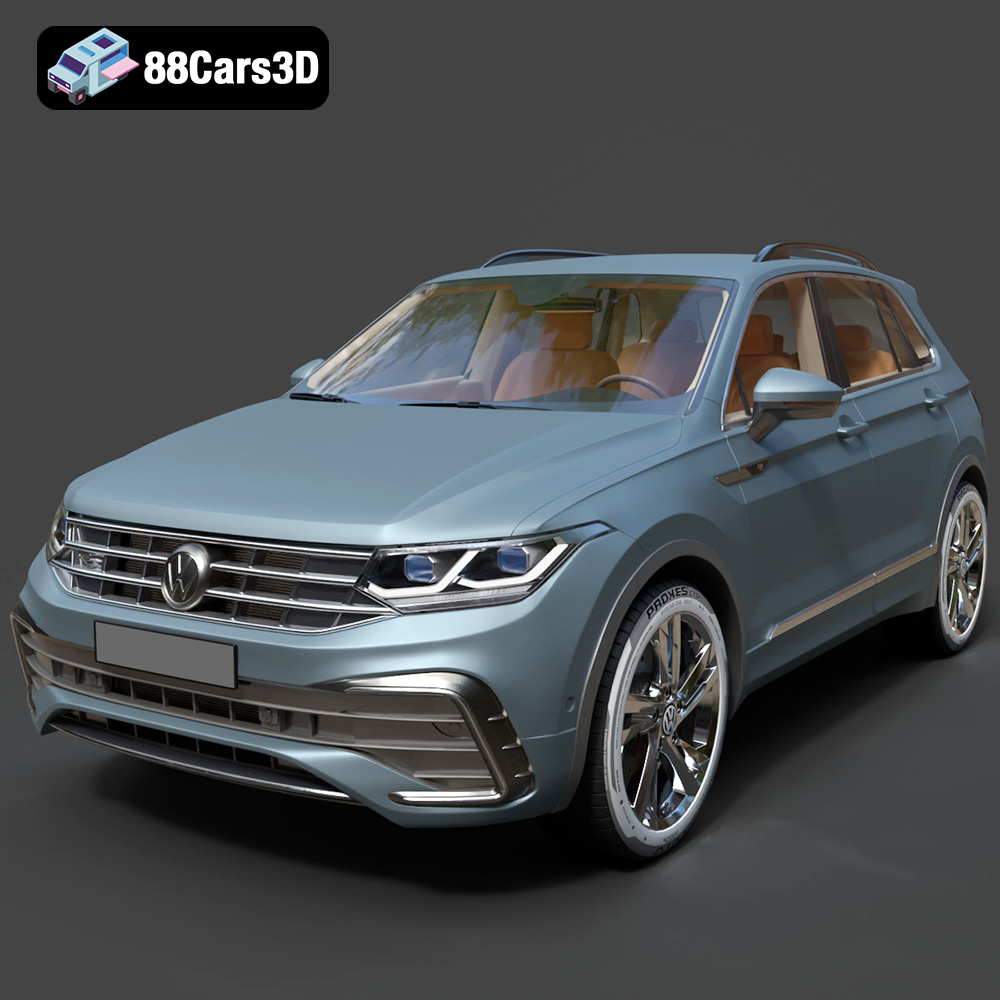
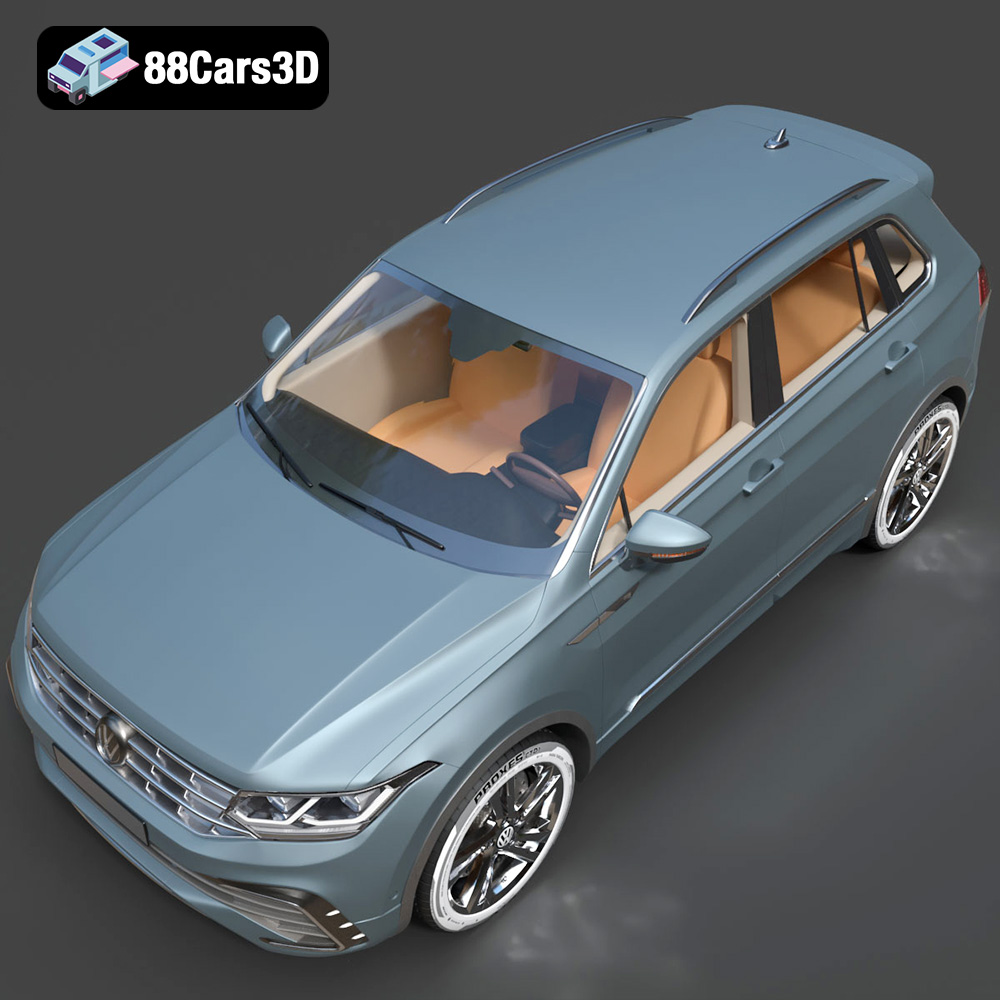
The creation of a truly professional 3D car model involves a deep understanding of geometry, materials, and various software ecosystems. It’s about capturing not just the silhouette, but the very essence and engineering of a vehicle. This is precisely where assets like the Volkswagen Tiguan 2021 3D Model truly shine. Designed to professional standards, this model offers a realistic digital replica, perfectly capturing the modern styling, dynamic stance, and sophisticated details of the popular SUV. It’s an exceptional asset ready for a diverse array of digital projects, whether it’s for stunning automotive rendering, integrating as a robust game asset, or crafting detailed AR/VR experiences.
The visual expectations in today’s digital landscape are incredibly high. Consumers and clients alike demand photorealism and seamless integration. For automotive projects, this translates to 3D car models that don’t just look good but are technically sound, ensuring optimal performance across various applications.
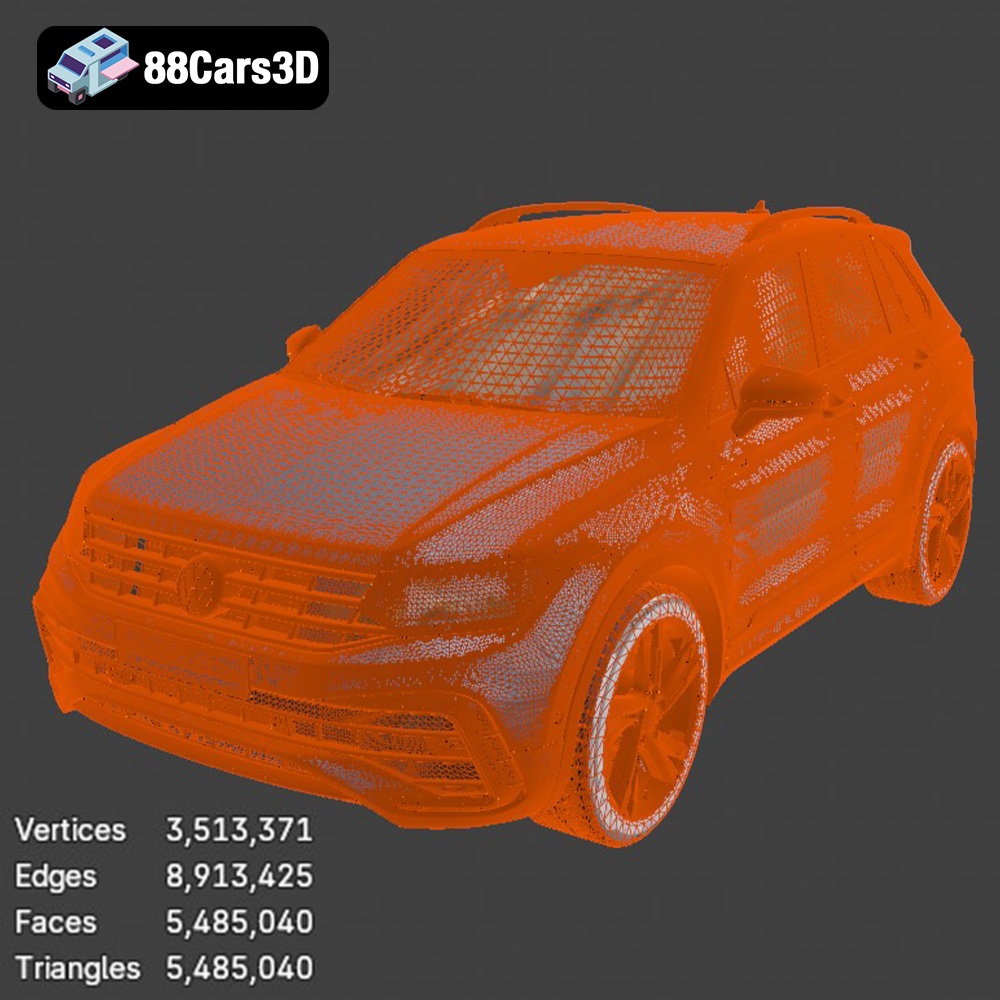
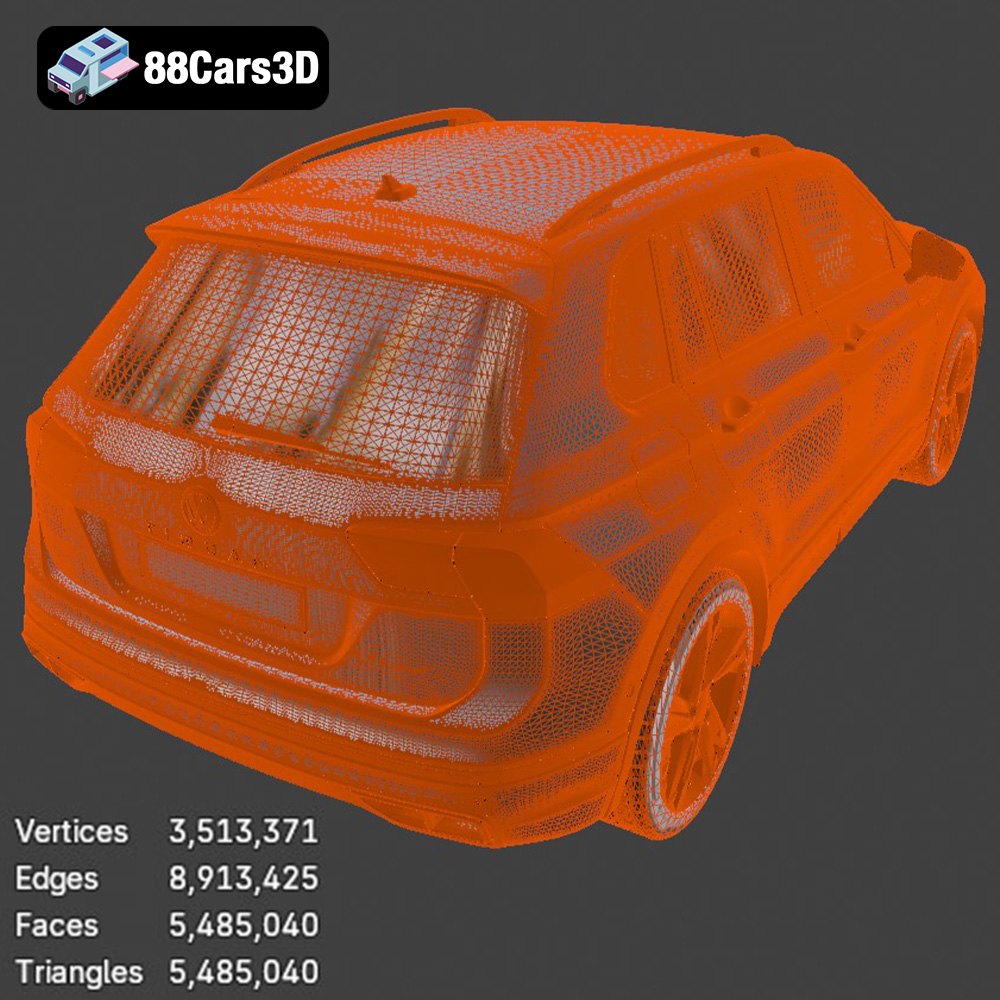
At the core of any high-quality 3D model is its geometry and topology. A well-constructed model, like the Volkswagen Tiguan 2021 3D Model, boasts clean quad-based topology. This means the mesh is primarily composed of four-sided polygons, which is crucial for smooth subdivisions, deformations, and animation. Poor topology, often characterized by triangles and n-gons (polygons with more than four sides), can lead to artifacts, pinching, and difficulties in UV mapping or rigging. Clean geometry also contributes to an optimized poly count, striking a balance between detail and performance, making the model versatile for both high-end rendering and real-time game engines. The accurate proportions and details of the Tiguan model are a direct result of meticulous geometric construction.
Once the geometry is solid, the next layer of realism comes from materials and textures. High-fidelity 3D car models require sophisticated PBR (Physically Based Rendering) materials that accurately simulate how light interacts with surfaces – paint, glass, rubber, chrome, and plastics. This involves a suite of textures: diffuse/albedo, roughness, metallic, normal, and sometimes ambient occlusion maps. Properly unwrapped UVs (the 2D representation of the 3D model’s surface) are essential for applying these textures without stretching or distortion. The Volkswagen Tiguan 2021 3D Model is engineered with an emphasis on visual fidelity, meaning its materials are designed to react realistically to various lighting conditions, bringing the digital vehicle to life.
A truly versatile 3D car model isn’t limited to a single use case. It must be optimized for a range of demanding applications. For cinematic rendering, the focus is on extreme detail and photorealism. For game development, the priority shifts to performance, requiring efficient polygon counts, well-optimized UVs, and potentially Level of Detail (LOD) assets. AR/VR experiences demand a delicate balance of visual quality and real-time efficiency. Models found on platforms like 88cars3d.com, including the Tiguan, are built with this multi-purpose versatility in mind, offering clean geometry and well-structured topology that allows for seamless workflow integration and outstanding results across various professional pipelines.
Navigating the world of 3D modeling often means grappling with a multitude of file formats, each with its own strengths, weaknesses, and preferred applications. Understanding these formats is critical for professional workflows, ensuring compatibility, preserving data integrity, and optimizing assets for specific needs. The Volkswagen Tiguan 2021 3D Model is available in a comprehensive set of formats, offering maximum flexibility for creators.
The .blend format is Blender’s native file type. It’s a complete package, storing not just the mesh data but also materials, textures, animations, camera settings, lighting setups, and even scene configurations. This makes it incredibly powerful for Blender users, as it preserves all aspects of the original project. When you download a .blend file, you’re getting a fully editable Blender scene, often with pre-configured materials and lighting, allowing for immediate rendering or further customization within Blender.
.fbx (Filmbox) is a proprietary file format developed by Autodesk, widely regarded as the industry standard for exchanging 3D data between different software applications, especially for game development. It supports geometry, materials, textures, animations, cameras, and lights. Its robust support for skeletal animations and blend shapes makes it ideal for game engines like Unreal Engine and Unity, where efficient asset transfer and animation integration are paramount. The .fbx format is often “game-engine ready,” meaning it’s been optimized for real-time performance.
The .obj (Wavefront OBJ) format is one of the oldest and most universal 3D file formats. It’s celebrated for its simplicity and wide compatibility, making it a reliable choice for cross-software transfers. An .obj file primarily stores geometric data (vertices, faces, UV coordinates) and can reference external .mtl (material) files and texture maps. While it doesn’t support animations or advanced scene data like .fbx or .blend, its universal nature ensures that virtually any 3D software can open and import it, making it a safe bet for basic model exchange.
.glb (GL Transmission Format Binary) is the binary version of glTF, a royalty-free specification for the efficient transmission and loading of 3D scenes and models by applications. It’s an excellent format for web-based 3D, Augmented Reality (AR), and Virtual Reality (VR) applications because it packages all necessary data (geometry, materials, textures, animations) into a single, self-contained file. This makes it extremely lightweight and fast to load, ideal for interactive experiences where performance and rapid delivery are key. It’s a modern standard for optimized, real-time 3D content.
.stl (STereoLithography) is the de facto standard file format for 3D printing and CAD (Computer-Aided Design). It represents 3D surfaces as a series of connected triangles, describing only the surface geometry of a 3D object without any color, texture, or material information. Its simplicity makes it universally compatible with 3D printing software (slicers). For applications like the Volkswagen Tiguan 2021 3D Model, an .stl output means the digital design can be translated into a physical prototype, perfect for rapid prototyping or scale model production.
The .ply (Polygon File Format or Stanford Triangle Format) is a versatile format for storing 3D data from 3D scanners, CAD systems, and other sources. It can store a variety of properties including color, transparency, normals, texture coordinates, and even reliability information for each vertex and face. While less common for general asset exchange than .fbx or .obj, it’s a precision mesh format valuable for scientific visualization, 3D scanning, and applications where a rich dataset tied to the geometry is crucial. It’s useful for detailed analysis or specific visualization needs.
The .unreal format signifies an asset specifically pre-configured for use within Unreal Engine. This isn’t a single file type but often a package or a .uasset file within the Unreal project structure. When a model is supplied in this “unreal” format, it typically means it has been imported, processed, had materials set up, and is ready for drag-and-drop integration into an Unreal project. This dramatically reduces setup time for game developers and real-time visualization specialists, ensuring the asset is engine-ready for optimal performance.
The .max format is the native file type for Autodesk 3ds Max. Similar to .blend, it stores an entire 3ds Max scene, including geometry, materials, textures, lighting, cameras, animation data, and modifier stacks. This format offers complete control and editability within 3ds Max, making it invaluable for artists who use the software for high-end automotive rendering, animation, or further customization. It ensures that all the scene’s intricacies and original settings are preserved.
Achieving photorealistic automotive rendering is an art form that combines technical skill with an eye for detail. The Volkswagen Tiguan 2021 3D Model provides an excellent foundation, but the final output relies heavily on a refined rendering workflow. This is where advanced software like 3ds Max or Blender, paired with powerful renderers, truly shine.
In 3ds Max, setting up a convincing studio environment is crucial for showcasing the nuances of a 3D car model. This often involves HDRi (High Dynamic Range Image) maps for realistic global illumination and reflections, complemented by targeted area lights. A typical setup might include a dominant key light, a fill light to soften shadows, and rim lights to accentuate the car’s contours. Physical cameras, matching real-world lens parameters, help achieve accurate depth of field and perspective distortion. The goal is to highlight the Volkswagen Tiguan’s elegant lines and paintwork, making it appear as if it’s sitting in a professional photography studio. With the .max file provided, users get a head start with a potentially pre-configured scene.
Modern renderers like V-Ray, Corona Renderer (for 3ds Max), or Cycles (for Blender) are instrumental in achieving photorealism through advanced ray tracing. These engines accurately simulate how light bounces and interacts with materials. The process involves fine-tuning material properties, such as metallic flake for paint, refraction for glass, and subsurface scattering for interior leathers. Careful attention to details like tire sidewall imperfections or slight variations in panel gaps further enhances realism. The Volkswagen Tiguan 2021 3D Model’s realistic materials are specifically designed to leverage these advanced rendering capabilities, ensuring that every curve and surface reflects light as it would in reality.
Rendering is often just the first step. Post-production in software like Adobe Photoshop or Affinity Photo adds the final layer of polish. This stage involves color grading to set the mood, adding subtle lens flares, vignetting, or depth-of-field effects that might not be perfectly achieved in the render. Compositing multiple render passes (e.g., reflections, refractions, shadows, ambient occlusion) provides granular control over the final image. This meticulous process ensures that the automotive rendering of the Tiguan model achieves a cinematic quality, making it suitable for high-impact marketing and presentation materials.
The demand for high-quality game assets extends beyond static renders to interactive, real-time environments. Game developers and AR/VR creators require 3D car models that are not only visually impressive but also optimized for performance. The Volkswagen Tiguan 2021 3D Model is engineered to facilitate this integration seamlessly.
For game engines like Unreal Engine and Unity, optimization is key. This involves ensuring polygon counts are balanced – detailed enough to look good, but low enough not to impact framerate. The Volkswagen Tiguan 2021 3D Model, provided in game-engine ready formats like .fbx and .unreal, typically includes clean geometry and optimized UVs. Textures are often packed into atlases or utilize efficient PBR workflows to reduce draw calls. Setting up materials within the engine’s shader graph ensures visual fidelity while maintaining real-time performance. This pre-optimization saves developers countless hours, allowing them to focus on gameplay and interactive elements.
To further enhance performance in real-time applications, Level of Detail (LOD) models are essential. LODs are simplified versions of the main mesh that swap in when the car is further away from the camera, reducing the computational load. High-quality 3D car models often come with pre-generated LODs or are structured in a way that makes LOD generation straightforward. Additionally, collision meshes are vital for accurate physics and player interaction. These are typically simplified, invisible meshes that define the physical boundaries of the vehicle, ensuring realistic impacts and interactions within the game world. The well-structured topology of the Tiguan model facilitates the creation of these critical game-specific assets.
Augmented Reality (AR) and Virtual Reality (VR) experiences push the boundaries of immersion. The Volkswagen Tiguan 2021 3D Model is particularly well-suited for these applications, especially with its .glb format, optimized for web-based and XR visualization. In AR, the model can be placed virtually in a real-world environment, allowing users to explore the car from any angle, customize colors, or even simulate driving. In VR, users can step inside a virtual showroom, interacting with the Tiguan in a fully immersive 3D space. The model’s optimized geometry and realistic materials ensure that these experiences are both visually compelling and run smoothly on target hardware, delivering a truly engaging interaction.
The utility of a high-quality 3D car model extends far beyond creating beautiful images or interactive games. It serves as a foundational asset for numerous practical and innovative applications in the automotive and design industries.
One of the most powerful applications for models like the Volkswagen Tiguan 2021 3D Model is in creating advanced online configurators and virtual showrooms. Customers can virtually “build” their desired Tiguan, choosing paint colors, wheel options, interior trims, and accessories in real-time 3D. This not only enhances the customer experience but also provides valuable insights for manufacturers. Virtual showrooms, powered by detailed 3D car models, offer an immersive alternative to physical dealerships, allowing potential buyers to explore vehicles from the comfort of their homes, interacting with features and seeing configurations instantly rendered. The versatility and fidelity of the Tiguan model make it an ideal candidate for such sophisticated tools.
The automotive industry relies heavily on simulation for design validation, safety testing, and driver training. A precise 3D model, like the Volkswagen Tiguan, can be integrated into physics-based simulation environments to test aerodynamic performance, crash dynamics, or even driver assistance systems. For training, it can be used in realistic driving simulators, offering a cost-effective and safe way to train new drivers or test reactions to various road conditions without risking actual vehicles. The accurate proportions and clean geometry of the Tiguan model ensure that these simulations are as realistic and reliable as possible, contributing to safer and more efficient automotive development.
While often seen as a digital asset, a well-structured 3D car model can bridge the gap to the physical world through 3D printing. The .stl and .ply formats provided for the Volkswagen Tiguan 2021 3D Model are specifically designed for this purpose. Designers can produce physical prototypes, scale models, or even custom accessories. This is invaluable for design reviews, showcasing concepts to stakeholders, or creating tangible marketing materials. The ability to transition from a digital design to a physical object opens up new avenues for product development and tangible brand engagement, proving the multifaceted value of professional 3D assets from 88cars3d.com.
In a saturated market of 3D assets, distinguishing between amateur and professional-grade models is crucial for project success. Investing in high-quality assets from a trusted source like 88cars3d.com offers significant advantages that resonate throughout the entire production pipeline.
We’ve discussed the technical aspects of clean geometry and UVs, but it’s worth reiterating their practical value. A professional 3D car model, such as the Volkswagen Tiguan 2021 3D Model from 88cars3d.com, guarantees these fundamental qualities. This means less time spent fixing geometry, re-unwrapping UVs, or dealing with rendering artifacts. Clean topology translates to predictable deformation for animation, effortless subdivision for close-up renders, and smooth shading across all surfaces. This underlying technical quality is the bedrock upon which all other project elements are built, ensuring a stable and reliable foundation.
Time is a precious commodity in any creative or development pipeline. Starting with a high-quality, pre-optimized 3D car model significantly accelerates project timelines. Instead of spending days or weeks modeling a vehicle from scratch or cleaning up a poorly constructed one, artists and developers can immediately jump into texturing, lighting, animation, or engine integration. The Volkswagen Tiguan 2021 3D Model’s comprehensive package, structured to integrate flawlessly into preferred professional pipelines and offered in various editable and optimized formats, embodies this efficiency. This allows teams to focus their resources on innovation and refinement rather than remedial tasks.
For studios and agencies working on multiple projects, maintaining a consistent level of quality is paramount. Sourcing assets from reputable marketplaces like 88cars3d.com ensures that you’re acquiring models that adhere to industry best practices. This consistency translates into predictable results, reduced troubleshooting, and a higher overall standard for all your output, whether it’s a cinematic automotive rendering, a new game level, or an interactive AR experience. The assurance of professional-grade quality means that the Volkswagen Tiguan 2021 3D Model will integrate seamlessly and perform reliably across a spectrum of demanding applications.
The journey from concept to a stunning 3D visualization or an interactive experience relies heavily on the quality of its foundational assets. High-fidelity 3D car models are not merely visual elements; they are complex technical assets that demand precision, optimization, and versatility. As we’ve explored, the right model can elevate automotive rendering, streamline game development, and unlock innovative applications in AR/VR and beyond.
The Volkswagen Tiguan 2021 3D Model stands as a prime example of a professional-grade asset, offering clean geometry, accurate proportions, realistic materials, and a comprehensive suite of file formats tailored for diverse workflows. Whether your project demands the intricate control of 3ds Max, the versatility of Blender, the real-time performance of Unreal Engine, or the precision for 3D printing, this model provides an exceptional starting point. By choosing meticulously engineered 3D car models from trusted sources like 88cars3d.com, professionals can ensure their projects not only look spectacular but also perform flawlessly, setting new benchmarks for digital excellence.
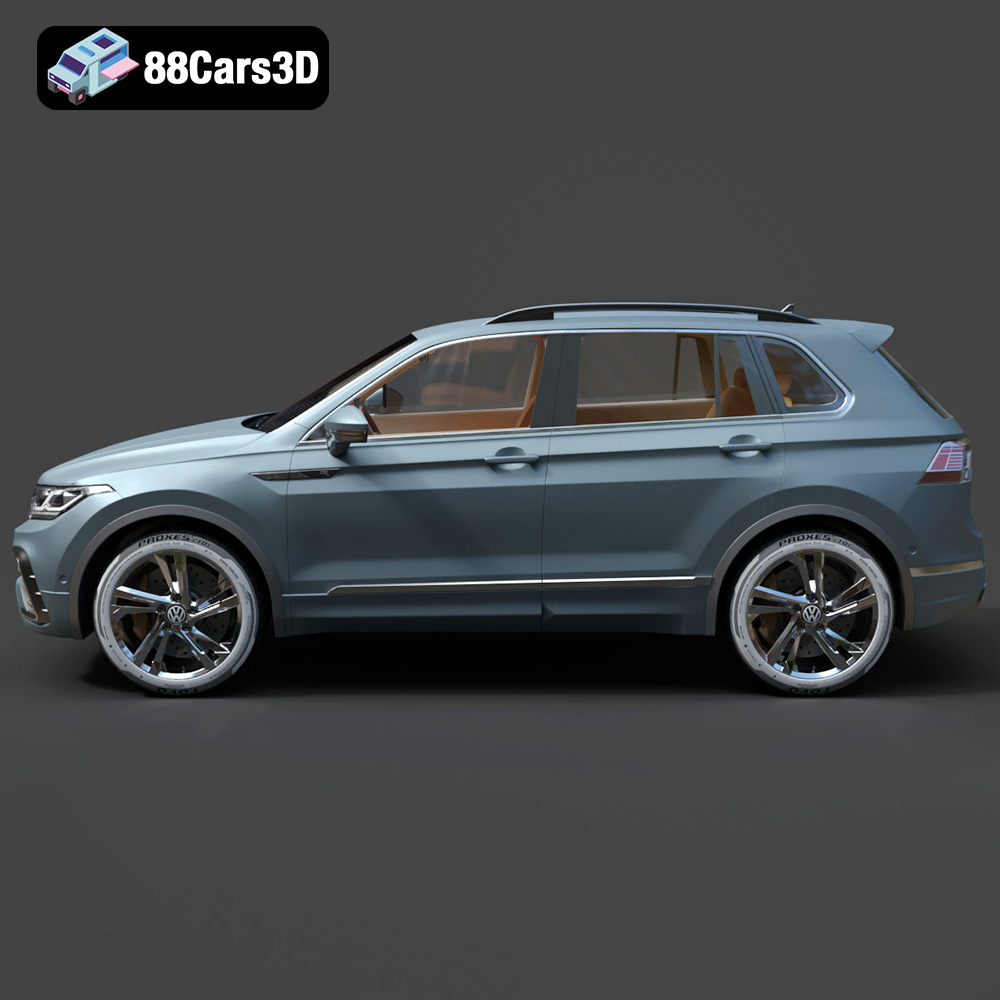
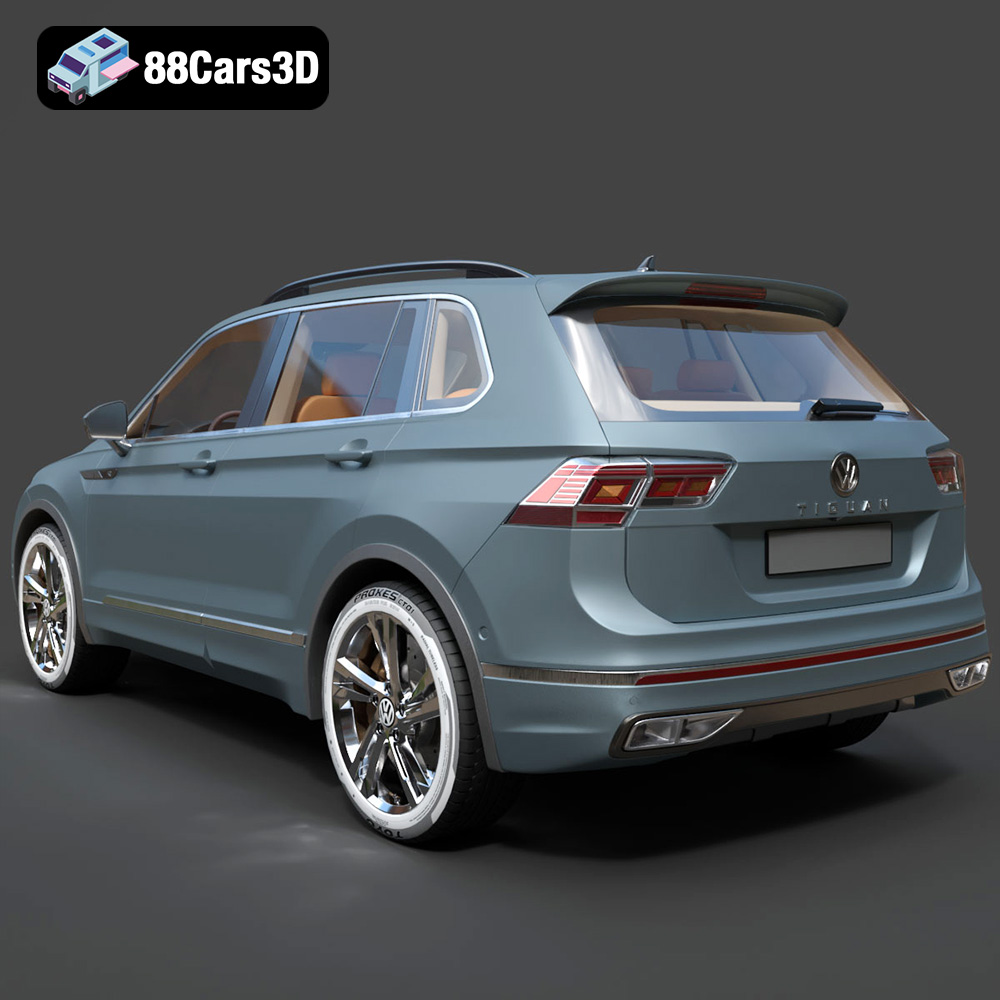
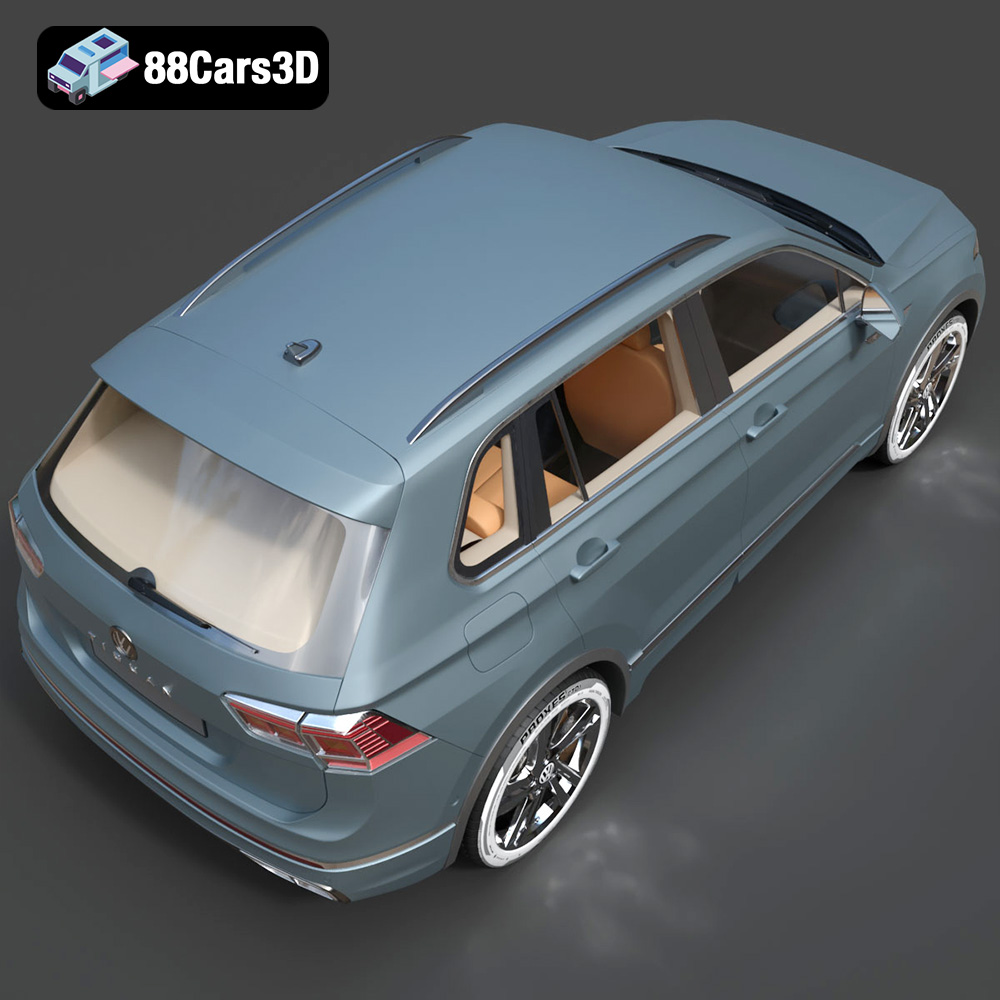
Experience the precision of the Volkswagen Tiguan 2021 3D Model, a realistic digital replica designed to meet professional standards. This model perfectly captures the modern styling, dynamic stance, and sophisticated details of the popular SUV, providing an exceptional asset for a diverse array of digital projects. Engineered with an emphasis on performance and visual fidelity, this 3D vehicle features clean geometry, accurate proportions, and realistic materials. The well-structured topology allows for seamless workflow integration, ensuring outstanding results in both tight studio close-ups and expansive dynamic environments. This versatile model is optimized for demanding applications, making it an excellent choice for game development, cinematic rendering, augmented and virtual reality (AR/VR) experiences, and architectural visualization. The comprehensive package is structured to integrate flawlessly into your preferred professional pipeline. Available file formats include: .blend – Editable Blender file with materials and lighting setup, .fbx – Game-engine ready format for Unreal Engine and Unity, .obj – Standard 3D model format compatible with all major software, .glb – Optimized for AR/VR and web-based visualization, .stl – Suitable for 3D printing and prototyping, .ply – Detailed polygon mesh for analysis and visualization, .unreal – Pre-configured for Unreal Engine use, .max – Editable 3ds Max file for rendering and animation.
$39.99
.arvr
.blend
.car3dmodel
.crossover
.fbx
.gameasset
.glb
.max
.obj
.ply
.rendering
.simulation
.stl
.tiguan
.unreal
.volkswagen
SUV