Get 20% OFF All Premium 3D & STL Models!

In the expansive and ever-evolving world of 3D visualization, the demand for high-fidelity, production-ready assets is paramount. From blockbuster video games to cinematic automotive advertisements and immersive architectural walkthroughs, the foundation of any compelling visual experience lies in the quality of its 3D models. Nowhere is this more apparent than in the realm of automotive design, where precision, realism, and optimization converge to bring vehicles to life in the digital space.
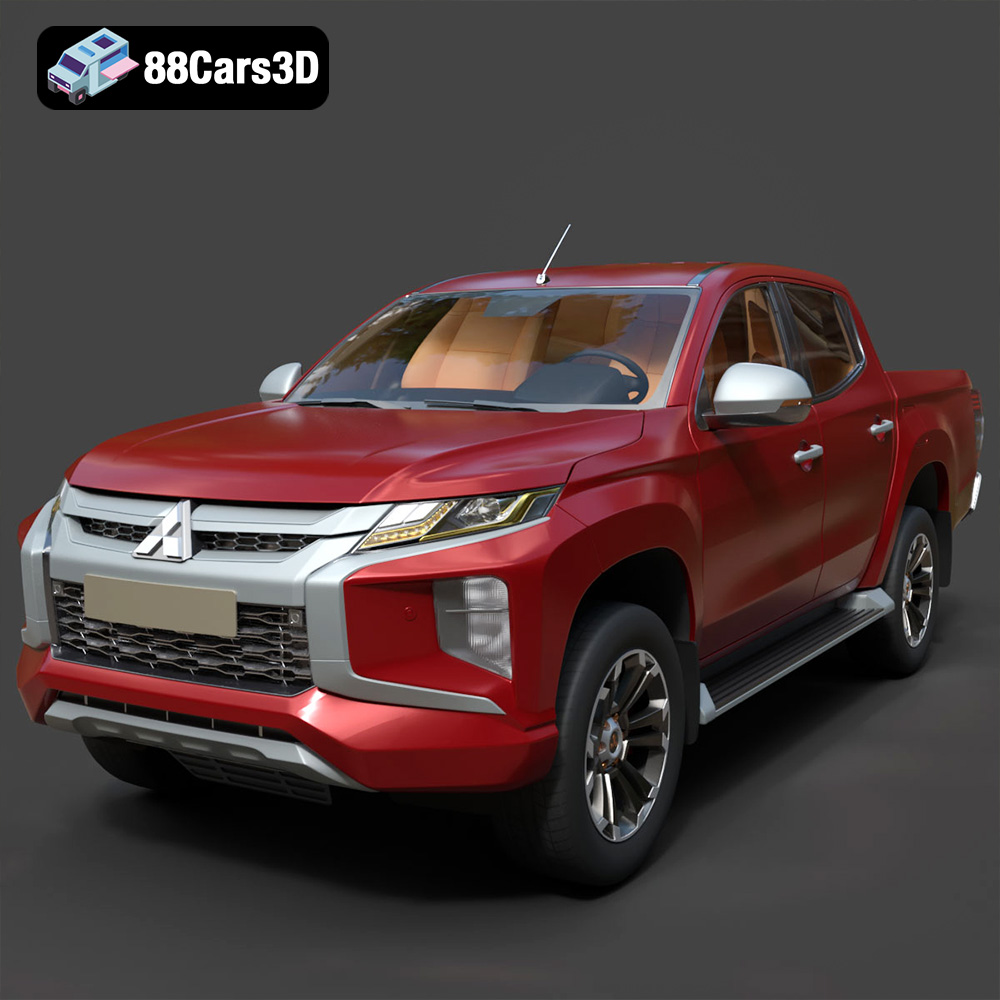
Creating a truly authentic 3D car model from scratch is a labor-intensive endeavor, requiring not only artistic skill but also deep technical understanding of topology, materials, and engine optimization. This is where pre-made, professional-grade assets become invaluable, saving countless hours for studios and individual artists alike. Consider, for instance, a robust and versatile vehicle like the 2019 Mitsubishi L200 Crew Cab. This iconic pickup truck, known globally as the Triton, embodies a blend of rugged utility and contemporary design, making it a perfect candidate for a wide array of digital projects. When such a detailed and optimized 3D model is made available, it empowers creators to seamlessly integrate a familiar, real-world vehicle into their virtual environments, elevating their projects with unparalleled realism and efficiency.
The distinction between a mediocre 3D model and an exceptional one can make or break a project. In automotive rendering and game development, quality isn’t just about aesthetics; it’s about technical integrity, performance, and versatility. A poorly optimized model, despite looking good in a static render, can cripple real-time applications with excessive poly counts or inefficient materials. Conversely, a highly detailed model lacking proper UVs or pivot points will prove frustrating for animators and texture artists.
Achieving a harmonious balance between visual realism and computational performance is the holy grail for any 3D automotive asset. For game developers, this means meticulously crafted low-poly versions that look stunning up close yet maintain high frame rates across various platforms. For high-end rendering, it implies intricate detailing, accurate material definitions, and precise geometric accuracy that can withstand close-up shots and physically based lighting setups. The 2019 Mitsubishi L200 Crew Cab 3D model exemplifies this balance, offering an optimized topology that serves both ends of the spectrum.
High-quality 3D car models are not confined to a single industry. Their utility spans a vast landscape of digital content creation. From realistic vehicle simulations and immersive virtual reality experiences to detailed product configurators and compelling architectural visualizations, these assets are foundational. They are essential for creating dynamic commercials, interactive training modules, and even for preliminary design evaluations. The true measure of a versatile 3D model lies in its ability to be effortlessly adapted across these diverse applications without significant rework, a characteristic deeply embedded in well-designed products found on marketplaces like 88cars3d.com.
Navigating the world of 3D modeling often means grappling with a multitude of file formats, each with its own strengths, weaknesses, and ideal use cases. Understanding these formats is crucial for ensuring compatibility, preserving data integrity, and optimizing workflows across different software and platforms. The Mitsubishi L200 Crew Cab 2019 3D model, for instance, is offered in a comprehensive suite of formats, catering to virtually every professional need.
The .blend format is the native file type for Blender, the powerful open-source 3D creation suite. When you download a .blend file, you’re getting a fully editable Blender scene, complete with all objects, meshes, materials, textures, lighting, cameras, and even animation data. This format is ideal for users who primarily work in Blender, offering the highest degree of flexibility for modifications, rigging, and custom rendering setups. For the Mitsubishi L200 model, having a .blend file means direct access to its native setup, allowing artists to easily adjust materials, append to existing scenes, or modify topology.
FBX (Filmbox) is a proprietary file format owned by Autodesk and is one of the most widely supported 3D file formats in the industry. It’s renowned for its ability to store not just mesh data, but also complex animation, rigging, materials, and even light and camera information. This makes .fbx incredibly versatile for transferring assets between different 3D applications and, critically, into game engines like Unreal Engine and Unity. For a game-ready asset like the Mitsubishi L200 Crew Cab, .fbx is often the go-to format for seamless integration into real-time pipelines, ensuring that all animation pivots and material assignments are preserved.
OBJ (or .obj) is a simple, universal 3D geometry definition file format that represents only the geometry of a 3D model – namely, its vertices, faces, normals, and UV coordinates. While it doesn’t typically store animation or advanced material properties within the file itself (these are usually handled by an accompanying .mtl file for basic materials), its widespread support makes it an excellent choice for cross-software compatibility. If you need a clean mesh to import into almost any 3D software for further processing, texturing, or sculpting, .obj is a reliable format. It’s often used as a foundational exchange format when only the raw mesh data is required.
GLB (GL Transmission Format Binary) is the binary version of glTF, a royalty-free specification for the efficient transmission and loading of 3D scenes and models by applications. .glb files package all model data—geometry, materials, textures, and animations—into a single binary file, making them highly optimized for web-based 3D, augmented reality (AR), virtual reality (VR), and mobile applications. Its compact size and single-file nature are perfect for quick loading and display in browsers or AR/VR viewers. The Mitsubishi L200 Crew Cab 3D model in .glb format is ideal for creating interactive virtual showrooms or mobile AR experiences.
STL (stereolithography) is almost exclusively used for 3D printing. This format represents a 3D model as a series of connected triangles, forming the surface geometry of the object. Unlike other formats, .stl files typically do not contain color, texture, or material information—they strictly define the shape. For hobbyists or professionals looking to physically manifest the Mitsubishi L200 into a tangible model, the .stl version provides the necessary data for slicing software to prepare the model for a 3D printer.
PLY (Polygon File Format, or Stanford Triangle Format) is a file format for storing 3D data, particularly from 3D scanners. It’s capable of storing a wide range of properties, including color, transparency, surface normals, texture coordinates, and reliability information for each point or polygon. While less common for general 3D asset exchange than .fbx or .obj, .ply is valuable in specific technical or scientific applications, often used in CAD, reverse engineering, or when precise mesh data with additional attributes is critical.
While not a traditional open file format like .fbx, the inclusion of an “.unreal” file or asset typically implies a model pre-packaged and optimized for direct import or use within Unreal Engine. This could refer to a .uasset file, a pre-migrated project folder, or a specifically structured import package that leverages Unreal’s native content pipeline. For game developers using Unreal Engine, this means a streamlined workflow for the Mitsubishi L200, potentially with pre-configured materials, LODs (Levels of Detail), and collision meshes, significantly reducing setup time and ensuring engine-ready performance.
Similar to .blend for Blender, .max is the native file format for Autodesk 3ds Max, a leading software for 3D modeling, animation, rendering, and visual effects. A .max file contains the complete 3ds Max scene, including geometry, materials, textures, lights, cameras, animations, and plug-in data. For users entrenched in the 3ds Max ecosystem, this format offers full editability and access to the original scene setup, making it ideal for high-end rendering, complex animations, and integration into existing 3ds Max projects. The Mitsubishi L200 Crew Cab 3D model provided in .max format ensures maximum flexibility for professional visualization studios.
The Mitsubishi L200 Crew Cab 2019 3D model from 88cars3d.com isn’t just a generic pickup truck; it’s a meticulously crafted digital twin designed for peak performance and visual fidelity. Its detailed specifications highlight a commitment to professional-grade asset creation, ready to be dropped into demanding production pipelines.
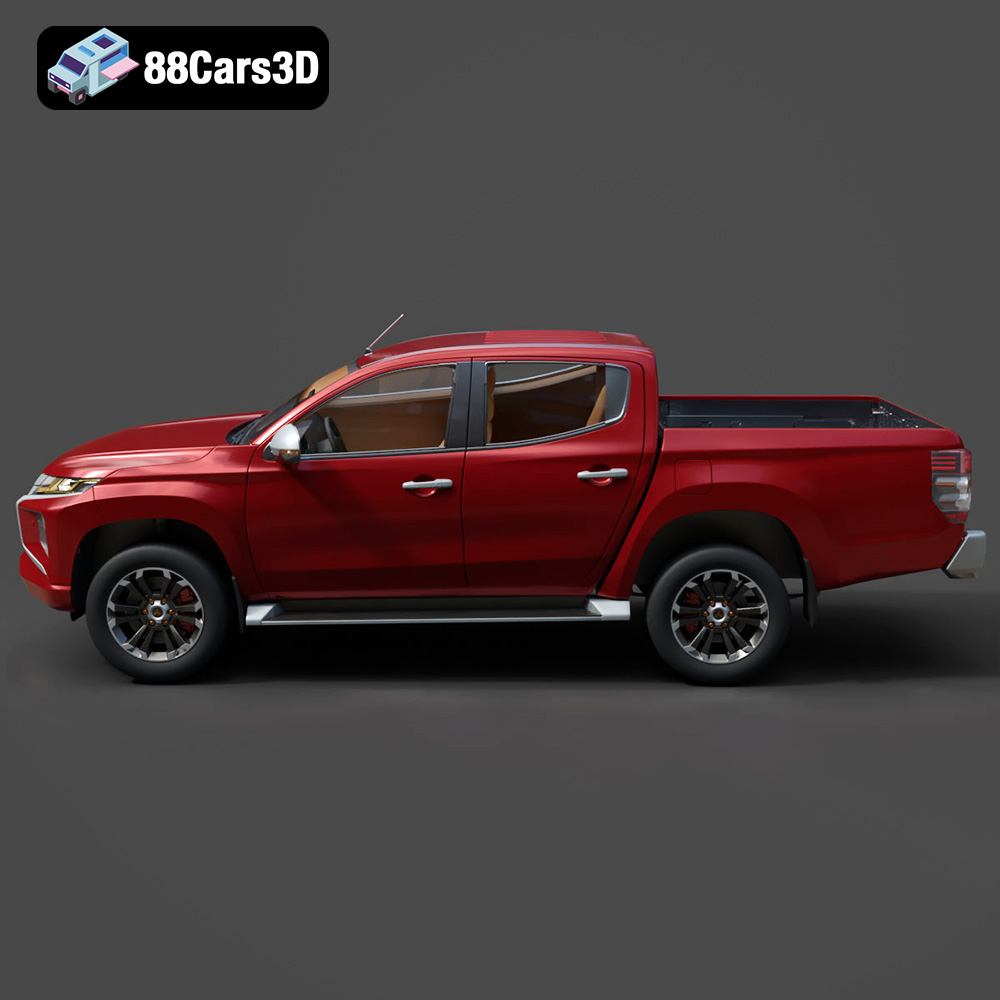
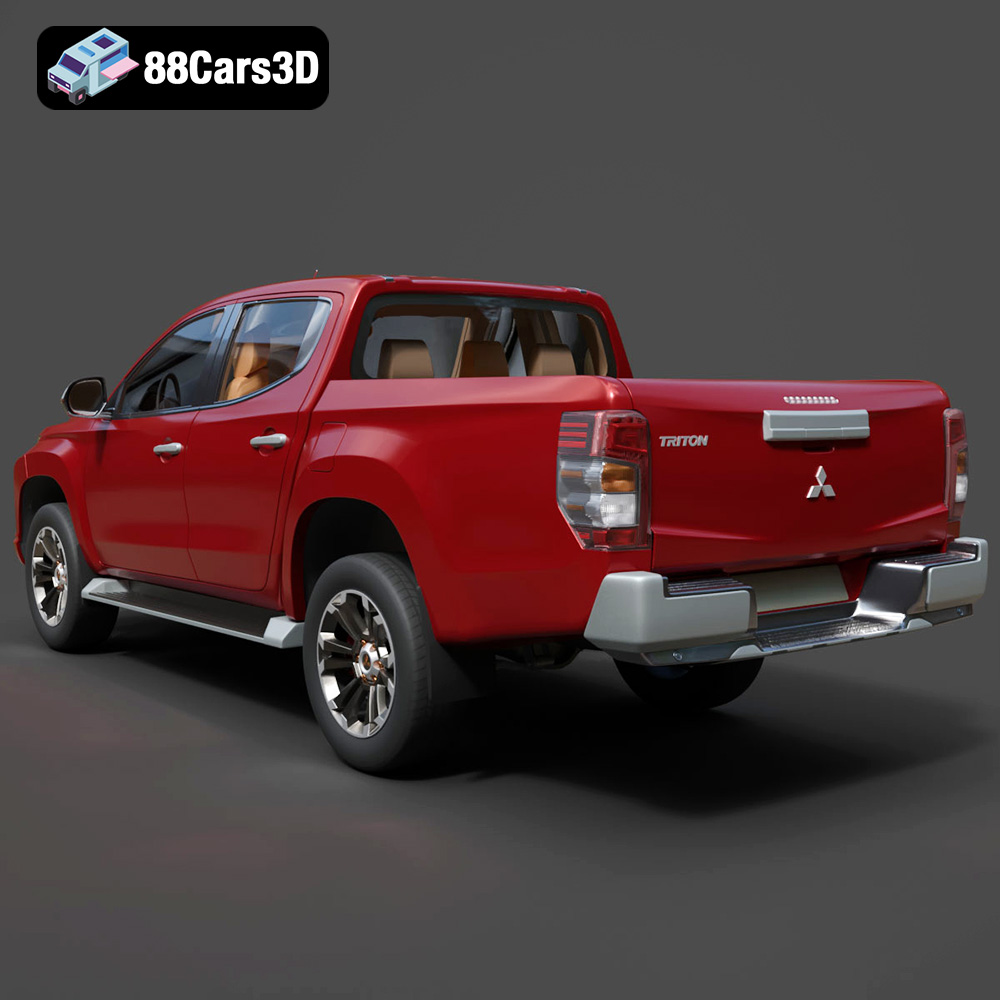
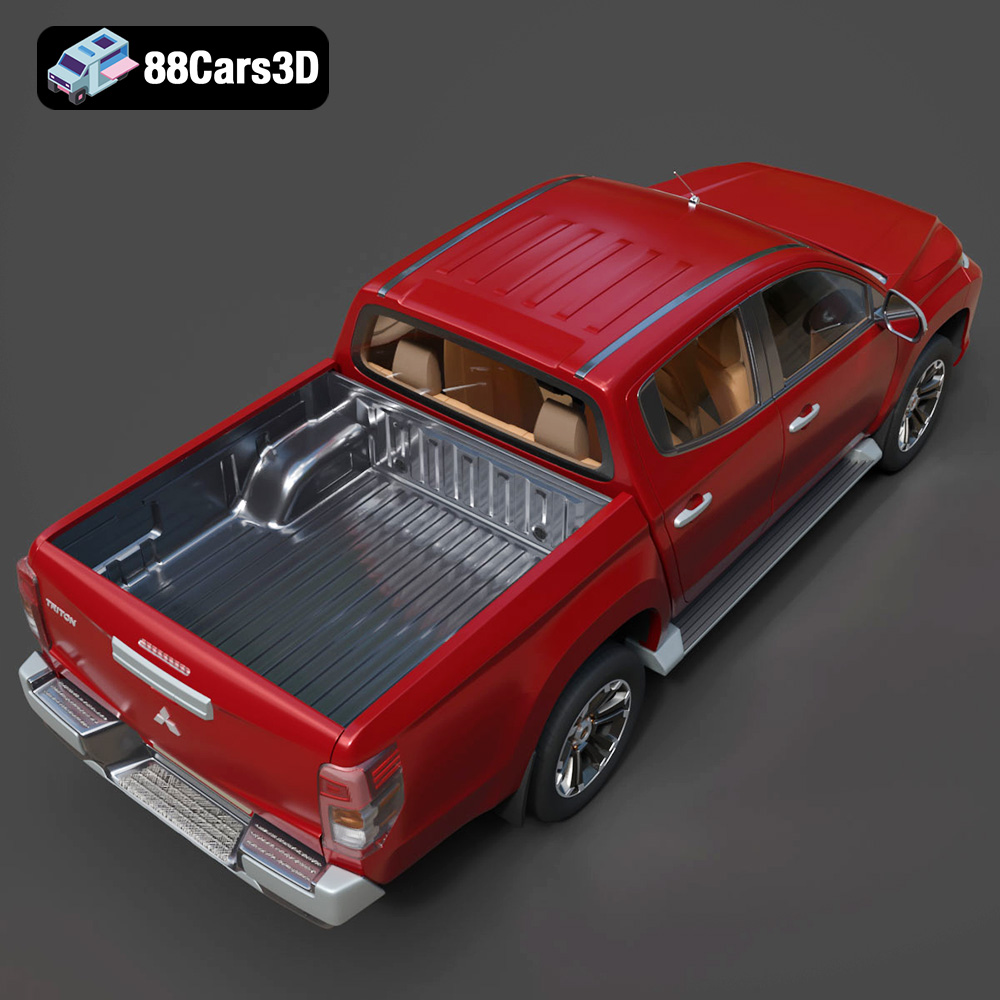
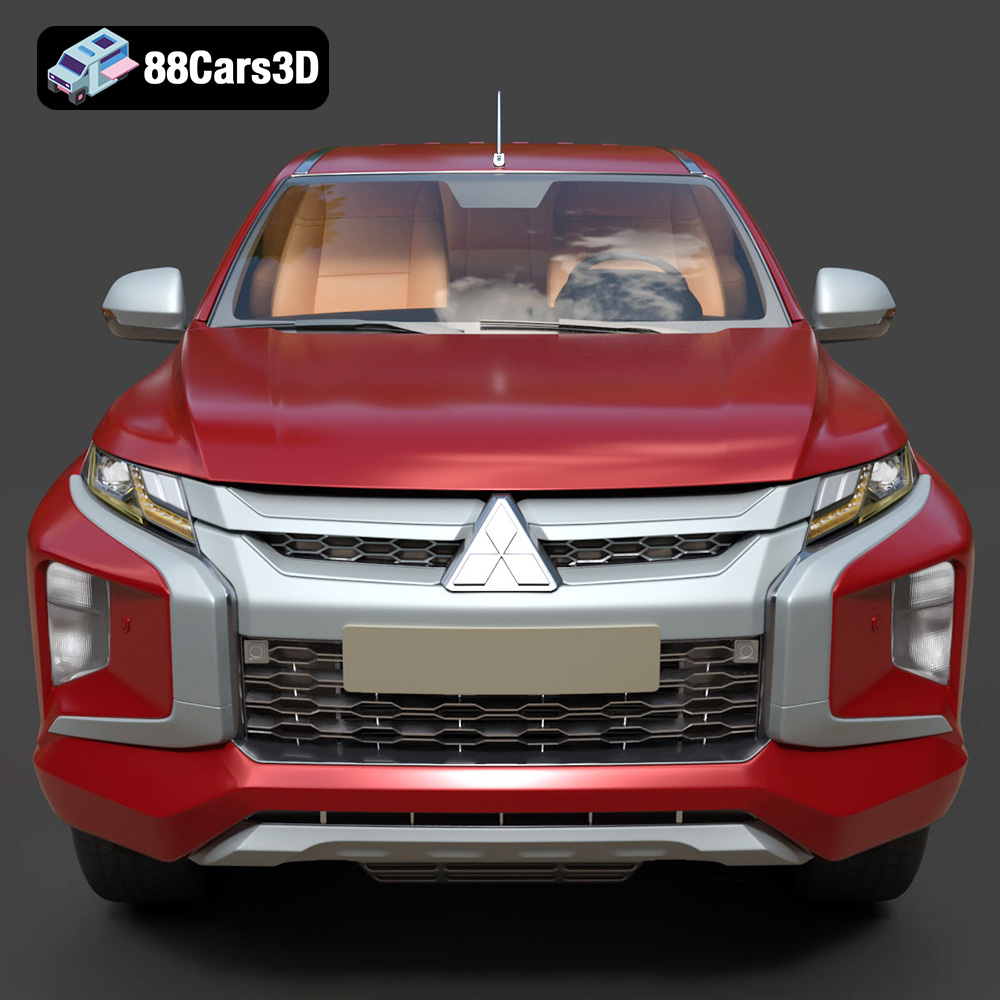
A vehicle’s exterior is its most recognizable feature, and the L200 model captures the essence of the 2019 Crew Cab with remarkable accuracy. The “Dynamic Shield” front fascia, a hallmark of modern Mitsubishi design, is faithfully recreated, from the intricate grille pattern to the striking LED headlight arrays. Sculpted side panels, authentic tailgate details, and visible undercarriage components like suspension elements add layers of realism often overlooked in lesser models. Crucially, the model features accurate alloy wheel designs paired with detailed all-terrain tires, contributing significantly to its rugged aesthetic. Separate geometry for wheels, suspension, and steering components ensures it’s ready for complex animation sequences right out of the box.
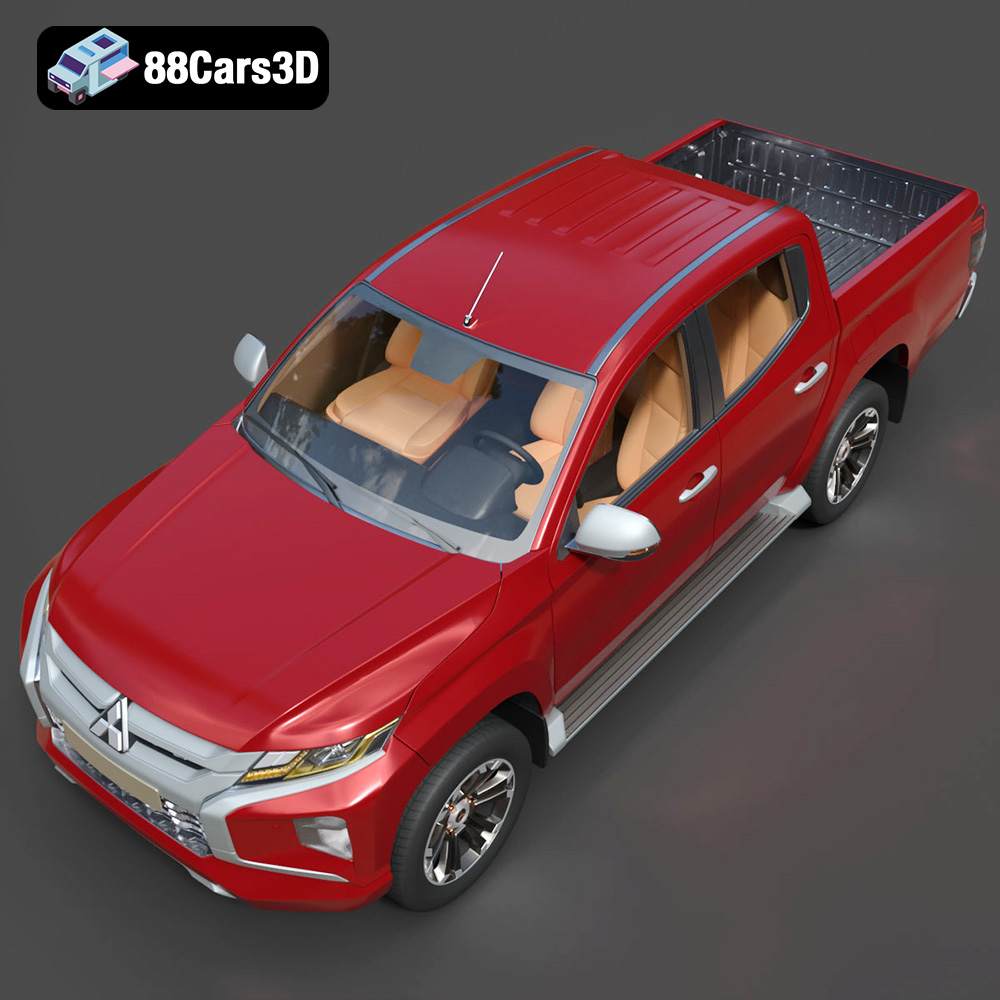
While often seen from the outside, a well-modeled interior elevates an asset’s versatility, especially for first-person game perspectives or detailed interior rendering. The Mitsubishi L200 Crew Cab model boasts a spacious five-seat configuration with accurate upholstery details. The steering wheel, complete with brand insignia and multi-function buttons, the instrument cluster, modern center infotainment display, and precise control details (pedals, gear selector, climate vents) are all meticulously modeled. This attention to detail ensures that whether you’re creating an immersive VR experience or a close-up interior shot, the cabin holds up to scrutiny, providing a rich environment for interaction and visual storytelling.
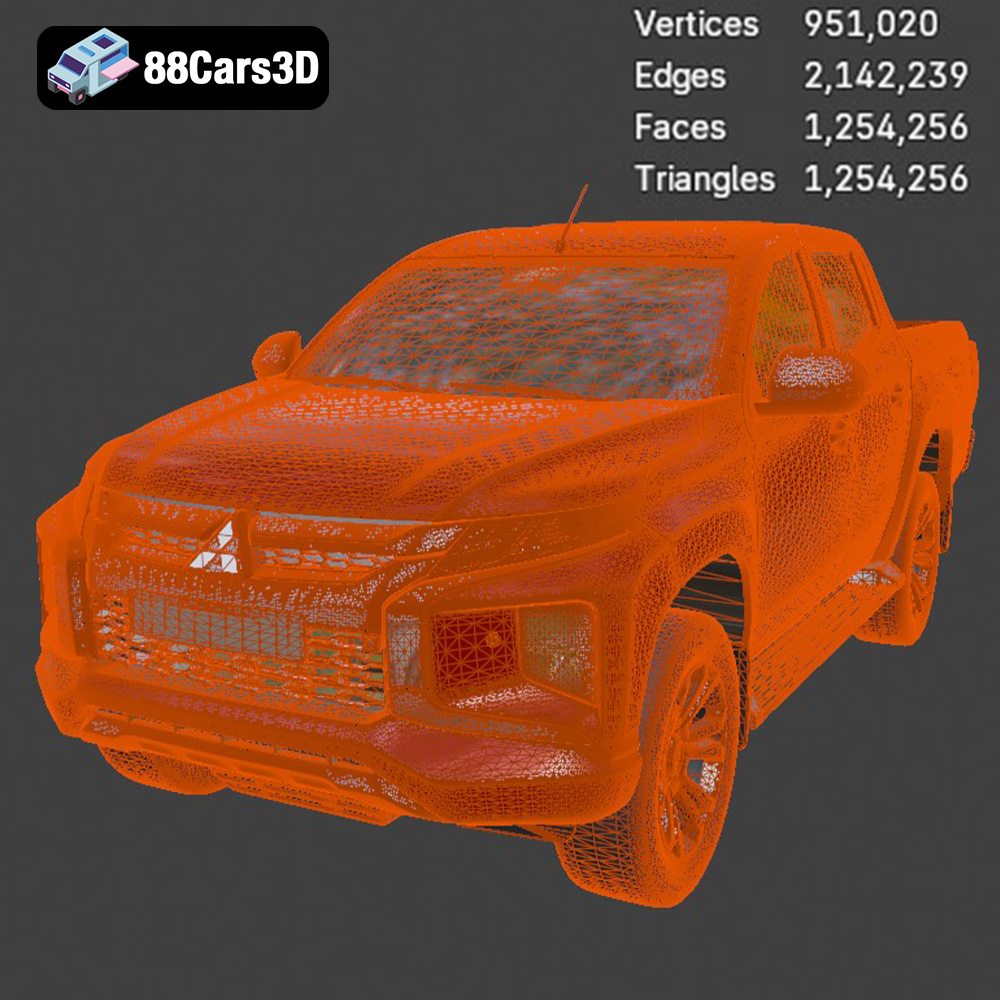
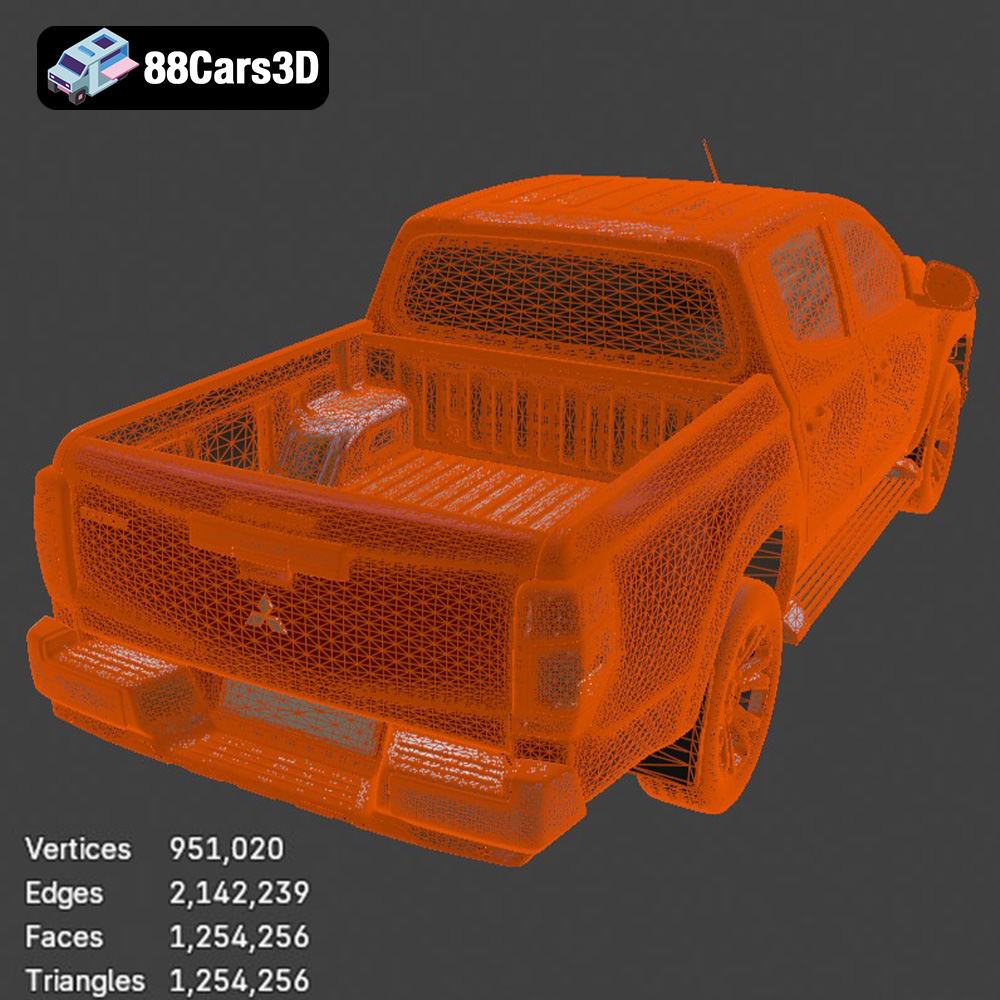
The true power of this 3D car model lies in its technical optimization. With approximately 550,000 triangles, it strikes an optimal balance for modern real-time engines like Unreal and Unity. This polycount is high enough to retain intricate details crucial for visual realism but carefully managed to prevent performance bottlenecks. Furthermore, the model is built to real-world scale, a fundamental requirement for accurate scene integration and physically based rendering. Proper pivot setups for steering, wheel rotation, and suspension travel are pre-configured, drastically reducing animation setup time. This “game-ready” and “optimized” philosophy extends its utility far beyond just games, making it a reliable asset for high-end rendering and AR/VR applications where performance is key.
The versatility of a well-crafted 3D car model, such as the Mitsubishi L200 Crew Cab 2019, truly shines when integrated into various professional pipelines. Its multi-format availability and optimized structure enable seamless transitions between different software and project types.
For game developers, efficiency and performance are paramount. The L200 model, with its optimized ~550,000 triangle count, is perfectly suited for integration into popular game engines. When working with Unreal Engine, the provided .unreal or .fbx formats allow for direct import. Developers can leverage Unreal’s powerful material editor to create realistic physically based rendering (PBR) materials, taking full advantage of the model’s clean UVs. The separate, animatable components (wheels, suspension, steering) are crucial for implementing realistic vehicle physics and handling systems. In Unity, a similar process applies; the .fbx file imports with skeletal data, allowing for easy rigging to a vehicle controller. Developers can then script custom behaviors, integrate it into open-world environments, or use it as a hero vehicle in racing simulators. Proper LODs (Levels of Detail), which a high-quality model is prepared for, further ensure performance optimization across various distances from the camera.
In the realm of automotive rendering, realism is king. Studios using 3ds Max will find the included .max file invaluable, offering the complete scene setup for immediate rendering with V-Ray, Corona, or other renderers. Artists can easily adjust materials, add studio lighting setups, and compose cinematic shots. The detailed exterior and interior mean close-up renders maintain fidelity. Similarly, Blender artists can utilize the .blend file to tap into Blender’s powerful Cycles or Eevee render engines. The model’s clean geometry and logical material groupings allow for effortless customization of paint finishes, tire textures, and interior upholstery. Imagine rendering the L200 driving through a dusty off-road track or parked elegantly in a modern architectural scene – the model’s inherent quality provides the perfect canvas for such scenarios.
The emerging fields of Augmented Reality (AR) and Virtual Reality (VR) demand highly optimized assets that can run smoothly on mobile devices or VR headsets. The .glb format, included with the Mitsubishi L200 model, is specifically tailored for this purpose. Its compact, single-file structure makes it ideal for web-based AR configurators or immersive VR showrooms where users can explore the vehicle from every angle. Developers can create interactive experiences, allowing users to change paint colors, open doors, or even “sit” inside the cabin. The model’s game-ready optimization ensures that these experiences remain fluid and engaging, providing a true sense of presence and detail.
Beyond digital displays, the world of 3D printing offers a tangible connection to 3D models. The .stl format of the Mitsubishi L200 Crew Cab model enables hobbyists and professionals to bring the digital design into the physical world. While requiring careful preparation, such as determining optimal scale (1:12, 1:18, 1:24 are recommended), layer height, infill, and support structures, the underlying geometry provides an excellent base. Resin printing is often recommended for preserving fine details like mirrors and door handles. This capability opens avenues for creating display models, architectural scale models, or even components for custom projects. Post-processing with sanding, primer, and authentic paint finishes can transform a raw print into a stunning miniature replica.
To truly appreciate the value of a high-quality asset like the Mitsubishi L200 Crew Cab 2019 3D model, it’s helpful to envision its application in real-world scenarios. Its robust design and technical optimization lend themselves to diverse professional projects.
Imagine a cutting-edge off-road driving simulator aiming for maximum realism. The Mitsubishi L200 Crew Cab, known for its 4WD capabilities, would be a prime candidate for inclusion. Using the .fbx or .unreal format, game developers could import the model into their engine, rig it with advanced physics, and begin crafting challenging terrains. The separate suspension and steering components are vital here, allowing for accurate simulation of articulation over uneven surfaces. The detailed undercarriage, though often unseen, adds to the authenticity for those rare moments of vehicle rollover or when inspecting the vehicle in a garage module. Its optimized polycount ensures that even with multiple L200s in a multiplayer session, performance remains smooth, delivering a truly immersive off-road experience.
Architectural visualization studios frequently need contextual elements to bring their renders to life. A modern house or commercial building rendering gains immediate credibility when real-world vehicles are tastefully placed in driveways or parking lots. The 2019 Mitsubishi L200 Crew Cab 3D model, provided in formats like .max or .blend, fits this role perfectly. Its accurate real-world scale means it will look correct next to buildings and landscapes. A viz artist can easily adjust the body color to match a client’s aesthetic, add subtle reflections, and integrate it into a pre-existing environment. The highly detailed exterior provides an excellent mid-ground or background element, adding scale, context, and a touch of lifestyle to the scene without becoming the sole focus or overwhelming system resources.
For advertising agencies creating campaigns for related products—perhaps an outdoor gear brand, a new tire company, or even a local dealership—the Mitsubishi L200 offers a ready-made hero vehicle. Using high-end rendering software with the .max or .blend file, artists can create stunning photorealistic imagery and animation. Picture the L200 driving along a scenic mountain road for a travel agency ad, or parked dramatically in a wilderness setting for a camping equipment brand. The ability to customize body colors, material finishes (matte, gloss, metallic), and adapt lighting for different environments allows for endless creative possibilities, producing polished, professional-grade visuals that resonate with audiences. This direct access to a high-quality 3D car model dramatically cuts down production time and costs compared to shooting with a physical vehicle.
A truly professional 3D asset isn’t just about initial quality; it’s about how easily it can be adapted to specific project requirements. The Mitsubishi L200 Crew Cab 2019 3D model provides extensive customization options, giving artists unparalleled control over its appearance and behavior.
The foundation of visual appeal lies in materials and textures. With this model, artists have the flexibility to change body colors, choosing from authentic factory colors or creating bespoke custom finishes to match a brand or artistic vision. The model’s clean UV mapping, implicitly part of any high-quality asset, facilitates effortless texture modifications. This means swapping out tire textures for off-road variants versus street versions is straightforward. Adjusting material finishes—from a rugged matte to a glossy metallic sheen—is also easily achievable within any major 3D software, ensuring the vehicle can perfectly complement any scene or lighting condition.
For dynamic projects, animation is key. The L200 model arrives with separate wheels, suspension components, and steering elements, all with properly configured pivot points. This pre-rigged structure vastly simplifies the animation process. Animators can quickly set up wheel rotations, simulate realistic suspension travel, and articulate the steering wheel for drive sequences. For game developers, this means faster integration with vehicle physics systems. For cinematic rendering, it translates to more lifelike driving animations, adding a layer of authenticity that is difficult to achieve with static models.
Integrating a 3D model seamlessly into an existing scene requires more than just dropping it in; it demands environmental awareness. The real-world scale of the Mitsubishi L200 Crew Cab model ensures it always looks proportional alongside other scene elements. Its well-defined geometry interacts correctly with global illumination and ambient occlusion, producing realistic shadows and light bounces. Artists can easily adapt lighting setups to match outdoor daylight, indoor studio environments, or dramatic nighttime scenarios, ensuring the vehicle is always beautifully illuminated and contextually integrated. This adaptability makes it a truly flexible asset for any visualization challenge.
In the demanding landscape of 3D content creation, the difference between a good project and a great one often hinges on the quality and versatility of its assets. High-fidelity 3D car models are no longer a luxury but a necessity for studios and individual artists striving for excellence in automotive rendering, game development, AR/VR, and various visualization fields. The Mitsubishi L200 Crew Cab 2019 3D model stands as a prime example of such an asset, meticulously crafted to meet the stringent demands of professional pipelines.
From its accurate “Dynamic Shield” exterior and detailed interior to its optimized ~550,000 triangle count and comprehensive file format support (.blend, .fbx, .obj, .glb, .stl, .ply, .unreal, .max), this model offers unparalleled flexibility. It empowers game developers to build immersive worlds, allows automotive designers to visualize concepts, provides architectural artists with realistic contextual elements, and even enables hobbyists to create physical replicas through 3D printing. The thoughtfulness in its design—including animatable components and real-world scale—ensures it’s not just a beautiful model, but a robust and adaptable tool.
Whether you’re embarking on an ambitious game project, crafting a photorealistic commercial, or designing an interactive VR experience, investing in a high-quality 3D model like the Mitsubishi L200 Crew Cab 2019 is a decision that pays dividends in efficiency, visual appeal, and creative freedom. Explore this and many other premium 3D car models available at 88cars3d.com, and elevate your next project to new heights.
The 2019 Mitsubishi L200 Crew Cab (also known as the Triton) is a masterclass in rugged utility and modern design. Known for its robust “Dynamic Shield” front fascia, aggressive styling, and exceptional 4WD capabilities, this pickup truck bridges the gap between commercial workhorse and comfortable family vehicle. This high-quality 3D model strikes the perfect balance between high-end visual fidelity and game-ready optimization with approximately 550,000 triangles, ideal for game development, AR/VR experiences, high-end animation, and architectural or automotive visualization. Includes detailed exterior, cockpit, accurate real-world scale, and multiple file formats for versatile applications.
$39.99
.2019
.4×4
.blend
.fbx
.glb
.max
.mitsubishi
.obj
.ply
.rendering
.stl
.unreal
car-3d-model
crew-cab
game asset
game-ready
l200
low-poly
off-road
optimized
pickup-truck
utility-vehicle
VR/AR