Get 20% OFF All Premium 3D & STL Models!

In the dynamic world of digital design, the allure of high-fidelity 3D models is undeniable. From captivating cinematic sequences to immersive game environments and realistic product visualizations, the demand for meticulously crafted assets continues to grow. Automotive design, in particular, stands at the forefront of this digital revolution, where precision and aesthetic fidelity are paramount. A truly exceptional 3D car model is more than just a collection of polygons; it’s a digital masterpiece that can drive engagement, enhance realism, and streamline complex production pipelines.
The ability to integrate a stunningly detailed vehicle into various projects offers immense value to professionals across industries. Whether you’re an automotive engineer needing a visualization for a new concept, a game developer crafting the next open-world racing sensation, or an architect seeking to populate a street scene with realistic vehicles, the foundation of your success lies in the quality of your 3D assets. This is where models like the Ford Mustang GT, available for download at 88cars3d.com, truly shine. It exemplifies the blend of iconic design with technical optimization, making it an invaluable tool for a wide spectrum of digital artists and developers.
This comprehensive guide delves into the intricate world of 3D car models, exploring their technical nuances, diverse applications, and the workflows that bring them to life. We’ll examine why high-quality assets are critical, dissect various file formats crucial for compatibility, and showcase how a model like the Ford Mustang GT can be leveraged across game development, architectural visualization, AR/VR experiences, and even 3D printing, illustrating the true versatility and power of professionally developed automotive 3D assets.
High-fidelity 3D automotive models are the backbone of modern digital production workflows. They provide an unprecedented level of detail and accuracy, allowing creators to transcend the limitations of physical prototypes and bring their visions to life with stunning realism. This level of detail isn’t just for aesthetics; it plays a crucial role in performance, functionality, and user experience across various applications.
While the visual appeal of a finely modeled car is obvious, its underlying structure and technical attributes are what make it truly valuable. A high-fidelity model, such as the Ford Mustang GT, isn’t just about glossy paint and sleek lines; it encompasses accurate proportions, meticulous internal component detailing like the 5.0L V8 engine block, and correct pivot points for animation. These functional details are critical for simulations, game physics, and interactive experiences. Without proper geometry for suspension, steering, and wheel rotation, even the most beautiful model would fall flat in a real-time environment.
Developing a high-quality 3D car model from scratch is an incredibly time-consuming and expensive endeavor, often requiring hundreds of hours from skilled 3D artists, modelers, and texture artists. By utilizing expertly crafted, pre-built assets from marketplaces like 88cars3d.com, studios and individual creators can drastically reduce development time and costs. This allows them to focus resources on core project development, innovation, and creative storytelling, rather than reinventing the wheel (pun intended) for every vehicle they need. The upfront investment in a professional model pays dividends in saved production hours and consistent quality across projects.
Navigating the world of 3D modeling requires a solid understanding of the various file formats available, each tailored for specific workflows, software, and applications. Choosing the correct format is crucial for ensuring compatibility, preserving data integrity, and optimizing performance. The Ford Mustang GT 3D model, for instance, offers a comprehensive suite of formats, catering to virtually any professional need. Let’s break down the most common and critical ones:
The .blend file format is native to Blender, the popular open-source 3D creation suite. It’s a complete scene file, meaning it not only stores the mesh data (geometry) but also all associated materials, textures, lighting, cameras, animations, rigging, and even modifiers. For Blender users, it’s the most comprehensive and editable format, allowing full access to every aspect of the model’s creation and modification. If you plan to make extensive changes, re-rig, or deeply integrate the model within a Blender-based project, the .blend format is your go-to choice. It guarantees all native Blender features and optimizations are retained.
.fbx (Filmbox) is arguably the most widely adopted proprietary 3D exchange format, developed by Autodesk. It’s an excellent choice for transferring 3D data between different software applications, particularly those within the Autodesk ecosystem (like 3ds Max, Maya) and real-time engines such as Unreal Engine and Unity. FBX files can store not just geometry but also materials, textures, animations, skeletons, and blend shapes. It’s highly optimized for game development and real-time pipelines due to its efficient handling of animation data and hierarchical structures. When working in game engines or needing broad compatibility with animation, .fbx is the gold standard.
The .obj (Wavefront Object) format is a universal standard, prized for its simplicity and wide support across almost all 3D software. It primarily stores geometric data – vertices, normals, UV coordinates, and faces – and can reference external .mtl (material library) files for basic material properties. While it doesn’t typically support animation, rigging, or complex shader networks, its widespread compatibility makes it perfect for static mesh transfer between different programs without loss of core geometry. If you need a clean, fundamental mesh to start with in almost any 3D application, .obj is a reliable choice.
.glb (GL Transmission Format Binary) is the binary version of glTF, a royalty-free specification for the efficient transmission and loading of 3D scenes and models by applications. It’s highly optimized for web-based 3D, augmented reality (AR), and virtual reality (VR) experiences due to its compact size and quick parsing. A .glb file bundles the model data, textures, and animations into a single file, making it incredibly easy to share and integrate into browser-based viewers, mobile AR apps, and VR platforms. For interactive web experiences or light AR/VR implementations, .glb offers superior performance.
.stl (Stereolithography) is the most common file format for 3D printing. It represents a 3D model as a series of connected triangles (a tessellation) that define its surface geometry, but it contains no color, texture, or material information. While simplistic, its ubiquity in 3D printing ensures that almost every slicer software can interpret and prepare an STL file for additive manufacturing. For hobbyists or professionals looking to print a physical replica of the Ford Mustang GT, the .stl format is essential, requiring careful consideration of scale and support structures for optimal results.
The .ply (Polygon File Format) is a versatile format for storing 3D data, particularly useful for scan data and scientific applications. It can store a variety of properties, including color, transparency, normals, texture coordinates, and even reliability information. While less common in general 3D art pipelines compared to FBX or OBJ, it offers precision for complex mesh structures often used in CAD, reverse engineering, or data analysis where detailed surface properties are critical. For highly accurate geometric data or point cloud representations, .ply offers robust capabilities.
When a product like the Mustang GT specifies an .unreal file, it typically refers to an asset package or a specific import pipeline optimized for Unreal Engine. This might be a .uasset file or a folder structure specifically prepared for direct integration, often including pre-configured materials, collision meshes, LODs (Levels of Detail), and blueprints. Such assets save immense time for Unreal developers by eliminating the need for complex import settings, material setup, and physics configuration, ensuring the model is truly “engine-ready” for immediate use in real-time environments.
The .max format is native to Autodesk 3ds Max, a powerful 3D modeling, animation, and rendering software. Similar to .blend, a .max file contains the entire scene data, including geometry, materials, textures, lights, cameras, animations, and render settings specific to 3ds Max. It offers full editability within the 3ds Max environment, making it ideal for users who primarily work within this software and require access to all native features, modifiers, and rendering capabilities for advanced animation and high-quality renders.
The availability of these diverse formats for the Ford Mustang GT 3D model ensures that regardless of your software preference or project requirements, you have the right tool for the job, making the asset incredibly flexible and adaptable.
Integrating a detailed 3D car model into a professional workflow requires more than just importing a file. It involves understanding software-specific pipelines, optimizing the asset for its intended use, and leveraging its features to achieve desired outcomes. The Ford Mustang GT 3D model, with its optimized geometry and diverse file format support, is designed for seamless integration across various industry-standard tools.
For artists working in Autodesk 3ds Max, the inclusion of the native .max file format for the Mustang GT is a significant advantage. It ensures that all scene data, including materials, textures, and potentially even V-Ray or Corona settings, are preserved as intended by the original artist. This allows for immediate rendering in high-end engines, easy modification of components, and integration into complex animation sequences. Similarly, Blender users benefit from the .blend file, providing full access to modifiers, node-based materials, and the entire Blender toolset for customization and rendering with Eevee or Cycles. Both formats offer unparalleled flexibility for detailed rendering and animation projects, allowing users to quickly change body colors, adjust material finishes, or adapt lighting as needed for specific scenes.
Game developers and real-time visualization specialists often rely on Unreal Engine for its powerful rendering capabilities and robust toolset. The Ford Mustang GT’s availability in .fbx and specifically .unreal formats makes its integration into Unreal Engine highly efficient. The .fbx format ensures that the mesh, UVs, and basic material assignments transfer cleanly. However, an “engine-ready” .unreal asset goes a step further, often including pre-configured materials, collision meshes, LODs (Levels of Detail), and potentially even basic blueprints for immediate functionality. With an optimized polycount of ~200,000 triangles, the model strikes an excellent balance for game-ready performance, allowing for smooth framerates even in demanding open-world racing titles or interactive configurators. Proper pivot setup for steering and suspension is critical here for realistic vehicle dynamics in simulations.
In the realm of game development and real-time engines, performance is king. A visually stunning model that brings an engine to its knees is ultimately unusable. Therefore, meticulous optimization is a non-negotiable aspect of professional 3D car models. The Ford Mustang GT 3D model is a prime example of an asset engineered for this demanding environment, balancing high visual fidelity with efficient resource usage.
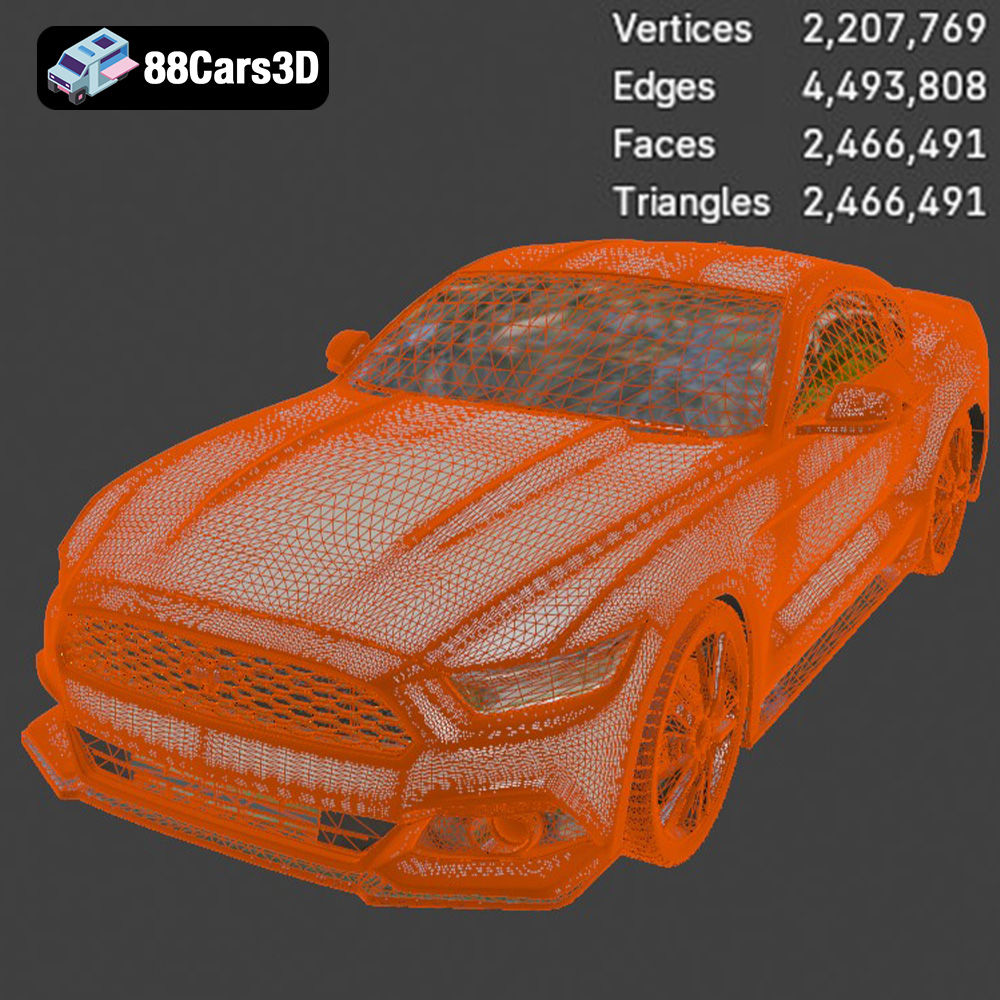
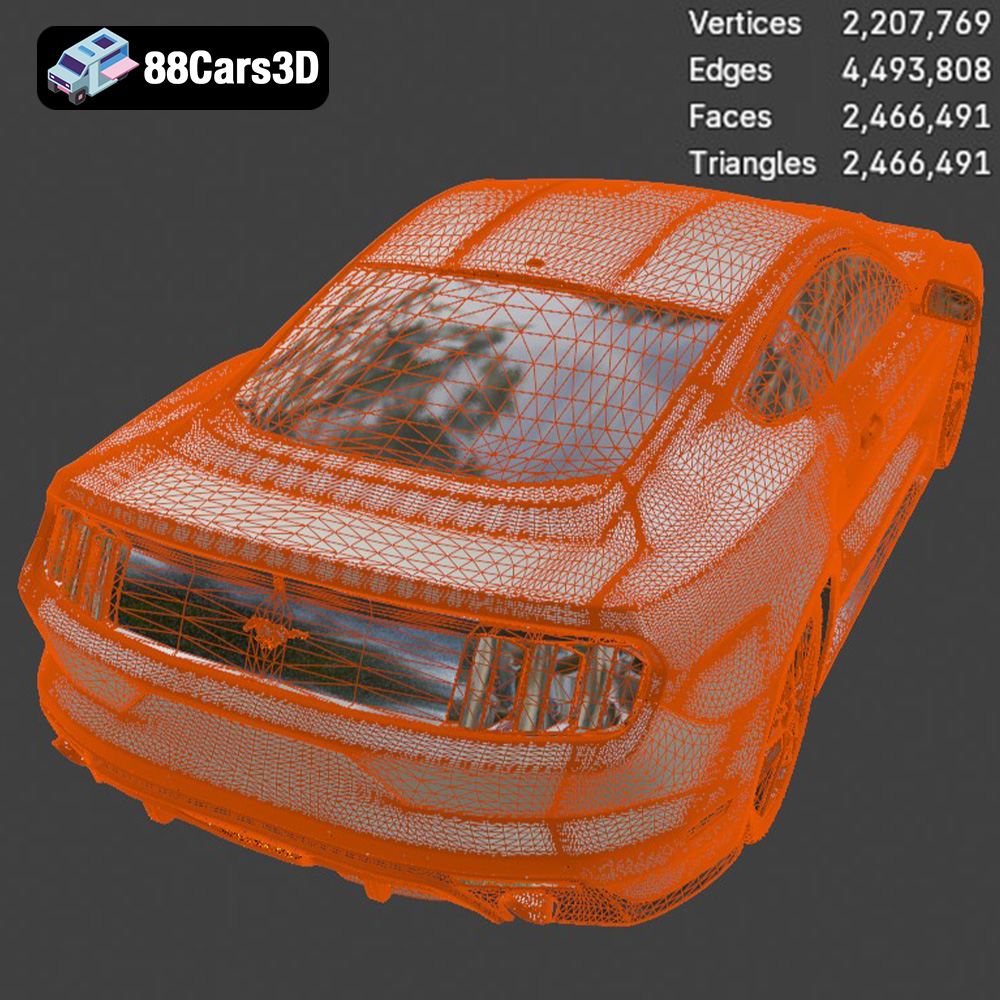
The “triangle count” or “polycount” of a model is a critical metric for real-time performance. Too few triangles and the model looks blocky; too many, and it taxes the GPU, leading to framerate drops. The Ford Mustang GT’s optimized topology, featuring approximately 200,000 triangles, is a testament to skilled polycount management. This sweet spot allows for exceptional visual realism – capturing the car’s aggressive aesthetic, detailed interior, and engine bay specifics – without becoming a performance bottleneck. This level of optimization is crucial for open-world racing games, where multiple vehicles need to be rendered simultaneously, and for high-end AR/VR experiences that demand consistent framerates for immersion.
The design philosophy behind models like the Ford Mustang GT directly targets the needs of popular game engines such as Unreal Engine and Unity. Beyond the optimized polycount, key features like real-world scale accuracy, proper pivot setups for steering, wheel rotation, and suspension travel are fundamental. These elements are not merely aesthetic; they are functional prerequisites for implementing realistic vehicle physics and animation systems within the engine. The inclusion of .fbx and .unreal formats streamlines the import process, often providing assets with pre-configured materials and potentially even collision meshes, significantly reducing the setup time for developers. This ‘game-ready’ approach allows studios to hit the ground running, integrating the model almost immediately into their game logic and cinematic sequences.
The utility of high-quality 3D car models extends far beyond traditional screens, finding powerful applications in immersive technologies like Augmented Reality (AR) and Virtual Reality (VR), as well as in the physical realm through 3D printing. These diverse applications underscore the versatility of meticulously crafted assets, such as the Ford Mustang GT 3D model.
AR and VR are transforming how we interact with digital content, offering unparalleled levels of immersion and interactivity. For automotive visualization, this means virtual showrooms where customers can explore a car in lifelike detail, interact with its features, and even customize it in real-time. The Ford Mustang GT model, optimized for real-time engines and available in .glb format, is perfectly suited for these environments. The .glb format is specifically designed for efficient transmission and rendering in web and mobile AR/VR applications, making it ideal for creating interactive configurators or placing a virtual Mustang in your driveway via your smartphone. The model’s optimized geometry and realistic details ensure a compelling and convincing experience, blurring the lines between the digital and physical worlds.
The ability to convert a digital model into a tangible object opens up exciting possibilities for hobbyists, educators, and product designers. The Ford Mustang GT 3D model, provided in the .stl format, makes it ready for 3D printing. This allows enthusiasts to produce display-scale replicas of their favorite muscle car. However, successful 3D printing requires careful consideration of settings. Recommended scales (1:12, 1:18, 1:24) ensure a balance of detail and printability. Resin printing is often recommended for fine details like grilles, mirrors, and exhaust tips, which might be challenging for FDM printers. Proper wall thickness, infill, and strategic use of supports for intricate parts are crucial for a successful print. Post-processing, including sanding, priming, and painting with authentic factory colors, can elevate a 3D-printed model to a collector’s item.
Automotive visualization is an art form, blending technical precision with artistic flair to create stunning imagery and compelling narratives. High-quality 3D car models are the essential canvas for this art, allowing creators to produce photorealistic renders and dynamic cinematic sequences that captivate audiences. The Ford Mustang GT 3D model provides an exceptional foundation for such endeavors.
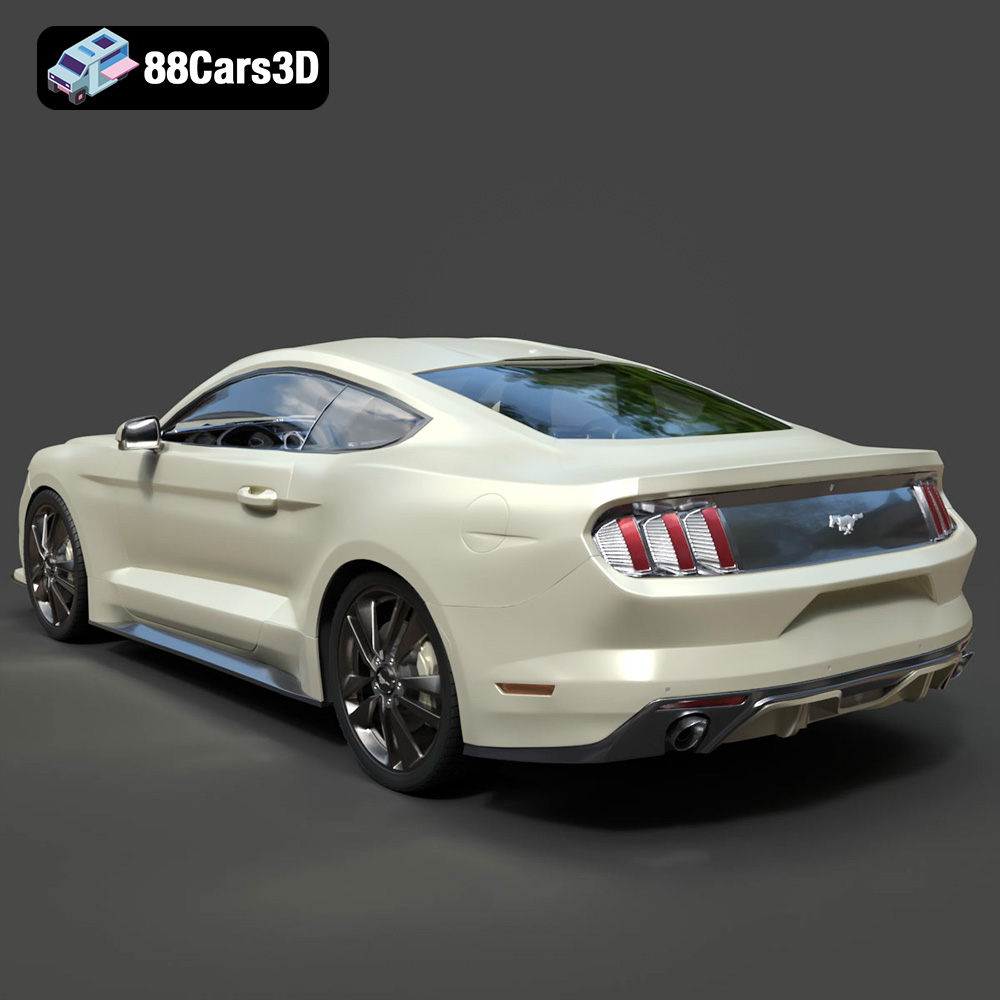
In the competitive automotive industry, striking visuals are paramount for marketing campaigns, product launches, and design reviews. The Ford Mustang GT 3D model, with its accurate frame geometry, detailed exterior features like aggressive rear diffusers, quad-tip exhausts, and signature LED lights, along with a meticulously crafted interior, provides all the necessary components for breathtaking photorealistic renders. Using software like 3ds Max or Blender with powerful renderers (V-Ray, Corona, Cycles), artists can simulate various lighting conditions, material finishes (matte, gloss, metallic), and environments to showcase the car in its best light. From studio setups to dynamic lifestyle scenes, the model’s fidelity ensures that every reflection, every curve, and every texture contributes to an incredibly convincing visual output, perfect for brand campaigns or virtual automotive showrooms.
Beyond static images, 3D car models are central to cinematic animations that bring vehicles to life. The Ford Mustang GT model is built with animation in mind, featuring separate wheels, suspension, and steering components, all with proper pivot setups. This allows animators to create realistic driving sequences, dramatic camera movements, and engaging product showcases. Imagine a high-octane chase scene, a slow-motion reveal of the Mustang’s powerful stance, or an intricate tour of its detailed cockpit – all made possible by an animation-ready asset. The flexibility to change body colors, modify tire textures, and adapt lighting for different environments further enhances storytelling capabilities, allowing artists to craft narratives that truly resonate with viewers and highlight the raw power and heritage of the Mustang GT.
In the vast digital landscape, the distinction between a generic 3D model and a professional-grade asset is significant, profoundly impacting the quality and efficiency of your projects. When selecting 3D car models, prioritizing quality is not merely an aesthetic preference; it’s a strategic decision that influences every aspect of your workflow, from initial integration to final output. This is precisely why platforms like 88cars3d.com focus on delivering assets that meet rigorous industry standards.
While seemingly cheaper upfront, low-quality 3D models often come with hidden costs that quickly outweigh any initial savings. These can include:
These issues translate directly into increased labor hours for artists and developers, prolonged production cycles, and ultimately, a compromised final product. A “cheap” model quickly becomes expensive when you factor in the time spent fixing its fundamental flaws.
A professional 3D car model, such as the Ford Mustang GT available at 88cars3d.com, is an investment in efficiency and excellence. These models are crafted by experienced artists who understand the technical demands of various pipelines. Key advantages include:
By choosing high-quality, pre-optimized assets, you empower your team to focus on creativity and innovation, confident that the foundational elements of your project are solid and reliable. This leads to faster development, higher visual quality, and a more polished final product, making a professional asset a truly invaluable component of any serious digital production pipeline.
The journey through the intricate world of 3D automotive modeling reveals that a high-quality asset is far more than just a pretty picture. It is a technically robust, meticulously optimized, and versatile digital tool, capable of driving diverse projects across industries. From the demanding performance requirements of game development to the immersive potential of AR/VR, the precision of 3D printing, and the artistic finesse of photorealistic rendering, the foundational quality of your 3D models dictates the success and efficiency of your creative endeavors.
The Ford Mustang GT 3D model exemplifies this pinnacle of digital craftsmanship. Its optimized topology, game-ready features, detailed interior and exterior, and comprehensive suite of file formats (including .blend, .fbx, .obj, .glb, .stl, .ply, .unreal, and .max) position it as an indispensable asset for professionals. It embodies the seamless blend of iconic design with technical excellence, ensuring that whether you’re building a virtual racing simulator, designing a futuristic showroom, or creating stunning visual campaigns, you have a reliable and high-fidelity model at your disposal.
Investing in such professional-grade 3D car models from trusted sources like 88cars3d.com not only streamlines your workflow and saves invaluable time but also elevates the overall quality and impact of your final output. In a rapidly evolving digital landscape, choosing assets that are built for performance, compatibility, and visual integrity is not just a preference – it’s a strategic imperative for achieving remarkable results.
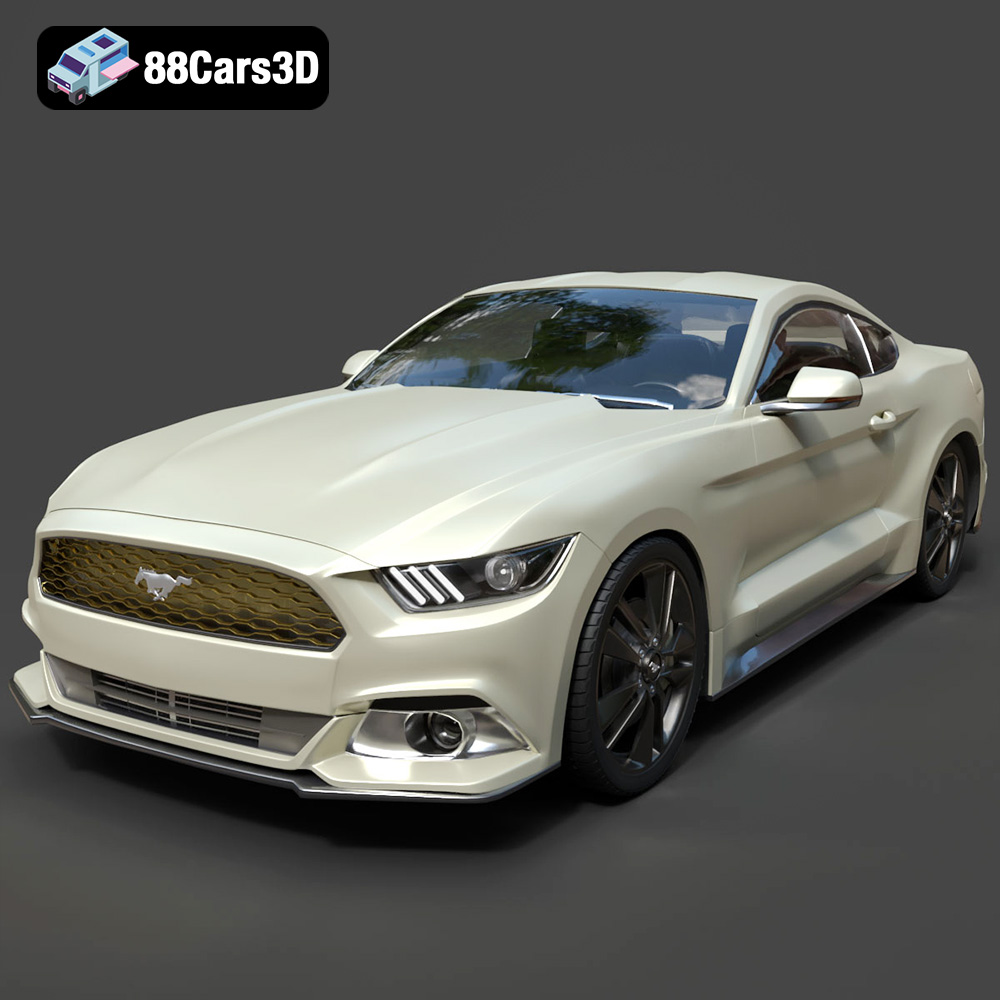
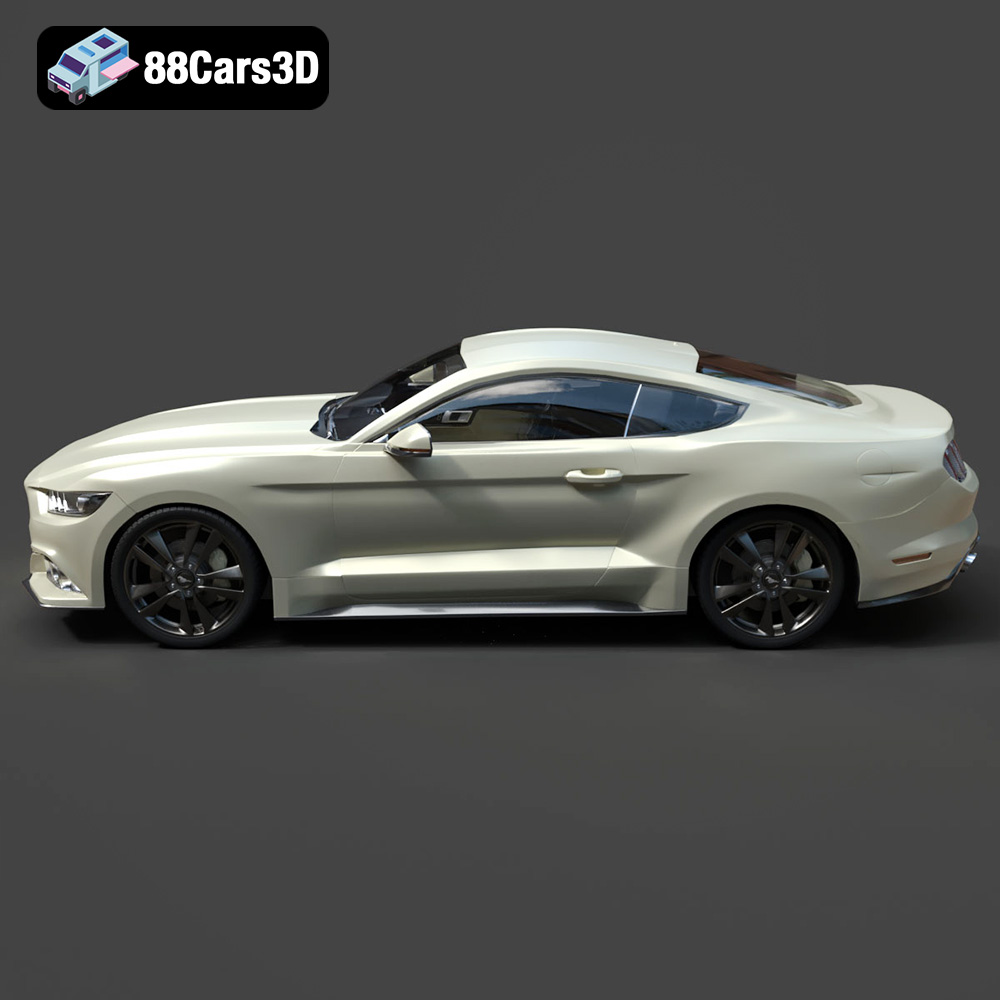
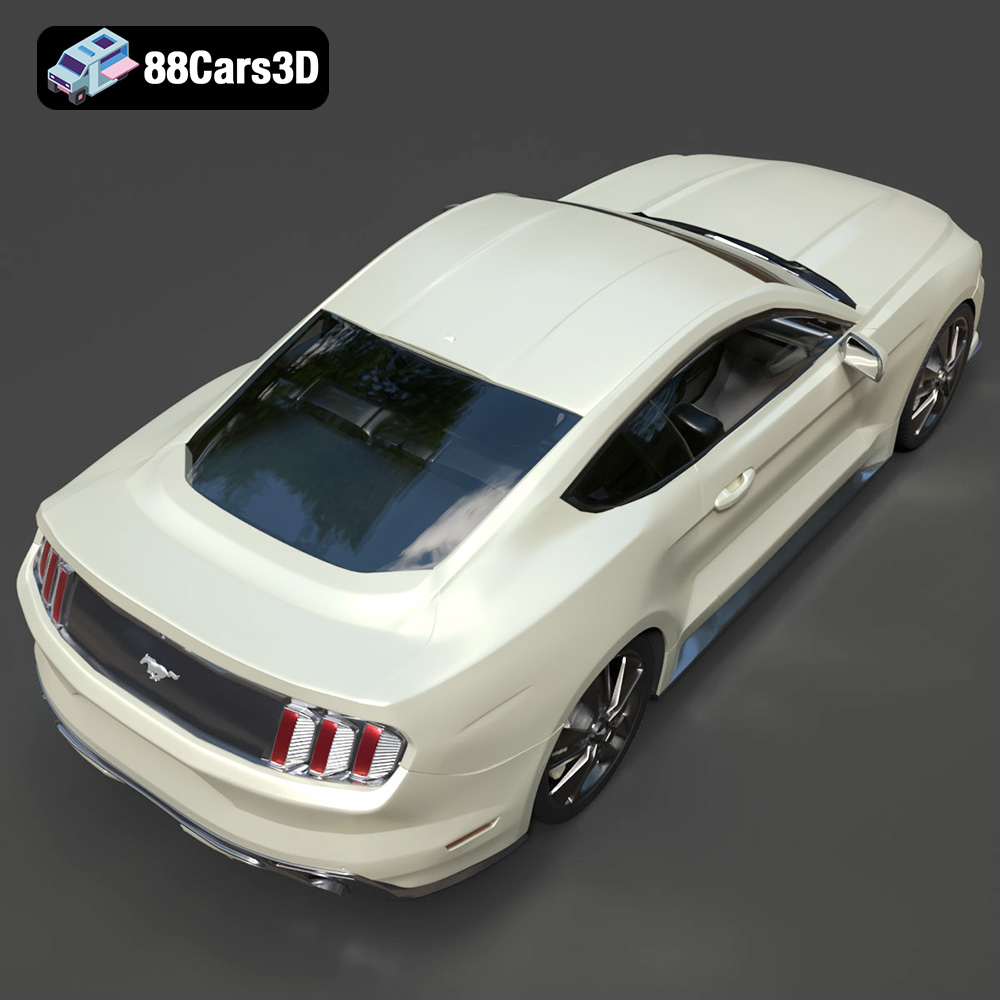
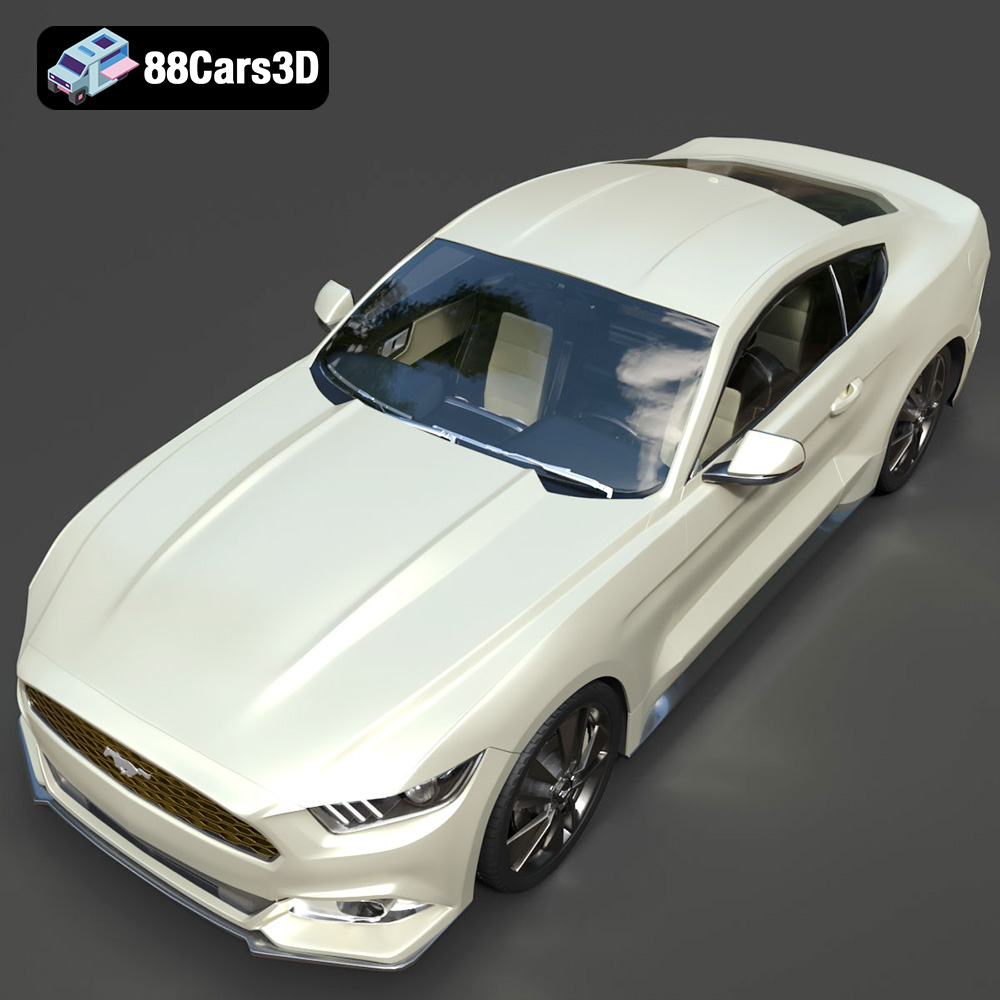
The Ford Mustang GT is an enduring icon of American muscle, celebrated for its aggressive aesthetic, legendary heritage, and raw power. This incredibly detailed 3D model captures the unmistakable styling cues of the modern Mustang GT, from its signature long hood and fastback roofline to the imposing front grille, quad-tip exhaust system, and raw 5.0L V8 engine bay details. Engineered for premium digital performance, this model features an optimized topology with approximately 200,000 triangles, delivering exceptional game-ready performance without sacrificing visual fidelity. The meticulously crafted geometry ensures seamless integration into game development workflows, high-end AR/VR experiences, cinematic animations, and professional automotive visualization. Perfect for open-world racing games, virtual automotive showrooms, cinematic renders, and high-performance car configurators.
$19.99
.blend
.fbx
.ford
.glb
.max
.obj
.ply
.rendering
.sports car
.stl
.unreal
car-3d-model
game asset
game-ready
low-poly
muscle-car
mustang-gt
optimized
VR/AR