Get 20% OFF All Premium 3D & STL Models!

In the dynamic worlds of automotive design, game development, architectural visualization, and marketing, the demand for realistic and performant 3D assets has never been higher. From crafting immersive virtual experiences to generating stunning photorealistic renders, the foundation of any successful project lies in the quality and versatility of its core models. High-quality 3D car models are not just static representations; they are intricate digital blueprints designed for diverse applications, demanding precision, optimization, and broad compatibility.
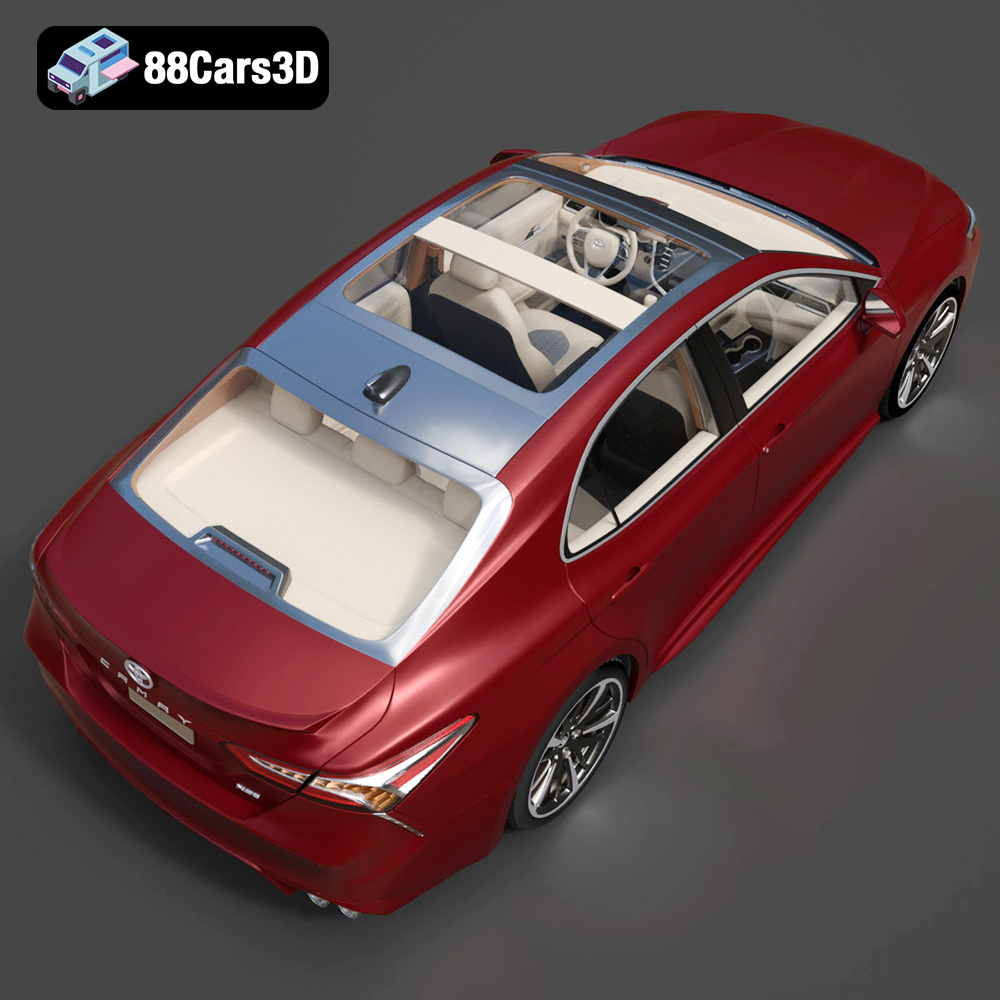
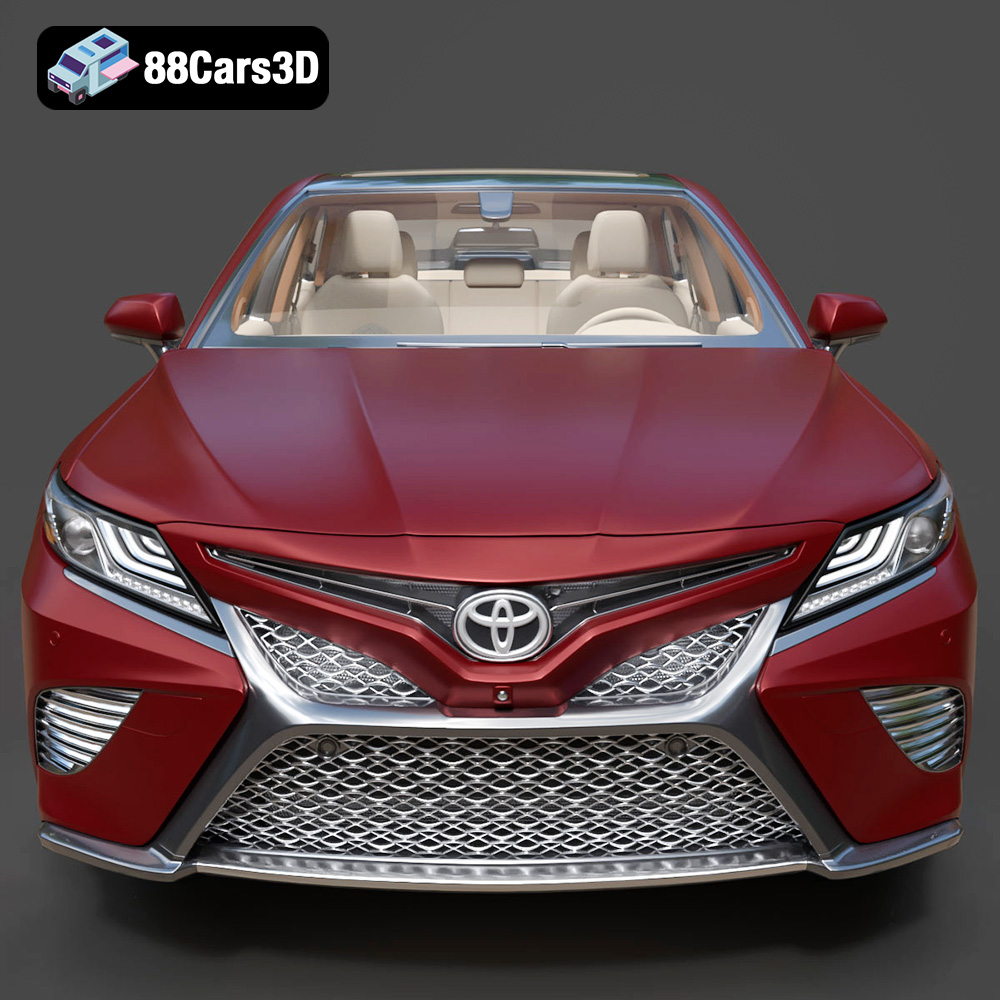
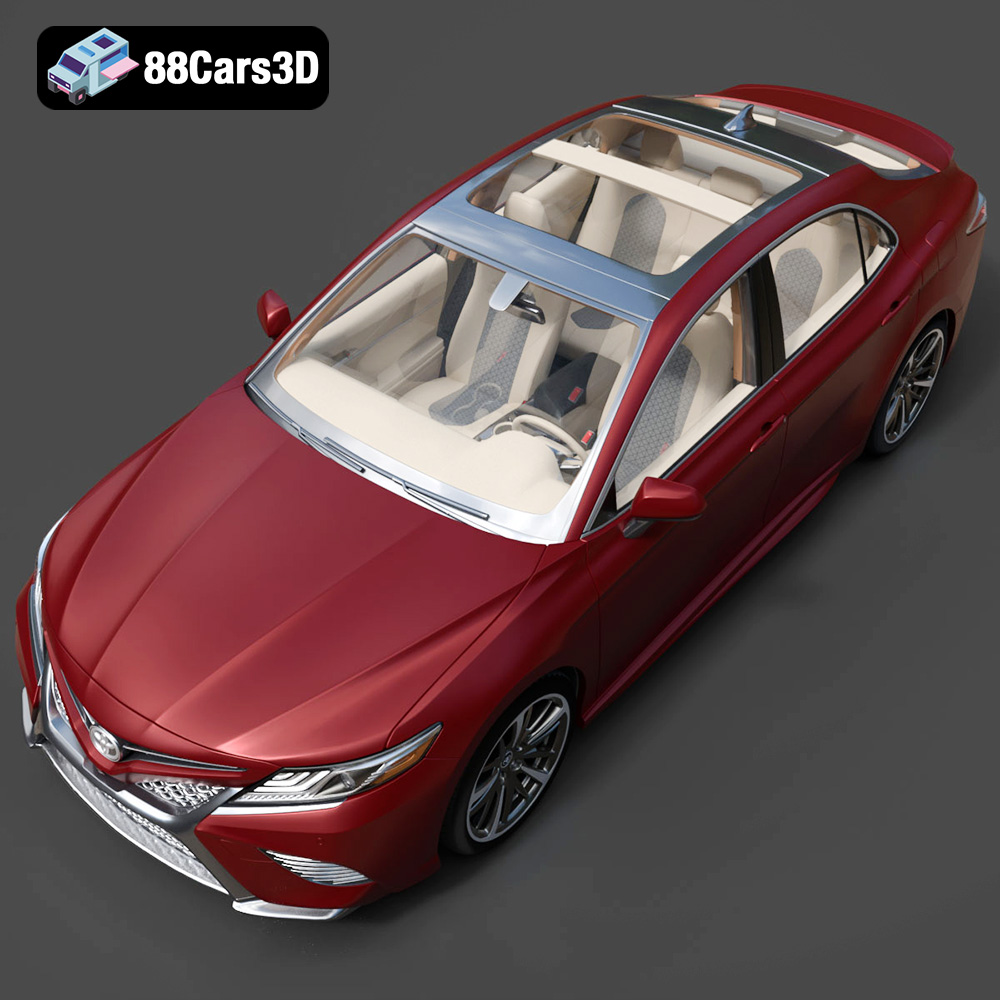
Today, we delve into the technical intricacies and expansive applications of a prime example: the Toyota Camry 2018 3D Model. This particular asset, available for download on 88cars3d.com, encapsulates the essence of what a professional-grade automotive 3D model should offer. It represents a significant leap for digital artists and developers looking to integrate a well-known, modern vehicle into their projects, providing both visual fidelity and game-ready optimization.
The versatility of any professional 3D model, especially complex automotive assets like the 2018 Toyota Camry, is heavily reliant on the range of file formats it supports. Each format serves a specific purpose, catering to different software, pipelines, and end-use cases. Understanding these formats is crucial for designers, developers, and artists to select the right tool for their project, ensuring seamless integration and optimal performance. The Toyota Camry 2018 3D Model’s comprehensive suite of included formats exemplifies this commitment to flexibility.
The .blend format is the native file type for Blender, a powerful and increasingly popular open-source 3D creation suite. A .blend file typically contains the entire scene, including mesh data, materials (with Cycles/Eevee nodes), textures, lighting, cameras, animations, and even physics simulations. For artists working within the Blender ecosystem, this format offers unparalleled editability and control. When you download the Toyota Camry 2018 3D Model as a .blend file, you gain immediate access to its material setup, modifiers, and clean topology within Blender, allowing for extensive customization or rendering directly.
.fbx (Filmbox) is arguably the most widely used interchange format in the 3D industry. Developed by Autodesk, it excels at transferring complex 3D models, complete with animation, skeletal data, skinning information, blend shapes, and embedded textures, between different software applications. This format is the go-to for game development (Unreal Engine, Unity), animation pipelines, and general interoperability between digital content creation (DCC) tools like 3ds Max, Maya, and Blender. The 2018 Toyota Camry 3D Model in .fbx ensures that its detailed geometry, pivot points for articulation, and basic material assignments can be smoothly imported into virtually any professional 3D environment.
The .obj (Wavefront OBJ) format is a universal, text-based standard for representing 3D geometry. It’s excellent for transferring basic mesh data (vertices, normals, UVs, polygons) and material references (.mtl file). While it doesn’t support animation or advanced scene data, its simplicity and widespread adoption make it highly compatible across almost all 3D software. For static renders or base geometry transfer of the Toyota Camry, .obj is a reliable choice, often used as a fallback when more complex formats present issues.
.glb (GL Transmission Format Binary) is the binary version of glTF, a relatively newer format gaining significant traction, especially for web-based 3D, AR (Augmented Reality), and VR (Virtual Reality) applications. It’s designed to be compact, efficient, and self-contained, often embedding textures and PBR (Physically Based Rendering) materials directly within a single file. For developers creating interactive 3D experiences in browsers or mobile AR applications, the .glb version of the Toyota Camry 2018 3D Model provides an optimized, ready-to-deploy asset, ensuring fast loading times and consistent visual quality.
.stl (Stereolithography) is the de facto standard format for 3D printing. It represents a 3D model as a collection of unconnected triangular facets, defining only the surface geometry without color, texture, or material information. While not suitable for rendering, the .stl version of the Toyota Camry is essential for hobbyists and professionals who wish to bring the digital model into the physical world through additive manufacturing. The model’s conversion to .stl enables the creation of display-scale replicas, requiring careful consideration of print settings and supports.
The .ply (Polygon File Format) is another format for storing 3D data, often used in scientific, scanning, and CAD applications. It can store a wider range of properties than .obj, including color per vertex, normal information, and material properties. While less common for general DCC workflows, its precision and ability to carry detailed attribute data make it valuable for specific engineering, reverse engineering, or high-fidelity mesh analysis tasks involving the Toyota Camry 3D model.
The .unreal designation typically refers to assets specifically prepared or packaged for direct import and optimal performance within Unreal Engine. While often derived from an .fbx import, an “unreal” specific file might imply pre-configured materials, collision meshes, LODs (Levels of Detail), and blueprint compatibility that streamline the development process within Unreal Engine. This optimized format for the 2018 Toyota Camry 3D Model greatly reduces setup time for game developers and real-time visualization specialists.
Finally, the .max format is the native file type for Autodesk 3ds Max, a leading software for modeling, animation, and rendering. A .max file contains the complete scene, including complex modifiers, advanced material setups (V-Ray, Corona), animation data, lighting, and camera configurations specific to the software. For professionals accustomed to 3ds Max, this format offers full project editability and allows for the most detailed manipulation and high-end automotive rendering, leveraging the software’s robust toolset.
Achieving truly convincing automotive rendering and immersive game experiences starts with a foundation of meticulously crafted 3D car models. The 2018 Toyota Camry 3D Model sets a benchmark in this regard, showcasing an expert balance of detail and optimization essential for modern pipelines. It’s not merely a shell, but a comprehensive digital representation built with precision.
The exterior of any car model is its immediate impression, and the Toyota Camry 2018 model delivers with an exacting commitment to authenticity. Its frame geometry and proportions are accurately replicated, capturing the dramatic styling shift of the eighth-generation Camry – its aggressive lines, sportier stance, and iconic front grille. This accuracy extends to crucial components often overlooked in lesser models:
The interior, or cockpit, of a vehicle model is paramount for first-person views, virtual showrooms, and driver-centric simulations. The 2018 Toyota Camry 3D Model excels here with a high degree of fidelity:
In today’s fast-paced digital landscape, stunning visuals must coexist with optimal performance. The Toyota Camry 2018 3D Model exemplifies this synergy, engineered to deliver both visual fidelity and efficiency for real-time applications and high-end rendering alike.
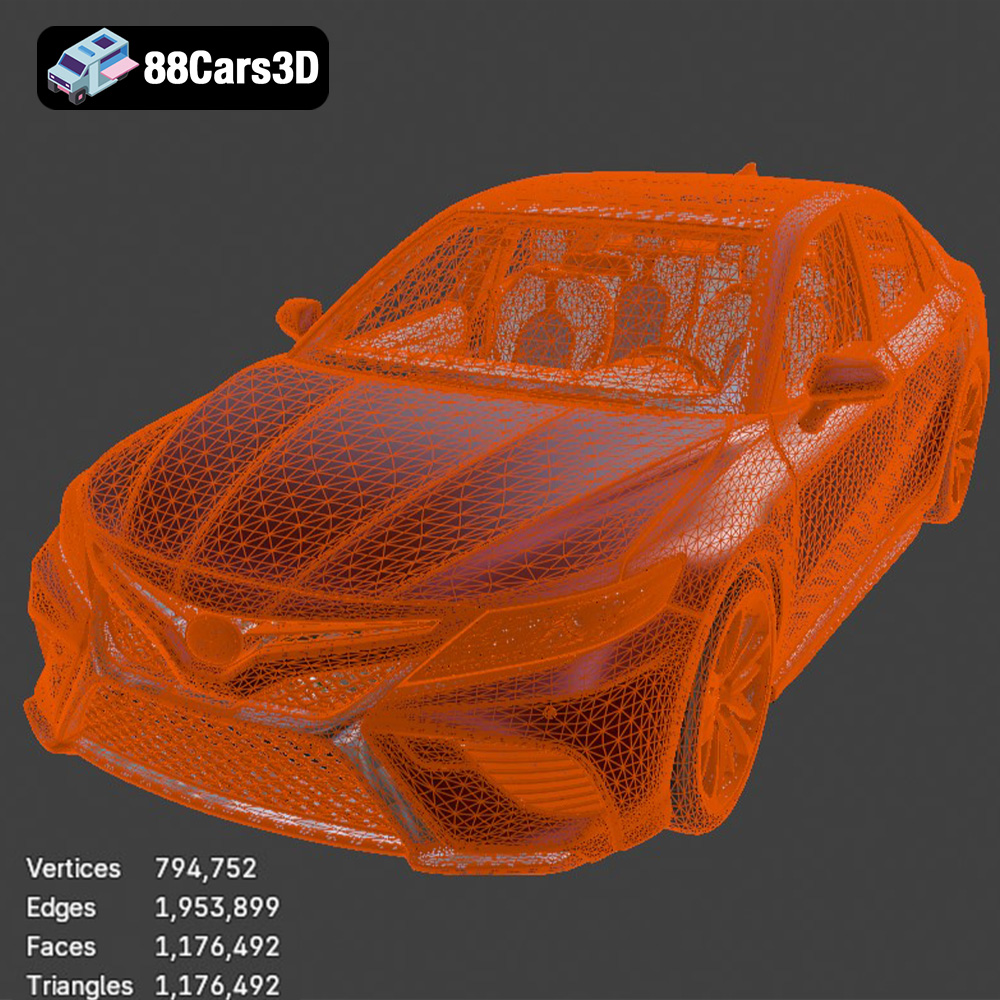
One of the most critical technical specifications for any 3D model intended for real-time engines is its polygon count (often referred to as triangle count). The 2018 Toyota Camry model boasts an approximate triangle count of 150,000. This figure is a testament to game-ready optimization, striking a perfect balance:
This careful optimization makes the model an ideal game asset, capable of being populated in large open-world environments or featured prominently in racing titles without causing performance bottlenecks.
Beyond static appearance, a professional 3D car model must behave realistically within a simulated environment. The Toyota Camry model is built with several key advantages:
Its inherent compatibility with major 3D software platforms and real-time rendering engines, coupled with these technical advantages, positions this model as a robust foundation for diverse professional projects.
The versatility of a well-designed 3D car model like the Toyota Camry 2018 is evident in its wide range of applications across multiple industries. From entertainment to engineering, this model provides a solid asset for creative and technical endeavors.
The gaming industry constantly seeks high-quality, optimized 3D assets to build believable worlds and engaging gameplay. The 2018 Toyota Camry 3D Model is tailor-made for this purpose:
Beyond real-time interactivity, high-fidelity 3D car models are indispensable tools for professional rendering and visualization, especially in marketing and architectural fields.
The ability to customize body colors, material finishes, and adapt lighting for different environments further enhances its utility for these demanding applications.
The digital realm of 3D modeling increasingly intersects with the physical world through 3D printing. The availability of the Toyota Camry 2018 3D Model in .stl format opens up exciting possibilities for hobbyists, designers, and educators to create tangible replicas.
Converting a high-detail rendering model into a successful 3D print requires specific considerations and settings. The .stl format is the standard for this, representing the model as a triangulated mesh ready for slicing software. For the Toyota Camry, several print settings are recommended to ensure a high-quality physical output:
Once printed, the physical model offers a new canvas for customization and finishing:
The ability to transform this detailed 3D car model from a digital asset into a tangible object highlights its comprehensive design and utility.
The efficiency of any 3D production pipeline hinges on the quality and readiness of its assets. Purchasing pre-made, high-quality 3D car models from marketplaces like 88cars3d.com significantly streamlines workflows, freeing artists and developers to focus on creative execution rather than foundational modeling.
For artists leveraging industry-leading DCC applications, the Toyota Camry 2018 3D Model is designed for straightforward integration:
These workflows underscore how ready-to-use 3D car models from 88cars3d.com accelerate production cycles, ensuring consistency and quality across diverse projects.
Real-time environments, particularly those built with Unreal Engine, demand assets that are not only visually rich but also optimized for performance and interaction. The Toyota Camry 2018 3D Model excels here:
The journey from concept to fully realized digital (and even physical) asset is a complex one, yet the availability of high-quality 3D car models like the 2018 Toyota Camry significantly simplifies this process. This meticulously crafted model stands as a testament to technical excellence, offering game-ready optimization, accurate detailing, and unparalleled versatility across a multitude of file formats.
Whether you are developing the next big open-world game, crafting a compelling automotive rendering for a marketing campaign, designing an immersive AR/VR experience, or even printing a physical replica, the Toyota Camry 2018 3D Model provides the robust foundation you need. Its comprehensive feature set, from the detailed engine block to the optimized cockpit, ensures that your projects achieve both visual fidelity and optimal performance.
For professionals seeking premium assets that accelerate workflows and elevate their digital creations, exploring offerings like this on 88cars3d.com is an essential step. Invest in quality, and let your creativity drive the future of visualization.
The 2018 Toyota Camry, representing the eighth generation of this iconic mid-size sedan, brought a dramatic shift in styling with its aggressive lines, sportier stance, and prominent front grille. Known for its legendary reliability and comfort, this specific generation introduced the TNGA platform, elevating its driving dynamics while boasting striking visual elements like its sweeping roofline, sculpted doors, and modern LED lighting signature. This high-quality 3D model features game-ready optimization with an approximate triangle count of 150,000, ensuring excellent performance without sacrificing visual fidelity. Designed for modern pipelines, it boasts clean topology perfect for real-time applications like game development, AR/VR experiences, architectural visualization, and high-end animation. Perfect for urban traffic simulations, architectural renders, open-world driving games, and virtual showroom applications.
$19.99
.blend
.fbx
.glb
.max
.obj
.ply
.rendering
.sedan
.stl
.toyota
.unreal
camry-2018
car-3d-model
family-car
game asset
game-ready
low-poly
mid-size-car
optimized
VR/AR