Get 20% OFF All Premium 3D & STL Models!

In the exhilarating realm of digital content creation, where every pixel contributes to the illusion of reality, the demand for high-fidelity 3D assets has never been greater. Whether you are an automotive design studio pushing the boundaries of visualization, a game developer crafting immersive open worlds, or an architect integrating vehicle models into stunning presentations, the quality of your foundational assets dictates the final output. This is particularly true for complex subjects like vehicles, where intricate mechanics, aerodynamic forms, and subtle material nuances combine to create a compelling visual experience.
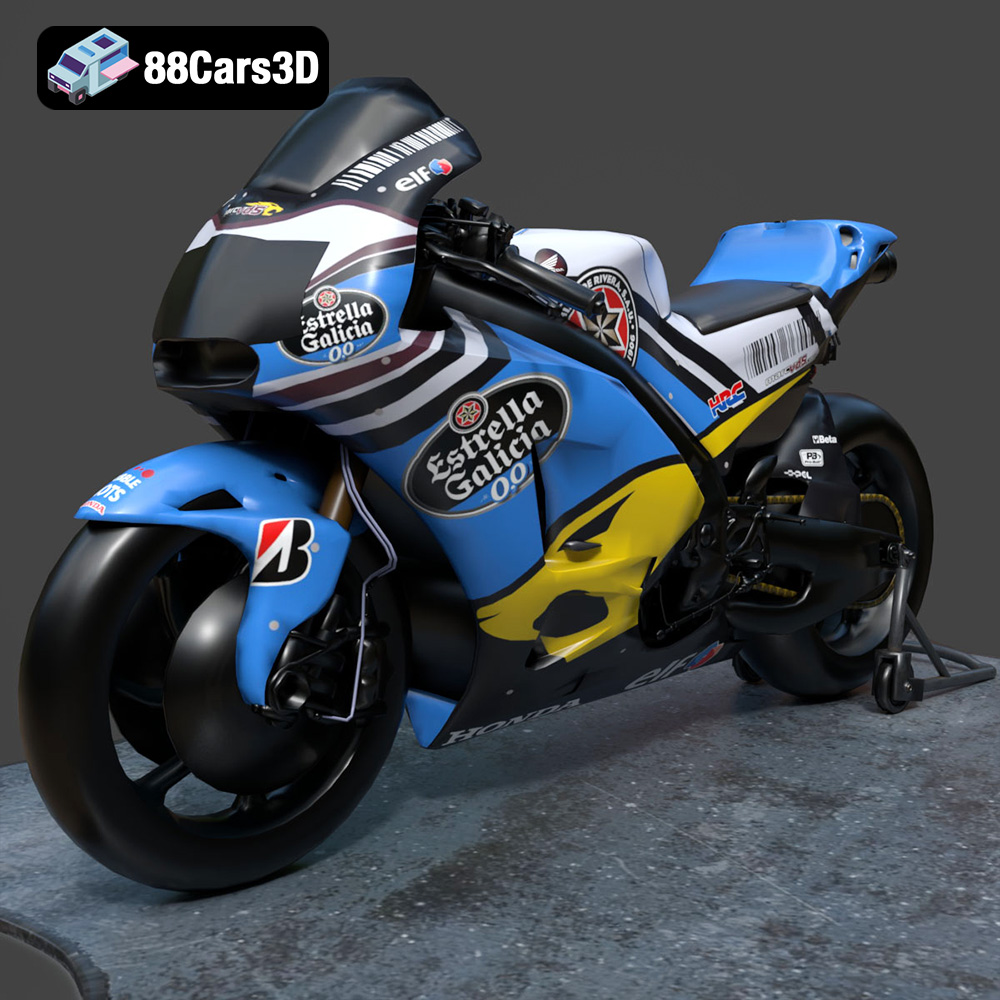
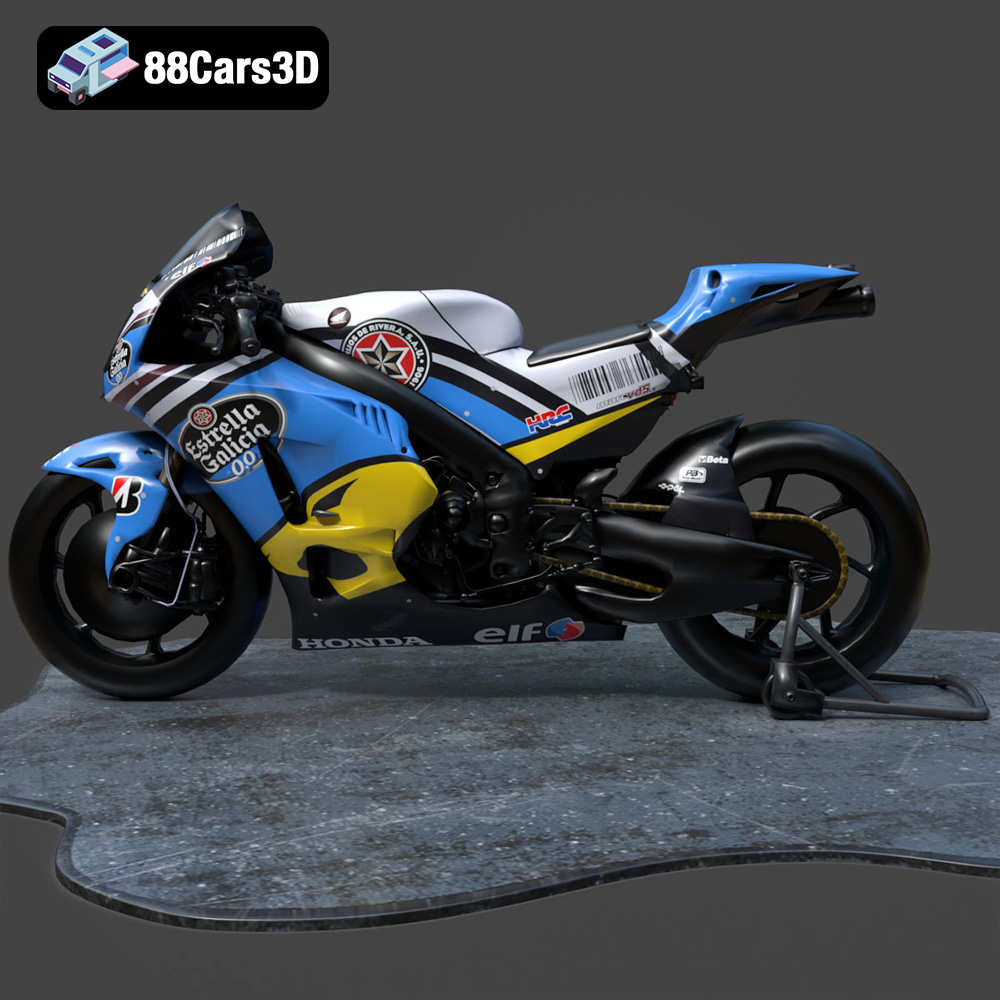
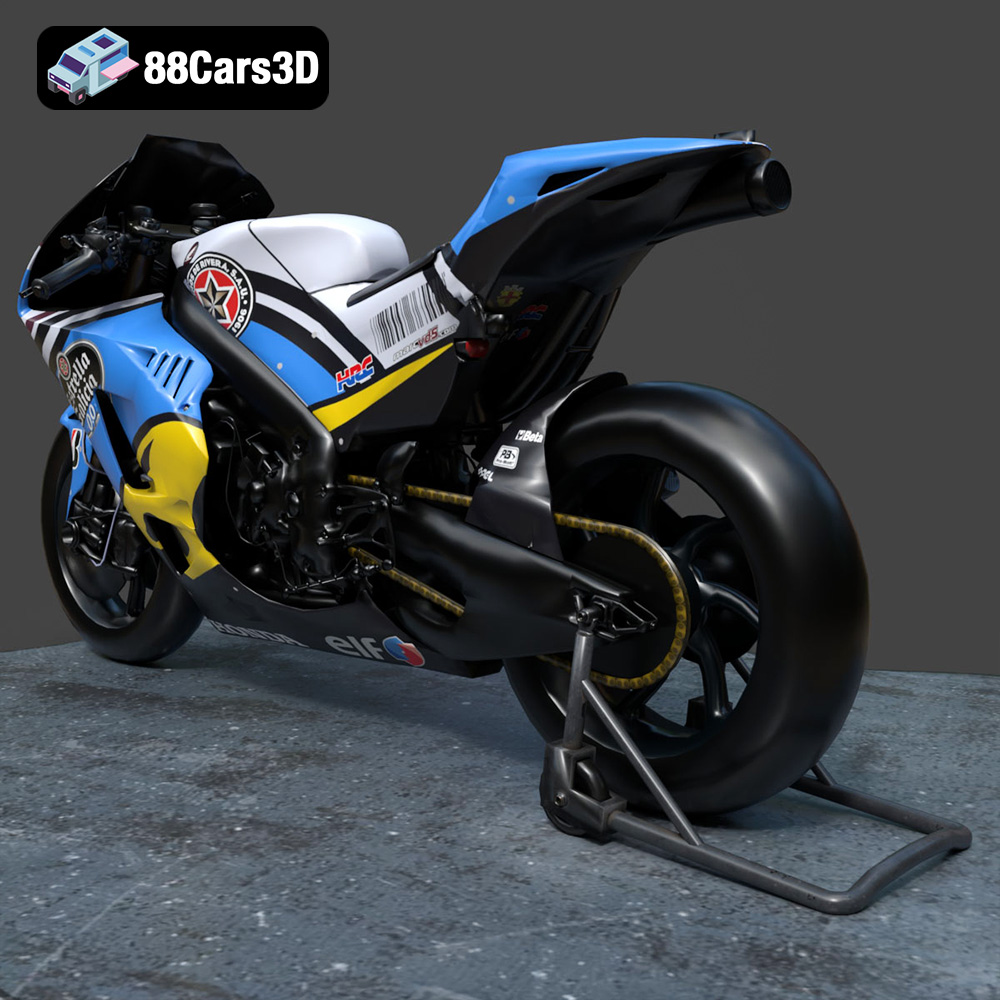
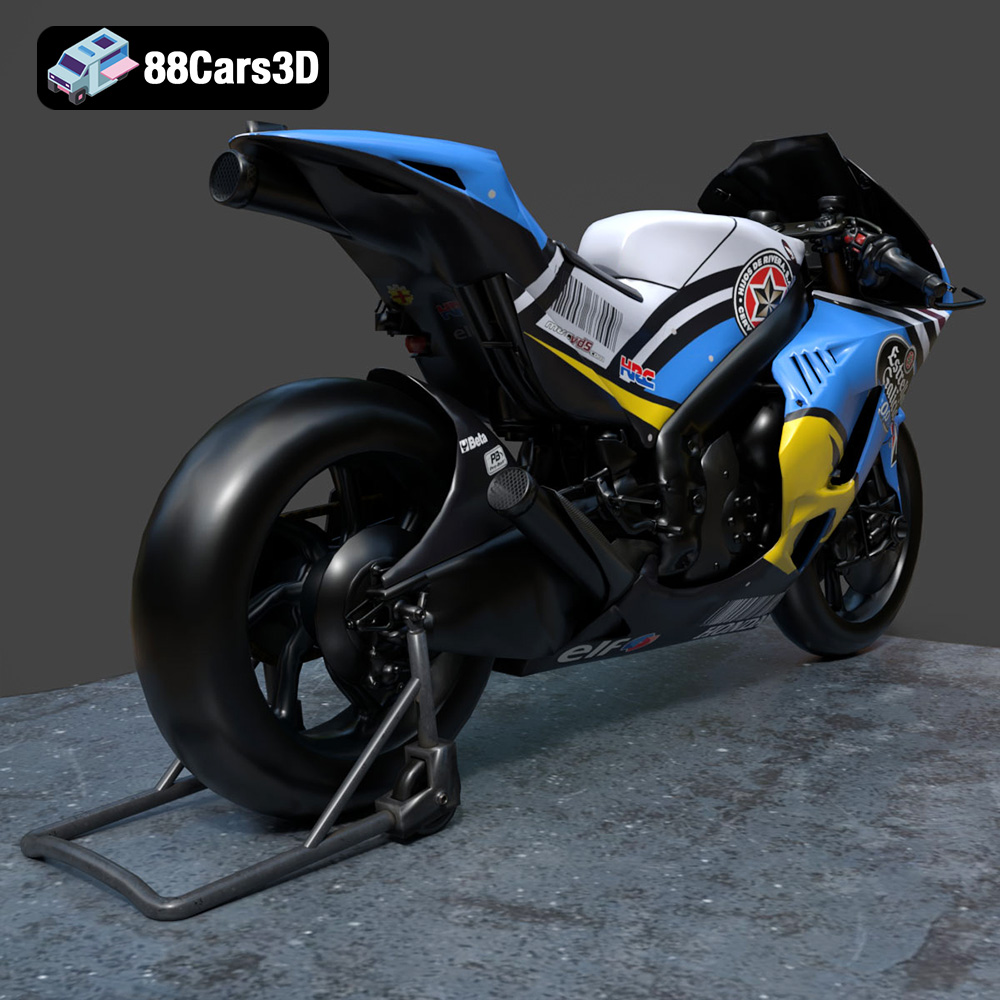
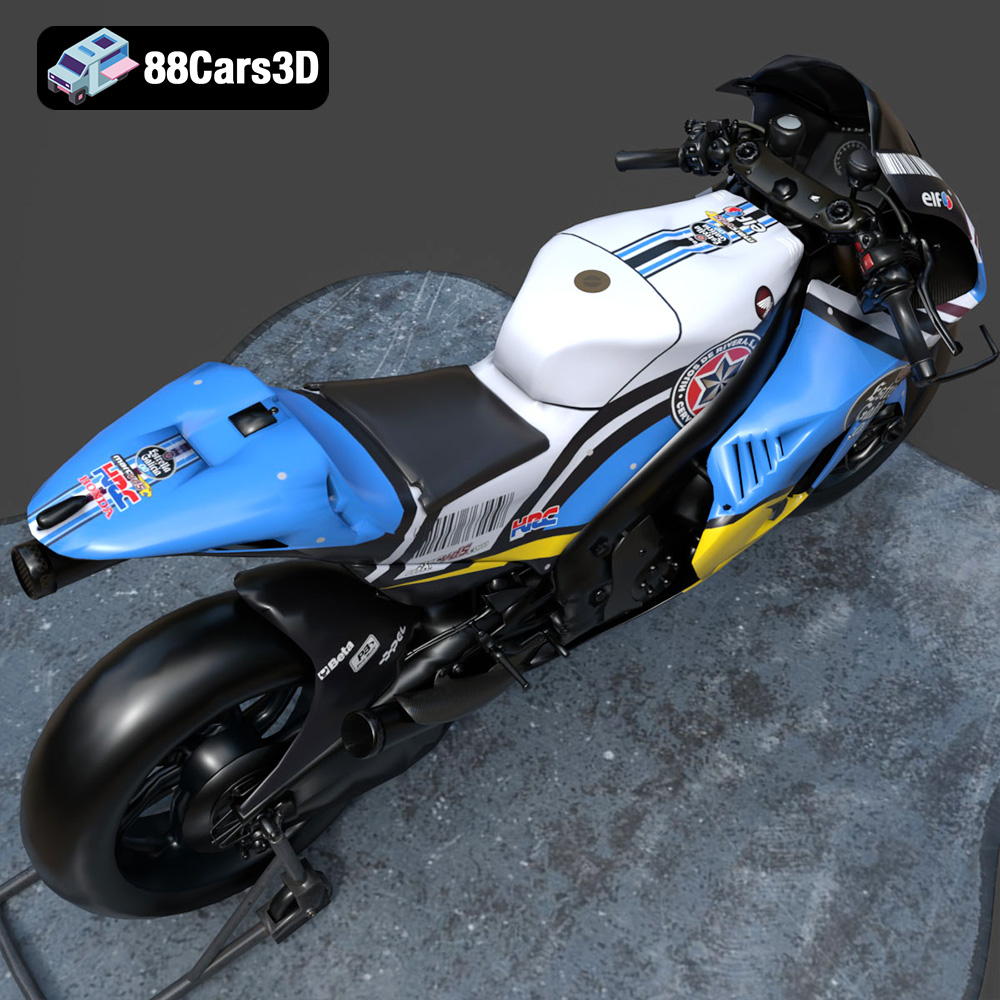
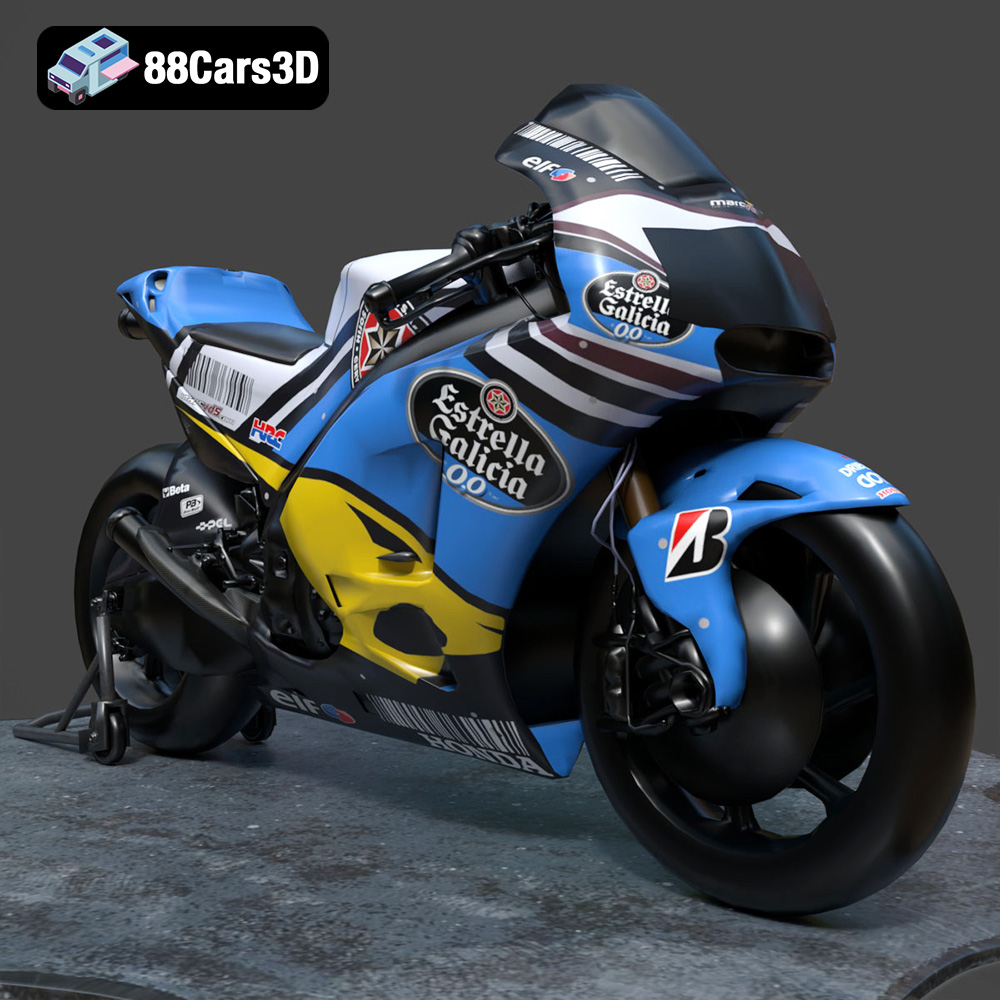
Enter the Honda RCV-213-001 3D Model, an asset that doesn’t just represent a motorcycle; it captures the very essence of a racing legend. Meticulously crafted and engineered for stunning visual fidelity, this model stands as a testament to precision and dedication. It’s more than just a collection of polygons; it’s a digital twin designed to elevate your projects, from hyper-realistic renders to dynamic real-time simulations. Available on 88cars3d.com, this model exemplifies the quality and versatility that professional creators demand, offering clean geometry, realistic materials, and a build quality ready for top-tier productions.
This comprehensive guide delves into the technical depths and creative opportunities presented by such a high-caliber 3D model. We’ll explore how assets like the Honda RCV-213-001 seamlessly integrate into diverse professional workflows, discuss the critical role of various file formats, and illustrate how this model can be the cornerstone of your next groundbreaking project.
The true versatility of a professional 3D model, such as the Honda RCV-213-001, often lies in its support for a multitude of file formats. Each format serves a specific purpose, optimized for different software, engines, or end-use applications. Understanding these distinctions is crucial for seamless integration into your workflow and for maximizing the utility of your purchased assets. The Honda RCV-213-001 3D Model comes with a comprehensive suite of formats, ensuring broad compatibility and specific optimizations.
The .blend file is Blender’s native format. For users of this powerful open-source 3D suite, receiving a .blend file means gaining access to a fully editable scene. This typically includes not just the raw mesh data, but also all materials, textures, lighting setups, camera positions, and sometimes even animation rigs. For the Honda RCV-213-001, the .blend file provides an editable Blender scene complete with its sophisticated materials and a lighting setup, allowing artists to immediately render or further customize the model without extensive re-configuration. This is invaluable for artists who want to dissect the model’s construction, adjust PBR (Physically Based Rendering) texture parameters, or integrate it into an existing Blender project with minimal fuss.
.fbx (Filmbox) is arguably the most common and robust interchange format in the 3D industry, especially prevalent in game development and animation pipelines. Its strength lies in its ability to store not just geometry, but also materials, textures, animations, skinning information, and even camera data within a single file. For the Honda RCV-213-001, the .fbx format is game-engine ready, making it ideal for direct import into Unreal Engine, Unity, and other real-time platforms. Its comprehensive data storage ensures that the model’s visual integrity, including its complex PBR materials, translates accurately across different software. Technical considerations for .fbx often revolve around proper scaling, axis orientation, and ensuring all material channels (albedo, normal, roughness, metallic, AO) are correctly mapped upon import.
.obj (Wavefront Object) is another widely supported universal format, revered for its simplicity and broad compatibility. While it doesn’t support advanced features like animation or scene data, it excels at preserving geometric information (vertices, normals, UV coordinates) and basic material assignments. This makes the .obj version of the Honda RCV-213-001 a reliable fallback for cross-software compatibility. If you need to import the model into older software, specialized CAD applications, or simply desire a clean mesh to build upon, .obj is an excellent choice. Textures typically accompany the .obj file as separate image files, along with an associated .mtl (material) file.
.glb (GL Transmission Format Binary) is gaining immense traction, particularly for AR (Augmented Reality), VR (Virtual Reality), and web-based applications. It’s an optimized, self-contained format that bundles mesh data, materials, textures, and even animations into a single binary file. This makes it incredibly efficient for streaming and displaying 3D models directly in browsers or mobile AR/VR experiences. The .glb version of the Honda RCV-213-001 is perfectly optimized for AR/VR and web-based visualization, offering a lightweight yet visually rich representation for interactive digital environments.
.stl (Stereolithography) is the de facto standard for 3D printing. It represents a 3D model as a series of connected triangles, describing only the surface geometry without color, texture, or internal structure. When considering the Honda RCV-213-001 for prototyping or miniature creation, the .stl file is what you’d feed into your slicer software. It’s crucial for the model to be watertight (no holes or gaps in the mesh) for successful 3D printing, a characteristic usually ensured in professional assets like this one.
.ply (Polygon File Format), much like .obj, is a straightforward format for storing polygonal meshes. However, .ply often has a slight edge in its ability to store a wider range of properties per vertex or face, such as color, transparency, normals, texture coordinates, and even reliability information from 3D scanners. This makes the .ply version of the Honda RCV-213-001 valuable for precision mesh analysis, scientific visualization, or scenarios where a richer dataset beyond basic geometry is required, often used in CAD or more technical applications.
The inclusion of an .unreal file signifies a significant advantage for game developers using Unreal Engine. This often means the asset is pre-configured with materials, collision meshes, and potentially even LOD (Level of Detail) setups, ready for direct import and use within an Unreal Engine project. This saves countless hours of setup time, allowing developers to immediately focus on integration and gameplay rather than asset preparation.
Finally, the .max file is the native format for Autodesk 3ds Max, a leading software for 3D modeling, animation, and rendering. An editable .max project file for the Honda RCV-213-001 provides artists with the full scene, including modifiers, animation keys, complex material setups using V-Ray or Corona renderers (if applicable), and all original scene organization. This is indispensable for professional rendering studios that rely on 3ds Max for high-end automotive visualization and animation, offering the ultimate flexibility for customization and advanced rendering techniques.
This comprehensive array of formats ensures that the Honda RCV-213-001 3D Model is not just a beautiful asset, but a highly adaptable tool ready for any professional pipeline.
Replicating a real-world object in 3D is a demanding discipline, especially when dealing with the intricate engineering and iconic aesthetics of a racing motorcycle. The Honda RCV-213-001 3D Model represents the pinnacle of this craft. It’s not merely a static representation but a dynamic dataset reflecting countless hours of meticulous modeling, texturing, and optimization.
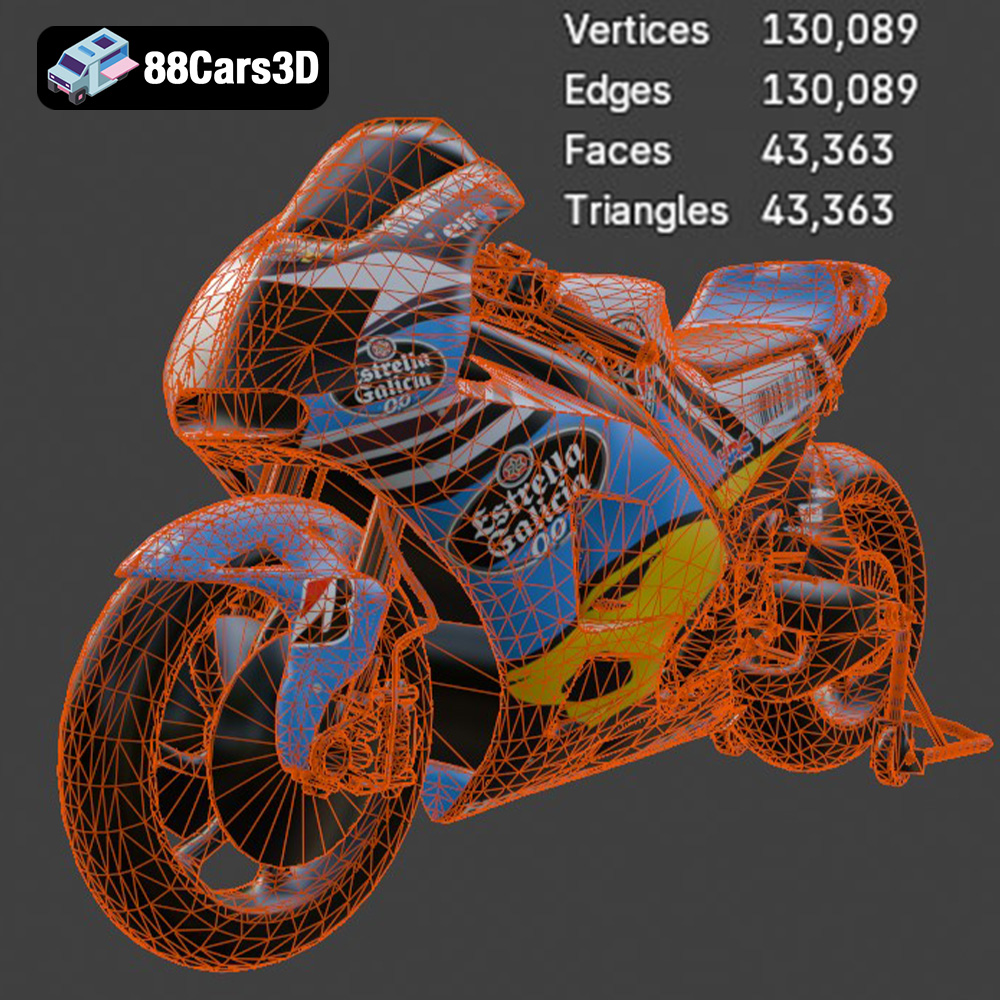
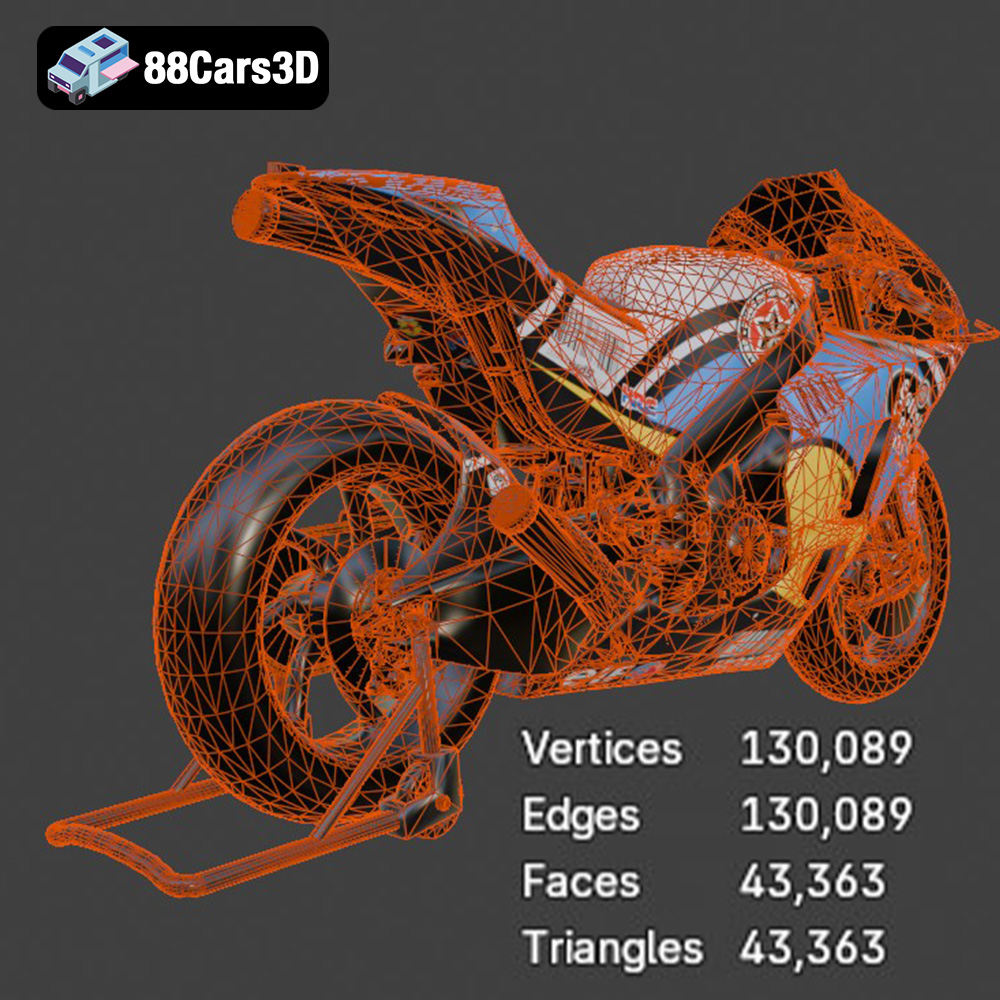
The beauty of the Honda RCV-213-001 in its digital form lies in its uncompromising attention to detail. Every aerodynamic fairing, crucial for cutting through the air at high speeds, has been sculpted with precision. The intricate mechanical components, from the exposed engine block to the braking system and suspension linkages, are not just placeholders but accurately modeled parts. This level of granular detail is achieved through a combination of expert poly modeling, clean topology, and the application of high-resolution PBR textures. The result is a model that holds up under extreme close-ups, making it ideal for hero shots in advertising or detailed breakdowns in simulations.
For artists working on automotive rendering, this means less time spent correcting mesh errors or remodeling parts, and more time focusing on lighting, materials, and composition. The clean geometry of the Honda RCV-213-001 ensures smooth subdivisions and deformation, crucial for both static renders and dynamic animations.
Professional visualization often aims to blur the lines between what’s real and what’s rendered. The Honda RCV-213-001 3D Model is an exceptional tool for achieving this. Its realistic materials accurately simulate the metallic sheen of the frame, the subtle texture of the tires, the reflective quality of the paint, and the transparency of the windshield. These materials are often designed using Physically Based Rendering (PBR) workflows, meaning they react to light in a way that mimics real-world physics, resulting in highly convincing renders regardless of the lighting scenario.
This fidelity makes it a prime candidate for product showcases, digital twins in virtual showrooms, or even forensic analysis in virtual environments. By providing a highly accurate digital representation, the model allows designers and marketers to iterate on concepts, explore different color schemes, or even demonstrate features long before a physical prototype exists.
High-quality 3D car models are the bedrock of stunning automotive rendering. The Honda RCV-213-001 provides an excellent starting point for artists aiming to create photorealistic visualizations. Its professional-grade build translates directly into superior rendering results across various platforms.
When working with software like Autodesk 3ds Max (with the included .max file) or Blender (with the .blend file), the process of creating a photorealistic render becomes an exercise in artistic control. The Honda RCV-213-001, with its clean mesh and pre-configured materials, allows artists to immediately dive into scene creation. In 3ds Max, for instance, artists can leverage powerful renderers like V-Ray or Corona to cast precise global illumination, volumetric lighting, and intricate reflections on the motorcycle’s surfaces. Blender users benefit from Cycles or Eevee, utilizing the native .blend file to tweak materials and lighting setups seamlessly.
Achieving realism isn’t just about the model itself; it’s about the environment. Placing the Honda RCV-213-001 in a studio setup with softbox lighting, an outdoor scene with a High Dynamic Range Image (HDRI) for ambient light, or a dramatic trackside environment allows the model to truly shine. The model’s inherent quality ensures that even subtle reflections and highlights contribute to a convincing illusion.
The realistic materials included with the Honda RCV-213-001 are a significant asset. These PBR materials consist of various maps (albedo/base color, roughness, metallic, normal, ambient occlusion) that define how light interacts with the surface. Artists can further refine these in 3ds Max or Blender. For example, adjusting the roughness maps can control the specularity of paint or the dullness of rubber tires, while normal maps add perceived surface detail without increasing polygon count. Learning to manipulate these parameters, along with applying realistic lighting schemes (three-point lighting, physically accurate sun and sky systems, or studio setups), is key to transforming a great model into a breathtaking render.
Consider a scenario where the motorcycle needs to appear in a high-gloss studio advertisement. The artist can fine-tune the metallic and roughness values of the paint material to achieve a perfect, mirror-like finish, then use precise softbox lights to sculpt highlights across its curves. For a gritty track scene, the same materials can be subtly adjusted to show wear, grime, and a more diffused reflectivity.
Beyond static renders, the Honda RCV-213-001 is primed for animation. Its clean topology and organized hierarchy mean it can be rigged for complex movements, from wheel rotation to suspension compression, enabling dynamic cinematics. In 3ds Max, artists can set up paths for camera movements, animate the motorcycle driving through a scene, or even simulate racing scenarios. The .fbx format, with its animation capabilities, can facilitate the transfer of these animated sequences to other applications or game engines.
Imagine a marketing campaign featuring the Honda RCV-213-001 speeding down a track, its fairings catching the light, suspension absorbing bumps, and wheels spinning realistically. Such complex animations, which are typically very time-consuming, are significantly streamlined when starting with a high-quality, pre-built 3D model like this one.
For game developers and real-time visualization specialists, the challenge is balancing visual fidelity with performance. The Honda RCV-213-001 3D Model is engineered to meet these demands, offering an exceptional balance suitable for demanding game environments and interactive experiences.
High-quality 3D car models for games require careful optimization. While the Honda RCV-213-001 boasts intricate detail, professional game assets are designed with real-time performance in mind. This means clean topology, efficient UV layouts for texture mapping, and often, consideration for Level of Detail (LOD) models (though not explicitly stated for this model, it’s a standard practice for professional assets). The base model provides the visual fidelity, and developers can implement LODs as needed to ensure smooth frame rates when the motorcycle is viewed from a distance.
The optimization includes the use of efficient PBR textures, which provide rich visual detail without excessive polygon counts. The model’s engineering ensures that it can be integrated into a game world without being a performance bottleneck, while still delivering stunning visuals in close-up scenarios.
The inclusion of .fbx and specifically the .unreal formats with the Honda RCV-213-001 streamlines its integration into game engines like Unreal Engine and Unity. For Unreal Engine, the .unreal file can mean a direct, drag-and-drop solution where materials, textures, and even basic collision setups are already configured. This dramatically reduces the asset preparation time, allowing developers to focus on gameplay mechanics and environmental design.
The .fbx file provides similar benefits for both Unreal and Unity, acting as a robust bridge between Digital Content Creation (DCC) software and the game engine. Upon import, the .fbx typically carries the mesh, UVs, and material slots. Artists then assign the corresponding PBR texture maps (albedo, normal, roughness, metallic, AO) to the material instances within the engine. This workflow ensures that the visual quality achieved in rendering software is closely matched in the real-time environment, making the Honda RCV-213-001 an ideal game asset.
The PBR materials of the Honda RCV-213-001 are crucial for its realistic appearance in game engines. They allow the motorcycle to react accurately to dynamic lighting, reflections, and weather conditions within the game world. Imagine the metallic paint reflecting a virtual sunset, or the tires casting realistic shadows as the rider accelerates through a dimly lit tunnel. Modern game engines leverage PBR to its fullest, enabling artists to create highly immersive and believable environments where assets like this motorcycle seamlessly blend in.
Furthermore, the model’s clean structure supports the addition of real-time effects such as dirt accumulation, wear and tear, or even damage systems, which can further enhance the realism and player experience in racing games or simulations.
The utility of a high-quality 3D model like the Honda RCV-213-001 extends far beyond traditional rendering and game development. Its robust construction and format versatility open doors to innovative applications in augmented reality, virtual reality, and physical prototyping.
Augmented Reality (AR) and Virtual Reality (VR) are transforming how we interact with digital content. For these immersive platforms, optimized 3D models are paramount. The .glb format, specifically designed for AR/VR and web-based display, ensures that the Honda RCV-213-001 can be seamlessly integrated into interactive applications. Imagine placing a lifelike digital Honda RCV-213-001 on your desk through an AR app, allowing users to walk around it, inspect details, and even see it in different color schemes. Or, experiencing the thrill of riding it in a fully immersive VR simulation.
The .glb file’s efficiency means quicker loading times and smoother performance in these demanding real-time environments. This makes the Honda RCV-213-001 an invaluable asset for creating engaging product configurators, virtual showrooms, training simulations, or even educational content where users can explore the motorcycle’s mechanics in an interactive 3D space.
While digital models are powerful, sometimes a tangible representation is necessary. This is where the .stl and .ply formats come into play for 3D printing and rapid prototyping. The .stl file of the Honda RCV-213-001 allows designers, engineers, or hobbyists to print a physical miniature of the motorcycle. This could be for scale models, design verification, or even creating custom parts for dioramas.
The accuracy of the original 3D model translates directly to the precision of the 3D print. Professionals might use the .ply format for detailed mesh analysis or for specific 3D printing processes that leverage the additional data points, such as color information, if the model supports it and the printer is capable. This bridge between the digital and physical realms demonstrates the comprehensive value of meticulously crafted 3D car models available on platforms like 88cars3d.com.
In any professional creative pipeline, efficiency is key. Starting with a high-quality, pre-made 3D model like the Honda RCV-213-001 is a strategic decision that saves time, reduces costs, and elevates the overall quality of a project.
Building a complex 3D model like a racing motorcycle from scratch is an incredibly time-consuming and resource-intensive endeavor. It requires specialized skills in modeling, texturing, rigging, and optimization. By acquiring a professionally made asset such as the Honda RCV-213-001 from 88cars3d.com, studios and individual artists can bypass these initial development stages entirely. This allows them to allocate their resources more efficiently, focusing on the unique creative aspects of their project rather than foundational asset creation.
The assurance of clean geometry, accurate scale, realistic materials, and cross-format compatibility means less troubleshooting and more immediate progress. This is a significant advantage, especially under tight deadlines or when working with large teams where consistent asset quality is paramount.
A professional 3D model isn’t just a static object; it’s a flexible foundation. With the editable .max and .blend files included, artists have full control to customize the Honda RCV-213-001 to fit specific project requirements. This could involve:
This flexibility fosters rapid iteration, allowing designers and clients to quickly visualize different concepts and make informed decisions throughout the project lifecycle. Instead of starting from zero for every design variant, artists can leverage the robust base of the Honda RCV-213-001 and focus on creative iteration.
In the dynamic world of 3D content creation, the availability of high-quality assets is a game-changer. The Honda RCV-213-001 3D Model is more than just a digital replica; it is a meticulously engineered tool designed to empower digital creators across a spectrum of industries. From the intricacies of its aerodynamic fairings to the fidelity of its PBR materials, every aspect of this model speaks to a commitment to visual excellence and technical precision.
Its comprehensive file format support — including .blend, .fbx, .obj, .glb, .stl, .ply, .unreal, and .max — ensures unparalleled versatility, allowing for seamless integration into diverse workflows spanning high-end automotive rendering, performance-optimized game development, immersive AR/VR experiences, and even physical 3D printing. By providing a solid foundation of clean geometry and realistic textures, it drastically streamlines production pipelines, allowing artists and developers to focus their creative energy on bringing their visions to life.
Whether you’re crafting the next generation of racing games, producing stunning visual advertisements, or developing interactive virtual showrooms, the Honda RCV-213-001 offers the quality and flexibility needed to push the boundaries of digital realism. This exemplary 3D car model, found on 88cars3d.com, is a smart investment for any professional seeking to elevate their projects with assets that truly deliver on their promise of stunning visual fidelity and robust performance.
Experience true realism with the Honda RCV-213-001 3D Model, meticulously crafted to represent the iconic racing motorcycle. This model is engineered to provide stunning visual fidelity, making it an exceptional choice for automotive enthusiasts and digital creators. Key features of this 3D model include clean geometry, realistic materials, and a professional quality build. Every detail, from the aerodynamic fairings to the intricate mechanical components, has been modeled to deliver a highly accurate digital twin of the original vehicle. This asset is highly versatile and perfect for a wide range of applications. Whether you are working on game development, rendering, AR/VR experiences, or professional visualization projects, this model provides the performance and aesthetic precision required for top-tier productions. The following file formats are included with your download: .blend – Editable Blender file with materials and lighting setup, .fbx – Game-engine ready format for Unreal Engine and Unity, .obj – Standard 3D model format compatible with all major software, .glb – Optimized for AR/VR and web-based visualization, .stl – Suitable for 3D printing and prototyping, .ply – Detailed polygon mesh for analysis and visualization, .unreal – Pre-configured for Unreal Engine use, .max – Editable 3ds Max file for rendering and animation.
$39.99
.arvr
.blend
.car3dmodel
.fbx
.gameasset
.glb
.honda
.max
.motorcycle
.obj
.ply
.racingbike
.rcv213001
.rendering
.simulation
.stl
.unreal