Get 20% OFF All Premium 3D & STL Models!

In the dynamic realm of digital design and interactive media, the demand for high-fidelity 3D car models is relentless. From crafting hyper-realistic automotive advertisements to developing immersive open-world racing games, the quality of a vehicle asset can significantly elevate a project’s impact. Artists and developers consistently seek models that not only capture aesthetic accuracy but also offer robust technical foundations for seamless integration into diverse pipelines. This pursuit of perfection often leads them to specialized marketplaces where precision and optimization are paramount.
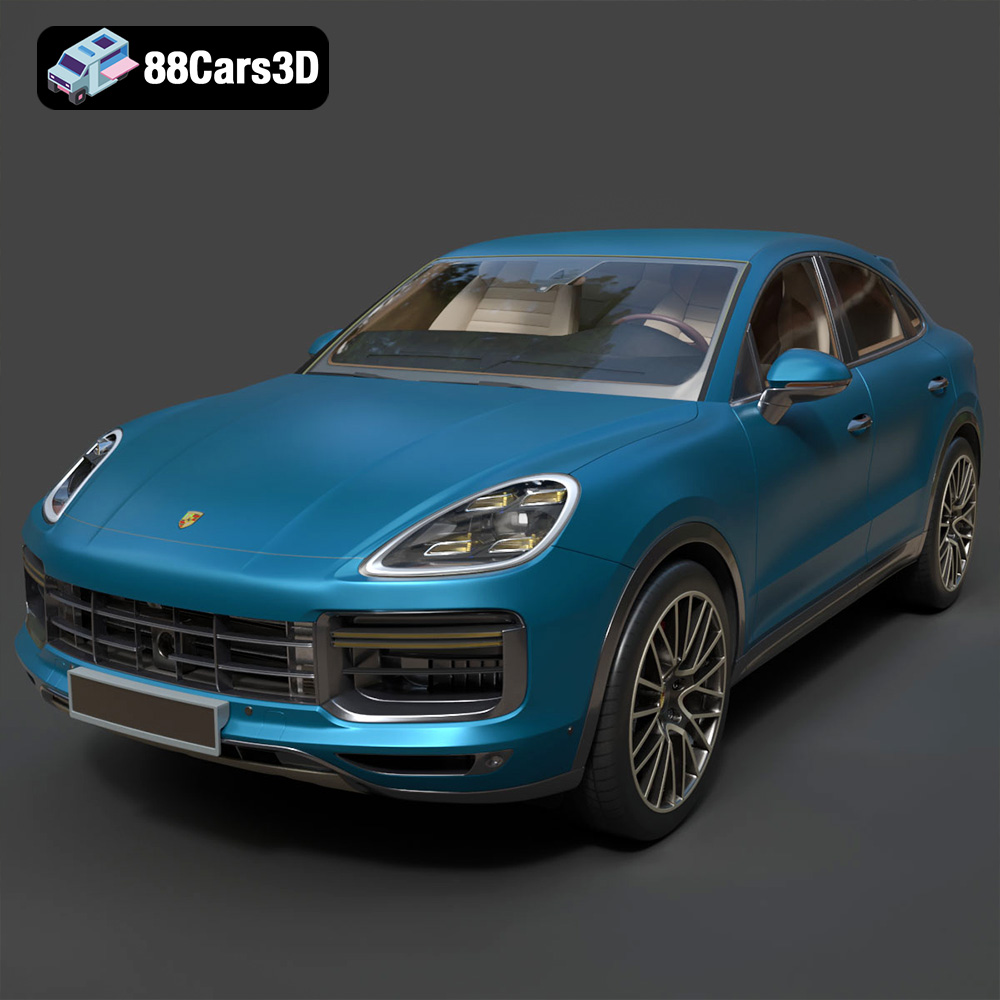
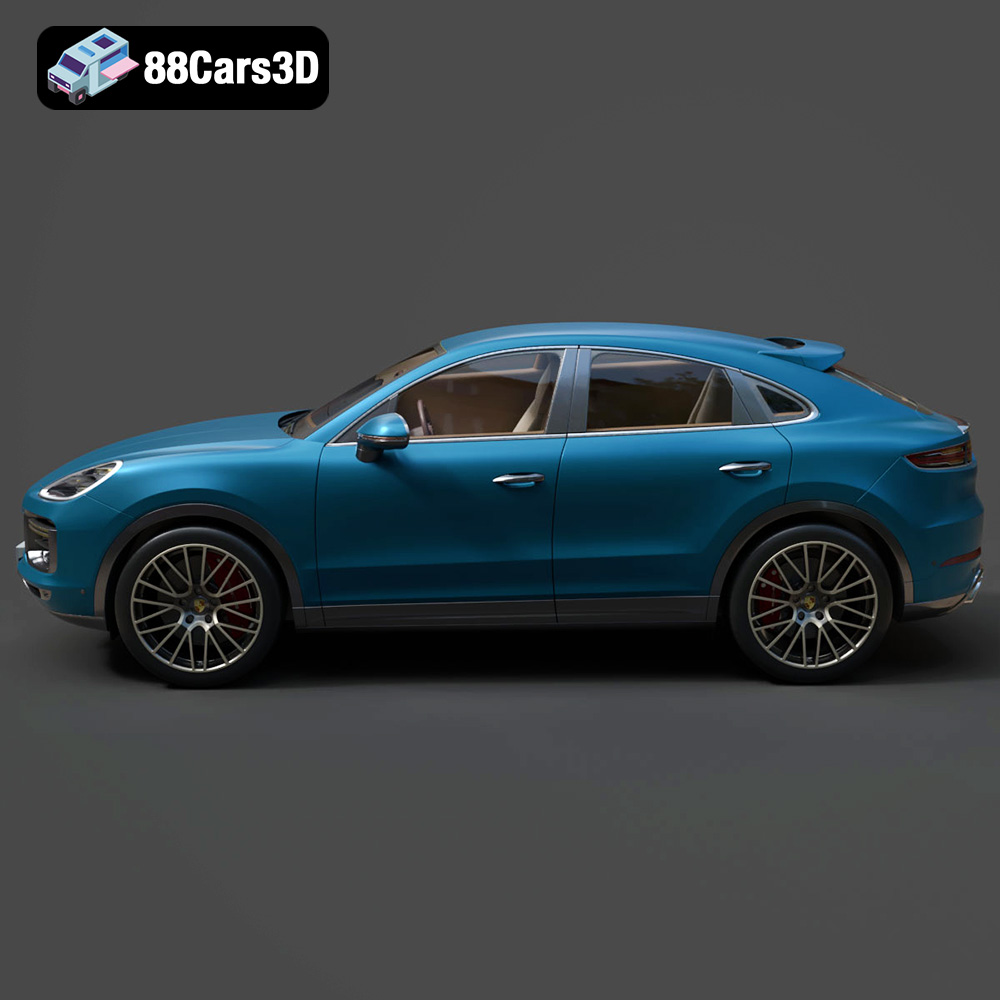
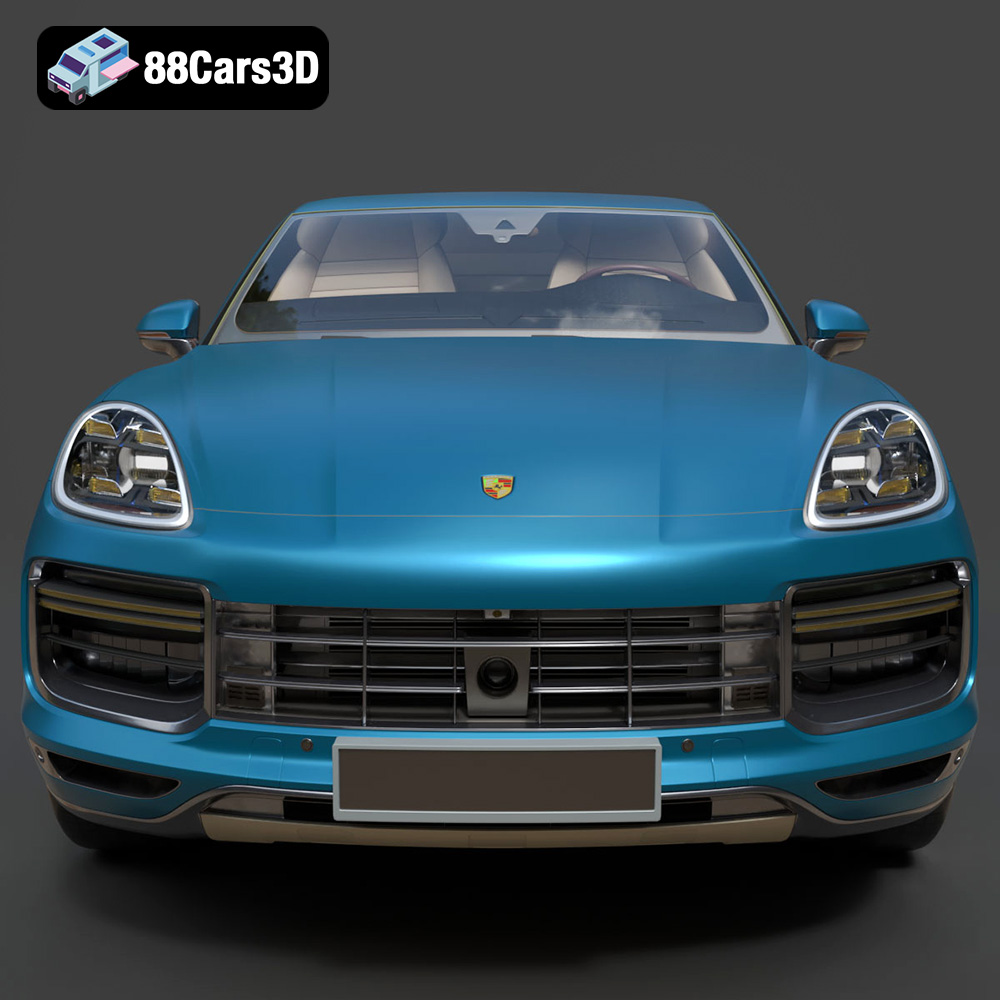
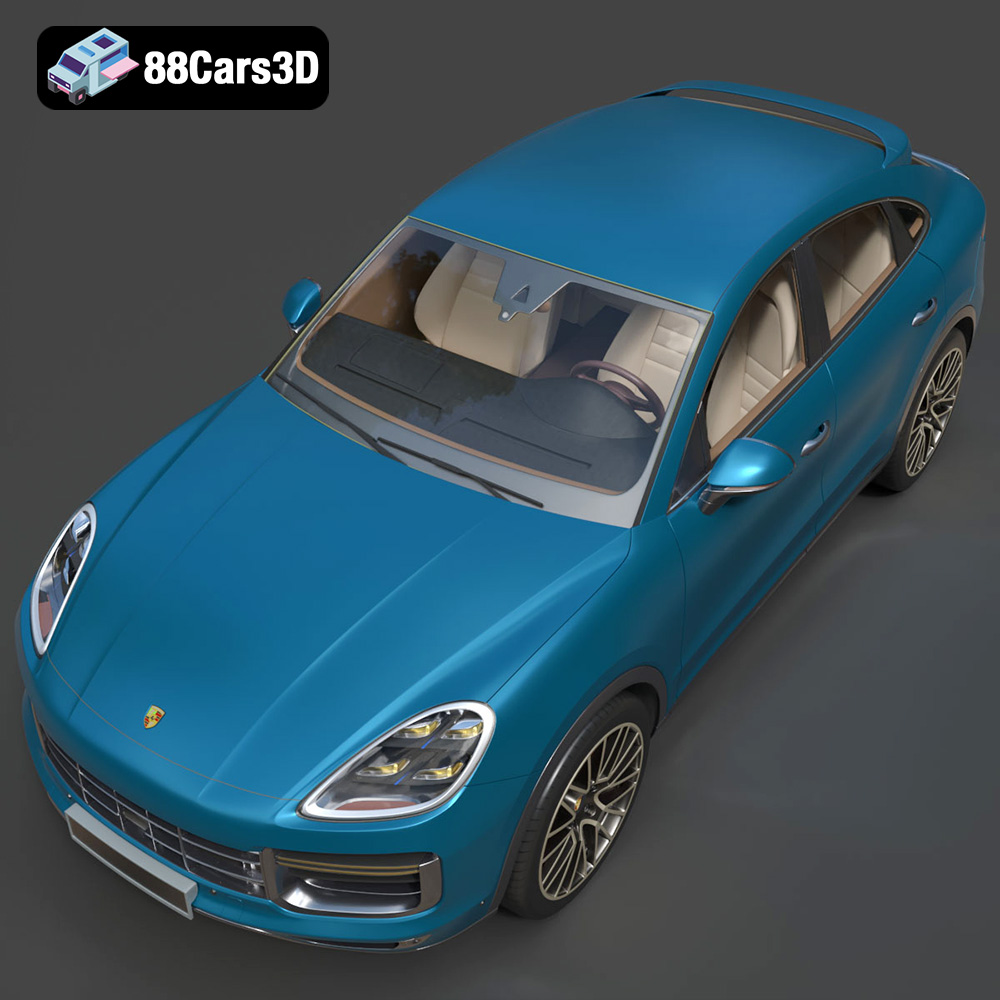
Today, we delve into the intricate world of professional 3D car models, exploring the technical considerations, workflow implications, and vast applications that define excellence in this field. We’ll specifically examine a prime example of such craftsmanship: the Porsche Cayenne Turbo Coupe 2020 3D Model. This exceptional digital recreation embodies the fusion of sports car performance and SUV versatility, meticulously capturing its striking athletic stance, dramatically sloping coupe-style roofline, and legendary Porsche design DNA. It’s a testament to how detailed 3D assets can empower creators across various industries, providing a versatile foundation for everything from cinematic rendering to real-time interactive experiences.
The journey of a 3D model from conception to deployment involves navigating a landscape of diverse file formats, each with its unique strengths, compatibility, and intended applications. Choosing the correct format is crucial for maintaining data integrity, optimizing performance, and ensuring a smooth workflow across different software and platforms. Understanding these formats is a cornerstone of professional 3D asset management, especially when dealing with complex 3D car models like the Porsche Cayenne Turbo Coupe 2020.
The .blend format is native to Blender, the powerful open-source 3D creation suite. A .blend file encapsulates an entire Blender scene, including all mesh data, materials, textures, lighting, cameras, animations, rigging, and even scene settings. This makes it an incredibly comprehensive and fully editable format. When you acquire a .blend file, you’re getting the complete working environment the artist used, allowing for deep customization, adjustments to the topology, modifications to shader networks, and full control over any included animation curves. It’s the go-to format for Blender users who need maximum flexibility and direct access to the source data for intricate automotive rendering or game asset development.
.fbx (Filmbox) is a proprietary file format developed by Autodesk, serving as a robust standard for 3D data exchange between various applications, especially in game development and animation. It efficiently stores not only mesh data but also critical elements like skeletal animations, blend shapes, material assignments, and even cameras and lights. Its widespread support makes it ideal for transferring assets between software like Maya, 3ds Max, Blender, ZBrush, and into game engines such as Unreal Engine and Unity. For a complex model like the Porsche Cayenne Turbo Coupe 2020, an .fbx file ensures that intricate details like separate wheels, suspension components, and the active rear spoiler can retain their pivot points and animation readiness, critical for realistic vehicle simulations and cinematic sequences.
.obj (Wavefront OBJ) is one of the oldest and most universally supported 3D file formats. It’s primarily a geometric format, storing vertex positions, normals, texture coordinates (UVs), and polygon faces. While it’s excellent for transferring mesh data, it typically stores material information (colors, reflectivity) in a separate companion .mtl (Material Template Library) file. Animation data is not supported by .obj, making it less suitable for animated assets but perfect for static, high-detail models that need to be imported into virtually any 3D software for rendering or further sculpting. Its simplicity and broad compatibility make it a reliable choice for cross-software workflows and archival purposes.
.glb is the binary version of the GL Transmission Format (glTF), often referred to as the “JPEG of 3D.” It’s an open-standard, royalty-free specification designed for efficient transmission and loading of 3D scenes and models by applications. A .glb file packages everything into a single file – geometry, materials, textures, animations, and even skeletal data – making it highly optimized for web-based 3D, augmented reality (AR), virtual reality (VR), and mobile applications. Its compact size and ease of integration into web browsers and AR/VR platforms make it an excellent choice for interactive virtual showrooms or product configurators featuring the Porsche Cayenne Turbo Coupe 2020, delivering high visual fidelity with minimal loading times.
.stl (STereoLithography) is the de facto standard for 3D printing. This format represents the surface geometry of a 3D object using a collection of interconnected triangles (a tessellation). It doesn’t store color, texture, or material properties, only the surface shape. For enthusiasts and professionals looking to produce a physical replica of the Porsche Cayenne Turbo Coupe 2020, converting the digital model to .stl is the first step. While simple, the accuracy of the printed model heavily depends on the tessellation density and the cleanliness of the original mesh, making a well-structured source model indispensable.
.ply (Polygon File Format, or Stanford Triangle Format) is another format for storing 3D data, particularly point clouds and polygon meshes. It can store a wider range of properties than .obj or .stl, including color, transparency, normals, texture coordinates, and even scalar data associated with vertices or faces. It’s commonly used for data obtained from 3D scanners, scientific analysis, and some CAD applications where high precision and comprehensive attribute storage are required. While less common for general asset exchange, its ability to retain rich data makes it valuable in specific engineering or heritage preservation contexts.
The .unreal designation often refers to assets that are pre-configured or specifically optimized for direct integration into Unreal Engine projects. While Unreal Engine primarily imports .fbx files, an “.unreal” asset implies that it comes with appropriate material setups (PBR, instanced materials), correct scaling, LODs (Levels of Detail), collision meshes, and potentially even blueprint configurations for immediate use within the engine. This significantly reduces setup time for game developers, allowing them to drag-and-drop the Porsche Cayenne Turbo Coupe 2020 directly into their game worlds with minimal post-import tweaking, ready for real-time environments.
Similar to .blend for Blender, the .max format is native to Autodesk 3ds Max. It contains all the data for a 3ds Max scene, including geometry, materials, textures, lighting, cameras, animation, modifiers, and plugin-specific data. It offers the most comprehensive control for 3ds Max users, allowing for deep editing, complex rigging, advanced animation setups, and high-end rendering using engines like V-Ray or Corona. For artists who rely on 3ds Max for their automotive rendering and visualization projects, the .max file provides the ultimate flexibility and direct access to the scene’s construction.
Creating a premium 3D car model is an intricate blend of artistic vision and technical prowess. It requires a meticulous approach to capture the essence of the real vehicle while ensuring its digital counterpart is optimized for various applications. The Porsche Cayenne Turbo Coupe 2020 3D model available on 88cars3d.com exemplifies this balance, offering a sophisticated asset built for demanding professional workflows.
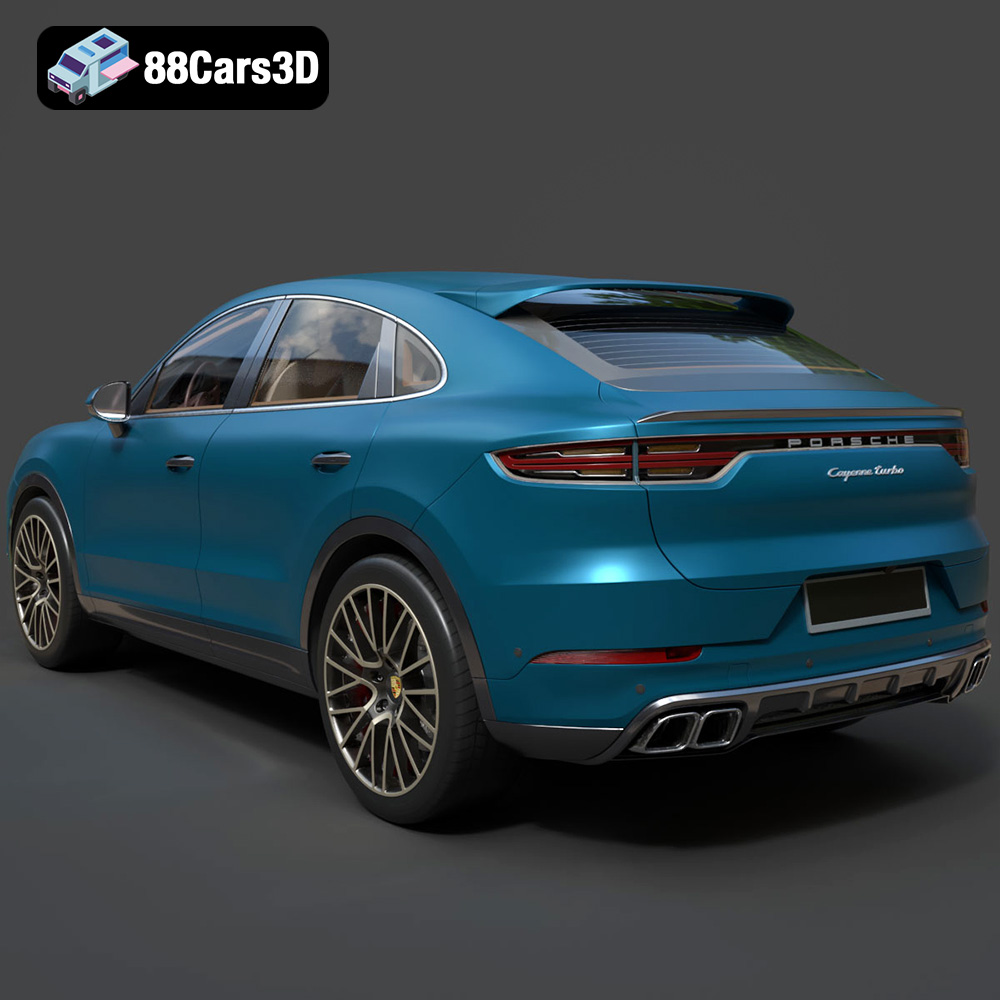
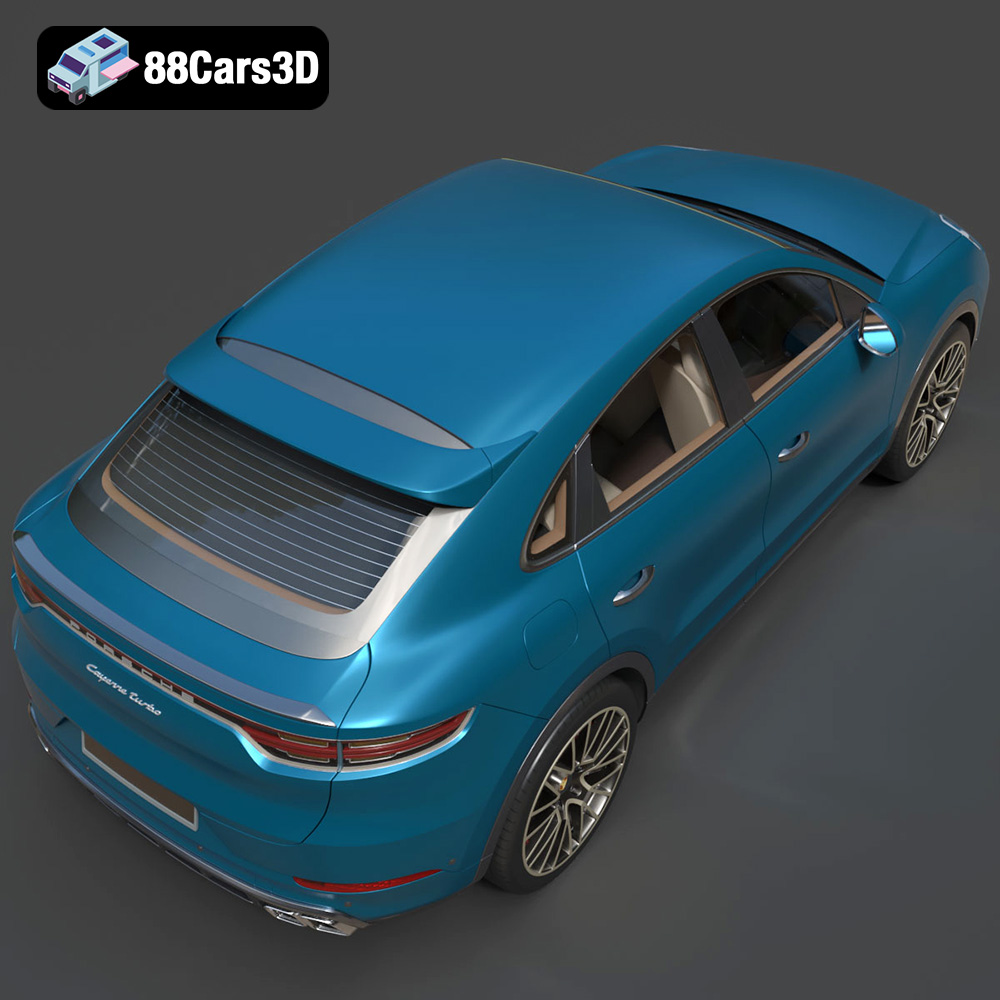
The first impression of any car is its exterior, and in 3D, this translates to impeccable geometry and surface detailing. The Porsche Cayenne Turbo Coupe 2020 model excels in accurately reproducing the vehicle’s unique frame geometry and aerodynamic proportions. Every curve, panel gap, and ventilation slit is carefully modeled to reflect light precisely, a critical factor for achieving photorealistic renders. From the prominent front air intakes to the dynamic active rear spoiler and the signature continuous LED taillight strip, iconic visual elements are painstakingly recreated. The distinct 22-inch alloy wheels, complete with highly detailed brake calipers and cross-drilled rotors, further enhance the realism. Even the undercarriage and accurately modeled air suspension components contribute to the overall authenticity, providing a complete and convincing representation whether viewed up close or from a distance. The separation of elements like wheels, suspension, steering components, and the active rear spoiler is a significant technical advantage, enabling seamless animation for racing games or dynamic product presentations.
While the exterior captures attention, the interior defines the user experience, especially in interactive applications like VR showrooms or first-person game perspectives. The Porsche Cayenne Turbo Coupe 2020 3D model features an authentic and highly detailed cockpit. Artists will appreciate the 18-way adaptive sport seats with intricate stitching details, the detailed GT sports steering wheel with its drive mode selector, and the Porsche Advanced Cockpit featuring detailed digital instrument clusters and infotainment screens. The accurate center console, complete with modeled shift lever, buttons, and climate controls, provides a rich environment for close-up shots or immersive VR experiences. Crucially, this interior geometry is optimized, striking a balance between visual fidelity and polycount efficiency, making it ideal for smooth performance in real-time gaming and virtual reality applications where frame rates are paramount.
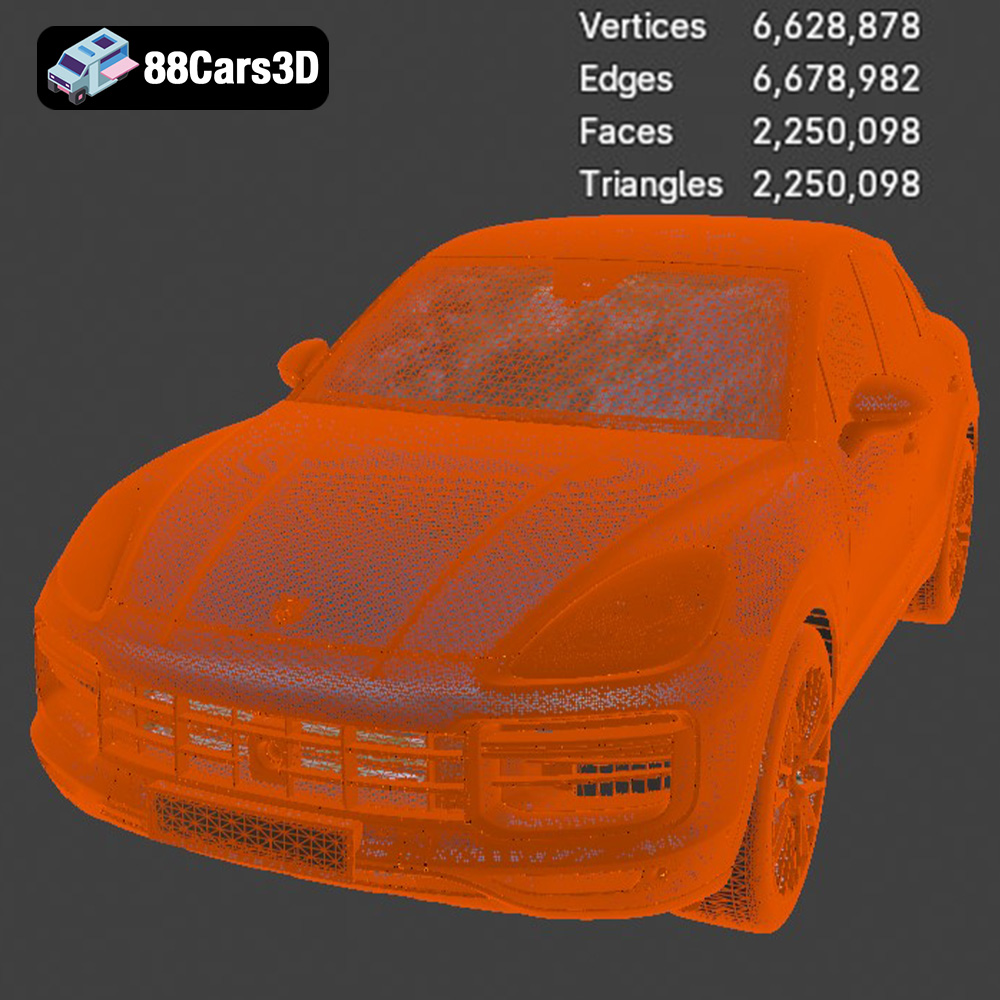
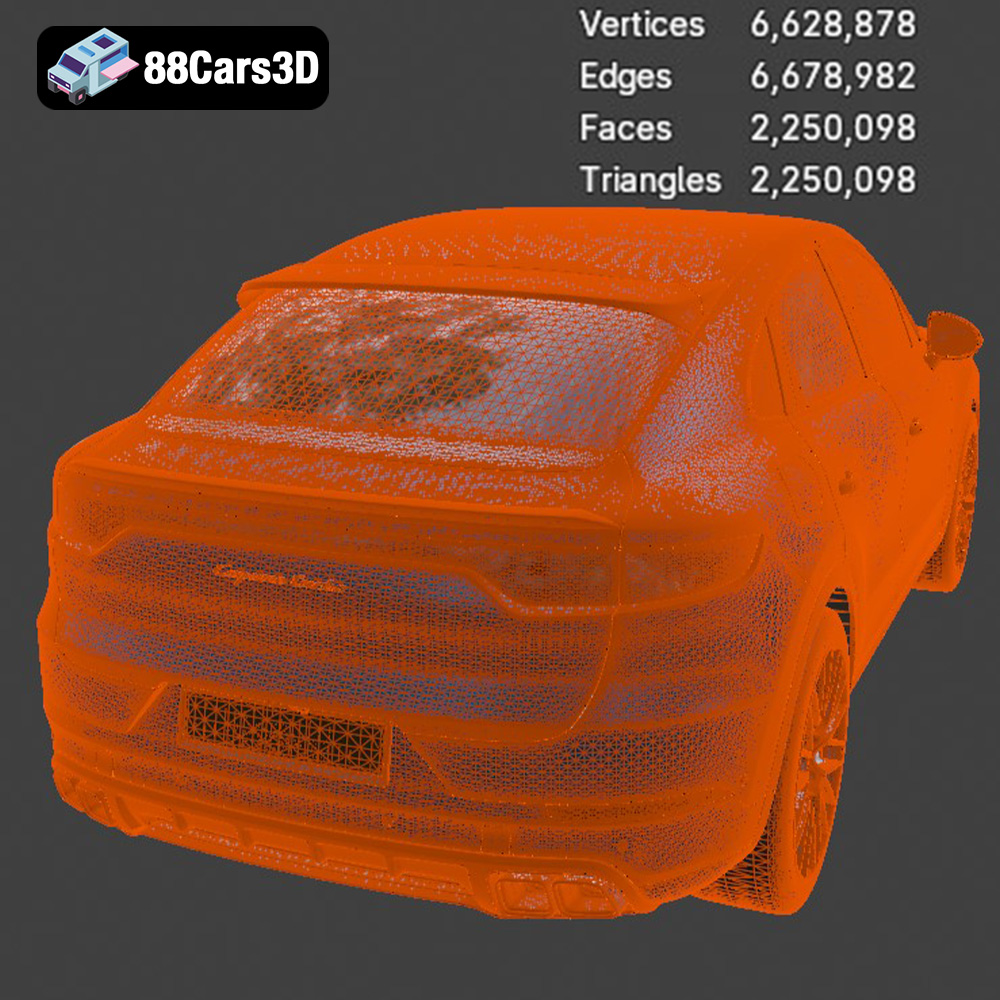
Beneath the detailed surfaces lies a robust technical foundation. The model boasts an optimal triangle count of approximately 450,000. This “game-ready & optimized” polycount is a deliberate choice, striking a perfect balance for real-time engines like Unreal and Unity while maintaining high-end visual realism. It’s a common misconception that more polygons always mean better quality; in professional environments, efficient polycount ensures smooth performance without sacrificing visual integrity. Furthermore, the model is built to real-world scale accuracy, based on the actual vehicle chassis (cm/meters), which is essential for consistent integration into larger scenes or accurate physics simulations. Proper pivot setups for steering, wheel rotation, suspension travel, and active aero deployment are fundamental for dynamic animation and interactive functionality, making this a truly versatile asset for animators and game developers alike.
The versatility of a premium 3D car model is defined by its ability to fit seamlessly into diverse professional pipelines. The Porsche Cayenne Turbo Coupe 2020 3D model is designed with this flexibility in mind, offering solutions for game development, high-end rendering, and immersive AR/VR experiences.
For game developers, performance and visual quality are in a constant tug-of-war. The Porsche Cayenne Turbo Coupe 2020 3D model, with its optimized ~450,000 triangle count, is perfectly suited for modern real-time engines like Unreal Engine and Unity. Its inclusion of .fbx and dedicated .unreal formats streamlines integration. Developers can leverage the separated components (wheels, suspension, spoiler) for intricate physics simulations, realistic suspension articulation, and dynamic active aerodynamic deployment. In a racing game, this means the car can realistically lean into turns, its spoiler deploying at high speeds, providing players with a truly immersive driving experience. For open-world titles, the optimized geometry ensures that even when populating vast scenes with multiple vehicles, the performance remains fluid. Implementing LODs (Levels of Detail) would further enhance performance, automatically switching to simpler meshes as the vehicle moves away from the camera, a common practice supported by such a well-structured base model.
In the world of advertising, marketing, and architectural visualization, photorealism is paramount. The Porsche Cayenne Turbo Coupe 2020 3D model serves as an excellent foundation for stunning automotive rendering. Using software like Autodesk 3ds Max or Blender, artists can import the .max or .blend files respectively, or the .fbx/.obj for other platforms, and leverage powerful renderers such as V-Ray, Corona Renderer, Arnold, or Cycles. The model’s premium topology ensures clean reflections and highlights, crucial for capturing the luxurious finish of a Porsche. Artists can set up sophisticated studio lighting, utilize high-dynamic-range imaging (HDRI) environments for realistic reflections, and apply advanced physically-based rendering (PBR) materials to simulate paint, glass, chrome, and rubber with incredible accuracy. This results in breathtaking static images or dynamic animations suitable for high-end brand campaigns, luxury lifestyle scenes, and compelling product configurators that demand visual perfection.
The burgeoning fields of Augmented Reality (AR) and Virtual Reality (VR) demand highly optimized assets that deliver compelling visuals in real-time, often on mobile or less powerful hardware. The Porsche Cayenne Turbo Coupe 2020 3D model, especially in its .glb format, is ideal for these applications. The .glb format’s efficiency for web and XR makes it perfect for interactive virtual showrooms where users can explore the vehicle in 360 degrees, customize colors and materials in real-time, or even place the car into their real-world environment via AR on a smartphone. The optimized interior geometry is a significant advantage for VR applications, allowing users to “sit inside” the car and experience the cockpit details from a first-person perspective without experiencing motion sickness due to performance drops. This interactivity transforms passive viewing into an engaging, immersive experience, bringing the vehicle closer to potential buyers or enthusiasts.
The utility of a high-quality 3D model extends beyond digital displays, crossing over into the tangible world through 3D printing. The Porsche Cayenne Turbo Coupe 2020 3D model offers this unique capability, allowing enthusiasts and professionals to create physical representations of this luxury SUV.
For collectors, hobbyists, or design studios needing physical prototypes, the Porsche Cayenne Turbo Coupe 2020 model’s inclusion of an .stl format is invaluable. This format translates the digital mesh into a printable representation, making it convertible for display-scale hobbyists and automotive collectors. The recommended scales (1:12, 1:18, 1:24) cater to popular model car sizes, allowing for impressive desk or display case pieces. For optimal results, resin printing is highly recommended due to its ability to capture the fine exterior details, sharp edges, and intricate elements like the brake calipers and exhaust tips that FDM printers might struggle with. The guidance on layer height, wall thickness, infill, and support placement is crucial for a successful print. Printing parts separately, such as the frame angled for structural integrity and wheels/active spoiler individually, ensures better detail resolution and easier post-processing, leading to a higher-quality physical model.
The beauty of starting with a versatile 3D model is the endless potential for customization, both digitally and physically. Digitally, artists can easily change body colors to match iconic Porsche factory paints like Carmine Red or Lava Orange, or even experiment with custom wraps and liveries. Modifying tire textures between high-performance street tread and winter tire variants can add seasonal realism to renders. Adjusting material finishes—from matte to gloss to metallic, or adding carbon fiber accents—allows for a personalized touch that reflects specific design visions. Furthermore, adapting lighting for daytime running lights, nighttime beams, and braking scenarios provides dynamic realism for animations. For 3D printed models, post-processing steps like sanding, priming, and applying authentic Porsche factory colors with gloss or metallic finishes become an art form, transforming a plastic print into a miniature replica with museum-quality appeal.
In a world overflowing with digital assets, the discerning professional understands the paramount importance of quality and technical integrity. Sourcing high-quality 3D car models like the Porsche Cayenne Turbo Coupe 2020 from platforms such as 88cars3d.com offers distinct advantages that streamline workflows and elevate final outputs.
Investing in a meticulously crafted model means saving invaluable development time. Instead of spending weeks on modeling, texturing, and optimizing a complex vehicle, artists and developers can immediately integrate a game-ready asset that adheres to professional standards. The detailed descriptions, clear technical specifications, and diverse file format options provided by 88cars3d.com ensure that creators know exactly what they are getting, eliminating compatibility guesswork and unexpected technical hurdles. The focus on optimized geometry, accurate scale, and proper pivot setups means less time spent on correctional work and more time dedicated to creative endeavors – whether that’s designing breathtaking automotive rendering scenes, fine-tuning game mechanics, or crafting immersive AR/VR experiences. The versatility offered by a model like the Porsche Cayenne Turbo Coupe 2020, capable of excelling in both real-time engines and high-fidelity renderers, makes it an indispensable tool for any serious 3D professional. It’s not just about buying a model; it’s about acquiring a reliable, high-performance digital asset that empowers innovation.
The landscape of 3D modeling is constantly evolving, driven by the insatiable demand for visual fidelity and interactive experiences across industries. High-quality 3D car models stand at the forefront of this evolution, serving as critical assets for a myriad of applications, from game development and cinematic rendering to virtual reality and 3D printing. The Porsche Cayenne Turbo Coupe 2020 3D Model exemplifies the pinnacle of digital automotive craftsmanship, offering a robust, versatile, and highly optimized solution for professionals.
Its meticulous exterior and interior detailing, coupled with intelligent technical optimization, make it an invaluable resource. The comprehensive range of included file formats – from the fully editable .blend and .max scenes to the game-ready .fbx and .unreal, the web-optimized .glb, and the 3D print-ready .stl – ensures seamless integration into virtually any professional workflow. Whether you are aiming for photorealistic automotive rendering, seeking a high-performance game asset, or envisioning an immersive AR/VR showroom, this model provides the foundation for excellence.
By prioritizing detailed geometry, accurate scale, and efficient polycount, models like the Porsche Cayenne Turbo Coupe 2020 from 88cars3d.com empower creators to realize their ambitious visions with unparalleled efficiency and quality. Investing in such premium assets is not merely an acquisition; it’s an investment in the success and visual impact of your projects.
Experience the ultimate fusion of sports car performance and SUV versatility with the Porsche Cayenne Turbo Coupe 2020. This exceptional 3D model captures the striking athletic stance, the dramatically sloping coupe-style roofline, and the legendary Porsche design DNA. From its prominent front air intakes to the dynamic active rear spoiler and signature continuous LED taillight strip, every iconic visual element has been meticulously recreated to honor this high-performance luxury powerhouse. Crafted with premium topology and an optimal triangle count, this 3D model delivers spectacular visual fidelity while maintaining exceptional game-ready optimization. The geometry is intelligently structured to reflect light precisely across its curved surfaces, making it a highly versatile asset for developers and artists. Whether you are building an interactive configurator or placing background traffic in a cinematic sequence, the model’s efficient polycount ensures smooth performance in modern real-time engines. Perfect for open-world racing games, luxury architectural visualizations, high-end commercial rendering, and immersive virtual reality showrooms.
$39.99
.blend
.fbx
.glb
.luxury suv
.max
.obj
.ply
.porsche
.rendering
.stl
.unreal
car-3d-model
cayenne-turbo-coupe-2020
game asset
game-ready
low-poly
optimized
performance suv
VR/AR