Get 20% OFF All Premium 3D & STL Models!

In the rapidly evolving landscape of 3D visualization, game development, and immersive experiences, the quality of digital assets can make or break a project. From the gleaming chrome of a concept car in a cinematic render to the subtle reflections on a vehicle navigating a bustling virtual city, realistic and optimized 3D car models are absolutely essential. The demands for fidelity, performance, and versatility have never been higher, driving artists and developers to seek out assets that seamlessly integrate into complex pipelines.
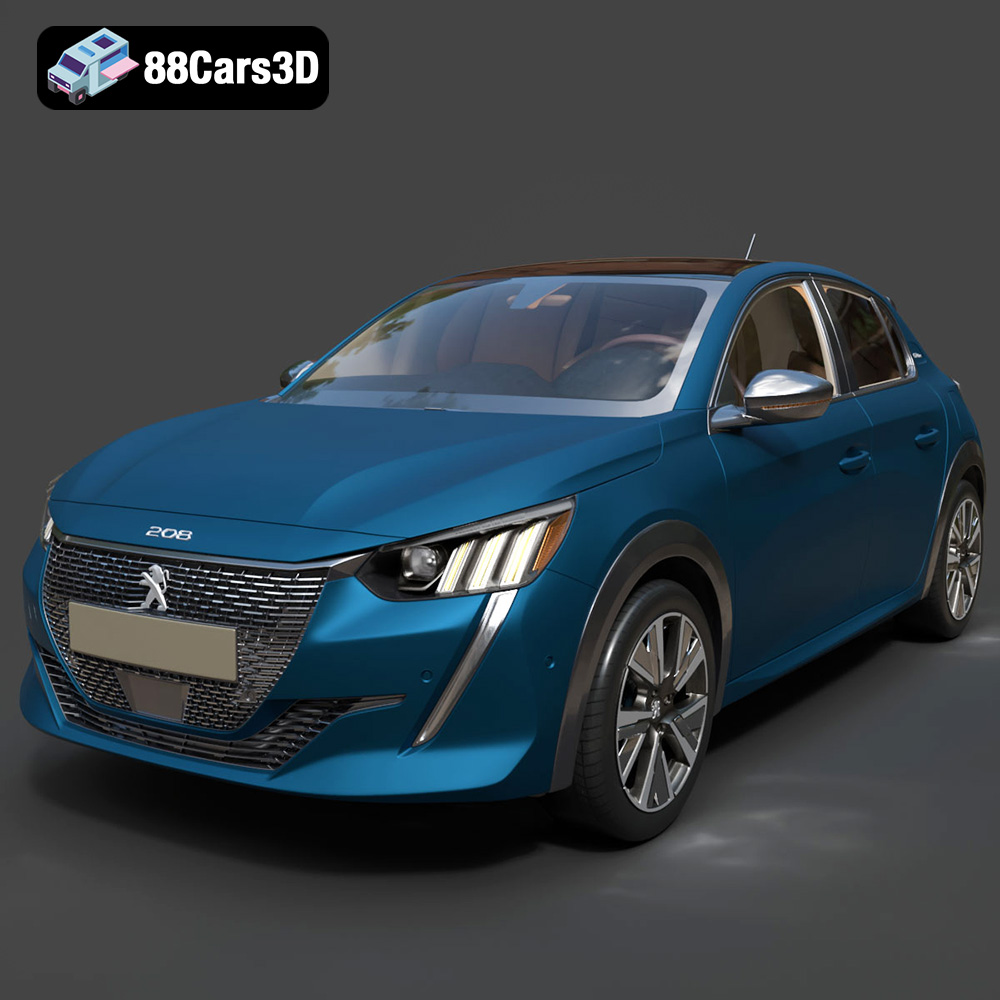
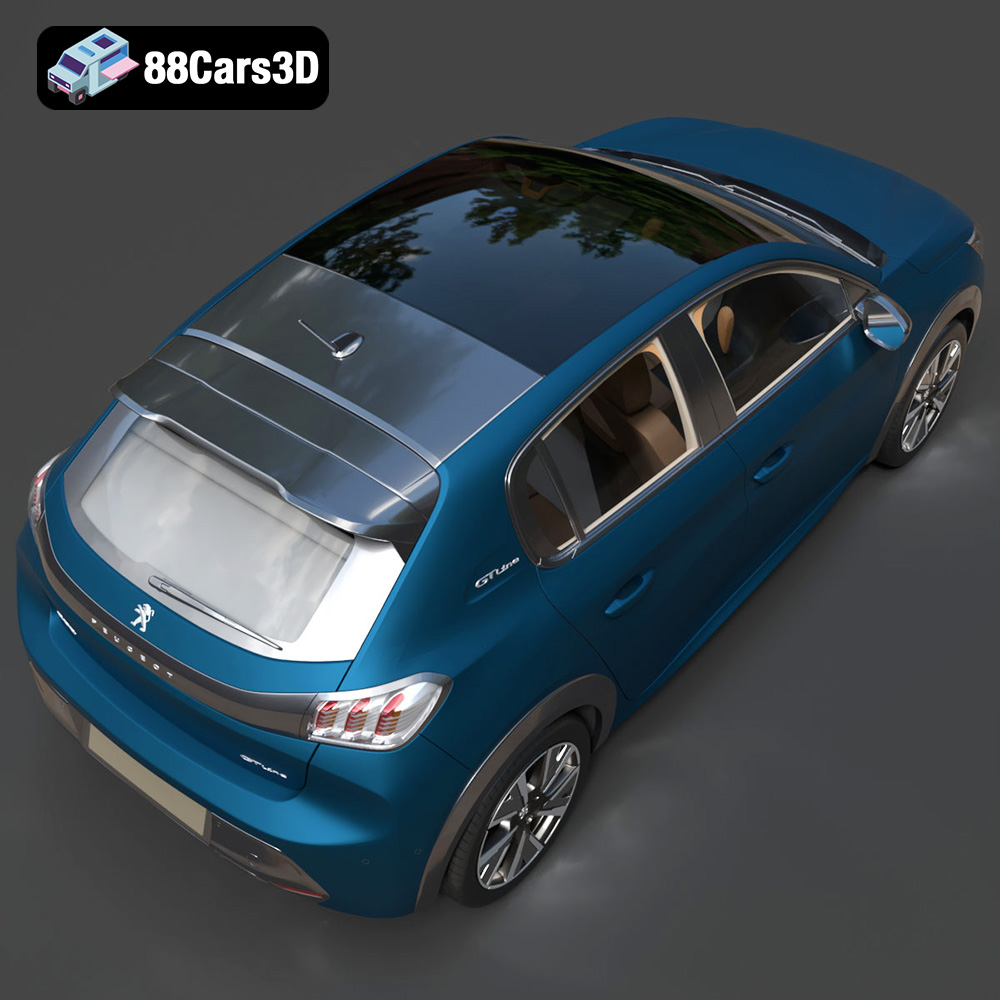
Today, we delve into the world of high-quality automotive 3D assets, exploring the technical nuances, workflow advantages, and diverse applications that define excellence in this field. We’ll specifically examine how meticulously crafted models, such as the Peugeot 208 2020 3D Model, available on platforms like 88cars3d.com, stand as prime examples of assets built to meet these rigorous professional standards. This model, with its bold, aggressive styling and sporty proportions, featuring striking ‘saber-tooth’ LED daytime running lights and an elegant gloss-black rear light cluster fascia, offers a perfect case study for exploring the journey of a digital vehicle from concept to final render or real-time simulation.
The flexibility and usability of a 3D model are often defined by the array of file formats it supports. Each format is designed with specific use cases in mind, catering to different software environments, project requirements, and delivery platforms. Understanding these distinctions is paramount for any professional working with 3D car models, ensuring seamless integration and optimal performance across diverse workflows. The Peugeot 208 2020 3D Model, for instance, provides a comprehensive suite of formats, each serving a unique purpose.
The .blend format is native to Blender, the powerful open-source 3D creation suite. When a 3D model is provided in .blend, it typically means a fully editable Blender scene is included, complete with materials, textures, lighting, and any modifiers or rigging applied during its creation. This format offers maximum flexibility for artists who use Blender as their primary DCC (Digital Content Creation) tool. They can easily inspect the scene setup, modify geometry, tweak materials, or even re-rig components, making it ideal for deep customization and iterative design processes.
.fbx (Filmbox) is arguably the most widely used interchange format in the 3D industry, particularly popular for its robust support of geometry, materials, animations, and rigs. It’s the go-to format for transferring assets between different 3D software packages and into real-time game engines like Unreal Engine and Unity. For a 3D car model like the Peugeot 208 2020, an .fbx file ensures that the mesh, UVs, basic material assignments, and skeletal data (if applicable for moving parts) are reliably imported, making it ideal for game development and animation pipelines where compatibility is key.
.obj (Wavefront OBJ) is a universal geometry definition file format that primarily stores 3D model data, including vertices, UV coordinates, normals, and polygons. While it doesn’t typically embed animations or complex material nodes, its simplicity and widespread support make it an excellent choice for basic mesh transfer across virtually any 3D software. An .obj file, often accompanied by an .mtl (material template library) file for basic material properties and texture references, ensures broad cross-software compatibility for the Peugeot 208 2020 3D Model, serving as a reliable fallback for diverse applications.
.glb (GL Transmission Format Binary) is an increasingly vital format, especially for modern web-based 3D, augmented reality (AR), and virtual reality (VR) applications. It’s a binary version of glTF, designed for efficient transmission and loading of 3D scenes and models. A .glb file packages all necessary data—geometry, materials, textures, and even animation—into a single, self-contained file. This optimization makes it perfect for displaying the Peugeot 208 2020 in browser-based configurators, immersive AR experiences on mobile devices, or lightweight VR showrooms, offering quick load times and ease of integration.
.stl (Stereolithography) is the de facto standard file format for 3D printing. It represents a 3D model as a series of connected triangles (a tessellation of the surface geometry). While it lacks color or texture information, its simplicity makes it universally understood by 3D printers and slicing software. For enthusiasts or designers looking to create physical prototypes or display models of the Peugeot 208 2020, the .stl format is essential, allowing for accurate scaling and preparation for additive manufacturing.
.ply (Polygon File Format, or Stanford Triangle Format) is another format used for storing 3D data, particularly suited for scanner data, CAD applications, and scientific analysis. It can store a wider range of properties than .obj, including color, transparency, and different types of data for vertices and faces. While less common for everyday artistic workflows, its precision mesh capabilities make it valuable for specific engineering or analysis tasks involving the Peugeot 208 2020 model, where exact geometry and additional data attributes are crucial.
The inclusion of an .unreal specific file (often referring to a packaged asset or a Uasset/uproject file structure) signifies that the asset is optimized and pre-configured for direct use within the Unreal Engine. This often means textures are properly imported, materials are set up with appropriate shaders, and collisions might already be defined. For game developers or real-time visualization artists using Unreal, this format streamlines the workflow dramatically, allowing for immediate integration of the Peugeot 208 2020 into game levels or interactive scenes, saving considerable setup time.
Similar to .blend for Blender, the .max format is the native file type for Autodesk 3ds Max. It contains the complete 3ds Max scene, including all geometry, materials, textures, lights, cameras, animations, and modifiers. For artists who primarily work within 3ds Max, this format provides full editability and access to the original scene’s construction, enabling detailed customization, animation, or rendering within their preferred environment. The Peugeot 208 2020 3D Model in .max format offers unparalleled flexibility for users of this powerful software.
By offering this extensive range of formats, the Peugeot 208 2020 3D Model from 88cars3d.com demonstrates its commitment to versatility and professional utility, ensuring that users can leverage the model effectively, regardless of their preferred software or project requirements.
Creating a truly photorealistic and functional 3D car model goes far beyond simply modeling its general shape. It requires an obsessive attention to detail, a deep understanding of automotive design, and technical mastery of 3D software. The 2020 Peugeot 208 3D Model exemplifies this dedication, capturing the essence of the vehicle with remarkable accuracy.
The exterior of any car model is its immediate identifier, and for the 2020 Peugeot 208, its bold and aggressive styling is key. The model meticulously recreates the signature ‘saber-tooth’ LED daytime running lights, which are not merely textures but detailed geometry with accurate light housing and reflector setups. The prominent Peugeot lion emblem on the front grille is precisely modeled, adding to the authenticity. Furthermore, elements like the aerodynamic alloy wheels, complete with detailed brake calipers and disc rotors, and realistic tire treads for city and highway driving, demonstrate a commitment to visual fidelity. Crucially, separate components for wheels, suspension, and steering ensure that the model is animation-ready, allowing for realistic driving sequences and interactive showcases.
While the exterior grabs attention, the interior is where immersion truly takes hold, especially for first-person perspectives in gaming or virtual showrooms. The Peugeot 208 2020 3D Model extends its detail into the cockpit, accurately reproducing the ergonomic i-Cockpit layout with its signature compact steering wheel. Detailed seating, complete with realistic fabric/leather texture mapping, and an accurate central console with tactile control buttons, all contribute to a believable environment. The digital 3D instrument cluster and modern infotainment display are not just flat images but possess a depth and texture that resonate with the real vehicle’s sophisticated design, making it ideal for close-up cinematic shots and realistic user interaction.
In today’s interactive applications, raw visual fidelity must be balanced with exceptional performance. A high-quality 3D car model is not just about polycount; it’s about intelligent topology, efficient materials, and seamless integration into demanding real-time environments. The Peugeot 208 2020 3D Model is engineered with this crucial balance in mind.
With an optimized topology of approximately 120k triangles, the Peugeot 208 model strikes a near-perfect balance for real-time engines like Unreal and Unity. This polycount is sufficient to maintain high-end visual realism, delivering crisp reflections and accurate ambient occlusion, without overtaxing GPU resources. Achieving “game-ready” status means that the mesh is clean, with minimal ngons or overlapping geometry, and its polygon flow is tailored for both performance and close-up cinematic shots. This makes it an ideal asset for open-world games, racing titles, and simulators where frame rate stability is paramount.
The model’s compatibility extends beyond just mesh data. Designed for real-time engines, it features real-world scale accuracy and a proper pivot setup for steering, wheel rotation, and suspension travel. This ‘out-of-the-box’ readiness significantly reduces development time. For Unreal Engine users, the included .unreal file format streamlines the import process, ensuring materials are correctly applied, textures are properly referenced, and collisions (if pre-configured) are ready for immediate use. This level of optimization and setup is invaluable for professionals aiming to integrate high-quality 3D car models efficiently into their projects.
The versatility of a premium 3D car model extends far beyond traditional rendering or game development. Its applications span a wide spectrum of industries, providing value in unexpected ways. The Peugeot 208 2020 3D Model, with its robust technical foundation, is uniquely positioned to excel in these diverse fields.
In architectural visualization (arch-viz), context is everything. Placing a modern, detailed vehicle like the Peugeot 208 2020 into a street scene or driveway instantly brings a sense of realism and scale to an architectural render. Its dynamic stance and streamlined profile perfectly capture the essence of contemporary European car design, making it excellent for brand campaigns, lifestyle scenes, and studio lighting setups. Artists can effortlessly change body colors, adjust material finishes (matte, gloss, metallic), and adapt lighting for different environments to match specific client briefs, adding a layer of authenticity and visual interest that generic background models simply cannot provide.
Augmented Reality (AR) and Virtual Reality (VR) are revolutionizing how consumers interact with products. The Peugeot 208 2020 3D Model is perfect for immersive virtual showrooms, where potential buyers can explore the vehicle in a true-to-life scale, open doors, and even sit inside the virtual i-Cockpit. Its optimized geometry and the inclusion of the .glb format make it ideal for mobile AR experiences or web-based configurators, allowing users to customize colors and trims in real-time, right in their living room. This capability transforms passive viewing into an engaging, interactive product discovery journey, a critical advantage in modern automotive marketing.
The digital realm often inspires tangible creations, and 3D printing is a prime example. The Peugeot 208 2020 3D Model, convertible to .stl format, opens up possibilities for display-scale hobbyists and designers. The detailed product description even provides specific 3D print settings: recommended scales (1:12 / 1:18 / 1:24), layer height (0.04–0.12 mm, recommending resin for fine details), wall thickness, infill, and crucial support requirements for delicate parts like side mirrors and exhaust tips. This attention to detail ensures that the transition from screen to physical object is as smooth and successful as possible, allowing for the creation of authentic scale models.
The true measure of a high-quality 3D asset lies in its ability to integrate seamlessly into diverse professional workflows, saving time and resources for artists and developers. The Peugeot 208 2020 3D Model is designed with this principle at its core, offering compatibility and features that streamline project pipelines across various platforms.
For artists operating within Autodesk 3ds Max, the inclusion of the .max file format means complete access to the original scene setup. This allows for full customization, animation, and rendering capabilities, leveraging 3ds Max’s robust toolset for high-end visualization projects. Similarly, Blender users benefit from the .blend file, which provides an editable scene with materials, textures, and potentially lighting setups ready for modification. This native file access is invaluable for studio environments where specific rendering engines or animation pipelines are established, ensuring the model can be adapted without tedious re-creation of basic elements.
Game developers working with Unreal Engine or Unity will find the Peugeot 208 2020 3D Model particularly advantageous. The .fbx format ensures reliable import of geometry, UVs, and basic material assignments, while the .unreal specific asset (or optimized .fbx with Unreal-ready configurations) can significantly reduce setup time within the engine. With its optimized ~120k triangle count, the model is perfectly suited for real-time performance without compromising visual fidelity. Proper pivot setups for steering, wheels, and suspension further facilitate easy animation and integration into vehicle physics systems, making it a truly ‘game-ready’ asset right out of the box for demanding interactive experiences.
Investing in a premium 3D model like the Peugeot 208 2020 from 88cars3d.com isn’t just about acquiring a static asset; it’s about gaining a versatile foundation that can be adapted and re-used across multiple projects. The customization options and inherent quality of the model ensure its longevity and value.
A truly professional 3D car model offers a degree of customization that empowers artists to match specific project requirements. The Peugeot 208 model allows for significant modifications, from changing body colors (e.g., Faro Yellow, Vertigo Blue, Elixir Red) to adapting material finishes (matte, gloss, metallic) to fit branding or aesthetic needs. Furthermore, the ability to modify tire textures for summer or all-season variants, and adjust lighting for different environments, provides an unparalleled level of creative control. This flexibility means a single purchase can serve a multitude of projects, each with its unique visual identity, maximizing the return on investment for game developers and visualization artists alike.
The comprehensive range of included file formats (.blend, .fbx, .obj, .glb, .stl, .ply, .unreal, .max) is a testament to the model’s future-proofing. As software evolves and new platforms emerge (e.g., advanced AR headsets, new real-time rendering technologies), having an asset available in a universal format like .fbx or the optimized .glb ensures continued compatibility. Furthermore, the clean topology and accurate UV mapping mean that even as rendering technologies improve, the underlying mesh will continue to hold up, ready for more advanced shaders and lighting techniques. This foresight in asset creation makes the Peugeot 208 2020 3D Model a valuable, long-term addition to any professional’s digital asset library.
In the dynamic world of 3D modeling, the demand for high-quality, versatile, and technically robust automotive assets is constant. Whether for the immersive realism of game development, the striking detail of automotive rendering, or the interactive potential of AR/VR experiences, a truly professional 3D car model must deliver on multiple fronts. The Peugeot 208 2020 3D Model stands out as an exemplary asset, offering an unparalleled combination of meticulous detail, optimized performance, and broad compatibility.
From its faithfully recreated ‘saber-tooth’ LED DRLs and ergonomic i-Cockpit to its game-ready ~120k triangle topology and extensive file format support, this model provides the essential tools for a wide array of applications. It streamlines workflows, enables creative customization, and empowers artists and developers to achieve stunning visual results without compromising performance. For those seeking to elevate their projects with a top-tier digital vehicle, this model, found on 88cars3d.com, represents a significant investment in quality and efficiency. By choosing expertly crafted assets, you not only save valuable time but also ensure your projects stand out in an increasingly competitive digital landscape.
The 2020 Peugeot 208 redefined the modern compact hatchback segment with its bold, aggressive styling and sporty proportions. Featuring the striking ‘saber-tooth’ LED daytime running lights, a muscular sculpted hood, and an elegant gloss-black rear light cluster fascia, this vehicle stands out in any urban setting. Its dynamic stance and streamlined profile perfectly capture the essence of contemporary European car design.
This meticulously crafted 3D model boasts an optimized topology of approximately 120k triangles, ensuring flawless game-ready performance without compromising visual fidelity. Designed for high-end rendering and real-time engines, it delivers crisp reflections, accurate ambient occlusion, and an immaculate flow of polygons tailored for both performance and close-up cinematic shots.
Perfect for modern city driving games, architectural visualization street scenes, VR automotive showrooms, and commercial lifestyle rendering.
.blend, .fbx, .obj, .glb, .stl, .ply, .unreal, .max
Tags:
peugeot, 208, 2020, hatchback, compact-car, city-car, game-ready, low-poly, optimized, car-3d-model, game-asset, rendering, vr-ar, blend, fbx, obj, glb, stl, ply, unreal, maxVespa VNB 125 3D Model 3D Printable STL
$39.99
.2020
.208
.blend
.fbx
.glb
.hatchback
.max
.obj
.peugeot
.ply
.rendering
.stl
.unreal
car-3d-model
city-car
compact-car
game asset
game-ready
low-poly
optimized
VR/AR