Get 20% OFF All Premium 3D & STL Models!

In the fast-evolving landscape of digital design, the demand for high-fidelity 3D assets is more critical than ever. From blockbuster video games to cinematic automotive advertisements, and from advanced architectural visualizations to immersive AR/VR experiences, the quality of a 3D model can make or break a project. Automotive models, in particular, require an unparalleled level of detail and accuracy to truly captivate an audience.
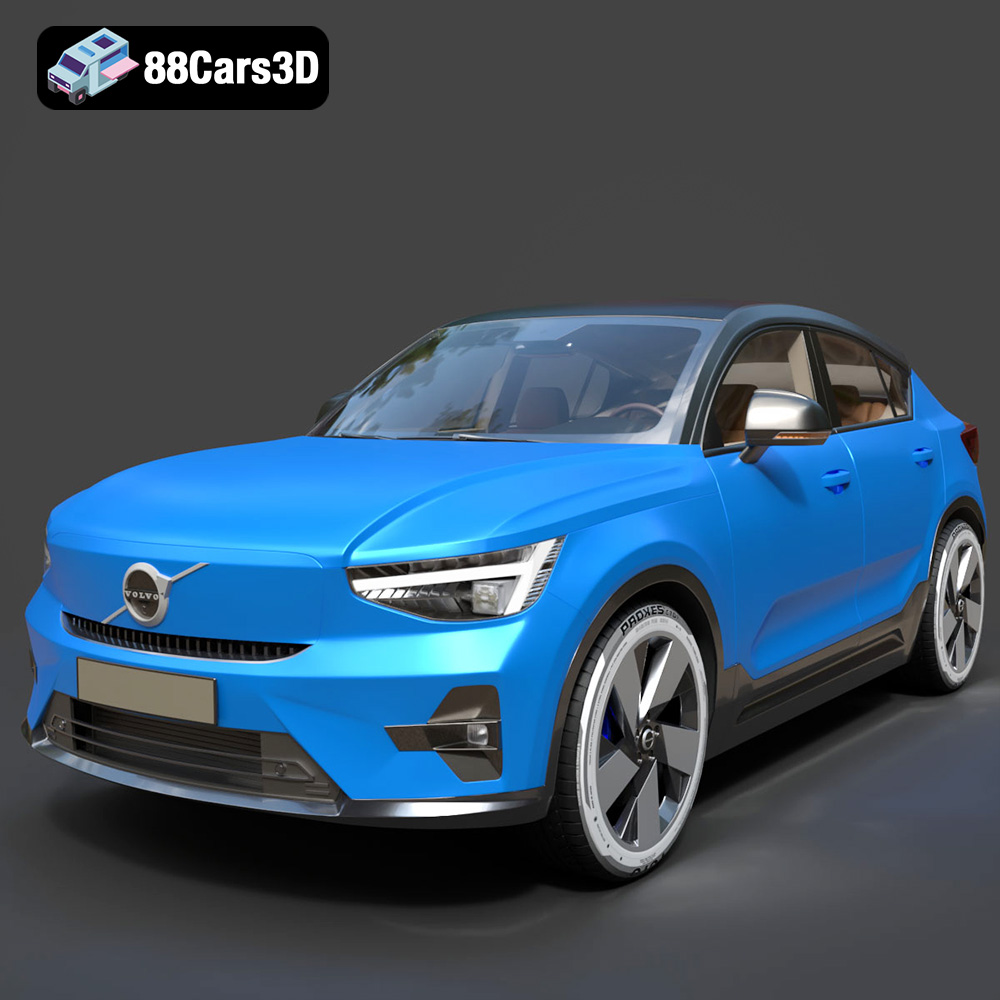
Today’s professional artists, developers, and designers are constantly seeking resources that not only meet stringent technical demands but also inspire creativity. This is where meticulously crafted 3D car models shine, offering a powerful foundation upon which to build stunning digital worlds. Imagine bringing a cutting-edge electric vehicle to life in a hyper-realistic scene or integrating it seamlessly into a dynamic game environment. This pursuit of perfection is precisely what high-quality assets like the Volvo C40 Recharge 3D Model offer, providing a robust starting point for a myriad of applications.
This comprehensive guide delves into the technical intricacies, diverse applications, and professional workflows that leverage such detailed 3D car models. We will explore how these assets serve as cornerstones in various industries, from rendering and game development to augmented reality and simulation, highlighting the specific benefits and technical considerations that make a model truly exceptional. We’ll also examine the critical role of file formats and how choosing the right one can dramatically impact project efficiency and output quality, ultimately reinforcing why professional-grade assets from platforms like 88cars3d.com are indispensable.
Choosing the correct 3D model file format is not merely a technicality; it’s a strategic decision that profoundly impacts workflow, compatibility, performance, and the ultimate utility of your digital asset. A premium 3D car model, such as the Volvo C40 Recharge, often comes in a variety of formats, each optimized for specific software, pipelines, and end-use scenarios. Understanding these distinctions is crucial for maximizing efficiency and achieving desired results across different platforms and applications.
The .blend format is the native file type for Blender, the powerful open-source 3D creation suite. When you acquire a .blend file, you’re getting more than just a mesh; you’re receiving a complete Blender scene. This includes not only the meticulously modeled geometry of the Volvo C40 Recharge but also its materials, textures, lighting setups, camera positions, and even animation data if present. This format offers unparalleled editability, allowing artists to delve deep into the model’s construction, modify its topology, adjust shaders, or tweak scene parameters directly within Blender. It’s ideal for artists who primarily work within the Blender ecosystem, providing a fully operational and ready-to-render environment, or for those who need to extensively customize the asset for unique project requirements.
.fbx (Filmbox) is arguably the most prevalent exchange format in the 3D industry, particularly for real-time applications like game development. Developed by Autodesk, it’s designed to preserve a wide range of 3D data, including geometry, UVs, materials (though sometimes requiring re-setup), animations, and bone structures. Its robust nature makes it an ideal conduit between different 3D software packages and game engines like Unreal Engine and Unity. For a 3D car model, an .fbx file ensures that the mesh, its UV mapping, and potentially some basic material assignments transfer cleanly, providing a solid foundation for further optimization and integration into a game engine. The .unreal format, on the other hand, takes this a step further. It represents a model specifically optimized and configured for direct use within Unreal Engine. This often means pre-applied materials, collision meshes, LODs (Levels of Detail), and even blueprints, saving significant time in the engine integration pipeline. For game developers or real-time visualization specialists, having the Volvo C40 Recharge in both .fbx and .unreal formats offers immense flexibility and efficiency.
The .obj (Wavefront Object) format is a venerable and highly compatible format that has been a standard for cross-software 3D model exchange for decades. It’s a simple, text-based format that primarily stores geometry (vertices, normals, UVs, faces) and references to external material files (.mtl). While it doesn’t support advanced features like animation or rigging, its universality is its greatest strength. Nearly every 3D software package can import and export .obj files, making it an excellent fallback or a primary choice when maximum compatibility is required. When using an .obj file for the Volvo C40 Recharge, you’ll get a clean mesh that can be easily imported into any 3D application for rendering, sculpting, or further processing, with materials typically needing to be re-created or assigned.
.glb (GL Transmission Format Binary) is an increasingly vital format, particularly for web-based 3D, augmented reality (AR), and virtual reality (VR) applications. It’s a self-contained, binary version of glTF (GL Transmission Format), meaning all assets – geometry, materials, textures, animations – are bundled into a single file. This makes .glb incredibly efficient for streaming and displaying 3D models directly in browsers or mobile AR/VR experiences, minimizing load times and simplifying distribution. For showcasing a product like the Volvo C40 Recharge in an interactive web viewer or an AR app, the .glb format is indispensable, offering a balance of visual quality and performance optimization.
.stl (Stereolithography) is the de facto standard for 3D printing. It represents a 3D model as a collection of unconnected triangular facets, making it robust for additive manufacturing processes. While it contains no color or texture information, its simplicity ensures widespread support across 3D printing software and hardware. For engineers or designers looking to rapidly prototype the Volvo C40 Recharge or produce physical scale models, an .stl file is essential. The .ply (Polygon File Format) is another precision mesh format, often used for storing 3D scanner data and CAD models. It can store a wider range of properties than .stl, including color, transparency, and normal information per vertex or face. It’s particularly useful for precise analysis, measurement, or when a very accurate and detailed polygon mesh is required for scientific or industrial visualization.
Finally, the .max format is the native file type for Autodesk 3ds Max, a leading software for 3D modeling, animation, and rendering, especially prominent in architectural visualization, product design, and cinematic production. Similar to .blend, a .max file contains the complete scene data, including all geometry, modifiers, materials, lighting, cameras, and animation data specific to 3ds Max. This offers the highest level of editability and integration for professionals operating within the 3ds Max ecosystem. Receiving the Volvo C40 Recharge in .max format ensures that all the intricate details, sophisticated material setups (e.g., V-Ray or Corona materials), and scene optimizations are preserved, allowing for immediate high-quality rendering and further development.
Each of these formats serves a distinct purpose, and the availability of the Volvo C40 Recharge in such a comprehensive range ensures maximum versatility for any professional workflow. This strategic multi-format availability underscores the commitment of 88cars3d.com to providing truly professional-grade 3D car models.
Automotive rendering stands as one of the most demanding disciplines in 3D visualization, where the line between reality and CGI often blurs. Achieving photorealism requires not only skilled artists and powerful rendering engines but, most importantly, exceptionally detailed and accurately modeled 3D assets. The Volvo C40 Recharge 3D Model exemplifies the kind of precision engineering required for top-tier automotive visualization.
The foundation of photorealistic rendering lies in the interplay of materials, textures, and lighting. A high-quality 3D car model like the Volvo C40 Recharge features carefully crafted UV maps, allowing for the application of high-resolution textures that accurately mimic real-world surfaces. This includes everything from the subtle metallic flake in the paint to the nuanced reflections on chrome accents, the intricate weave of seat fabrics, and the precise grain of dashboard plastics. Advanced shader networks simulate complex phenomena such as clear coat reflectivity, subsurface scattering in headlights, and intricate normal mapping for fine details. When combined with sophisticated global illumination, environmental lighting, and studio-grade light setups, these elements converge to create images indistinguishable from photographs. The provided textures and materials within the .blend or .max files of the Volvo C40 Recharge are specifically designed to facilitate this level of visual fidelity, minimizing the need for extensive material recreation.
For professional automotive rendering studios, software like 3ds Max remains an industry standard, often paired with rendering engines such as V-Ray or Corona Renderer. The availability of the Volvo C40 Recharge in an editable .max file is a significant advantage. This means artists can import the model with its pre-configured materials and scene setups, allowing them to instantly begin adjusting lighting, camera angles, and rendering parameters without spending hours on asset preparation. This workflow is crucial for agencies working on tight deadlines for advertising campaigns, product launches, or configurators. They can focus on artistic direction – perfecting reflections, orchestrating dynamic compositions, and crafting compelling narratives – rather than the foundational modeling work. The clean geometry and intelligently organized structure of the model ensure smooth viewport performance and efficient rendering, even for complex studio environments.
What sets truly premium 3D car models apart is their attention to both exterior and interior detail. While many models focus solely on the outer shell, the Volvo C40 Recharge 3D Model boasts a fully modeled interior, complete with detailed dashboard components, seating, and trim. This level of comprehensive detail is indispensable for projects requiring close-up shots, virtual showrooms, or immersive product experiences where users might “sit” inside the car. Architectural visualization projects, for instance, often place cars in foregrounds or within parking structures; having a detailed interior ensures credibility even when seen through windows. The accurate proportions and sleek styling captured in this model allow designers to render it from any angle, with confidence that every curve and contour matches the actual vehicle, ensuring brand consistency and visual integrity.
The interactive nature of video games places unique demands on 3D assets. While visual fidelity is paramount, it must be balanced with performance optimization to ensure smooth frame rates and immersive gameplay. High-quality 3D car models are central to creating believable virtual worlds, and the Volvo C40 Recharge 3D Model is engineered to excel in these real-time environments.
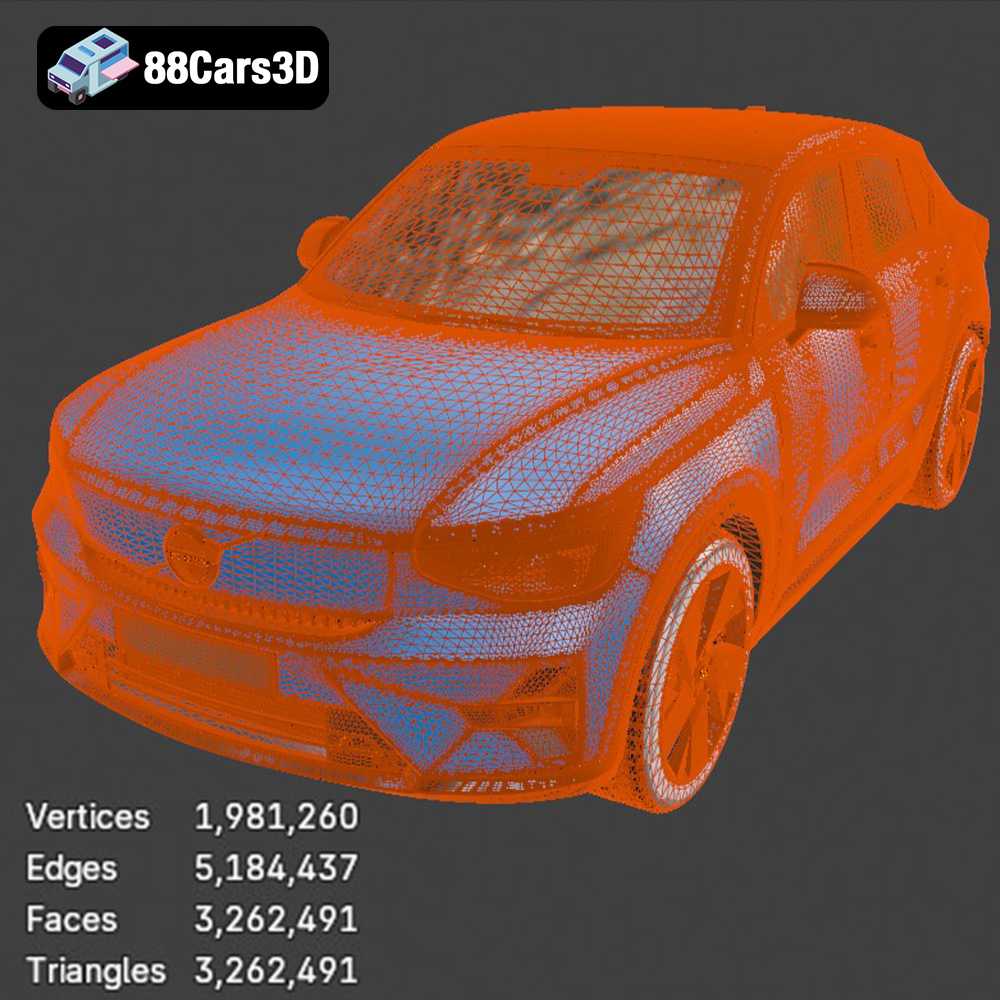
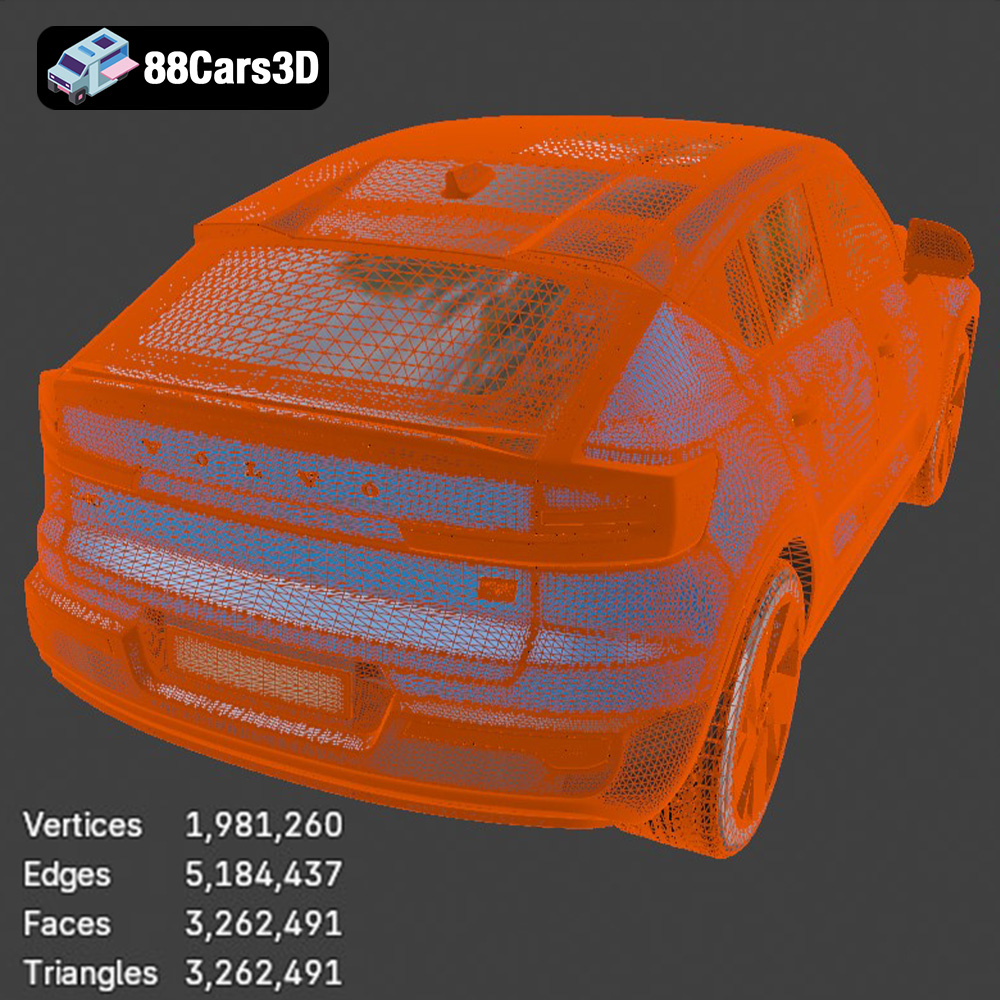
Game assets operate under strict polygon budget constraints. While rendering typically allows for millions of polygons, game engines demand optimization to maintain performance across various hardware. A professionally developed 3D car model, such as those found on 88cars3d.com, strikes a careful balance between visual detail and poly count. The “clean, optimized geometry” of the Volvo C40 Recharge means that its mesh is efficient, with unnecessary polygons removed without sacrificing crucial visual fidelity. Furthermore, well-organized UV maps are vital for game development. They ensure textures are applied efficiently and without distortion, facilitating the use of texture atlases and efficient material pipelines within engines like Unreal and Unity. Proper UVs are also critical for baking ambient occlusion, normal maps, and other texture types that enhance realism without adding geometric complexity.
Unreal Engine and Unity are the two titans of game development, and their workflows heavily rely on the .fbx format. The Volvo C40 Recharge 3D Model, provided in .fbx format, allows game developers to seamlessly import the asset into their engine of choice. This transfer includes the mesh, UVs, and often basic material assignments, providing a solid base. From there, developers can apply engine-specific shaders, set up physically based rendering (PBR) materials, and configure collision meshes. The inclusion of a pre-configured .unreal file for the Volvo C40 Recharge significantly streamlines the process for Unreal Engine users, potentially offering pre-set materials, LODs, and even basic collision geometry, drastically reducing the time required for asset integration and optimization within the game environment. This ‘game-engine ready’ approach saves valuable development time and ensures consistency across projects.
Beyond static visual appeal, 3D car models in games must be interactive and responsive. They are often subjects of physics simulations, destruction systems, and customizable options. A well-constructed model allows for easy rigging for suspension, steering, and wheel rotations. Its organized hierarchy ensures that different components can be individually manipulated or swapped out for customization. For titles requiring a high degree of realism, the detailed interior of the Volvo C40 Recharge means that first-person views or in-car sequences can maintain immersion. Whether it’s for a high-octane racing game, an open-world adventure, or an immersive driving simulator, a robust 3D car model serves as the literal vehicle for player engagement and dynamic storytelling.
Augmented Reality (AR) and Virtual Reality (VR) are transforming how we interact with digital content, offering immersive experiences across various sectors. High-quality 3D car models are pivotal in creating these engaging environments, allowing users to experience products in ways previously unimaginable. The Volvo C40 Recharge 3D Model is perfectly suited for these cutting-edge applications.
For AR/VR applications, particularly those deployed on the web or mobile devices, performance and ease of distribution are paramount. This is where the .glb format excels. As a self-contained, optimized file, it’s designed for efficient loading and rendering in real-time AR/VR viewers and web-based platforms. Imagine a potential customer viewing the Volvo C40 Recharge in their driveway via an AR app on their phone, or exploring its interior in a full VR showroom experience. The .glb format ensures that the model loads quickly, maintaining visual fidelity without bogging down the application. This makes the Volvo C40 Recharge a prime candidate for interactive product configurators, virtual test drives, and immersive marketing campaigns that aim to bring the product directly into the user’s personal space.
The applications of AR/VR and high-quality 3D assets extend far beyond entertainment. In fields like automotive engineering, driver training, and logistics, realistic simulations are crucial. The Volvo C40 Recharge 3D Model can be integrated into sophisticated training simulators for new drivers, emergency services personnel, or even factory workers learning assembly processes. Its accurate dimensions and detailed components allow for precise spatial understanding and interaction. For example, an engineer could use a VR environment with the C40 model to evaluate ergonomics or conduct virtual crash tests, while a technician could practice maintenance procedures in an AR overlay. The model’s “detailed dashboard components” and “fully modeled interior” are particularly beneficial for these types of immersive training scenarios, offering a true-to-life environment for learning and practice.
In architectural visualization (ArchViz), cars are often used as scale references or to add life and context to scenes. A premium 3D car model, accurately scaled and detailed, elevates the realism of any ArchViz project. Placing the Volvo C40 Recharge in front of a modern home or within a commercial development instantly enhances the scene’s credibility and aspirational quality. Furthermore, for product presentation, especially for luxury items like vehicles, high-resolution renders and interactive 3D views are essential marketing tools. Companies can leverage the Volvo C40 Recharge model to create stunning promotional images, animations, or interactive 360-degree spins for their websites, allowing potential buyers to explore every angle and detail, significantly enhancing the online shopping experience. This versatility underscores the value of such a comprehensive 3D asset across diverse professional applications.
In the demanding world of 3D production, time is money, and efficiency is paramount. The true value of a professional-grade 3D car model lies not just in its aesthetic appeal but in its ability to integrate seamlessly into existing workflows, accelerate project timelines, and maintain a consistent level of quality across diverse projects. This is where the offerings from 88cars3d.com, exemplified by the Volvo C40 Recharge 3D Model, truly shine.
Modeling a complex vehicle from scratch is an incredibly time-consuming and labor-intensive process, requiring hundreds of hours from highly skilled artists. By providing a pre-built, high-quality 3D model like the Volvo C40 Recharge, designers and studios can dramatically cut down on production time. Instead of building the car, they can immediately focus on the creative aspects of their project – staging scenes, developing unique lighting, animating sequences, or integrating the asset into larger environments. This allows for better allocation of internal resources, enabling teams to tackle more projects or invest more time in refining other critical elements. For freelancers, it means delivering projects faster and taking on more clients, directly impacting their profitability.
Accuracy is non-negotiable in professional 3D work, especially for branded content or product visualization. The Volvo C40 Recharge 3D Model, “carefully crafted to mirror the actual vehicle” with “incredibly accurate proportions,” eliminates the need for extensive blueprint research or manual measurement. This built-in precision ensures that renders and interactive experiences are faithful representations of the real product, upholding brand integrity. Furthermore, the model’s “clean, optimized geometry” and “intelligently organized structure” make it scalable. Whether you need a low-poly version for a distant background element or a high-resolution mesh for a close-up hero shot, the foundational quality of the model allows for efficient creation of LODs (Levels of Detail) or further subdivision without introducing artifacts or topological issues. This scalability makes it a versatile asset for projects ranging from mobile AR to cinematic rendering.
Choosing a reputable source for 3D assets is as important as the asset itself. Platforms like 88cars3d.com specialize in providing high-quality 3D car models that meet professional industry standards. The detailed product descriptions, including information about geometry optimization, material setups, and the comprehensive range of file formats (from .blend and .max for ultimate editability to .fbx and .unreal for real-time applications, and .glb for web/AR/VR), empower users to make informed decisions. This dedication to quality and versatility ensures that professionals receive assets that are not just visually appealing but also technically sound and production-ready, supporting diverse pipelines and accelerating creative output. Investing in such meticulously crafted assets is an investment in efficiency, quality, and ultimately, project success.
The digital landscape is a fiercely competitive arena where only the highest quality visuals truly stand out. From the nuanced reflections of an automotive advertisement to the seamless interaction within a next-generation video game, the underlying 3D assets are the unsung heroes defining success. As we have explored, a truly professional 3D car model, like the Volvo C40 Recharge 3D Model, is far more than just a collection of polygons; it is a meticulously engineered foundation designed to elevate diverse creative and technical workflows.
We’ve delved into the critical importance of understanding various file formats – from the comprehensive .blend and .max for deep scene integration, to the versatile .fbx and engine-ready .unreal for real-time applications, the universal .obj, and the web-optimized .glb. Each format plays a vital role in ensuring that artists and developers have the flexibility to integrate assets into their specific pipelines, whether for photorealistic rendering, game development, AR/VR experiences, or precision simulations. The detailed interior, accurate proportions, and optimized geometry of the Volvo C40 Recharge 3D Model underscore its suitability for even the most demanding projects, offering both visual fidelity and technical efficiency.
Ultimately, investing in premium 3D car models from trusted sources such as 88cars3d.com is an investment in efficiency, quality, and the overall success of your digital endeavors. These assets empower professionals to bypass tedious foundational work, allowing them to focus on innovation, creativity, and delivering truly captivating experiences. As the digital world continues to expand, the demand for such high-quality, production-ready assets will only grow, solidifying their indispensable role in shaping the future of visualization and interactive content.
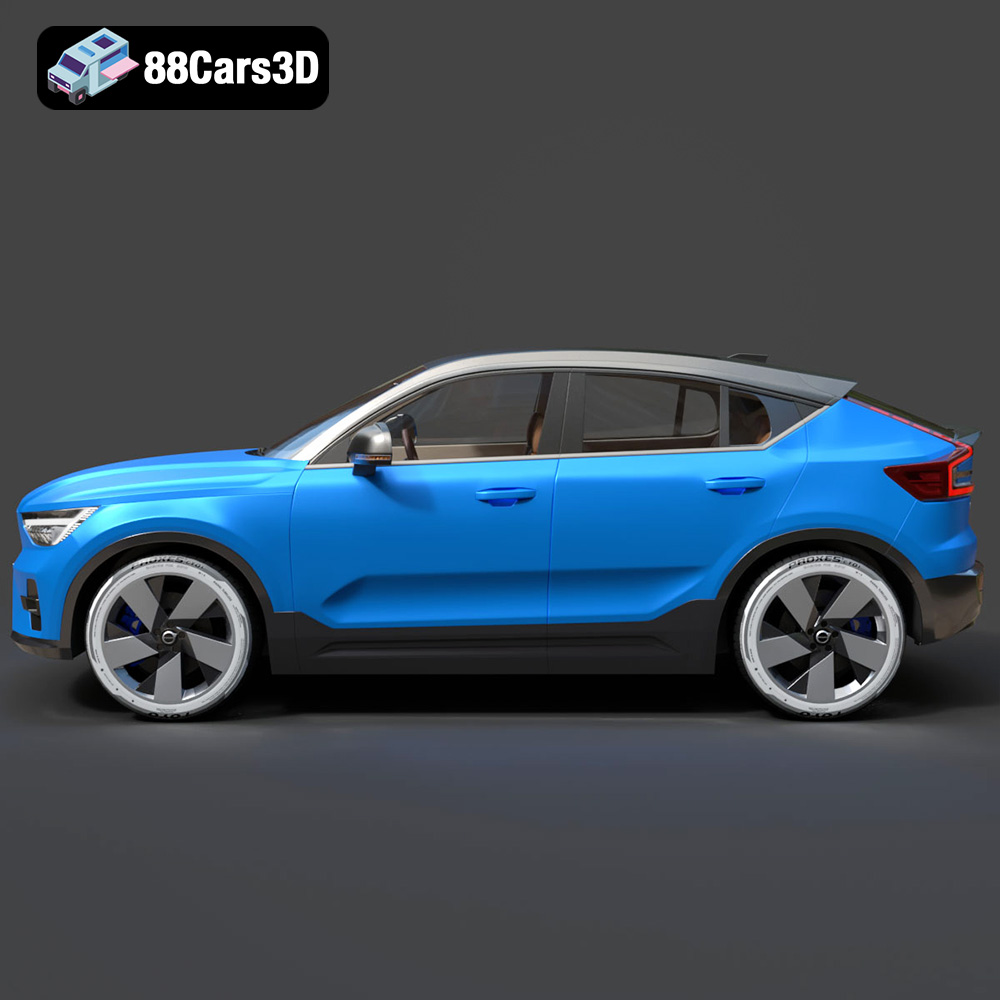
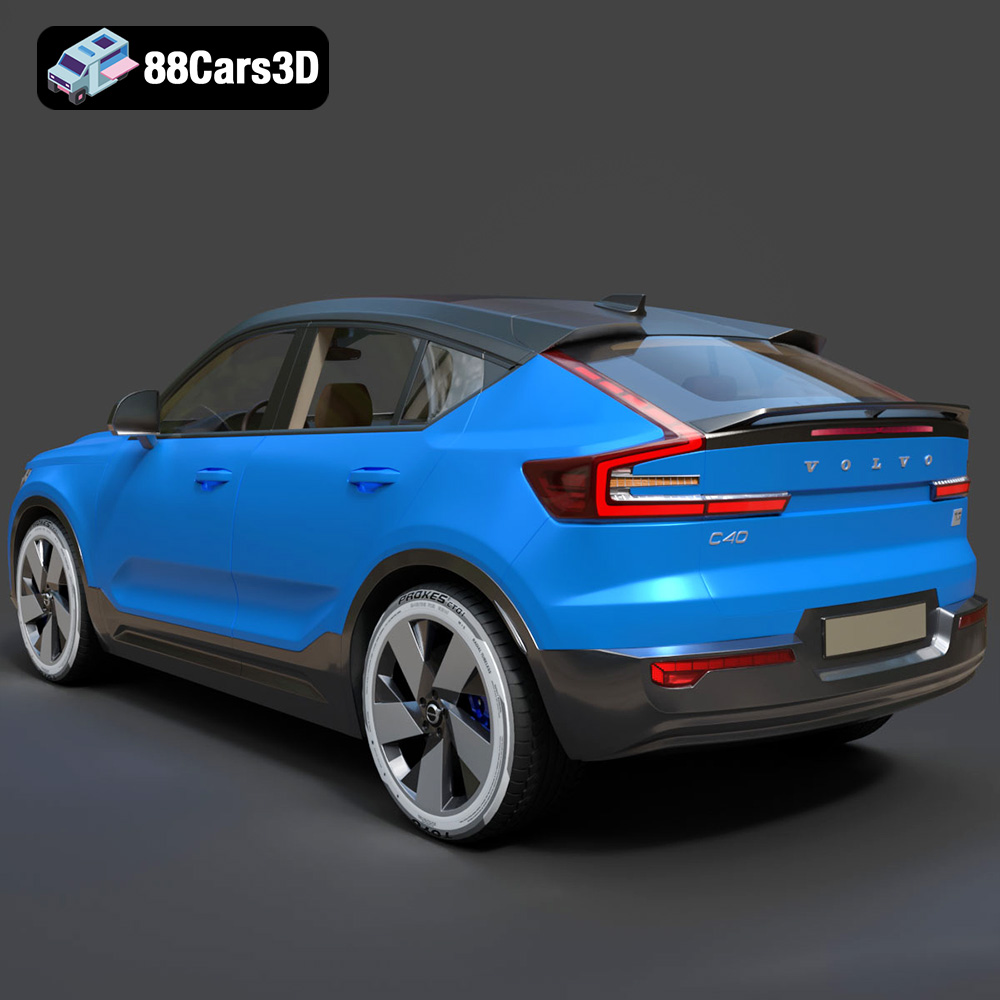
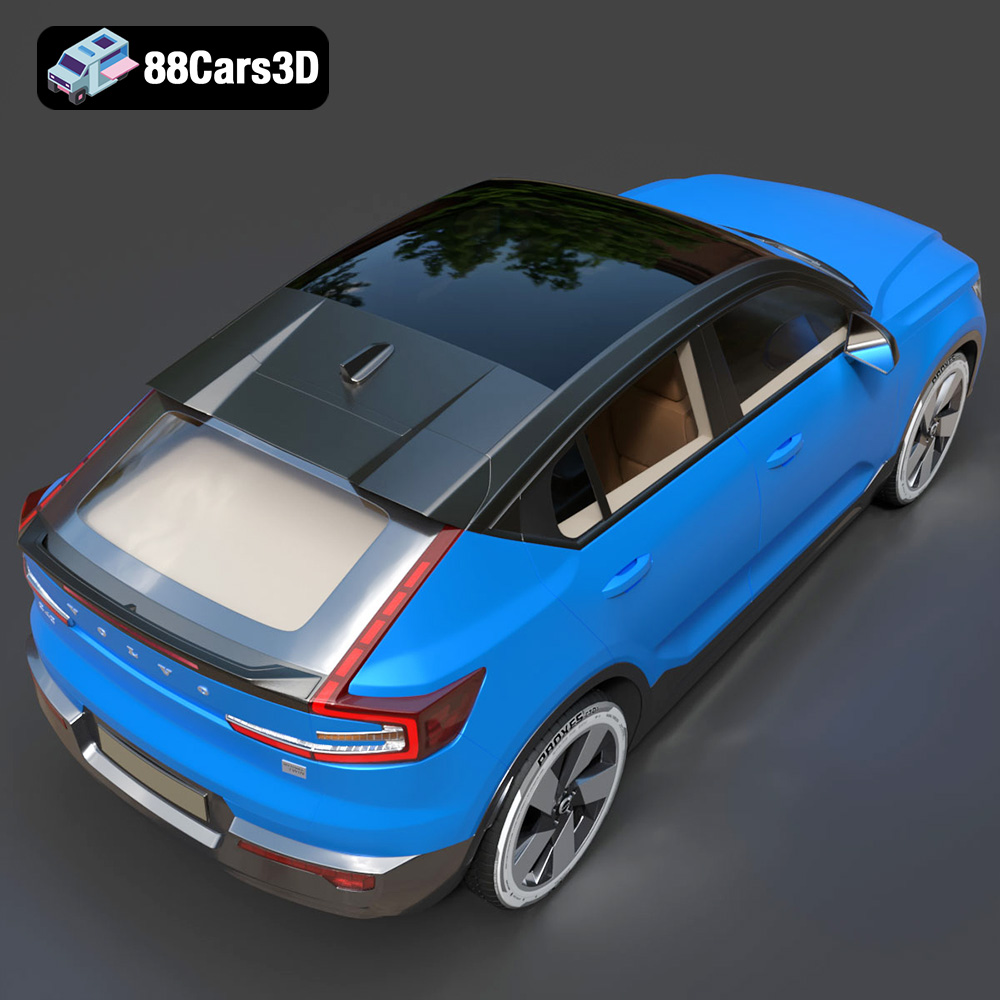
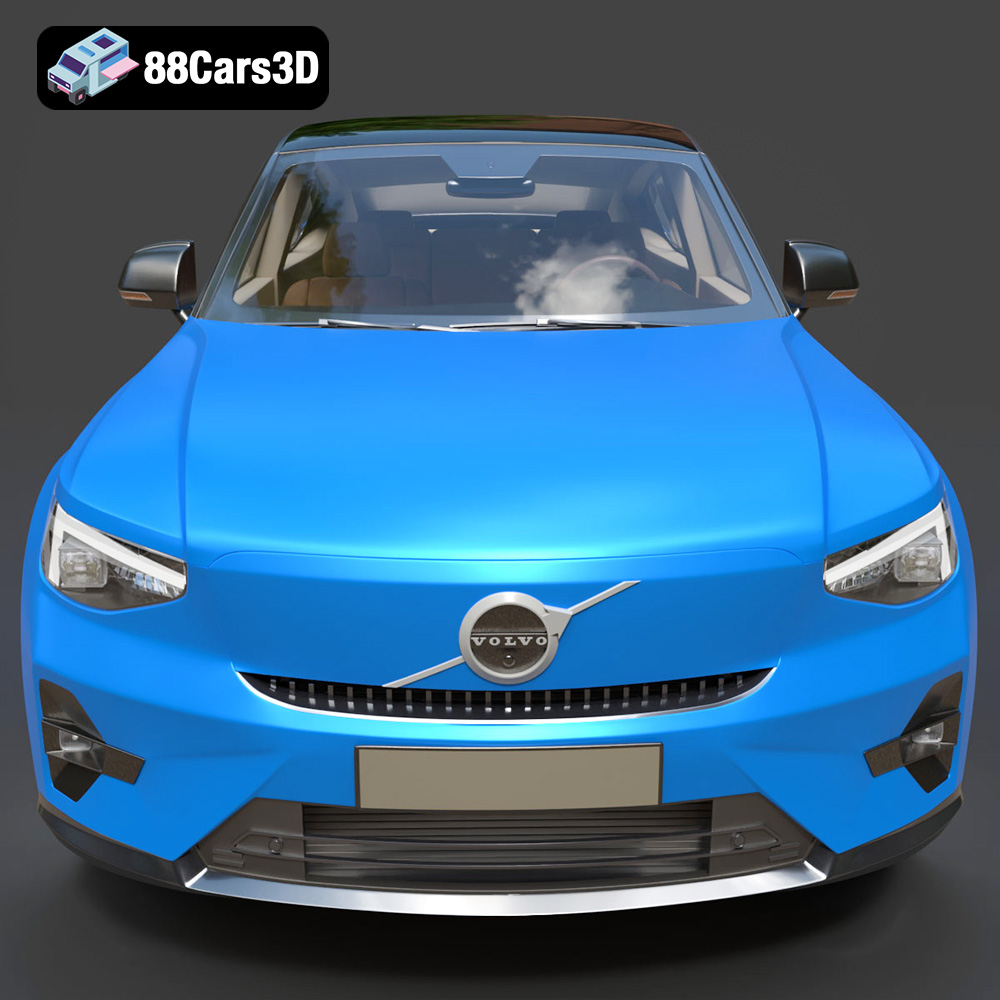
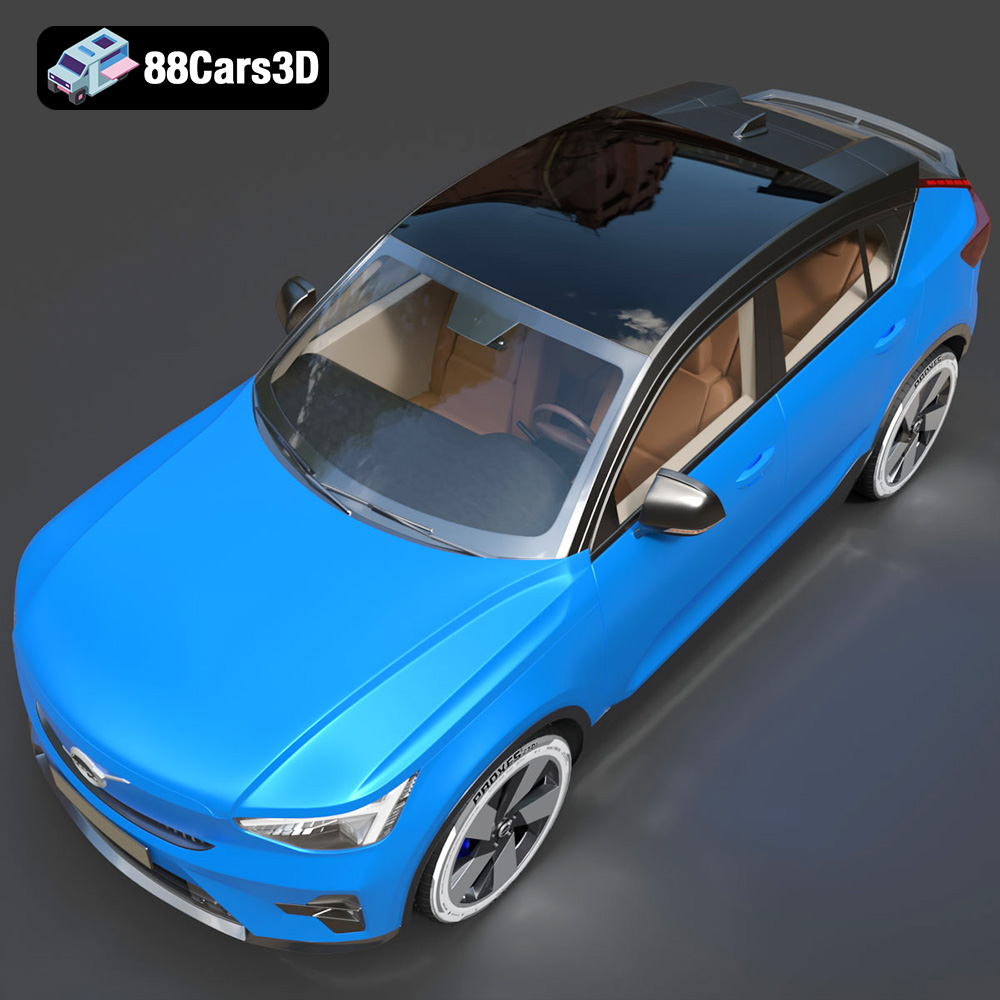
Discover the exceptional realism of the Volvo C40 Recharge 3D Model. Carefully crafted to mirror the actual vehicle, this 3D asset provides incredibly accurate proportions, sleek styling, and realistic textures ideal for any digital environment. Featuring clean, optimized geometry and an intelligently organized structure, this model ensures seamless integration into your workflow. The exterior perfectly captures the distinctive aesthetic of the modern electric crossover, while the fully modeled interior presents detailed dashboard components and seating, enhancing its suitability for close-up shots and immersive experiences. Whether you are developing cutting-edge video games, producing hyper-realistic automotive renderings, building interactive AR/VR applications, or conducting simulations, this versatile 3D model delivers outstanding performance and visual fidelity. Available in a comprehensive range of industry-standard file formats to suit any pipeline:
$39.99
.arvr
.blend
.c40
.car3dmodel
.crossover
.electriccar
.ev
.fbx
.gameasset
.glb
.max
.obj
.ply
.recharge
.rendering
.simulation
.stl
.unreal
.volvo
SUV