Get 20% OFF All Premium 3D & STL Models!

In the expansive world of logistics and transportation, few vehicles command as much respect and recognition as the heavy-duty tractor truck. These titans of the highway are the backbone of global commerce, and among them, the Volvo VNL series has consistently stood out for its blend of power, comfort, and advanced engineering. The 2002 Volvo VNL Tractor Truck, in particular, represents a beloved era, a workhorse renowned for its aerodynamic profile, driver-centric design, and unwavering reliability in the face of demanding hauls. For 3D artists, game developers, animators, and visualization specialists, bringing such an iconic vehicle to life in digital form presents both a challenge and an immense opportunity.
Creating a truly authentic and technically robust 3D model of a complex machine like the Volvo VNL requires meticulous attention to detail, optimized topology, and versatile file formats. This isn’t just about aesthetics; it’s about functionality across diverse digital ecosystems. Whether for an immersive trucking simulator, a high-fidelity industrial rendering, or an interactive AR/VR experience, the underlying quality of the 3D asset dictates its usability and impact. This article delves into the intricate process of developing and utilizing premium 3D models, showcasing how an asset like the Volvo VNL Tractor Truck 2002 3D Model available on 88cars3d.com can elevate your projects from concept to compelling reality.
At the heart of any successful 3D project lies the quality of its assets. A high-quality 3D model is far more than just an accurate representation; it’s a meticulously engineered digital object designed for performance, versatility, and scalability across various applications. For complex subjects like 3D car models or heavy-duty vehicles, this distinction is even more pronounced. Poorly constructed models can lead to a myriad of issues, from jagged edges and visual artifacts in renders to severe performance bottlenecks in real-time engines, and even compatibility problems during export or import.
The term “topology” refers to the arrangement of polygons (triangles and quads) that make up a 3D model’s surface. Good topology is paramount for several reasons. Firstly, it ensures smooth deformations during animation, preventing unsightly pinching or tearing. For a vehicle like the Volvo VNL Tractor Truck 2002, where moving parts like wheels, steering components, and suspension systems are critical, clean topology guarantees realistic movement. Secondly, optimized topology, often referred to as “game-ready,” balances visual fidelity with performance. This means achieving a detailed look with the lowest possible polygon count, crucial for maintaining high frame rates in game development and AR/VR applications.
Modern 3D rendering relies heavily on Physically Based Rendering (PBR) materials, which accurately simulate how light interacts with surfaces in the real world. A high-quality 3D model should come with PBR-ready textures and materials, ensuring that chrome reflects correctly, paint appears metallic or matte as intended, and rubber has appropriate roughness. Equally important is adherence to real-world scale. An accurately scaled 3D car model or truck ensures that it fits seamlessly into environments, interacts correctly with physics simulations, and maintains proper proportions when viewed alongside other assets or in virtual spaces. The Volvo VNL Tractor Truck 2002 3D Model, for instance, is built to real-world scale, a fundamental aspect for accurate visualization and simulation.
One of the most critical aspects of working with 3D models, especially when sourcing them from marketplaces like 88cars3d.com, is understanding the various file formats available. Each format serves specific purposes, excels in different environments, and offers unique advantages for distinct workflows. The Volvo VNL Tractor Truck 2002 3D Model package provides an exceptional array of formats, ensuring maximum compatibility and utility.
The .blend format is the native file type for Blender, a powerful open-source 3D creation suite. When you receive a .blend file, you’re getting a fully editable Blender scene. This includes not just the mesh geometry but also all materials, textures, lighting setups, cameras, animations, and even physics simulations created within Blender. It’s ideal for users who primarily work in Blender and want complete control over the asset. Artists can dive in to modify materials, adjust UVs, change mesh topology, or integrate the model directly into existing Blender projects without any loss of data or conversion artifacts. For the Volvo VNL model, a .blend file allows for deep customization, from altering specific mechanical components to fine-tuning shader networks for a bespoke rendering.
.fbx (Filmbox) is arguably the most widely adopted 3D file format in the industry, developed by Autodesk. It’s renowned for its ability to store not just mesh data, but also complex animation, skeletal rigging, materials, textures, and even camera information. This makes it an ideal choice for pipelines involving multiple software packages, especially for real-time engines like Unreal Engine and Unity. When importing an .fbx, you can expect a robust transfer of most, if not all, crucial asset data, minimizing the need for extensive re-setup. For game assets like the Volvo VNL, .fbx is the go-to for ensuring everything from the vehicle’s geometry to its pivot points and basic material assignments transfers smoothly into the game engine, ready for further optimization and interaction scripting.
The .obj (Wavefront OBJ) format is a universal standard for storing 3D geometry. It’s highly compatible across virtually all 3D software applications due to its simple, text-based structure. While .obj is excellent for transferring mesh data (vertices, normals, UVs, faces), it typically does not store animation, rigging, or complex material properties beyond basic texture assignments (usually via an accompanying .mtl file). It’s a reliable choice when you need a clean mesh for sculpting, retopology, or when moving between different software where other formats might pose compatibility issues. The Volvo VNL .obj file provides a clean geometric base, perfect for those who want to start fresh with materials in their preferred renderer or make significant mesh modifications.
.glb (GL Transmission Format Binary) is an increasingly important format, especially for the burgeoning fields of Augmented Reality (AR), Virtual Reality (VR), and browser-based 3D applications. It’s a binary version of the glTF format, designed for efficient transmission and loading of 3D scenes and models. A .glb file packages geometry, materials, textures, and even animations into a single, compact file, making it incredibly lightweight and fast to load. This optimization is critical for mobile AR experiences, web-based 3D viewers, and VR applications where performance is paramount. The Volvo VNL in .glb format would be perfect for an interactive 3D product showcase on a website or an AR app allowing users to place the truck in their real-world environment.
.stl (Stereolithography) is the de facto standard format for 3D printing. It represents a 3D model as a series of connected triangles, essentially describing the surface geometry without color or texture information. While simple, its universal acceptance by 3D printers and slicing software makes it indispensable for physical output. When preparing the Volvo VNL for 3D printing, the .stl file provides the necessary geometry for additive manufacturing, allowing hobbyists and professionals to create tangible models for display, prototyping, or dioramas. Careful consideration of scale, wall thickness, and print orientation, as detailed in the product description, is key for successful prints.
The .ply (Polygon File Format) is another format for storing 3D data, often used in scientific and engineering applications, 3D scanning, and CAD. It can store various properties beyond just geometry, such as color per vertex, normal information, and even material properties, making it useful for representing point clouds and complex meshes with high fidelity. While less common for general game assets, it offers precision for detailed analysis or when integrating models into more technical pipelines where exact mesh properties are crucial. For the Volvo VNL, a .ply file might be beneficial for engineers analyzing its structure or for highly precise visualization tasks.
The inclusion of a .unreal format, or an asset specifically tailored for Unreal Engine, signifies that the model has been optimized and prepared to seamlessly integrate into this powerful real-time engine. This often means pre-configured materials, LOD (Level of Detail) setups, collision meshes, and proper pivot points for animation, all set up to meet Unreal’s specific requirements. This drastically reduces setup time for developers. For the Volvo VNL Tractor Truck 2002, an Unreal-ready asset means it can be dropped into a trucking simulator project with minimal adjustments, accelerating development and ensuring optimal performance within the engine’s rendering pipeline.
Finally, the .max format is the native file type for Autodesk 3ds Max, a leading software for 3D modeling, animation, and rendering in architectural visualization, product design, and game development. Similar to .blend for Blender, a .max file contains the complete 3ds Max scene, including geometry, modifiers, materials, lights, cameras, and animations. This allows 3ds Max users to open the Volvo VNL model in its native environment, offering full editability and control over every aspect of the asset. This is particularly useful for detailed animation sequences, high-fidelity marketing renders, or integration into larger visualization projects where 3ds Max is the primary tool.
The Volvo VNL Tractor Truck 2002 3D Model from 88cars3d.com stands as a testament to meticulous craftsmanship in automotive rendering. It exemplifies how deep attention to engineering details translates into a visually stunning and technically sound 3D asset, ready for a multitude of professional applications.
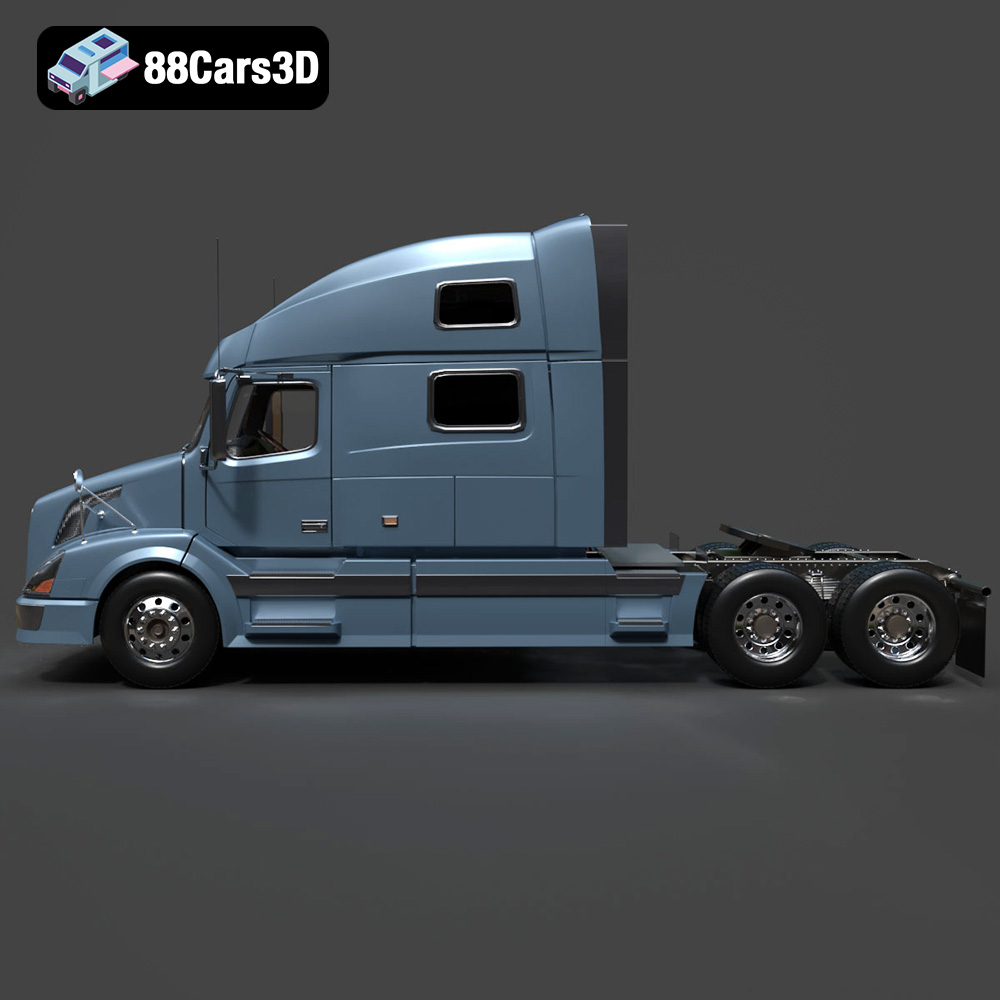
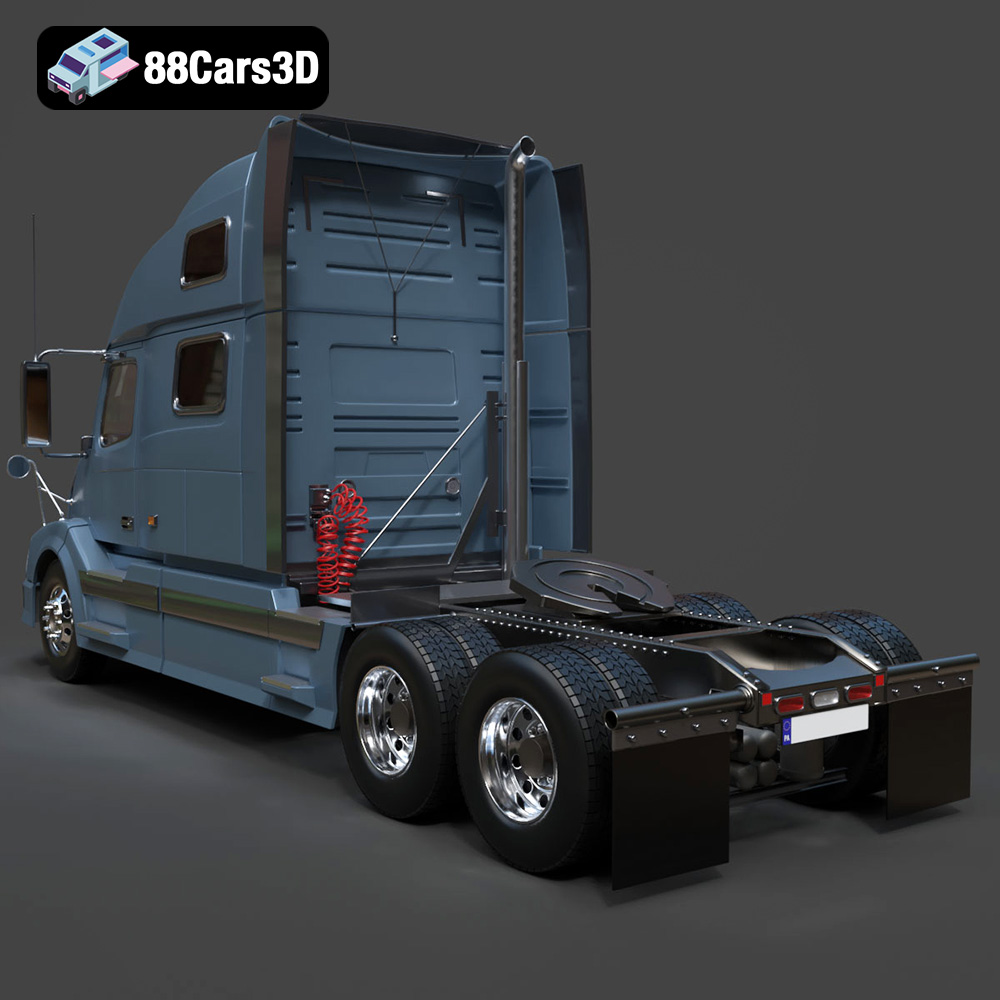
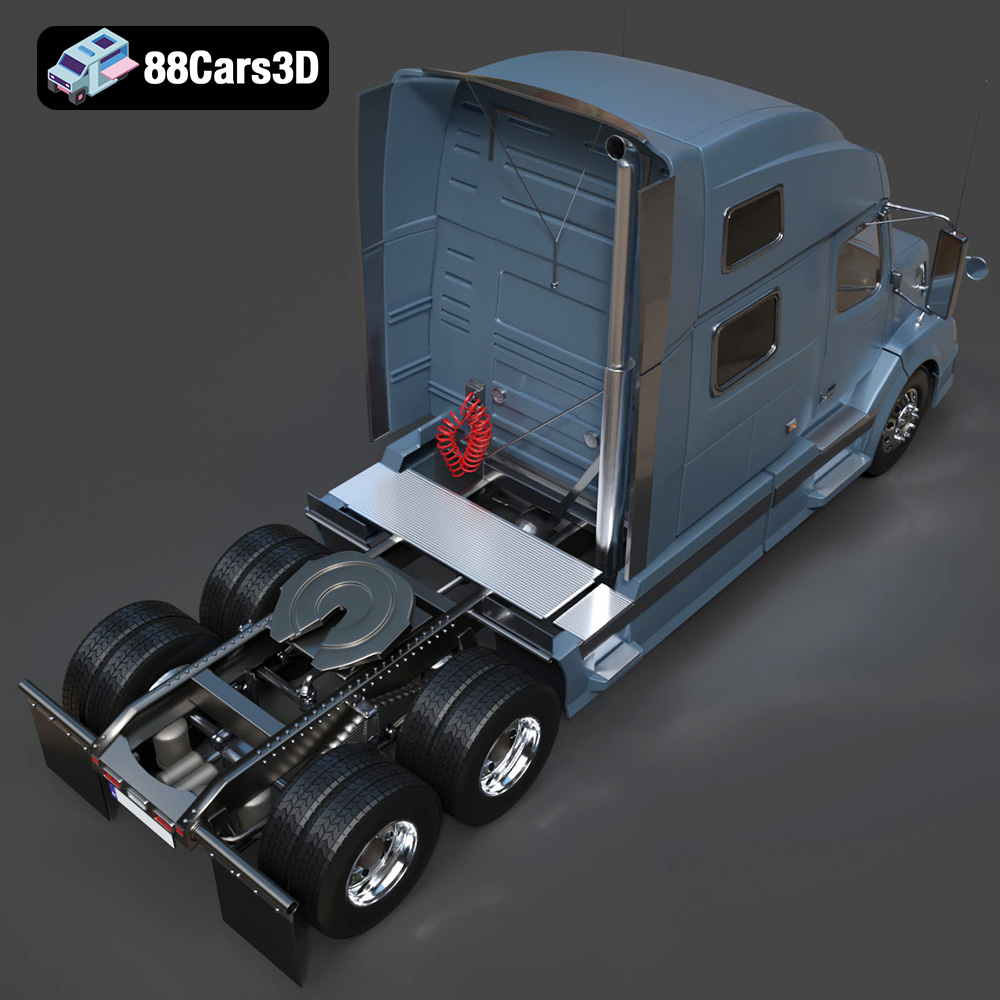
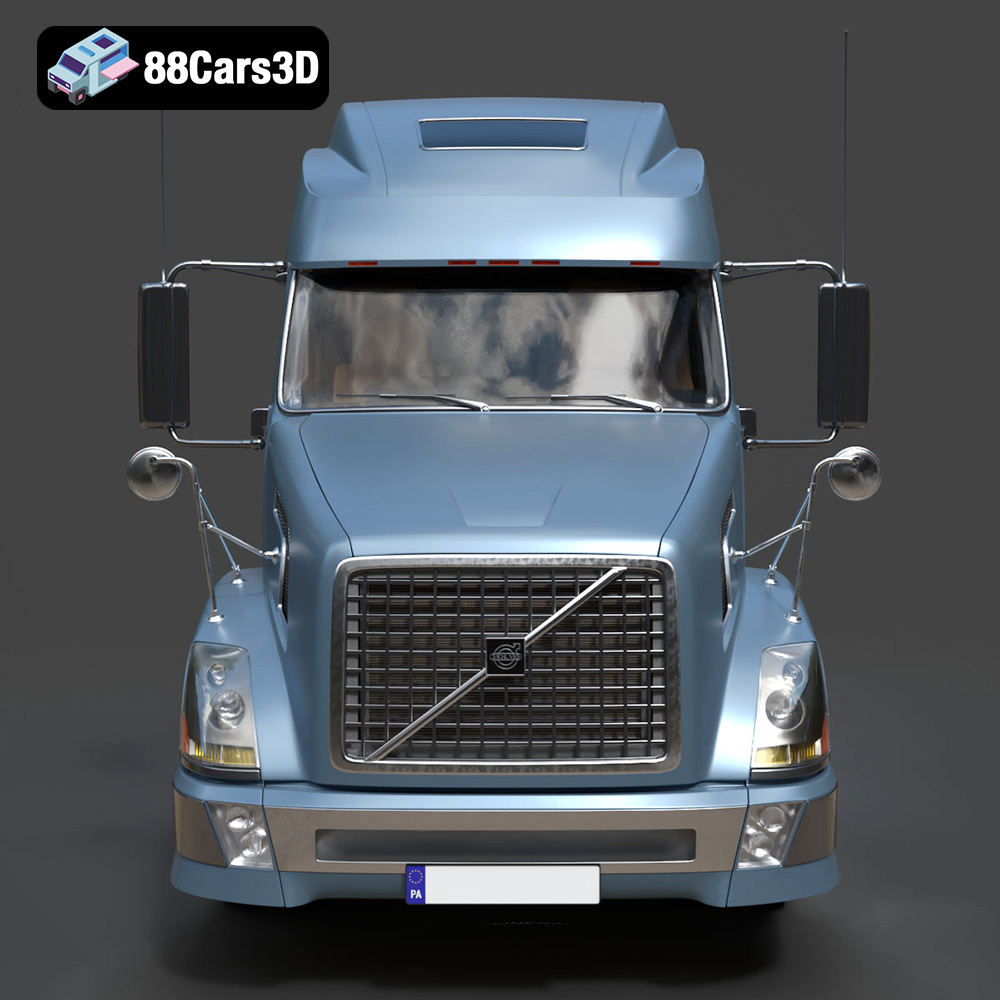
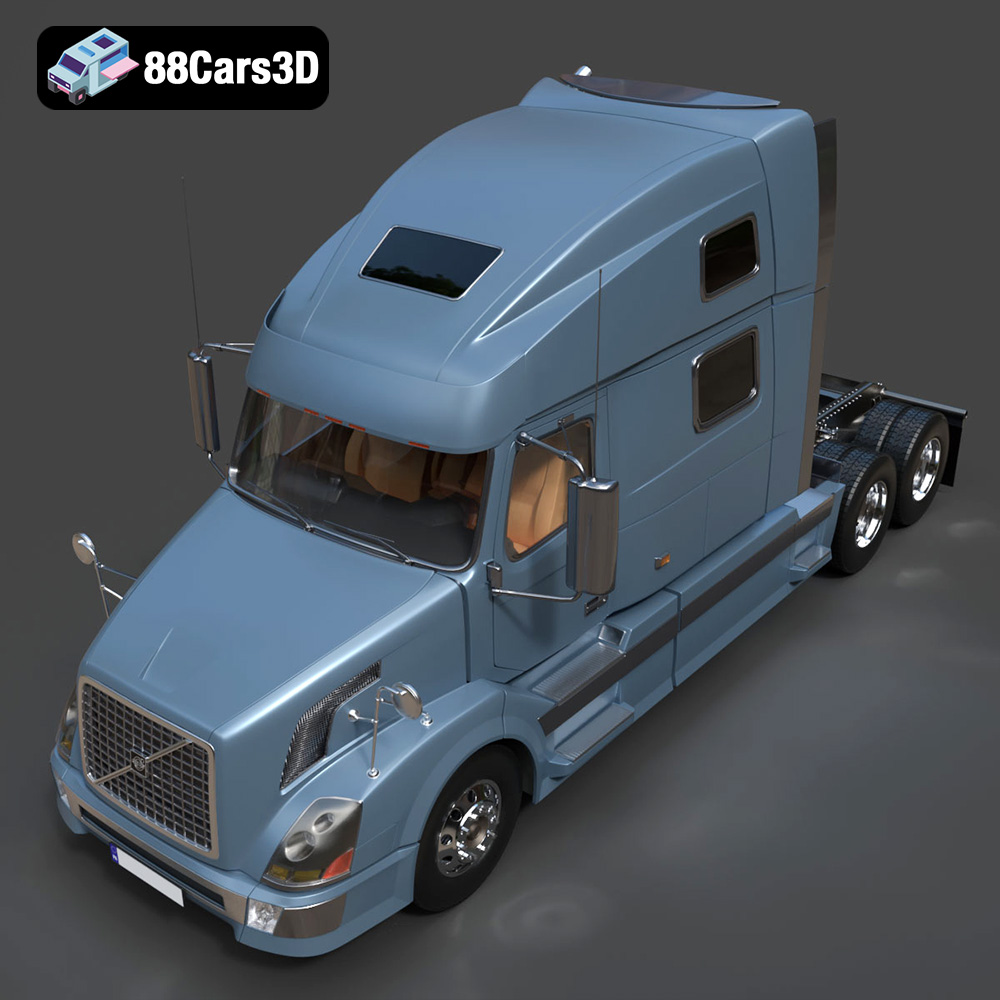
The exterior of the 2002 Volvo VNL is immediately recognizable, and this 3D model painstakingly recreates its distinctive features. From the aerodynamic cab geometry and accurate proportions to the heavy-duty chassis and the critical fifth-wheel coupling system, every element is faithfully reproduced. The prominent dual vertical exhaust stacks, designed for efficient emission dispersal and a commanding visual presence, are meticulously detailed, as are the aerodynamic fairings that streamline airflow over the trailer. Even subtle details like the large halogen headlights, cab roof markers, and realistic commercial dually wheels with accurate tire treads contribute to its convincing realism. Crucially, components like wheels, suspension, and steering are separated, enabling realistic animation and dynamic interaction within simulated environments.
While often overlooked in external shots, a detailed interior is vital for truly immersive experiences, especially in first-person simulators. The Volvo VNL model doesn’t disappoint, offering a detailed driver air-ride seat and a thoughtfully blockout sleeper cab. The authentic heavy-duty commercial steering wheel, the wrap-around instrument cluster with dials and gauges, and accurate control details like air brake valves and the manual shifter are all present. This optimized geometry for first-person POV ensures that players in a trucking simulator, or users in a VR training application, feel truly immersed in the driver’s seat, making the experience far more believable and engaging.
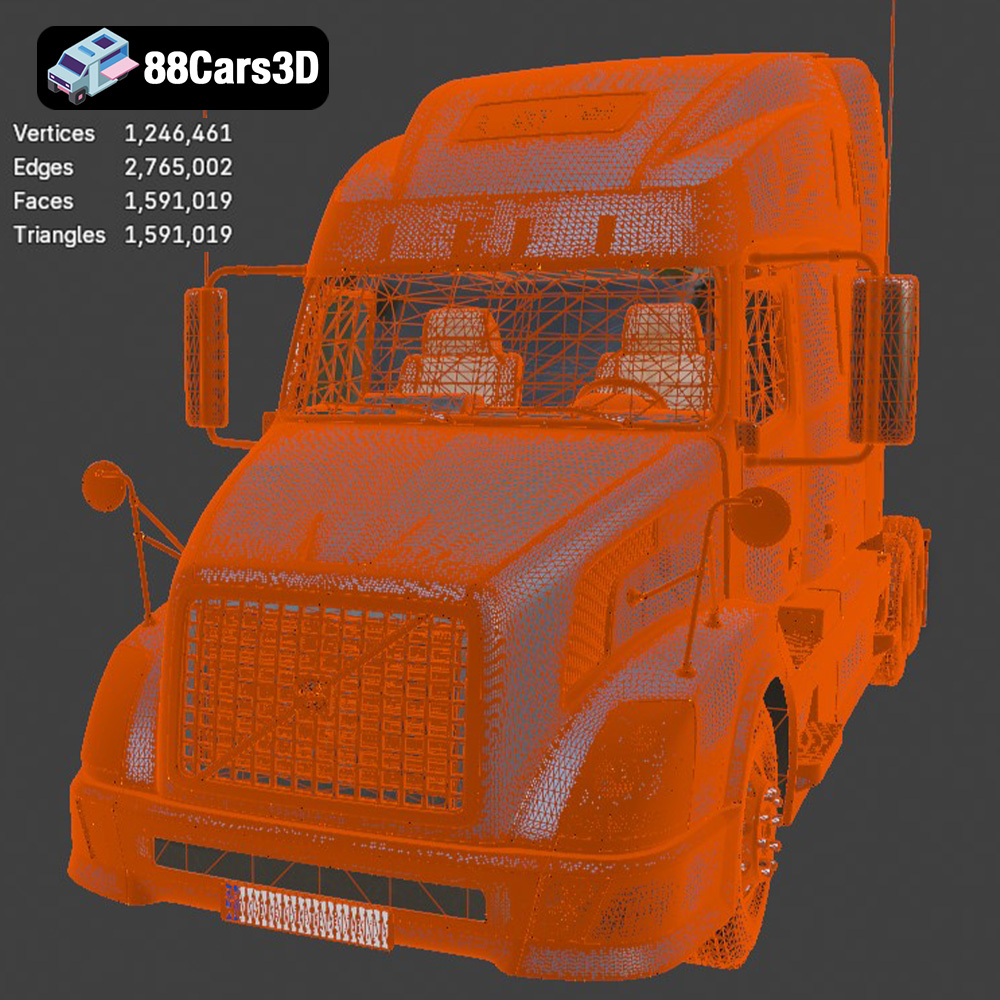
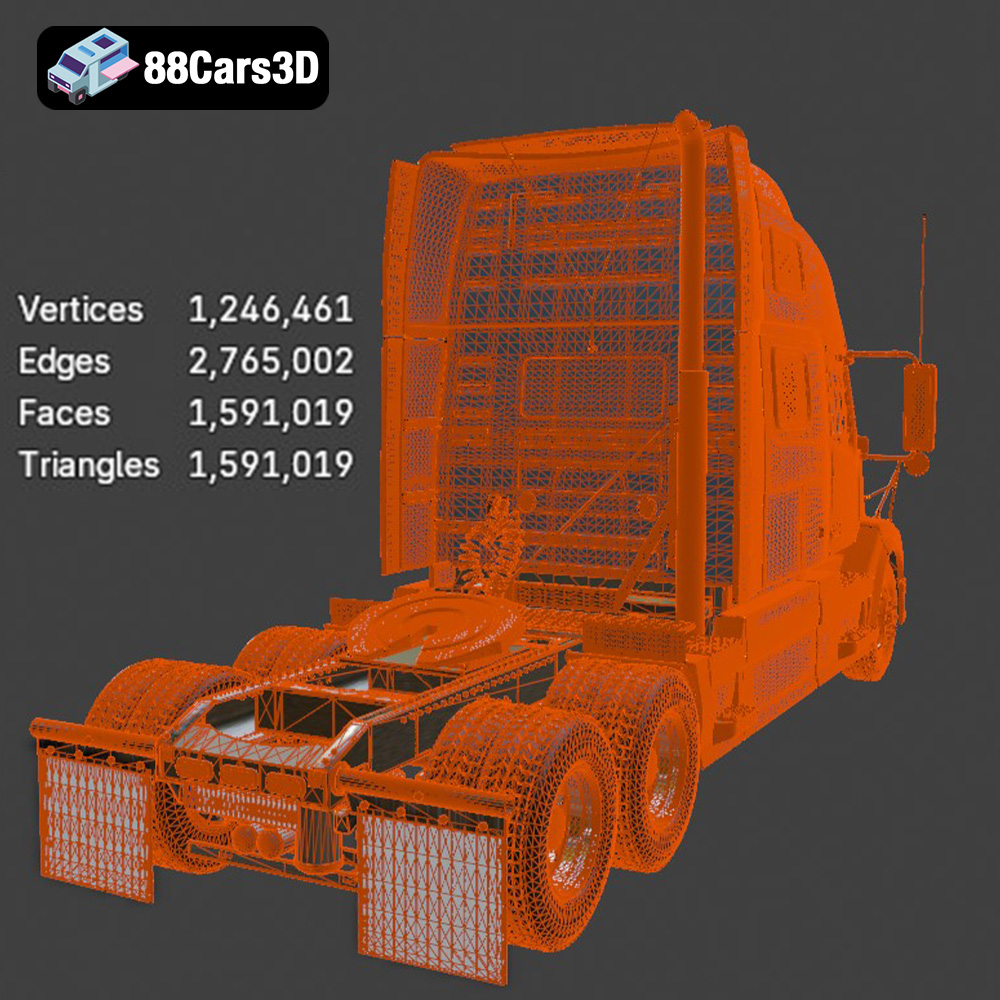
A key advantage of this specific model is its “game-ready” optimization. With approximately 200,000 triangles, it strikes an optimal balance, delivering high-end visual realism without compromising real-time performance. This poly count is perfect for demanding game engines like Unreal and Unity, ensuring smooth frame rates even in complex scenes with multiple vehicles. Real-world scale accuracy and proper pivot setups for steering, wheel rotation, trailer coupling, and suspension travel further enhance its utility for simulations. These technical specifications mean that developers can integrate the Volvo VNL into their projects with confidence, knowing it’s built to perform.
The versatility of the Volvo VNL Tractor Truck 2002 3D Model truly shines when integrated into various professional 3D workflows. Its optimized nature and comprehensive file format support make it a powerful asset for developers and artists across multiple industries.
For game developers, especially those crafting intricate trucking simulators or expansive open-world highway games, the Volvo VNL is an ideal game asset. Its optimized triangle count and pre-configured pivots significantly streamline the development process. Developers can import the FBX file into Unreal Engine or Unity, and thanks to the proper pivot setups, quickly implement realistic vehicle physics, steering, and suspension. Collision meshes can be generated or pre-assigned to ensure accurate interactions with the environment. The detailed interior, optimized for first-person views, provides an unparalleled level of immersion, crucial for captivating simulation gameplay. Imagine a player navigating vast landscapes in a game, truly feeling the presence of this iconic truck, all powered by a robust and efficient 3D model.
Beyond gaming, the Volvo VNL model is an excellent candidate for automotive rendering in industrial visualization and architectural projects. Using software like 3ds Max or Blender, artists can leverage the model’s high-fidelity details to create stunning marketing materials, product showcases, or logistical planning visualizations. The ability to customize body colors, material finishes (like chrome grilles or metallic paint), and tire textures allows for brand-specific liveries or scenario-specific visual adaptations. Picture a photorealistic rendering of a bustling logistics hub, with a fleet of Volvo VNL trucks meticulously positioned, reflecting the ambient light and adding a layer of realism that only a detailed 3D asset can provide. The .max or .blend files offer the flexibility needed for these high-end rendering tasks.
The rise of AR/VR and browser-based 3D experiences demands highly optimized assets. The Volvo VNL’s game-ready geometry and its availability in the .glb format make it perfectly suited for these emerging platforms. For AR/VR, the model can be used to create immersive virtual fleet showrooms, where clients can inspect the truck from every angle, or for interactive training configurators that allow mechanics to virtually dismantle and reassemble components. On the web, a .glb version of the truck can power a dynamic 3D viewer on a company’s website, allowing potential buyers to rotate, zoom, and customize the truck in real-time within their browser, providing an engaging and interactive product demonstration that traditional images cannot match.
The utility of a high-quality 3D model extends beyond digital screens into the tangible world through 3D printing. The Volvo VNL Tractor Truck 2002 3D Model offers significant potential for physical production, appealing to hobbyists, collectors, and professionals alike.
Converting a detailed 3D model like the Volvo VNL into a physical object via 3D printing requires careful preparation, primarily utilizing the .stl format. The product details recommend scales like 1:24, 1:32, or 1:43, which are standard for model vehicles, allowing for integration into existing collections or dioramas. Key printing considerations include layer height (0.04–0.12 mm for fine details, ideally with resin printing for superior results), adequate wall thickness (1.2–2.0 mm for structural integrity), and appropriate infill (20–30% for a good balance of strength and material usage). Supports are essential for intricate parts such as the exhaust stacks, side mirrors, and the fifth wheel mechanism to prevent warping and ensure fidelity. Correct print orientation, such as printing the frame angled and the cab and wheels separately, further optimizes print quality and structural soundness.
For enthusiasts of automotive history and model making, the ability to 3D print a detailed Volvo VNL opens up a world of possibilities. Imagine constructing a meticulously detailed diorama of a highway rest stop, an industrial loading dock, or a cross-country journey, with accurately scaled and painted Volvo VNL trucks taking center stage. Post-processing, including sanding, priming, and painting with authentic fleet colors and metallic finishes, transforms the printed model into a realistic collectible. This direct path from a digital asset to a physical object provides a unique blend of digital artistry and traditional craftsmanship, allowing for truly personalized and historically accurate representations of this iconic heavy-duty truck.
A truly valuable 3D asset is one that offers flexibility and longevity. The Volvo VNL Tractor Truck 2002 3D Model is designed with customization in mind, ensuring it remains relevant and adaptable for future projects and evolving creative visions.
The ability to easily modify material finishes and textures is paramount for asset versatility. With the Volvo VNL model, artists can readily change body colors to match specific fleet liveries, experiment with custom company branding, or simply adjust the aesthetic for different lighting scenarios. Swapping out tire textures for highway rib versus traction variants allows for accurate representation in diverse environments, from pristine asphalt to muddy construction sites. Adjusting material properties for matte plastics, gleaming chrome grilles, or rich metallic paint enables artists to precisely control the visual impact and realism of the truck in any given scene. This flexibility ensures the model can be repurposed for countless projects without requiring extensive re-modeling.
Beyond static representation, the Volvo VNL model is engineered for dynamic animation. The separation of key components like wheels, suspension, and steering parts allows animators to create highly realistic movement sequences. Imagine a detailed animation showcasing the truck’s suspension compressing over bumps, the steering wheel turning accurately, or the fifth-wheel coupling mechanism engaging with a trailer. These capabilities are essential for creating compelling cinematic sequences, realistic simulations, or interactive training modules where mechanical accuracy is key. The clean topology and proper pivot setups simplify the rigging and animation process, making it accessible for even complex movements, further extending the model’s lifespan and utility in high-demand production pipelines.
The journey from a historical icon like the 2002 Volvo VNL Tractor Truck to a high-fidelity, production-ready 3D model is a complex undertaking, requiring a deep understanding of 3D modeling principles, technical optimization, and diverse application needs. The Volvo VNL Tractor Truck 2002 3D Model exemplifies excellence in digital asset creation, providing an optimized, versatile, and highly detailed representation of this legendary vehicle. Whether your project demands real-time performance in a game engine, photorealistic quality for automotive rendering, immersive experiences in AR/VR, or tangible models through 3D printing, this asset is meticulously prepared to meet those challenges.
By offering a comprehensive suite of file formats—from .blend and .max for full editability in native software, to .fbx and .unreal for seamless game engine integration, .glb for web and AR/VR, .obj for universal compatibility, and .stl for 3D printing—the model ensures maximum utility across the entire spectrum of 3D production. This robust flexibility, combined with its game-ready topology, accurate scale, and detailed features, positions it as an invaluable resource for professionals and enthusiasts alike. Explore the possibilities and elevate your next project with premium 3D car models and vehicle assets available at 88cars3d.com, where quality and versatility drive innovation.
The 2002 Volvo VNL Tractor Truck represents a pivotal era in commercial freight transportation, renowned for its aerodynamic design, exceptional driver comfort, and robust heavy-hauling capabilities. This meticulously crafted 3D model captures the imposing presence of the iconic semi-truck, featuring its signature sloped hood, prominent front grille, distinct dual exhaust stacks, and the spacious sleeper cab architecture that made it an industry standard. Engineered with exceptional attention to detail, this 3D model features game-ready topology with an optimized triangle count that delivers stunning visual fidelity without compromising performance. Designed seamlessly for heavy-duty vehicle simulators, industrial animations, and logistics visualizations, the geometry ensures smooth real-time rendering in major engines while preserving the intricate mechanical details of a true commercial workhorse.
$39.99
.blend
.fbx
.glb
.max
.obj
.ply
.rendering
.stl
.unreal
.volvo
2002
car-3d-model
commercial-vehicle
game asset
game-ready
heavy-duty-truck
low-poly
optimized
semi-truck
truck-3d-model
vnl-tractor-truck
VR/AR