Get 20% OFF All Premium 3D & STL Models!

In the rapidly evolving digital landscape, the demand for realistic, optimized, and versatile 3D assets has never been higher. From blockbuster video games and immersive virtual reality experiences to cutting-edge architectural visualizations and compelling marketing campaigns, accurate 3D models are the backbone of countless creative endeavors. Crafting these digital replicas, especially complex subjects like automobiles, requires a blend of artistic skill, technical precision, and an deep understanding of various software ecosystems and file formats.
Imagine needing a highly detailed, game-ready crossover SUV that not only looks authentic but also performs flawlessly across diverse platforms. This is where specialized platforms like 88cars3d.com shine, offering meticulously crafted 3D car models designed to integrate seamlessly into professional workflows. One such standout asset is the Mitsubishi Outlander GT 2010 3D Model. This model doesn’t just represent a vehicle; it embodies a solution for artists, developers, and designers seeking efficiency without compromising on visual fidelity.
This comprehensive guide will delve into the intricate world of automotive 3D modeling, exploring the technical specifications, workflow considerations, and diverse applications that define modern digital production. We’ll specifically highlight how a product like the Mitsubishi Outlander GT 2010 3D Model empowers creators to achieve stunning results, whether for high-fidelity automotive rendering, dynamic game environments, or even tangible 3D prints.
The choice of a 3D model file format is often as critical as the model itself, dictating compatibility, feature retention, and overall workflow efficiency. Professionals working with 3D car models need to understand the nuances of each format to ensure their assets are production-ready for their intended application. The Mitsubishi Outlander GT 2010 3D Model exemplifies this versatility by offering a comprehensive suite of formats, each serving a distinct purpose.
The .blend format is native to Blender, an incredibly powerful open-source 3D creation suite. When you download a .blend file, you’re getting a complete Blender scene, often including the model’s raw mesh, materials, textures, lighting, camera setups, and even animations. This format is ideal for users who primarily work in Blender, offering the highest level of editability and direct access to all aspects of the model. For the Mitsubishi Outlander GT 2010, the .blend file provides a fully editable canvas for customization, allowing artists to tweak geometry, adjust shaders, or integrate it into a larger Blender project with ease.
.fbx (Filmbox) is arguably the most widely used proprietary 3D file format for data exchange between different 3D software applications and game engines. Developed by Autodesk, it supports not only geometry but also materials (though often simplified), textures, animations, skinning, and camera data. It’s the go-to format for transferring assets to real-time pipelines like Unreal Engine and Unity, making it an indispensable choice for game assets. The .fbx version of the Mitsubishi Outlander GT 2010 3D Model is optimized for these environments, ensuring that its separate wheels, suspension, and steering components, along with PBR-ready materials, translate correctly for dynamic in-game use and automotive rendering.
The .obj (Wavefront OBJ) format is a universal, open-standard format primarily used for transferring 3D geometric data. It’s incredibly compatible, supported by virtually every 3D application. However, .obj files typically only store mesh information (vertices, normals, UV coordinates, and faces) and can link to external material definition (.mtl) files for basic color and texture references. It generally does not support advanced materials, rigging, or animation data. For scenarios where pure mesh data is needed for sculpting, retopology, or as a base for completely new material setups in any software, the .obj version of the Outlander GT is highly useful due to its broad compatibility.
.glb (GL Transmission Format Binary) is a modern, open-standard 3D file format designed for efficient transmission and loading of 3D scenes and models in web and immersive applications. It’s often referred to as the “JPEG of 3D” because it packages all model data – geometry, materials, textures, animations – into a single binary file. This makes it highly optimized for AR (Augmented Reality), VR (Virtual Reality), and browser-based display, facilitating quick loading and seamless integration. The .glb version of the Mitsubishi Outlander GT 2010 3D Model is perfect for virtual showrooms, online configurators, and mobile AR experiences, delivering visual quality with efficient performance.
The .stl (Stereolithography) format is the de facto standard for 3D printing. It represents a 3D model as a series of connected triangles (a triangulated mesh) without any color, texture, or material information. Its simplicity makes it universally compatible with 3D printers and slicing software. While it doesn’t carry visual attributes, it precisely defines the external surface geometry needed for physical fabrication. The .stl option for the Outlander GT model is tailored for hobbyists and professionals looking to create physical scale models, offering a tangible output from the digital asset.
The .ply (Polygon File Format) is another open-standard format that can store complex geometric data, including vertex properties (like color, normals, transparency), face properties, and sometimes even 3D scanner data. It’s often used in scientific visualization, CAD, and applications requiring precise geometric analysis. While less common for general animation, its ability to store detailed mesh information makes it valuable for certain specialized engineering or reverse-engineering workflows when working with 3D car models like the Outlander GT.
The .unreal format refers to assets specifically packaged or configured for direct import and optimal performance within Unreal Engine. This might involve an .fbx file that has been pre-processed, had collision meshes generated, LODs (Levels of Detail) set up, and PBR materials configured to Unreal Engine standards. While not a standalone file extension in the same way .fbx or .obj are, its inclusion signifies that the Mitsubishi Outlander GT 2010 3D Model has been specifically prepared to be a plug-and-play solution for Unreal Engine developers, saving considerable setup time and ensuring engine-native compatibility and performance.
Finally, the .max format is the native scene file format for Autodesk 3ds Max, a leading software for 3D modeling, animation, and rendering. Similar to .blend for Blender, a .max file contains all scene information, including the model’s geometry, modifiers, materials, lighting, cameras, and animation data specific to 3ds Max. For artists working within the 3ds Max ecosystem, this format offers the highest degree of flexibility for further manipulation, advanced rendering setups with engines like V-Ray or Corona, and integration into complex architectural or automotive visualization projects. The .max file for the Outlander GT model provides a robust foundation for high-end rendering and detailed animation sequences.
Creating a high-quality 3D car model is far more than simply extruding shapes. It’s a rigorous process that combines artistic interpretation with engineering precision, demanding meticulous attention to detail at every stage. The Mitsubishi Outlander GT 2010 3D Model from 88cars3d.com is a testament to this intricate balance.
The journey begins with comprehensive research. Skilled 3D artists gather extensive reference materials – blueprints, technical drawings, hundreds of photographs from all angles, and even real-world measurements of the actual vehicle. For the 2010 Mitsubishi Outlander GT, this would involve studying its distinctive “Jet Fighter” front grille, the specific curvature of its body panels, the detailed design of its 18-inch alloy wheels, and the nuances of its interior layout. Capturing these accurate proportions and intricate details, down to the bi-xenon HID headlights and LED taillights, is paramount to achieving a truly authentic representation that stands up to scrutiny in high-fidelity automotive rendering projects.
Once the initial shape is established, the focus shifts to topology – the arrangement of polygons (usually quads) that make up the model’s surface. Clean topology is crucial for smooth deformations during animation, efficient UV unwrapping for texturing, and overall stability. For game-ready assets like the Outlander GT model, optimization is key. The target triangle count of approximately 180,000 strikes a perfect balance, offering exceptional visual fidelity for close-up shots while remaining highly efficient for real-time engines like Unreal and Unity. This careful optimization ensures that the model renders quickly without sacrificing important visual cues, such as the detailed engine block profile or the authentic dual-tip exhaust system. Furthermore, proper UV unwrapping ensures textures are applied accurately and efficiently, making the model ready for sophisticated PBR (Physically Based Rendering) workflows.
The true value of a versatile 3D asset lies in its ability to adapt and perform across various professional applications. The Mitsubishi Outlander GT 2010 3D Model is engineered precisely for this flexibility, providing a robust foundation for a multitude of digital projects.
For game developers, efficiency and realism are paramount. The Outlander GT model’s optimized ~180,000 triangle count makes it an ideal game asset for open-world games, racing titles, and simulation experiences. The inclusion of .fbx and specifically prepared .unreal formats ensures seamless integration into leading game engines like Unreal Engine and Unity. Artists can leverage the properly set up pivots for individual components – wheels, suspension, and steering – to create realistic vehicle physics and animations. This means the Outlander GT can realistically traverse virtual terrains, react to collisions, and offer an immersive driving experience, whether it’s a casual urban simulator or a competitive off-road racer. The model’s PBR-ready materials enhance visual realism, reflecting light accurately in diverse in-game lighting conditions.
When it comes to creating stunning marketing visuals, product showcases, or architectural visualizations, high-fidelity rendering is essential. The .max and .blend formats included with the Outlander GT model provide artists with fully editable scenes within Autodesk 3ds Max and Blender. This allows for advanced rendering setups using engines like V-Ray, Corona Renderer, Cycles, or Eevee. Artists can craft bespoke studio lighting environments, integrate the vehicle into realistic photographic backplates, or create dynamic animation sequences to highlight its features. The model’s detailed exterior, including the accurate Mitsubishi Outlander GT 2010 frame geometry, striking LED taillights, and detailed engine block, ensures it shines in any photorealistic automotive rendering scenario, captivating audiences with its digital presence.
The burgeoning fields of Augmented Reality (AR) and Virtual Reality (VR) demand lightweight yet visually rich 3D content. The .glb format, included with the Mitsubishi Outlander GT 2010 3D Model, is perfectly suited for these immersive platforms. Developers can easily deploy the model into virtual showrooms, interactive configurators, or mobile AR applications, allowing users to explore the vehicle in a highly engaging manner. Imagine a potential customer using their smartphone to place a virtual Outlander GT in their driveway, or walking around it in a VR environment to inspect the premium leather-appointed seating and multifunction steering wheel. The optimized geometry ensures smooth performance even on less powerful devices, making high-quality 3D car models accessible to a broader audience.
While digital visualization is powerful, the ability to translate a 3D model into a physical object opens up new avenues for creators. The Mitsubishi Outlander GT 2010 3D Model includes an .stl file, making it directly compatible with 3D printing technologies, appealing to hobbyists, designers, and engineers alike.
Transforming a digital asset into a physical one requires specific considerations. The .stl format provided is a triangulated mesh, ready for slicing software. For optimal results, recommended scales like 1:12, 1:18, or 1:24 are suggested, allowing for a good balance of detail and manageable print time. Technical parameters like a layer height of 0.04–0.12 mm (with resin printing recommended for fine details) and wall thickness of 1.2–2.0 mm ensure structural integrity. Crucially, supports are required for intricate parts such as the detailed exhaust system, mirrors, and even parts of the independent front and rear suspension. Print orientation is also vital; printing the main frame angled can enhance structural integrity, while wheels should generally be printed separately for best results. This meticulous preparation ensures that the physical replica of the Mitsubishi Outlander GT 2010 captures the essence of its digital counterpart.
Once printed, the physical model enters the realm of post-processing and finishing. This stage allows for significant customization and refinement. Sanding can smooth out layer lines, while primer provides an ideal base for painting. Hobbyists can then apply authentic factory colors, experimenting with metallic finishes to replicate the Outlander GT’s original luster. The ability to print separate components means advanced builders can assemble the model with working parts, further enhancing realism. This blend of digital precision and hands-on craftsmanship offers a unique way to experience and appreciate high-quality 3D car models, extending their utility beyond screens into the physical world.
The true measure of a premium 3D car model lies in its ability to faithfully replicate the real vehicle’s characteristics. The Mitsubishi Outlander GT 2010 3D Model excels in this regard, offering an exceptional level of detail that caters to the most discerning eye.
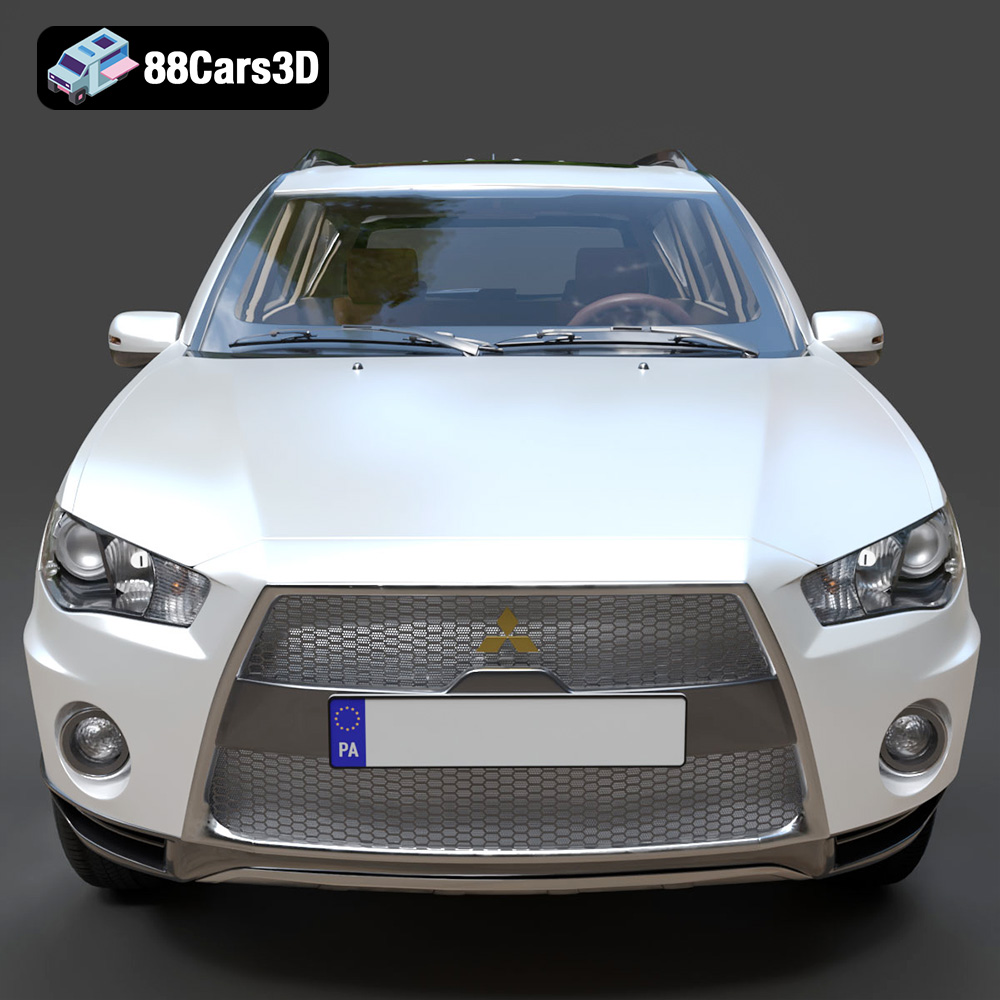
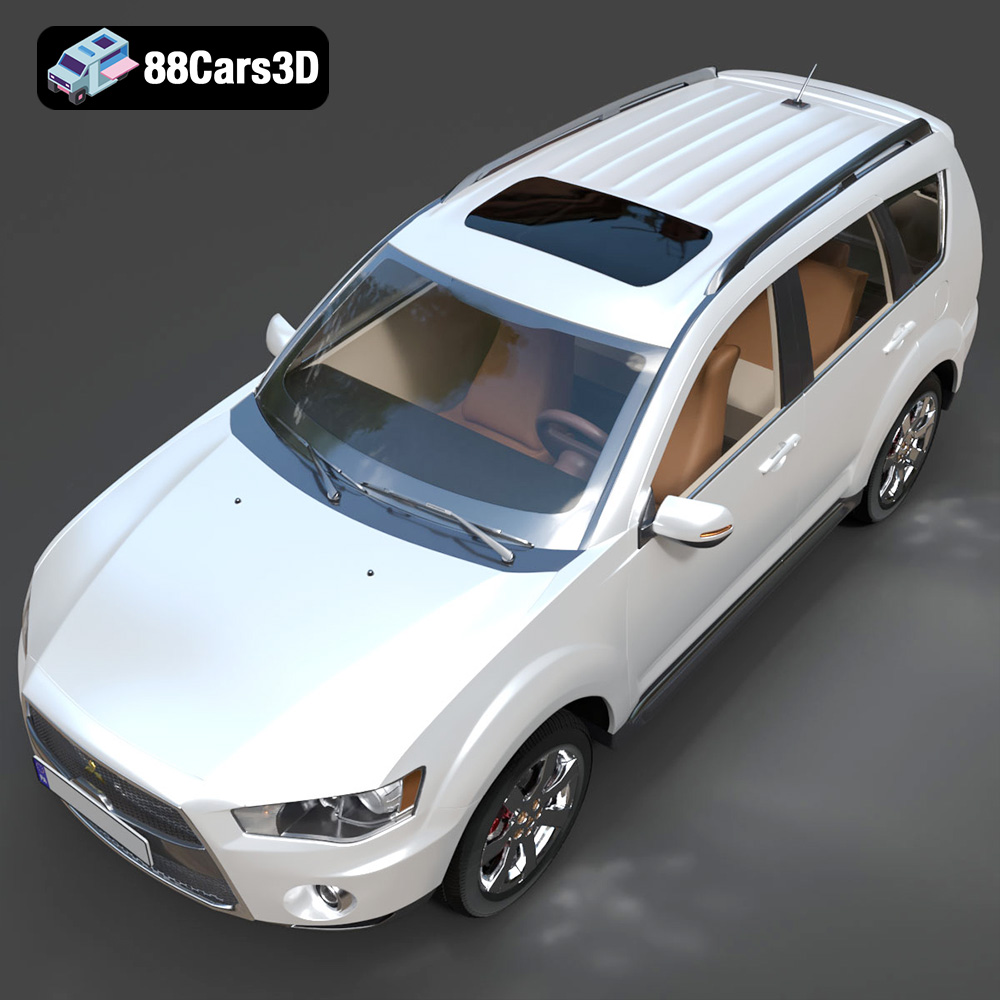
This model is a meticulous digital recreation of the 2010 Mitsubishi Outlander GT, a highly acclaimed crossover SUV. It flawlessly captures the vehicle’s sporty aesthetic, most notably its aggressive Lancer Evolution-inspired ‘Jet Fighter’ front grille, which defines its powerful presence. The accurate Mitsubishi Outlander GT 2010 frame geometry and proportions provide a solid foundation for realism. Beyond the bodywork, attention has been paid to the robust V6 engine profile, visible when appropriate, and its signature dual exhaust setup, adding to the vehicle’s dynamic character. Furthermore, the model features highly detailed bi-xenon HID headlights and striking LED taillights, replicated 18-inch alloy wheels with highly detailed crossover tires, and accurate independent front and rear suspension details. Crucially for animators and simulation developers, the wheels, suspension, and steering components are all separated and properly pivoted for dynamic animation, allowing for realistic turns, bumps, and suspension travel.
The dedication to detail extends into the interior, offering a rich environment for first-person perspectives in games or close-up renders for visualization. The model includes premium leather-appointed seating with detailed stitching, a multifunction steering wheel equipped with paddle shifters for a sporty feel, and an accurate instrument cluster. The central infotainment screen, realistic control details including pedals, a gear shifter, and a drive mode selector, all contribute to a highly immersive experience. This optimized geometry for first-person POV in gaming ensures that players or viewers feel truly integrated into the vehicle’s environment, enhancing the overall realism and user experience.
Beneath its stunning aesthetics, the Outlander GT model boasts impressive technical specifications. It’s truly “Game-Ready & Optimized,” with a triangle count of approximately 180,000. This polycount strikes an exceptional balance for real-time engines like Unreal and Unity, ensuring fluid performance without sacrificing high-end visual realism. The model is built to real-world scale accuracy, based on the actual vehicle chassis, ensuring correct spatial relationships. Additionally, proper pivot setup for steering, wheel rotation, and suspension travel simplifies animation and integration into physics systems. Compatibility with major 3D software platforms and real-time rendering engines further underscores its technical advantage, making it a versatile and reliable asset for any professional project requiring high-quality 3D car models.
The versatility of the Mitsubishi Outlander GT 2010 3D Model extends far beyond its inherent design, offering immense scope for creative application and customization across various industries. This adaptability is what makes it a truly valuable asset from 88cars3d.com.
The model’s optimized nature and high detail make it a prime candidate for a broad spectrum of uses. In game development, its low-poly yet realistic structure is ideal for inclusion in open-world games where performance is critical, or as a featured vehicle in racing titles and driving simulators. For AR/VR experiences, it forms the perfect basis for immersive virtual showrooms or interactive configurators, allowing users to engage with the vehicle in a highly personalized way. Designers and marketers can utilize it for exquisite rendering & visualization projects, creating compelling brand campaigns, sophisticated lifestyle scenes, or detailed studio lighting setups that showcase the Outlander GT’s design. And as discussed, its compatibility with the .stl format also makes it suitable for 3D printing, catering to hobbyists who wish to bring the digital design into the physical world.
One of the significant advantages of purchasing a professional 3D model is the inherent flexibility it offers for customization. The Mitsubishi Outlander GT 2010 model provides numerous avenues for artists to tailor it to specific project requirements. Users can easily change body colors, experimenting with factory-authentic hues or custom finishes to match a brand’s aesthetic. Tire textures can be modified to reflect different scenarios, from standard street variants to more aggressive off-road designs. Material finishes are also fully adjustable, allowing for exploration of matte, gloss, or metallic looks to achieve the desired visual impact. Furthermore, adapting lighting for different environments – be it a sunny outdoor scene, a moody urban night, or a pristine studio setup – can drastically alter the perception of the model, showcasing its adaptability as a premium 3D car model.
The demand for high-fidelity, production-ready 3D car models continues to accelerate, driven by the expanding frontiers of gaming, virtual reality, architectural visualization, and marketing. As evidenced by the comprehensive capabilities of the Mitsubishi Outlander GT 2010 3D Model, a truly valuable asset is one that combines meticulous detail with technical optimization and broad compatibility. From its authentic recreation of the Outlander GT’s distinct styling and intricate interior to its versatile file formats and game-ready optimization, this model stands as a testament to the art and science of modern 3D asset creation.
Whether you are developing the next generation of racing games, crafting stunning automotive rendering visuals, designing an immersive AR showroom, or even creating a physical replica through 3D printing, a high-quality 3D car model serves as the indispensable foundation. Products like the Mitsubishi Outlander GT 2010 3D Model from 88cars3d.com not only streamline professional workflows but also empower creators to push the boundaries of digital realism and interactive experiences. By investing in such meticulously engineered assets, artists and developers can focus their creative energy on storytelling and innovation, confident that their foundational models are built for excellence across any platform or purpose.
Discover the dynamic and versatile 2010 Mitsubishi Outlander GT, a highly acclaimed crossover SUV known for its aggressive Lancer Evolution-inspired ‘Jet Fighter’ front grille and advanced S-AWC all-wheel-drive system. Our meticulously crafted 3D model perfectly captures the vehicle’s sporty aesthetic, featuring accurate exterior lines, a robust V6 engine profile, and its signature dual exhaust setup.
Engineered with highly optimized topology and an efficient triangle count, this game-ready asset guarantees exceptional visual fidelity without compromising real-time performance. Designed to meet the stringent demands of modern 3D engines, it acts as a plug-and-play solution for game development, AR/VR experiences, animation, and architectural visualization.
Perfect for urban driving simulators, off-road racing titles, virtual automotive showrooms, and high-end lifestyle rendering projects.
.blend, .fbx, .obj, .glb, .stl, .ply, .unreal, .max
Tags:
mitsubishi, outlander, outlander-gt, 2010, suv, crossover, game-ready, low-poly, optimized, car-3d-model, game-asset, rendering, vr-ar, blend, fbx, obj, glb, stl, ply, unreal, maxBMW 328 Mille Miglia Touring Coupe 3D Model 3D Printable STL
$39.99
.2010
.blend
.crossover
.fbx
.glb
.max
.mitsubishi
.obj
.outlander
.ply
.rendering
.stl
.unreal
car-3d-model
game asset
game-ready
low-poly
optimized
outlander-gt
SUV
VR/AR