Get 20% OFF All Premium 3D & STL Models!

In today’s visually-driven digital landscape, the demand for high-fidelity 3D assets is insatiable. From captivating automotive rendering for advertising campaigns to immersive game development and groundbreaking AR/VR experiences, meticulously crafted 3D car models and vehicles form the bedrock of compelling visual content. Professionals across diverse sectors understand that the quality of their 3D models directly impacts the credibility, performance, and aesthetic appeal of their final output. It’s not just about creating a shape in three dimensions; it’s about capturing the soul of an object, its intricate details, and its functional elegance.
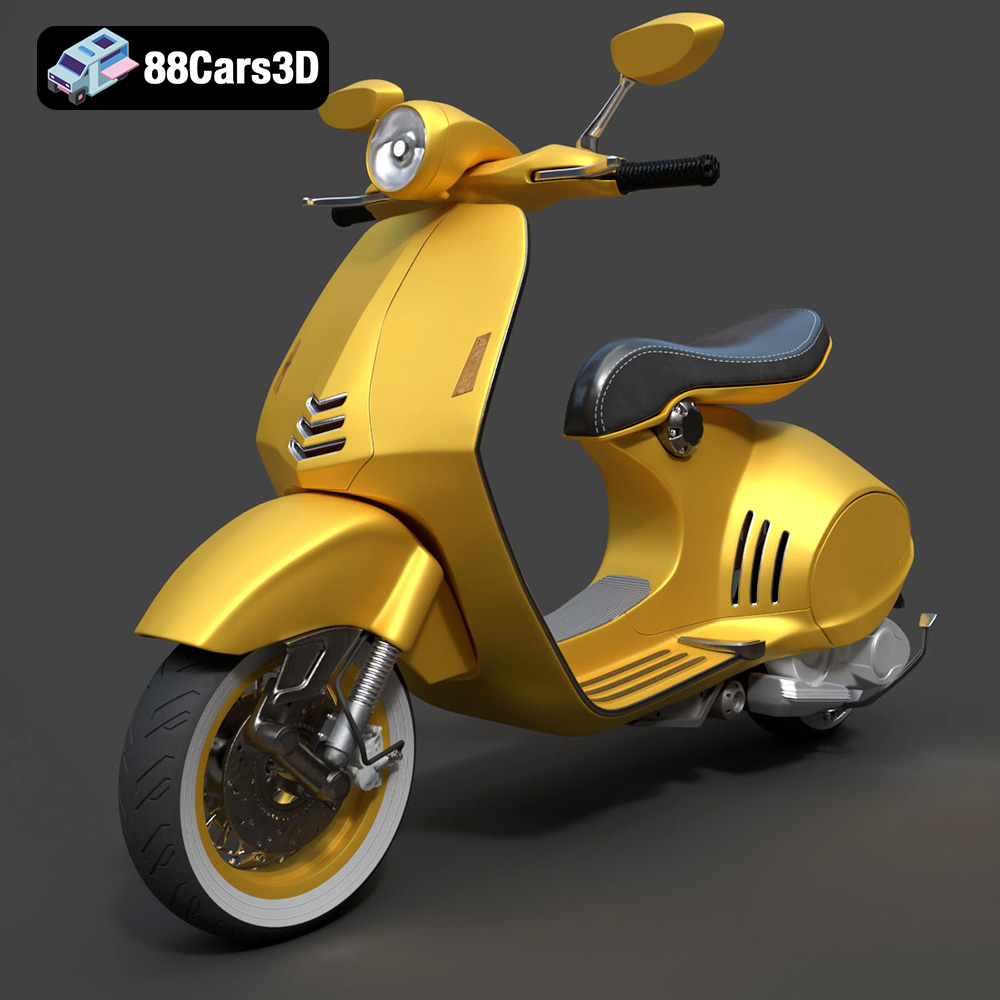
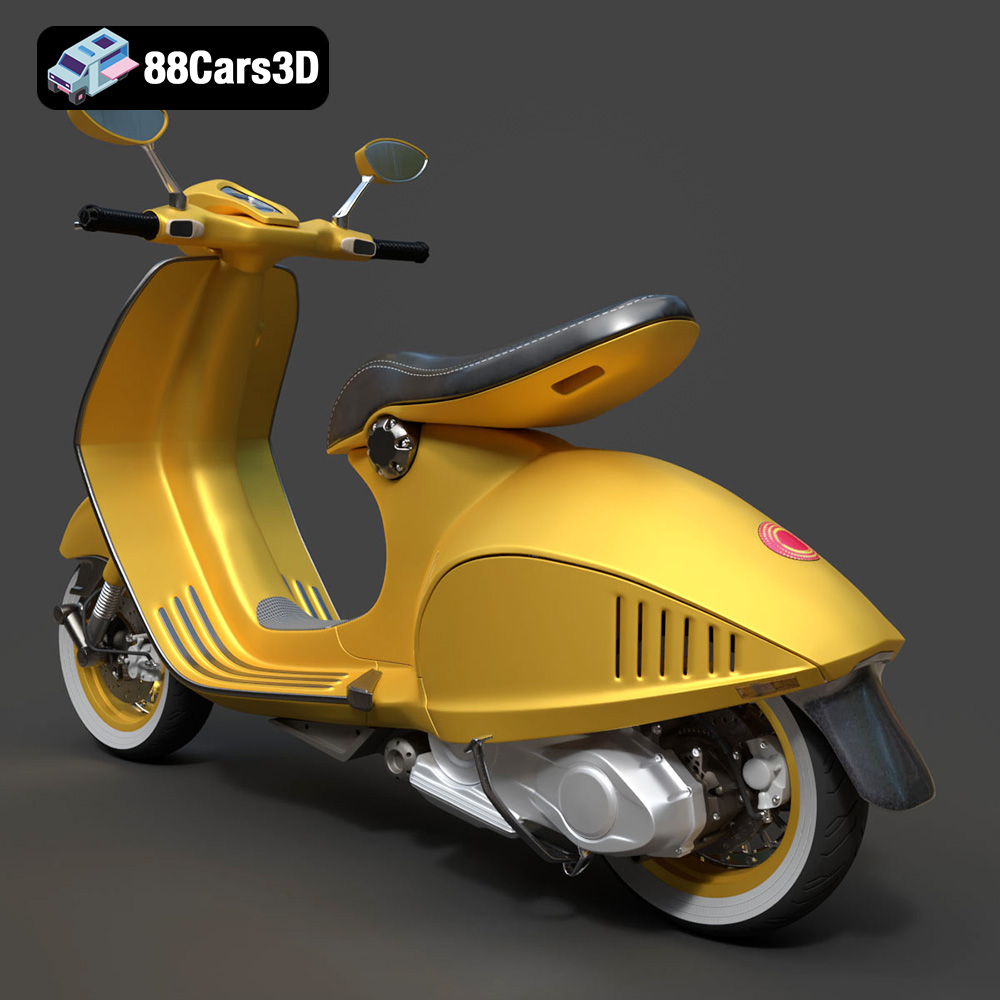
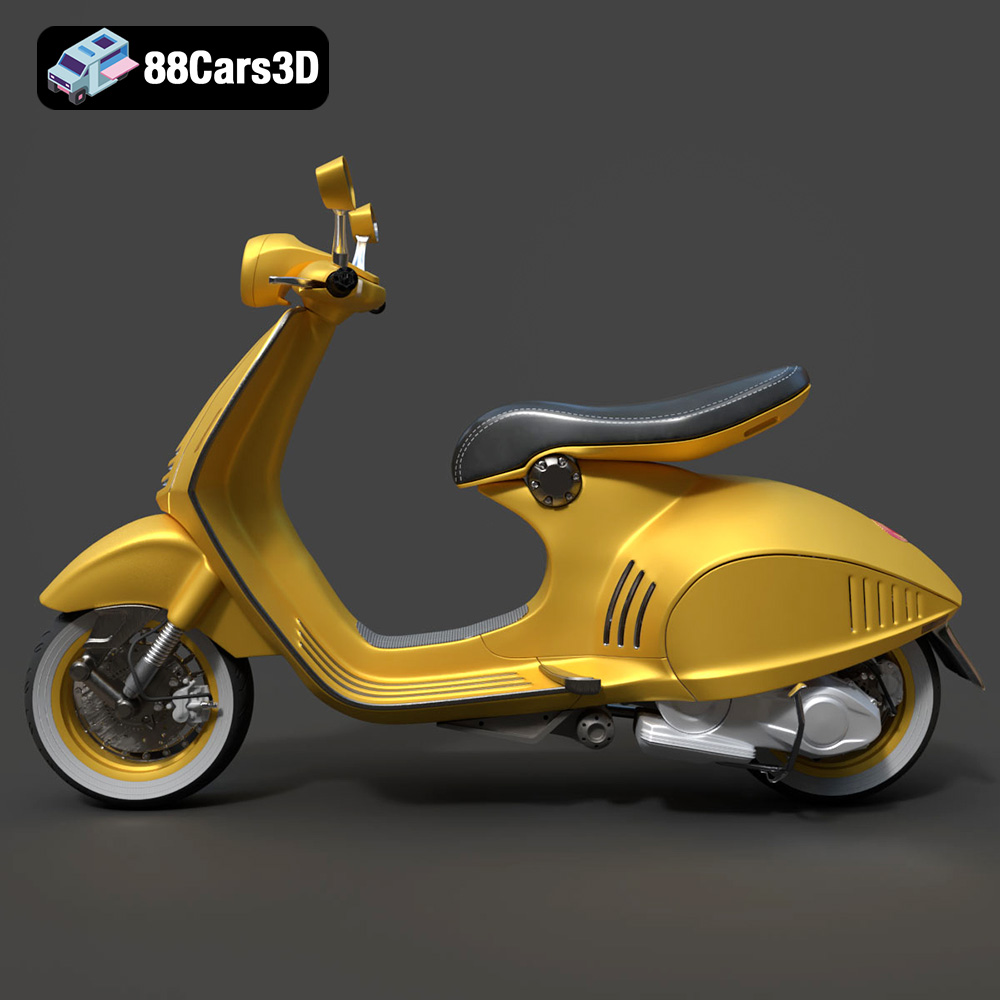
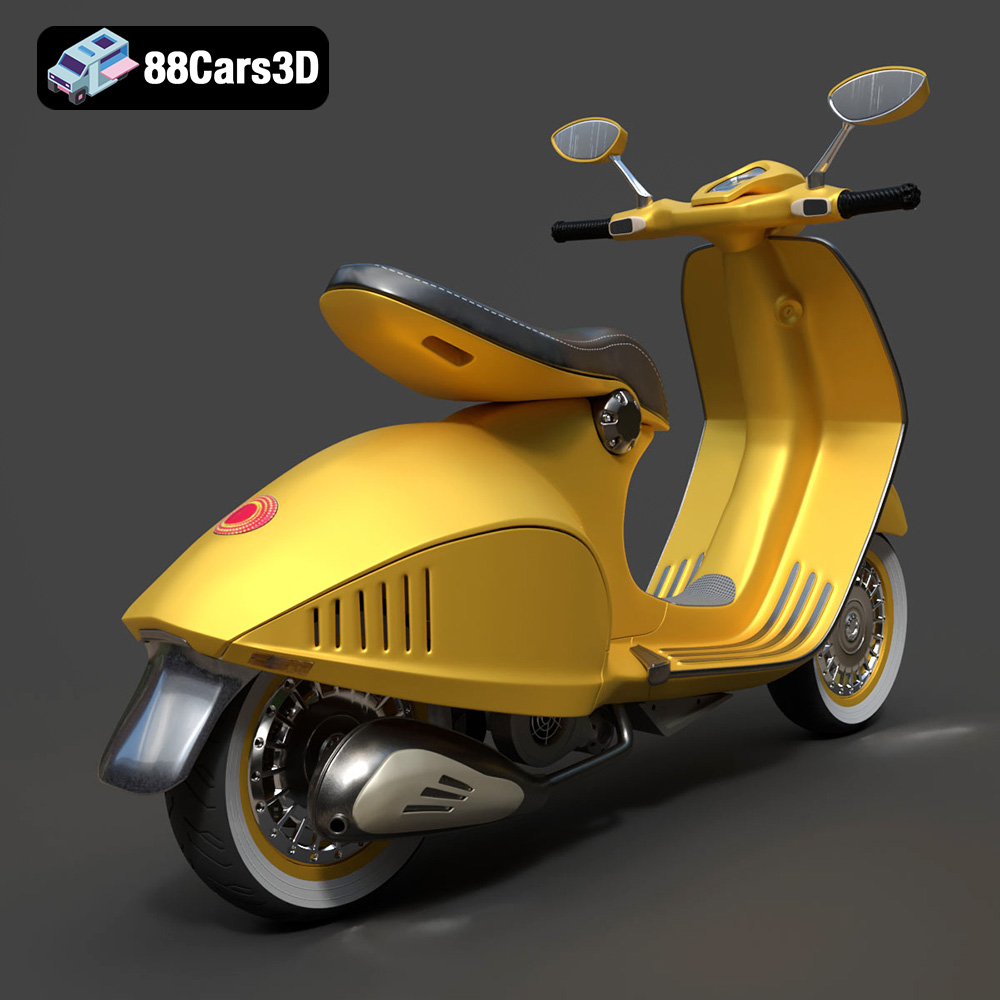
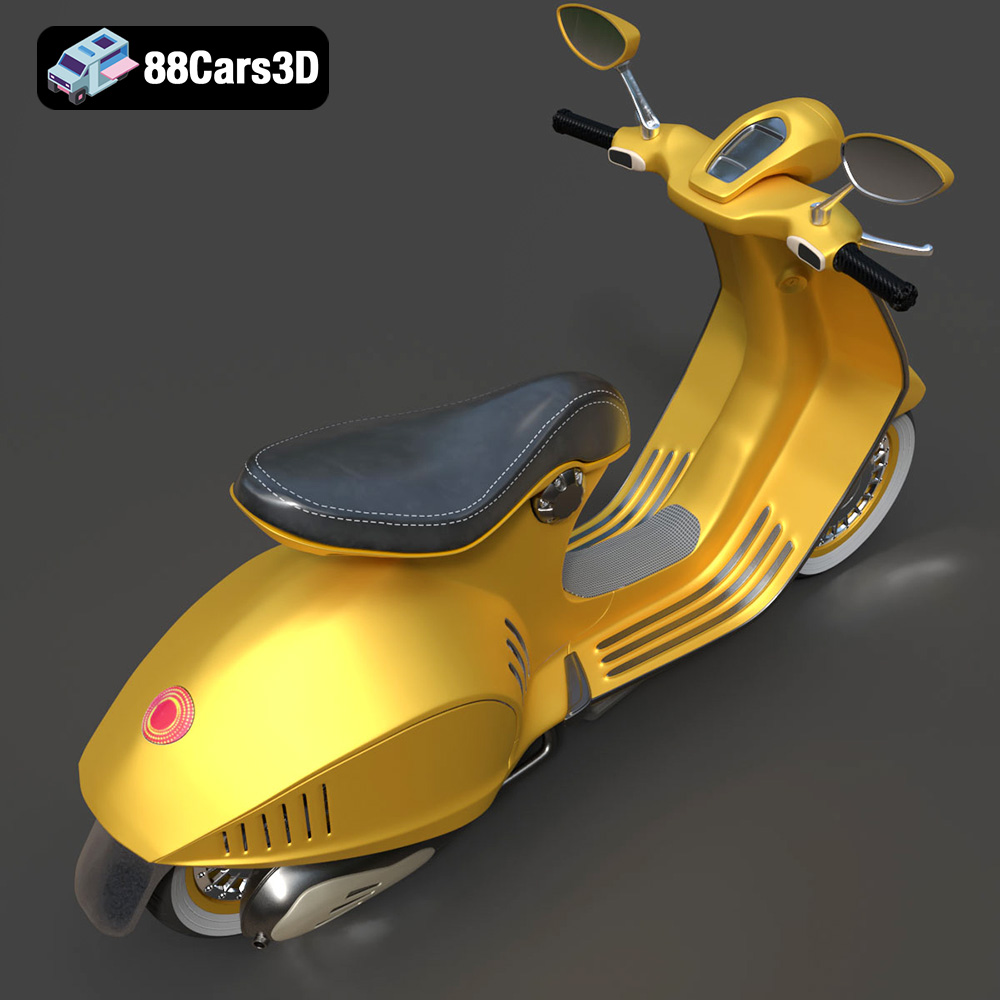
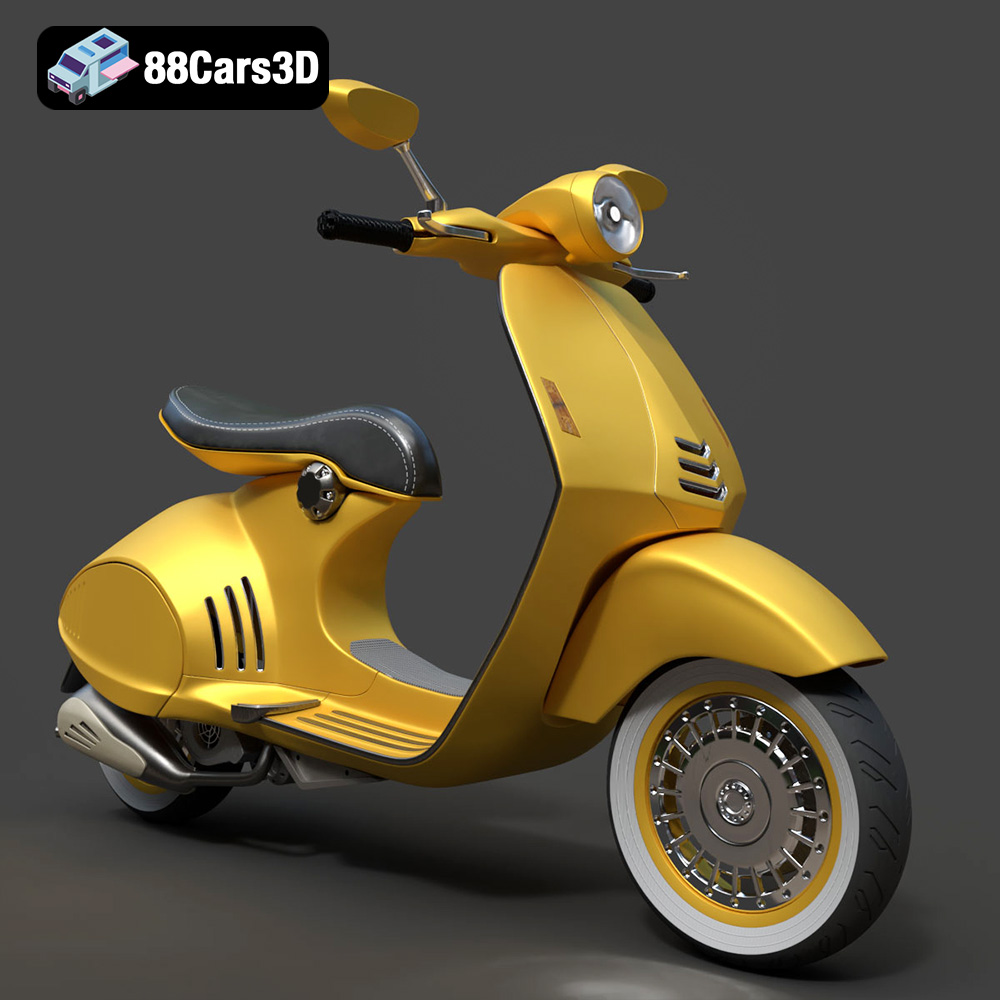
Consider the timeless charm and sophisticated engineering of a classic like the Vespa 946. Replicating such an iconic design in the digital realm requires more than just skilled modeling; it demands an understanding of its heritage and aesthetic principles. This is precisely where a premium asset like the Vespa 946 3D Model distinguishes itself. It offers an unparalleled level of detail and authenticity, meticulously translating the scooter’s distinctive curves, polished chassis, and ergonomic seating into a digital masterpiece. Designed with clean geometry and optimized polygon counts, this model ensures seamless integration into various professional pipelines, serving as an ideal foundation for demanding digital creations across animation, visualization, and real-time applications.
This article will delve into the technical intricacies, workflow considerations, and diverse applications of professional 3D models, using the Vespa 946 3D Model as a prime example of excellence in asset creation. We’ll explore why choosing high-quality assets from reputable sources like 88cars3d.com is crucial for success in any project requiring automotive rendering or game assets.
The versatility of a professional 3D model often lies in its availability across multiple file formats, each optimized for specific software, workflows, and end-uses. Understanding these formats is paramount for any 3D artist or developer, ensuring compatibility, preserving data integrity, and maximizing efficiency. The Vespa 946 3D Model, for instance, comes bundled with an impressive array of formats, each serving a critical role in the digital production pipeline.
The .blend format is the native file type for Blender, the renowned open-source 3D creation suite. A .blend file is a complete scene package, containing not just the mesh data, but also materials, textures, lighting setups, cameras, animations, physics simulations, and even custom scripts. For artists working primarily in Blender, this format offers maximum flexibility and editability. The Vespa 946 3D Model in .blend format provides an editable Blender scene complete with materials and a lighting setup, allowing for immediate rendering or further customization, from tweaking the metallic sheen of the chassis to adjusting scene lighting for a unique artistic vision.
.fbx (Filmbox) is a proprietary file format owned by Autodesk, widely regarded as the industry standard for exchanging 3D data between different software applications, especially within game development pipelines. It supports geometry, materials, textures, animations, and rigs. Its strength lies in its robust support for animation data and hierarchical structures, making it ideal for real-time engines like Unreal Engine and Unity. When a model like the Vespa 946 is provided as .fbx, it’s typically “game-engine ready,” meaning it’s optimized for performance with appropriate poly counts, UVs, and PBR (Physically Based Rendering) materials configured for real-time display, ensuring smooth integration into interactive environments.
The .obj (Wavefront OBJ) format is one of the oldest and most universally supported 3D file formats. It’s a simple, text-based format primarily used to store geometric data (vertices, normals, texture coordinates, and faces). While it supports basic material definitions via an accompanying .mtl file, it doesn’t handle animation or rigging data. Its strength is its ubiquity, making it an excellent choice for cross-software compatibility. If you need to import the Vespa 946 3D Model into virtually any 3D modeling or CAD software without worrying about advanced features, .obj is your go-to format, offering a clean mesh for further manipulation.
.glb (GL Transmission Format Binary) is a modern, compact, and efficient file format designed for web-based 3D graphics. It’s the binary version of glTF (GL Transmission Format), packaging all necessary data (geometry, materials, textures, animations) into a single file, making it incredibly easy to share and load quickly in browsers and AR/VR applications. For projects involving augmented reality, virtual reality, or interactive web experiences featuring the Vespa 946, the .glb format is optimized for fast loading and rendering, providing a seamless, immersive display without requiring powerful dedicated software.
.stl (STereoLithography) is the standard file format for 3D printing and rapid prototyping. It describes only the surface geometry of a 3D object using a collection of interconnected triangles, without any color, texture, or material information. While not suitable for rendering or animation directly, an .stl version of the Vespa 946 3D Model enables physical fabrication, allowing designers to create scale models or prototypes. This is invaluable for product design, engineering, or even creating physical collectibles.
The .ply (Polygon File Format, or Stanford Triangle Format) is another format primarily used to store 3D data from 3D scanners. It can store a wide range of properties, including color, transparency, normals, texture coordinates, and scalar values. It’s often favored in academic research, computer vision, and reverse engineering due to its flexibility in representing complex data. For precise analysis or visualization of the Vespa 946’s geometry, especially if you’re dealing with high-density point clouds or intricate surface data, the .ply format offers a robust solution.
Specific to the Unreal Engine, the .unreal format signifies an asset that has been pre-configured and optimized for direct import into Unreal projects. This means the model’s materials, textures, and possibly collision data or LODs (Levels of Detail) have been set up according to Unreal’s specifications, streamlining the integration process. For game developers or real-time visualization artists, having the Vespa 946 available in this engine-ready format significantly reduces setup time and ensures optimal performance within the Unreal ecosystem.
Finally, the .max format is the native file type for Autodesk 3ds Max, a leading software for 3D modeling, animation, and rendering. Similar to .blend, a .max file contains the complete scene, including geometry, materials, lights, cameras, animations, and render settings. For professionals using 3ds Max for high-end automotive rendering or architectural visualization, the .max version of the Vespa 946 offers full editability and compatibility with rendering engines like V-Ray or Corona, allowing for detailed adjustments and integration into complex scenes.
The comprehensive set of formats provided with the Vespa 946 3D Model from 88cars3d.com underscores its professional utility, ensuring that artists and developers have the correct tools for any project, regardless of their preferred software or final application.
The true value of a high-quality 3D model, such as the Vespa 946, comes from its seamless integration into various professional workflows. Whether your goal is photorealistic automotive rendering, interactive game assets, or compelling architectural visualization, a well-prepared model dramatically cuts down production time and elevates output quality.
For cinematic visuals and advertising, 3ds Max paired with industry-standard renderers like V-Ray or Corona remains a top choice. The .max file provided with the Vespa 946 3D Model allows artists to immediately open a pre-configured scene. From there, they can fine-tune lighting to highlight the scooter’s elegant curves, adjust material properties for perfect reflections, and compose dynamic camera angles. Imagine a showroom setup, where the polished chassis of the Vespa 946 catches the soft studio lights, or a vibrant street scene where it stands out amidst a blurred background. The professional-grade topology of the model ensures smooth subdivisions, crucial for close-up renders where surface imperfections would be glaringly obvious on a lesser model. Artists can focus on artistic direction rather than fixing geometry issues.
In game development, performance is as critical as visual fidelity. The Vespa 946 3D Model’s availability as .fbx and a dedicated .unreal file is a significant advantage. Game developers can import the optimized mesh, complete with PBR (Physically Based Rendering) textures, directly into Unreal Engine. The clean geometry and optimized polygon counts mean the model won’t unnecessarily burden the game engine, ensuring smooth frame rates. Developers can then easily create LODs (Levels of Detail) for different viewing distances, add collision meshes for realistic interactions, and even rig the scooter for animations such as turning handlebars or rolling wheels. This ready-to-use asset accelerates prototyping and final asset integration, allowing teams to focus on gameplay mechanics and environmental design.
Architectural visualization often requires populating scenes with realistic props and vehicles to bring life and scale to a design. A detailed model like the Vespa 946 can transform a static street scene into a bustling urban environment or add a touch of Italian flair to a modern villa render. Using the .obj or .max formats, visualization artists can place the scooter within their architectural renders, adjusting its position, rotation, and scale to match the scene. Its realistic materials and accurate texturing ensure it blends seamlessly with the environment, enhancing the overall realism and narrative of the architectural presentation. For instance, placing the Vespa 946 outside a chic cafe in a high-quality render instantly communicates a specific lifestyle and atmosphere.
The differentiation between a mediocre 3D model and a professional-grade asset lies in its technical foundation. For applications ranging from high-end automotive rendering to robust game assets, adhering to stringent technical specifications is non-negotiable. The Vespa 946 3D Model exemplifies these best practices, providing a reliable and versatile asset.
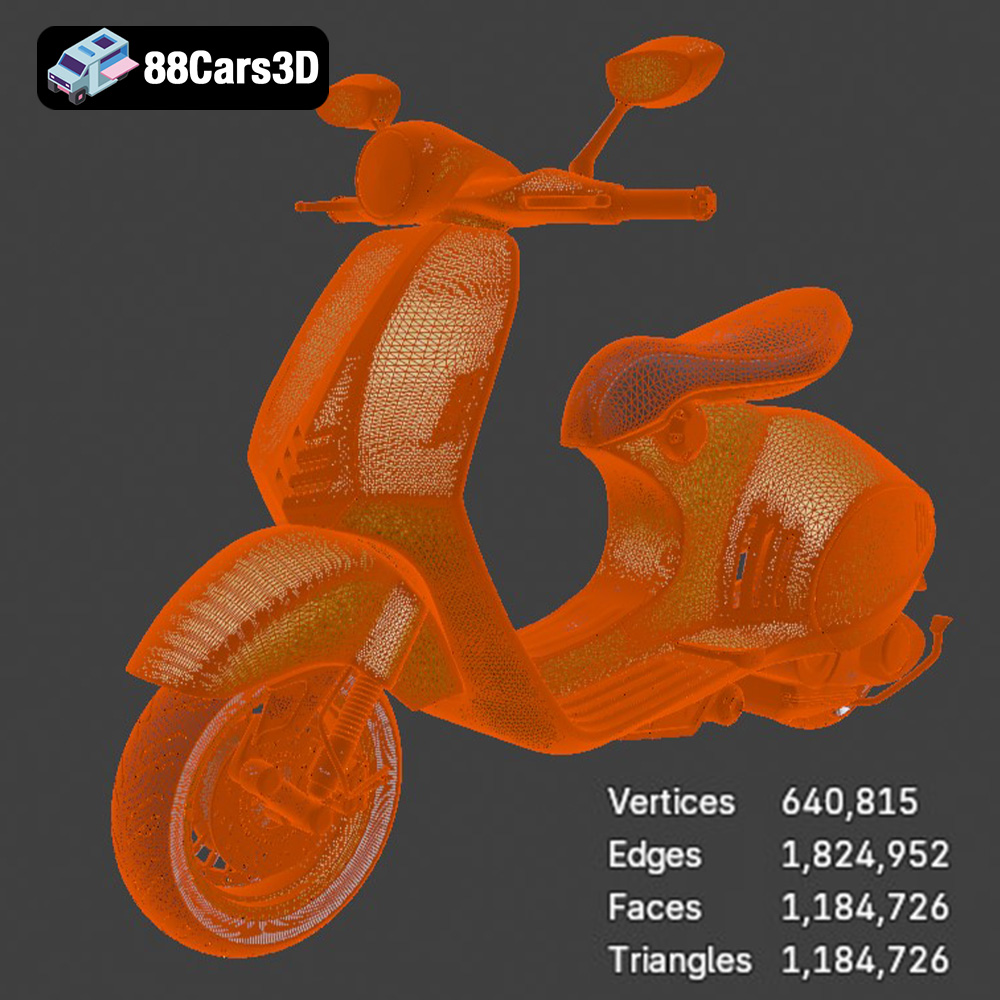
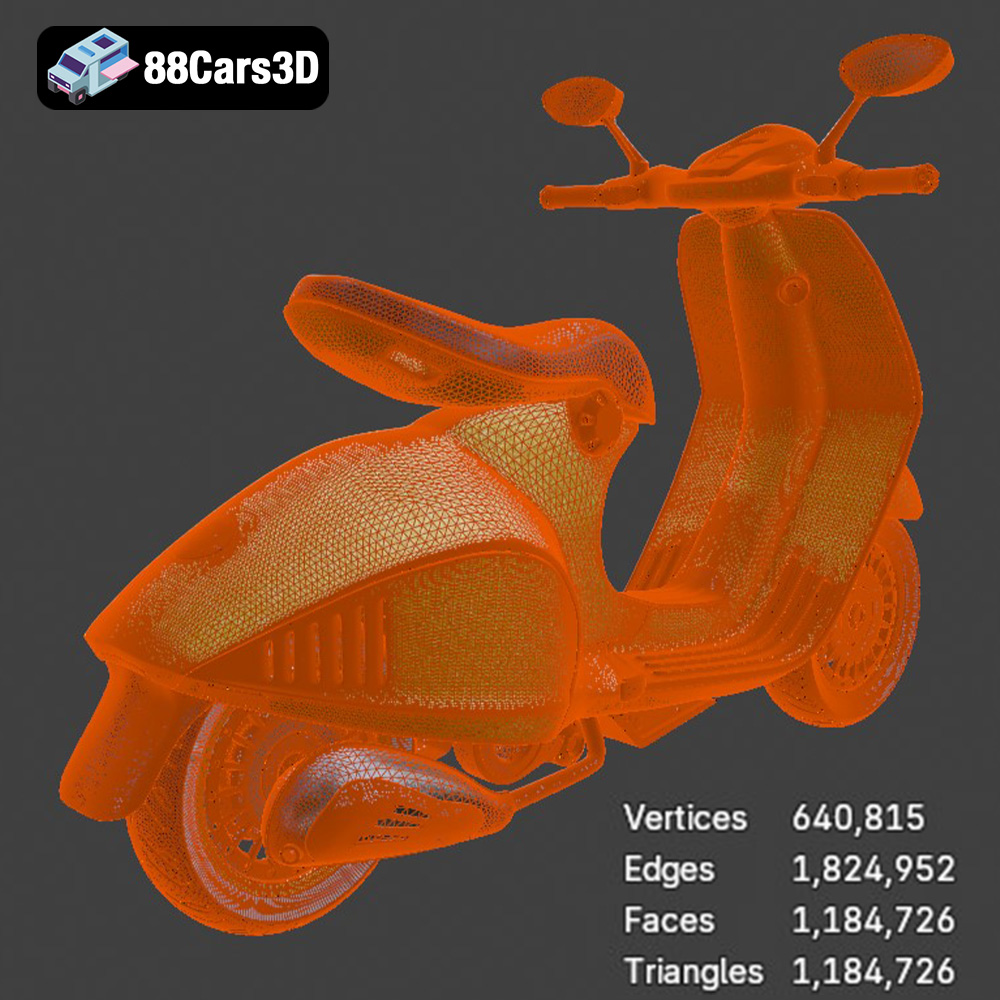
At the core of any high-quality 3D model is its geometry. “Clean geometry” refers to a mesh that is free from artifacts like non-manifold edges, inverted normals, or overlapping faces, and adheres to good topology principles (e.g., primarily quads, appropriate edge loops). This ensures that the model subdivides smoothly, deforms correctly during animation, and renders without visual glitches. The Vespa 946 3D Model boasts clean geometry, meaning it’s ready for subdivision modifiers, providing a perfectly smooth surface for close-up shots without manual cleanup. Simultaneously, it features optimized polygon counts. This balance is crucial: too many polygons increase file size and rendering times, while too few can result in blocky, unrealistic shapes. An optimized model like this one offers sufficient detail for realism while remaining performant enough for real-time applications, a hallmark of professionally prepared 3D car models.
Visual realism in 3D is heavily dependent on the quality of materials and textures. Physically Based Rendering (PBR) has become the gold standard, accurately simulating how light interacts with surfaces based on real-world properties. A professional 3D model includes well-calibrated PBR textures (Albedo/Base Color, Metallic, Roughness, Normal, Ambient Occlusion maps, etc.) that accurately represent the object’s surface. The Vespa 946 3D Model comes with realistic materials and accurate texturing that replicate the distinct sheen of its metallic parts, the subtle texture of its seating, and the reflectivity of its chrome accents. This attention to material detail is what truly brings the model to life, making it indistinguishable from its real-world counterpart in high-resolution renders.
UV mapping is the process of flattening the 3D surface of a model into a 2D space so that a 2D texture can be applied to it. High-quality UVs are crucial for preventing texture stretching, seams, and distortion. A well-UV-mapped model has a logical layout that efficiently utilizes texture space and facilitates easy texture painting or application. The highly detailed structure of the Vespa 946 3D Model implies meticulous UV unwrapping, ensuring that its accurate texturing is applied seamlessly across all surfaces. This attention to detail means that whether you’re rendering a close-up of the headlight or a wide shot of the entire scooter, the textures will always appear crisp and consistent, contributing significantly to the overall visual fidelity.
The versatility of a meticulously crafted 3D model like the Vespa 946 extends across a multitude of industries, proving its value in diverse professional scenarios. Its adaptability makes it an invaluable asset for creative agencies, product designers, game studios, and simulation developers.
In the competitive world of advertising, visual impact is everything. High-quality 3D car models allow brands to create stunning, photorealistic visuals for product launches, brochures, commercials, and online campaigns without the expense and logistical challenges of physical photoshoots. Imagine a new Vespa 946 model being advertised with a visually arresting 3D render showcasing its design from every angle, or placed in fantastical environments impossible to achieve with live photography. The ability to iterate quickly on colors, materials, and settings in a 3D environment provides unparalleled creative freedom. This precision in automotive rendering helps communicate the brand’s message and the product’s premium quality effectively to potential customers.
Augmented Reality (AR) and Virtual Reality (VR) are transforming how we interact with digital content, offering immersive experiences that blur the line between real and virtual. A well-optimized 3D model, especially in formats like .glb, is perfectly suited for these platforms. Developers can integrate the Vespa 946 3D Model into AR apps, allowing prospective buyers to “see” the scooter in their driveway or living room before purchasing, or to explore its features interactively. In VR training simulations, mechanics could learn to service the Vespa in a virtual garage. These interactive applications provide engaging and informative experiences that would be impossible with traditional media, driven by high-quality game assets.
Beyond entertainment, 3D models play a crucial role in simulation for training, engineering, and logistics. For instance, a detailed 3D model of the Vespa 946 could be used in urban planning simulations to assess traffic flow, or in driver training modules to simulate riding scenarios in various conditions. Engineers might use it for ergonomic studies or for virtually testing accessory designs. The accurate geometry and proportions of the model are vital here, ensuring that simulations are true to life. This extends to fields like forensics, where accurate 3D models of vehicles can reconstruct accident scenes for analysis. The robust and accurate nature of the Vespa 946 3D Model makes it a suitable candidate for these demanding, data-driven applications.
For professionals seeking to elevate their projects, the source of 3D assets is as important as the assets themselves. Websites like 88cars3d.com specialize in providing high-quality, production-ready 3D car models and other vehicles, making it easier for artists and developers to access the tools they need to succeed.
88cars3d.com prides itself on offering a meticulously curated selection of 3D models, ensuring that every asset meets professional standards of quality and detail. This eliminates the guesswork and risk often associated with finding reliable 3D content online. When you’re looking for a specific vehicle, whether it’s an elegant scooter like the Vespa 946 or a high-performance sports car, you can trust that the models available have undergone rigorous quality checks. This focus on quality means artists can spend less time fixing mesh issues or re-texturing, and more time on creative endeavors, confident in the integrity of their base assets.
Time is a valuable commodity in any production pipeline. By offering models like the Vespa 946 3D Model with clean geometry, optimized poly counts, and multiple ready-to-use file formats (including game-engine ready .fbx and .unreal files), 88cars3d.com significantly streamlines the workflow. Artists can bypass the arduous process of modeling complex vehicles from scratch, instantly gaining access to a highly detailed and versatile asset. This efficiency is crucial for meeting tight deadlines and managing project budgets, enabling studios to deliver high-quality automotive rendering and compelling game assets with greater speed and consistency.
Choosing a premium 3D model is an investment that pays dividends in the long run. A well-constructed model is future-proof, capable of being adapted for various projects and technologies as they evolve. The superior topology of the Vespa 946 3D Model ensures it will hold up under scrutiny in future high-resolution renders and demanding real-time environments. Furthermore, models from reliable sources come with proper licensing, giving you peace of mind that your work is legally compliant. For any professional striving for excellence in 3D visualization, game development, or design, investing in high-quality assets from platforms like 88cars3d.com is a foundational step towards achieving outstanding results.
In the expansive and ever-evolving world of 3D content creation, the quality of your foundational assets directly dictates the success and impact of your projects. From the meticulous crafting of an object’s geometry to its optimized performance across diverse platforms and its seamless integration into complex workflows, every detail counts. The featured Vespa 946 3D Model stands as a testament to this philosophy, offering not just a visual representation, but a robust, versatile, and technically superior asset ready to empower professionals across numerous industries.
Whether you’re developing the next blockbuster game, producing a high-stakes advertising campaign through stunning automotive rendering, or creating immersive AR/VR experiences, investing in high-quality 3D car models and vehicles is a non-negotiable step towards achieving digital excellence. With its clean geometry, optimized poly counts, realistic materials, and comprehensive file format support, the Vespa 946 3D Model provides a ready-to-use solution that saves valuable production time and elevates visual fidelity. Explore this and many other premium 3D models available at 88cars3d.com to unlock the full potential of your creative vision and deliver truly exceptional digital experiences.
Experience the iconic elegance of the Vespa 946 with this meticulously crafted 3D model. Designed to replicate the authentic curves and refined aesthetics of the renowned scooter, this asset provides true-to-life realism for professional projects. Whether for close-up studio renders or dynamic environments, every detail from the distinct seating to the polished chassis has been modeled with precision. Built with clean geometry and optimized polygon counts, this model ensures seamless integration into various pipelines. It features realistic materials, accurate texturing, and a highly detailed structure, making it a perfect choice for demanding digital creations. The professional-grade topology guarantees smooth subdivisions and optimal performance. This Vespa 946 3D model is highly versatile and ideal for a wide range of applications, including game development, architectural visualization, AR/VR experiences, animation, and realistic rendering. It provides creators with a ready-to-use asset that elevates the visual fidelity of any scene. Included file formats: .blend – Editable Blender file with materials and lighting setup, .fbx – Game-engine ready format for Unreal Engine and Unity, .obj – Standard 3D model format compatible with all major software, .glb – Optimized for AR/VR and web-based visualization, .stl – Suitable for 3D printing and prototyping, .ply – Detailed polygon mesh for analysis and visualization, .unreal – Pre-configured for Unreal Engine use, .max – Editable 3ds Max file for rendering and animation.
$39.99
.946
.arvr
.blend
.car3dmodel
.fbx
.gameasset
.glb
.max
.motorcycle
.obj
.ply
.rendering
.scooter
.simulation
.stl
.unreal
.vespa