Get 20% OFF All Premium 3D & STL Models!

In the vast and intricate world of 3D design, the pursuit of realism and efficiency is a constant endeavor. From breathtaking cinematic sequences to immersive game environments and precise architectural visualizations, the quality of a 3D asset dictates the success of a project. Automotive models, in particular, demand an exceptional level of detail and accuracy to truly resonate with audiences. It’s not just about recreating a vehicle; it’s about capturing its soul, its engineering, and its aesthetic appeal in a digital format.
Few vehicles embody timeless design and sophisticated engineering quite like the Vespa. Its iconic silhouette has graced streets worldwide for decades, becoming a symbol of freedom and elegance. Translating such a classic into the digital realm requires meticulous attention to every curve, every reflection, and every material. This is precisely where a high-quality asset like the Vespa 946 3D Model distinguishes itself, offering designers, game developers, and visualization artists an unparalleled foundation for their projects. It’s a testament to how expertly crafted 3D car models and vehicle assets can elevate any digital scene, providing true-to-life realism that captivates and convinces.
The digital landscape is more competitive than ever, demanding assets that are not only visually stunning but also technically robust. Whether you’re working on a high-fidelity automotive rendering for a marketing campaign, developing realistic game assets for an open-world title, or creating interactive AR/VR experiences, the foundational 3D models must meet stringent standards. Compromising on quality often leads to wasted time, inconsistent visuals, and ultimately, a less impactful final product.
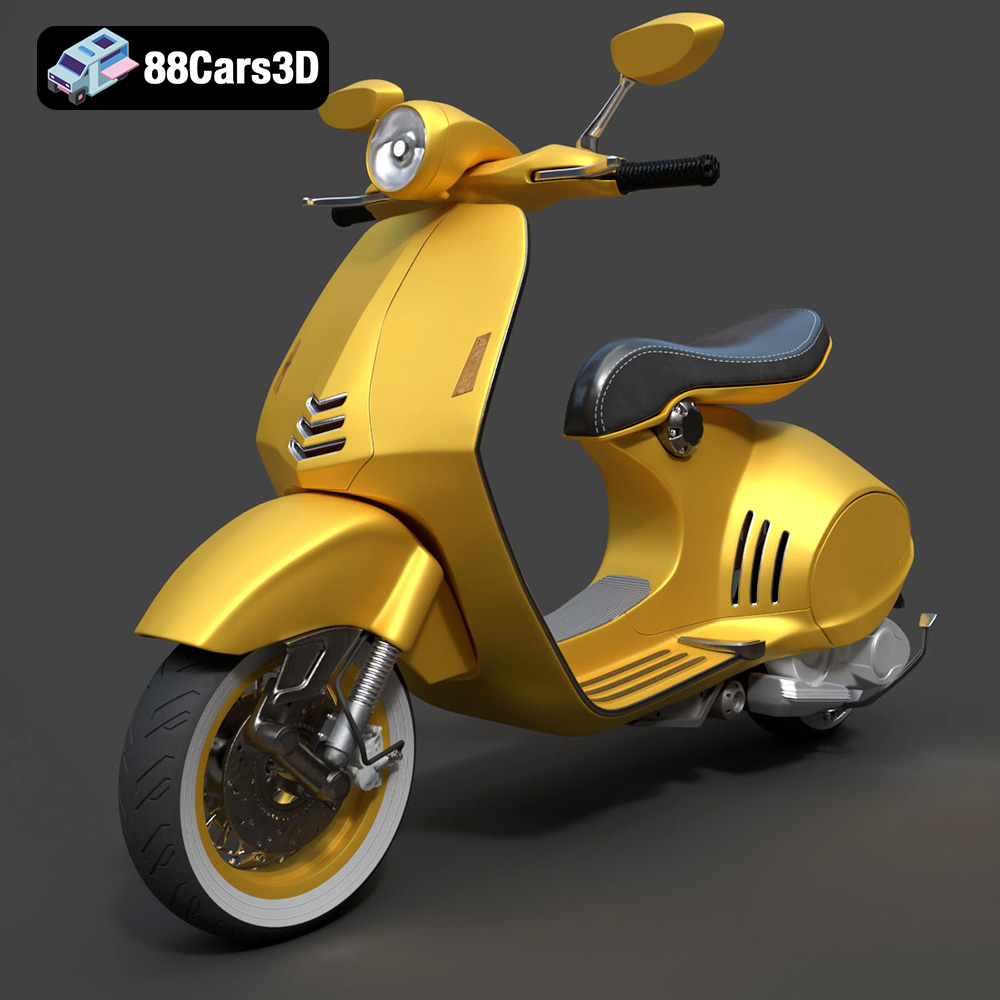
For industries like advertising, product design, and architectural visualization, photorealism is paramount. A car model isn’t just a static object; it needs to reflect light accurately, exhibit nuanced material properties, and integrate seamlessly into diverse environments. The Vespa 946 3D Model, with its detailed geometry and realistic materials, serves as an excellent example. Its polished chassis, distinct seating, and intricate mechanical components are all designed to react to virtual lighting setups as they would in the real world. This level of detail is crucial for creating marketing visuals that are indistinguishable from real photography, allowing brands to showcase products before physical prototypes even exist.
Time is a valuable commodity in any production pipeline. Creating complex 3D car models from scratch is an incredibly time-consuming process, requiring expert modeling, texturing, and rigging skills. By utilizing pre-made, professional-grade assets, studios and individual artists can significantly cut down on development cycles. A model that is “ready-to-use” means less time spent on foundational work and more time dedicated to creative iteration, scene composition, and fine-tuning. For instance, the Vespa 946 3D Model arrives with clean geometry, optimized polygon counts, and pre-configured materials, enabling artists to drop it into their scene and immediately begin rendering or integrating it into a game engine. This efficiency is a core advantage offered by marketplaces like 88cars3d.com, providing valuable resources that empower creators.
Navigating the diverse world of 3D software and applications means understanding the various file formats that facilitate data exchange. Each format serves a specific purpose, optimized for different stages of the 3D pipeline—from initial modeling and animation to real-time rendering and physical fabrication. Choosing the correct format is crucial for maintaining data integrity, optimizing performance, and ensuring compatibility across your chosen toolset. The Vespa 946 3D Model, for example, is offered in a comprehensive suite of formats, catering to virtually any professional workflow.
The .blend format is the native file type for Blender, an incredibly powerful open-source 3D creation suite. When you receive a .blend file, you’re getting a complete Blender scene, often including not just the model mesh but also materials, textures, lighting setups, cameras, animations, and even physics simulations. This makes .blend files ideal for artists who use Blender as their primary DCC (Digital Content Creation) tool, as it provides maximum editability and allows for direct manipulation of every aspect of the asset. Similarly, the .max format is proprietary to Autodesk 3ds Max, one of the industry’s leading software for modeling, animation, and rendering. A .max file offers a fully editable 3ds Max project, preserving all scene elements, modifiers, and rendering settings, which is invaluable for professional studios reliant on this robust platform for high-end automotive rendering and visualization projects.
For game development and real-time interactive experiences, the .fbx (Filmbox) format is a gold standard. Developed by Autodesk, FBX is widely supported across various 3D software and game engines like Unreal Engine and Unity. It’s particularly good at encapsulating not just mesh data but also animations, skinning, blend shapes, and camera information, making it an ideal intermediate format for transferring complex animated assets. Its robust nature makes it the go-to choice when importing game assets into a real-time environment. Complementing this, the .unreal format represents a pre-configured, engine-ready asset specifically tailored for Unreal Engine. This means the model might already have optimized UVs, collision meshes, LODs (Levels of Detail), and appropriate material setups for Unreal’s Physically Based Rendering (PBR) system, drastically accelerating the integration process for game developers.
The .obj (Wavefront Object) format is a classic, universal 3D model format renowned for its widespread compatibility. Almost every 3D software can import and export OBJ files, making it excellent for cross-software workflows. While it primarily stores geometry (vertices, normals, UVs, faces) and can link to external material files (.mtl), it doesn’t typically store animations or complex scene data. This simplicity makes it a reliable choice for static model transfers. For AR, VR, and web-based applications, the .glb (GL Transmission Format Binary) is increasingly popular. GLB is a binary version of glTF, a royalty-free specification for 3D scenes and models. It’s optimized for efficient transmission and loading of 3D assets, combining model, texture, and animation data into a single, compact file, making it perfect for interactive web viewers and mobile AR experiences. When it comes to physical fabrication, the .stl (Stereolithography) format takes precedence. It defines only the surface geometry of a 3D object using a collection of triangular facets, making it the industry standard for 3D printing and rapid prototyping. Lastly, the .ply (Polygon File Format) is another precision mesh format, often used for storing 3D scanner data. It can store a wider range of properties, including color, transparency, and texture coordinates per vertex or face, which can be useful for scientific visualization, CAD, or detailed analysis where exact mesh data is critical.
The journey from a raw 3D model to a captivating visual masterpiece involves a series of sophisticated workflows. A high-quality 3D asset, such as the Vespa 946 3D Model, provides an excellent starting point, but understanding how to leverage its potential within various software environments is key. This involves everything from setting up studio lighting to configuring advanced materials and optimizing for real-time performance.
For high-end still images and animations, software like Autodesk 3ds Max and Blender are industry staples. In 3ds Max, artists can import the .max version of the Vespa 946 3D Model, which often includes a foundational material setup. The workflow then involves crafting realistic lighting environments—think studio HDRIs (High Dynamic Range Images) for reflections, area lights for soft shadows, and targeted spotlights to accentuate details. Material refinement is crucial; this means adjusting reflectivity, glossiness, normal maps for subtle surface imperfections, and potentially adding displacement maps for tire treads or stitching details. V-Ray or Corona Renderer, popular rendering engines integrated with 3ds Max, allow for physically accurate light simulations. In Blender, a similar process unfolds, utilizing its powerful Cycles or Eevee renderers. The .blend file for the Vespa 946 typically comes with materials and lighting pre-configured, giving artists a head start to tweak, add custom backdrops, or animate the vehicle for dynamic sequences. These detailed 3D car models are the bedrock of such advanced visualization efforts.
When transitioning to real-time environments like Unreal Engine or Unity, the focus shifts to optimization and performance. The .fbx and .unreal formats of the Vespa 946 3D Model are designed for this purpose. Upon import, artists typically create PBR (Physically Based Rendering) materials, ensuring that the model’s surfaces react realistically to the game engine’s lighting. This involves correctly connecting albedo (base color), metallic, roughness, normal, and ambient occlusion maps. Crucially, LODs (Levels of Detail) are often implemented. LODs are simplified versions of the model that automatically switch based on distance from the camera, significantly reducing polygon counts for objects further away and improving frame rates. Collision meshes are also added to allow for proper physics interactions within the game world. The clean topology and optimized poly counts of the Vespa 946 3D Model make it an ideal candidate for such rigorous game asset integration, ensuring smooth performance without sacrificing visual quality.
For augmented reality (AR), virtual reality (VR), and web-based 3D experiences, performance is paramount, even more so than in traditional game development due to the diverse range of target devices and potential for latency. The .glb format of the Vespa 946 3D Model is specifically optimized for these applications. This format combines all necessary data (geometry, materials, textures) into a single, compact file, enabling faster loading times and smoother interactivity. When developing for AR/VR, developers must consider polygon count constraints even more stringently, as maintaining a high frame rate (e.g., 90 FPS for VR) is essential to prevent motion sickness. Models like the Vespa 946, designed with professional-grade topology, ensure that even when optimized for lower poly counts, they maintain their aesthetic integrity and can be easily adapted for mobile AR platforms or interactive web configurators.
What truly sets a premium 3D asset apart is its underlying technical construction. The Vespa 946 3D Model available on 88cars3d.com exemplifies this dedication to technical excellence, ensuring it’s not just a visually appealing model but also a highly functional one across diverse applications. This attention to detail dramatically reduces the effort required from the end-user, allowing for immediate deployment or effortless customization.
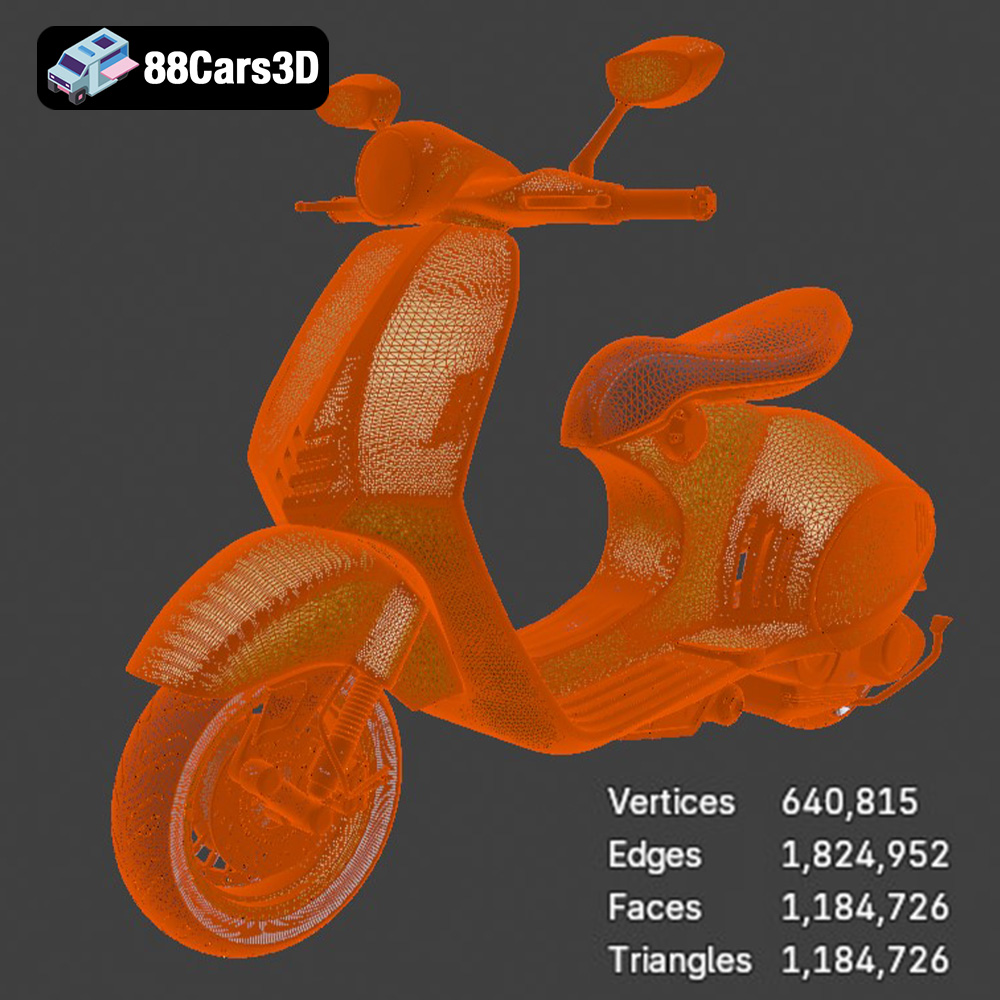
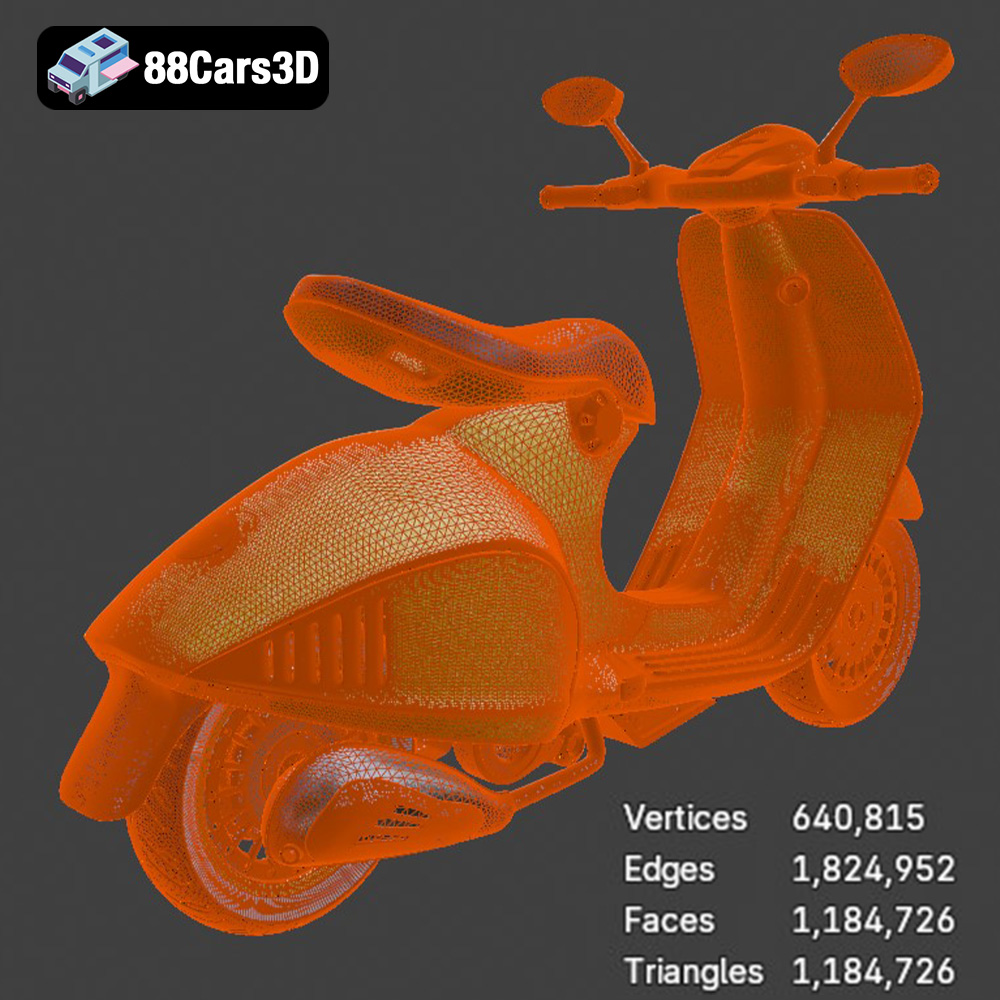
The foundation of any high-quality 3D model is its geometry. The Vespa 946 3D Model boasts meticulously crafted, clean geometry with optimized polygon counts. This means the model is efficient, rendering quickly without unnecessary computational overhead, yet detailed enough to hold up to close-up renders. “Clean topology” refers to the orderly arrangement of polygons (quads, primarily) that form the mesh. This is critical for several reasons: it ensures smooth subdivision (when adding more detail, the surface remains consistent), allows for easier UV mapping, and makes animation and deformation predictable. For intricate surfaces like the Vespa’s distinctive curves, proper topology is essential to avoid pinching, distortion, or unsightly artifacts, delivering a flawless aesthetic from every angle.
Visual fidelity extends beyond geometry to the surface properties of the model. The Vespa 946 3D Model comes equipped with realistic materials and accurate texturing. This includes finely tuned metallic paints with accurate reflections, subtly textured plastics, polished chrome details, and appropriately weathered or worn elements where applicable. The textures are often PBR (Physically Based Rendering) ready, meaning they include maps for albedo, roughness, metallic, normal, and ambient occlusion, allowing the model to react realistically to various lighting conditions in any modern renderer or game engine. This attention to material science ensures that the digital Vespa looks and feels tangible, enhancing its perceived value in any scene, whether for automotive rendering or a detailed virtual showroom.
A truly professional 3D model is one that isn’t confined to a single use case. The Vespa 946 3D Model is highly versatile, making it ideal for a wide range of applications. Its robust design makes it a perfect game asset, ready for integration into racing simulators or open-world adventures. For architectural visualization, it can serve as an elegant prop to inject life and realism into street scenes or modern interiors. Its optimized formats like .glb also make it suitable for immersive AR/VR experiences, allowing users to interact with a lifelike Vespa in their own environment. Even for 3D printing enthusiasts, the .stl format ensures that the digital design can be brought into the physical world, creating scale models or prototypes. This inherent versatility underscores its value as a premium asset for diverse creative needs.
The utility of professional 3D car models extends far beyond simply creating pretty pictures. They are powerful tools that drive innovation, streamline development, and open up new avenues for engagement across various industries. The Vespa 946 3D Model is a prime example of an asset that can be leveraged for a multitude of practical applications.
In architectural visualization (ArchViz), realism is key to selling a vision. Incorporating detailed 3D vehicles like the Vespa 946 can breathe life into static architectural renders, populating urban scenes or enhancing the appeal of residential garages and showrooms. Imagine a sleek, modern apartment render with a classic Vespa parked gracefully in the entryway, adding a touch of sophisticated lifestyle. For product placement, brands can digitally integrate this model into various marketing materials, creating dynamic advertisements without the need for expensive physical photoshoots or complex logistics. This allows for rapid iteration of concepts and cost-effective content creation, making premium 3D assets a strategic investment.
The demanding world of game development constantly seeks high-quality game assets that can deliver immersive experiences. The Vespa 946 3D Model, with its optimized geometry and game-engine-ready formats, is a perfect fit. It could be featured as a player vehicle in an urban exploration game, an AI-driven scooter populating virtual city streets, or a collectible item in a virtual showroom. For interactive applications, its detailed design allows for close-up inspection, custom paint jobs, or even modular modifications. The meticulous attention to detail means that even at high speeds or in close camera views, the Vespa maintains its visual integrity, contributing to a believable and engaging interactive world.
Beyond the digital realm, 3D models have a tangible impact through 3D printing. The .stl and .ply formats of the Vespa 946 3D Model open up possibilities for physical prototyping, scale model creation, or even custom parts manufacturing. Product designers can print scaled-down versions for physical evaluation, hobbyists can create highly detailed desktop models, and engineers could potentially use the mesh data for fit and form studies. This bridge between the digital design and physical output is a testament to the comprehensive nature of modern 3D assets, allowing creators to explore new dimensions of their projects with ease and precision.
The evolution of 3D modeling has ushered in an era where digital assets are no longer just supplementary but integral to professional creative workflows. The ability to source meticulously crafted 3D car models like the Vespa 946 3D Model empowers artists and developers to achieve unprecedented levels of realism and efficiency in their projects. From high-fidelity automotive rendering and complex game asset development to innovative AR/VR experiences and physical 3D printing, the demand for excellence remains unwavering.
By providing a rich array of file formats, clean geometry, optimized topology, and realistic materials, the Vespa 946 3D Model stands as a prime example of a professional-grade asset that meets these diverse needs. It streamlines production, enhances visual fidelity, and offers unparalleled versatility, allowing creators to focus on their artistic vision rather than wrestling with foundational technical issues. For those seeking top-tier 3D models that deliver on both aesthetics and technical robustness, platforms like 88cars3d.com continue to be an invaluable resource, providing the essential building blocks for tomorrow’s digital masterpieces.
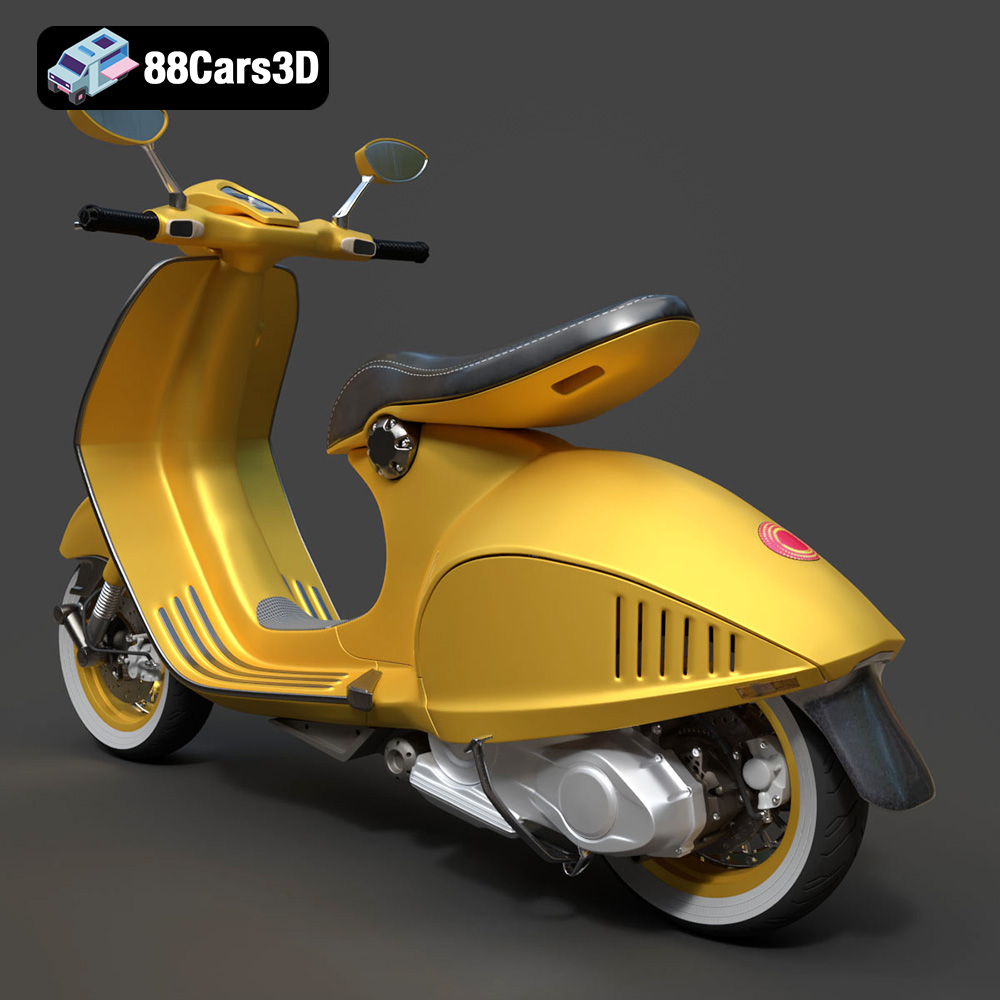
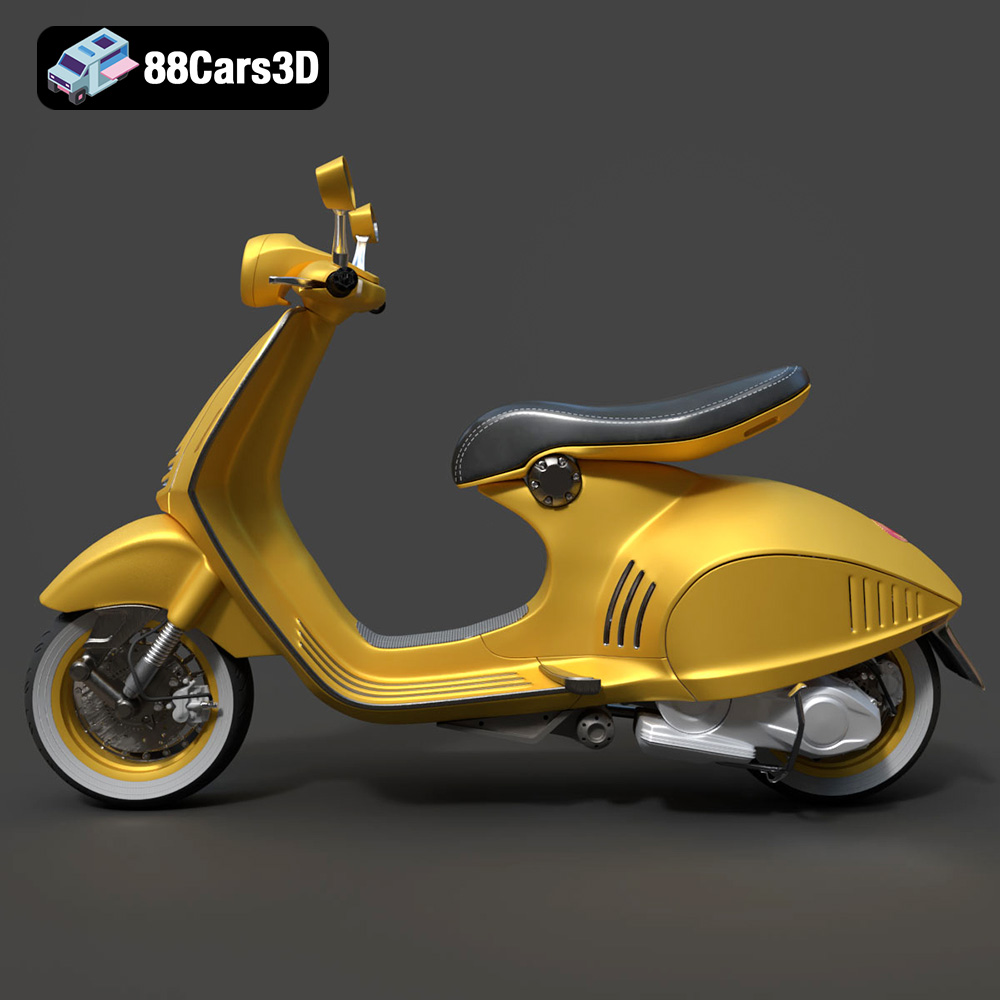
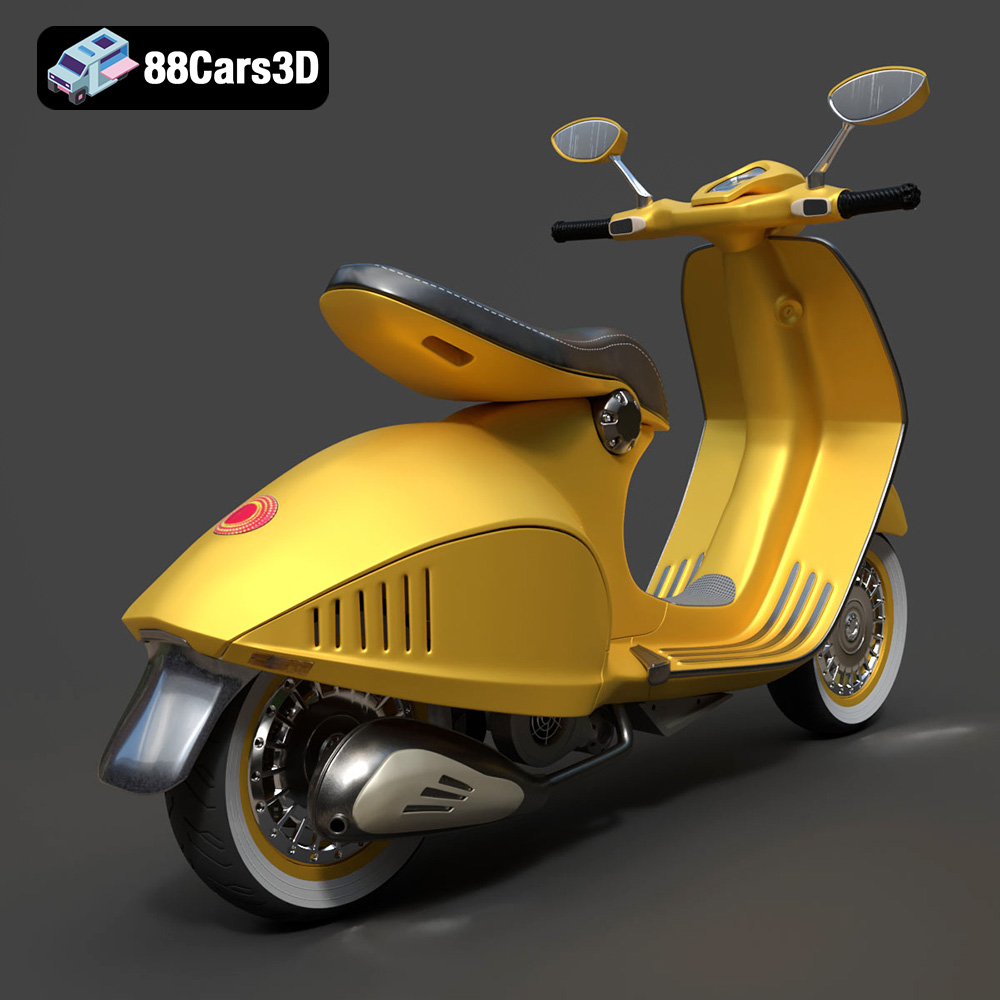
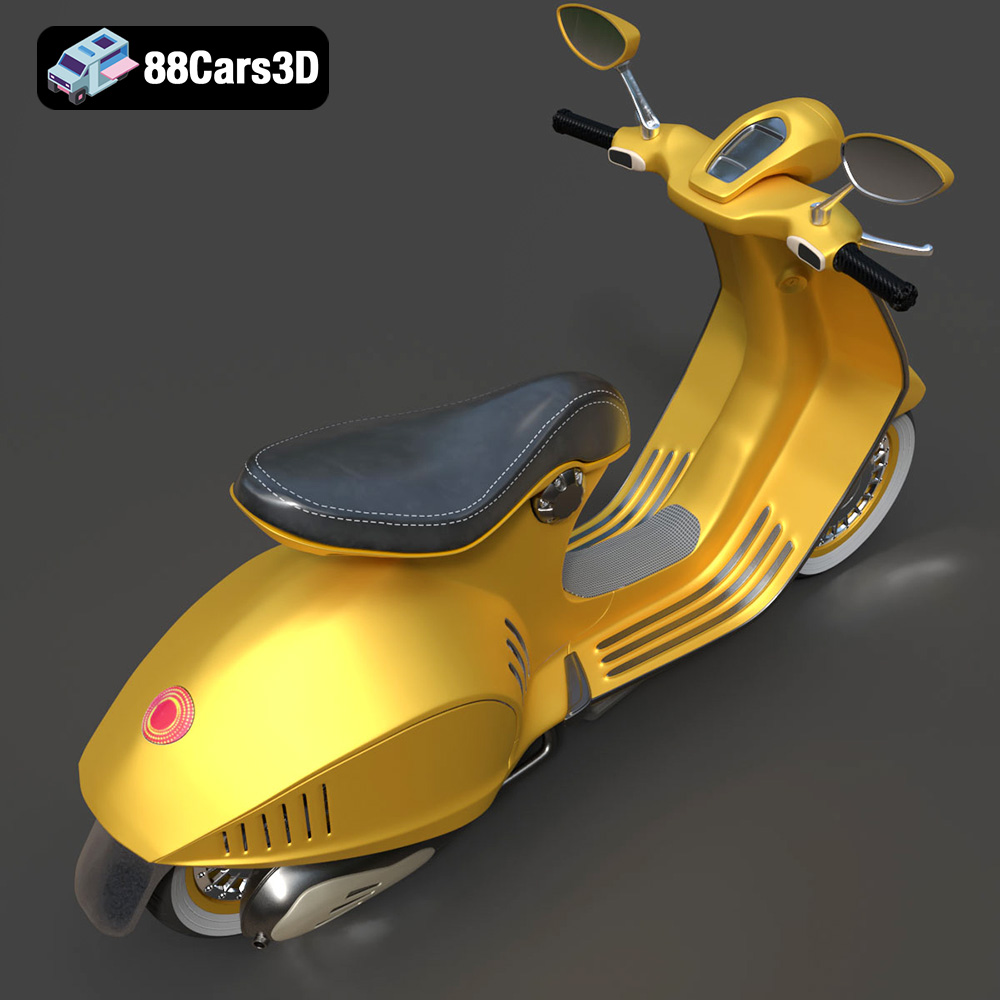
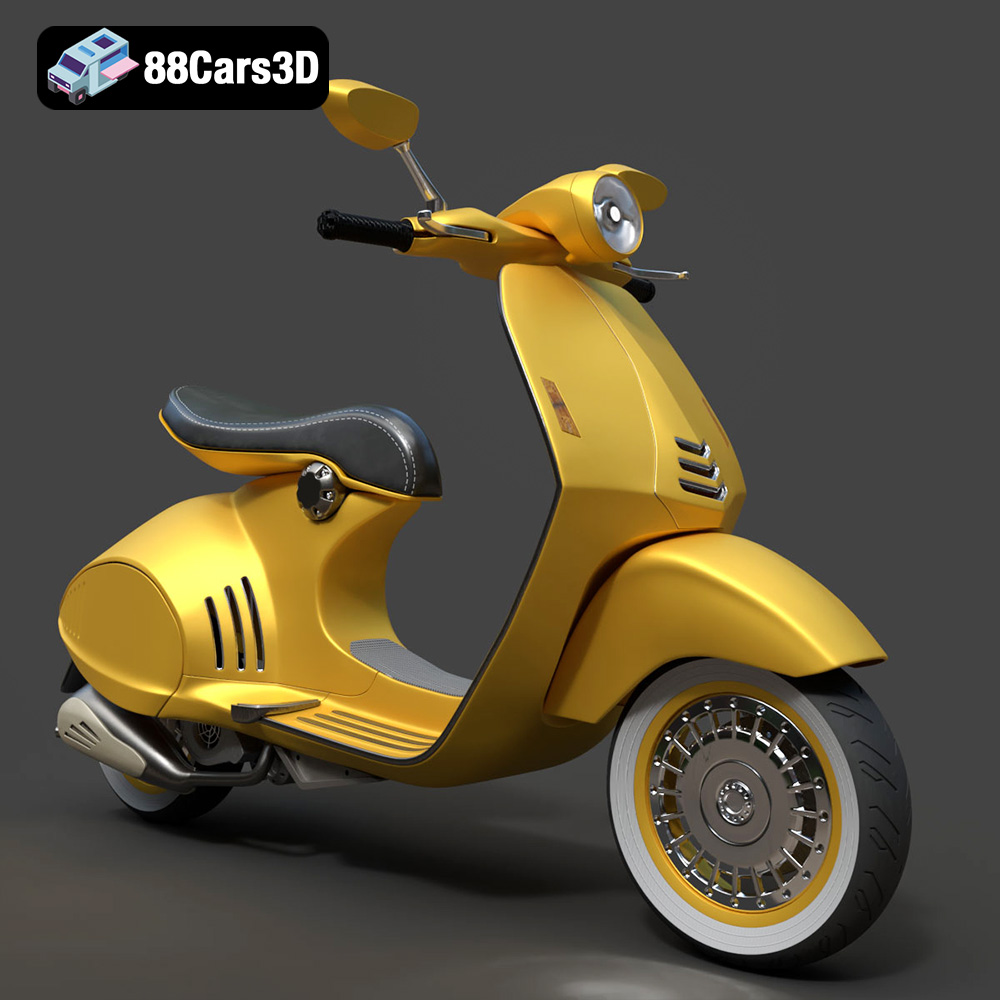
Experience the iconic elegance of the Vespa 946 with this meticulously crafted 3D model. Designed to replicate the authentic curves and refined aesthetics of the renowned scooter, this asset provides true-to-life realism for professional projects. Whether for close-up studio renders or dynamic environments, every detail from the distinct seating to the polished chassis has been modeled with precision.
Built with clean geometry and optimized polygon counts, this model ensures seamless integration into various pipelines. It features realistic materials, accurate texturing, and a highly detailed structure, making it a perfect choice for demanding digital creations. The professional-grade topology guarantees smooth subdivisions and optimal performance.
This Vespa 946 3D model is highly versatile and ideal for a wide range of applications, including game development, architectural visualization, AR/VR experiences, animation, and realistic rendering. It provides creators with a ready-to-use asset that elevates the visual fidelity of any scene.
Included file formats:
Tags:
.vespa, .946, .scooter, .motorcycle, .car3dmodel, .rendering, .simulation, .gameasset, .arvr, .blend, .fbx, .obj, .glb, .stl, .ply, .unreal, .max
$39.99
.946
.arvr
.blend
.car3dmodel
.fbx
.gameasset
.glb
.max
.motorcycle
.obj
.ply
.rendering
.scooter
.simulation
.stl
.unreal
.vespa