Get 20% OFF All Premium 3D & STL Models!

In the rapidly evolving world of digital content creation, the demand for realistic, high-fidelity 3D assets has never been greater. From blockbuster video games to cutting-edge architectural visualizations and immersive AR/VR experiences, professional artists and developers rely on precision and detail to bring their visions to life. When it comes to automotive subjects, this requirement is amplified, as vehicles represent complex forms with intricate details that must be perfectly captured to achieve believability.
This pursuit of perfection is precisely where a premium asset like the Lexus GX460 2014 3D Model truly shines. It’s more than just a mesh; it’s a meticulously crafted digital replica designed to integrate seamlessly into diverse professional pipelines. Whether you’re a seasoned visualization artist seeking a striking vehicle for your next scene, a game developer in need of an authentic in-game ride, or a product designer simulating real-world scenarios, understanding the technical intricacies and workflow advantages of such a model is crucial. Let’s explore the ecosystem of high-quality 3D car models and discover how this particular Lexus GX460 stands as a benchmark for excellence.
The versatility of a 3D model is often defined by the range and quality of its supported file formats. Each format serves a specific purpose, optimized for different software, engines, or end-use applications. A comprehensive package, like that offered with the Lexus GX460 2014 3D Model, provides artists with unparalleled flexibility, ensuring compatibility across virtually any professional pipeline. Understanding when and why to use each format is fundamental for efficient project management and optimal results.
The .blend format is the native file type for Blender, the popular open-source 3D creation suite. When you receive a .blend file, it’s typically a complete scene, including the 3D model, its materials, textures, lighting setups, and even camera configurations. This makes it incredibly valuable for artists who primarily work in Blender, offering full editability and the ability to directly render or modify the asset without any import issues or data loss. For the Lexus GX460 2014 3D Model, the .blend file provides a ready-to-render scene, allowing immediate photorealistic output using Blender’s Cycles or Eevee render engines.
.fbx (Filmbox) is arguably the most widely used proprietary 3D file format for data exchange between different 3D software applications and game engines. Developed by Autodesk, it supports not only geometry and UVs but also materials, textures, animations, and skeletal data. This makes it ideal for transferring 3D car models into game engines like Unreal Engine and Unity, where performance and efficient data handling are paramount. The .fbx version of the Lexus GX460 is game-engine ready, ensuring all critical data translates correctly for real-time environments.
The .obj (Wavefront Object) format is a universal standard for 3D geometry. It’s a simple, text-based format that defines polygon mesh data (vertices, normals, texture coordinates) and references external material files (.mtl). While it doesn’t support advanced features like animation or rigging, its widespread compatibility means virtually every 3D software application can import and export .obj files. It’s an excellent choice when maximum cross-software compatibility is required, making the Lexus GX460 2014 3D Model accessible to any artist, regardless of their primary software.
.glb (GLB format, a binary version of glTF) is an increasingly important format, especially for Augmented Reality (AR), Virtual Reality (VR), and web-based 3D applications. It’s designed to be a compact, single-file asset that includes geometry, materials, textures, and animation, optimized for efficient transmission and loading on various platforms. Its PBR (Physically Based Rendering) material support ensures consistent visual fidelity across different viewers. The .glb version of the Lexus GX460 is perfectly suited for interactive 3D experiences in browsers or mobile AR applications, offering rapid deployment and excellent visual quality.
.stl (STereoLithography) is the de facto standard file format for 3D printing. It represents a 3D model as a series of connected triangles, defining only the surface geometry without color, texture, or material information. While not typically used for rendering or animation, it’s essential for prototyping and physical model creation. The .stl variant of the Lexus GX460 2014 3D Model allows designers to produce physical replicas for concept validation, scale models, or custom accessories.
The .ply (Polygon File Format or Stanford Triangle Format) is often used for storing 3D data from 3D scanners, CAD applications, or scientific data. It can store various properties beyond just geometry, such as color, transparency, surface normals, and range data, making it useful for high-precision mesh representation and analysis. For complex engineering or scientific visualizations involving the Lexus GX460, the .ply format offers a robust and detailed mesh for advanced applications.
Specifically tailored for Epic Games’ Unreal Engine, the .unreal format signifies an asset pre-configured and optimized for direct integration into an Unreal Engine project. This often means the model has been properly scaled, has its materials correctly set up using Unreal’s PBR workflow, and is ready for lighting and interaction within the engine’s environment. The .unreal package for the Lexus GX460 2014 3D Model drastically cuts down setup time for game developers and real-time visualization artists, allowing them to focus on scene building and interactivity.
Finally, the .max format is the native file type for Autodesk 3ds Max, a leading software for 3D modeling, animation, and rendering in the architecture, engineering, and entertainment industries. Like .blend files, .max files contain the complete scene, including complex materials, lighting, cameras, and animation data specific to 3ds Max. For professionals leveraging powerful renderers like V-Ray or Corona within 3ds Max, the .max version of the Lexus GX460 provides full access to the model’s structure and shaders for unparalleled customization and high-end automotive rendering.
The provision of such a comprehensive array of formats ensures that the Lexus GX460 2014 3D Model purchased from 88cars3d.com is a truly versatile and future-proof asset, ready for any project.
Creating a high-quality 3D car model is an intricate dance between artistic interpretation and technical precision. It requires not only a keen eye for aesthetics but also a deep understanding of surfacing, topology, and material science. The Lexus GX460 2014 3D Model exemplifies this balance, offering both visual appeal and robust technical integrity.
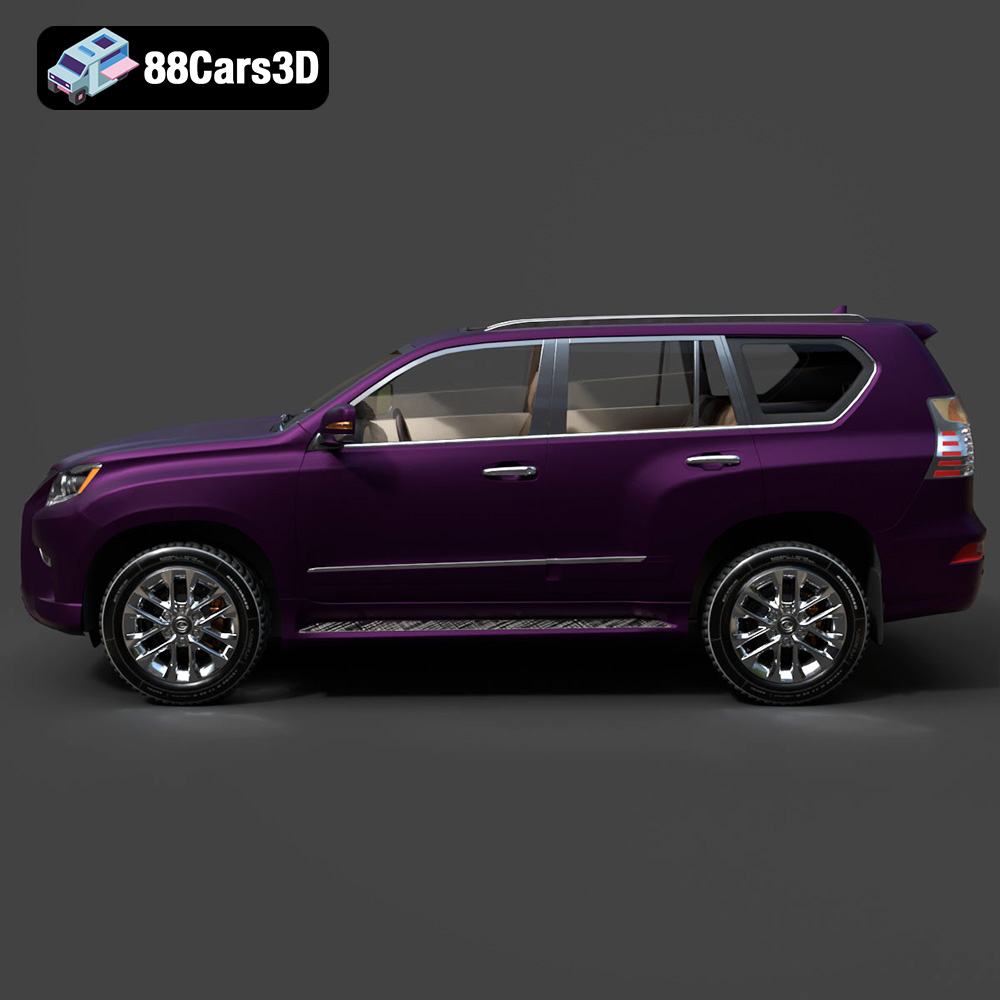
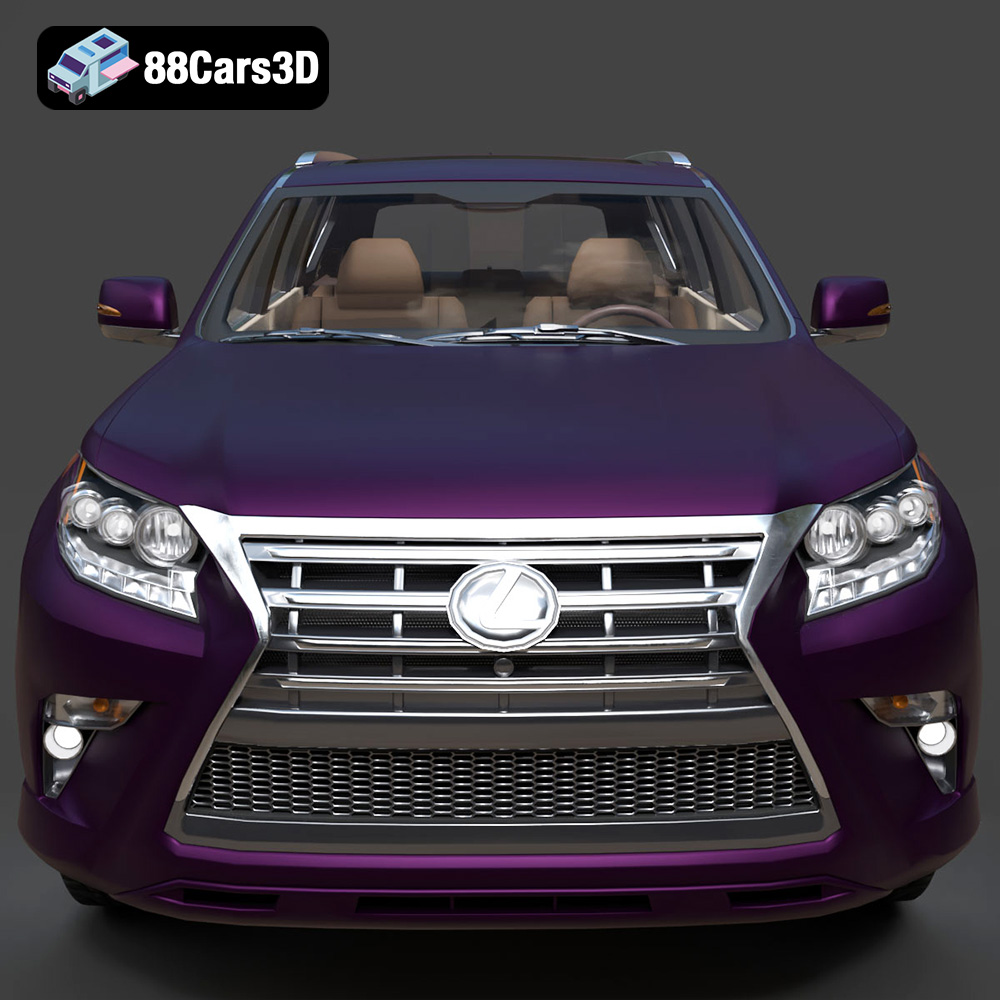
The challenge in replicating a real-world vehicle like the Lexus GX460 lies in accurately translating its physical form into a digital one. This involves meticulous attention to scale, curvature, and the subtle nuances that give a car its character. A top-tier 3D model begins with exhaustive reference gathering – blueprints, photographs from all angles, and even physical inspections. The model of the Lexus GX460 2014 found on 88cars3d.com has been crafted with this precision, ensuring its powerful stance and luxurious design are perfectly replicated. Every panel gap, every headlight detail, and every aerodynamic curve is painstakingly reproduced to match the real vehicle, resulting in an asset that holds up even under extreme close-up shots. This accuracy is paramount for professional automotive rendering and visualization where photorealism is the ultimate goal.
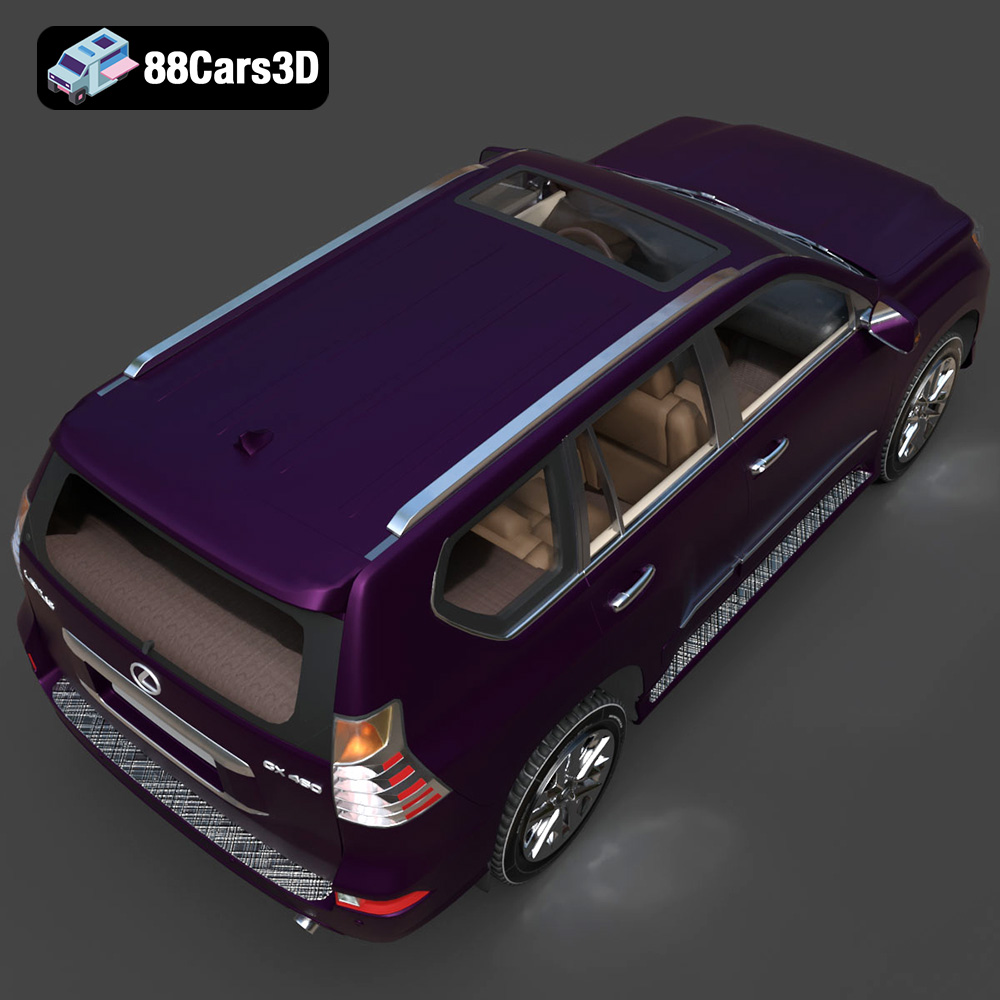
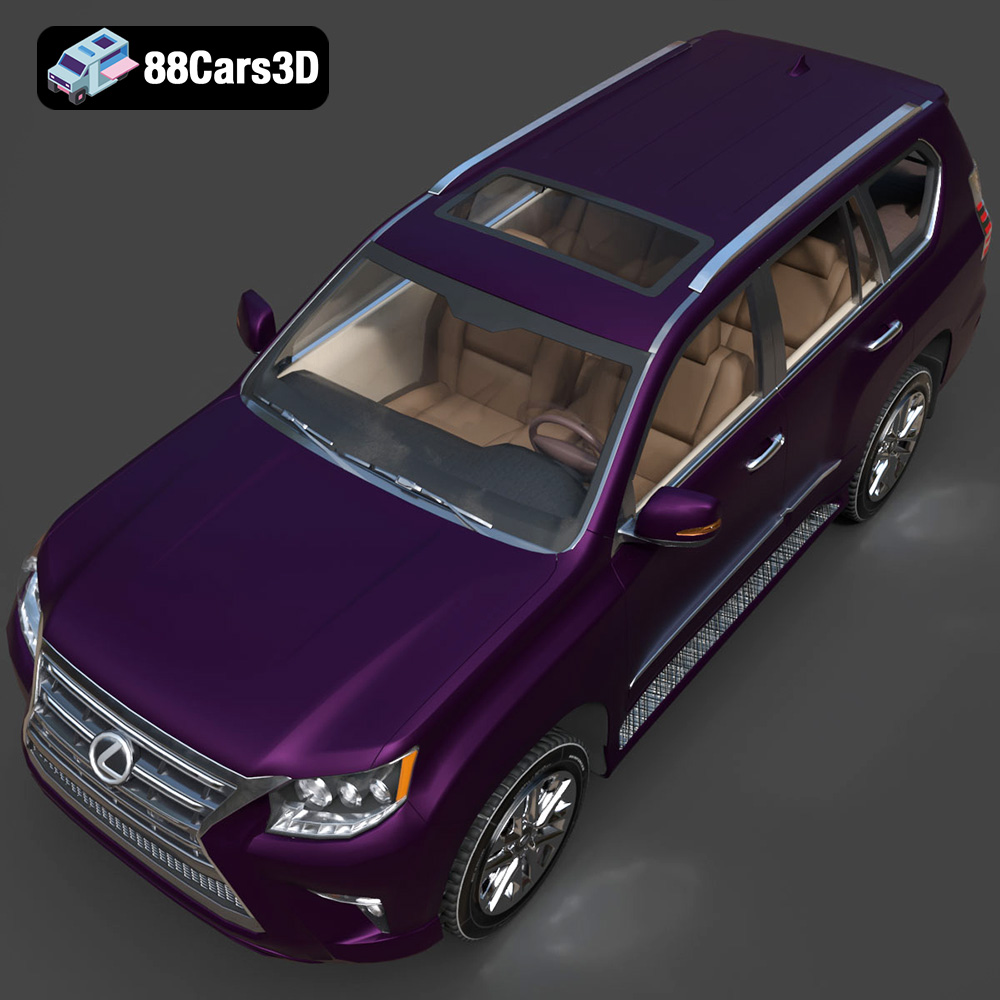
While the exterior often grabs immediate attention, the interior of a vehicle is equally important, especially for immersive applications like AR/VR or detailed product showcases. A truly comprehensive 3D car model, such as this Lexus GX460, extends its meticulous detailing to the cabin. This includes accurately modeled seats, dashboard elements, steering wheel, and console controls. The balance here is critical: achieve sufficient detail for realism without overburdening the polygon count, particularly for real-time environments. The product description highlights that “every exterior curve and interior element has been modeled to deliver professional quality results,” indicating a thoughtful approach to detail where it matters most, ensuring both aesthetic fidelity and optimal performance.
A superior 3D asset is not just about its visual quality; it’s also about how seamlessly it integrates into various professional workflows. The Lexus GX460 2014 3D Model has been engineered for versatility, making it a valuable tool across different industries and software environments.
For artists focused on photorealistic imagery, the included .max and .blend files are invaluable. In 3ds Max, the model can be effortlessly loaded into a scene, ready for advanced rendering with engines like V-Ray or Corona. Artists can leverage 3ds Max’s robust toolset for environment setup, complex material adjustments, and animation, creating stunning marketing visuals or detailed product presentations. Similarly, Blender users benefit from a pre-configured .blend file, enabling immediate high-quality renders using Cycles or Eevee. This workflow often involves setting up sophisticated PBR (Physically Based Rendering) materials, applying HDRI (High Dynamic Range Image) lighting for realistic reflections, and composing dynamic camera angles to highlight the vehicle’s features. The clean geometry and well-organized UVs of the Lexus GX460 2014 3D Model significantly streamline this process, allowing artists to focus on creative expression rather than technical troubleshooting.
In the realm of game development, efficiency and optimization are paramount. The .fbx and dedicated .unreal formats of the Lexus GX460 2014 3D Model are specifically designed for this purpose. When integrated into Unreal Engine or Unity, these game assets are ready for real-time interaction. This involves carefully managed polygon counts to ensure smooth framerates, efficient UV mapping for texture atlases, and PBR materials configured to perform optimally within the engine’s rendering pipeline. Whether developing an immersive open-world game, a racing simulator, or a training application, having a high-quality, pre-optimized 3D car model drastically reduces development time and elevates the visual fidelity of the final product. The model’s clean structure makes it easy to add physics, vehicle controls, and visual effects tailored to the game engine.
The emerging fields of Augmented Reality, Virtual Reality, and web-based 3D experiences demand assets that are both visually rich and highly optimized for performance on diverse devices. The .glb format of the Lexus GX460 2014 3D Model is tailor-made for these applications. Its compact size and PBR material support enable quick loading times and consistent appearance across different browsers and AR/VR platforms. Imagine a virtual car showroom where potential buyers can explore the Lexus GX460 in 3D directly on a webpage, or an AR app that lets them place the SUV in their driveway. This format facilitates dynamic, interactive experiences without sacrificing visual quality, making the model an excellent choice for modern digital marketing and interactive presentations.
Beyond aesthetics, the true measure of a professional 3D car model lies in its underlying technical specifications. These details dictate its performance, flexibility, and longevity within any production pipeline. The Lexus GX460 2014 3D Model upholds rigorous standards in this regard.
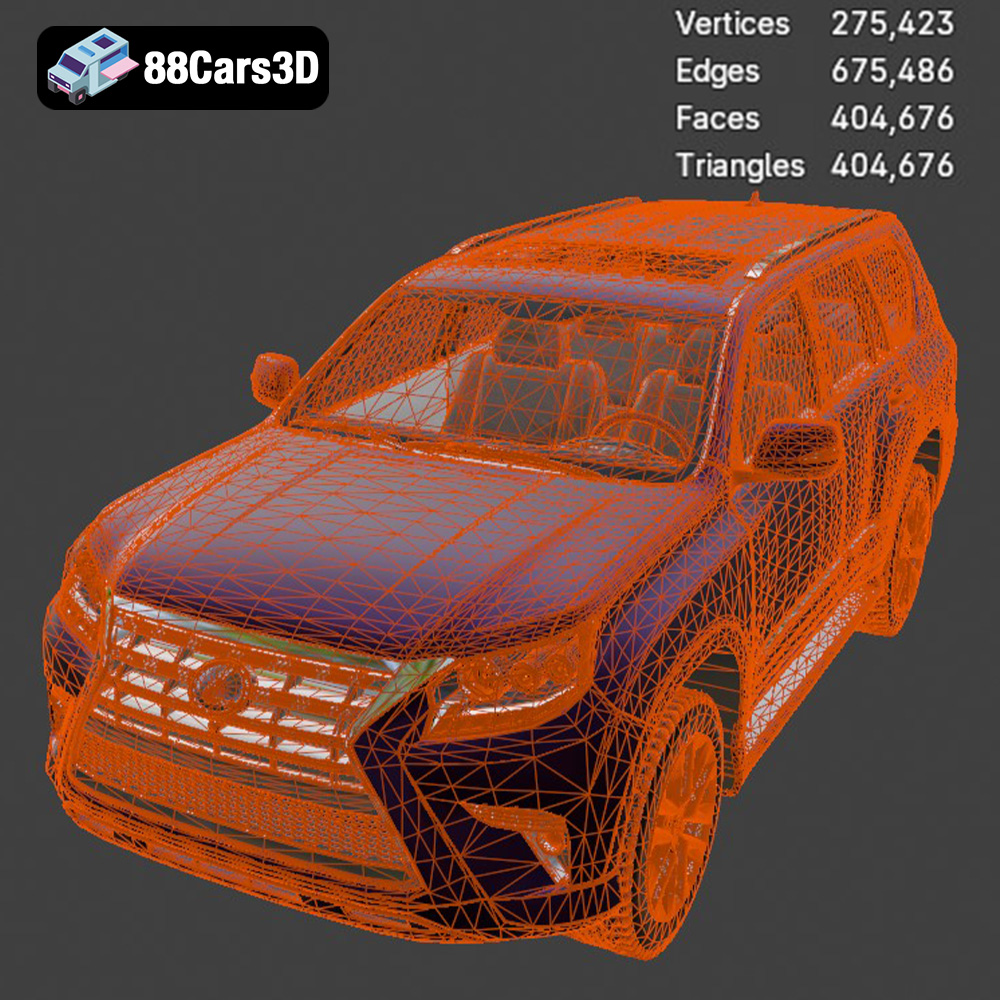
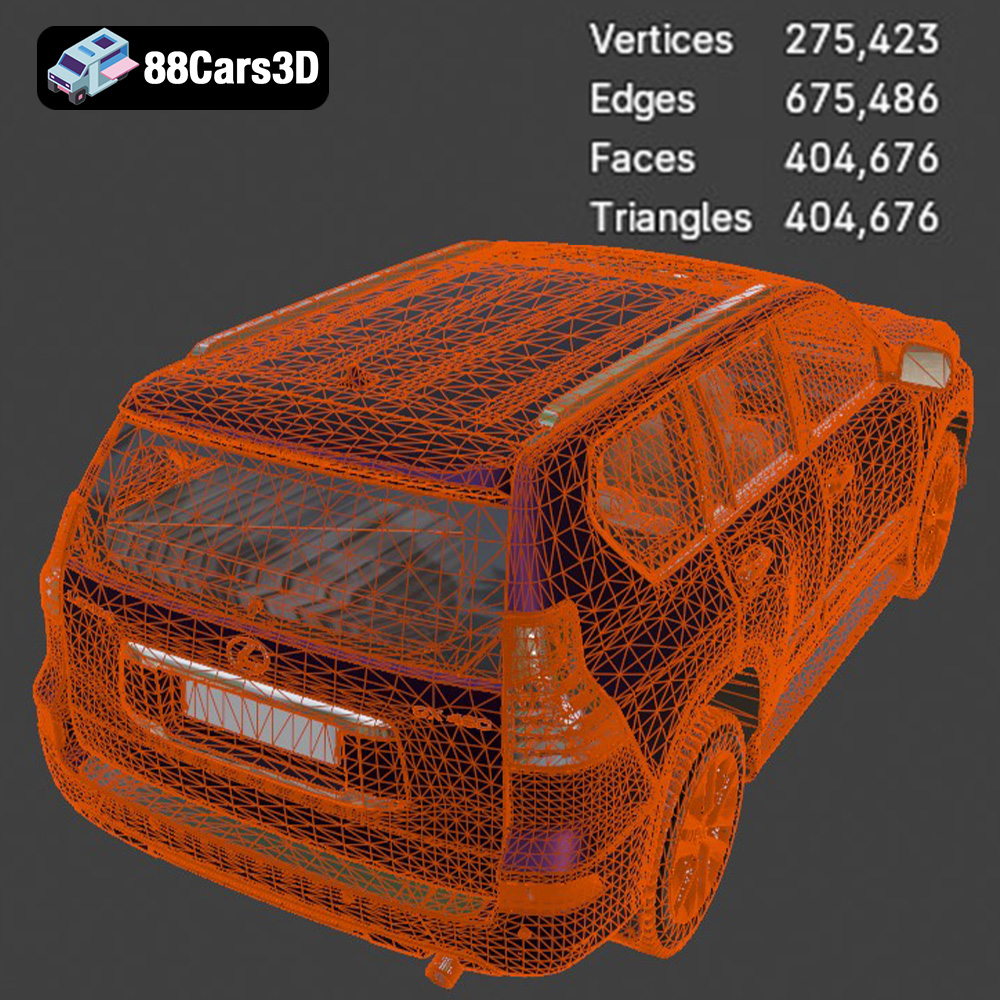
A fundamental aspect of any high-quality 3D model is its geometry and topology. The Lexus GX460 2014 3D Model boasts “clean geometry,” meaning the mesh is free from errors like non-manifold edges, inverted normals, or overlapping faces. This clean structure is essential for proper deformation, subdivision surfacing (if applied), and rendering without artifacts. Equally important are the UV maps, which dictate how 2D textures are wrapped onto the 3D surface. The model features non-overlapping UVs, ensuring textures appear seamless and correct across all parts of the vehicle, from the body panels to the tires. This meticulous attention to UVs is critical for the “fully textured” claim, guaranteeing that the materials and details are displayed flawlessly.
Modern rendering relies heavily on Physically Based Rendering (PBR) workflows, which simulate light interaction with surfaces in a physically accurate manner. The Lexus GX460 2014 3D Model incorporates realistic PBR materials, typically comprising Albedo (base color), Normal (for surface detail), Roughness (for micro-surface imperfections), Metallic (for conductive surfaces), and Ambient Occlusion (for contact shadows) maps. These textures are provided at appropriate resolutions to maintain crisp detail without excessive memory footprint, ensuring stunning realism in both high-end renders and real-time environments. The precise calibration of these materials contributes significantly to the model’s exceptional realism.
A well-built 3D asset should offer a degree of scalability and customization. The clean geometry and logical hierarchy of the Lexus GX460 3D Model allow artists to easily modify aspects like paint color, rim finishes, or even add custom decals and liveries. Its organized structure means individual components can be isolated, replaced, or adjusted as needed, adapting the model to specific project requirements without complex re-modeling. This adaptability is key for agencies that need to present multiple variations of a vehicle or integrate it into diverse scene contexts.
The practical applications of a versatile 3D car model like the Lexus GX460 2014 are extensive, touching numerous sectors of the digital content industry.
In architectural visualization, context is everything. Placing a realistic vehicle, such as the Lexus GX460, in front of a newly designed building or within a street scene instantly adds realism, scale, and a sense of lifestyle. High-quality 3D car models elevate exterior architectural renders from sterile blueprints to vibrant, believable environments. They help clients envision themselves within the space and significantly improve the overall impact of “photorealistic architectural visualizations.” The Lexus GX460’s luxurious aesthetic makes it a perfect complement for high-end residential or commercial projects.
The precision and detail of the Lexus GX460 2014 3D Model make it an excellent candidate for demanding simulation and training environments. From advanced driving simulators used for driver training to virtual testing grounds for autonomous vehicle development, high-fidelity vehicle models are critical for accurate behavioral analysis and immersive experiences. The model’s optimized geometry and realistic materials ensure it performs well in real-time simulations, allowing engineers and developers to “conduct automotive simulations” with a high degree of visual and physical accuracy.
For automotive brands and dealerships, 3D car models have revolutionized marketing and product presentation. Virtual showrooms, online configurators, and interactive advertising campaigns leverage assets like the Lexus GX460 3D Model to showcase vehicles in dynamic and engaging ways. Customers can explore a car’s features, customize options, and view it from any angle, long before stepping into a physical dealership. This technology provides an unparalleled level of interaction and personalization, driving engagement and sales.
In a marketplace flooded with varying qualities of 3D assets, choosing a reliable source is paramount. 88cars3d.com distinguishes itself by offering only high-quality 3D car models that meet professional industry standards. The Lexus GX460 2014 3D Model is a prime example of their commitment to excellence, providing not just a model, but a comprehensive package designed for immediate deployment and seamless integration.
Their focus on providing a wide array of industry-standard file formats – from .blend and .max for intricate rendering, to .fbx and .unreal for game development, and .glb for cutting-edge AR/VR – ensures that your investment is versatile and future-proof. When you acquire a 3D car model from 88cars3d.com, you are investing in meticulously crafted geometry, realistic materials, optimized polygon counts, and the assurance of professional quality results across all your projects.
The journey through the intricacies of high-quality 3D car models reveals a fascinating blend of artistry and technical mastery. Assets like the Lexus GX460 2014 3D Model are not merely digital objects; they are foundational elements that empower creators across industries. From automotive rendering and immersive game assets to detailed simulations and striking architectural visualizations, the demand for precision, versatility, and efficiency is ever-present. This model exemplifies professional-grade asset creation, offering clean geometry, realistic materials, and a comprehensive suite of file formats to meet any challenge.
By understanding the nuances of various file formats and the workflows they support, artists and developers can make informed decisions that streamline their production pipelines and elevate the quality of their final output. The Lexus GX460 2014 3D Model provides a robust and reliable solution, ready to enhance any digital project. For those seeking to equip their digital library with such exceptional 3D car models, exploring the curated selection at 88cars3d.com is a definitive step towards achieving unparalleled realism and efficiency in their creative endeavors.
Discover the exceptional realism and precision of the Lexus GX460 2014 3D Model. Crafted with meticulous attention to detail, this digital asset perfectly replicates the powerful stance and luxurious design of the iconic SUV, making it an outstanding addition to your digital library. Designed for optimal performance, this model features clean geometry, realistic materials, and an optimized polygon count. Every exterior curve and interior element has been modeled to deliver professional quality results. The asset is fully textured and ready for immediate deployment in your chosen software. Whether you are developing an immersive video game, creating photorealistic architectural visualizations, producing interactive AR/VR experiences, or conducting automotive simulations, this versatile 3D model adapts seamlessly to any demanding production environment. This comprehensive package includes multiple industry-standard file formats to ensure maximum compatibility: .blend – Editable Blender file with materials and lighting setup; .fbx – Game-engine ready format for Unreal Engine and Unity; .obj – Standard 3D model format compatible with all major software; .glb – Optimized for AR/VR and web-based visualization; .stl – Suitable for 3D printing and prototyping; .ply – Detailed polygon mesh for analysis and visualization; .unreal – Pre-configured for Unreal Engine use; .max – Editable 3ds Max file for rendering and animation.
$39.99
.arvr
.blend
.car3dmodel
.fbx
.gameasset
.glb
.gx460
.lexus
.luxury
.max
.obj
.offroad
.ply
.rendering
.simulation
.stl
.unreal
SUV