Get 20% OFF All Premium 3D & STL Models!

In the rapidly evolving world of digital visualization, the demand for high-quality 3D models is greater than ever. Whether you’re an automotive designer showcasing a new concept, a game developer crafting immersive open worlds, an architect populating a street scene, or a marketer creating captivating advertisements, the fidelity and versatility of your 3D assets are paramount. A premium 3D model isn’t just about aesthetic appeal; it’s about clean topology, optimized performance, and seamless integration into diverse professional workflows.
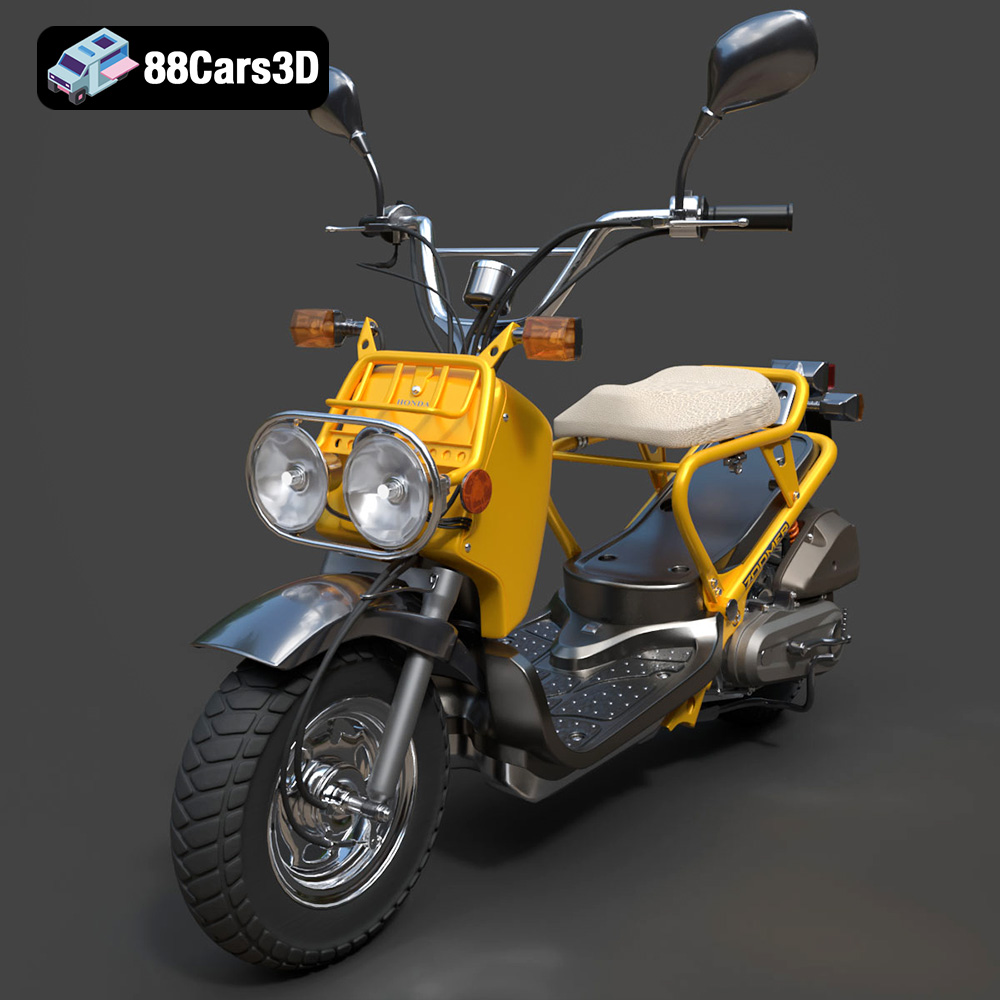
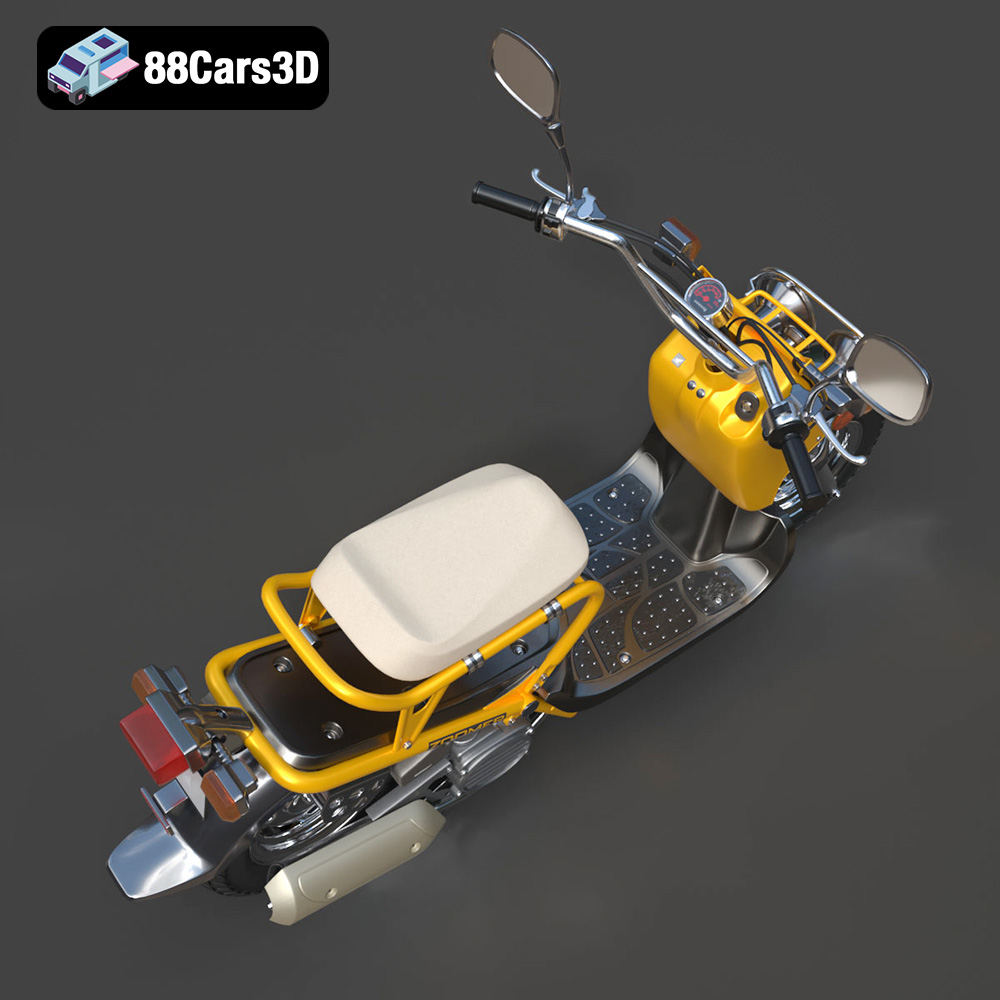
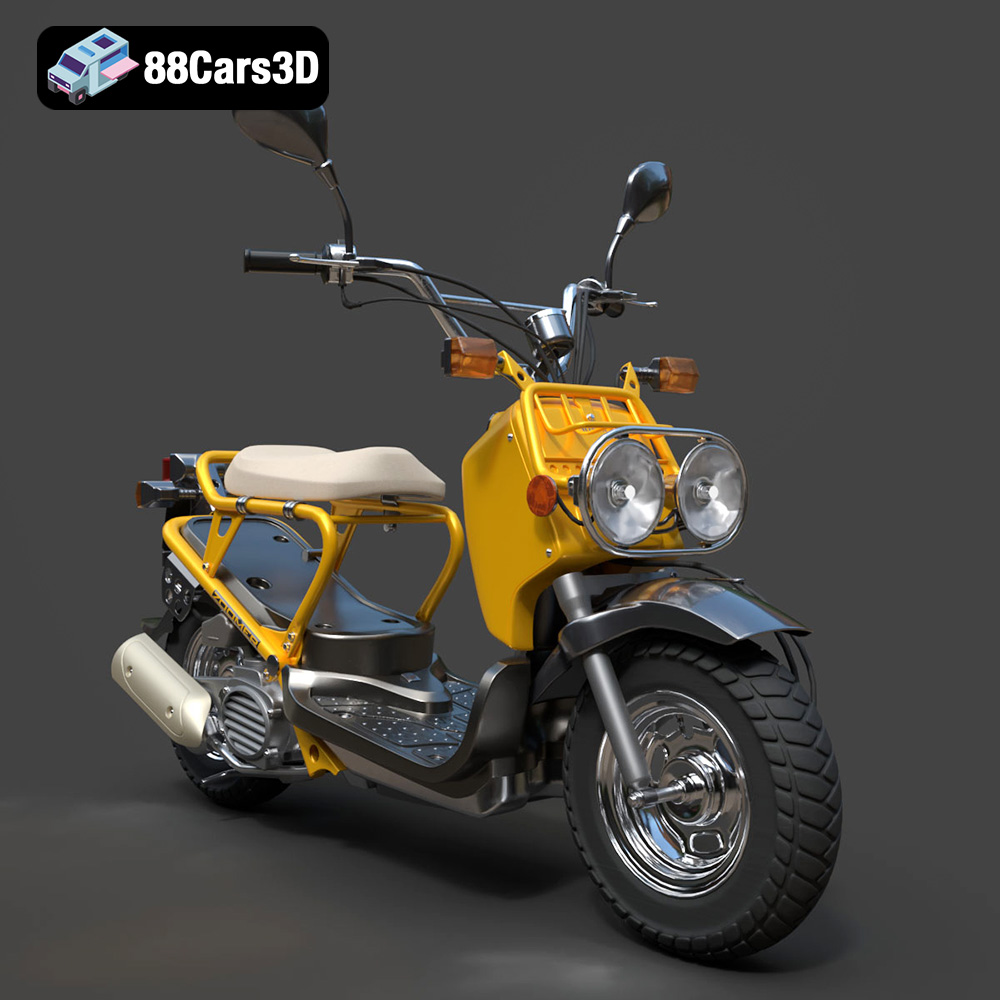
Today, we delve into the intricate world of automotive 3D modeling, exploring the technical nuances that elevate a simple mesh into a professional-grade asset. We’ll examine the critical role of various file formats, discuss industry-standard workflows in software like 3ds Max, Blender, and Unreal Engine, and highlight how a meticulously crafted model can significantly streamline your projects. As a prime example of such excellence, we’ll feature the Honda Zoomer 50 2005 3D Model, available at 88cars3d.com, which stands as a testament to unparalleled precision and versatility.
This iconic rugged scooter, captured in exquisite detail, offers a perfect case study for understanding the benchmark of quality in 3D automotive assets. Its clean geometry, realistic materials, and professional construction make it an exceptional choice for everything from high-resolution renders to real-time game environments. Join us as we unpack the technical prowess required to deliver such a versatile asset and how it empowers creators across various industries.
Choosing the correct file format for your 3D model is a critical decision that impacts compatibility, feature retention, and overall project workflow. A high-quality model, like the Honda Zoomer 50 2005 3D Model from 88cars3d.com, often comes with a suite of formats, each optimized for specific applications. Understanding these formats is essential for leveraging your assets effectively.
The .blend format is Blender’s native file type, retaining all aspects of a Blender project. This includes not only the mesh data but also materials, textures, lighting setups, camera positions, animations, physics simulations, and modifiers. For artists working primarily in Blender, this format offers maximum flexibility and editability. When you receive a .blend file for a 3D car model, you gain access to the complete scene as the artist intended, allowing for easy modifications, re-lighting, or animation adjustments without losing any data. It’s ideal for in-depth customization and continued development within the Blender ecosystem.
The Autodesk Filmbox (.fbx) format is an industry-standard interchange format widely supported across 3D software and game engines like Unreal Engine and Unity. It excels at transferring entire scenes, including geometry, materials (with some limitations on complex shaders), textures, skeletal animations, and cameras. Its robust support for animation makes it the go-to choice for exporting rigged characters and animated objects into game engines. For a vehicle model like the Honda Zoomer 50, an .fbx file would typically contain the optimized mesh, basic material assignments, and potentially a simple rigging for wheels or handlebars if intended for interactive use in a game.
Wavefront OBJ (.obj) is one of the most universal and oldest 3D file formats. It primarily stores geometry (vertices, normals, UV coordinates) and references external Material Template Library (MTL) files for material definitions. While .obj files don’t support animations or advanced scene data, their simplicity and widespread compatibility make them excellent for transferring pure mesh data between different 3D applications. If you need to import the Honda Zoomer 50 into a niche software or a program that struggles with more complex formats, .obj is a reliable fallback.
The GL Transmission Format Binary (.glb) is the binary version of glTF, a royalty-free specification for the efficient transmission and loading of 3D scenes and models by engines and applications. .glb packages all necessary data—geometry, materials, textures, and animations—into a single file, making it incredibly efficient for web-based 3D viewers, augmented reality (AR), and virtual reality (VR) applications. Its small file size and quick loading times are perfect for delivering interactive experiences of models like the Zoomer 50 on the web or mobile devices.
Stereolithography (.stl) is almost exclusively used for 3D printing and CAD software. It describes only the surface geometry of a 3D object using a collection of connected triangles. It doesn’t store color, texture, or material information. For designers looking to 3D print a scaled-down replica or a component of the Honda Zoomer 50, an .stl file provides the necessary raw mesh data for rapid prototyping.
The Polygon File Format (.ply), also known as the Stanford Triangle Format, is a versatile file type for storing 3D data from 3D scanners. It can store various properties beyond geometry, such as color, transparency, and texture coordinates, often on a per-vertex or per-face basis. While less common for general 3D model distribution than .obj or .fbx, it’s valuable for scientific visualization, CAD applications, or when precise mesh data with vertex attributes is crucial for analysis.
The .unreal format, or rather assets specifically packaged for Unreal Engine, implies a level of pre-configuration and optimization directly within the Unreal ecosystem. This isn’t a single file format in the traditional sense, but typically refers to a fully imported and set-up asset within an Unreal project. This could mean a static mesh with applied materials (using Unreal’s PBR shaders), collision meshes, LODs (Levels of Detail), and potentially Blueprints for interactive elements. A “pre-configured for Unreal Engine use” Honda Zoomer 50 means less setup time for game developers, as it’s ready to be dropped into a scene with correct materials and perhaps even basic physics properties.
Similar to .blend for Blender, .max is the native file format for Autodesk 3ds Max. It contains all scene information, including geometry, modifiers, materials, textures, lighting, cameras, animation data, and render settings. For professionals using 3ds Max for architectural visualization, product design, or high-end cinematic rendering, the .max file provides the complete, editable project file, allowing for comprehensive scene management and customization of the Honda Zoomer 50 model.
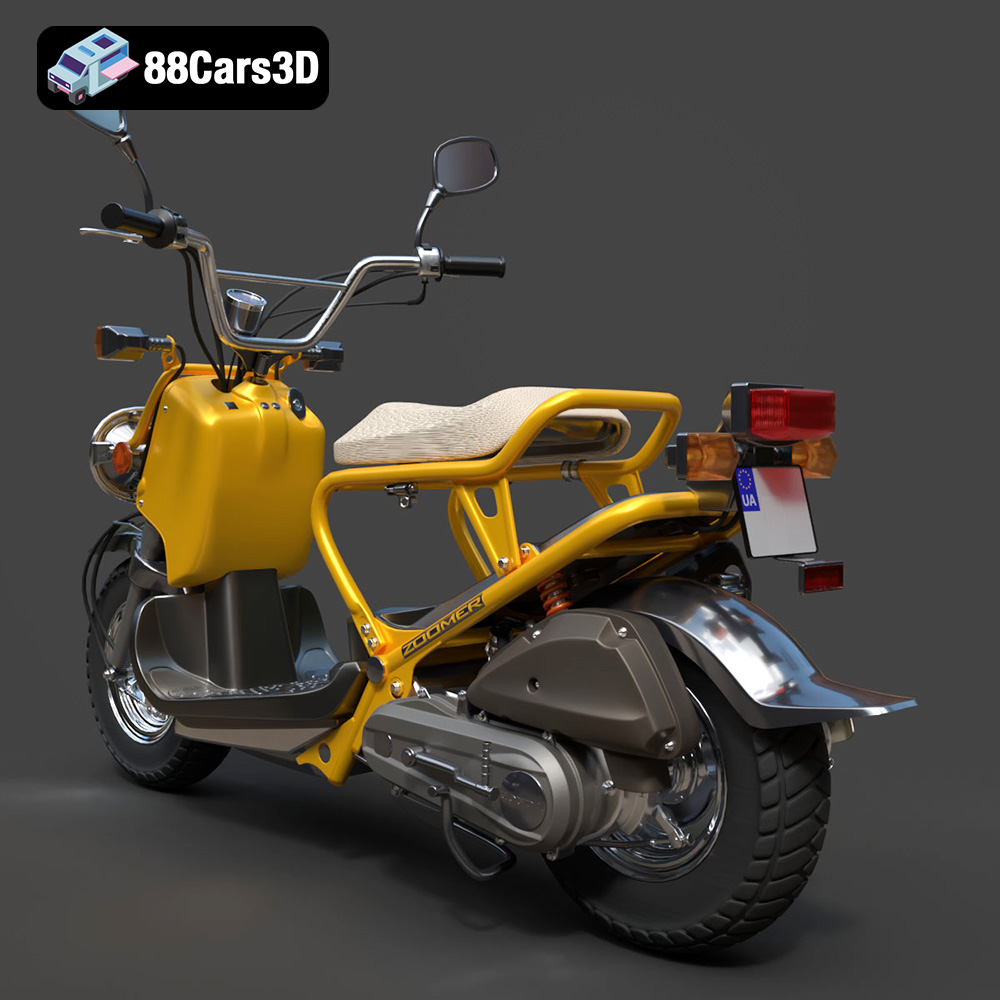
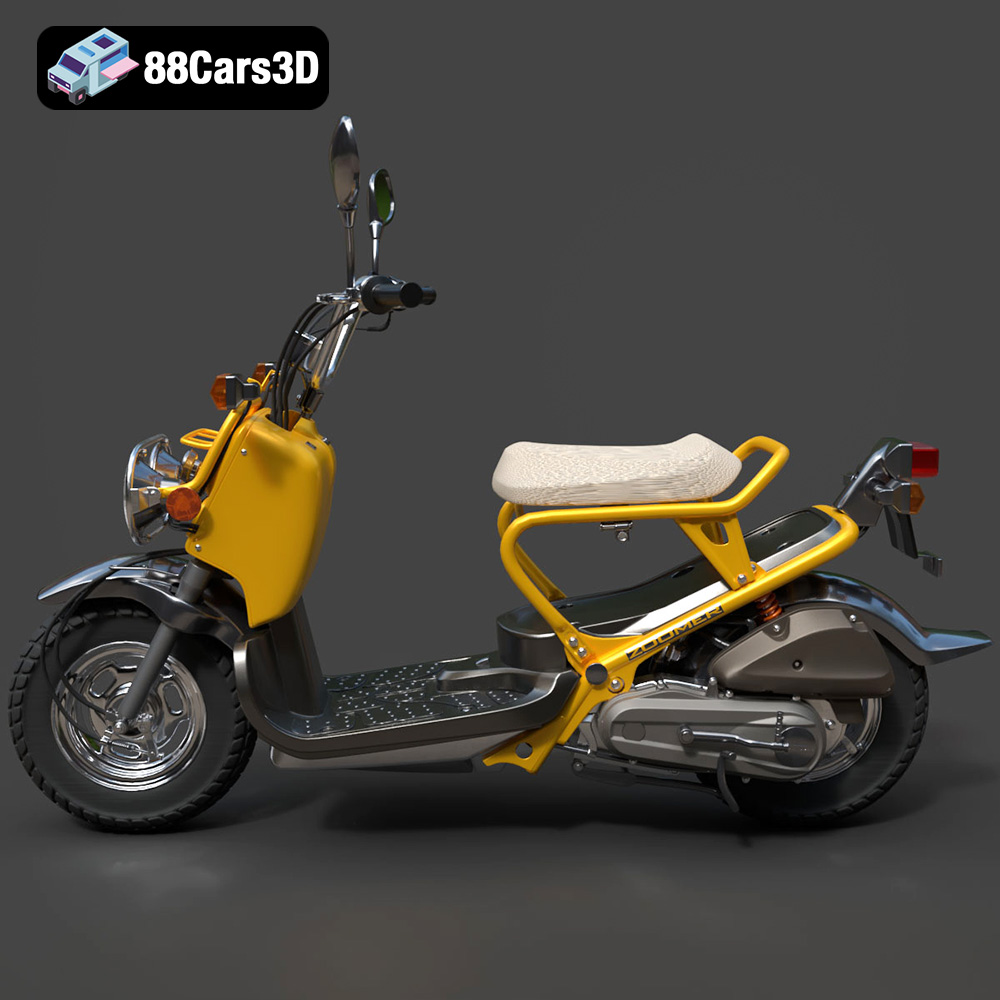
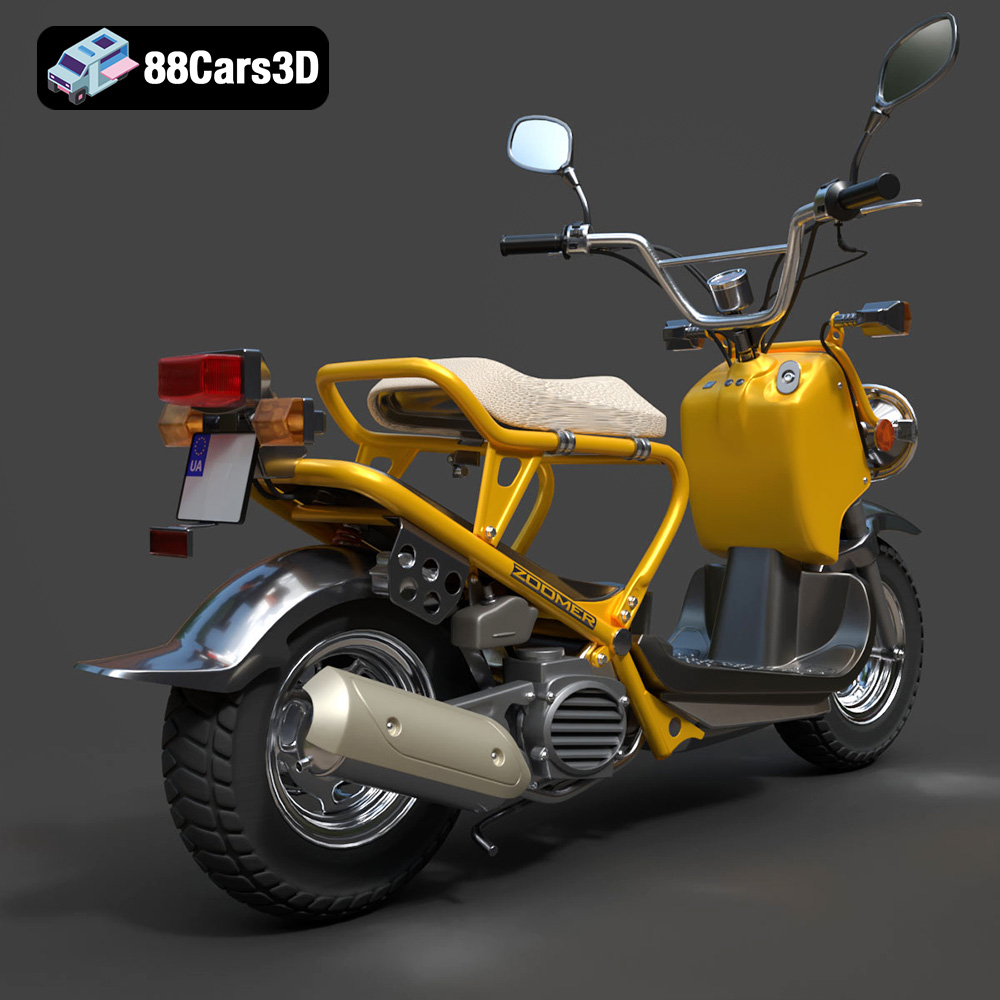
The Honda Zoomer 50 2005 3D Model is more than just a digital representation; it’s a testament to the power of meticulous craftsmanship in 3D asset creation. This particular model, available at 88cars3d.com, exemplifies how a well-executed 3D automotive model can serve a multitude of professional applications.
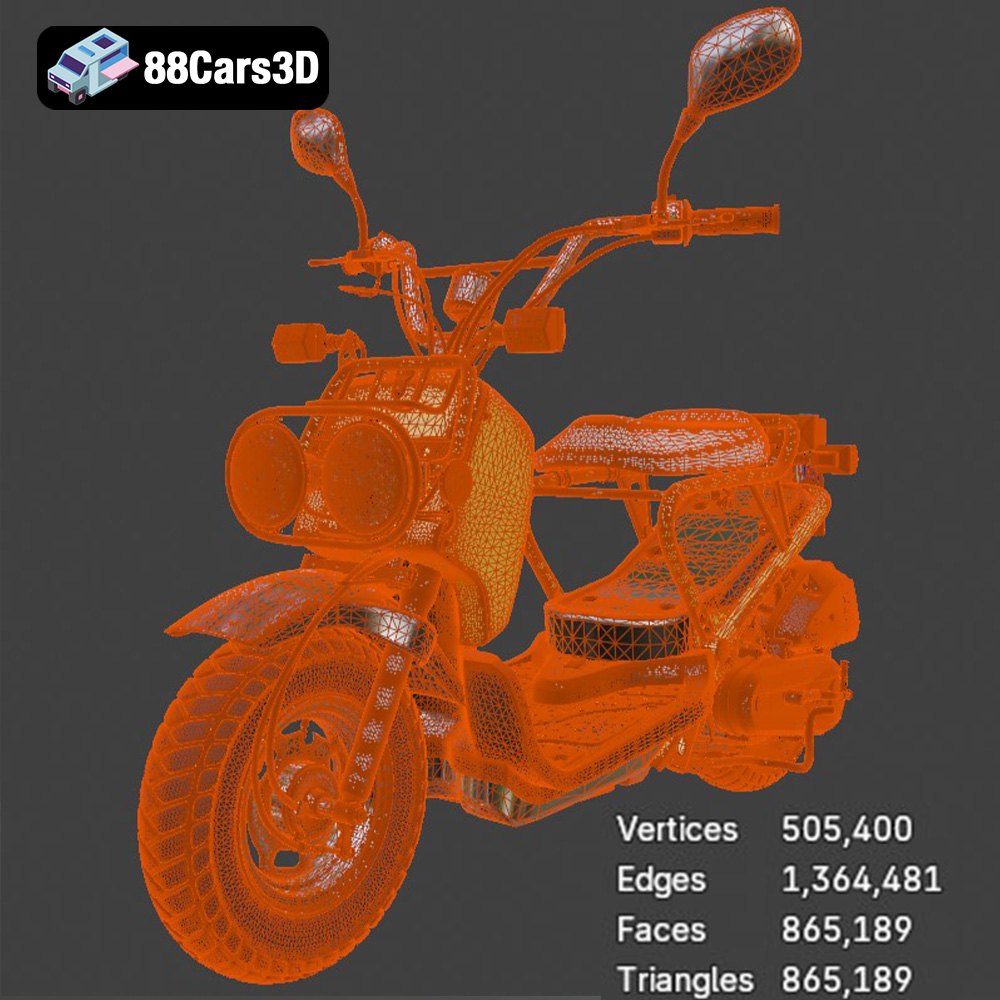
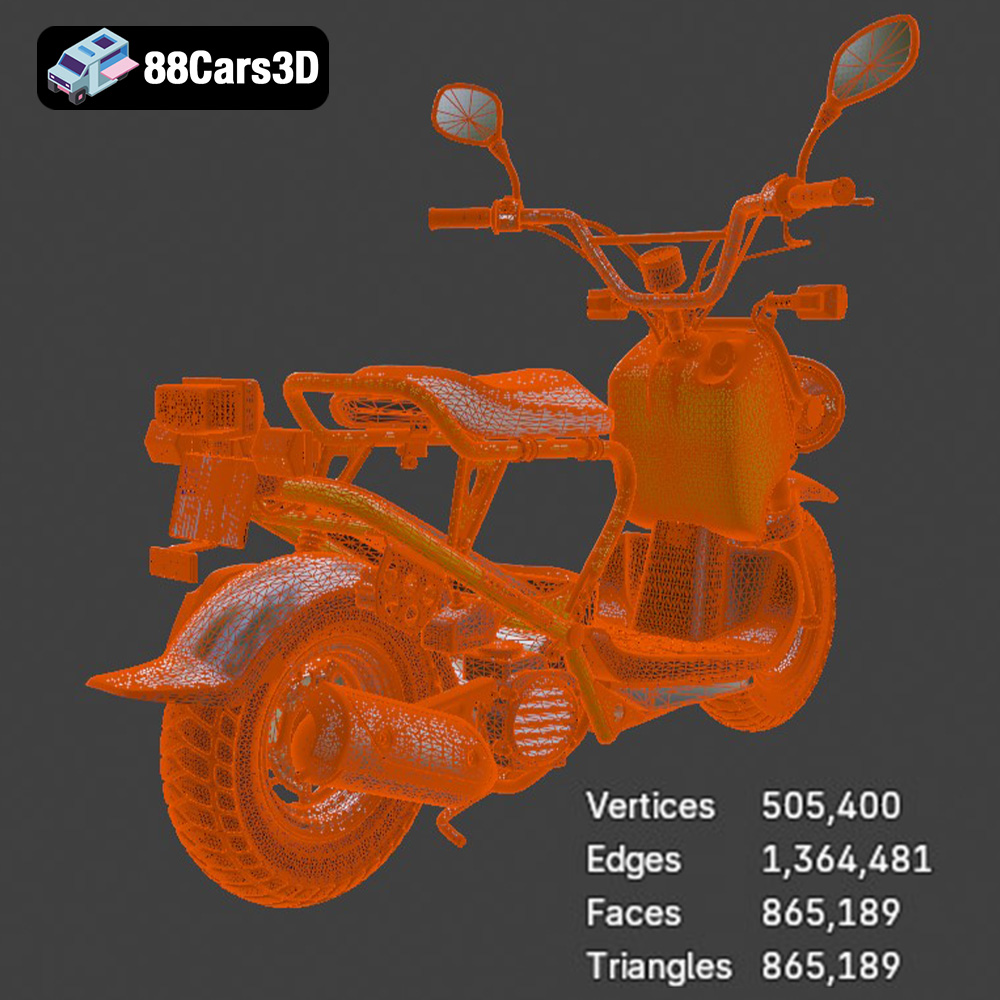
The description highlights “unparalleled precision” and “clean geometry.” What does this mean for a professional? Clean geometry implies a well-optimized mesh with logical polygon flow, minimal triangulation (quads preferred for subdivision), and no non-manifold edges or overlapping vertices. This is crucial for several reasons:
For the Honda Zoomer 50, this means that every curve of its frame, every detail of its engine, and every component of its rugged design has been carefully constructed to meet professional standards, ensuring it looks impeccable from any angle and under any lighting condition.
Beyond geometry, the model boasts “realistic materials.” In 3D, this typically refers to Physically Based Rendering (PBR) materials, which accurately simulate how light interacts with surfaces in the real world. This involves detailed texture maps for:
For the Zoomer 50, this translates into believable paint finishes, realistic rubber tires, metallic accents, and detailed seat textures. Such attention to material properties ensures the model integrates seamlessly into photorealistic rendering scenes, matching the visual quality of its real-world counterpart.
The Honda Zoomer 50 2005 3D Model is described as “perfect for diverse applications, including game development, rendering, AR/VR experiences, and visualization.” Its availability in multiple formats directly supports this claim:
This multi-format delivery ensures that regardless of your target platform or creative software, the Honda Zoomer 50 2005 3D Model is ready to perform.
High-quality automotive 3D models are fundamental assets for professionals in a range of industries. Their integration into various workflows demands a solid understanding of software capabilities, rendering principles, and optimization techniques. The Honda Zoomer 50 2005 3D Model provides an excellent foundation for these advanced applications.
For artists focused on photorealistic imagery, software like 3ds Max and Blender offer powerful rendering engines. When using a model like the Honda Zoomer 50, the native `.max` or `.blend` files are invaluable. They often come pre-configured with materials, lighting, and camera setups, significantly reducing setup time.
Game developers demand models that are not only visually appealing but also highly optimized for real-time performance. The Honda Zoomer 50’s “game-engine ready format for Unreal Engine and Unity” (.fbx, .unreal) addresses these needs directly.
Beyond traditional rendering and game development, high-quality 3D automotive models are pivotal in cutting-edge applications like Augmented Reality (AR), Virtual Reality (VR), and 3D printing for rapid prototyping and educational purposes.
AR and VR are transforming how we interact with digital content, offering immersive experiences that blur the lines between virtual and real. Automotive models play a significant role here, from virtual showrooms to interactive training simulations. The Honda Zoomer 50 2005 3D Model, with its .glb format, is specifically optimized for these applications.
3D printing allows for the physical manifestation of digital designs, serving critical roles in prototyping, product development, and even creating educational tools. The Honda Zoomer 50 model’s .stl format is tailored for this specific purpose.
Placing realistic vehicles within architectural visualizations or urban planning simulations adds a crucial layer of believability and context. The Honda Zoomer 50 2005 3D Model excels in these scenarios.
Achieving a balance between breathtaking realism and optimal performance is a constant challenge in 3D modeling. For professional 3D car models like the Honda Zoomer 50, this optimization is built-in, saving countless hours for artists and developers.
The “clean geometry” of the Honda Zoomer 50 3D Model implies a smart use of polygons. An efficient polygon budget means that detail is present where it’s needed most (e.g., engine, dashboard) but optimized in less visible areas. For game development, this typically involves creating Multiple Levels of Detail (LODs). Each LOD is a progressively lower-polygon version of the model, which the game engine swaps in based on the camera’s distance to the object. This ensures that distant objects consume fewer resources, drastically improving real-time performance without a noticeable drop in visual quality.
Effective UV mapping is critical for applying textures without stretching or distortion. For complex objects like vehicles, efficient UV layouts are essential. A well-UV’d model like the Honda Zoomer 50 will typically feature:
The inclusion of “realistic materials” suggests that the Honda Zoomer 50 model comes with well-prepared texture maps, designed to integrate seamlessly with these optimized UVs, whether for high-resolution renders or real-time PBR shaders.
While not explicitly mentioned as rigged, many advanced automotive 3D models come with basic rigging for interactive elements. For a scooter like the Zoomer 50, this could include:
The “structural components are modeled with strict attention to detail” makes the Honda Zoomer 50 2005 3D Model an excellent candidate for such rigging, enabling dynamic simulations or interactive controls in game engines and animations. This level of preparation saves significant time for animators and game developers who need a functional vehicle model.
The journey from a mere digital mesh to a truly professional 3D automotive model is paved with technical precision, meticulous craftsmanship, and a deep understanding of diverse industry requirements. As we’ve explored, factors like clean geometry, realistic PBR materials, optimized performance, and versatile file format support are not just features but necessities for creators aiming for excellence in rendering, game development, AR/VR, and advanced visualization.
The Honda Zoomer 50 2005 3D Model exemplifies these high standards, offering a robust and adaptable asset for a wide array of applications. Its meticulous detailing ensures stunning visual fidelity, while its availability in multiple, industry-standard file formats – from .blend and .max for full editability to .fbx and .unreal for game engines, and .glb for AR/VR – guarantees seamless integration into virtually any professional workflow. This level of quality translates directly into saved time, reduced development costs, and superior end results for your projects.
Whether you’re populating a bustling street scene, developing the next hit open-world game, or crafting a photorealistic advertisement, investing in a high-quality 3D car model like the Honda Zoomer 50 2005 is a decision that pays dividends. For those seeking assets that meet the most stringent professional demands, 88cars3d.com stands as a reliable source for such expertly crafted 3D models, empowering artists and developers to bring their most ambitious visions to life.
Discover the realistic Honda Zoomer 50 2005 3D Model, meticulously crafted to represent the iconic rugged scooter. This model delivers unparalleled precision, making it an excellent choice for detailed visualizations and dynamic projects. Key features include clean geometry, realistic materials, and professional quality construction. The structural components are modeled with strict attention to detail, ensuring seamless integration into varied environments. This 3D model is perfect for diverse applications, including game development, rendering, AR/VR experiences, and visualization. Whether used in a street scene simulation or a dedicated showcase, it provides exceptional results.
$39.99
.arvr
.blend
.car3dmodel
.fbx
.gameasset
.glb
.honda
.max
.moped
.motorcycle
.obj
.ply
.rendering
.scooter
.simulation
.stl
.unreal
.zoomer50