Get 20% OFF All Premium 3D & STL Models!

In the expansive and ever-evolving landscape of digital content creation, the demand for realistic, high-fidelity 3D assets is paramount. From blockbuster video games to cutting-edge architectural visualizations, cinematic productions, and immersive AR/VR experiences, the quality of a 3D model directly impacts the final output. Among these, 3D car models hold a unique position, requiring an intricate balance of aesthetic accuracy, technical precision, and performance optimization. A well-crafted vehicle model isn’t just an object; it’s a meticulously engineered digital representation that can elevate a project from ordinary to extraordinary.
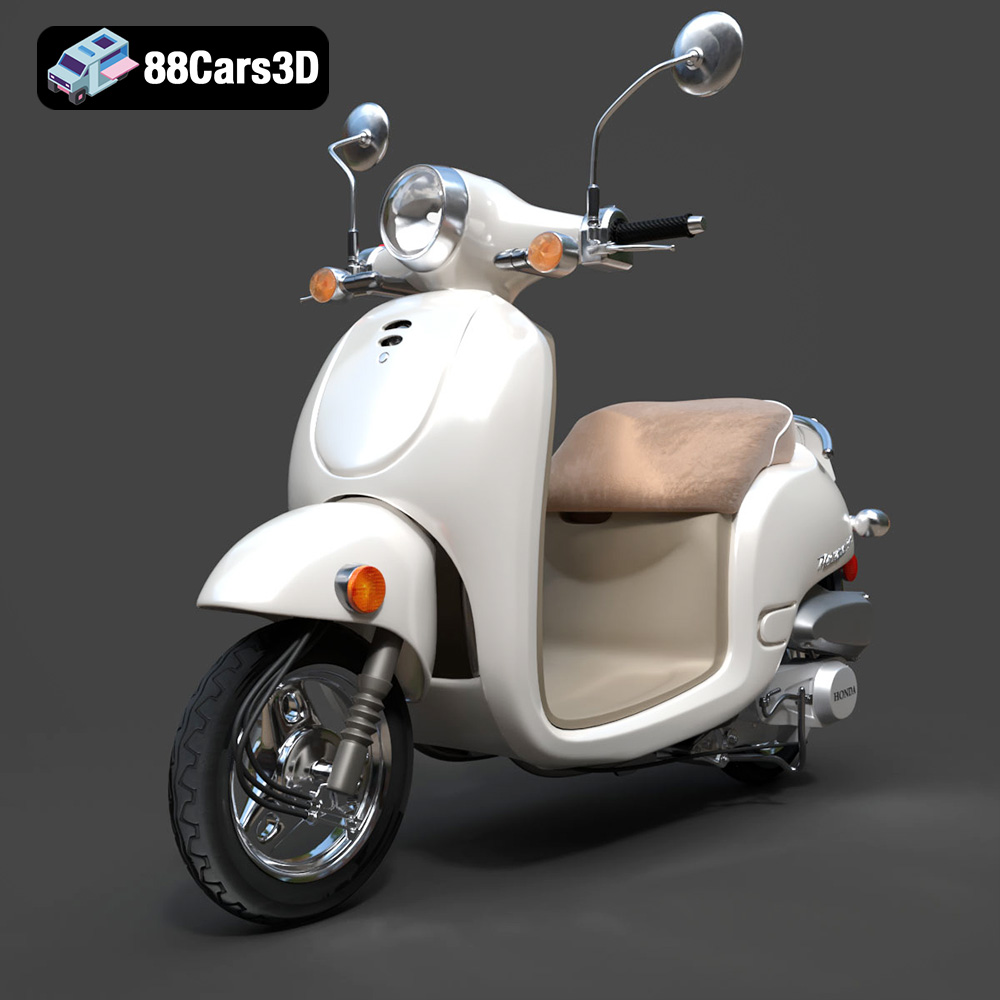
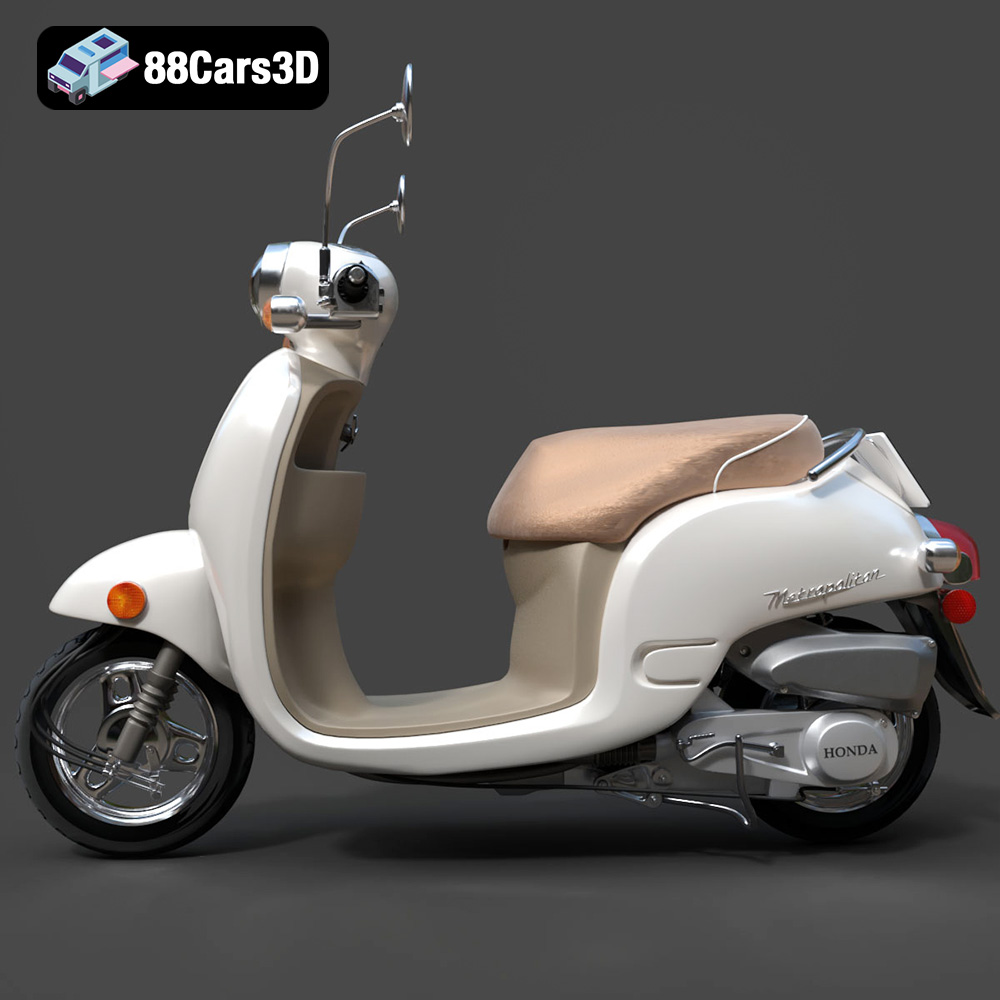
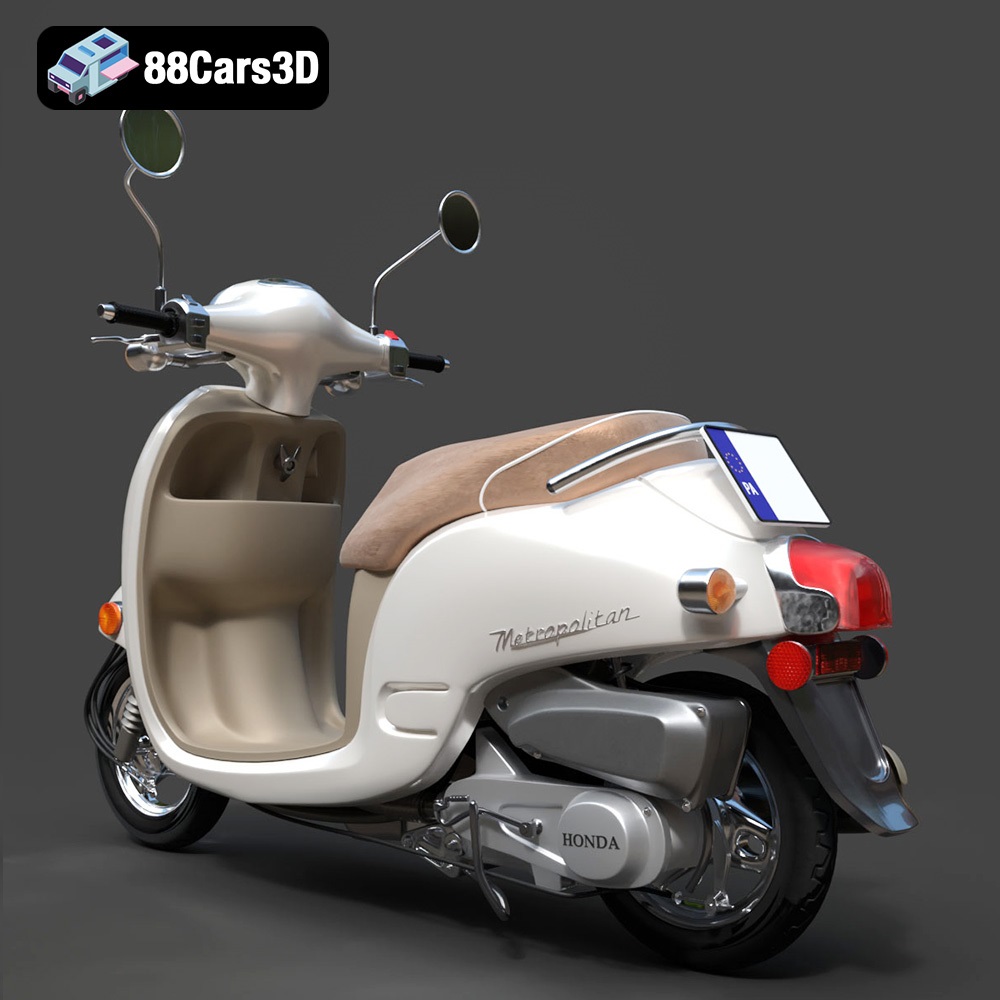
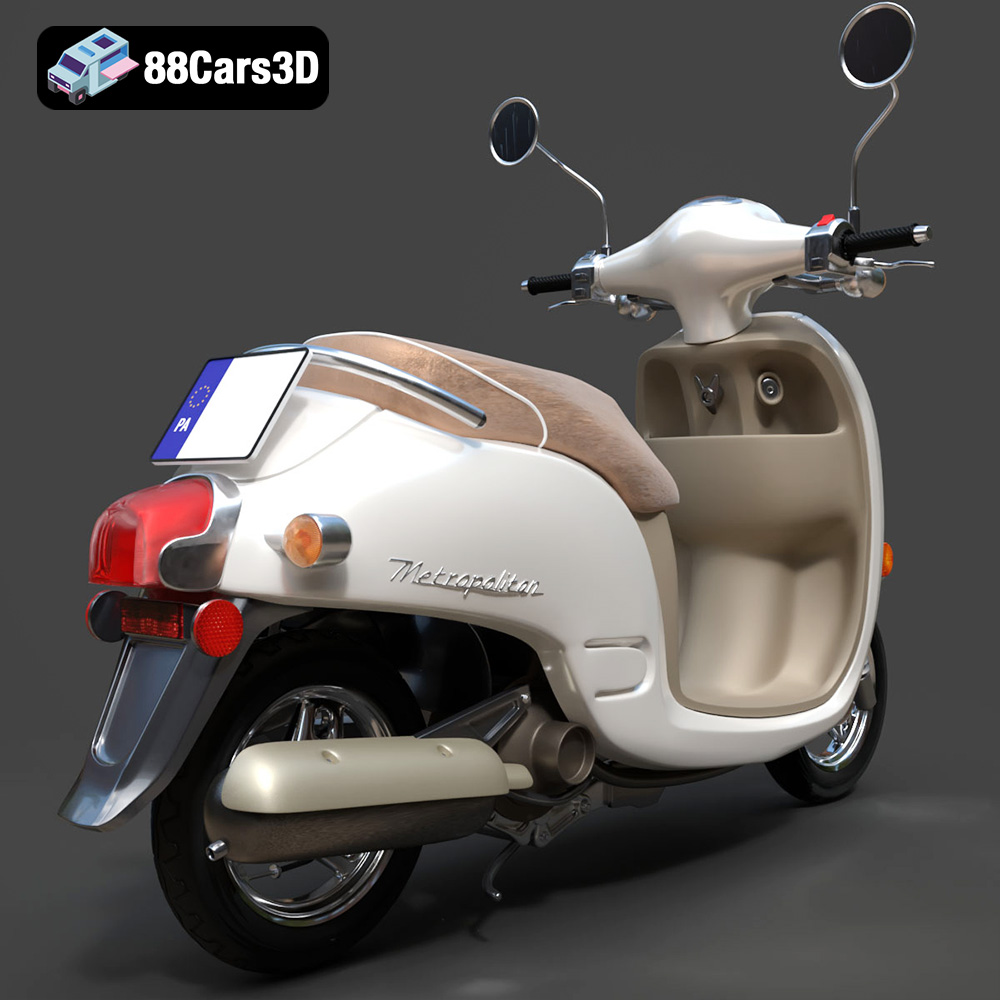
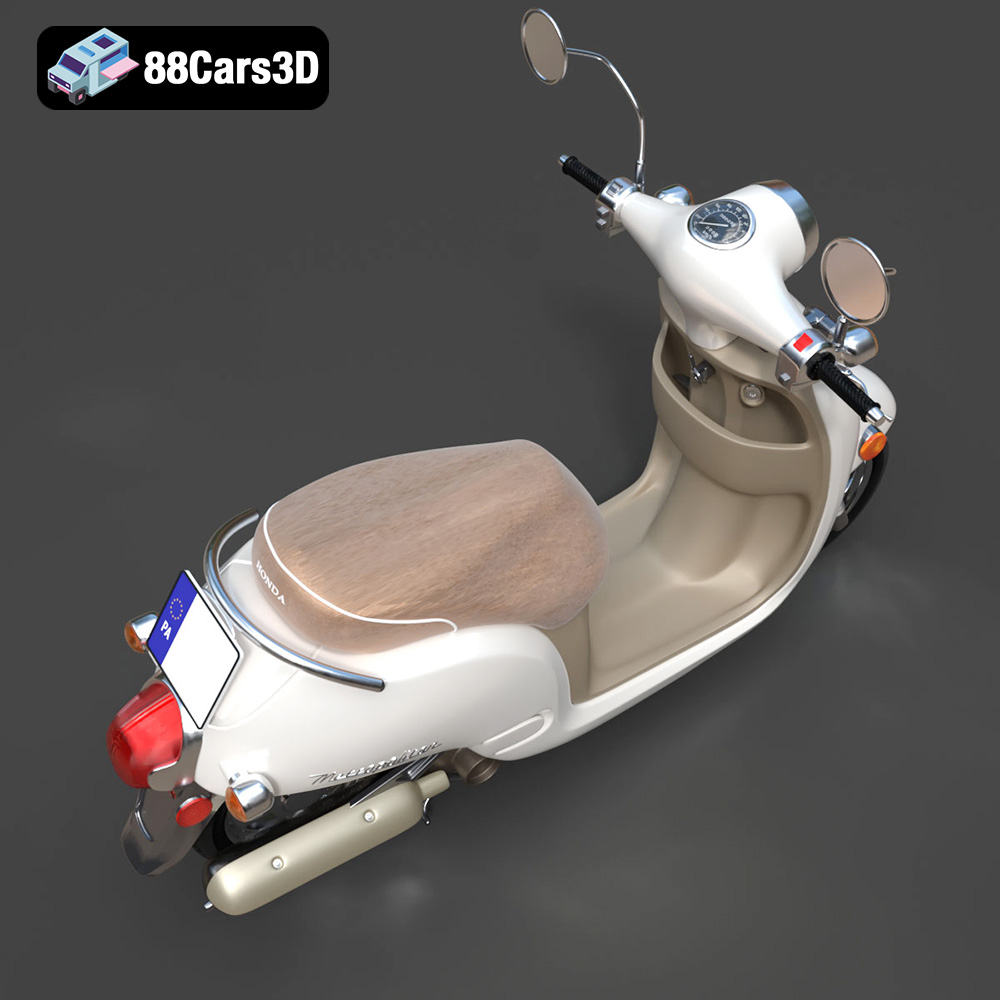
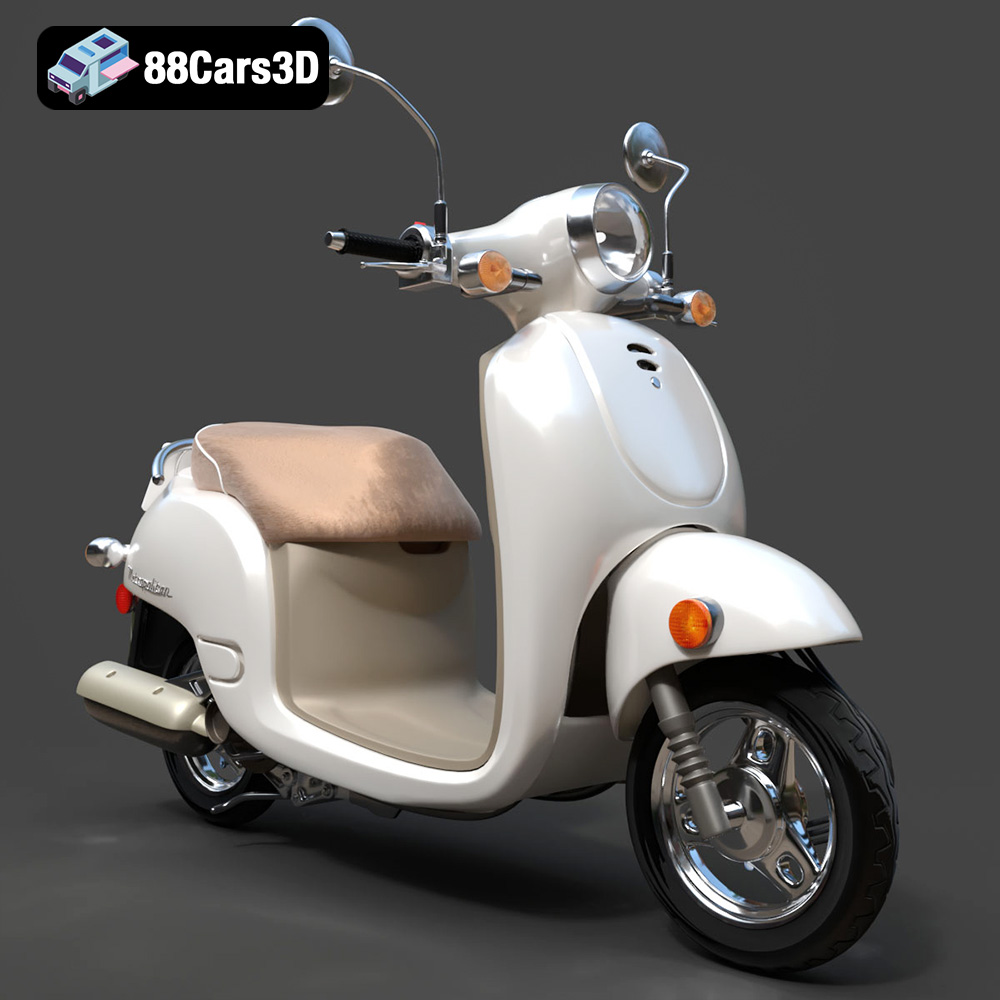
Consider the subtle gleam of chrome, the nuanced reflections on painted surfaces, or the intricate details of an interior dashboard. Achieving this level of realism demands a commitment to clean geometry, accurate proportions, and professionally constructed materials. This is precisely the philosophy behind models available on platforms like 88cars3d.com, which prioritize delivering assets ready for professional pipelines. One such exemplary asset is the Honda Metropolitan 2013 3D Model. This model embodies the precision and versatility required by industry professionals, offering true-to-life detail and seamless integration across various software environments. It’s a testament to how dedicated craftsmanship in 3D modeling can bridge the gap between imagination and a compelling digital reality.
The journey of a 3D model from concept to a final render or real-time application often involves navigating a complex ecosystem of file formats. Each format serves a specific purpose, optimized for different software, engines, or end-use scenarios. Understanding these distinctions is crucial for selecting the right asset and ensuring a smooth workflow, regardless of your chosen pipeline.
The .blend format is native to Blender, a powerful open-source 3D creation suite. When you acquire a .blend file, you’re not just getting a model; you’re often getting a complete scene. This includes the model’s geometry, materials (with all their nodes and textures), lighting setups, camera positions, animations, and even physics simulations. For artists and studios primarily working within Blender, a .blend file offers the highest degree of editability and flexibility. You can dissect every aspect of the model, modify shaders, adjust lighting, or re-rig components with ease. This makes it invaluable for projects requiring extensive customization or iteration, providing a robust foundation like that found in the Honda Metropolitan 2013 3D Model package.
.fbx (Filmbox) is a proprietary format owned by Autodesk, but it has become an industry-standard for interoperability between different 3D software applications and game engines. It’s highly versatile, capable of storing not just mesh data, but also materials, textures, animations, skinning, and camera information. This makes .fbx an ideal choice for exporting animated characters or complex scenes for use in Unreal Engine, Unity, or other professional DCC (Digital Content Creation) tools. Its ability to maintain hierarchical data and animation curves is a significant advantage in pipelines focused on real-time rendering and interactive experiences.
.obj (Wavefront Object) is one of the oldest and most universally supported 3D file formats. While it doesn’t typically store animation or rigging data, it excels at representing geometry (vertices, normals, UV coordinates) and can reference external material files (.mtl) for basic shading information. Its simplicity makes it incredibly robust for basic mesh exchange between virtually any 3D software. When you need a clean, unadulterated mesh that can be imported and manipulated anywhere, .obj is a reliable choice. It’s often used as a fallback or for models where only the static mesh data is required.
The .ply (Polygon File Format) is another format focused on describing 3D scanners or polygon meshes. It’s particularly strong for storing data from 3D scanning, including color, transparency, and sometimes even normal and texture coordinates, often associated with point clouds. While not as common for general asset exchange as .fbx or .obj, .ply is valued for its precision and comprehensive mesh data, making it useful in scientific visualization, CAD, or analysis where exact geometric representation is critical.
.glb (GL Transmission Format Binary) is the binary version of glTF, a royalty-free specification for the efficient transmission and loading of 3D scenes and models by applications. Developed by the Khronos Group, .glb is often called the “JPEG of 3D” due to its optimization for web-based, AR (Augmented Reality), and VR (Virtual Reality) applications. It packs all assets (geometry, textures, animations, PBR materials) into a single, compact file, ensuring fast loading and rendering across various devices and platforms. For interactive web experiences or mobile AR, .glb is rapidly becoming the go-to format, perfect for showcasing assets like the Honda Metropolitan 2013 on a browser.
The .unreal format isn’t a single universal file type in the same way .fbx or .obj are. Instead, when a model is supplied as “.unreal,” it typically signifies a pre-configured asset or project file designed specifically for Unreal Engine. This might be an exported Unreal Engine asset package (.uasset) or a scene file containing the imported model with optimized materials, collision meshes, LODs (Levels of Detail), and blueprint setups. This approach significantly streamlines the integration process, saving developers countless hours of setup and optimization, and ensuring the model is truly “engine-ready” right out of the box.
.stl (Stereolithography) is perhaps the most widely recognized file format for 3D printing. It represents a 3D model as a series of connected triangles (a triangular mesh) without any color, texture, or material information. Its simplicity makes it universally compatible with 3D printers and slicing software. For rapid prototyping, physical model creation, or intricate part manufacturing, .stl is the standard. If you needed to 3D print a miniature replica of the Honda Metropolitan, this would be your format of choice.
Finally, .max is the native file format for Autodesk 3ds Max, one of the leading software packages for 3D modeling, animation, and rendering in the architecture, visualization, and entertainment industries. Like .blend files, .max files contain a complete scene, including geometry, materials, lighting, cameras, and animations specific to 3ds Max. It offers full editability and access to all modifiers and tools within the software, making it essential for professionals whose primary workflow revolves around 3ds Max for high-end rendering and complex animations.
The perceived realism of a 3D car model doesn’t happen by accident; it’s the result of meticulous attention to several core technical principles. When sourcing assets from platforms like 88cars3d.com, understanding these underpinnings helps appreciate the value and efficiency a professional-grade model brings to your projects. The Honda Metropolitan 2013 3D Model exemplifies these principles, built to meet the rigorous demands of various professional applications.
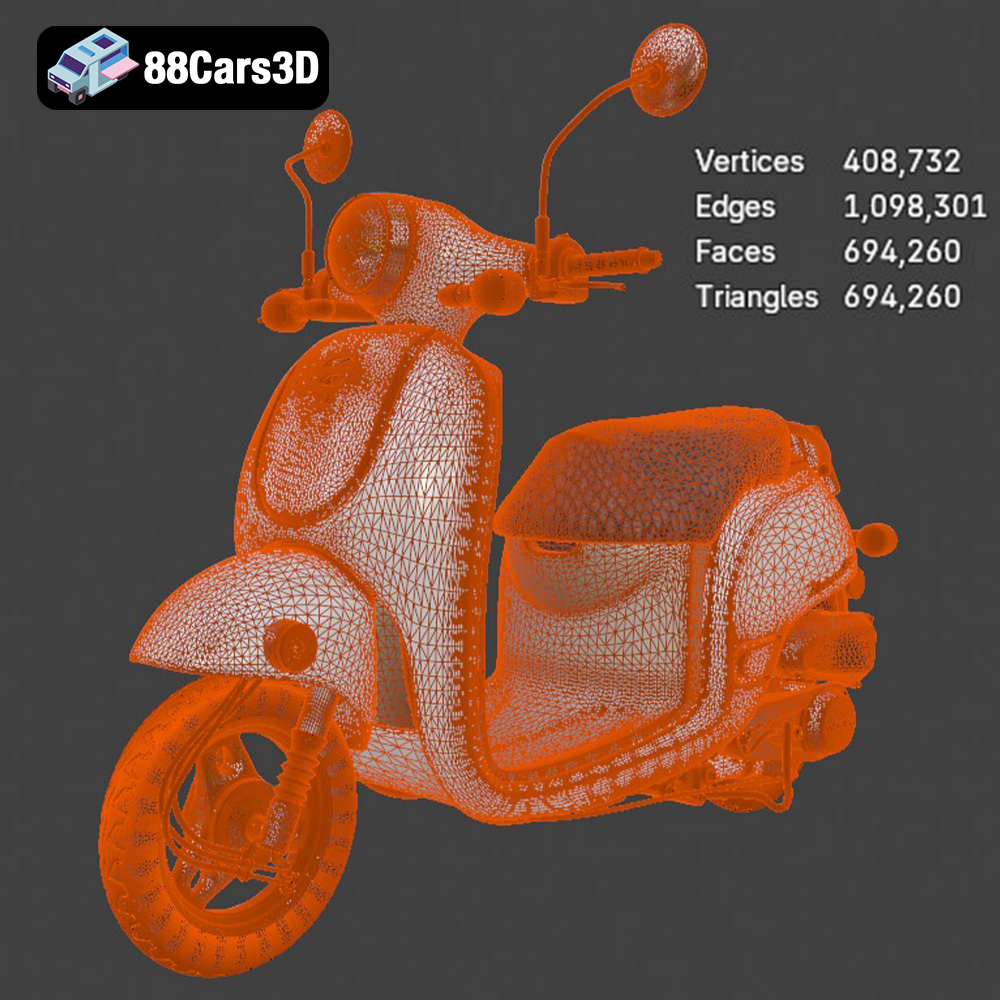
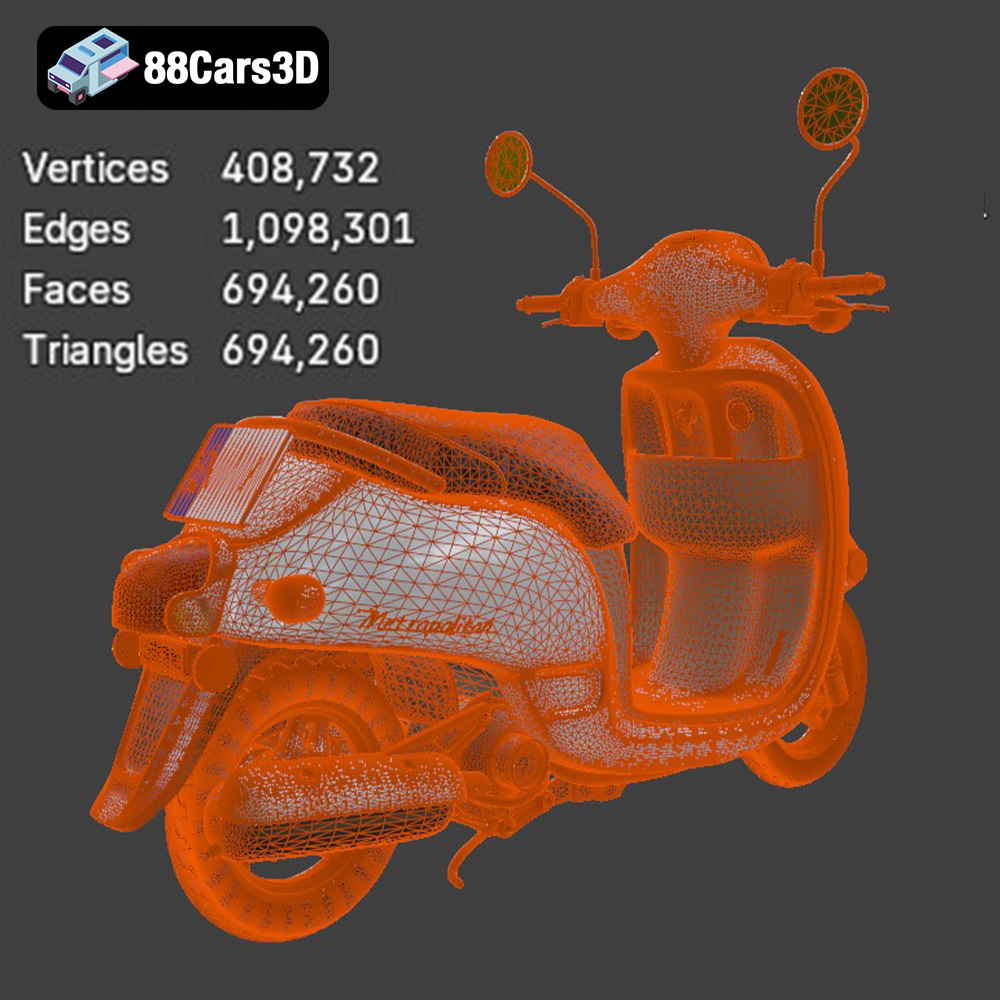
At its heart, a 3D model is a collection of vertices, edges, and faces that form a mesh. The quality of this mesh, known as its geometry and topology, is foundational. “Clean geometry” refers to a mesh that is well-organized, with quadrangulated polygons (quads) predominantly used where possible, rather than triangles (tris) for deformable surfaces. While tris are inevitable in game engines, a clean quad mesh in the source file facilitates easier unwrapping, texturing, and deformation for animation. It also prevents artifacts like pinching or unwanted shading issues during rendering. For automotive models, accurate proportions and smooth, flowing curves are paramount. This often involves careful use of subdivision surfaces and maintaining consistent edge flow to ensure reflections behave realistically on curved body panels. The Honda Metropolitan 2013 is constructed with such clean geometry, ensuring its visual integrity under any lens.
Once the geometry is solid, UV mapping becomes critical. UVs are 2D coordinates that tell a 3D software how to project a 2D texture onto a 3D surface. A good UV map is efficient, with minimal stretching or overlapping, and organized logically to facilitate texturing. For complex objects like vehicles, this means carefully unwrapping various components – body panels, tires, seats, dashboard – into dedicated UV islands. PBR (Physically Based Rendering) workflows, now standard across industries, demand specific texture maps beyond just color (albedo). These include normal maps for fine surface detail, roughness maps to control shininess, metallic maps for material properties, and ambient occlusion maps for subtle contact shadows. Expertly crafted UVs and accompanying PBR textures allow the Honda Metropolitan 2013 to achieve striking results under diverse lighting conditions, mimicking real-world material behavior.
While UVs and textures provide the visual data, it’s the material shaders that interpret this data and interact with light to create the final appearance. A well-configured shader network can mimic anything from glossy paint and polished chrome to matte plastics and textured rubber. This involves setting up parameters like diffuse color, specular reflections, refractive indices, and subsurface scattering based on the real-world properties of the material. When combined with a thoughtfully designed lighting setup – be it studio HDRIs, environment lights, or specific spotlights – the material shaders breathe life into the model. Professional 3D car models, like those offered by 88cars3d.com, come with realistic materials pre-configured, minimizing the setup time for artists and ensuring optimal visual fidelity straight out of the box.
A truly versatile 3D model is one that transcends specific software boundaries, offering seamless integration into a variety of professional pipelines. The Honda Metropolitan 2013 3D Model, with its multiple file formats and professional construction, is designed to be a plug-and-play solution for different creative industries.
For game developers, performance and visual quality are in constant tension. High-detail 3D car models need to be optimized for real-time rendering. The .fbx and .unreal formats of the Honda Metropolitan 2013 are specifically tailored for this. In Unreal Engine, developers can import the .unreal asset, which likely includes pre-configured materials, LODs (Levels of Detail) for efficient rendering at varying distances, and potentially even collision meshes. This saves immense development time, bypassing the manual setup of textures, materials, and optimization steps. Similarly, for Unity users, the .fbx file provides a clean import with embedded textures and animations, ready for scripting and integration into game logic. Whether it’s populating an open-world environment or creating a detailed racing simulator, this model provides the visual fidelity without compromising performance.
Architectural visualization (ArchViz) and product rendering demand photorealism, often for static hero shots or short animations. Here, the .max and .blend formats of the Honda Metropolitan 2013 truly shine. In 3ds Max, artists gain access to the full editable scene, allowing for custom lighting setups, advanced V-Ray or Corona renders, and intricate camera animations. The ability to modify materials, add reflections, or integrate the scooter into a larger scene with specific architectural elements provides unparalleled control. Blender users benefit from the native .blend file, which includes materials and lighting setups, making it straightforward to drop the model into an existing scene or build a new one around it. The precision of the model ensures it looks right whether parked outside a modern building or showcased as a standalone product render.
Augmented Reality (AR) and Virtual Reality (VR) are rapidly expanding fields, requiring 3D assets that are both visually compelling and highly optimized for mobile or standalone headsets. The .glb format of the Honda Metropolitan 2013 is engineered precisely for these applications. Its compact, all-in-one nature ensures quick loading times and efficient rendering on performance-sensitive platforms. Imagine integrating this detailed scooter into an interactive showroom experience, allowing users to walk around it virtually, change colors, or inspect details in an immersive environment. The model’s clean geometry and optimized textures ensure a smooth, high-fidelity experience that enhances engagement without taxing device resources, making it perfect for interactive simulations and product showcases.
The utility of high-quality 3D car models extends far beyond just pretty pictures. These assets are powerful tools that drive innovation, enhance communication, and create immersive experiences across numerous industries. The Honda Metropolitan 2013 3D Model, with its exceptional detail and versatile file formats, is an ideal candidate for a wide array of professional uses.
In today’s competitive market, striking visuals are essential for capturing attention. Automotive rendering has become a cornerstone of modern advertising, allowing brands to showcase vehicles in virtually any scenario, at any time of day, without the logistical costs and constraints of physical photography. A detailed 3D car model, such as the Honda Metropolitan 2013, can be placed in photorealistic environments – be it a bustling city street, a serene beachfront, or a futuristic landscape – all created digitally. This enables agencies to produce dynamic promotional animations, high-resolution hero shots for brochures, or interactive 360-degree views for websites, providing maximum visual impact and flexibility in their campaigns. The ability to iterate on colors, materials, and environments rapidly in 3D drastically shortens production cycles and reduces costs compared to traditional photo shoots.
From feature films to animated shorts and cinematic cutscenes in video games, 3D vehicles play a critical role in visual storytelling. Directors and animators rely on highly detailed models that can withstand close-up shots and complex lighting scenarios. The precision of the Honda Metropolitan 2013 3D Model, with its accurate proportions and refined curves, ensures it holds up under the scrutiny of a high-definition render. It can be integrated into live-action plates, serve as a hero asset in fully animated sequences, or be utilized for visual effects (VFX) work where realistic vehicles are crucial for enhancing a scene’s credibility. The model’s clean construction and professional-grade textures make it suitable for advanced rendering engines that demand the highest quality assets for cinematic output.
While not its primary function, highly accurate 3D models can even contribute to early-stage engineering and design processes. Before a physical prototype is built, a detailed digital model allows designers and engineers to visualize concepts, conduct virtual walkthroughs, and review aesthetics and ergonomics. The .ply format, known for its precision, can be instrumental in certain analytical tasks, while the .stl format of the Honda Metropolitan 2013 opens doors for rapid prototyping. Imagine printing a scaled-down physical model to assess its form factor or even prototyping specific components. This significantly reduces lead times and costs associated with physical mock-ups, allowing for quicker iteration and refinement of designs. Furthermore, such models are invaluable for simulations, from aerodynamics to crash testing, providing critical data long before manufacturing begins.
The digital realm is increasingly sophisticated, demanding 3D assets that are not only visually stunning but also technically robust and versatile. Whether you’re a game developer seeking immersive realism, an architect striving for compelling visualizations, an advertiser crafting a captivating campaign, or an AR/VR innovator building the next interactive experience, the foundation of your project lies in the quality of your 3D models. The meticulous craftsmanship evident in assets like the Honda Metropolitan 2013 3D Model underscores the importance of choosing professionally built components.
This model, with its accurate proportions, clean geometry, realistic materials, and availability in multiple industry-standard formats including .blend, .fbx, .obj, .glb, .stl, .ply, .unreal, and .max, represents a significant investment in quality. It streamlines workflows, minimizes compatibility issues, and empowers creators to achieve outstanding visual fidelity with greater efficiency. By choosing assets from trusted sources like 88cars3d.com, you are not just acquiring a file; you are acquiring a production-ready solution that has been designed to excel across a spectrum of professional applications. Elevate your projects, inspire your audience, and unlock new creative possibilities with 3D car models engineered for excellence.
Experience realistic visualization with the Honda Metropolitan 2013 3D Model. This exceptionally detailed asset brings true-to-life precision to your projects, featuring accurate proportions and refined curves that capture the essence of the original vehicle.
Built with clean geometry and professional-grade construction, this model is designed for seamless integration into various pipelines. It features realistic materials and expertly crafted surfaces, ensuring striking results under diverse lighting conditions. Every component has been meticulously modeled to provide top-tier realism without compromising performance.
Perfect for a wide range of applications, this 3D model excels in game development, architectural visualization, cinematic rendering, and AR/VR experiences. Whether you are building an interactive simulation or producing dynamic promotional animations, this versatile vehicle asset delivers outstanding visual fidelity.
The model is delivered in multiple industry-standard file formats to suit any workflow:
Tags: .honda, .metropolitan, .scooter, .moped, .car3dmodel, .rendering, .simulation, .gameasset, .arvr, .blend, .fbx, .obj, .glb, .stl, .ply, .unreal, .max
Tags:
.honda, .metropolitan, .scooter, .moped, .car3dmodel, .rendering, .simulation, .gameasset, .arvr, .blend, .fbx, .obj, .glb, .stl, .ply, .unreal, .maxVespa VNB 125-B 3D Model 3D Printable STL
$39.99
.arvr
.blend
.car3dmodel
.fbx
.gameasset
.glb
.honda
.max
.metropolitan
.moped
.obj
.ply
.rendering
.scooter
.simulation
.stl
.unreal