Get 20% OFF All Premium 3D & STL Models!

In the dynamic world of digital content creation, the demand for hyper-realistic and performance-optimized 3D assets has never been higher. From blockbuster video games and immersive virtual reality experiences to high-stakes automotive configurators and cinematic advertising, the quality of a 3D model can make or break a project. Automotive models, in particular, represent a pinnacle of this challenge, requiring an intricate balance of artistic fidelity and technical precision. They must not only capture the essence of a vehicle’s design but also perform flawlessly across a spectrum of digital environments.
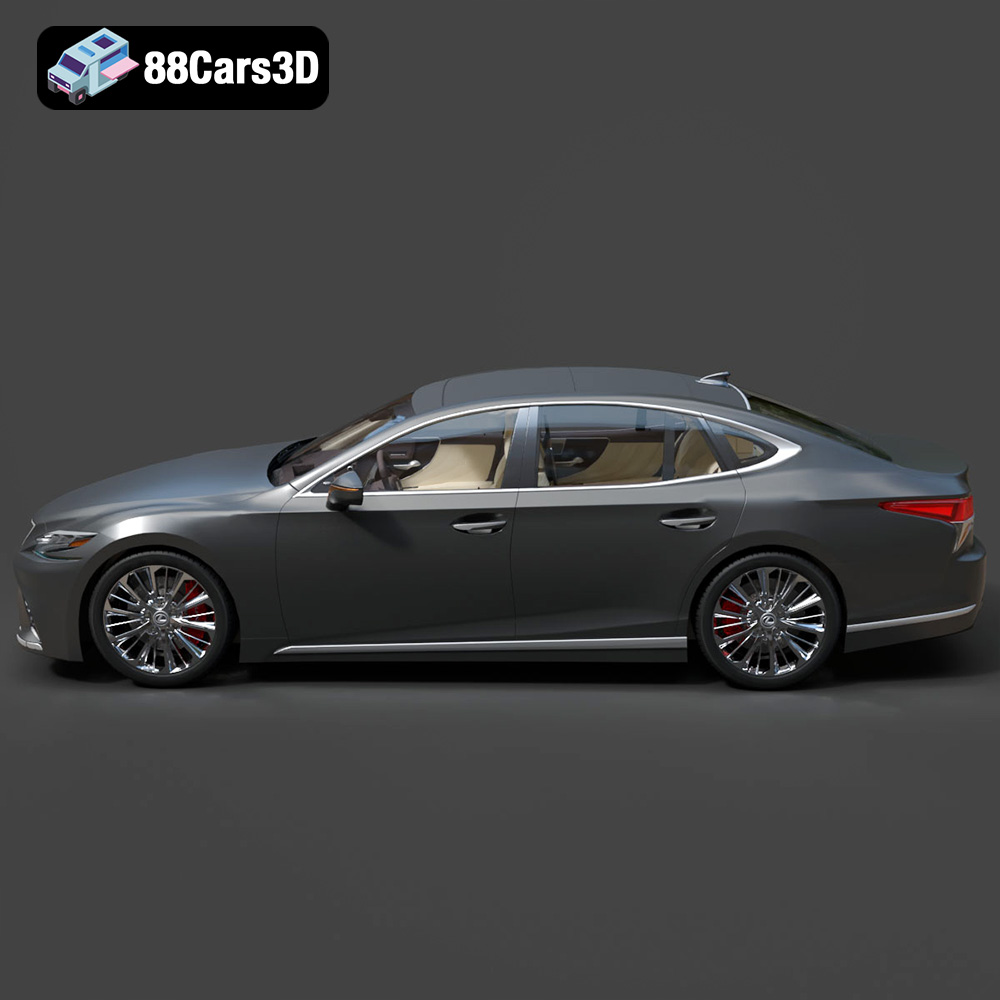
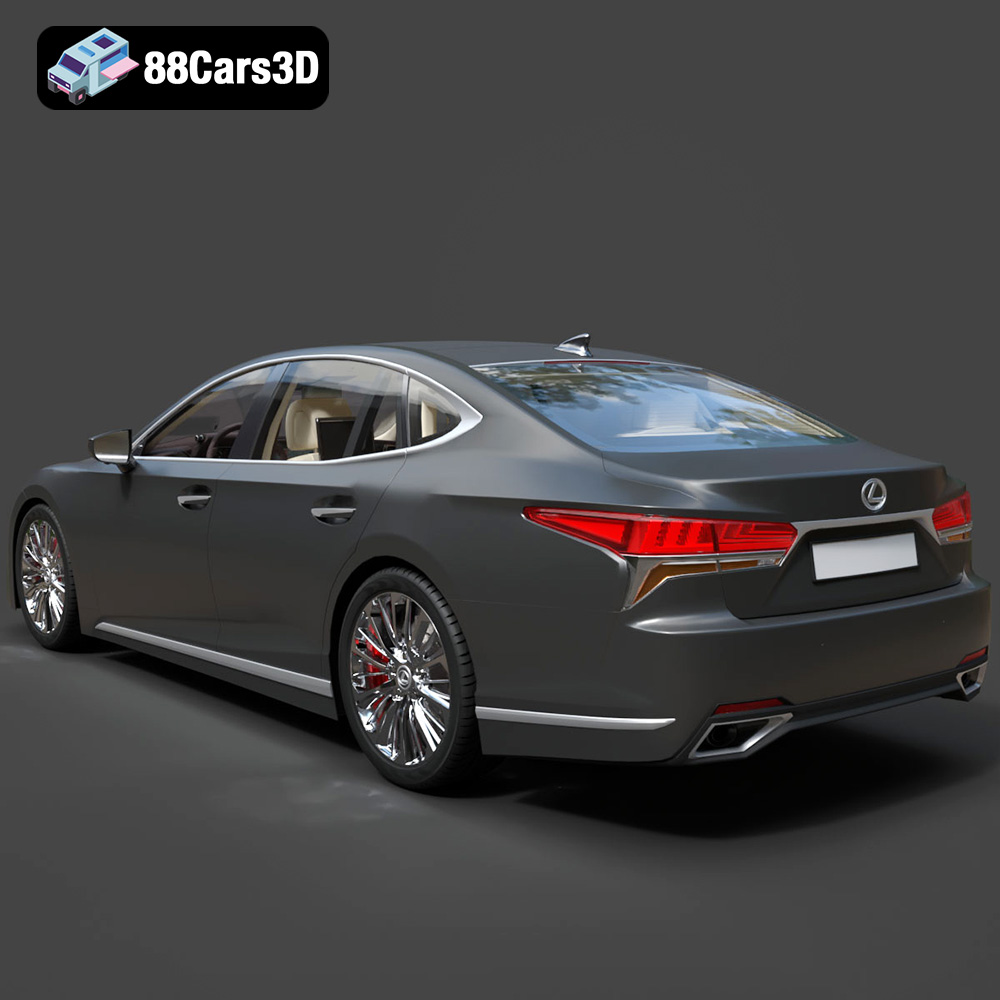
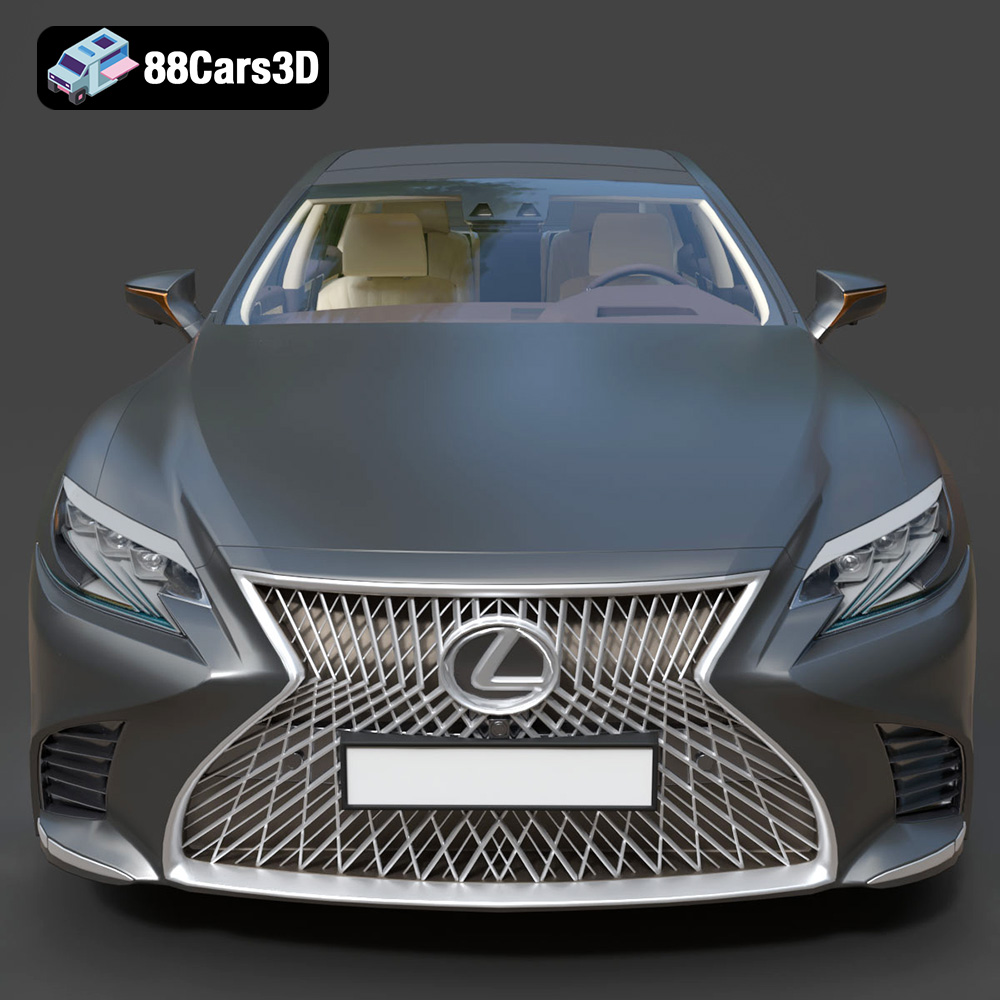
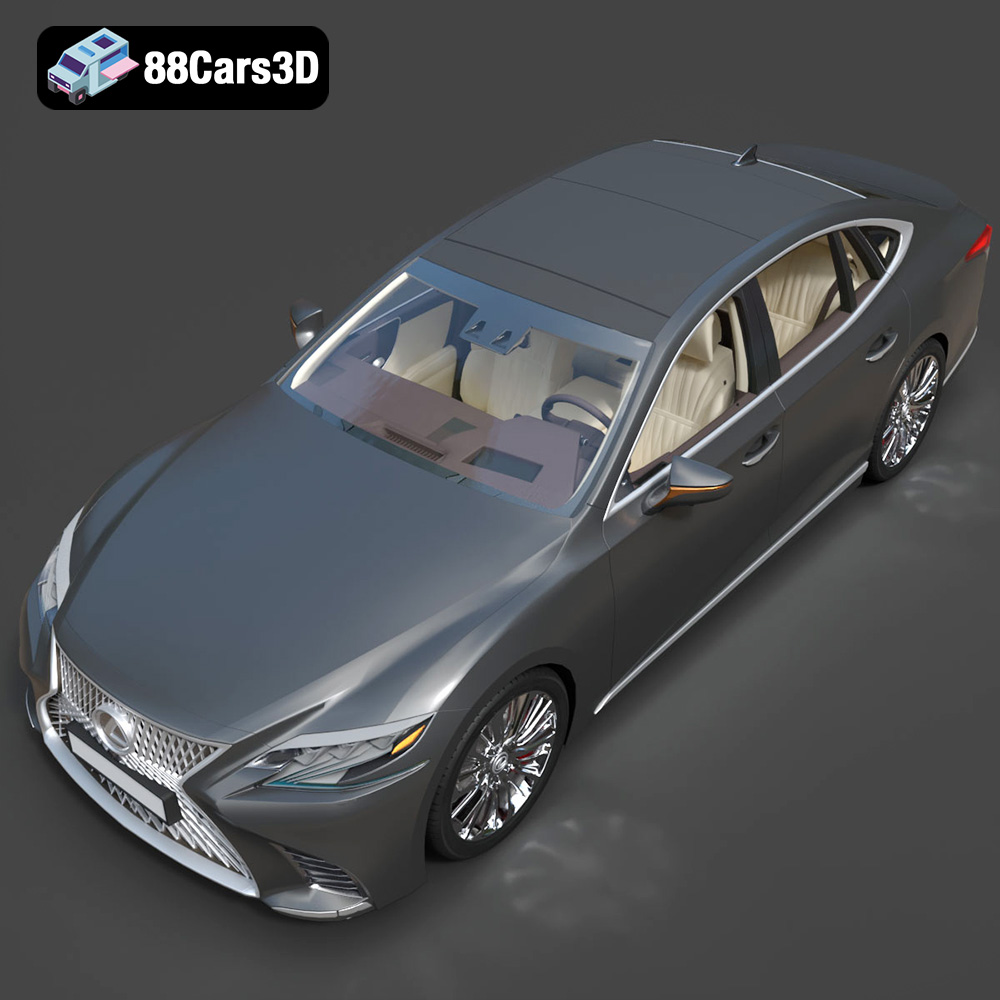
Today, we’re diving deep into the technical intricacies and creative possibilities offered by a prime example of such an asset: the Lexus LS 500 2018 3D Model. This isn’t just a static representation; it’s a meticulously crafted digital twin, engineered to meet the rigorous demands of professional workflows. The 2018 Lexus LS 500 itself is a masterpiece of Japanese luxury, renowned for its striking spindle grille, elegant coupe-like silhouette, and a powerful twin-turbo V6. Its digital counterpart from 88cars3d.com embodies this spirit, translating its “Takumi” craftsmanship and aggressive yet refined styling into a versatile 3D asset. We will explore how such a detailed model can revolutionize your projects, from understanding its foundational file formats to integrating it into complex real-time and offline rendering pipelines.
Choosing the correct 3D model file format is paramount for efficiency, compatibility, and leveraging the full potential of a digital asset. Different formats are optimized for specific use cases, software environments, and performance requirements. A premium 3D car model like the Lexus LS 500 2018 is typically offered in a suite of formats to ensure maximum versatility for professionals. Let’s break down the core formats included with this model and their technical implications.
The .blend file format is the native format for Blender, the popular open-source 3D creation suite. When you receive a .blend file, you’re getting a fully editable scene, complete with all objects, materials, textures, lighting setups, and even animation data if present. This format is ideal for users deeply integrated into the Blender ecosystem, allowing for immediate modifications, re-texturing, rigging adjustments, and rendering without any import/export conversions that could potentially alter data. For the Lexus LS 500 model, having a native .blend file ensures that all intricate details, from the material shaders to the proper pivot setups for animation (wheels, doors, suspension), are preserved exactly as intended by the artist, offering unparalleled flexibility for customization.
.fbx (Filmbox) is a proprietary file format owned by Autodesk and is widely considered the industry standard for 3D data interchange. Its strength lies in its ability to store not just geometry, but also materials, textures, animations (including skeletal animations, morph targets, and camera data), and scene hierarchy. This makes it an ideal format for transferring complex assets like the Lexus LS 500 between different 3D software packages (e.g., from 3ds Max or Blender to Maya, Cinema 4D, or even directly into game engines like Unreal Engine and Unity). For game development and real-time pipelines, .fbx is often the preferred choice due to its robust support for animations and its efficient handling of mesh data, ensuring that the optimized ~200,000 triangle geometry and separate animated components are preserved during export.
.obj (Wavefront Object) is one of the oldest and most universally supported 3D file formats. While it’s primarily excellent for storing geometric data (vertices, normals, UV coordinates, and faces), it handles materials through an accompanying .mtl (material template library) file and doesn’t inherently support animations or scene hierarchy in the same way .fbx does. Its simplicity and widespread compatibility make it an excellent choice for cross-software compatibility, especially when the primary concern is the mesh itself. If you need to import the Lexus LS 500 model into a less common 3D application or perform mesh analysis, .obj provides a reliable, universally readable foundation.
.glb (GL Transmission Format Binary) is the binary version of glTF, an open-standard format for 3D scenes and models. Designed for efficient transmission and loading of 3D models in web browsers, AR (Augmented Reality), and VR (Virtual Reality) applications, .glb files bundle all necessary assets (geometry, materials, textures, animations) into a single, compact file. This format is crucial for showcasing the Lexus LS 500 in interactive web experiences, virtual showrooms, or mobile AR apps where quick loading times and broad device compatibility are essential. Its optimization for runtime performance aligns perfectly with the model’s game-ready design.
.stl (Stereolithography) is the de facto standard for 3D printing. It represents a 3D model as a series of connected triangles, defining only the surface geometry without color, texture, or material information. While simplistic, its ubiquity makes it indispensable for converting digital models into physical objects. The Lexus LS 500 3D Model, with its detailed exterior features, can be readily converted to .stl for hobbyists or professionals looking to create display-scale physical models. The product description provides excellent recommendations for print settings, highlighting the transition from digital fidelity to physical manufacturability.
.ply (Polygon File Format) is another format used for storing 3D data, particularly from 3D scanners. It can store not only geometry but also color and texture per vertex or face, and even properties like transparency or confidence values. While less common for general asset distribution, .ply is valued in scientific, CAD, and engineering fields for its precision and ability to carry diverse data attributes. For advanced analysis or specific manufacturing processes, the Lexus LS 500 model in .ply format could be beneficial.
The .unreal format, or more accurately, the specific asset pipeline and structure associated with Unreal Engine, refers to assets that are prepared and optimized for direct integration into an Unreal Engine project. This often involves careful naming conventions, proper material setup, collision geometry, LODs (Levels of Detail), and blueprint integration. While not a standalone file type in the traditional sense, providing an “Unreal-ready” asset like the Lexus LS 500 means it adheres to best practices for the engine, potentially including pre-configured textures, materials, and pivot points, significantly streamlining the development process for game artists and developers.
.max is the native file format for Autodesk 3ds Max, a powerful 3D modeling, animation, and rendering software widely used in architectural visualization, product design, and game development. Similar to .blend for Blender, a .max file contains the entire scene, allowing for complete editability, access to modifiers, complex material setups, and sophisticated rendering engines like V-Ray or Corona. For professionals working within a 3ds Max pipeline, the .max version of the Lexus LS 500 2018 3D Model offers the highest degree of control and flexibility for animation, high-resolution rendering, and integration into existing 3ds Max projects.
By offering this comprehensive range of file formats, the Lexus LS 500 2018 3D Model ensures that users, regardless of their preferred software or target application, can seamlessly incorporate this high-quality asset into their workflows, minimizing conversion issues and maximizing creative potential. This commitment to versatility is a hallmark of premium 3D car models available on platforms like 88cars3d.com.
The creation of a high-fidelity 3D car model is an intricate process, blending artistic interpretation with engineering precision. The Lexus LS 500 2018 3D Model exemplifies this fusion, offering a digital representation that is both stunningly accurate and technically robust. Every element, from the car’s majestic stance to the minutiae of its interior, has been painstakingly recreated.
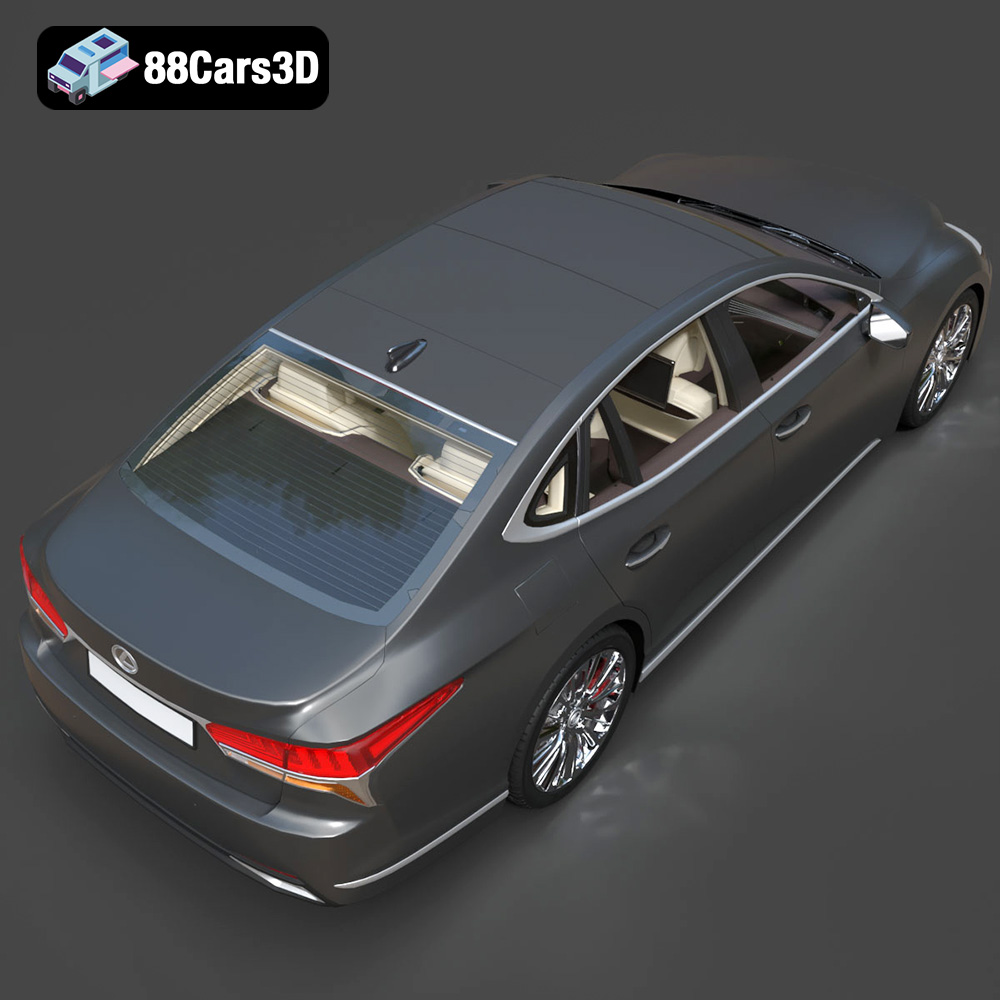
The exterior of the Lexus LS 500 2018 is a masterclass in automotive design, characterized by its “aggressive yet refined styling.” The 3D model accurately reflects this, beginning with its foundational geometry. The “accurate Lexus LS 500 2018 frame geometry” ensures that its distinctive flowing lines and coupe-like sedan proportions are preserved. Key design elements like the signature spindle grille are rendered with “complex mesh geometry,” a crucial detail that often distinguishes high-quality models from generic ones. The grille’s intricate pattern, a hallmark of modern Lexus vehicles, is not simply a texture but a true geometric representation, allowing for realistic light interaction and reflections. Similarly, the “integrated dual exhaust finishers with chrome detailing” and the “Z-shaped LED headlights and L-shaped taillights with internal projector detailing” are testament to the model’s commitment to visual authenticity. The inclusion of “authentic 19-inch/20-inch alloy wheels with low-profile tires and detailed brake calipers” along with “accurately modeled multi-link suspension components” demonstrates an understanding of the vehicle’s engineering, essential for both visual realism and functional simulation.
The interior of a luxury vehicle is as important as its exterior, defining the user experience. The Lexus LS 500 2018 3D Model doesn’t disappoint, providing a “luxurious leather-trimmed seating with intricate quilting and stitching details.” These subtle but impactful textures and patterns are critical for conveying the car’s premium feel, especially in close-up renderings or first-person VR experiences. The “detailed steering wheel with integrated controls and paddle shifters,” “high-resolution digital instrument cluster and center infotainment display screen,” and “accurately placed center console controls, trackpad, shifter, and pedals” create an environment ripe for immersion. For game developers and AR/VR creators, the “optimized geometry for first-person POV in gaming and VR simulations” is a significant advantage, ensuring that performance is maintained even with high levels of interior detail.
In today’s interactive digital landscape, raw visual fidelity isn’t enough; performance is paramount. A truly professional 3D asset must balance breathtaking aesthetics with efficient resource utilization. The Lexus LS 500 2018 3D Model is engineered precisely with this balance in mind, making it an ideal “game-ready” asset.
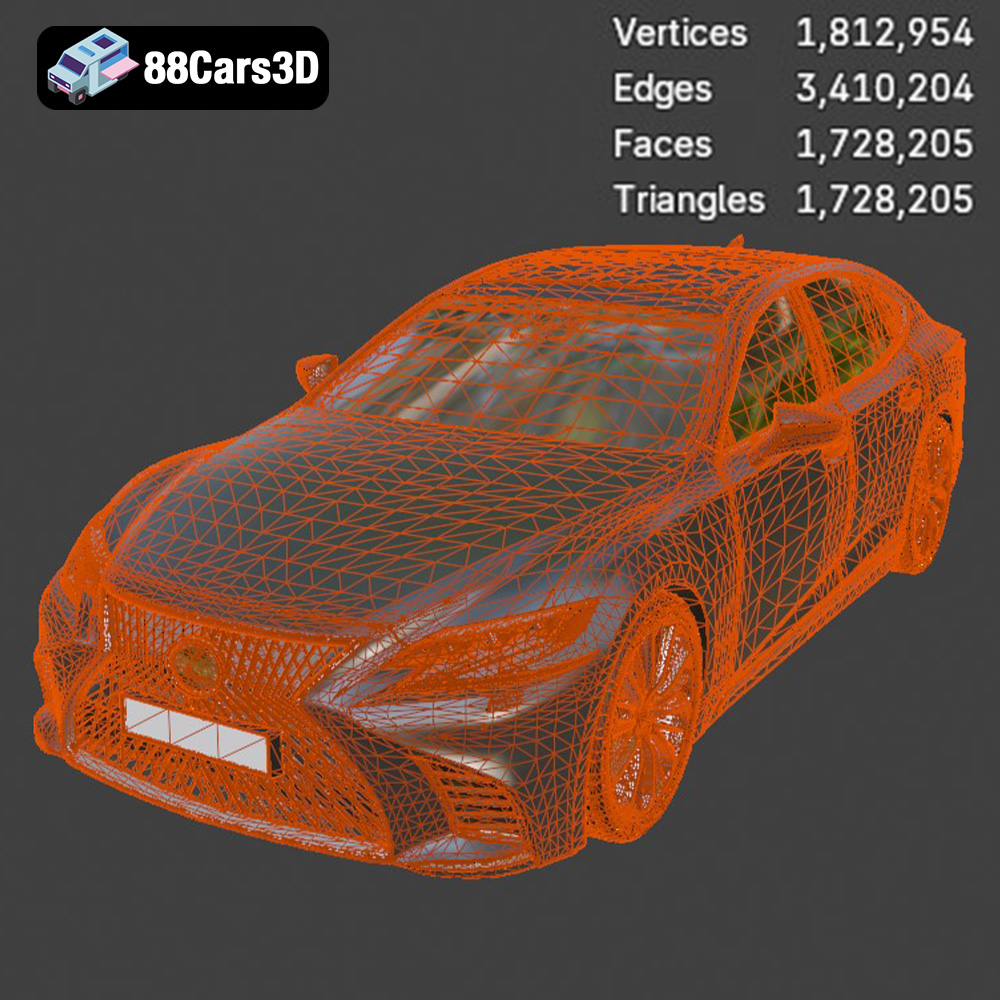
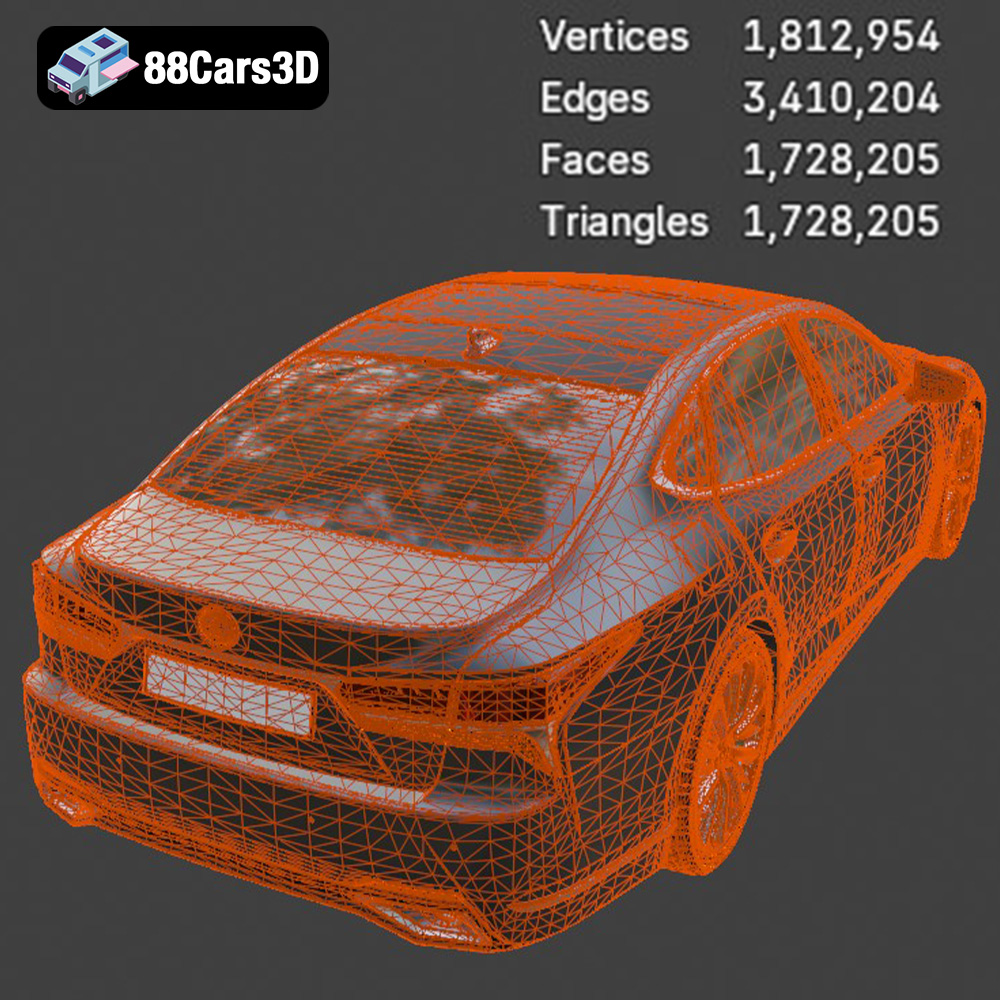
The primary indicator of an asset’s performance in real-time engines is its polygon count, or more precisely, its triangle count. The Lexus LS 500 model boasts “approximately 200,000 triangles,” which is a highly optimized figure for a modern, high-detail vehicle in game development or AR/VR. This “strikes perfect balance for real-time engines (Unreal, Unity) while maintaining high-end visual realism.” A lower polycount might sacrifice crucial details, making the car look unrealistic, while an excessively high polycount (millions of triangles) would cripple performance, leading to frame rate drops and unplayable experiences. This ~200,000 triangle count allows for the accurate representation of the car’s complex curves, detailed grille, and intricate interior without overwhelming the GPU, even when multiple vehicles are present in a scene.
Beyond the raw polycount, several technical considerations elevate the Lexus LS 500 3D Model’s utility for real-time applications. “Real-world scale accuracy based on actual vehicle chassis” ensures that the car fits authentically into virtual environments, from architectural visualizations to open-world game maps. Discrepancies in scale can break immersion and complicate physics simulations. Furthermore, “proper pivot setup for steering, wheel rotation, and suspension travel” is a critical feature for animation and interactive systems. This means the model is ready for immediate integration into vehicle physics systems in game engines, allowing developers to animate steering, wheel spin, and suspension compression and extension with minimal setup. The separation of “wheels, doors, suspension, and steering components for animation” further empowers animators and developers, offering granular control over each moving part.
The true value of a versatile 3D asset like the Lexus LS 500 2018 3D Model is realized when it seamlessly integrates into diverse professional workflows, from cinematic rendering to interactive game development. Let’s explore how this model fits into industry-standard software and real-world scenarios.
In architectural visualization (arch-viz), adding realistic vehicles is crucial for grounding scenes in reality and conveying scale and lifestyle. A high-quality model of a luxury sedan like the Lexus LS 500 elevates the perceived value of any architectural rendering. Professionals using 3ds Max (with rendering engines like V-Ray or Corona Renderer) can leverage the included .max file for immediate, uncompromised integration. The “high-resolution textures” and “clean geometry” of the model allow it to hold up under extreme close-ups and diverse lighting conditions. Imagine a sleek, modern villa rendering where the Lexus LS 500 is parked in the driveway, its metallic paint reflecting the ambient light, and its intricate spindle grille casting subtle shadows. The model’s real-world scale and detailed exterior features ensure it acts as a powerful accent, making the scene more believable and aspirational. The separate components also allow for subtle animations, like doors slightly ajar or wheels turned, adding dynamic storytelling to a static render.
For game developers, finding a balance between visual quality and performance is a constant challenge. The Lexus LS 500 2018 3D Model, with its “game-ready & optimized: ~200,000 triangles,” is tailor-made for this environment. Developers working in Blender can utilize the native .blend file to modify UVs, adjust material properties, or even create LODs (Levels of Detail) for further optimization before exporting. For integration into Unreal Engine, the model’s .fbx format is ideal, allowing for a straightforward import that preserves geometry, UVs, and animation pivots. Once in Unreal, developers can quickly set up physically based materials (PBR) using the high-resolution textures, create collision meshes, and integrate the separate wheel and suspension components with Unreal’s vehicle physics systems. This enables dynamic gameplay in open-world games, realistic car simulators, or even interactive showrooms where players can explore the car’s detailed interior in first-person view. The optimized geometry ensures that even with multiple instances of the vehicle, the game maintains smooth frame rates.
The burgeoning fields of Augmented Reality (AR) and Virtual Reality (VR) demand highly efficient assets. The Lexus LS 500 model’s inclusion of a .glb file format and its optimized topology make it perfectly suited for these applications. For a virtual showroom experience in VR, users can walk around, open doors, and even sit inside the meticulously detailed cockpit, experiencing the “luxurious leather-trimmed seating” and “digital instrument cluster” firsthand. In an AR application, the Lexus LS 500 could be placed realistically in a user’s driveway via their smartphone, allowing them to visualize its size and presence in their own environment. The compact nature of the .glb format ensures quick loading times on mobile devices, a critical factor for user retention in AR/VR apps. Developers using Unity can import the .fbx or .glb for mobile VR/AR experiences, while web-based AR/VR platforms (like those using WebXR) can directly consume the .glb file, making the Lexus LS 500 a versatile asset for next-generation immersive content.
The utility of a high-quality 3D model extends far beyond traditional screen-based rendering and game development. With advancements in technology, these digital assets are increasingly finding their way into immersive experiences and tangible physical forms. The Lexus LS 500 2018 3D Model is uniquely positioned to excel in these evolving domains.
The inherent “game-ready” nature and optimized geometry of the Lexus LS 500 model make it an ideal candidate for cutting-edge AR/VR applications. Imagine stepping into a virtual Lexus showroom, where the 2018 LS 500 sits gleaming under dynamic lighting. Users can freely walk around the vehicle, examine its “detailed signature spindle grille,” and appreciate its “elegant coupe-like silhouette” in a fully immersive environment. In a VR configurator, potential buyers could “change body colors,” “modify tire textures,” and “adjust material finishes” in real-time, visualizing their dream car before it’s even manufactured. The “optimized geometry for first-person POV in gaming and VR simulations” ensures that even when looking closely at the “luxurious leather-trimmed seating” or the “high-resolution digital instrument cluster,” the experience remains smooth and visually compelling, free from performance hitches. For mobile AR, the .glb format is particularly powerful, allowing users to place a virtual Lexus LS 500 on their driveway, scale it, and walk around it using just their smartphone, offering a powerful pre-purchase visualization tool.
While often overlooked for complex automotive models, 3D printing offers a unique way to bring digital assets into the physical world. The Lexus LS 500 2018 3D Model is “convertible to .stl format for display-scale hobbyists,” opening up a fascinating avenue for creators. This allows enthusiasts and designers to produce tangible replicas of this luxurious sedan. The detailed product description provides precise “3D Print Settings” that are crucial for successful output. Recommendations like “Recommended scale: 1:12 / 1:18 / 1:24” guide users towards common model car sizes. Technical specifications such as “Layer height: 0.04–0.12 mm (Resin printing recommended for fine details)” highlight the need for high-precision printing methods to capture intricate details like the grille mesh and interior elements. Furthermore, advice on “Supports: Required for detailed parts like exhaust, mirrors, grille” and “Print orientation: Frame printed angled for structural integrity; wheels printed separately” demonstrates a deep understanding of the 3D printing process, ensuring that even complex geometries like the “Z-shaped LED headlights” are rendered faithfully. Post-processing guidance, including sanding, priming, and applying “authentic factory colors with metallic finishes,” completes the journey from digital polygon to miniature physical masterpiece, showcasing the versatile nature of premium 3D models from sources like 88cars3d.com.
A truly professional 3D asset provides not just a ready-to-use model, but also the flexibility for artists and developers to adapt it to their specific creative vision. The Lexus LS 500 2018 3D Model is designed with this customization in mind, offering a wealth of opportunities to make it uniquely yours.
The foundation of visual customization lies in the ability to modify materials and textures. The Lexus LS 500 3D Model allows users to easily “change body colors,” enabling a switch from factory colors to “custom metallic or pearl finishes.” This is crucial for matching corporate branding, specific client requests, or simply experimenting with different aesthetic choices. Beyond the paint, the ability to “modify tire textures (street vs. performance variants)” adds another layer of realism and context. A luxury sedan might require sleek street tires for urban scenes, while a stylized racing scenario could demand performance-oriented rubber. Furthermore, artists can “adjust material finishes (matte, gloss, metallic, chrome)” on various parts of the car, from the window trim to interior accents. This level of control over PBR (Physically Based Rendering) material properties is essential for achieving photorealistic results under diverse lighting conditions and artistic styles.
A 3D model doesn’t exist in a vacuum; its appearance is heavily influenced by its environment. The Lexus LS 500 model is built to respond dynamically to different lighting scenarios. The flexibility to “adapt lighting for different environments (daylight, night driving, studio)” allows artists to seamlessly integrate the vehicle into any scene. Whether it’s casting long shadows under a bright midday sun, glinting under the neon glow of a city at night, or showcasing its elegant lines under precise studio lights for a product showcase, the model’s clean geometry and robust material setup ensure it reacts realistically. This extends to integration within various scenes – from sprawling open-world game maps to confined architectural interior renders – where the car’s lighting can be tailored to match the ambient and direct light sources of the virtual world, further enhancing its realism and narrative impact. The detailed interior, for example, will react differently to soft studio lighting compared to the stark contrast of headlights illuminating a night scene, offering rich visual opportunities.
The journey through the intricacies of the Lexus LS 500 2018 3D Model reveals the depth of engineering and artistry required to create a truly professional digital asset. From its meticulously recreated exterior and immersive interior to its optimized performance metrics and versatile file formats, this model stands as a testament to what high-quality 3D car models can offer. It’s more than just a visual prop; it’s a foundational tool designed to accelerate and elevate projects across multiple industries.
We’ve seen how its robust file format support, including `.blend`, `.fbx`, `.obj`, `.glb`, `.stl`, `.ply`, `.unreal`, and `.max`, provides unparalleled compatibility and flexibility for artists and developers using a wide range of software. The balanced polygon count (~200,000 triangles) ensures it’s “game-ready” for real-time engines like Unreal and Unity, while its intricate details make it perfect for photorealistic “automotive rendering” and cinematic visualizations. Beyond the screen, its adaptability for AR/VR applications and precision for 3D printing opens up new avenues for immersive experiences and tangible creations.
Whether you’re crafting an open-world game, designing a virtual showroom, producing a high-end commercial, or simply creating a stunning render, the Lexus LS 500 2018 3D Model offers the technical excellence and creative freedom you need. It represents a smart investment for any professional seeking top-tier 3D car models to drive their digital dreams forward. Explore this and other exceptional assets at 88cars3d.com, where quality and versatility meet the demands of modern digital creation.
The 2018 Lexus LS 500 is the pinnacle of Japanese luxury, featuring a striking spindle grille, elegant coupe-like silhouette, and a powerful twin-turbo V6 engine. Known for its meticulous Takumi craftsmanship, whisper-quiet ride, and aggressive yet refined styling, the LS 500 represents the intersection of executive comfort and cutting-edge automotive design. From its complex front fascia to the dual exhaust outlets, every curve is captured to convey its dynamic road presence. This highly detailed, game-ready 3D model boasts optimized topology (approximately 200,000 triangles), ensuring top-tier visual fidelity without sacrificing real-time performance. Designed with clean geometry and high-resolution textures, it delivers photorealistic results ideal for modern game development, immersive AR/VR experiences, high-end animation, and architectural visualization.
$39.99
.2018
.blend
.fbx
.glb
.lexus
.max
.obj
.ply
.rendering
.stl
.unreal
car-3d-model
executive-car
game asset
game-ready
low-poly
ls-500
luxury-sedan
optimized
VR/AR