Get 20% OFF All Premium 3D & STL Models!

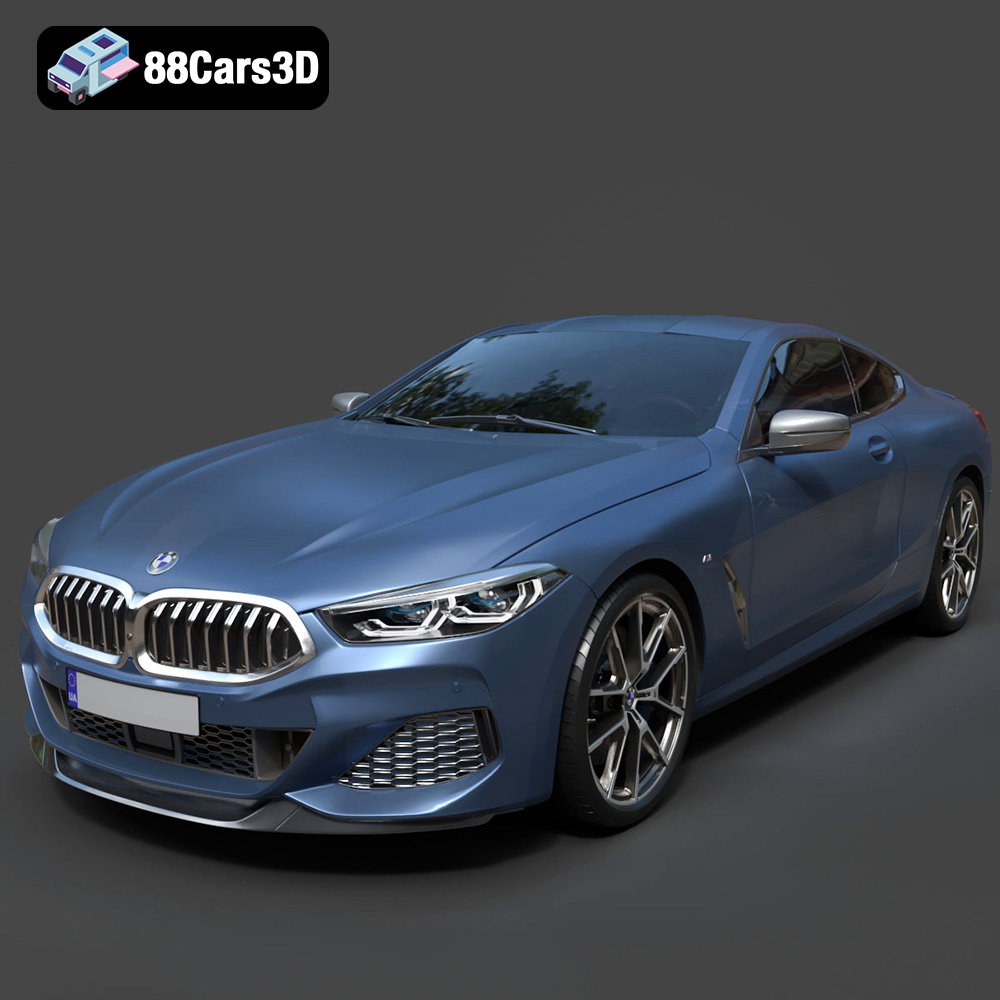
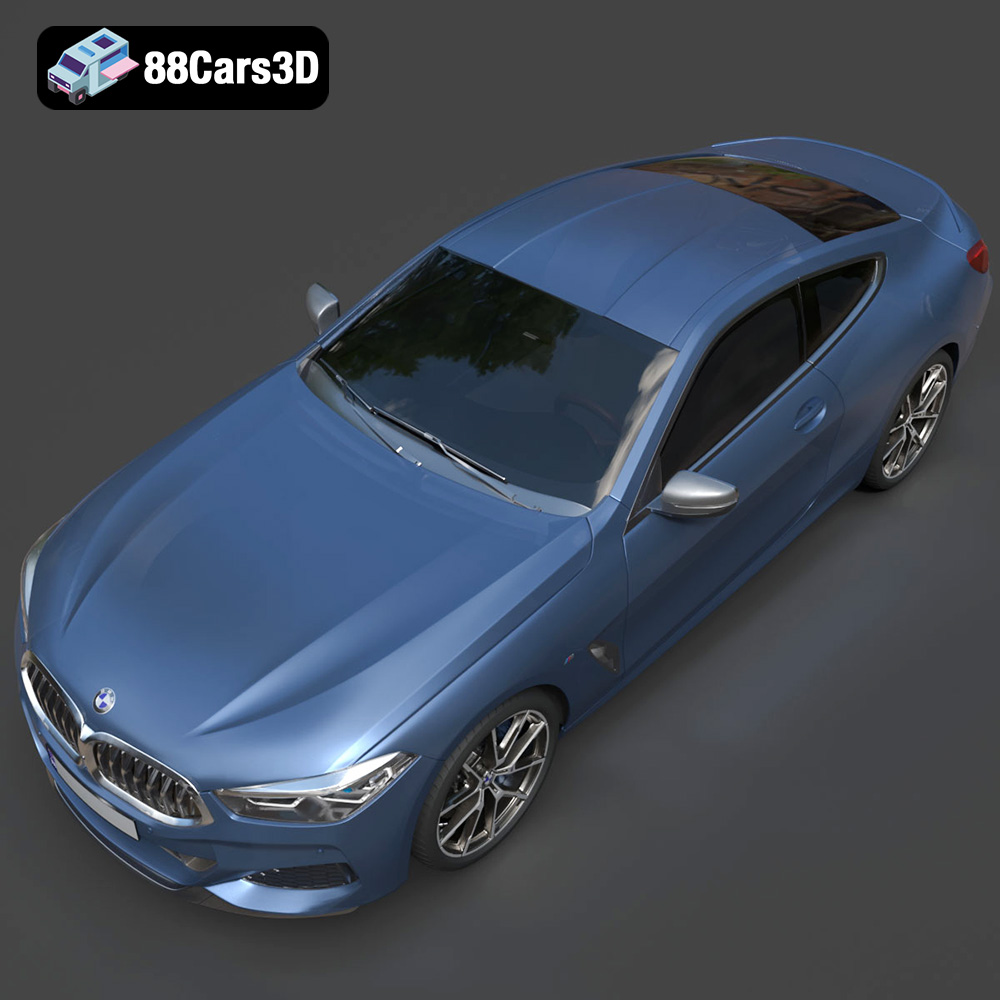
In the dynamic world of 3D visualization, the quality of your assets dictates the impact of your final product. Whether you’re crafting a cinematic masterpiece, developing an immersive game, or designing the next generation of automotive experiences, the foundation lies in meticulously detailed and technically sound 3D models. Nowhere is this more apparent than in the realm of automotive design, where precision, realism, and performance are paramount. This is precisely where a premium asset like the BMW 8-Series M850i G15 Coupe 2019 3D Model truly shines, offering an unparalleled level of detail and versatility for professionals across various industries.
The quest for photorealism and efficient workflows drives innovation in 3D modeling. Automotive enthusiasts and professionals alike understand the intricate balance required to capture the essence of a vehicle digitally. From the sleek lines and aerodynamic curves to the intricate interior details and reflective surfaces, every element must be accurately represented. This detailed exploration will delve into the technical underpinnings that make high-quality 3D car models indispensable, showcasing how an asset like the BMW 8-Series M850i G15 Coupe 2019 3D Model can elevate your projects to professional standards across diverse applications.
The visual fidelity of any digital project hinges on the quality of its assets. For automotive visualization, this truth is amplified. A low-quality model, no matter how well-lit or textured, will always betray its imperfections, breaking immersion and undermining credibility. High-quality 3D car models are not just about aesthetics; they are about technical integrity, efficiency, and adaptability across various pipelines.
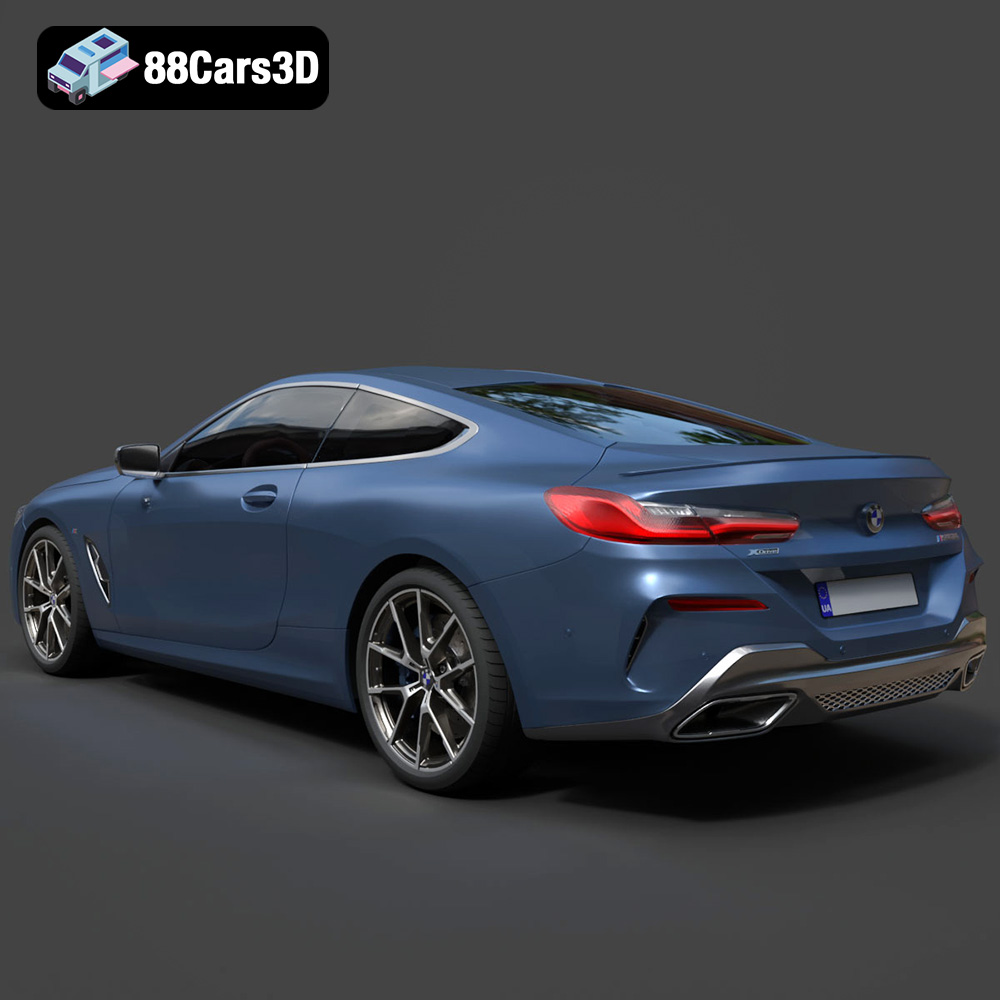
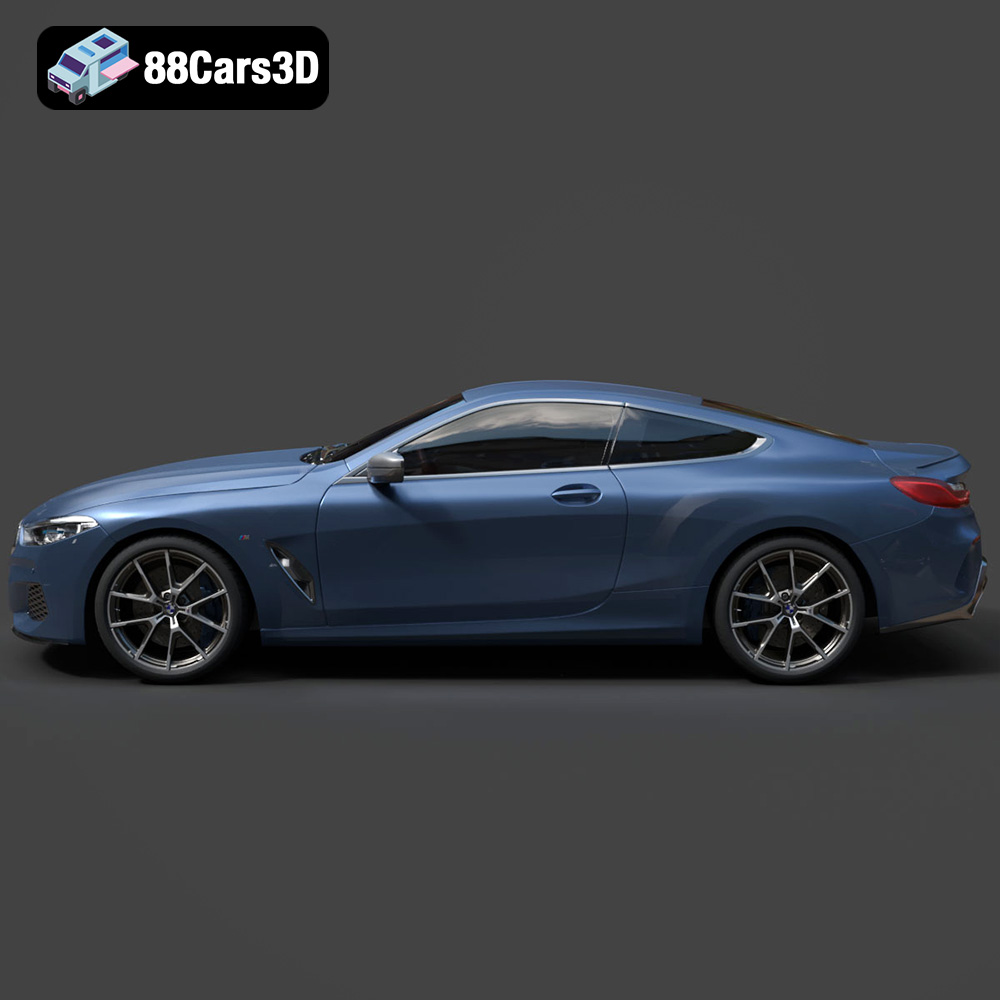
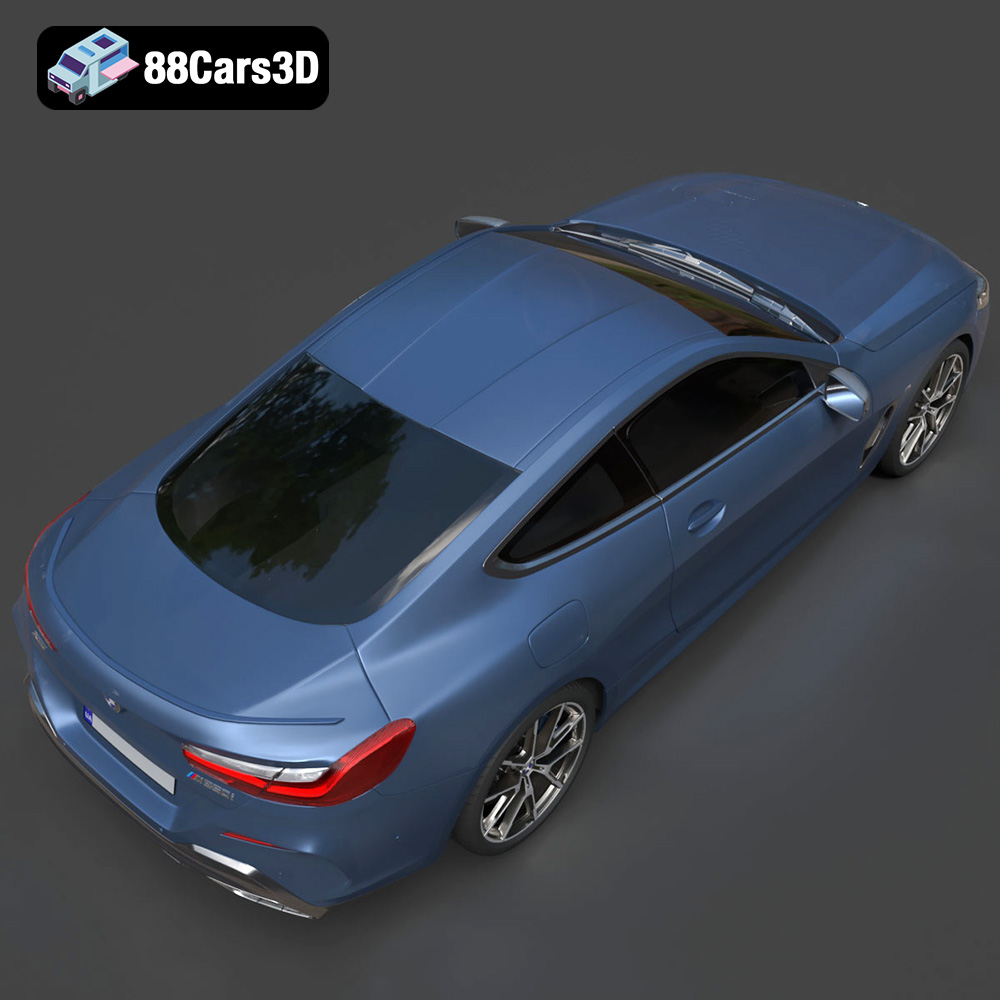
Automotive visualization demands an almost obsessive attention to detail. Car manufacturers, advertising agencies, and architectural visualization studios rely on 3D models to present vehicles in their best light, often before a physical prototype even exists. This means the 3D model must perfectly replicate the vehicle’s real-world counterpart, down to the millimeter. Features like accurate chassis proportions, intricate grille patterns, realistic tire treads, and precise panel gaps are crucial. The BMW 8-Series M850i G15 Coupe 2019 3D Model exemplifies this, crafted to capture the sleek proportions and aggressive styling that define the iconic luxury sports coupe. Its inherent accuracy ensures that any rendering or animation will faithfully represent the vehicle’s design intent, making it an invaluable asset for design reviews, marketing campaigns, and cinematic sequences.
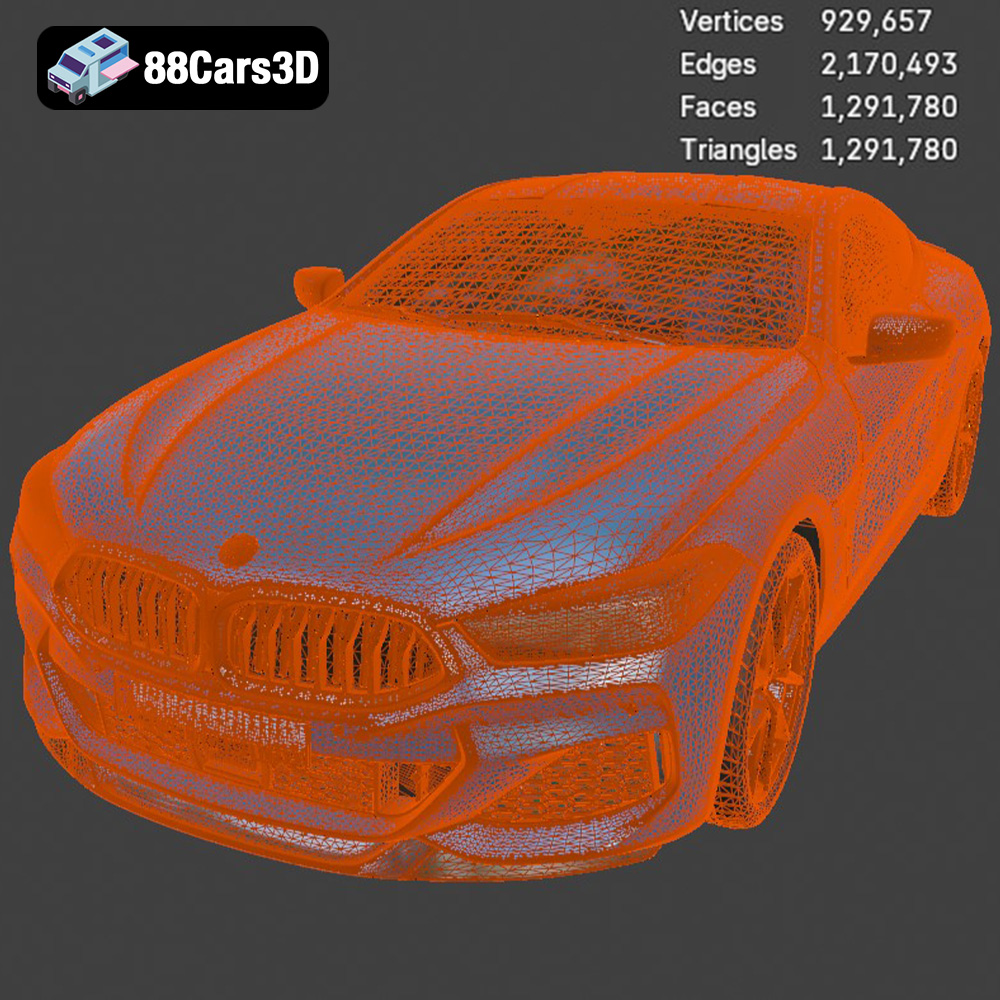
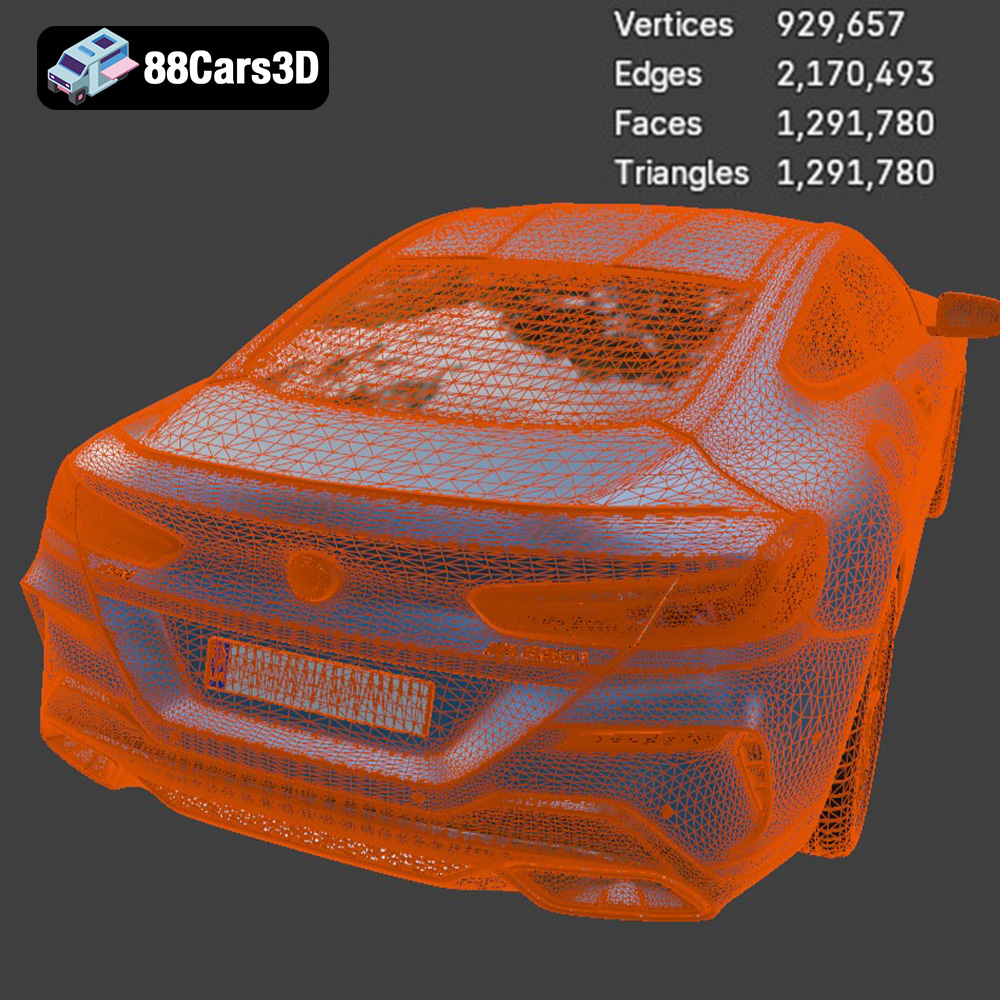
While precision is key for rendering, performance takes center stage in real-time applications like game development, AR/VR, and interactive configurators. A model with excessive polygons or inefficient topology can cripple frame rates, leading to a poor user experience. Conversely, a model that is too simplified loses critical detail. The challenge lies in striking the perfect balance. High-quality 3D car models are built with clean geometry and optimized polygon distribution, ensuring they look fantastic without bogging down the engine. This optimization often involves careful retopology, proper use of normal maps, and efficient UV layouts. For the BMW 8-Series M850i G15 Coupe 2019 3D Model, its construction with “optimized polygon distribution” directly translates to smooth performance, even in demanding interactive environments.
Beneath the surface of a beautiful render lies the fundamental structure of the model: its geometry and UV mapping. Clean geometry means a mesh free of ngons, flipped normals, and overlapping faces, allowing for smooth subdivisions and predictable deformation. Optimized UVs are equally critical, ensuring textures are applied without distortion, maximizing texture resolution, and facilitating efficient material creation. A model with clean, quadded topology and well-laid-out UVs is easier to work with, quicker to texture, and renders more predictably. These foundational elements are often overlooked but are hallmarks of a professional-grade 3D model. The BMW 8-Series M850i G15 Coupe 2019 3D Model’s commitment to “clean geometry” and “optimized polygon distribution” ensures that artists can rely on it for complex workflows without encountering common headaches associated with poorly constructed models.
The versatility of a 3D model is often defined by the range of file formats it supports. Different formats serve different purposes, offering unique advantages for specific software, workflows, or target platforms. Professionals regularly navigate a complex ecosystem of file types, and understanding their strengths and weaknesses is crucial for efficient project management and seamless interoperability. A comprehensive asset, like the BMW 8-Series M850i G15 Coupe 2019 3D Model available on 88cars3d.com, provides a wide array of formats to cater to virtually any pipeline.
The .blend format is the native file type for Blender, an increasingly popular open-source 3D content creation suite. A .blend file typically encapsulates an entire scene, including mesh data, materials, textures, lighting setups, cameras, animation data, and even modifiers. This makes it a perfect choice for Blender users who want a fully editable and ready-to-render scene without any loss of data or conversion artifacts. When you download the BMW 8-Series M850i G15 Coupe 2019 3D Model in .blend format, you’re getting a complete Blender scene file, often with pre-configured materials and lighting, allowing for immediate rendering or further customization within Blender.
.fbx (Filmbox) is a proprietary file format owned by Autodesk, widely recognized as one of the most robust and versatile interchange formats in the 3D industry. It supports not just geometry, but also materials, textures, animations, rigging, and even camera and light data. Its strength lies in its ability to transfer complex 3D scenes between different software applications (e.g., 3ds Max to Unreal Engine, Maya to Unity) with high fidelity. The .fbx format is particularly ideal for real-time pipelines like game development, where efficiency and comprehensive data transfer are critical. The BMW M850i model’s .fbx version is explicitly “game-engine ready,” making it a go-to for developers working with Unreal Engine or Unity.
The .obj (Wavefront OBJ) format is one of the oldest and most universally supported 3D file formats. It’s a simple, text-based format primarily used for transferring geometric data (vertices, normals, texture coordinates, and faces). While it doesn’t typically store advanced scene data like animation or complex material properties (these are often stored in an accompanying .mtl file for basic color and texture references), its widespread compatibility makes it a safe bet for cross-software integration. Almost every 3D application can import and export .obj files, making the .obj version of the BMW 8-Series M850i G15 Coupe 2019 3D Model an excellent “standard 3D model format compatible with all major software” for straightforward mesh transfer.
.glb (GL Transmission Format Binary) is the binary version of the glTF format, designed for efficient transmission and loading of 3D scenes and models by engines and applications. It’s quickly becoming the standard for 3D content on the web, AR (Augmented Reality), and VR (Virtual Reality) experiences due to its compact size, optimized asset delivery, and support for PBR (Physically Based Rendering) materials. For interactive web viewers or AR apps showcasing the BMW 8-Series M850i G15 Coupe 2019, the .glb format is indispensable, offering “optimized for AR/VR and web-based visualization.”
.stl (STereoLithography) is the de facto standard file format for 3D printing. It represents a 3D model as a collection of unconnected triangular facets, without any color, texture, or material information. While simple, its strength lies in its universal acceptance by 3D printing software (slicers). If the goal is to create a physical prototype or scale model of the BMW 8-Series M850i G15 Coupe 2019, the .stl version provides the necessary data for “3D printing and prototyping.”
The .ply (Polygon File Format or Stanford Triangle Format) is a versatile file format for storing 3D data, particularly from 3D scanners. It can store a variety of data, including geometry (vertices, faces), colors, transparency, normals, texture coordinates, and even properties like confidence values or data from sensor readings. This makes it valuable for scientific applications, CAD, and detailed analysis where precision and a richer dataset beyond just mesh geometry are required. The “detailed polygon mesh” offered by the .ply format for the BMW M850i is suitable for specialized “analysis and visualization” tasks.
While often represented by an .fbx import, the term .unreal implies a model that has been specifically packaged or configured for direct use within Unreal Engine. This might mean optimized material setups, collision meshes, LODs (Levels of Detail), and blueprint configurations already applied. An asset described as “.unreal – Pre-configured for Unreal Engine use” suggests that the tedious setup process has been streamlined, saving significant development time for game developers or virtual production artists utilizing the BMW 8-Series M850i G15 Coupe 2019 3D Model within Unreal Engine.
Similar to .blend for Blender, .max is the native file format for Autodesk 3ds Max, a leading software for 3D modeling, animation, and rendering in professional visualization. A .max file contains all scene data, including geometry, modifiers, materials, textures, lighting, cameras, and animation curves. For professionals deeply embedded in the 3ds Max ecosystem, having the BMW M850i model in its native .max format means full editability, access to original modifier stacks, and seamless integration into existing 3ds Max scenes for “rendering and animation” without conversion hurdles.
By providing such a comprehensive suite of file formats, 88cars3d.com ensures that the BMW 8-Series M850i G15 Coupe 2019 3D Model is not just a high-quality asset but also an incredibly flexible one, ready to integrate into virtually any professional pipeline.
Automotive rendering is an art form, blending technical mastery with artistic vision. The goal is to produce images so realistic they are indistinguishable from photographs. This process heavily relies on the quality of the 3D car model, alongside sophisticated lighting, material, and camera setups. The BMW 8-Series M850i G15 Coupe 2019 3D Model, with its “realistic materials and intricate detailing,” provides an excellent starting point for achieving stunning results.
Autodesk 3ds Max, paired with powerful render engines like V-Ray or Corona Renderer, is a staple in professional automotive visualization. These engines offer advanced global illumination, physically based materials, and extensive lighting controls necessary for photorealistic renders. With the BMW M850i model provided in .max format, artists can dive directly into refining materials for body paint (metallic flakes, clear coat), glass (refraction, tint), tires (rubber displacement, subtle dirt), and interior elements (leather textures, stitching, carbon fiber accents). Setting up complex studio lighting or integrating the car into HDR (High Dynamic Range) environments becomes a streamlined process, allowing artists to focus on artistic direction rather than fixing model imperfections.
Blender, with its powerful Cycles ray-tracing engine, has become a formidable competitor for photorealistic rendering. Its node-based shader editor provides immense flexibility for creating intricate materials that perfectly replicate real-world surfaces. The .blend file of the BMW 8-Series M850i G15 Coupe 2019 3D Model often comes with pre-configured materials, serving as a robust foundation. Artists can then fine-tune parameters like roughness, metallicness, clear coat, and normal maps to achieve hyper-realistic reflections and refractions. For faster previews or stylized renders, Blender’s real-time Eevee engine can also leverage the model’s optimized geometry and PBR materials to produce impressive results with incredible speed.
Effective lighting is paramount for showcasing a vehicle’s design. Techniques include setting up a virtual photo studio with area lights, softboxes, and reflectors to highlight curves and reflections. HDRI (High Dynamic Range Image) backgrounds are essential for realistic environmental lighting and reflections, seamlessly integrating the car into a virtual world. For shading, advanced material layering is common, especially for car paint, which often consists of a base coat, metallic flakes, and a clear coat. Each layer reacts differently to light, and accurately simulating this requires a detailed material setup. The “intricate detailing” of the BMW 8-Series M850i model ensures that these advanced lighting and shading techniques will have a rich canvas to work with, bringing out every subtle nuance of its design.
The demand for high-fidelity assets in real-time applications has skyrocketed, driven by advancements in game engines and the proliferation of AR/VR. Game developers, virtual production studios, and interactive experience creators constantly seek optimized 3D car models that can deliver visual excellence without compromising performance. The BMW 8-Series M850i G15 Coupe 2019 3D Model, with its “game-engine ready format,” is specifically designed for these demanding environments.
Unreal Engine and Unity are the two dominant platforms for game development and real-time visualization. Importing a 3D car model like the BMW 8-Series M850i into these engines requires specific optimization strategies. The .fbx and .unreal formats provided are crucial here. Unreal Engine users benefit from the pre-configured .unreal file, which likely includes optimized mesh, correctly scaled assets, PBR material setups, and potentially even basic collision meshes. For both engines, textures should be properly packed (e.g., metallic, roughness, ambient occlusion into a single texture map) to minimize draw calls. Material instances should be used to allow for easy color changes or variations without creating new, expensive materials. Performance is key, and an optimized base model is non-negotiable.
To ensure smooth framerates across different viewing distances, Levels of Detail (LODs) are indispensable. An LOD system generates multiple versions of a model, each with decreasing polygon counts and simplified geometry. When the camera is close, the high-detail model is rendered; as it moves further away, lower-detail versions automatically switch in. Implementing effective LODs for complex 3D car models like the BMW 8-Series M850i G15 Coupe 2019 is crucial for performance scalability in open-world games or detailed simulations. Beyond geometry, efficient texture atlasing, draw call reduction, and skeletal mesh optimization (for animated parts like doors or wheels) are all critical considerations for achieving cinematic quality in real-time.
Augmented Reality (AR) and Virtual Reality (VR) push the boundaries of immersion, but they also impose stringent performance requirements. Devices like standalone VR headsets or mobile AR platforms have limited processing power, making highly optimized 3D assets essential. The .glb format, included with the BMW M850i model, is particularly suited for these applications due to its efficiency and compact size. When developing AR/VR experiences featuring the BMW 8-Series M850i G15 Coupe 2019, developers must consider mesh simplification, careful texture compression, and minimizing complex shaders to maintain high frame rates and prevent motion sickness. The asset’s inherent optimization and “optimized polygon distribution” contribute significantly to creating fluid and realistic interactive experiences.
While often associated with stunning renders and interactive entertainment, high-quality 3D car models extend their utility far into the design, engineering, and prototyping phases of automotive development. They serve as critical tools for innovation, analysis, and validation, bridging the gap between digital concept and physical reality. The versatile file formats offered by models like the BMW 8-Series M850i G15 Coupe 2019 3D Model empower professionals in these specialized fields.
One of the most tangible applications of 3D models outside of digital screens is 3D printing. Designers and engineers frequently create physical mock-ups and prototypes to assess form, fit, and aesthetic appeal in the real world. The .stl format provided with the BMW 8-Series M850i G15 Coupe 2019 3D Model is the industry standard for this purpose. It allows for the rapid creation of scale models, concept validation parts, or even functional components, enabling a hands-on review of design choices that might be difficult to fully appreciate in a purely digital environment. This iterative process accelerates development cycles and reduces costly errors by catching design flaws early.
Before any metal is cut or molds are created, automotive designers cycle through countless iterations of a vehicle’s form. High-fidelity 3D car models are the backbone of this process. Using software like 3ds Max or Blender with an editable model like the BMW M850i, designers can quickly modify body lines, experiment with different wheel designs, or adjust aerodynamic elements. These digital models facilitate rapid concept validation through virtual wind tunnel simulations, ergonomic studies, and visual impact assessments. The ability to quickly visualize and analyze design changes helps refine the vehicle’s aesthetic and functional attributes long before costly physical prototypes are built, streamlining the entire design workflow.
Beyond visual aesthetics, 3D car models are vital for rigorous engineering analysis. Formats like .ply, with their capability to store detailed polygon mesh data, can be used in specialized software for Computational Fluid Dynamics (CFD) to simulate airflow, or Finite Element Analysis (FEA) to test structural integrity under various stresses. While the game-ready models might require further preparation for these engineering simulations (often involving watertight meshes and specific surface quality for meshing), a clean and accurate base model like the BMW 8-Series M850i G15 Coupe 2019 3D Model provides a solid foundation for these advanced analytical workflows, contributing to safer, more efficient, and better-performing vehicles.
In a market flooded with digital assets, discerning professionals understand that not all 3D models are created equal. The difference between a usable asset and one that creates more work than it saves often comes down to the commitment to quality, optimization, and comprehensive support. This is where marketplaces like 88cars3d.com distinguish themselves, providing assets that genuinely accelerate professional workflows.
88cars3d.com prides itself on delivering 3D car models that meet professional standards, and the BMW 8-Series M850i G15 Coupe 2019 3D Model is a prime example. This means going beyond just visual appeal. It encompasses clean geometry, optimized polygon distribution, realistic materials, and accurate detailing. Such models ensure smooth subdivisions for close-up shots, predictable rendering across various engines, and easy integration into complex scenes. For animators, clean topology translates to fewer deformation issues. For game developers, optimized meshes mean higher frame rates. This commitment to underlying technical quality is what empowers artists and developers to achieve exceptional visual fidelity without spending valuable time cleaning up messy data.
Time is a critical resource in any creative or development pipeline. The versatility offered by the BMW 8-Series M850i G15 Coupe 2019 3D Model through its extensive list of file formats is a direct answer to this need. Whether you’re a Blender artist needing a native .blend file, a 3ds Max user preferring the .max format, a game developer requiring a .fbx or .unreal package, or an AR/VR enthusiast looking for a .glb, having these options pre-packaged saves countless hours. Instead of struggling with conversions, re-texturing, or fixing geometry, professionals can immediately integrate the model and focus on their core creative tasks. This streamlined approach minimizes technical hurdles and maximizes creative output, making 88cars3d.com a valuable resource for high-quality automotive assets.
The journey from concept to compelling visual output in 3D automotive design is intricate, demanding both artistic flair and technical precision. At its heart lies the quality of the 3D models used. As we’ve explored, high-fidelity assets are not merely about aesthetics; they are critical for performance, flexibility, and the seamless integration into diverse professional workflows, from cinematic rendering to immersive game development and crucial design prototyping.
The BMW 8-Series M850i G15 Coupe 2019 3D Model stands as a testament to this commitment to excellence. Its meticulously crafted geometry, optimized polygon distribution, realistic materials, and intricate detailing ensure that it is not just a digital representation of an iconic luxury sports coupe, but a versatile tool ready for the most demanding projects. Furthermore, its availability in a comprehensive range of file formats—from .blend and .max for native software users, to .fbx and .unreal for game engines, and specialized formats like .glb and .stl for AR/VR and 3D printing—underscores its adaptability across the entire spectrum of 3D applications.
For professionals seeking to elevate their automotive rendering, accelerate game asset development, or enhance their design visualization, investing in a high-quality 3D car model is an investment in efficiency and visual impact. By providing such an exemplary asset, 88cars3d.com empowers creators to achieve unparalleled realism and streamline their creative processes, ensuring that their digital projects captivate and perform at the highest level.
Experience unparalleled realism with the BMW 8-Series M850i G15 Coupe 2019 3D Model. Designed to meet professional standards, this model captures the sleek proportions and aggressive styling of the iconic luxury sports coupe, ensuring exceptional visual fidelity for any digital project. Built with clean geometry and optimized polygon distribution, the model guarantees smooth subdivisions and excellent performance. It features realistic materials and intricate detailing, making it ideal for close-up shots and demanding environments. This versatile 3D asset is perfectly suited for a wide range of applications, including game development, cinematic rendering, AR/VR experiences, and automotive visualization.
$39.99
.8series
.arvr
.blend
.bmw
.car3dmodel
.coupe
.fbx
.g15
.gameasset
.glb
.luxurycar
.m850i
.max
.obj
.ply
.rendering
.simulation
.sportsCar
.stl
.unreal