Get 20% OFF All Premium 3D & STL Models!

In the dynamic world of 3D visualization, game development, and automotive design, the quest for highly detailed, authentic, and performant 3D models is perpetual. From crafting immersive virtual realities to rendering breathtaking marketing visuals, the quality of a 3D asset dictates the success of a project. Automotive subjects, in particular, demand an unparalleled level of precision, capturing not just the form but the very essence and engineering marvel of a vehicle.
Today, we delve into the intricate details of professional 3D car models, exploring their technical specifications, diverse applications, and the workflows that bring them to life. At the heart of our discussion is a prime example of digital craftsmanship: the Mercedes-Benz GLB-Class Mk1 AMG Line 2019 3D Model, available for download at 88cars3d.com. This asset is a testament to the blend of artistic fidelity and technical optimization that modern projects demand, offering a versatile foundation for everything from high-fidelity rendering to real-time game environments.
High-fidelity 3D car models are more than just digital representations; they are fundamental tools that drive innovation across multiple industries. In automotive design, they allow engineers and designers to iterate concepts rapidly, visualize changes in real-time, and make critical decisions long before physical prototypes are built. For marketing and advertising, these models enable the creation of stunning photorealistic renders and animations that are often indistinguishable from actual photography, offering unparalleled control over lighting, environment, and camera angles without the logistical challenges of a physical shoot.
In the realm of product development, particularly for complex machinery like automobiles, 3D models serve as the crucial link between abstract concepts and tangible reality. Before a single piece of metal is cut or a mold is cast, designers leverage sophisticated 3D models to scrutinize every curve, panel gap, and material finish. Tools like the Mercedes-Benz GLB-Class AMG Line 3D model provide an accurate foundation, allowing designers to experiment with color schemes, trim options, and aerodynamic modifications in a cost-effective virtual space. This iterative process drastically reduces development cycles and minimizes costly errors, ensuring that the final product aligns perfectly with the initial vision.
Whether it’s for a cinematic commercial, an interactive car configurator, or an open-world racing game, the demand for both meticulous detail and robust optimization is paramount. A model must possess enough polygon density to accurately represent complex curvatures and intricate components, yet remain optimized for the target platform’s performance requirements. This delicate balance is where expert 3D artists shine, meticulously crafting topology, UV layouts, and PBR (Physically Based Rendering) textures. The Mercedes-Benz GLB-Class (Mk1) AMG Line 2019 3D model, with its ~250,000 triangles, exemplifies this balance, offering stunning visual realism while remaining “game-ready” for demanding real-time engines.
Choosing the correct 3D model file format is a critical decision that impacts compatibility, performance, and the scope of future modifications. Different formats are optimized for various stages of the 3D pipeline, from initial modeling to final rendering, game integration, or 3D printing. Understanding their unique characteristics is key to a smooth workflow, especially when acquiring professional-grade 3D car models like those found on 88cars3d.com, which often come in a comprehensive suite of formats.
The .blend format is the native file type for Blender, a powerful open-source 3D creation suite. A .blend file saves an entire Blender scene, including all 3D models, materials, textures, animations, lights, cameras, modifiers, and even scene settings. This makes it ideal for users who primarily work in Blender and require full editability. When you download a .blend file, you gain access to the original scene setup, allowing for comprehensive modifications, re-topology, animation adjustments, or material tweaks specific to Blender’s Cycles or Eevee render engines. It’s the most flexible format for a Blender artist.
The .fbx (Filmbox) format, developed by Autodesk, is an industry-standard format for exchanging 3D data between various 3D applications and game engines like Unreal Engine and Unity. It supports geometry, animation, skinning, camera, and light data, making it incredibly versatile. Its widespread adoption stems from its robust data integrity and ability to store complex scene information in a relatively compact form. For real-time pipelines, .fbx is often the go-to choice due to its optimization capabilities and efficient handling of animation data. When importing into Unreal or Unity, .fbx files can be configured to optimize polygon count, combine meshes, and set up import materials automatically, streamlining the game asset development process.
The .obj (Wavefront Object) format is one of the oldest and most universally supported 3D file formats. It’s a simple, text-based format primarily used for transferring geometric data, including vertices, normals, UV coordinates, and faces. While it doesn’t typically store animation or rigging information directly within the .obj file itself, it often references an accompanying .mtl (Material Template Library) file for basic material properties and texture paths. Its strength lies in its widespread compatibility, making it an excellent choice for cross-software data exchange when dealing with static meshes. Almost every 3D application can open and export .obj files, ensuring broad access to the model’s core geometry.
.glb (GLB format, often referred to as GL Transmission Format Binary) is the binary version of glTF, designed for efficient transmission and loading of 3D scenes and models in web and AR/VR applications. A .glb file encapsulates all necessary data – models, textures, animations, and PBR material definitions – into a single, self-contained file. This makes it incredibly efficient for streaming over networks and for use in browser-based 3D viewers or mobile augmented reality experiences. Its compact size and ease of integration make it a preferred format for immersive media, offering an optimized experience without compromising visual quality, crucial for applications like virtual showrooms or mobile AR experiences of the Mercedes-Benz GLB-Class.
The .stl (Stereolithography) format is the standard for 3D printing. It represents a 3D model as a series of connected triangles (a triangular mesh) without color or texture information. Its simplicity makes it universally understood by 3D slicing software, which prepares the model for printing. For intricate models like our GLB-Class, an .stl file ensures that the geometry is watertight and ready for additive manufacturing. Similarly, .ply (Polygon File Format) is a precision mesh format capable of storing more complex information than .stl, including color, transparency, and sometimes even scanner data. It’s often used in CAD, scientific applications, and for representing detailed scan data, offering a more robust alternative for certain analytical or fabrication workflows.
The “.unreal” designation often refers to assets that are packaged or prepared specifically for Unreal Engine. While not a native Unreal file extension in the sense of a .uasset, it typically signifies an .fbx or similar format that has been pre-configured or optimized with Unreal’s specific import settings in mind, such as correct scale, pivot points, and material setup, saving developers significant time. The .max format is the native file format for Autodesk 3ds Max, one of the leading software packages for 3D modeling, animation, and rendering in professional visualization. Like .blend, it saves the entire scene, including complex modifiers, rigging, lighting setups, and render settings, providing full flexibility for 3ds Max users.
The Mercedes-Benz GLB-Class Mk1 AMG Line 2019 3D model represents a pinnacle of digital automotive artistry, meticulously crafted to serve a multitude of professional applications. It encapsulates the rugged versatility and premium luxury of its real-world counterpart, making it an invaluable asset for anyone seeking high-quality 3D car models.
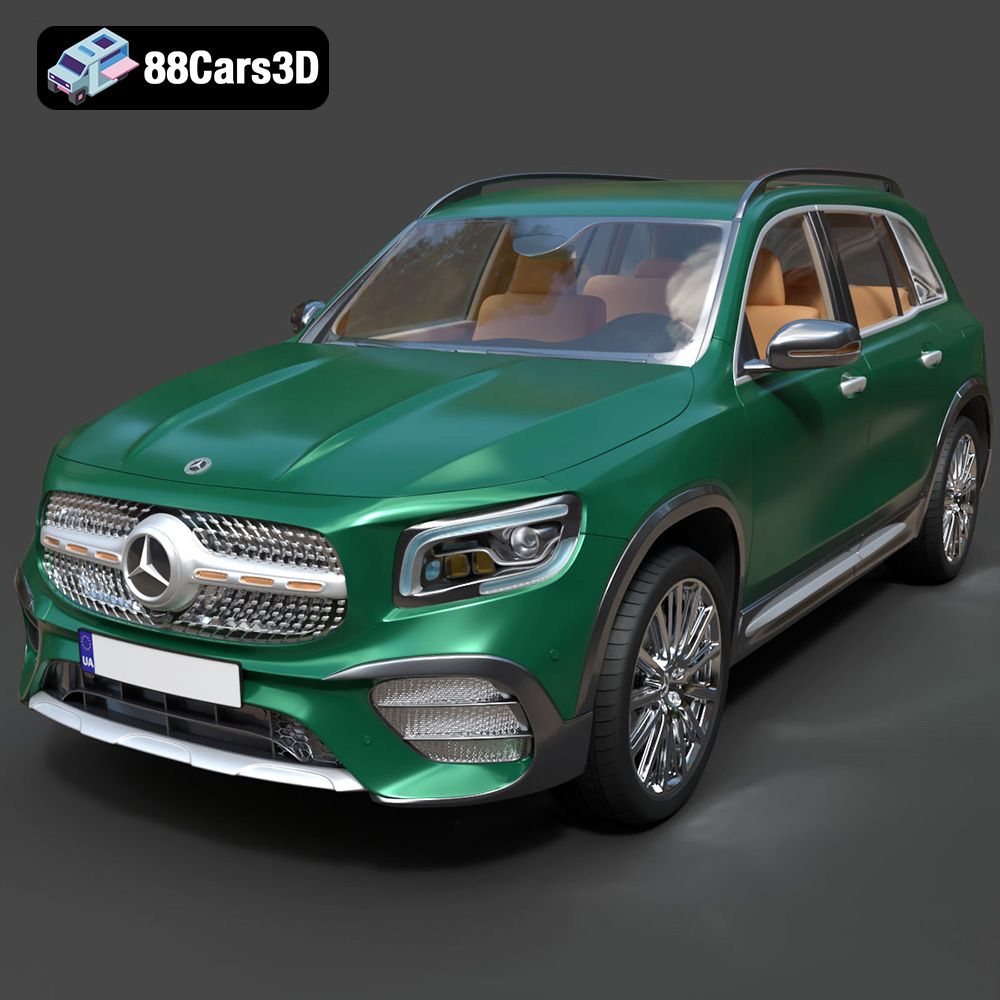
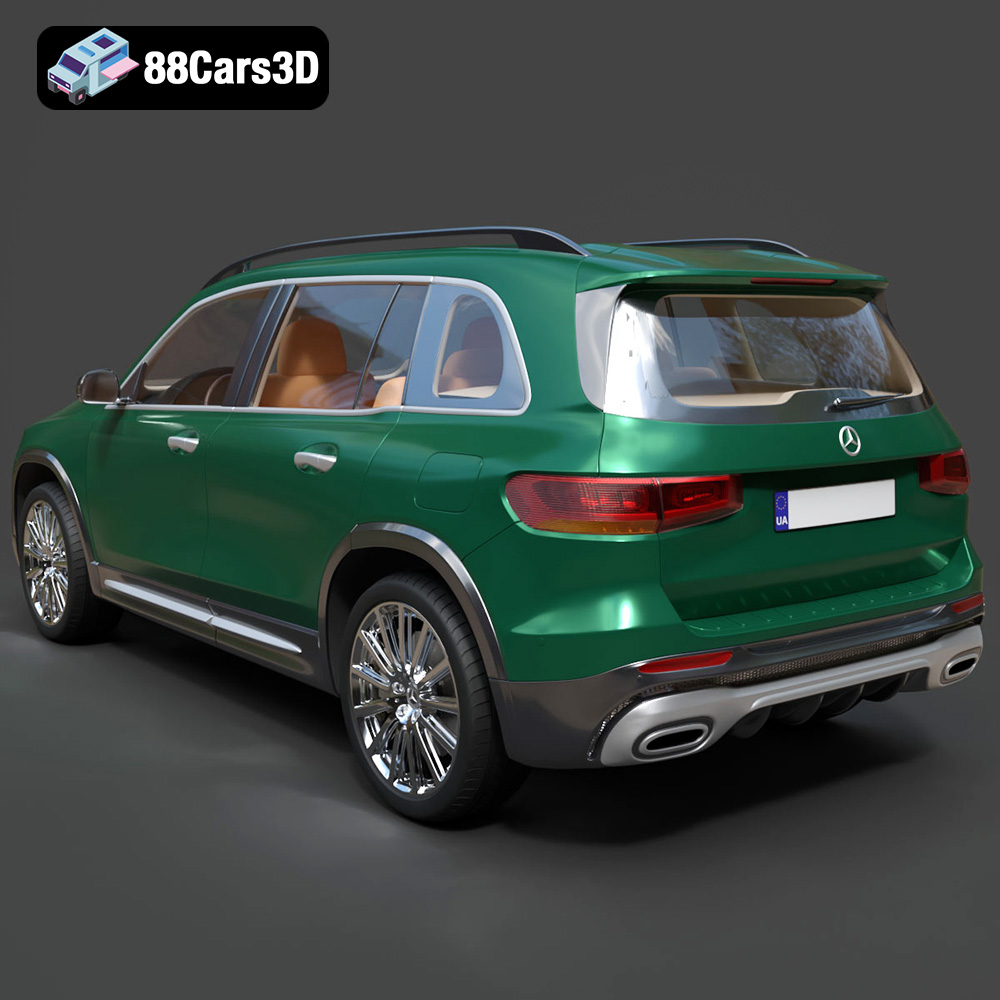
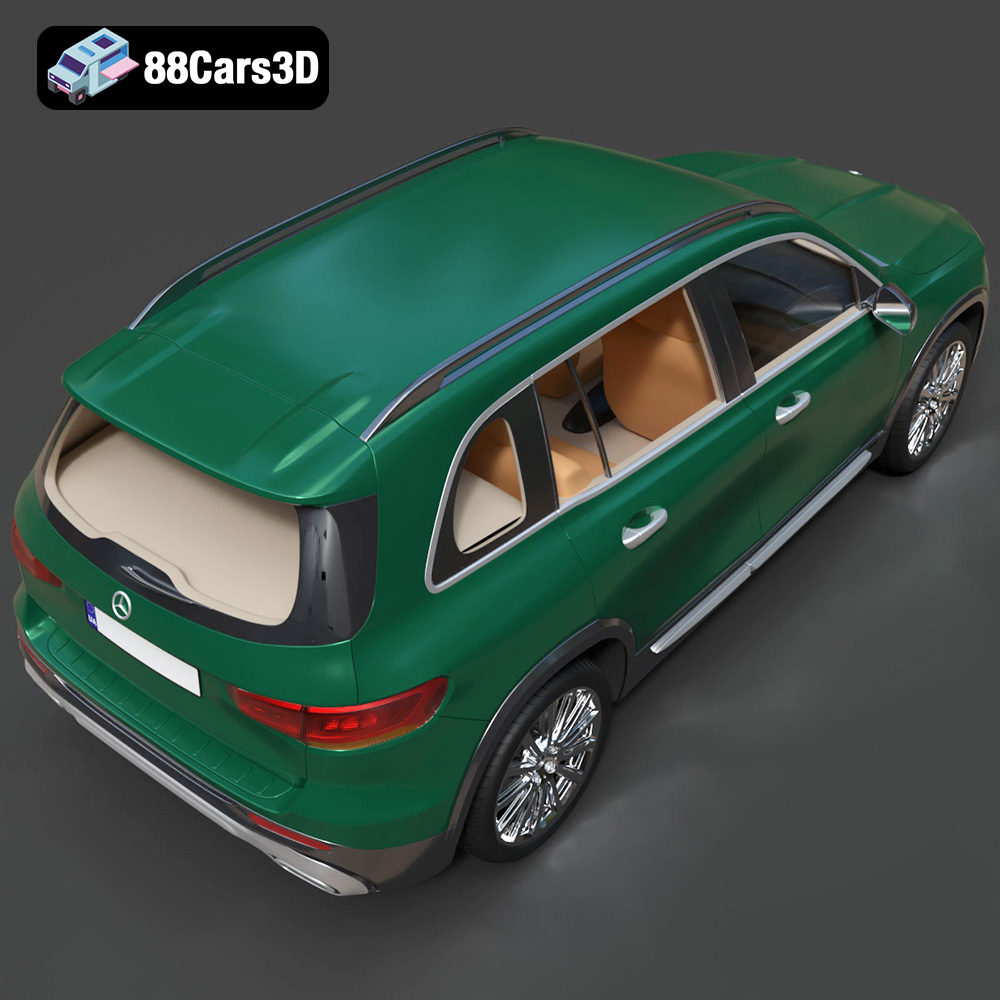
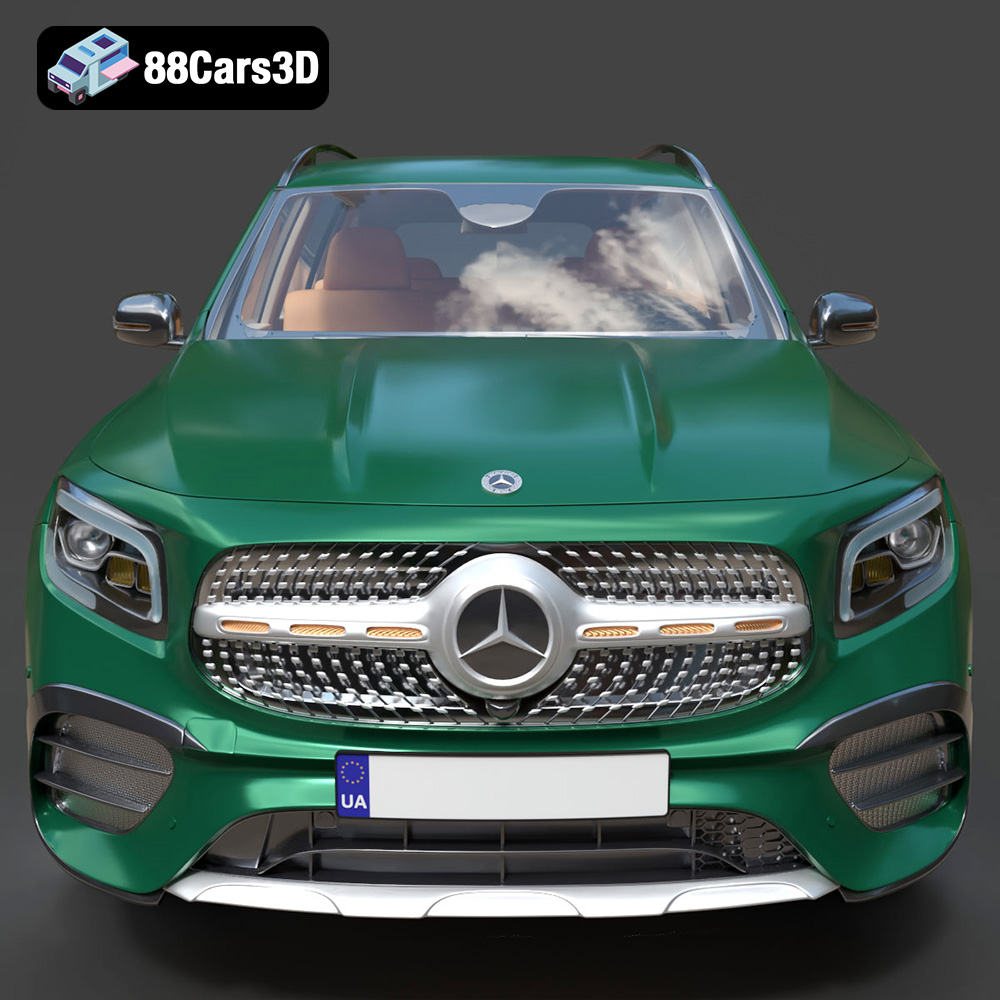
The attention to exterior detail in this GLB-Class model is truly remarkable. From the accurate frame geometry and authentic proportions that capture the distinctive boxy silhouette of the Mk1, to the commanding stance and aggressive AMG Line styling cues, every element has been faithfully reproduced. The signature diamond radiator grille, sporty front aprons, and prominent dual exhaust system are all rendered with high fidelity. Furthermore, specific elements like the high-detail LED High Performance headlamps and distinctive taillight clusters are accurately modeled, ensuring that the vehicle looks stunning from every angle and under any lighting condition. The inclusion of authentic AMG 5-twin-spoke light-alloy wheels and performance tires, along with sport-tuned suspension detailing, elevates the realism, providing a foundation for dynamic visuals and realistic physics simulations.
The interior of a vehicle is just as crucial as its exterior, especially for first-person perspective applications in games or VR. This model delivers an immersive cockpit experience, featuring detailed sport seating with intricate stitching and contouring. The Nappa leather multifunction sports steering wheel, complete with precise switchgear, is a focal point, inviting interaction. Crucially, the accurate MBUX dual-screen digital instrument cluster and infotainment system are faithfully reproduced, alongside a detailed central console with touch controls, air vents, and pedals. This level of interior fidelity is particularly beneficial for virtual showrooms, car configurators, and driving simulators, where users expect to interact with and experience the vehicle’s cabin in detail.
The technical specifications of this Mercedes-Benz GLB-Class model highlight its suitability for professional production pipelines. With approximately 250,000 triangles, it strikes an impeccable balance for real-time engines like Unreal and Unity, ensuring high-end visual realism without sacrificing performance. This “game-ready” optimization means developers can integrate the model directly into their projects with minimal performance overhead. The model adheres to real-world scale accuracy, a critical factor for architectural visualizations and realistic simulations. Moreover, proper pivot setups for steering, wheel rotation, and suspension travel are implemented, making the model animation-ready right out of the box. PBR texturing further enhances its realism, ensuring consistent and physically accurate material rendering across different lighting environments and rendering engines.
The versatility of the Mercedes-Benz GLB-Class Mk1 AMG Line 2019 3D model makes it a cornerstone asset for various professional workflows. Its optimized structure and wide range of included file formats ensure seamless integration, whether you’re building a virtual world or creating a marketing campaign.
For game developers, the GLB-Class model is a highly valuable asset. Its optimized polycount (~250,000 triangles) is perfectly suited for modern game engines, allowing for detailed visuals without overburdening the rendering pipeline. In Unreal Engine, developers can import the .fbx or .unreal formats, leveraging Unreal’s robust material editor to create PBR materials that respond dynamically to light. The separate wheels, suspension, and steering components, coupled with proper pivot setups, allow for complex vehicle physics implementation and realistic animation. Imagine this GLB-Class model seamlessly cruising through an open-world environment or being a selectable vehicle in a high-octane racing title. Similarly, in Unity, the .fbx format can be imported, and its PBR textures applied to achieve stunning visual quality, ready for integration into interactive experiences or mobile games.
For artists focused on high-end automotive rendering, the Mercedes-Benz GLB-Class model provides an exceptional starting point. Using the .max format in Autodesk 3ds Max, artists can access the full scene and leverage powerful renderers like V-Ray or Corona to produce photorealistic images for advertising or product showcases. The detailed geometry, especially for interior and exterior components, means less time spent on modeling and more on lighting, shading, and scene composition. In Blender, the .blend file offers the same level of flexibility, allowing artists to utilize Cycles or Eevee for equally stunning results. The game-ready optimization doesn’t compromise detail, enabling rapid iteration of studio lighting setups, environmental effects, and custom material finishes, essential for luxury brand campaigns and lifestyle scenes.
The burgeoning fields of Augmented Reality (AR) and Virtual Reality (VR) demand highly optimized yet visually rich 3D models. The GLB-Class model, particularly in its .glb format, is tailor-made for these applications. For AR, the compact and self-contained .glb file can be easily integrated into mobile AR experiences, allowing users to “place” the virtual GLB-Class in their real-world environment, changing colors or viewing interior details through their smartphone. In VR, the model excels as a component of immersive virtual showrooms or vehicle configurators. The optimized geometry ensures smooth frame rates, crucial for preventing motion sickness and providing a truly immersive experience. Imagine a prospective buyer exploring every angle of the GLB-Class in a VR headset, opening doors, or even taking a virtual test drive – all powered by this precise 3D car model from 88cars3d.com.
While digital visualization is powerful, the ability to bring a 3D model into the physical world through 3D printing offers unique advantages, from tangible prototypes for review to exquisite collectibles. The Mercedes-Benz GLB-Class Mk1 AMG Line 2019 3D model is designed with this versatility in mind, providing an .stl format specifically for this purpose.
3D printing a complex model like a car requires careful preparation and an understanding of appropriate settings. The provided .stl format ensures a watertight mesh, essential for successful printing. Recommendations such as using a 1:12, 1:18, or 1:24 scale are crucial for maintaining detail while managing print time and material usage. For optimal results, especially for fine details like grilles, badges, and interior components, resin printing (SLA/DLP) is highly recommended over filament-based (FDM) printing. Specific layer heights (0.04–0.12 mm for resin), wall thicknesses (1.2–2.0 mm), and infill percentages (20–30%) are suggested to ensure structural integrity and detail preservation. Crucially, the need for supports for detailed parts like exhausts, mirrors, and the steering wheel, along with recommended print orientations (e.g., frame printed angled, wheels separately), streamlines the post-processing workflow and maximizes print quality.
Physical 3D prints derived from these high-quality 3D car models offer a tactile dimension that digital screens cannot replicate. For automotive designers, a scaled 3D print serves as an invaluable prototype for ergonomic studies, aerodynamic evaluations, or simply to get a physical feel for the vehicle’s proportions and styling. For hobbyists and collectors, these prints can be meticulously post-processed, sanded, primed, and painted with authentic factory colors and metallic finishes, creating custom, display-scale collectibles that rival professionally manufactured models. This capability extends the utility of the digital asset, transforming it from a purely virtual construct into a tangible piece of art or a functional prototype.
The true value of a premium 3D model lies not just in its inherent quality but in its adaptability and potential for customization. The Mercedes-Benz GLB-Class Mk1 AMG Line 2019 3D model offers extensive options for modification, ensuring it can be tailored to fit the unique requirements of almost any project.
One of the most immediate customization options is the ability to change body colors. From classic Mercedes hues like Mountain Grey or Cosmos Black to entirely custom finishes, artists have full control to match branding guidelines or specific artistic visions. The PBR texturing means that these color changes will interact realistically with light, whether it’s a matte, gloss, or metallic finish. Beyond paint, the ability to modify tire textures (e.g., switching between street variants and winter tread) adds another layer of realism and versatility, allowing the vehicle to be accurately portrayed in different scenarios or environments. Material finishes can be further adapted, incorporating carbon fiber accents, chrome detailing, or brushed metals to enhance specific aspects of the AMG Line aesthetic or to align with bespoke luxury configurations.
The GLB-Class model’s adaptability extends to its integration within various scene environments. Artists can easily adjust lighting setups to simulate different times of day or night, creating dramatic renders or subtle atmospheric effects. Whether it’s bathed in the golden hour glow, illuminated by harsh studio lights, or navigating a moonlit city street, the model’s PBR materials and detailed geometry will react authentically. This flexibility is critical for advertising campaigns where a product needs to be shown in multiple contexts, or for game environments where dynamic day-night cycles are in play. The optimized nature of the model ensures that these dynamic lighting and environmental changes can be rendered efficiently, maintaining high visual fidelity across all applications. This makes the Mercedes-Benz GLB-Class Mk1 AMG Line 2019 3D model a truly versatile asset for any designer or developer looking to elevate their automotive rendering or game development projects.
The world of 3D modeling for automotive design, game development, and visualization is driven by precision, performance, and versatility. As we’ve explored, a high-quality 3D car model is far more than just a digital object; it’s a foundation for innovation, a canvas for creativity, and a powerful tool for bringing complex visions to life. From its role in concept iteration and photorealistic rendering to its vital function in real-time game engines and immersive AR/VR experiences, the impact of well-crafted 3D assets cannot be overstated.
The Mercedes-Benz GLB-Class Mk1 AMG Line 2019 3D Model exemplifies these principles. Its meticulous detail, optimized topology, PBR texturing, and extensive file format compatibility make it an outstanding choice for professionals across diverse industries. Whether you’re a game developer seeking a game-ready vehicle, a visualization artist aiming for high-fidelity renders, or an architect integrating luxury vehicles into your scenes, this model provides the quality and flexibility needed to excel. Its ability to transition from digital environments to tangible 3D prints further underscores its comprehensive utility.
Investing in such a robust asset saves invaluable time and resources, allowing creators to focus on artistic direction and technical implementation rather than starting from scratch. For those seeking premium 3D car models that meet the rigorous demands of modern production, the Mercedes-Benz GLB-Class Mk1 AMG Line 2019 3D Model, available at 88cars3d.com, stands as a testament to exceptional digital craftsmanship and an essential asset for your next project.
Experience the perfect blend of rugged versatility and premium luxury with our meticulous 3D model of the Mercedes-Benz GLB-Class (Mk1) AMG Line 2019. This compact crossover SUV stands out with its distinctive boxy silhouette, commanding stance, and aggressive AMG Line styling cues, including the signature diamond radiator grille, sporty front aprons, and prominent dual exhaust system. Designed to encapsulate the modern elegance and muscular heritage of the Mercedes-Benz brand, this digital replica captures every striking curve and sophisticated detail.
This high-fidelity, game-ready 3D model is meticulously crafted with optimized topology (~250,000 triangles), striking an impeccable balance between exceptional visual realism and efficient real-time performance. Designed for maximum versatility, the model features PBR texturing and precise structural proportions, making it a premium asset for game engines, high-end rendering, and immersive interactive media.
Perfect for urban racing games, luxury vehicle configurators, architectural visualizations, and mobile AR experiences.
.blend, .fbx, .obj, .glb, .stl, .ply, .unreal, .max
Tags:
mercedes-benz, glb-class, amg-line, 2019, compact-suv, luxury-suv, game-ready, low-poly, optimized, car-3d-model, game-asset, rendering, vr-ar, blend, fbx, obj, glb, stl, ply, unreal, maxVespa VNB 125-B 3D Model 3D Printable STL
$39.99
.2019
.blend
.fbx
.glb
.luxury suv
.max
.obj
.ply
.rendering
.stl
.unreal
amg-line
car-3d-model
compact-suv
game asset
game-ready
glb-class
low-poly
mercedes-benz
optimized
VR/AR