Get 20% OFF All Premium 3D & STL Models!

In today’s visually-driven digital landscape, the demand for authenticity and precision in 3D content is paramount. From the glossy advertisements that grace our screens to the immersive worlds we explore in video games, the quality of 3D assets directly impacts the user’s perception and engagement. This is particularly true in the automotive sector, where vehicles are not just objects, but symbols of design, engineering, and aspiration. High-quality 3D car models are the bedrock upon which photorealistic visualizations, compelling game environments, and cutting-edge AR/VR experiences are built.
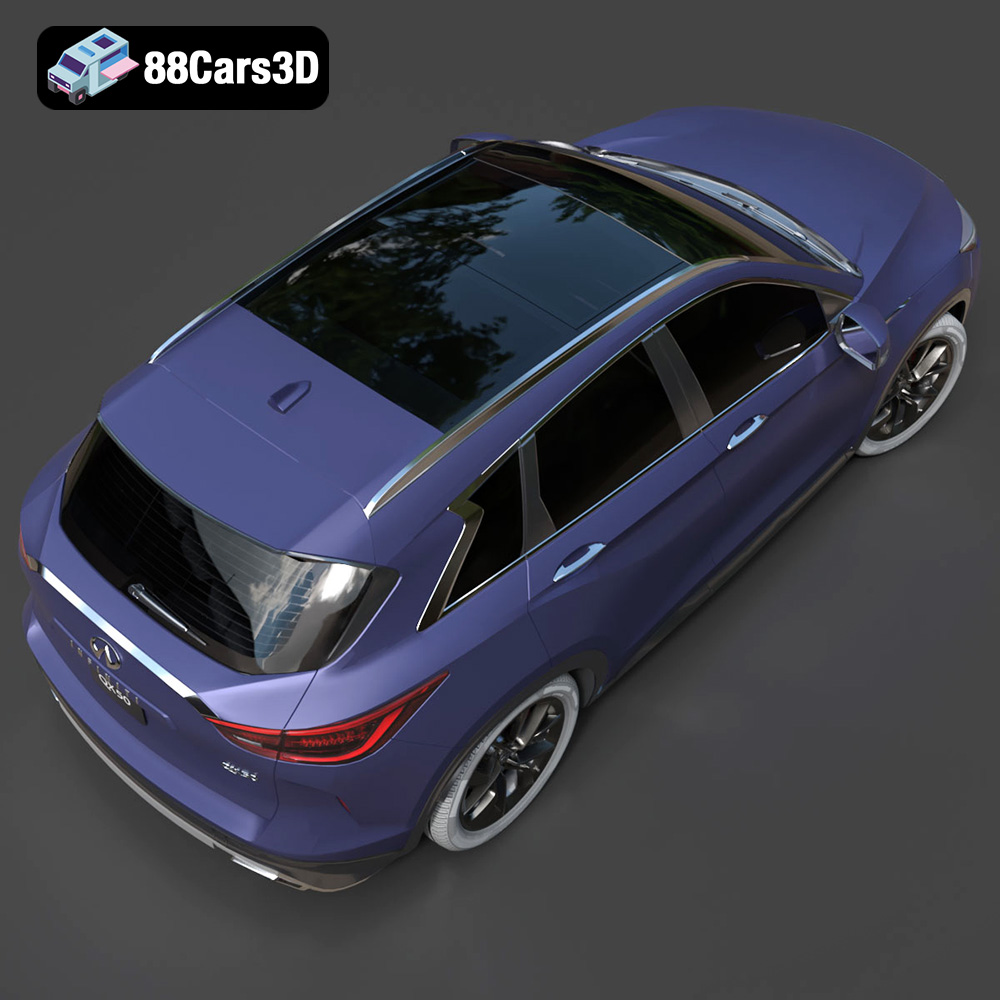
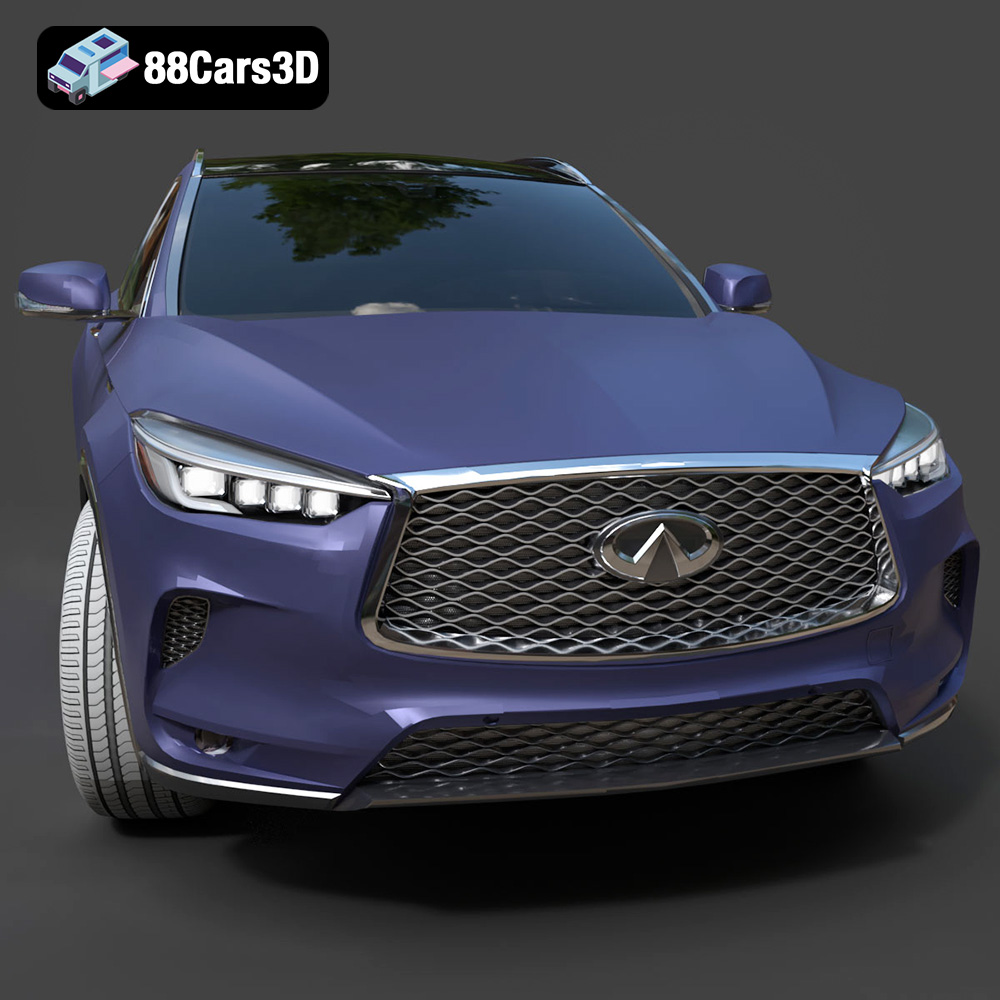
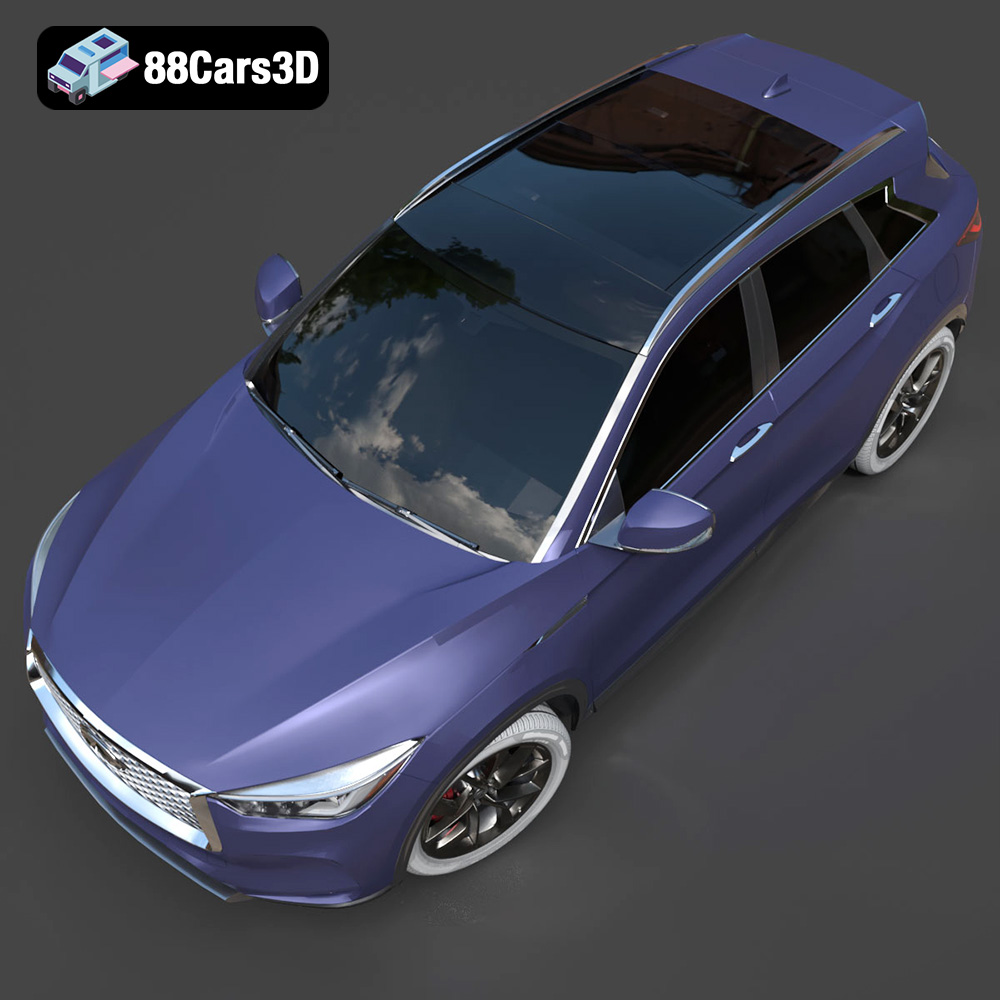
The journey from concept to a stunning final render or real-time experience is intricate, requiring a deep understanding of geometry, texturing, lighting, and optimization. Professional artists and developers continuously seek assets that not only look good but are also technically sound and versatile enough for diverse applications. This quest for excellence often leads to platforms like 88cars3d.com, a dedicated marketplace offering premium 3D car models designed to meet the rigorous demands of various industries. Among their stellar offerings is the Infiniti QX50 2019 3D Model, a prime example of meticulous craftsmanship and technical adaptability that serves as an invaluable tool for any digital creative.
The pursuit of realism in digital environments hinges on the quality of the assets used. For vehicles, this means more than just a recognizable shape; it encompasses accurate proportions, intricate details, realistic material responses, and optimized mesh structures. A poorly constructed model can undermine even the most sophisticated rendering engine or game environment, breaking immersion and detracting from the overall project quality.
Automotive visualization demands an extraordinary level of precision. Whether for marketing campaigns, design reviews, or configurators, the digital representation of a vehicle must be indistinguishable from its physical counterpart. This involves accurate reflections, subtle paint finishes, detailed interiors, and correctly proportioned components. A high-fidelity 3D car model, such as the Infiniti QX50 2019 3D Model, provides the essential framework for these tasks. Its clean geometry and professional topology ensure smooth subdivisions and accurate deformation, which are critical for close-up shots and complex animation sequences. Furthermore, realistic materials are calibrated to interact correctly with light, creating believable metallic sheens, glossy paint, and textured interiors.
Beyond static renders, high-quality 3D car models are crucial for dynamic, interactive applications. In game development, they serve as playable vehicles that players can drive and interact with, requiring optimized meshes, efficient UV layouts, and well-defined collision geometry. For AR/VR experiences, models must be light enough to run smoothly on target hardware while retaining visual integrity. The balance between visual fidelity and performance is a delicate one, and models designed with professional standards in mind inherently provide this balance. They are built to be scalable, allowing artists to adjust levels of detail (LODs) for different contexts without sacrificing the core aesthetic. This versatility makes assets like the Infiniti QX50 2019 3D Model indispensable for creating truly immersive automotive experiences.
The world of 3D modeling is rich with various file formats, each designed with specific purposes and compatibility in mind. Choosing the right format is critical for an efficient workflow, ensuring your 3D car models integrate seamlessly into your chosen software and target platform. The Infiniti QX50 2019 3D Model, a prime asset from 88cars3d.com, exemplifies this versatility by offering a comprehensive suite of formats, catering to virtually any professional need.
The extensive range of formats offered with models like the Infiniti QX50 2019 on 88cars3d.com underscores the platform’s commitment to professional workflow flexibility.
Automotive rendering is an art form that demands meticulous attention to detail, from the curve of the body panel to the subtle reflections on the paintwork. A high-quality 3D model serves as the canvas, but the true artistry comes from how it’s lit, textured, and composed. The Infiniti QX50 2019 3D Model is specifically engineered to excel in these demanding rendering environments.
The realism of a render largely depends on the materials and lighting. The Infiniti QX50 2019 model features professional-grade materials, carefully crafted to simulate real-world surfaces. This includes accurate car paint shaders with multiple layers (base coat, clear coat, metallic flakes), realistic glass for windows and headlights, and detailed textures for tires, interior fabrics, and chrome accents. When paired with advanced rendering engines like V-Ray, Corona, or Cycles, these materials respond accurately to physically based lighting setups. Artists can employ HDRI (High Dynamic Range Image) environment maps for global illumination, coupled with targeted area lights or spotlights to highlight specific design features, mimicking real-world photo studio setups. The model’s clean topology ensures that light bounces and reflections are smooth and accurate, avoiding artifacts that plague lower-quality meshes.
Professional rendering workflows leverage software like 3ds Max and Blender to achieve stunning results. In 3ds Max, artists can import the .max file of the Infiniti QX50 2019, which often comes pre-configured with materials and a basic studio setup. This allows for immediate iteration on lighting and camera angles. Complex scene environments, such as a luxurious garage or a scenic open road, can be built around the vehicle. Blender users can utilize the included .blend file, which provides a similar head-start with pre-configured materials and potentially a lighting rig. The node-based material system in Blender’s Cycles or Eevee renderers offers immense control for fine-tuning the look of the QX50, from dynamic wear and tear to intricate paint patterns. Both software platforms allow for non-destructive adjustments, ensuring that the original model integrity is maintained while artists explore creative rendering possibilities.
Consider an automotive manufacturer launching a new advertising campaign for the Infiniti QX50. Instead of costly physical photoshoots, they opt for high-end automotive rendering using the Infiniti QX50 2019 3D Model. Artists can place the car in various digital environments – from urban cityscapes to serene natural settings – all without moving a physical vehicle. They can showcase different paint colors, wheel options, and interior trims instantly, generating hundreds of unique marketing images and animations. Furthermore, this model is perfectly suited for an online car configurator. Using the high-quality base model, developers can create interactive experiences where customers can customize their QX50 in real-time, visualizing their choices with photorealistic precision. The model’s excellent topology and material setup ensure that every configuration update renders smoothly and accurately, enhancing the customer experience and driving sales engagement.
The demand for realistic vehicles in video games continues to grow, pushing the boundaries of real-time rendering. Developers need game assets that not only look impressive but are also meticulously optimized for performance. The Infiniti QX50 2019 3D Model from 88cars3d.com is engineered with these stringent requirements in mind, making it an excellent choice for modern game titles.
Integrating a high-fidelity 3D car model into a game engine like Unreal Engine or Unity requires more than just importing a file. Performance optimization is crucial. The Infiniti QX50 2019 model’s clean geometry and professional topology mean it’s built with game engines in mind. For Unreal Engine, the dedicated .unreal file format offers an immediate advantage, often including pre-configured materials (using Unreal’s PBR workflow), optimized meshes, and potentially even basic collision shapes. This dramatically reduces the setup time for developers. In Unity, the .fbx format is the preferred choice, allowing for efficient import of the mesh, UVs, and materials. Developers can then apply Unity’s Standard (PBR) shader and adjust textures to achieve accurate real-time reflections and material responses. The balance of visual detail and polygon count in such a high-quality model is carefully managed to ensure it looks great without overburdening the game engine’s rendering pipeline.
For truly optimized game assets, Levels of Detail (LODs) are indispensable. An expertly crafted model will have multiple versions, each with a progressively lower polygon count, to be swapped in and out based on the camera’s distance from the vehicle. This ensures that distant cars use fewer resources while close-up vehicles retain full detail. Collision meshes, often simplified versions of the visual mesh, are vital for accurate physics simulations and player interaction, preventing the player character or other objects from passing through the car. Furthermore, texture optimization is key. This involves using efficient UV layouts to maximize texture space, employing texture atlases, and utilizing modern texture compression techniques to reduce VRAM usage. A professional asset like the Infiniti QX50 2019 3D Model will come with well-organized UVs and often include PBR-ready textures (Albedo, Normal, Roughness, Metallic, AO) that are optimized for real-time engines.
Imagine a racing game where players can choose from a garage of meticulously detailed vehicles. The Infiniti QX50 2019 3D Model could be a premium unlockable, offering players a realistic driving experience. Its detailed interior would allow for immersive first-person camera views, while the accurately modeled exterior would stand out in cinematics and gameplay. In open-world games, this model could populate traffic, adding a layer of realism to urban environments. Its robust construction makes it suitable for physics simulations, allowing for realistic damage modeling or nuanced handling characteristics. The inclusion of multiple file formats, particularly .fbx and .unreal, ensures that game developers can integrate this luxurious crossover into their projects with minimal effort, contributing significantly to the overall immersion and visual fidelity of the virtual world.
The utility of high-quality 3D car models extends far beyond conventional rendering and game development. Emerging technologies like Augmented Reality (AR), Virtual Reality (VR), advanced simulations, and 3D printing are increasingly relying on precise digital assets. The Infiniti QX50 2019 3D Model stands ready to meet the demands of these diverse and evolving applications.
AR and VR are transforming how we interact with digital content, offering immersive experiences that blend virtual objects with the real world or create entirely new digital realities. For applications like virtual car showrooms, interactive product showcases, or automotive training simulations, high-quality, optimized 3D models are indispensable. The .glb file format included with the Infiniti QX50 2019 3D Model is specifically designed for this purpose. Its single-file binary structure encapsulates all necessary data – geometry, materials, and textures – into a compact, web-friendly package. This allows for rapid loading and smooth performance on AR/VR headsets and mobile devices, enabling users to explore the Infiniti QX50 from any angle, customize its features, or even place it realistically in their own driveways via augmented reality, creating highly engaging and informative experiences.
In the realm of engineering, product design, and research, 3D models are critical for various simulation and prototyping tasks. The .stl and .ply formats provided with the Infiniti QX50 2019 3D Model cater to these specialized needs. The .stl format, while simple, is the industry standard for 3D printing. Engineers and designers can use this file to quickly generate physical prototypes of vehicle components or even scaled-down models of the entire car for aerodynamic testing or ergonomic studies. This rapid prototyping capability significantly accelerates the design iteration process. The .ply format, with its ability to store detailed mesh attributes, is invaluable for advanced analysis. It can be used in computational fluid dynamics (CFD) simulations to study airflow around the vehicle, or in crash simulations to analyze structural integrity and deformation, providing critical data for design improvements without the need for expensive physical tests.
As industries evolve, the versatility of a robust 3D asset becomes increasingly important. The Infiniti QX50 2019 3D Model, with its comprehensive suite of file formats and inherent quality, is positioned as a future-proof asset. Beyond current applications, it could be used in autonomous vehicle training simulations, where realistic digital twins are essential for developing and testing AI perception systems. It could also contribute to smart city planning visualizations, demonstrating the impact of new vehicle designs on urban environments. Its high fidelity and adaptability make it a foundational asset for any forward-thinking project that requires an accurate and visually compelling representation of a modern luxury SUV.
When investing in 3D car models, professionals seek not just a product, but a reliable asset that integrates seamlessly into their workflow and meets stringent quality standards. 88cars3d.com distinguishes itself by offering a curated selection of premium models, exemplified by the Infiniti QX50 2019 3D Model, backed by a commitment to excellence and professional-grade support.
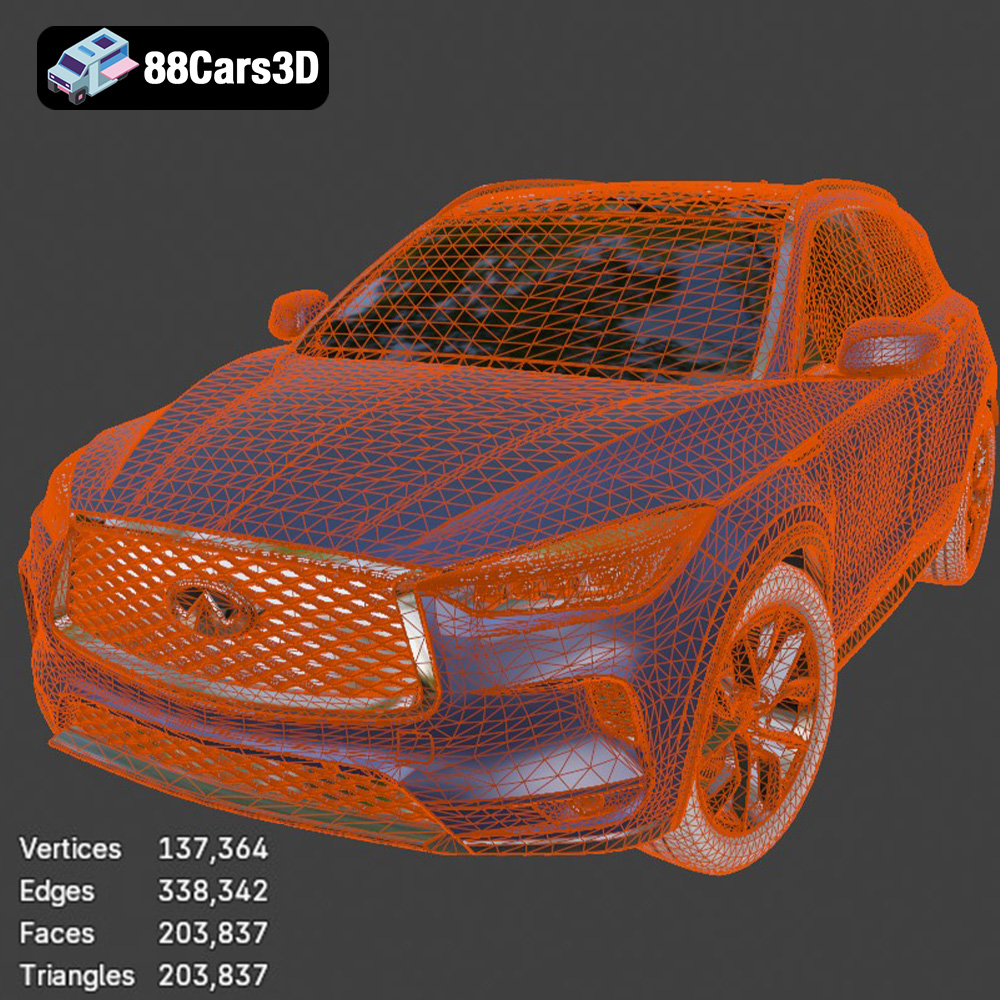
Every model on 88cars3d.com, including the Infiniti QX50 2019, undergoes rigorous quality control. This means developers and artists receive models with exceptionally clean geometry, which translates to smooth surfaces and predictable subdivision behavior – crucial for high-end rendering. Professional-grade topology ensures that polygons are optimally arranged, preventing shading artifacts and making the model easier to modify or animate. Realistic materials are carefully calibrated for physically based rendering (PBR) workflows, ensuring they look correct under varied lighting conditions across different software. Furthermore, fully modeled interiors, detailed exteriors, and accurate proportions are standard, providing a complete and authentic digital replica. This dedication to craftsmanship minimizes post-purchase adjustments, allowing artists to focus on creative tasks rather than fixing underlying model issues.
The provision of multiple, optimized file formats with models like the Infiniti QX50 2019 is a testament to 88cars3d.com’s understanding of professional workflows. Whether an artist prefers Blender (.blend), 3ds Max (.max), or needs a game-engine ready asset for Unreal Engine (.unreal, .fbx), the necessary files are readily available. This eliminates the time-consuming process of conversion, re-texturing, or complex optimization that often accompanies lower-quality assets. For teams working across different software platforms, this compatibility is invaluable, fostering collaboration and efficiency. By providing assets that are “ready to use” out of the box for specific applications like automotive rendering, game development, or AR/VR, 88cars3d.com empowers creatives to achieve their vision faster and with greater confidence.
The digital realm thrives on realism and precision, especially when it comes to intricate subjects like automobiles. High-quality 3D car models are no longer a luxury but a necessity for professionals aiming to create compelling automotive rendering, immersive game assets, and groundbreaking AR/VR experiences. The Infiniti QX50 2019 3D Model stands as a testament to this principle, offering an exceptional blend of meticulous detail, professional-grade topology, and broad file format compatibility.
From its impeccably clean geometry and realistic materials that make it ideal for photorealistic renders in 3ds Max or Blender, to its optimized formats like .fbx and .unreal that ensure seamless integration into game development pipelines, this model is designed for versatility. Its inclusion of specialized formats like .glb for AR/VR and .stl for 3D printing further underscores its adaptability across a spectrum of modern digital applications. The Infiniti QX50 2019 3D Model is not merely a digital asset; it is a meticulously crafted tool that empowers artists, designers, and developers to bring their visions to life with unparalleled realism and efficiency.
For those seeking the pinnacle of digital automotive assets, exploring the comprehensive collection available at 88cars3d.com is a worthwhile endeavor. Investing in professionally prepared models like the Infiniti QX50 2019 ensures that your projects benefit from the highest standards of quality, saving valuable production time and elevating the final output to cinematic levels of fidelity. Experience the difference that truly high-quality 3D assets can make in your next project.
Discover the exceptional realism and precision of the Infiniti QX50 2019 3D Model. Crafted with meticulous attention to detail, this premium digital asset accurately reflects the stunning aesthetics and sophisticated design of the renowned luxury crossover SUV. This model features exceptionally clean geometry, professional-grade topology, and realistic materials that ensure outstanding performance under varied lighting conditions. Every element, from its bold exterior curves to its fully modeled interior, has been constructed to meet the strictest industry standards for professional 3D design. Designed for unparalleled versatility, this 3D vehicle is ready to be integrated seamlessly into a wide range of professional applications. Whether you are working on advanced game development, creating photorealistic architectural renders, building immersive AR/VR experiences, or producing cinematic visual effects, this asset delivers reliable and visually striking results.
$39.99
.2019
.arvr
.blend
.car3dmodel
.crossover
.fbx
.gameasset
.glb
.infiniti
.max
.obj
.ply
.qx50
.rendering
.simulation
.stl
.unreal
SUV