Get 20% OFF All Premium 3D & STL Models!

In the rapidly evolving landscape of digital content creation, the demand for realistic and performant 3D assets is at an all-time high. From blockbuster video games to immersive architectural visualizations, and from cutting-edge AR/VR experiences to precise 3D prints, high-quality 3D car models are indispensable tools. These digital representations are more than just pretty pictures; they are the fundamental building blocks that empower artists, designers, and developers to bring their visions to life with unparalleled detail and authenticity.
The creation of a truly outstanding 3D car model involves a complex interplay of artistic skill, technical precision, and an deep understanding of real-world vehicle design. It’s about capturing not just the shape, but the very essence and character of an automobile. This level of dedication is exemplified by models such as the Volkswagen Jetta GLI 2019 3D Model, a meticulously crafted asset designed to meet the rigorous demands of professional production pipelines. As we delve into the intricacies of 3D car modeling, we’ll explore why these assets are crucial and how they integrate into various industry workflows, highlighting the exceptional quality found on marketplaces like 88cars3d.com.
The choice of file format is a critical decision in any 3D project, directly impacting compatibility, functionality, and the overall efficiency of your workflow. Different formats are optimized for specific purposes, and understanding their nuances is key to leveraging your 3D car models effectively. The Volkswagen Jetta GLI 2019 3D model, for instance, offers a comprehensive suite of formats, ensuring its versatility across a multitude of software and applications.
The .blend format is Blender’s native file type, containing a complete scene with all its data: meshes, materials, textures, lighting, cameras, animations, and even physics simulations. For artists working primarily in Blender, this format offers the most flexibility. You can open the file and immediately dive into a fully editable project, making quick modifications, re-rigging components, or adapting materials to suit specific rendering engines or stylistic needs. Its strength lies in preserving the entire creative context within one file, making it ideal for collaborative projects within a Blender-centric studio or for users who want to deeply customize the asset.
Autodesk’s .fbx (Filmbox) format is arguably the most widely adopted interchange format in the 3D industry, particularly popular for game development. It excels at transferring 3D models with complex data, including geometry, animation (skeletal and blend shapes), cameras, and lights, between different software applications like Maya, 3ds Max, Cinema 4D, and game engines such as Unreal Engine and Unity. The .fbx variant of the Jetta GLI model is game-ready, meaning it’s optimized for real-time performance while retaining high visual fidelity, making it a go-to choice for developers integrating it into their interactive experiences.
The .obj (Wavefront OBJ) format is a universal, widely supported geometric format. While it doesn’t typically store animation or rigging data, it’s excellent for transferring mesh geometry, UV mapping, and basic material definitions (via an accompanying .mtl file). Its simplicity and widespread compatibility make it a reliable choice for cross-software integration, especially when you primarily need the raw geometry and texture coordinates. If you’re importing the Jetta GLI model into a lesser-known 3D package or an older version of software, .obj often serves as a robust fallback.
.glb (GLB, or GL Transmission Format Binary) is the binary version of glTF, a royalty-free specification for the efficient transmission and loading of 3D scenes and models by applications. It packages geometry, materials, textures, and even animations into a single, self-contained file, making it incredibly efficient for web-based 3D viewers, AR/VR applications, and mobile experiences. Its compact nature and optimized delivery for modern graphics APIs make the Jetta GLI’s .glb version perfect for virtual showrooms or interactive web configurators.
The .stl (Stereolithography) format is the ubiquitous standard for 3D printing. It represents a 3D model as a collection of unconnected triangles, defining only the surface geometry without color, texture, or other properties. While it simplifies the model, it provides the necessary data for slicing software to prepare the model for physical fabrication. The Jetta GLI model’s availability in .stl enables hobbyists and professionals alike to bring a physical representation of the vehicle to life, whether for display, prototyping, or scale model collections.
The .ply (Polygon File Format) is another popular format for storing 3D data, particularly useful for scanned data and models with precise geometric information. It can store a wider range of properties than .obj or .stl, including color, transparency, and even normal vectors per vertex. This makes it suitable for applications requiring high precision, such as scientific visualization, CAD workflows, or complex mesh analysis. For the Jetta GLI, the .ply format offers an alternative for highly detailed geometric analysis or integration into specific engineering pipelines.
The .unreal format, typically referring to assets pre-packaged for Unreal Engine, signifies a model that has undergone specific optimizations and configurations tailored for Epic Games’ powerful real-time engine. This usually means proper material setup (PBR), collision meshes, LODs (Levels of Detail), and potentially even basic blueprint implementations are already in place. This greatly accelerates integration time for developers, allowing them to drop the Jetta GLI directly into an Unreal project with minimal setup.
Finally, the .max format is Autodesk 3ds Max’s native scene file. Similar to .blend for Blender, it encapsulates the entire 3ds Max project, including complex scene setups, modifiers, advanced material networks, and sophisticated animation rigs. For users of 3ds Max, this format provides complete control over the model, allowing for extensive customization, high-end rendering with V-Ray or Corona, and integration into detailed animation sequences for commercials or cinematics. The Jetta GLI .max file empowers artists to leverage the full suite of 3ds Max features.
Creating a 3D car model that truly resonates with realism requires an immense amount of skill and a deep understanding of automotive design. It’s about meticulously translating the physical nuances of a vehicle into a digital form, ensuring every curve, seam, and component is accurately represented. The Volkswagen Jetta GLI 2019 3D model stands as a testament to this intricate process, delivering a level of detail that satisfies even the most discerning eye.
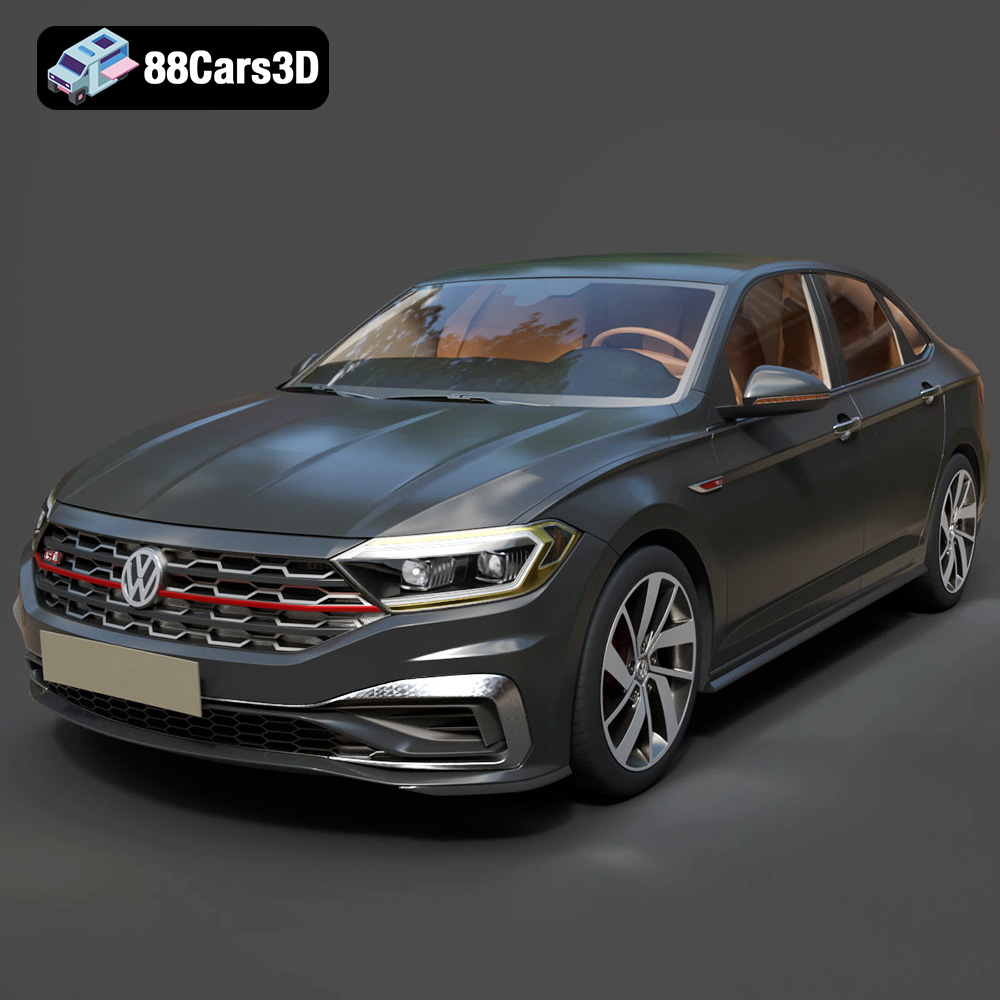
The fidelity of a 3D car model begins with its foundational geometry. For the Volkswagen Jetta GLI 2019, this means capturing its distinctive blend of everyday practicality and thrilling performance. The model faithfully reproduces the aggressive honeycomb grille with its iconic red accents, the sleek aerodynamic profile, and the overall assertive stance of the sports sedan. Every exterior feature has been painstakingly recreated: from the accurate frame geometry and proportions to the detailed representation of the 2.0L TSI turbocharged 4-cylinder engine block.
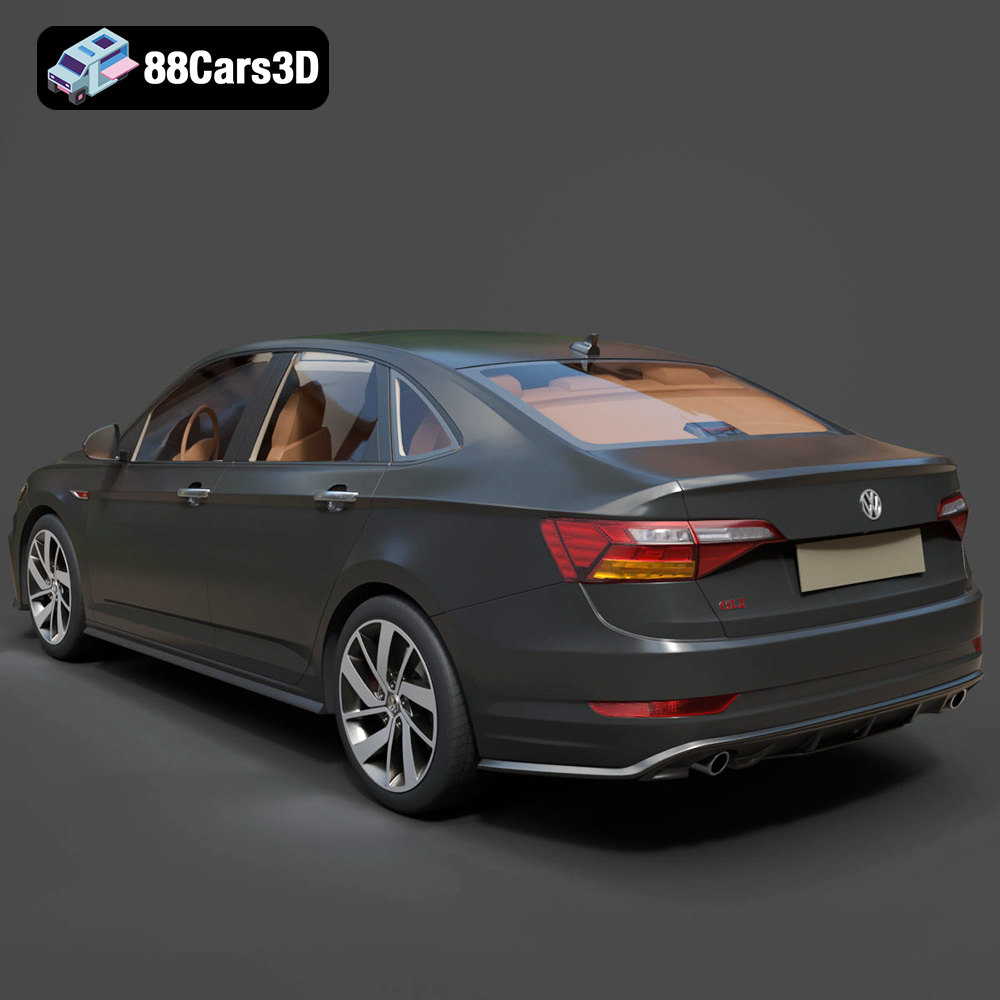
Further enhancing its authenticity are the sport-tuned dual exhaust system with chrome tips, the signature LED projector headlights and sleek taillight clusters, and the exclusive GLI alloy wheels paired with performance tire treads. Even the red brake calipers, a subtle but critical detail for sports models, are rendered with precision. The model also incorporates sport suspension lowering details, contributing to its aggressive, track-ready appearance. Crucially for animation, components like the wheels, suspension, and steering are separate, allowing for dynamic, realistic movement in simulations and interactive experiences.
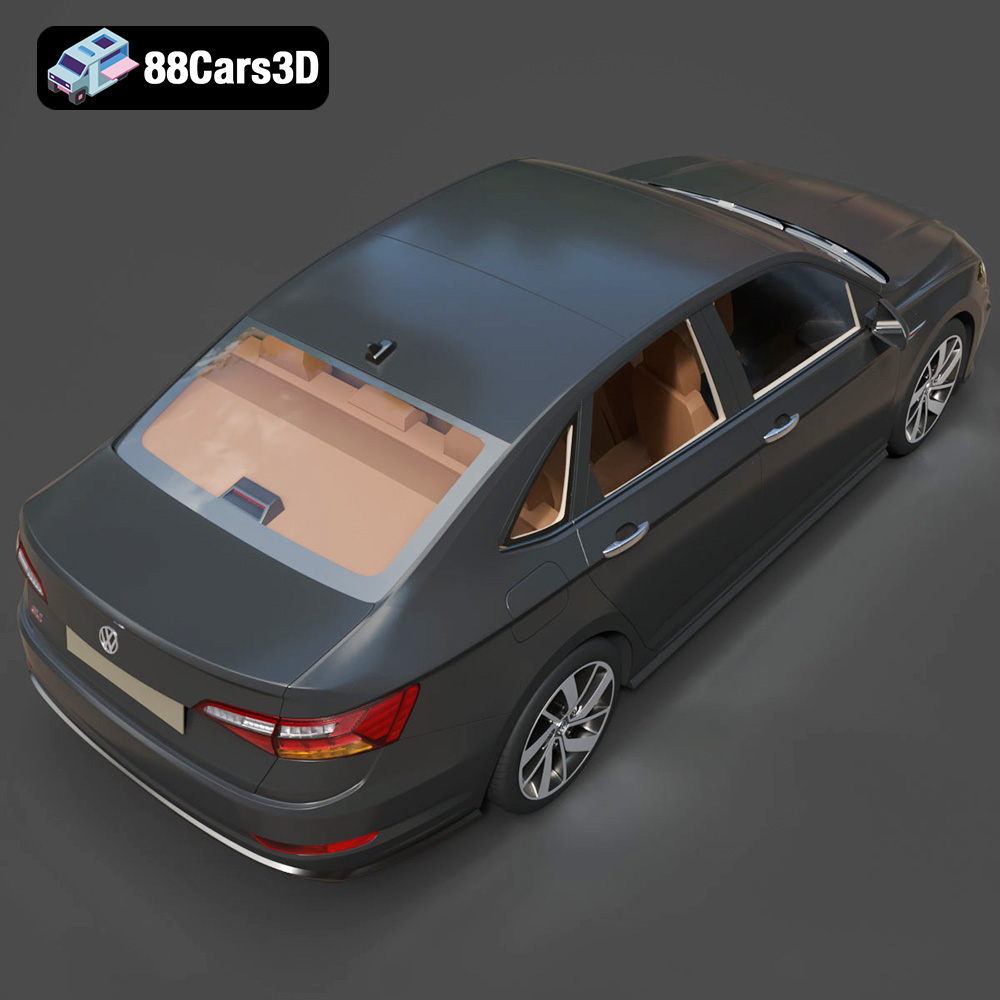
Beyond the impressive exterior, the interior of a 3D car model is paramount for immersive experiences, especially in game development and virtual reality. The Volkswagen Jetta GLI 2019 model does not disappoint, featuring a meticulously replicated cockpit that invites close inspection. The sport seats, complete with their signature red contrast stitching, immediately convey the GLI’s performance pedigree. The leather-wrapped, flat-bottom sport steering wheel, the digital cockpit, and the modern infotainment instrument cluster are all rendered with high fidelity, reflecting the car’s contemporary sophistication.
Even smaller details like the accurate pedal, shift lever, and center console controls are present, adding to the realism. This attention to detail in the interior is particularly vital for applications that feature first-person perspectives, such as driving simulators or open-world games. The optimized geometry ensures that these interior elements look stunning without excessively taxing real-time rendering engines, providing a seamless and believable user experience.
In the realm of interactive 3D, striking a balance between visual splendor and computational efficiency is crucial. A beautiful model that causes performance bottlenecks is often unusable in real-time applications. This is where “game-ready optimization” comes into play, a core advantage of professional 3D models like the Volkswagen Jetta GLI 2019, available on 88cars3d.com.
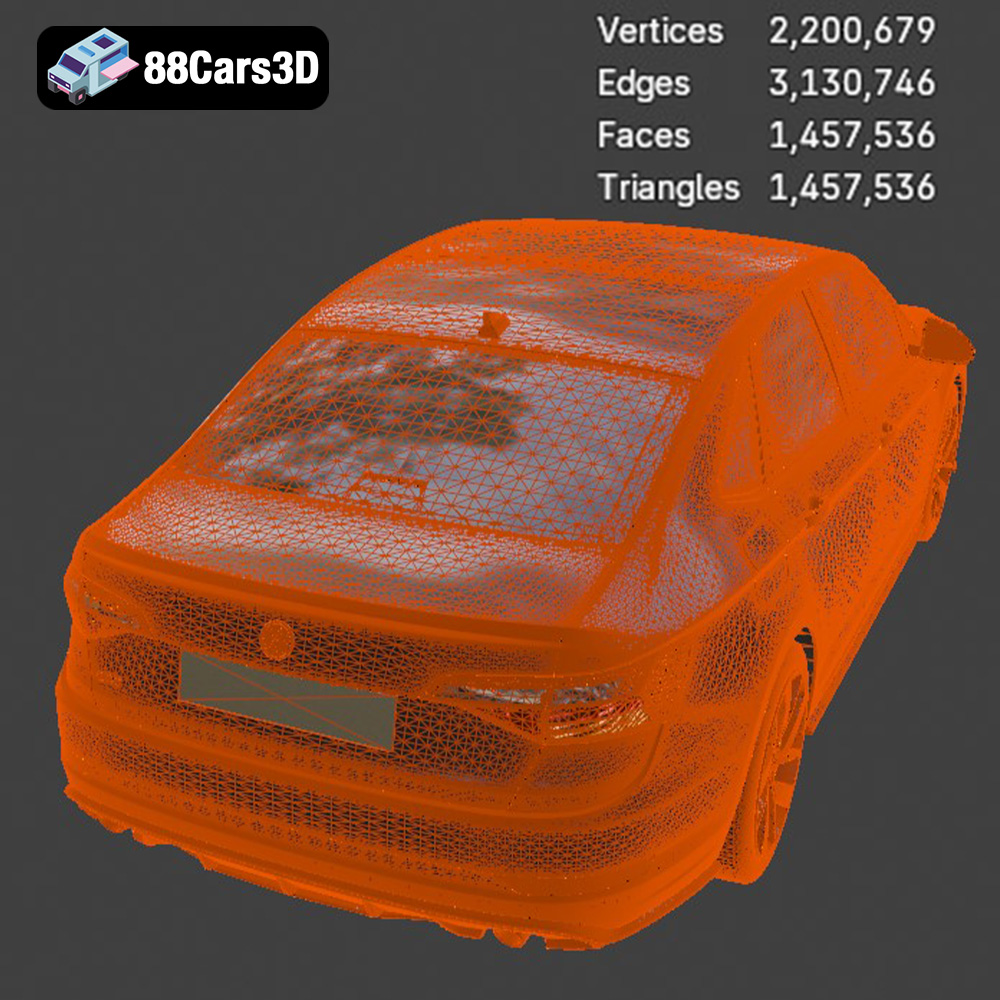
The Volkswagen Jetta GLI 2019 3D model is a prime example of intelligent optimization. With approximately 250,000 triangles, it achieves a perfect equilibrium for real-time engines like Unreal and Unity. This polycount is sufficient to maintain high-end visual realism, ensuring that the car looks stunning even in close-up shots, while being lean enough to integrate into complex game environments without compromising frame rates. This meticulous optimization avoids the pitfalls of overly dense meshes that can cripple performance, making it a truly practical asset for developers.
Beyond geometry, the model features stunning topological accuracy and highly detailed PBR (Physically Based Rendering) materials. PBR materials are essential for achieving photorealistic results in modern rendering engines because they accurately simulate how light interacts with surfaces in the real world. This means reflections, refractions, and diffuse lighting respond realistically to environmental changes, providing unmatched visual fidelity for both static renders and dynamic gameplay. Furthermore, the model is built to real-world scale accuracy, based on actual vehicle chassis dimensions, ensuring consistent integration into any scene.
For any interactive or animated application, the underlying rigging and pivot setup of a 3D car model are just as important as its visual fidelity. The Jetta GLI model incorporates proper pivot setup for crucial elements like steering, wheel rotation, and suspension travel. This means animators and game developers can easily apply rotations and transformations that accurately mimic real-world vehicle mechanics without needing to rework the model’s fundamental structure.
The separation of wheels, suspension, and steering components allows for independent animation, facilitating the creation of realistic driving dynamics. Imagine a racing game where the suspension visibly compresses and extends over bumps, or a vehicle configurator where users can articulate the steering wheel. These small details significantly enhance immersion and functionality, demonstrating the forethought put into making this model a truly versatile asset for dynamic use cases.
The utility of a high-quality 3D car model extends far beyond a single purpose. The Volkswagen Jetta GLI 2019 3D model, with its robust technical specifications and versatile file formats, is designed to serve a broad spectrum of professional applications across multiple industries.
For game developers, the Jetta GLI model is a ready-to-use asset that can significantly accelerate production timelines. Its optimized polycount and PBR materials make it ideal for integration into demanding environments such as open-world games, where dozens or hundreds of vehicles might be present, or high-octane racing titles that demand visual realism at speed. The accurate geometry and separate animated components allow for realistic physics implementation and dynamic gameplay experiences. Developers can quickly populate urban environments, create engaging car chases, or design immersive driving mechanics with a reliable, visually striking asset.
The burgeoning fields of Augmented Reality (AR) and Virtual Reality (VR) thrive on high-quality 3D content. The Volkswagen Jetta GLI 2019 3D model is perfect for creating immersive virtual showrooms, where potential customers can explore the car in detail from any angle, open doors, and even customize features. For automotive configurators, users can interact with the vehicle in a virtual space, changing body colors, tire textures, and material finishes in real-time. Its .glb format is especially suited for web-based AR/VR experiences and mobile AR, allowing for seamless integration into web browsers or smartphone applications, providing accessible and engaging brand interactions.
In the realm of marketing, advertising, and architectural visualization, photorealistic renders are paramount. The Jetta GLI model excels in these scenarios, offering unmatched realism for brand campaigns, lifestyle scenes, and studio lighting setups. Architects can integrate the car into their visualization projects to give scale and context to their designs, making parking lots or street scenes feel alive. With its detailed PBR materials, artists can achieve stunningly realistic reflections and lighting interactions, creating compelling imagery that captures the essence of the vehicle. Whether it’s for a print advertisement, a cinematic commercial, or a still image showcasing a luxury property, this model provides the visual fidelity needed to impress. You can find more premium 3D car models like this at 88cars3d.com to enhance your visualization projects.
The journey of a 3D model doesn’t always end on a screen. For enthusiasts, designers, and prototypers, the ability to transition from a digital asset to a tangible object through 3D printing opens up a world of possibilities. The Volkswagen Jetta GLI 2019 3D model is designed with this capability in mind, offering specific guidelines and features for successful physical fabrication.
To prepare the Jetta GLI model for 3D printing, it’s typically converted to the .stl format, which triangulates the mesh into a printable form. For optimal results, recommended scales like 1:12, 1:18, or 1:24 allow for a balance between manageable print size and retained detail. When setting up your 3D printer, crucial parameters include layer height (0.04–0.12 mm for fine detail, with resin printing highly recommended for superior precision), wall thickness (1.2–2.0 mm for structural integrity), and infill (20–30% for a robust, yet not overly heavy model).
Due to the intricate geometry of a car, supports are required for detailed parts such as the exhaust system, side mirrors, and complex undercarriage components. Proper print orientation is also key: printing the main frame angled can enhance structural integrity, while wheels are best printed separately to capture their delicate spoke designs and tire treads without support artifacts on critical surfaces. These considerations ensure that the printed model closely mirrors the high fidelity of its digital counterpart.
Once printed, the physical model offers a new canvas for customization. Post-processing steps often include sanding to smooth layer lines, applying a primer to prepare the surface, and then painting with authentic factory colors, often with metallic finishes to replicate the car’s original aesthetic. This hands-on process allows for a deeper connection with the design and a personalized touch.
Even before printing, the digital model itself offers extensive customization options. Artists can easily change body colors to any factory shade or even create custom finishes like matte or unique metallics. Tire textures can be modified to represent off-road, street, or racing variants. Material finishes, such as gloss, matte, or specific metallic sheen, can be adjusted to achieve a desired look. Furthermore, adapting the lighting within the 3D scene allows for an infinite array of environmental presentations, from sun-drenched street scenes to dramatic studio spotlights, showcasing the car in its best light. These digital flexibilities translate into incredible creative freedom for the final output, whether digital or physical.
The true value of a professionally crafted 3D asset lies in its seamless integration into diverse production workflows. A model like the Volkswagen Jetta GLI 2019 from 88cars3d.com is designed to be a time-saving, high-quality solution that enhances creative projects, rather than creating new technical hurdles.
For artists leveraging industry-standard DCC (Digital Content Creation) tools, the inclusion of native .max and .blend files is a significant advantage. In 3ds Max, opening the .max file provides immediate access to the entire scene, including any pre-configured PBR materials, lighting setups, or foundational rigs. This allows for rapid iteration: users can easily modify the model’s environment, integrate it into a larger architectural visualization scene, or set up complex animations for a commercial. The ability to directly manipulate original geometry and material nodes within 3ds Max provides maximum control for bespoke renders.
Similarly, Blender users benefit from the .blend file, which grants full access to the model within Blender’s intuitive interface. This means artists can leverage Blender’s powerful Cycles or Eevee renderers, integrate the Jetta GLI into existing Blender projects, or even extend its functionality with Blender’s extensive add-ons. The clean topology and proper UV mapping mean textures can be swapped, and the model can be quickly adapted for different styles, from photorealism to stylized renders. The separation of components like wheels and suspension further simplifies rigging and animation within both 3ds Max and Blender, allowing for dynamic camera movements and realistic vehicle simulations.
Game developers and real-time visualization specialists will find the Jetta GLI model particularly well-suited for Unreal Engine and Unity. Importing the .fbx or the dedicated .unreal file into Unreal Engine streamlines the entire process. The model’s optimized ~250k triangle count is ideal for game performance, preventing lag while maintaining visual fidelity. Developers can set up PBR materials, ensuring realistic reflections and lighting within the engine’s real-time renderer. Collision meshes can be automatically generated or custom-fit, providing accurate physical interactions. Moreover, the separate components allow for easy integration into blueprints or C# scripts for interactive elements—imagine opening doors, adjusting headlights, or simulating realistic driving physics directly in your game.
In Unity, the .fbx file imports seamlessly, bringing in the model’s geometry, UVs, and initial material slots. Artists can then assign Unity’s PBR materials (Standard, HDRP, or URP) to achieve desired visual effects. The model’s clean structure facilitates the attachment of wheel colliders, suspension joints, and vehicle controller scripts, enabling the Jetta GLI to become a fully driveable asset within a game or simulator. This level of preparation and optimization ensures that professionals can quickly deploy and integrate the Volkswagen Jetta GLI 2019 3D model into their interactive projects, significantly reducing development time and effort.
The demand for high-quality 3D assets continues to grow across numerous industries, from entertainment to engineering. A meticulously crafted 3D car model like the Volkswagen Jetta GLI 2019 is far more than a simple digital object; it is a versatile, performant tool that empowers creators. Its blend of accurate detail, game-ready optimization, and availability in a wide array of industry-standard file formats (.blend, .fbx, .obj, .glb, .stl, .ply, .unreal, .max) makes it an invaluable asset for game developers, architectural visualizers, AR/VR content creators, and even 3D printing enthusiasts.
From the precise capture of the GLI’s aggressive exterior and sophisticated interior to its optimized polygon count for real-time engines and its suitability for physical fabrication, this model demonstrates the pinnacle of professional 3D content creation. It significantly streamlines workflows, allowing artists and developers to focus on creativity rather than wrestling with technical limitations. For professionals seeking top-tier 3D car models that combine realism, performance, and flexibility, exploring the extensive catalog on 88cars3d.com is a crucial step towards elevating any project to the next level of visual excellence and functional integration.
The Volkswagen Jetta GLI 2019 combines everyday practicality with thrilling performance, standing out as a premier sports sedan in its class. Known for its GTI-borrowed turbocharged engine, aggressive honeycomb grille with iconic red accents, and sleek aerodynamic profile, this vehicle strikes the perfect balance between track-ready styling and modern sophistication. From its distinctive front fascia to the dual exhaust setup, every element of this athletic sedan has been meticulously captured. This meticulously crafted 3D model features game-ready optimization with approximately 250,000 triangles, ensuring high-end visual fidelity without compromising real-time performance in modern engines. With stunning topological accuracy and highly detailed PBR materials, it provides unmatched realism for close-up shots and gameplay alike. Perfect for immersive racing simulators, urban environment open-world games, high-end architectural visualizations, and interactive automotive configurators.
$39.99
.2019
.blend
.fbx
.glb
.max
.obj
.ply
.rendering
.sedan
.stl
.unreal
.volkswagen
car-3d-model
game asset
game-ready
jetta-gli
low-poly
optimized
sports-sedan
VR/AR