Get 20% OFF All Premium 3D & STL Models!

The Toyota Supra 2020, a modern icon, roars back into the automotive landscape with a blend of heritage and cutting-edge performance. Now, thanks to the detailed 3D model available at 88cars3d.com, you can bring this legendary sports car to life right in your own home using the power of 3D printing. This blog post will guide you through the entire process, from selecting the right materials and settings to post-processing techniques that will transform your 3D printed parts into a stunning replica of the Supra 2020. Get ready to experience the thrill of additive manufacturing and create a tangible tribute to this automotive masterpiece.
Before you dive headfirst into 3D printing your Toyota Supra 2020, it’s crucial to understand the different file formats included in your purchase and how they relate to the 3D printing process. While several formats are provided for various applications, the STL (Stereolithography) file is the cornerstone of 3D printing. Other formats like OBJ, PLY, BLEND, FBX, GLB and MAX each serve different purposes, mainly related to editing, rendering, and augmented reality previewing.
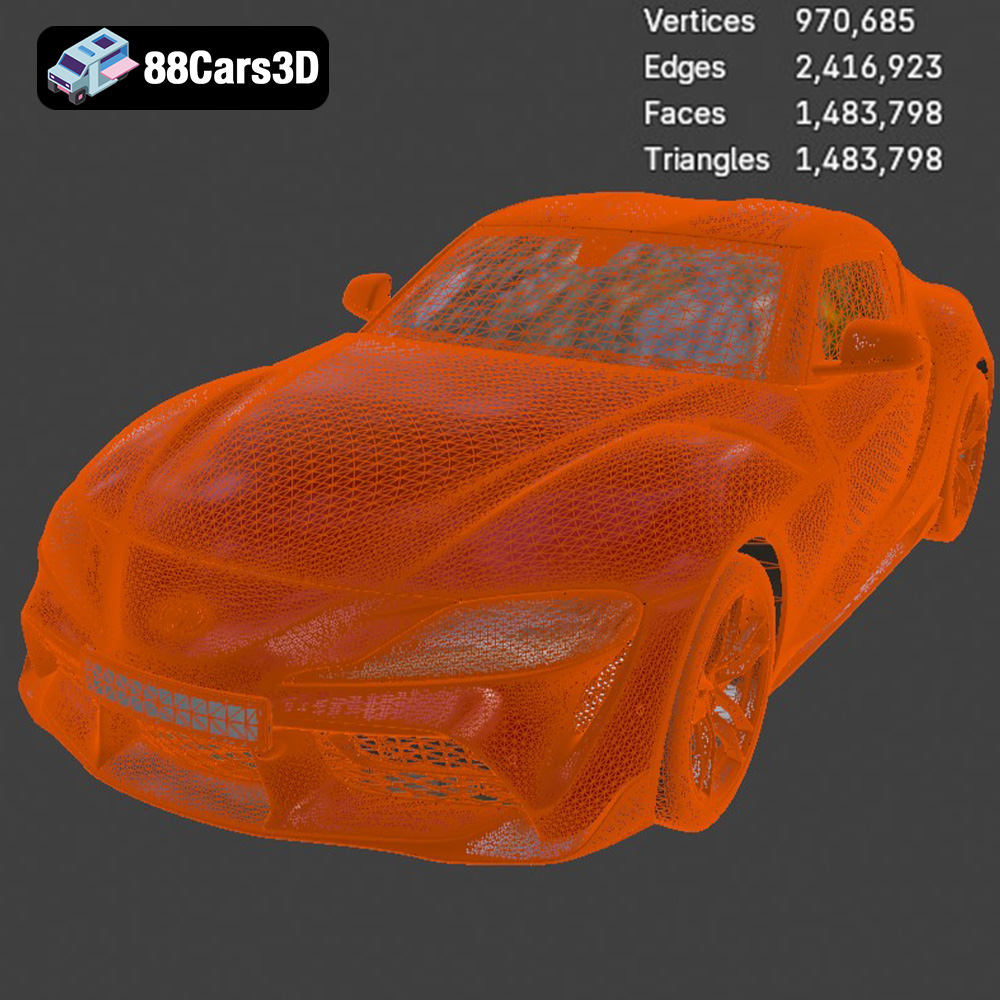
The STL file format is the industry standard for 3D printing. It represents the surface geometry of a 3D object as a collection of triangles. The more triangles, the smoother and more detailed the final print will be, but also the larger the file size and the more processing power required. The Toyota Supra 2020 model on 88cars3d.com boasts a meticulously optimized topology, balancing detail with printability. STL files are universally compatible with slicing software, which translates the 3D model into instructions that your 3D printer can understand.
* **OBJ:** This format, while capable of storing color and texture information, is less commonly used for 3D printing than STL. It can be useful if you intend to apply textures to your model before printing, but most slicing software focuses primarily on geometric data.
* **PLY:** PLY files are designed for high-detail mesh storage, often captured through 3D scanning. While capable of representing complex geometries accurately, they may result in excessively large file sizes for 3D printing, potentially overwhelming your slicing software.
* **BLEND:** This is the native file format for Blender, a popular open-source 3D modeling software. It allows you to make modifications to the 3D model before exporting it to a printable format like STL. This is excellent for customization.
* **FBX:** Commonly used for exchanging 3D data between different software applications, FBX files can contain information about materials and animations. While not directly printable, they can be imported into Blender or other 3D modeling software for editing and subsequent export to STL.
* **GLB:** GLB is a binary file format representing 3D models, often used for displaying 3D content in web browsers and augmented reality applications. It is generally not used for 3D printing.
* **MAX:** This is the native file format for 3ds Max, a professional 3D modeling and animation software. Similar to BLEND, it’s used for editing the model before exporting to STL.
For 3D printing the Toyota Supra 2020 model, the STL format is the recommended choice. When using STL, ensure the mesh is watertight (no holes or gaps in the surface) and has a reasonable polygon count. While the model from 88cars3d.com is optimized, it’s always a good idea to check the mesh quality in your slicing software. Slicers like Cura, PrusaSlicer, and Simplify3D have built-in mesh repair tools that can automatically fix minor errors. A well-prepared STL file will result in a cleaner, more accurate 3D print of your Supra.
The material you choose significantly impacts the final appearance, strength, and durability of your 3D printed Toyota Supra 2020. Several options are available, each with its own set of pros and cons.
PLA (Polylactic Acid) is a biodegradable thermoplastic derived from renewable resources like corn starch or sugarcane. It’s known for its ease of use, low printing temperature, and minimal warping, making it an excellent choice for beginners. PLA is available in a wide range of colors and finishes, allowing you to customize your Supra.
* **Pros:** Easy to print, low odor, wide color selection, biodegradable.
* **Cons:** Lower heat resistance, less durable than other materials, can be brittle.
* **Ideal for:** Initial prototypes, display models, parts that won’t be exposed to high temperatures or stress.
PETG (Polyethylene Terephthalate Glycol-modified) bridges the gap between PLA and ABS. It offers improved strength, flexibility, and heat resistance compared to PLA, while still being relatively easy to print. PETG is a good choice if you want a more durable model that can withstand some wear and tear.
* **Pros:** Stronger and more flexible than PLA, good heat resistance, chemical resistance.
* **Cons:** Can be more prone to stringing than PLA, requires higher printing temperatures.
* **Ideal for:** Parts that require some strength and durability, functional prototypes, parts that might be exposed to sunlight.
For the ultimate in detail and surface finish, resin printing is the way to go. Resin printers use liquid photopolymer resins that are cured by UV light, allowing for incredibly fine layer heights and intricate details that are impossible to achieve with filament-based printers. Resin printing is particularly well-suited for capturing the complex curves and intricate details of the Toyota Supra 2020. The product description on 88cars3d.com specifically recommends resin printing for fine details.
* **Pros:** Exceptional detail, smooth surface finish, high precision.
* **Cons:** Requires post-processing (washing and curing), resins can be expensive, less durable than some filaments, requires careful handling due to toxicity.
* **Ideal for:** Display models, intricate parts, highly detailed components like the interior and wheels.
Once you’ve chosen your material, you’ll need to prepare the 3D model for printing using slicing software. This software converts the STL file into a series of instructions (G-code) that your 3D printer can understand. Popular slicing software options include Cura, PrusaSlicer, Simplify3D, and Chitubox (for resin printing).
The orientation of your model on the print bed can significantly impact the print quality, strength, and the amount of support material required. For the Toyota Supra 2020, printing the frame at an angle (as suggested in the product description) can improve structural integrity. The wheels and other components should be printed separately for optimal results.
* **Supports:** Supports are necessary to prop up overhanging features and prevent them from collapsing during printing. The product description mentions that supports are required for detailed parts like the exhaust, mirrors, and steering wheel. Experiment with different support settings in your slicing software to find the optimal balance between support strength and ease of removal.
* **Rafts/Brims:** These are optional adhesion aids that can help prevent warping, especially when printing with materials like ABS or PETG. A raft is a thick layer of plastic printed underneath the model, while a brim is a thin layer of plastic printed around the base of the model.
The slicing parameters you choose will determine the resolution, strength, and printing time of your Toyota Supra 2020.
* **Layer Height:** A smaller layer height results in a smoother surface finish but increases printing time. The product description recommends a layer height of 0.04–0.12 mm, especially for resin printing. Experiment with different layer heights to find the sweet spot between quality and speed.
* **Infill:** Infill is the internal structure of the 3D printed part. A higher infill percentage results in a stronger part but increases printing time and material consumption. The product description recommends an infill of 20–30%.
* **Wall Thickness:** Wall thickness refers to the number of perimeters printed around the outside of the model. A thicker wall provides more strength and rigidity. The product description recommends a wall thickness of 1.2–2.0 mm.
* **Printing Speed:** Slower printing speeds generally result in better print quality, but significantly increase printing time.
With your model sliced and your printer prepped, it’s time to start printing! Monitor the print closely, especially during the first few layers, to ensure proper adhesion and that supports are building correctly.
* **Bed Adhesion:** Proper bed adhesion is crucial for preventing warping. Ensure your print bed is level and clean. Use appropriate bed adhesion aids like glue stick, painter’s tape, or build plate adhesion promoters.
* **Temperature Control:** Maintaining consistent temperatures is essential for successful printing. Enclosures can help regulate temperature and prevent warping, especially when printing with temperature-sensitive materials like ABS.
* **Resin Level:** Ensure the resin vat is filled to the appropriate level before starting the print.
* **Calibration:** Calibrate your resin printer regularly to ensure accurate layer heights and exposure times.
* **Cleanliness:** Keep your resin printer and work area clean to prevent contamination and ensure optimal print quality.
Once the printing is complete, the real magic begins. Post-processing is the process of cleaning, refining, and finishing your 3D printed parts to achieve a professional look.
Carefully remove the support structures from your 3D printed parts. Use specialized tools like flush cutters, pliers, or deburring tools to avoid damaging the model.
Sanding is essential for removing layer lines and creating a smooth surface finish. Start with coarse sandpaper and gradually move to finer grits. For resin prints, wet sanding can help achieve an even smoother surface.
Apply a primer to the sanded parts to create a uniform surface for painting. Choose paints that are compatible with your chosen material. The product description suggests using authentic factory colors with metallic finishes to replicate the look of the real Toyota Supra 2020. Consider using stencils or masking tape to create intricate paint details.
Assemble the individual parts of your Toyota Supra 2020, such as the body, wheels, and interior components. Use appropriate adhesives, such as super glue or epoxy, to join the parts together securely.
Even with careful preparation, you may encounter some challenges during the 3D printing process. Here are some common issues and their solutions:
* **Warping:** This occurs when the corners of the print lift off the print bed. Ensure proper bed adhesion, use a heated bed, and consider using an enclosure.
* **Stringing:** This is caused by excess filament oozing from the nozzle during travel moves. Reduce the printing temperature, increase retraction settings, and ensure the filament is dry.
* **Layer Separation:** This occurs when layers don’t adhere properly to each other. Increase the printing temperature, decrease the printing speed, and ensure the filament is dry.
* **Support Failure:** This can happen if the supports are too weak or the overhangs are too steep. Increase the support density, adjust the support angle, and ensure the supports are properly attached to the model.
* **Resin Printing Issues:** Resin prints can fail due to incorrect exposure times, low resin levels, or a dirty build plate. Recalibrate your printer, ensure proper resin levels, and clean the build plate regularly.
By understanding these common issues and their solutions, you can overcome printing challenges and achieve stunning results. Remember that patience and experimentation are key to mastering the art of 3D printing. You’ll be rewarded with a fantastic scale model.
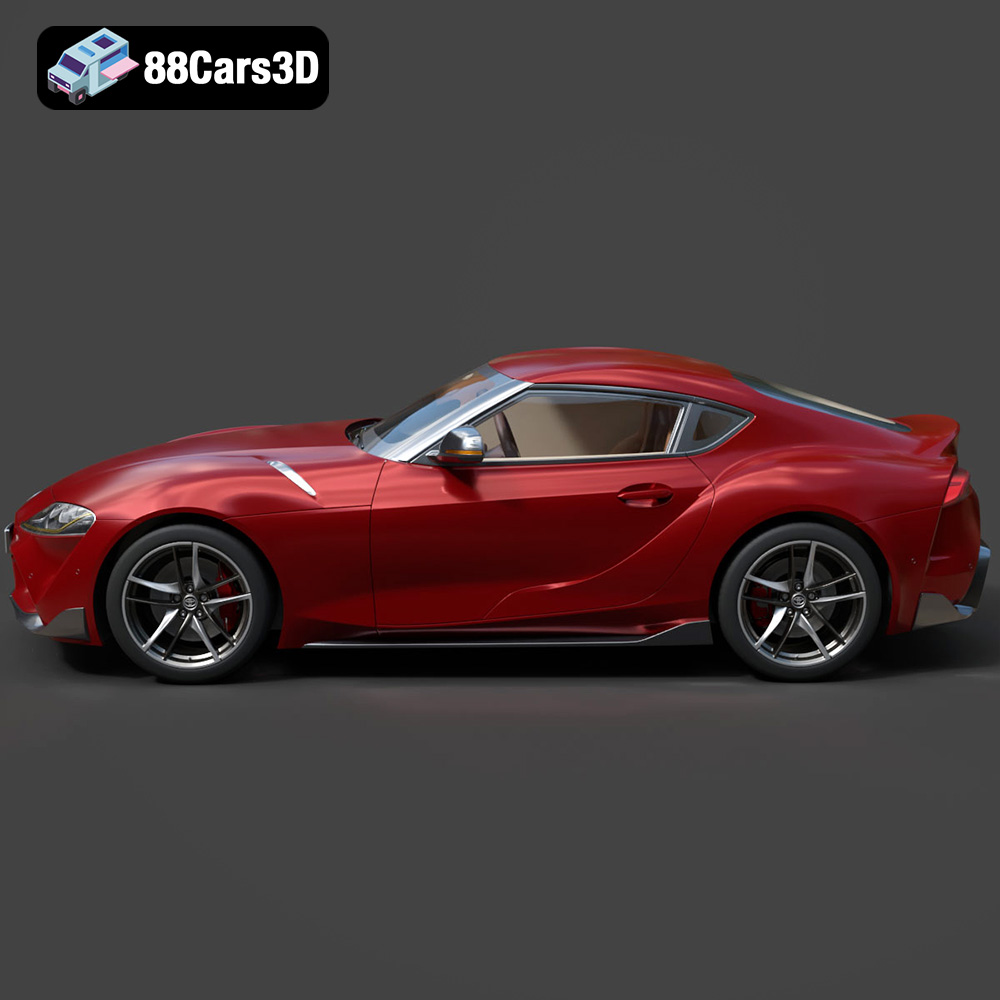
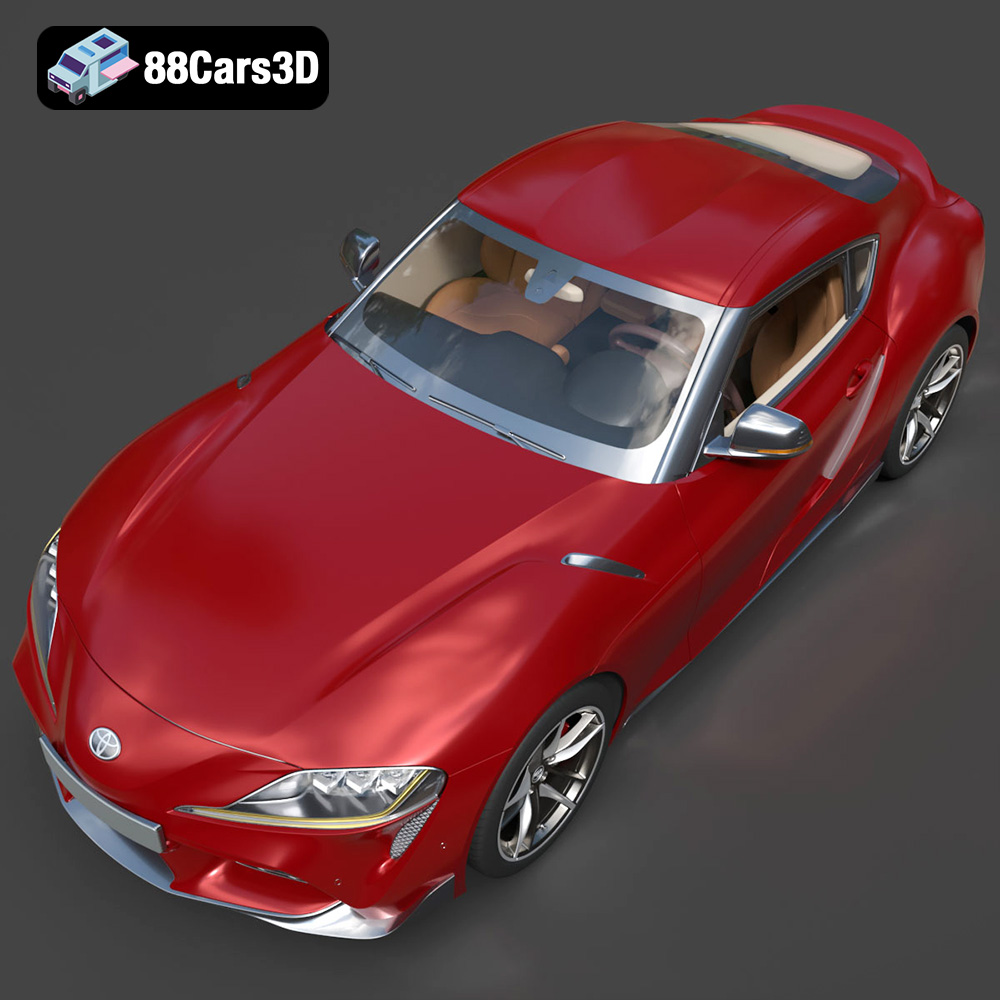
The Toyota Supra 2020 marks the triumphant return of a legendary sports car icon. Fusing a rich heritage with modern engineering, this masterpiece boasts an aggressive aerodynamic profile, signature double-bubble roof, and a meticulously detailed B58 3.0L turbocharged inline-six engine bay. Every curve, from the striking LED headlight clusters to the prominent rear lip spoiler and dual-branch exhaust system, has been faithfully recreated to capture its powerful stance and dynamic aesthetics.
$39.99
.blend
.coupe
.fbx
.glb
.jdm
.max
.obj
.ply
.rendering
.sports car
.stl
.toyota
.unreal
car-3d-model
game asset
game-ready
low-poly
optimized
supra-2020
VR/AR